Questions raised by Nostra aetate about the Christian God and Muslim Allah

Under another entry a commentator said:

It’s also about time that Catholics start repudiating those sections of Nostra Aetate referring to Muslims.

Let’s have a look at the relevant paragraph of Nostra aetate.

3. Ecclesia cum aestimatione quoque Muslimos respicit qui unicum Deum adorant, viventem et subsistentem, misericordem et omnipotentem, Creatorem caeli et terrae, homines allocutum, cuius occultis etiam decretis toto animo se submittere student, sicut Deo se submisit Abraham ad quem fides islamica libenter sese refert. Iesum, quem quidem ut Deum non agnoscunt, ut prophetam tamen venerantur, matremque eius virginalem honorant Mariam et aliquando eam devote etiam invocant. Diem insuper iudicii expectant cum Deus omnes homines resuscitatos remunerabit. Exinde vitam moralem aestimant et Deum maxime in oratione, eleemosynis et ieiunio colunt.

Quodsi in decursu saeculorum inter Christianos et Muslimos non paucae dissensiones et inimicitiae exortae sint, Sacrosancta Synodus omnes exhortatur, ut, praeterita obliviscentes, se ad comprehensionem mutuam sincere exerceant et pro omnibus hominibus iustitiam socialem, bona moralia necnon pacem et libertatem communiter tueantur et promoveant.

3. The Church regards with esteem (aestimatio: "an estimation of a thing according to its intrinsic worth") also the Moslems. They adore the one God, living and subsisting in Himself; merciful and all- powerful, the Creator of heaven and earth, who has spoken to men; they take pains to submit wholeheartedly to even His inscrutable decrees, just as Abraham, with whom the faith of Islam takes pleasure in linking itself, submitted to God. Though they do not acknowledge Jesus as God, they (tamen … ?) revere Him as a prophet. They also honor Mary, His virgin Mother; at times they even call on her with devotion. In addition, they await the day of judgment when God will render their deserts to all those who have been raised up from the dead. Finally, they value the moral life and worship God especially through prayer, almsgiving and fasting.

Since in the course of centuries not a few quarrels and hostilities have arisen between Christians and Moslems, this sacred synod urges all to forget the past (praeterita obliviscentes) and to work sincerely for mutual understanding and to preserve as well as to promote together for the benefit of all mankind social justice and moral welfare, as well as peace and freedom.

I wonder if the English translation here, from the Vatican website, is a good reflection of the Latin.

My initial reading gave me the impression that the English is slightly rosier than the Latin.

Also, I wonder about a few things.

First, I wonder if we can truly – nay rather – reasonably "forget things that have occurred in the past".  On the face of it, that is not either wise or possible.  However, the intent of this is surely meant to be "not be embittered by what has happened in the past".  Fine.  But my initial comment stands: we cannot, should not, forget the past.  Rather, the past should be a spur and a check on our choices today.

Secondly, the document states that Muslims worship "the one, only God" (unicus Deus).

We often hear that Christians and Muslims (and Jews) worship the same God, the God of Abraham.

Is this indeed the case?

I don’t know enough about the Muslim understanding of God to be able to embrace that assertion without hesitation.

It would be helpful to have the help of some experts on Islam on this question.

I know that this is very complicated, and leaves us open to all sorts of bickering, but perhaps we could drill at this question a bit… calmly and intelligently.

I know, for example, that it is said that the God Muslims refer to as "Allah" (among the many other names) is personal, omnipotent, and is said to be compassionate.  There is some agreement (to what extent I am not sure) that the Muslim’s Allah is the same God that entered into a covenant with Abraham.  St. Augustine says that God is closer to us than we are to ourselves.  The Koran says that Allah is closer to us than our own jugular vein… which is an unsettling image.  


Christians obviously believe that God is Triune.  But, "O People of the Scripture! Do not speak lies against Allah, but speak the Truth. That Jesus Christ, son of Mary, was a messenger of Allah, and His Word, which He bestowed on Mary, and a spirit from Him. So believe in Allah and His messengers, and say not ‘Trinity.’ Desist! It is better for you. For Allah is one God." (An-Nisa 4:17)

Sometimes a contrast is made between the God of the Old and New Testament and Allah, who seems to act in a more "capricious" manner.  Christians tend to think of God in terms of Logos while, as I understand it, Muslims tend to think of Allah as "Will", which brings us back to the notion of "capricious", that such a God would not be bound even by his own word.   Certainly Pope Benedict raised some interesting questions at Regensburg, in 2006. 

Let’s see if we can have a discussion about some of these points without being boors.
Posted in Our Catholic Identity, The Drill | Tagged , ,
114 Comments

The Savior’s chalice is forever precious and His hands are ever sacred

His Hermeneuticalness has an interesting post concerning the new corrected translation.   Let’s jump in media res:

In the combox of the post "Telling the truth – a new corrected translation", Lawrence the Roman writes concerning the new corrected ICEL translation of accipiens et hunc praeclarum calicem in sanctas ac venerabiles manus suas:

Jesus Christ did not take “a precious chalice".
"He the cup" (I Cor 11: 25)
"He took a cup" (Matt 26:27)
"He cup a cup" (Mark 14:23
"He did the same with the cup after supper.." (Luke: 22:20)
"The inspired books teach the truth. Since therefore all that the inspired authors or sacred writers affirm should be regarded as affirmed by the Holy Spirit, we must acknowledge that the books of Scripture firmly, faithfully, and without error teach that truth which God, for the sake of our salvation, wished to see confined to the Sacred Scriptures." (Catechism of the Catholic Church No. 107)
Just as the Sacred Scripture is the “soul of theology” it should also be the “soul of the Liturgy”. Let’s not alter Holy Writ for pious claptrap!

The Sacred Scriptures are indeed the soul of the Liturgy in the sense that the texts of the Liturgy include quotations from the scriptures and, when they are not quotations, often allude to them.

Fr. Finigan goes on to make his arguments, and – as you might expect – does a splendid job.

I will add to Fr. Finigan’s masterful treatment of the writer’s error reminding everyone that translation of liturgical texts is not the same as translation of Scripture. 

Liturgy constitutes its own theological source.

Liturgical texts must be respected for what they say on their own merits.

The augmentation of the institution narrative at the time of consecration reveals the understanding of the Catholic faithful through the centuries in the transcendent dimension of the moment.  The writer’s criticism of this language suggests a desire to strip the transcendent out.  This is antithetical to authentic Catholic worship.

Pope Benedict in his 2009 sermon for Holy Thursday drills into this phrase (my emphases and comments):

[…]

After the bread, Jesus takes the chalice of wine. The Roman Canon describes the chalice which the Lord gives to his disciples as "praeclarus calix" (the glorious cup), ["glorious chalice".  This will be given a far better expression in the new English translation.  In the present very deficient lame-duck translation the word praeclarus was purposely excluded.] thereby alluding to Psalm 23 [22], the Psalm which speaks of God as the Good Shepherd, the strong Shepherd. There we read these words: "You have prepared a banquet for me in the sight of my foes … My cup is overflowing" – calix praeclarus. [glorious in its overflowing-ness] The Roman Canon interprets [This is an important point in this sermon.  The Holy Father sees the Canon has being its own theological locus.  This is why, for example, he explained years ago that liturgical translation was not bound by the philological considerations of strict translation of Scripture.  Translation of liturgical texts must respect the texts themselves because they are their own theological starting point.  …] this passage from the Psalm as a prophecy that is fulfilled in the Eucharist: yes, the Lord does indeed prepare a banquet for us in the midst of the threats of this world, and he gives us the glorious chalice – the chalice of great joy, of the true feast, for which we all long – the chalice filled with the wine of his love.

[…]

Fr. Finigan’s interlocutor calls the words of the Roman Canon – a text which has its roots in the very earliest centuries of the Church and which expressed them and still express today the belief of those who embrace the regula Fidei – "pious claptrap". 

The words of consecration in the Roman Canon are "claptrap".

I will gladly add my own pious claptrap.

I believe Our Savior’s "cup" on that altar is the chalice of my salvation. 

When I take it into my anointed hands, I will without cynicism utter or whisper that perfect word "precious".

Our Savior’s hands endured torments for us.

I will call them "venerable" and "sacred".

Posted in Linking Back, New Translation, The Drill, Throwing a Nutty, WDTPRS | Tagged , , ,
30 Comments

TO ARMS! TO ARMS! Pro-abortion youth document proposed to UN General Assembly

TO ARMS WDTPRSers!

I received this via e-mail and present it for your opportune knowledge and consideration.   This needs action.

Dear Colleague,

Radical pro-abortion youth have written a document that the UN General Assembly is considering accepting. This would be disastrous. The document was written under the careful scrutiny of the UN Population Fund and International Planned Parenthood Federation. It calls for all the usual craziness: abortion on demand, comprehensive sex education…all for kids!

A group of smart young people have drafted a counter document that we will present to the UN later this month or early next month. This document will show the UN that radical youth DO NOT TALK FOR ALL YOUTH!

In order to make the necessary big splash, we need as many signatures as we can get. We need you to please sign THIS document right now and then send this note to everyone in your address book? Will you put this email up on Facebook? Will you circulate it among all of your family and friends.

I am often asked what you can do to help our cause at the UN. Here is something you can do that will make a HUGE DIFFERENCE!

UN delegations have requested our help in countering the radical youth document. Your signature on THIS document will help good pro-life delegations fight back against the radical pro-abortionists who want to undermine the morals of our children.

Act now and sign THIS document and then send this email to everyone you know.

Time is running out. We need 50,000 names in three weeks!

Sincerely,

Austin Ruse
President/C-FAM
Editor/Friday Fax

Posted in "How To..." - Practical Notes, The Campus Telephone Pole, The future and our choices | Tagged ,
17 Comments

Ground Zero Mosque: a “Rabat”, not a “Cultural Center”

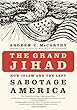
Some time ago, at the recommendation of the great Fr. Welzbacher of St. Paul, I read Andrew McCarthy’s The Grand Jihad: How Islam and the Left Sabotage AmericaIt was an excellent preparation, or propaedeutic, for the controversy over the proposal to build the mosque complex at Ground Zero in Manhattan.  And, yes, I think 51 Park Place qualifies as “ground zero” in the sense that landing gear from one of the airplanes struck the building.

As I listened and read about the “Cordoba House” proposal something about it sounded familiar.  McCarthy described how militant Islamists of the Brotherhood developed centers for young muslim men which included an athletic program component.  The nickle dropped.  (Cf. Chapter 4. “Eliminating and Destroying the Western Civilization from Within”.)

Today over breakfast coffee… I saw in the New York Post an article by Amir Taheri, which you should know about.
Amir Taheri is author of 11 books on the Middle East, Iran and Islam.

Let’s have a look with my emphases and comments.

Islam center’s eerie echo of ancient terror

By AMIR TAHERI

Last Updated: 8:35 AM, September 10, 2010

Should there be a mosque near Ground Zero? In fact, what is pro posed is not a mosque — nor even an “Islamic cultural center.

In Islam, every structure linked to the faith and its rituals has a precise function and character. A mosque is a one-story gallery built around an atrium with a mihrab (a niche pointing to Mecca) and one, or in the case of Shiites two, minarets.

Other Islamic structures, such as harams, zawiyyahs, husseinyiahs and takiyahs, also obey strict architectural rules. Yet the building used for spreading the faith is known as Dar al-Tabligh, or House of Proselytizing.

[NB] This 13-story multifunctional structure couldn’t be any of the above.

The groups fighting for the project know this; this is why they sometimes call it an Islamic cultural center. But there is no such thing as an Islamic culture.

Islam is a religion, not a culture. Each of the 57 Muslim-majority nations has its own distinct culture — and the Bengali culture has little in common with the Nigerian. Then, too, most of those countries have their own cultural offices in the US, especially in New York.

Islam is an ingredient in dozens of cultures, not a culture on its own.

In theory, at least, the culture of American Muslims should be American. Of course, this being America, each ethnic community has its distinct cultural memories — the Iranians in Los Angeles are different from the Arabs in Dearborn.

[Start taking notes if you have to…] In fact, the proposed structure is known in Islamic history as a rabat — literally a connector. The first rabat appeared at the time of the Prophet.

The Prophet imposed his rule on parts of Arabia through a series of ghazvas, or razzias (the origin of the English word “raid”). The ghazva was designed to terrorize the infidels, convince them that their civilization was doomed and force them to submit to Islamic rule. Those who participated in the ghazva were known as the ghazis, or raiders.

After each ghazva, the Prophet ordered the creation of a rabat — or a point of contact at the heart of the infidel territory raided. The rabat consisted of an area for prayer, a section for the raiders to eat and rest and facilities to train and prepare for future razzias. [The “athletic” component I alluded to earlier.] Later Muslim rulers used the tactic of ghazva to conquer territory in the Persian and Byzantine empires. After each raid, they built a rabat to prepare for the next razzia.

[NB:] It is no coincidence that Islamists routinely use the term ghazva to describe the 9/11 attacks against New York and Washington. The terrorists who carried out the attack are referred to as ghazis or shahids (martyrs).

[CONCLUSION:] Thus, building a rabat close to Ground Zero would be in accordance with a tradition started by the Prophet. To all those who believe and hope that the 9/11 ghazva would lead to the destruction of the American “Great Satan,” this would be of great symbolic value.

[Shift gears.] Faced with the anger of New Yorkers, the promoters of the project have started calling it the Cordoba House, echoing President Obama’s assertion that it would be used to propagate “moderate” Islam.

The argument is that Cordoba, in southern Spain, was a city where followers of Islam, Christianity and Judaism lived together in peace and produced literature and philosophy.

In fact, Cordoba’s history is full of stories of oppression and massacre, prompted by religious fanaticism. It is true that the Muslim rulers of Cordoba didn’t force their Christian and Jewish subjects to accept Islam. However, non-Muslims could keep their faith and enjoy state protection only as dhimmis (bonded ones) by paying a poll tax in a system of religious apartheid.

If whatever peace and harmony that is supposed to have existed in Cordoba were the fruit of “Muslim rule,” [NB:] the subtext is that the United States would enjoy similar peace and harmony under Islamic rule[That is why “Cordoba” was chosen: to symbolize the goal of subjugation of the USA to Sharia Law.]

A rabat in the heart of Manhattan would be of great symbolic value to those who want a high-profile, “in your face” projection of Islam in the infidel West.

This thirst for visibility is translated into increasingly provocative forms of hijab, notably the niqab (mask) and the burqa. The same quest mobilized hundreds of Muslims in Paris the other day to close a whole street so that they could have a Ramadan prayer in the middle of the rush hour. [These open demonstrations are escalating.]

One of those taking part in the demonstration told French radio that the aim was to “show we are here.” “You used to be in our capitals for centuries,” he said. “Now, it is our turn to be in the heart of your cities.

Before deciding whether to support or oppose the “Cordoba” project, New Yorkers should consider what it is that they would be buying.

Posted in The Drill, The future and our choices | Tagged , , , ,
58 Comments

A reflection on reordered churches

During my time in Manhattan this trip I have visited quite a few Catholic churches.  I have been amazed at how badly some of them have been mutilated, and stupidly so.  Some are still being mutilated according to tired old ideas that are now, in the minds of the younger clergy for sure, cliché and monstrous.  The outgoing regime with their tired ideas are still doing damage even as their theological wheelchairs are already turned in the direction of the door.

On Inside Catholic there is an article reproduced from the November 1995 issue of Crisis Magazine.

Read the whole piece for some context and some reflections on death and awareness of mortality.  At the end, however, the writer offered some pretty harsh comments about the fruits of the post-Conciliar reform.

Fair?  Unfair?

Having come from a parish where the all chaos and foolery was over the decades avoided, because of the guidance of well-informed pastors who thought with the mind of the Church, and being a convert, I was spared the full force of the idiocy that went on far and wide.   But I have certainly been around the pike a few times and seen what she was talking about.

Take a look … with my emphases and comments.

The writer is speaking of time spent in a church before the Blessed Sacrament.

He Came Down from Heaven: A Consolation [In the Incarnation, and at every Sacrifice of the Mass.]
Alice Thomas Ellis

[…]

There was a silent peace with a hidden promise of unimaginable joy to which all the objects of devotion attested: the altar, the statues, the crucifix, all the appurtenances of faith belonged to no one and to everyone. Still and worthy of trust, they were there yesterday and now and would be there tomorrow. Inanimate yet living testimony to a vital certainty. It is rare now to find such a church. Stripped and barren, while the people themselves are encouraged to buy more and more to support the market economy and cram their houses with trivia, the churches are denuded in the name of progress.

It is impossible to understand without laying bare the motives of those who wrought such destruction. The result is terrible in the terms of disillusion and loss, and those who say they wished only to affirm life and community have robbed us of consolation, giving death a greater power than is his due. The here and now is what concerns us they say, forgetting that life is short and but a preparation.

The new and re-ordered churches are symbolic only of a denied but underlying despair, a loss of faith to the sad conviction that death is the end. [The fruit of the modernist error: immanentism.] The noisy ceremonies that now fill these churches, the guitars, the clapping, swaying, and showy raptures are a mere extension of the drug culture, a whistling in the wind, a neurotic insistence that happiness is attainable immediately and does not need to be waited for or earned. The notion that suffering can bring forth good, that deprivation can nourish the soul is unacceptable. [I believe this is what I was driving at in that sermon I gave for the Feast of the Exaltation of the Cross on 14 Sept 2007 at Fr. Finigan’s parish.  We remove the Cross at our peril.  We must keep the Cross at the focus point so that we can deal with what St. Augustine called "our daily winter", fear of death.  It is there, in what the Cross reveals, that we encounter mystery both alluring and fearsome, and we are readied for what lies outside ourselves and the passage of the grave.] Suggest that the saints lived their lives in the promise and not the fulfillment of joy and you will not be heard. The Protestant cult of the "born again" with its ecstatic overtones has laid hold of a Church that still claims to lay all store on baptism. We are at the mercy of doctrinal error, often imposed from above, with little recourse to authority which is often too pusillanimous to argue with the trend. The wolves are in the fold.

Now that the churches are no longer peaceful but full of people determined to convey to you their loving care, their innate virtuousness, with handshakes and smiles, the bereft are best off in solitude, listening for the still, small voice. [The still small voice which the prophet eventually heard.  I often use the image of Moses, posted by God at the cleft in the rock.] The country graveyard is perhaps now the place nearest to God on earth, for that too is neutral ground where death has had his way, is satisfied and thus of no more significance and no threat. Freedom lies in looking on the face of death and knowing that there is no true battle here, that he does not need to be fought and defeated, for he is only God’s instrument and God lives.

We remove the Cross and worship redolent of His Sacrifice at our peril.

Posted in Our Catholic Identity, The future and our choices | Tagged ,
34 Comments

Fidel Castro: Communism failed in Cuba

AP has a story that a writer for The Atlantic, Jeffrey Goldberg, interviewed long-time Communist dictator for three days.

During the interview, Casto admitted that Communism has failed in Cuba.

HAVANA – Fidel Castro told a visiting American journalist that Cuba’s communist economic model doesn’t work, a rare comment on domestic affairs from a man who has conspicuously steered clear of local issues since stepping down four years ago.

The fact that things are not working efficiently on this cash-strapped Caribbean island is hardly news. Fidel’s brother Raul, the country’s president, has said the same thing repeatedly. But the blunt assessment by the father of Cuba’s 1959 revolution is sure to raise eyebrows. ["raise eyebrows"?  An admission from CASTRO that Communism FAILED?  You have to love that sort of bald spin.   The only other thing they could have done to downplay this is to suggest that he is at long last a little gaga.]

Jeffrey Goldberg, a national correspondent for The Atlantic magazine, asked if Cuba’s economic system was still worth exporting to other countries, and Castro replied: "The Cuban model doesn’t even work for us anymore" Goldberg wrote Wednesday in a post on his Atlantic blog.

He said Castro made the comment casually over lunch following a long talk about the Middle East, and did not elaborate. The Cuban government had no immediate comment on Goldberg’s account. [ROFL!]

Since stepping down from power in 2006, the ex-president has focused almost entirely on international affairs and said very little about Cuba and its politics, perhaps to limit the perception he is stepping on his brother’s toes.

Goldberg, who traveled to Cuba at Castro’s invitation last week to discuss a recent Atlantic article he wrote about Iran’s nuclear program, also reported on Tuesday that Castro questioned his own actions during the 1962 Cuban Missile Crisis, including his recommendation to Soviet leaders that they use nuclear weapons against the United States. [What a guy!]

Even after the fall of the Soviet Union, Cuba has clung to its communist system.

The state controls well over 90 percent of the economy, paying workers salaries of about $20 a month [A worker’s paradise, to be sure.] in return for free health care and education, and nearly free transportation and housing. At least a portion of every citizen’s food needs are sold to them through ration books at heavily subsidized prices.  [What father of children wouldn’t be proud to bring that home each week?]

President Raul Castro and others have instituted a series of limited economic reforms, and have warned Cubans that they need to start working harder and expecting less from the government. But the president has also made it clear he has no desire to depart from Cuba’s socialist system or embrace capitalism. [Good luck with that.  What was the old phrase from the Soviet Union?  "So long as the bosses pretend to pay us, we will pretend to work."]

Fidel Castro stepped down temporarily in July 2006 due to a serious illness that nearly killed him.

He resigned permanently two years later, but remains head of the Communist Party. After staying almost entirely out of the spotlight for four years, he re-emerged in July and now speaks frequently about international affairs. He has been warning for weeks of the threat of a nuclear war over Iran.

Castro’s interview with Goldberg is the only one he has given to an American journalist since he left office.

On an amusing note, NPR (aka National Peoples Radio) also posted on this story.  What do you think of their headline?

During Interview With Journalist Jeffrey Goldberg, Fidel Castro Talks Israel, Iran


Posted in Brick by Brick | Tagged ,
6 Comments

Had the Star Spangled Banner been in Latin…

Some item ago, I posted the quintessential old ICEL oration:

O God,
you are so big.
Help us to be big like you.

The blog Last Papist Standing posted a hypothetical pre-reconstituted, lame-duck ICEL translation of a hypothetical Latin original of The Star Spangled Banner:

IF OUR NATIONAL ANTHEM HAD BEEN TRANSLATED FROM LATIN IN 1970…

It might go like this:

The sun just came up so look over there
the flag we saw last night is still up!
It had stars and stripes
and we could see it over the walls while we were fighting;
Once in a while when a bomb went off
We could even see it at night!
is the flag still flying here
where people have courage and freedom
?


Posted in Lighter fare |
35 Comments

The world must be peopled.

There was a lot of controversy in Rome when the Mosque was under construction.  

I recall during that period hearing a translation of an Imam’s Friday sermon during which he said: "If we could not win with the long sword, we will win by the short sword."

He went on to exhort men to "take their women away" and "breed".

The birth rate in Italy then was very low.   It is rising now, I believe, but not because Italians are having children.  Italians in Italy are aborting and contracepting themselves out of their own home… out of existence.

This story comes from the New York Daily News.  My emphases and comments.

Catholic priest urges European Christians to fight off Islam by having babies

BY Meena Hartenstein
DAILY NEWS STAFF WRITER

A prominent Catholic priest wants European Christians to fight off Islam with a unique weapon: babies.

Father Piero Gheddo, an Italian missionary priest, said Wednesday he believes a declining birth rate among Europeans combined with a rising tide of Muslim immigrants could mean that Islam will soon dominate Europe[It’s not rocket science.  Europeans aren’t having babies.  Islamic immigrants are having lots of babies.  How is this hard?]

"Certainly from a demographic point of view, as it is clear to everyone that Italians are decreasing by 120,000 or 130,000 persons a year because of abortion and broken families; while among the more than 200,000 legal immigrants a year in Italy, more than half are Muslims and Muslim families, which have a much higher level of growth," he said, according to Rome’s Catholic news service Zenit News Agency.

Gheddo’s solution? Christians need to start having more children.

"The fact is that, as a people, we are becoming ever more pagan and the religious vacuum is inevitably filled by other proposals and religious forces," he said. "If we consider ourselves a Christian country, we should return to the practice of Christian life, which would also solve the problem of empty cradles."

Father Gheddo is a well-respected member of the Vatican’s Pontificial [sic] Institute for Foreign Missionaires.

His comments were made in response to Libyan chief of state Moammar Khadafy, who said this week that Europe should convert to Islam.

Khadafy, on an official visit to Italy, laced his speech with controversial remarks, such as, "Tomorrow Europe might no longer be European, and even black, as there are millions who want to come in."

"We don’t know if Europe will remain an advanced and united continent or if it will be destroyed, as happened with the barbarian invasions," Khadafy added, before handing out free copies of the Koran.

Incensed that Muslims could one day outnumber Christians in Europe, Gheddo vowed to bring more attention to the issue.

The media hasn’t "seriously taken into consideration how to respond to this challenge of Islam," he said, "which sooner or later will conquer the majority in Europe."

Gheddo intends to change that.

"The challenge must be taken seriously," he said.

It sounds as if he is on target.   That is what is happening in Europe.

Posted in "How To..." - Practical Notes, The future and our choices | Tagged
21 Comments

“Vatican II has done more good for the Extraordinary Form than the Ordinary Form”

Under another entry, long-time and perspicacious participant Henry Edwards wrote about the Extraordinary Form:

Henry: [T]here is no doubt that the glorious Missa Cantata that is the Sunday EF norm now was not always the majority EF experience. Not for nothing is the quip that Vatican II has done more good for the EF than the OF. So even as a seriously devoted EF advocate, I certainly have no desire to “go back”.

I agree.  This is not about nostalgia, either.

And I have gotten into trouble with some members of trad-nation by suggesting that the intervening years taught us a great deal about how to use the older form of our Catholic liturgical worship.

And another thing, Sacrosanctum Concilium belongs to traditional Catholics, not liberals.

Furthermore… you know.

Finally, Tabula delenda est.


Posted in Brick by Brick, Linking Back |
39 Comments

Nativity of the Blessed Virgin Mary (Solemn Mass tonight in Manhattan)

Today, the Feast of the Nativity of the Blessed Virgin Mary is one of only three births we celebrate during the Church year, the other two being that of the Our Lord Himself, and then the birth of the Lord’s Precursor, the greatest man of woman born, St. John the Baptist, whose original sin was forgiven before his birth but, of course, after his miraculous conception. 

Today there will be a Solemn Mass (Extraordinary Form) at 6 PM at the Church of the Holy Innocents in Manhattan (on 37th Street between Broadway and 7th Avenue). 

If you are in the area, please come assist at Holy Mass!  The undersigned is scheduled to be celebrant of the Mass.

Moreover, here is the entry in the 2005 Roman Martyrology for today’s feast.  Translation follows but in light lettering:

Festum Nativitatis beatae Mariae Virginis, ex semine Abrahae, de tribu Iuda ortae, ex progenie regis David, e qua Filius Dei natus est, factus homo de Spiritu Sancto, ut homines vetusta servitute peccati liberaret.

The Feast of the Nativity of the Blessed Virgin Mary, from the seed of Abraham, sprung from the tribe of Judah, from the line of King David, from whom the Son of God was born, made man by the Holy Spirit, so that men might be freed from the age old servitude of sin.

Have a try at the Latin!

Since it is the Feast of the Nativity of Mary, here is a shot of the relic I have of St. Anna, Mary’s mother (our grandmother in the faith, as it were).  She is in the center.  And Mary’s father, St. Joachim, is at the top.

Posted in Saints: Stories & Symbols |
14 Comments























