Hmmmm…. wait…
I suspect we are being made game of.
[youtube:http://www.youtube.com/watch?v=qxzbUAo-MSQ]
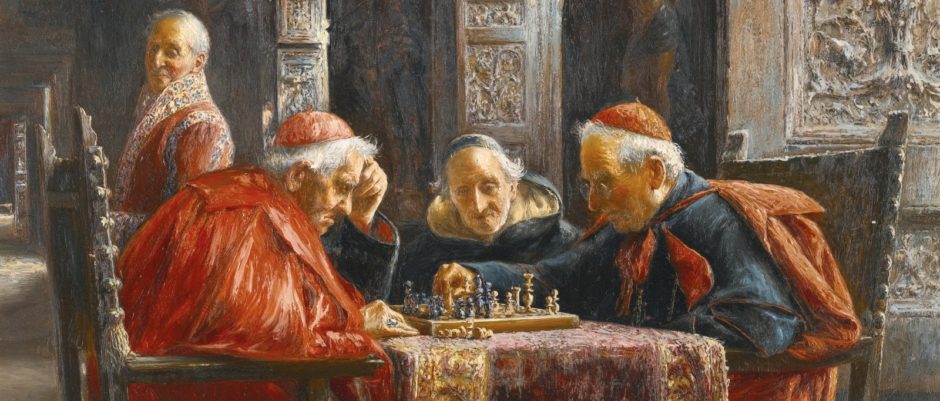
Hmmmm…. wait…
I suspect we are being made game of.
[youtube:http://www.youtube.com/watch?v=qxzbUAo-MSQ]
Today is – in the reformed, post-Conciliar calendar – the feast of both Sts. Joachim and Anna, the parents of the Blessed Virgin Mary, grandparents of the Savior. In the traditional calendar it is the feast of St. Anna.
Here is their entry from the 2005 Martyrologium Romanum.
Memoria sanctorum Ioachim et Annae, parentum immaculatae Virginis Dei Genetricis Mariae, quorum nomina ab antiquis traditionibus christianorum ex Iudaeis servata sunt.
I have relics of both Joachim and Anna.


Also sharing the reliquary are St. Nicholas (yes, Santa Claus) and St. Paul, the Apostle, and St. Blaise, of throat blessing fame.
Maybe someone would like to render the Latin of the 2005 MartRom entry into perfect, smooth English?
From the blog of CNS:
Power outage at USCCB, CNS
Power is out this morning at the U.S. Conference of Catholic Bishops after a line of severe thunderstorms rolled through Washington yesterday afternoon. And since we’re in the USCCB building, it means we may not be able to open today. More later.
What is there to say?
From the Latin Mass Society in England:
LMS Residential Training Conference for Priests Wishing to Learn the Extraordinary Form of the Roman Rite (Traditional Latin Mass) at Downside Abbey, Somerset.
Bishop Athanasius Schneider to attend Conference
The Latin Mass Society has announced that Bishop Athanasius Schneider ORC, Auxiliary Bishop of Karaganga in Kazakhstan, will be attending the forthcoming priests’ training conference to be held at Downside Abbey from Tuesday 10th to Friday 13th August. Bishop Schneider will celebrate a Solemn Pontifical Mass in the Extraordinary Form in the Abbey Church at Downside on Thursday 12th August at 11.00am. He will also deliver a lecture as part of the conference.
Around 30 priests are expected to attend the conference where tuition will be given in the celebration of Mass in the older form. Some will be beginners, and will be studying Low Mass; whilst others with more experience will be expanding their skills to include Missa Cantata and Missa Solemnis. Tuition will also be provided for altar servers.
Bishop Schneider is best known for his defence of the traditional practice of receiving Holy Communion on the tongue and kneeling. His book, Dominus Est, originally written in Italian but now available in English, deals with this subject in some detail.
The public will be able to attend the 11.00 am Mass in the Abbey Church each day of the conference, but will be particularly welcome at the Pontifical Mass on the Thursday.
There are a few last minute places available at the Downside conference. Priests and potential servers interested in attending should contact the Latin Mass Society by telephoning 020 7404 7284 for further information and an application form.
[..]
For further information, please contact John Medlin, General Manager, or James Murphy, LMS Office Manager, on (T) 020 7404 7284;
(F) 020 7831 5585; (E mail) info@latin-mass-society.org
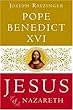 When I was writing a response to an email query, I looked up a link for Pope Benedict XVI’s book Jesus of Nazareth (Vol. 1).
I found that – at the time of this writing – it is on sale (at least for US buyers) through Amazon. Hardcover – $9.98.
If you don’t have the book, I suggest thinking about getting it at this price. A good gift, perhaps. Have an extra copy to mark up as you read.
His Holiness’ book has one of the best explanations of the uses of and limitations of the so-called historical-critical approach to Scripture, how divine inspiration worked, and very useful material for reflection on, for example, the Lord’s temptations in the desert.
FYI & FWIW
And don’t forget to refer to Benedict XVI as the "Pope of Christian Unity".
A glance through the Martyrologium Romanum today will produce astonishment.
Among the many saints listed today you will find,
St. Charbel
St. Christina, virgin and martyr
Sts. Boris and Gleb
St. Balduin
St. Cunegunda
Bl. Nicholas Garlick, Robert Ludlam, and Richard Simpson
Bl. Jopseh Lambton
St. John Boste
A whole rft of Spanish martyrs…
And
10*. Sancti Trudonis in Brabantia, baetae Christinae, cognomenato Mirabilis, virginis, quia in ea, tum corpore afflicta, tum spiritu rapta, Dominus mirabiliter operatus est.
 Yes, it is the feast of St. Christine the Astonishing today.
St. Christina was born in Brusthem, Belgium in 1150. She was orphaned at 3. At 21 she reportedly experienced something like an epileptic fit and she appeared that she had died. When Mass was being said for her, her body suddenly levitated to the ceiling of the Church. When the priest commanded her to return to earth, she did. Christine said that she had been to Heaven, Hell, and Purgatory. She was to return to earth to pray for souls in Purgatory. She explained later that she floated up to the roof of the church because she could not stand the smell of the people’s sins. Her description of the damned is sobering.
Probably in part because people thought she was crazy, St. Christina was very shy and avoided people, going so far as to climb trees or hiding in ovens. In those enlightened days many thought she was insane. She lived a very austere life, passing the last years of her life in St. Catherine’s convent in Saint-Trond. She died 25 July 1224.
Wikipedia recounts:
As chronicled by her contemporaries, she threw herself into burning furnaces and there suffered great tortures for extended time uttering frightful cries, yet coming forth with no sign of burning upon her. In winter she would plunge into the frozen Meuse River for hours and days and weeks at a time all the while praying to God and imploring His Mercy. She allowed herself to be carried by the currents down river to the mill where the wheel "whirled her round in a manner frightful to behold" yet she had no dislocations or broken bones. She was chased by dogs that bit and tore her flesh. She ran from them into thickets of thorns, and though covered in blood she would return with no wound or scar.
I have no doubt people were astonished by Christine.
 As far as the other St. Christine is concerned, the 3rd c. virgin martyr, you can visit her tomb and a nice catacomb in Bolsena in northern Lazio near Tuscany. Her tomb, which in centuries past was highly sought and venerated, is in the very church where the Eucharistic miracle occurred which sparked the feast of Corpus Christi. Bolsena is on the Via Francigena, which stretches between the doorway of Canterbury Cathedral and the threshold of the Apostles Peter and Paul in Rome.
I recommend that you prepare a nice supper tonight and enjoy, in honor of the Christines and other saints celebrated today, a glass of the nice and inexpensive Tuscan red Santa Cristina made by Antinori.
It is not, perhaps, an astonishing wine, but it will fit in every budget and it will make this day a little more special.
Herein we compare the lame-duck ICEL version of the 3rd Eucharistic Prayer now still in use with the new, approved and improved translation which we will soon be able to hear in our Churches.
The new translation of the Roman Missal will help the whole Catholic Church, whether people want to attend the newer form of Holy Mass or not. When the tide rises all the boats rise with it. Therefore, the implementation of the new translation is of paramount importance for the whole Church.

Thus, we hear today the lame-duck version and then the new version of the 3rd Eucharist Prayer. Many people have read it, but… have they heard it?
In the reading of the two versions of the Eucharistic Prayer, I try to keep my personality out of the way and not impose too much on the text. I just want you to hear the text. Besides, far too many priests try to read with meaning… it’s like drowning in syrup.
I make lots of digressions and rant a bit about various topics.
For this PODCAzT I chose some music from 1966, just to give you some context and zeitgeist. I do this because I include a text from a book published in 1966 by the famous architect of the new Eucharistic Prayers for the Missale Romanum, Cipriano Vagaggini.
Podcast: Play in new window | Download
Subscribe: RSS

103 10-05-24 The new translation of the 2nd Eucharist Prayer; Fr. Z digresses and rants
102 10-05-21 Exploring the new English translation of the Roman Canon; voicemail
From a reader:
Recently very good friends of mine told me that is is probably a sin to have read the Harry Potter books – even as a child with no intent of getting involved in "magic" or anything of that sort. They have heard from a priest that the names used in the book are the names of real demons and that reading it somehow attaches these demons to you.
I’ve done some research and I really can’t find much credible information to back up what they’ve said.
While it seems that individual priests/bishops have held a wide variety of opinion on whether or not one should read the books, I can’t find any authoritative Church teaching that says you should confess having read the books.
Am I correct in assuming that this is not a big deal?
There is no authoritative Church teaching that says you cannot read these books. Furthermore, for good or for ill, there is no longer any office Index of Prohibited Books (and my merely mentioning that will have all sorts of people posting here comments about how we need the Index).
At the same time, I won’t say it isn’t a big deal when it comes to children. What children read, in those formative years, is a big deal.
It seems to me that this is a case in which parents should make the choice. They should be reading their children’s books before their kids read them and then decide what to do.
The fine author Michael O’Brian – who did not like the first Harry Potter books at all – suggests that there are some books that are perfect for kids to read on their own, some that cannot ever be read, many that kids can read together with parents so that parents can help them sort things through.
I think the Harry Potter books are in this third category.
I have read all of them. "But Father! But Father!", some are saying even now. "Why did you waste your time on those? Shouldn’t you be reading… I dunno…. Spinoza?"
Frankly, I rather like espionage books. The last one I read was a ripping good yarn by Alan Furst, who has an amazing ability to set a scene. It’s like reading a film noir, if that makes sense. Right now I am reading The Grand Jihad: How Islam and the Left Sabotage America by Andrew C. McCarthy. I do not recommend it for junior, but perhaps college age students should get this. I digress.
I think it behooves priests to be aware of powerful influences in society, popular culture. Also, I read fast. And these are children’s books we are talking about. They are not exactly text books on string theory. Moreover, I checked the Harry Potter books out of the library rather than buy them.
But I admit that I have not been inclined to listen to Lady Gaga. A lacuna, surely, in my cultural formation. Still, I am able to pronounce on her music. BAD. Don’t waste your time on her stuff until you have memorized all the lyrics of Frank Sinatra’s opera omnia. But I digress.
I found that, as they went along – we are back to the Potter books now – there were some good elements in them. For example, the kids involved, while making mistakes (and I think kids make mistakes) eventually were faced with making choices involving self-sacrifice for high purposes. Also, there was little question about who was bad and who was good, which is important. One character winds up being a bit ambiguous in that regard, but in the end you sort out the puzzle. It seems to me that the author herself evolved in their writing.
About the magic thing. Many good books have magic in them. I wouldn’t deprive children of the great experience of reading, for example, Tolkien‘s books. I would only be concerned were children to want in any way to play at casting spells in any serious way, etc., or be a witch in the worse sense… I mean even worse than some of the staff of the seminary I was in, that sort of thing. I would absolutely forbid children to have anything to do with things associated with black magic. Some will say that the Potter books are in fact associated with black magic. I am not convinced that they are, except when the bad guys are up to their nefarious plots. And when Harry himself uses a dark spell – things go terribly wrong and he learns a horrible lesson.
Kids make mistakes.
Back to the question: No, unless your Mommy told you not to read those books, and you read them anyway, you don’t have to confess that you read about Harry Potter and his adventures.
For additional reading on the confusion surrounding the books, you might want to look at this story on Lifesite.
I am sure there could be a good, vigorous and spirited discussion in the combox, so long as people stay on target and remain more concise than I have been in answering.
NB: There may be "spoliers" in the discussion that follows. I don’t like spoilers. But it is hard to avoid them in such a discussion, since examples must be provided.
From The Catholic League with my emphases and comments:
BOSTON GLOBE & NYT LACK "ZERO TOLERANCE" RULE
Catholic League president Bill Donohue comments as follows:
Yesterday, a Boston Globe editorial unfavorably compared the Vatican to the American bishops, saying that "Until the church adopts a zero-tolerance policy, justice cannot be served…."
On July 9 and July 17, the New York Times, which owns the Globe, ran editorials voicing the same criticism. The Times editorial of July 17 correctly notes that such a policy means "requiring secular authorities to be alerted from the beginning." Interestingly, neither newspaper has such a policy of its own.
Section IV of the New York Times Business Ethics Policy (which also governs the Globe), says, "Any employee who becomes aware of any conduct that he or she believes to be prohibited by this Policy or a violation of the law," is expected to "promptly report the facts" to "any supervisor or the legal department." (My italics.) It says nothing about contacting the authorities. [Say it ain’t so!] Moreover, their policy says that if an employee has been found guilty, "appropriate and corrective action up to and including termination" will take place. Even then it says nothing about contacting the authorities! [ShaZAM!]
Yesterday, we contacted three persons on four different occasions who work in the Boston Globe’s Human Resources Department about this issue. No one responded.
This settles the issue.
The New York Times and the Boston Globe find it unwise to adopt the same policy regarding employee misconduct—including instances where the law is broken—that it condemns the Catholic Church for not adopting worldwide.
So if a priest is alleged to have groped a parishioner, the cops must be called. But even after an internal probe reveals that an employee at the Times or Globe is guilty of the same offense, the cops should not be summoned. The hypocrisy is vile.
Contact the editorial page editors, Andrew Rosenthal at the Times and Peter Canellos at the Globe: andyr@nytimes.com and canellos@globe.com

Coat of Arms by D Burkart
 emmatag1126 on Thoughts about the collision of the Holy See and the SSPX. Wherein Fr. Z rants.: “Also, the Declaration said that we can be saved only through the Roman Catholic Church, which unfortunately leaves out my…” on Thoughts about the collision of the Holy See and the SSPX. Wherein Fr. Z rants.: “I just wanted to say how much I appreciate your charity and well-worded wishes/prayers for hearts to change. Whenever I’m…”
 on ROME 26/5– Day 52: lace imitates God’s beauty enlaced in flowers: “Fr. Z: It wasn’t until I started reading your writings a few years back that I realized how important vestments…” on ROME 26/5– Day 52: lace imitates God’s beauty enlaced in flowers: “Speaking of age, I think I am lucky not to be in my teens or even early twenties right now.…”
 on ROME 26/5– Day 52: lace imitates God’s beauty enlaced in flowers: “The “seriously cool APP” Father Z is referring to is the Ava Maria Clock which if you have not downloaded…”
 on ROME 26/5– Day 53: Persevere!: “Black to move and mate in 4 1) … Qd1+ 2) RxQd1 (or Kh2) RxRd1+ 3) Kh2 (forced) Be5+ 4)…”
 on ROME 26/5– Day 52: lace imitates God’s beauty enlaced in flowers: “@Charivari Rob: How about calling it the Old Chestnut Award? It will probably only be slightly less feared than the…”
A Daily Prayer for Priests










They find you a pro-life agent in your area who commits to giving a portion of the fee to a pro-life group!

PLEASE subscribe via PayPal if it is useful. Zelle and Wise are better, but PayPal is convenient.
A monthly subscription donation means I have steady income I can plan on. I put you my list of benefactors for whom I pray and for whom I often say Holy Mass.
In view of the rapidly changing challenges I now face, I would like to add more $10/month subscribers. Will you please help?
For a one time donation...



Help Monks in Wyoming (coffee – UPDATED LINK) and Norcia (beer) and the wonderful "Soap Sisters" of Summit, NJ!


Please follow me on Twitter!










Visits tracked by Statcounter
since Sat., 25 Nov. 2006:


