Vespers at Brompton Oratory and some thoughts

Yesterday I participated at Vespers at the Brompton Oratory in choro.  My, they are precise around the place, I can tell you.

The psalms are sung, as pretty much everything Gregorian as I can tell, with organ accompaniment.  That has the advantage of keeping the pitch from sliding, but it does detract, I think from the sound of it.  The style of singing psalms at the Oratory is both a bit brisk and on the light side.  I wonder if the sound of the clerics in the sanctuary can actually be heard in the nave.

Their precision of movement reveals confidence and practice.  It is second nature in many respects.

It reminded me that people (parish priests, mainly) who are aiming at introducing chant or the older form of Mass, shouldn’t get trapped in the thought that they have to be perfect from the very beginning.  Things take time.  They become more comfortable over time.

We mustn’t let the perfect be the enemy of the good, especially when starting out with something new.

Here is what things looked like at the Oratory from my perspective as they prepared to expose the Blessed Sacrament.

The music for Vespers:

3.30 pm   Solemn Vespers & Benediction
Music:
Vexilla regis prodeunt  Gregorian chant.  
Magnificat Tone 1  Lassus.
Adoramus te Christe  Nanino. 
Toccata I  Froberger.

Seeing Nanino there make me think of the late Msgr. Richard Schuler, who over his 33 years as pastor of St. Agnes in St. Paul, another place which had wonderful and precise Masses with great music, slowly built up a great liturgical program.   It was brick by brick.

Such a project presupposes that the priest has time to work on it, build it slowly.  There must be consistency in leadership and vision, which doesn’t happen if priests are being moved all the time.

At the end, there was Veneration of a Relic of the Cross at one of the side altars in the transept.  Yours truly is at the far end of the balustrade, in the center.  That photo and many more are to be found here.

Posted in My View |
28 Comments

QUAERITUR: priestly handwashing before Mass

This came by e-mail:

Dear Father,
 
As always, thanks for all your work on your blog.
 
I had a question regarding the handwashing of the priest before Mass in the Extraordinary Form (and optionally in the Ordinary Form).
 
Does the priest use soap and water for the hand washing?  And does he do this in the sacrarium?  I have heard several different answers on both parts from different priests.

A good question.

This really should apply to the sacred ministers and even those who serve, I think, even before putting on the surplice, which had its accompanying prayer.

Many people know about the prayers a priest is to pray as he puts on his vestments for Holy Mass.  They are beautiful and highly significant.  Their loss as a regular part of priestly practice was a loss for priestly identity.  I am glad to see they are being recovered by many younger priests.

What many people don’t know, however, is that the priest and sacred ministers were always to wash their hands before vesting, while reciting a prayer, … which we can get to below.

Already in the ancient Church there was a firm understanding that the priest especially had to be properly disposed to celebrate Mass.  He had to have the correct intention, and mental and physical disposition.  The physical disposition included being clean. 

Lay people have to be properly disposed too.  They must be in the state of grace to receive Communion and they must have fasted.  Also, there is still a ritual "washing" with the sign of the Cross with holy water, which harks to the ancient washing of hands and feet at fountains outside the church.  I think we can view the Asperges in this light, as a matter of fact: there is a ritual cleansing of mind and body before Mass begins.  I digress…

The priest for centuries had a long series of prayers to recite even before vesting which he was to recite pro opportunitate.   Since Carolingian times, this usually included washing of hands before vesting.  There was sometimes even a ritual divesting of outer clothing, putting on special shoes, etc.  Also in medieaval times there was even a moment for combing the hair with its own prayer referring to the seven-fold gifts of the Holy Spirit!   When bishops wold comb their hair, a towel would be placed around his neck and the deacon would solemnly hand the comb to him.  Imagine that today….  In some places there was not only a washing of the hands but also the face, etc.
 
As I said, outward preparation was considered important. The hand-washing prayer above, however, seems to be later.  In any event, this practice and prayer made its way into the Roman Rite.


Here is the prayer priests of the Roman Rite are to recite when they wash their hands before vesting:

Da, Domine, virtutem manibus meis ad abstergendum omnem maculam ut sine pollutione mentis et corporis valeam tibi servire.

The word virtus can be "virtue", of course, but we can drill at it a bit.  Try this from the Lewis & Short Dictionary:  "manliness, manhood, i. e. the sum of all the corporeal or mental excellences of man, strength, vigor; bravery, courage; aptness, capacity; worth, excellence, virtue, etc."

I find this provocative.  Men should be doers and the work of saying Mass is truly "work" in the deepest sense.  Hands are deeply connected to work as would be, I think, his brow.

Virtus is by extenstion also "virtue" in the moral sense, as well as the skill for military prowess.  The next vesting prayer, for putting on the amice, also has a military overtone, taken from perhaps St. Paul’s imagery of armor.  The priest uses the amice as the "helmet of salvation" to drive sway the attacks of the enemy, the devil.

Going on, abstergeo is "to wipe away (any thing disagreeable, a passion, etc.), i. e. to drive away, expel, remove, banish".  Pollutio is "defilement, contamination, pollution".  It has, of course, not just a meaning of dirt or filth in the physical sense, but also in the moral sense.  Pollutio was the word usually used from the mediveal period onwards for the discharge of semen without sexual intercourse.  This application of pollutio is probably due to the writings of John Cassian (+435), who had some seriously dire things to say about … just about everything.  To make a long story short the prayer may have some overtone against masturbation (from manus and stuprare "to defile; to dishonor by unchastity, to debauch, deflour, ravish, stuprate).  We might want to think about the older version of the quite ancient hymn sung for Compline, Te lucis ante terminum which had this second verse:

Procul recedant somnia
Et noctium phantasmata,
Hostemque nostrum comprime,
Ne polluantur corpora.

I don’t want to push this too far, but I think there may be a layer of meaning of this in the prayer.

So, let’s get at this prayer:


OUR VERSION:
Give manly power to my hands, O Lord, in order to cleanse every stain, so that I may be able to serve you without defilement of mind and body.


Now to the question.

I don’t think soap would have to be used, but I think it is a good idea.  Why not actually wash your hands?  There is a practical dimension of keeping the vestments clean and the vessels free of oil from the hands. 

I remember many years ago when in Rome I lived with the rector of the Basilica of St. Cecilia and during that summer before seminary began I went every morning to serve Mass within the cloister of the Benedict nuns in the convent of St. Cecilia: yes, the place where the lambswool was worked, etc.  The rector, who was one of the papal masters of ceremony, very pointedly directed me to wash my hands at a marvelous lavabo in the cloister across from the door of the sacristy before entering and putting on my surplice.  There was soap, of course, and always fresh towels.  

Those days loaded me up with some fascinting anecdotes, which would only be digressions here.  So… I think soap is a good idea.  

And no, I don’t think the sacrarium really has anything to do with this washing.  It may be that in older churches the lavabos and sacraria are one and the same, such as perhaps in the sacristies of some old Roman churches, etc., but mostly I think they would not be.  There is no reason why the gray water from washing hands would have to go down the sacrarium.

Short questions.  Long answer.

But it is interesting to get at what the prayer really says.


Posted in ASK FATHER Question Box |
15 Comments

Plating up the “jump in the mouth”

The other day I posted about the minestrone I prepared for a supper with a guest.

I was going to post the second course the next day, but realized that the next day, yesterday, was a Friday. Some idiot who hates decent food well-prepared and presented was sure to complain that he saw a picture of meat on the blog.

In any event, I made saltimboca alla romana.

My guest brought the veal, and I had some prosciutto obtained from the "big city".

Alas the veal had been frozen, so it needed a bit of care.  I wound up having to work pieces of it together as I pounded it out.  Thus it required some pinning together.  Since I only has big skewers and no toothpicks around, I had to cut off the ends.

For this you use veal, and leaves of sage, beneath the slices of prosciutto.

So, into the pan it goes.  You use butter and olive oil, a bit of salt and pepper.  Deglaze with a little white wine.

Green beans are common with this sort of meal and they are in season and abundant.  I steamed them.

Posted in My View |
24 Comments

QUAERITUR: “novus ordo” vestments without orphreys for TLM

A question came by e-mail:

Dear Fr Z,
 
I am hoping you can help me with a question about vestments.  Is it permissible for priests praying the Extraordinary Form of the Mass to wear "novus ordo" vestments, i.e., Gothic style WITHOUT ORPHREYS?  Is this spelled out anywhere?
 
Our pastor has given permission for First Saturday EFM, to be said by retired priests we can line up, not himself.  I am on the committee to prepare for it and to gather what the parish does not presently have available.  We have some not-outrageous gothic novus ordo chasubles & stoles.  If they do NOT need to have an orphrey, we could obtain just the maniple, burse, and chalice veil.


First, I don’t think there is any such thing as a "Novus Ordo" vestment.  No special style of vestments is designated for the Novus Ordo.   I think they ought to be in good taste and, to my mind, in continuity with tradition.

These are not.

Be sure the the vestments are of good material, tasteful, in good repair.

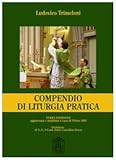
I did check Trimeloni and, on p. 255, found the comment (#269) that the chasuble should be what the Italians call a pianeta "in forma romana"… that is to say, the Roman chasuble.  This form is sometimes called a "fiddleback", though it isn’t.  The Roman-form has specific proportions and a specific pattern of "orphreys".

And Trimeloni also says that the Roman pianeta shouldn’t have the "forma primitiva", by which I think is mean the "Gothic style".  It permits the more ample style of the pianeta we sometimes call this the taglio filipino:

Of course outside Rome and Italy fuller "Gothic" vestments were in use everywhere.

The vestment Trimeloni doesn’t like at all is the actual "fiddleback".

I am just digressing:

In a pinch, you can use any decent style of vestment, though the Roman Rite really prefers the Roman vestment.

Posted in ASK FATHER Question Box |
31 Comments

A late summer supper

I had a guest tonight, to watch the convention coverage, and therefore made supper.

We started with a minestrone.

Here are some of the ingredients… fresh and Sabine.

And….

The setting:

The first course.

The second course…

Saltimbocca alla romana.

The beginning….

More later… perhaps.

Posted in My View |
15 Comments

Some Sabine views and news

I recently had the pleasure of a guest for about a week at the Sabine Farm.  And when there are guests, I cook.

The Sabine Farm has been quite lovely these days, with cool morning, warm days, and – for a while yet – prolonged evenings.

Rosy-fingered dawn will typically develop in this guise:

For me, my morning fast break is generally pretty simple, some toast and espresso or very strong filtered dark roasted coffee, but – when there are guests – I will often do more.  Here we have some tomatoes from the garden and a small piece of steak, grilled, and a mess of eggs scrambled with some fines herbes, whole wheat toast and various sauces, when desired to zip it up.  I have a couple that are nearly worthy of the flames of eternal perdition, and which tend to evoke a very sincere act of contrition, but they weren’t set out for this crew.

Supper.  

For the Feast of St. Augustine I picked a passel of pacchino, very zippy small savory tomatoes, and lots of basil, along with sprigs of green fennel seeds, sauteed them over extreme heat in a cold press olive oil from California, through the Olive Press this time I think, put it over linguine into which I had cut pieces of fontina cheese, since it melts nicely.  Adding just a dash of the water from the pasta, with the bit of starch and moisture created a smooth background for the tomatoes and fresh herbs. 

We managed to get it down.

Then I produced the coniglio in umido.  I had only kalamata olives to work with, but they were abundant.  After browning the whole rabbit, cut up, with the innards of course, I added white wine and springs of rosemary, again the green fennel seeds, sage parsley and thyme.  At the end I put in some few strips of bell peppers, of varied color, part green part red.  About half way into the hour or so of cooking time, I added the olives.  It was all done on the stove in a large cast iron skillet.  In the meantime, I had soaked some peeled sliced potatoes in salt water and, then, dried off, stirred through with olive oil, salt and chopped rosemary and put them in the oven at 400F to brown.  Which they did.  And which we ate with the rabbit.

A meal like this needs a cigar, afterward, with the necessary port, etc.  Here is a fine Macanudo with a splendid ash, which has developed nicely in the Sabine humidor.  They were a gift of the inimitable Fabrizio when he came to visit in June.  Penjing looks on with approval, as does Irohamomiji.

The day ends with a nice view and compline.  The Sabine Chapel is nice when lit up.

Posted in Fr. Z's Kitchen, My View |
26 Comments

WDTPRS: 16th after Pentecost – COLLECT

Here is a part of a column I wrote for The Wanderer to which you ought be subscribing.
_______________

This Sunday’s dense Collect survived the scissors and paste-pots of the Consilium during the 1960’s and lived on in the post-Conciliar Missale Romanum: it is the Collect for the 28th Sunday of Ordinary Time.  This prayer, used for centuries, in the Sacramentarium Hadrianum, a form of the ancient Gregorian Sacramentary.

COLLECT (1962MR):
Tua nos, quaesumus, Domine, gratia
semper et praeveniat et sequatur,
ac bonis operibus iugiter praestet esse intentos.

This is elegance. This is a lovely prayer to sing. Latin’s flexibility, made possible by the inflection of the word endings, allows for amazing possibilities of word order.  Latin permits rich variations in rhythm and conceptual nuances.  For example, the wide separation of tua from gratia in the first line is a good example of the figure of speech called hyperbaton: unusual word order to produce a dramatic effect. It helps the prayer’s rhythm and emphasizes tua gratia.    The use of conjunctions et and ac is very effective, as we shall see below.  

The juxtaposition of praeveniat with sequatur reminds me of a prayer I used to hear at my home parish, now greatly missed.  The Tuesday night devotions there, which featured the Novena of Our Mother of Perpetual Help by St. Alphonsus Liguori (+1787), always included: “May the Lord Jesus Christ be with you that He may defend you, within you that He may sustain you, before you that He may lead you, behind you that He may protect you, above you that He may bless you. In the name of the Father, the Son and the Holy Spirit.”

Let’s drill into vocabulary.  The adjective intentus, means “to stretch out or forth, extend” as well as “to strain or stretch towards, to extend.”  Think of English “tend towards”. The packed Lewis & Short Dictionary states that intentus is also “to direct one’s thoughts or attention to.” 

Folks, looking at a word like this should convince any of you with children that they must study Latin.  A firm grip on Latin will give shape to their ability to reason and provide insights into the meaning of our English words.  Roughly 80 percent of the entries in an English dictionary reveal roots in Latin. Over 60 percent of all English words have Greek or Latin roots. This is over 90 percent in the sciences and technology. Some 10 percent of Latin vocabulary merged into English without an intermediary language such as French.  Words from Greek origin often entered English indirectly through Latin.  Give your children, and yourselves, this splendid tool.

Latin has several particles that join parts of sentences and concepts together: et,  – que, atque or (ac), etiam, and quoque.  These little words all basically mean “and” but they have their nuances. For example, et simply means “and” while – que (always “enclitic”, i.e., tacked onto the end of a word) joins elements that are closely enough associated that the second member completes or extends the first.  Another conjunction, atque (a compound of ad and – que) often adds something more important to a less important thing.  The useful Gildersleeve & Lodge Latin Grammar points out that “the second member often owes its importance to the necessity of having the complement (– que).”  Ac, a shorter form of atque, does not stand before a vowel or the letter “h” and is “fainter” than atque. Ac is much like et.  Briefly, etiam means “even (now), yet, still”.  Etiam exaggerates and precedes the words to which it belongs while quoque is “so, also” and complements and follows the words it goes with. There are some other copulative particles or joining words, but that is enough for now. 

Let’s nitpick some  more.  Our Collect has two adverbs, semper and iugiterSemper is always “always”. Iugiter, however, means “always” in the sense of “continuously.”  A iugum is a “yoke”, like that which yokes animals together.  Iugum (English “juger”, a Roman unit for land measuring 28,800 square feet or 240 by 120 feet), is probably so named because it was plowed by yoked oxen.  Moreover, Iugum was the name of the constellation Libra, the Latin for “scale, balance”.  Ancient scales had a yoke-shaped bar.  Thus, libra is also the Roman the weight measure for “pound”.  Ever wonder why the English abbreviation for a pound is “lbs”? 

The iugum was the infamous ancient symbol of defeat.  The Romans would force the vanquished to pass under a yoke to symbolize that they had been subjugated.  Variously, iugum also means a connection between mountains or the beam of a weaver’s loom or even the marriage bond. 

Today’s adverb iugiter means “always”, in the continuous sense, because of the concept of yoking things together, bridging them, one after another in a unending chain.  We get this same word in the famous prayer written by St. Thomas Aquinas (+1274) used at Benediction of the Blessed Sacrament which is the Collect for Corpus Christi:

“O God, who bequeathed to us a memorial of Thy Passion under a wondrous sacrament, grant, we implore, that we may venerate the sacred mysteries of Thy Body and Blood, in such a way as to sense within us constantly (iugiter) the fruit of Thy redemption.” 

LITERAL TRANSLATION:
We beg, O Lord, that Your grace
may always both go before us and follow after,
and hence continuously grant us to be intent on good works.

On the 28th Sunday of Ordinary Time you who frequent parishes where only English is used will hear the following lame-duck version from

ICEL (1973 translation of the 1970MR):
Lord,
our help and guide,
make your love the foundation of our lives.
May our love for you express itself
in our eagerness to do good for others.

Yes… I did a double-take too.  This version, a perfectly wonderful little prayer for use on a grade school playground, is really how ICEL rendered today’s Collect.  The new draft translation being prepared will be more accurate.  How long will some members of certain bishops conferences strive to block its completion?

Back to happier things: copulative particles!  It is important not to get overly picky about particles or exaggerate their nuances.  Still, today these conjunctions could be important.  That et…et is a classic “both…and” construction. But our Collect has et…et…ac….   The et…et joins praeveniat and sequatur. That pair of verbs is followed by an ac.  The author was providing more than a simply change of pace.  While ac is not a very strong conjunction, the variation leads to a logical climax of ideas.  This is why I add “hence” to my literal version. 
u
As you read or, better yet, listen to the prayer being sung, attend to that tua gratia (“your grace”), underscored by means of hyperbaton.  First, that “tua gratia” can be an ancient form of honorific address, as used today in some countries for nobility and certain prelates: “Your Grace”.  So, in speaking of the gift, we speak of God Himself. Moreover, tua gratia is the subject of all the verbs.  We beg God, by His grace, always to be both before us and behind us.  We pray for this in order that we may always be attentive to good works.  Our good works bound up in His grace. 

We rely on grace so as not to fail in the vocations God entrusts to us.  God gives all of us something to do in this life.  If we attend to our work with devotion He will give us every actual grace we need to accomplish our tasks.  He knew us and our vocations from before the creation of the cosmos, and thus will help us to complete our part of His plan, so long as we cooperate. Living and acting in the state of grace and according to our vocations we come to merit, through Jesus Christ’s Sacrifice, to enjoy the happiness of the heaven for which God made us.   

In our prayer we recognize that all good initiatives come from God.  When we embrace them and cooperate, it is He who ultimately brings them to completion.  He goes before.  He follows after. Our good works have merit for heaven only because God inspires them, informs them, and brings them to a good completion.  He works through us, His knowing, willing, loving servants.  The good deeds are truly ours, of course, and therefore the reward for them is ours.  But God freely shares with us His merits so that our works are meritorious.  

Today’s Collect stresses how important our good works are for our salvation.  They are manifestations of God’s grace, indeed, of God’s presence.  We pray God will lavish His graces on us.  In turn, we should be generous with our good works.

Posted in WDTPRS |
6 Comments

WDTPRS: 22nd Sunday of the Year – COLLECT

Here is some work I did a while back on the Collect for the Mass for the 22nd Sunday of Ordinary Time.  It was originally in The Wanderer.

COLLECT – (2002MR):
Deus virtutum, cuius est totum quod est optimum,
insere pectoribus nostris tui nominis amorem, et praesta,
ut in nobis, religionis augmento, quae sunt bona nutrias,
ac, vigilanti studio, quae nutrita custodias.

With small differences this Collect is based on a prayer in the ancient Gelasian Sacramentary, subsequently in the 1962 Roman Missal on the Sixth Sunday after Pentecost.  In the Anglican Church’s 1662 Book of Common Prayer for the Seventh Sunday after Trinity (The Alternative Service Book of 1980 for Pentecost 17) we find: “Lord of all power and might, who art the author and giver of all good things: Graft in our hearts the love of thy name, increase in us true religion, nourish us with all goodness, and of thy great mercy keep us in the same.”

17th century English schismatics got it right.  Can’t we?  But what will you hear on Sunday?

ICEL (1973 translation of the 1970MR):
Almighty God,
every good thing comes from you.
Fill our hearts with love for you,
increase our faith,
and by your constant care
protect the good you have given us.

*ARRRGHHH!*
 
What does the prayer really say?  Your indomitable Lewis & Short Dictionary explains that insero means “to sow, plant in, engraft, implant.”  I really like that “graft”, chosen also by the Anglicans of yore.  Going on, optimum does not mean “perfect”, but rather “best.”  I think we can get away with “perfect”, given that we are applying “best” to what God has. 

Liturgiam authenticam 51 states that “deficiency in translating the varying forms of addressing God, such as Domine, Deus, Omnipotens aeterne Deus, Pater, and so forth, as well as the various words expressing supplication, may render the translation monotonous and obscure the rich and beautiful way in which the relationship between the faithful and God is expressed in the Latin text”.   Today the priest invokes God as Deus virtutum, an expression in St. Jerome’s Latin Vulgate Psalter (Ps 58:6; 79:5 ff; 83:9; 88;9) often translated as “God of hosts.”  Don’t confuse “host” as “army, multitude” with the wheat wafer used at Mass.  Virtutum is genitive plural of virtus,“manliness;  strength, vigor; bravery, courage; aptness, capacity; power” etc.  Jerome chose virtutum to render the Hebrew tsaba’, “that which goes forth, an army, war, a host.”  Tsaba’ describes variously hosts of soldiers, of celestial bodies, and of angels.   In the Sanctus of Mass and in the great Te Deum we echo the myriads of angels bowed low in the liturgy of heaven before God’s throne: Holy, Holy, Holy LORD GOD SABAOTH …. God of “heavenly hosts” or, as ICEL put it in 1973, God “of power and might”.  I think “O mighty God of hosts” conveys what LA 51 is saying we should have. 

LITERAL TRANSLATION:
O mighty God of hosts, of whom is the entirety of what is perfect,
graft into our hearts the love of your name, and grant,
that by means of an increase of the virtue of religion,
you may nourish in us the things which are good,
and, by means of vigilant zeal, guard the things which have been nourished. 

Notice that we pray to God for an increase in “religion.”  I take this to refer to the virtue of religion.

Last week I wrote about the difference between “values” and “virtues”.  Let’s make more distinctions.  The Catechism of the Catholic Church defines “religion” in the glossary toward the back of the newer English edition: a set of beliefs and practices followed by those committed to the service and worship of God. The first commandment requires us to believe in God, to worship and serve him, as the first duty of the virtue of religion (cf. also CCC 2084 and 2135).   The Angelic Doctor says in his mighty Summa (II-II, 81, 1) that religion is the virtue by which men exhibit due worship and reverence to God as the creator and supreme ruler of all things.  We must acknowledge dependence on God by rendering Him a due and fitting worship both interiorly (e.g., by acts of devotion, reverence, thanksgiving, etc.) and exteriorly (e.g., external reverence, liturgical acts, etc.).  The virtue of religion can be sinned against by idolatry, superstitions, sacrilege, and blasphemy.  We creatures must recognize who God is and act accordingly both inwardly and outwardly.  When this at last becomes habitual for us, then we have the virtue of religion.  A virtue is a habit.  One good act does not make us virtuous.  If being prudent or temperate or just, etc., is hard for us, then we don’t yet have the virtue.  This petition in the Collect follows immediately from our desire that God “graft” (insere) love of His Holy Name into our hearts.  We move from the title of God the angels and saints never tire of repeating in their everlasting liturgy in heaven: HOLY, they say, HOLY, again and again forever, HOLY.  Then we beg for all good things to be nourished in us by God as He increases in us the virtue of religion leading to the proper interior and exterior actions that necessarily flow from recognizing who God truly is and who we are. 

This Sunday’s Collect has images of armies.  I think it not a stretch to imagine also orchard or vine tending.  On the one hand, the God of hosts guards the good things we have.  On the other, this same mighty God is grafting love into us and then nourishing it so it can grow.

Posted in WDTPRS |
4 Comments

QUAERITUR: What to wear when serving Mass

I received a question via e-mail:

Father,
Recently we have been trying to introduce the Tridentine Mass to my parish, and fortunately we now have a new priest who is open to tradition. We have yet to overcome several obstacles, including sending our priest to be properly trained, but I am confident our efforts will be realized. I have offered to serve Mass in the Tridentine form and I have ordered the necessary literature and training information. My problem is I have looked online and have had no success in finding instructions on what garb I am to wear. I assume a cassock and surplice, but I was wondering if you could inform me of any rules regarding dress and also a quality site to order from online. These questions may seem very obvious, but my parish is currently very uninformed about most aspects pertaining to the Tridentine form. On a separate note: I am an avid reader of your blog and I truly enjoy your posts.
Thank you for your time.


In a pinch, anything decent would serve, so to speak.  If necessity strikes, wear your "Sunday Best".

However, the traditional garb would be, as you surmise, cassock of some color, black might be best depending on what the priest wants for his servers, and white unadorned surplice of some style.

Posted in ASK FATHER Question Box |
36 Comments

QUAERITUR: TLM servers and kissing stuff

A question was received:

Dear Fr. Z,

I am an altar server at a TLM since last month. I read in a liturgical manual written by a priest of the FSSP that when the server handles the cruets to the priest, he should kiss them before and after receiving them back. So I began doing it. But recently I read that this is a pre-1962 practice. So should it be done?


After consulting Trimeloni, [US HERE – UK HERE] which is a reprint pertaining to the 1962 edition of the Missale Romanum, I confirmed (not that I needed to) that the server kisses things when giving them to and receiving them from the priest.

(p. 421 – #445.5)  At the beginning of Mass the server kisses the hand and then the biretta.  (The he goes and puts the Missale on the stand, etc.)

(p. 423 – #447.1) He kisses the cruet and gives it to the priest, and kisses it when receiving it back.  Both wine and water cruets.  He doesn’t kiss the priest’s hand.

(p. 424 – #448.5) At the end of Mass he kisses the biretta and gives it to the priest, kissing his hand as he does so.  Be SURE, of course, to make sure the middle “point” of the biretta is offered to the priest’s hand.

If the priest saying the TLM would prefer that you not do this, don’t worry about it.  But in 1962 that was the custom.

Posted in ASK FATHER Question Box, Liturgy Science Theatre 3000 | Tagged , ,
36 Comments