QUAERITUR: Should I teach my child to confess sins in kind and also number?

From a reader:

I’m preparing my oldest child for his First Holy Communion. This great little Communion book from TAN publishers instructs the child to confess his sins and the number of times he committed them. Now for myself, in confession I always understood that I only tell the amount of times I’ve sinned mortally. As most children do not commit mortal sin, I’m unsure what to do. I want to instill good habits into my son but I don’t want him stressing over the amount he committed each venial sin. Should I teach him to tell the number of
times no matter?

Yes, I believe you should.  Start forming good habits early.  Don’t stress it to a point where little stupor mundi becomes worried, however.

Also, I am not sure about “children can’t commit mortal sin” thing.  I have looked into the eyes of a three year old.   I’m just sayin’….  o{]:¬)

Posted in "How To..." - Practical Notes, ASK FATHER Question Box | Tagged , ,
16 Comments

A really fun Super Bowl Commercial

Speaking of commercials, this one was GREAT. Most of them were not.

And the music is what I believe I will chose for my first entrance to my cathedral if I am ever made diocesan bishop of anywhere.  Just to set the tone for the upcoming years…. ya know?

Posted in Lighter fare |
32 Comments

POLL ALERT! LOWEST Super Bowl Commercial

Our friends at SERVIAM have a poll going about which Super Bowl commercial lowered the standard for good, acceptable commercials, and made everyone collectively stupider and more vicious.

GO VOTE NOW.

Let’s see if we can boost his voting turn out to thousands.

Posted in POLLS | Tagged , ,
17 Comments

Sounds from Sunday’s Mass at Holy Innocents (Manhattan) – Anniv. of Dedication

Sunday at Holy Innocents in Manhattan, Mass was celebrated for the Anniversary of the Dedication of the Church.

Sounds from the Mass are below.

After Mass and meeting people for coffee afterward, we dashed up to the 80’s on east side for some Hungarian food for lunch.

Sights along the way…

Ah… New York.

I had a little time so I walked over to Bryant Park, one of my favorite places in the city.

On a glorious day.

Back at church for vespers, the dedication candles were aflame.

Later, after meeting a priest friend for supper and heading back to find friends for a libation, I tuned into the game on my iPhone via Slingbox (bless its inventors).

A lovely day.

Enjoy some sounds from my lovely day.

Posted in Brick by Brick, What Fr. Z is up to | Tagged
6 Comments

You know who Bp. Athanasius Schneider is… right?

This is pretty interesting:

Schneider named Maria Santissima in Astana Auxiliary

Bishop Athanasius Schneider, O.R.C. was named Auxiliary Bishop of Maria Santissima in Astana, Kazakhstan.

Bishop Schneider had been serving as Auxiliary Bishop of Karaganda.

It is not often that an auxiliary bishop is moved to be auxiliary bishop of a different diocese.  Even to the metropolitan see.

Bp. Schneider gets around.  It might be easier to get around from Astana, rather than from Karaganda.

And as an auxiliary, without the obligation of the administration of a diocese, he can speak about many things in many places.

Posted in SESSIUNCULA |
14 Comments

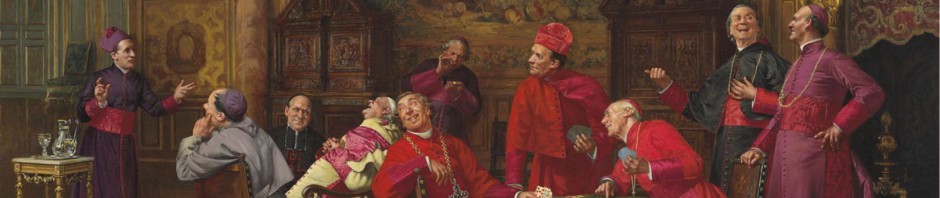
QUAERITUR: How to tell priests you don’t want concelebration.

From a reader:

Is there any way for the celebrant of a Mass to inform other clergy that he prefer that they NOT con-celebrate with him without offending them or seeming to be ultra-conservative or rejecting the accepted practice? Con-celebration seems to be obligatory whenever clergy are invited for a celebration. Attendance in choir dress seems to be non-existent.

You have come, perhaps, to the wrong corner for advice about anything having to do with concelebration.

WDTPRS thinks that concelebration should be safe, legal and rare.

Or maybe that is why you are asking me…. hmmm…

In any event, I think it is very hard for you to say anything, especially if you …

a) are not the locum tenens,
b) have not put it about ahead of time that there will be no concelebration,
c) are in a circle where the priests rush every altar, lemming-like, in their shapeless off-white moo-moos and finger-painted stoles no matter how many Masses they have already (con)celebrated that same day, so that they can stare about in fraternity with as little attention to this Mass as any other that they have …. okay… I am ranting.

If you aren’t the pastor of the place, or the guy who calls the shots, I think you have to keep your mouth shut and permit it. Even if you are the guy in charge, you probably have to permit it.  In some circumstances you have to invite it as well (funerals, for instance – it is simply expected by priests these days).

Similarly, you could, when notes are sent around about a Mass, indicate that there will be no concelebration.  Instead, come in cassock and surplice with biretta (stoles to be provided for communicating priests).  That ought to make some of them scratch their heads.  And it won’t win friends.

I suppose you could make a little speech, if you dare, about how concelebration is not foreseen at this Mass.  If any priest has not said Mass or has no other occasion, you would be happy to set up afterward and serve the Masses for the priests who otherwise would not have the opportunity.  I think such a speech would be met with confused and unhappy stares.

If you are worried about keeping the rubrics tidy, without the usual interlopers milling about, you could sequester concelebrants near, but not at, the altar.

This is all quite awkward.  There are good reasons to concelebrate.  There are good reasons not to have it.  I will not discount the reason of convenience.  Plainly, if you have a whole bunch of priests in one place, it is concelebration is convenient.  If you are a guest and the locum tenens isn’t inclined to help you out, well… concelebrate with a good attitude and smile.

You are going to be up against a certain mentality.

Even quite sensible priests, priests who ought to know better, have strange ideas about concelebration.  They would even constrain or look down on, or even gossip about, priests who for one reason or another chose not to.  I remember an occasion when I accompanied an old priest to a large Mass and he had the intention of being in choir without concelebrating.  One person after another harangued him and badgered him him, trying to get him to go along with everyone else, until he finally leaned in and said into one importunate fellow’s vacant face “I’m in the state of moral sin.”   That shut him up.

Anyway, this is an uphill battle

It is going to take a while to move away from the lemming-like approach to concelebration.  Young priests will be taking over soon.  They are more flexible and far less ideological.

To be clear, if I am with a group of priests, for example, in a fraternal setting such as an annual meeting of a priests’ group I belong to, I am okay with concelebration.  Holy Thursday, most ordinations, some occasions with the local bishop or one’s own bishop, funerals of priests …

Safe, legal and rare.

Very hard to do this, friend.  Very hard to say to a priest he can’t concelebrate in the Ordinary Form.

Perhaps priest readers…. priests mind you… have some suggestions.  I frankly have zero interest in the opinions of lay people insofar as this question is concerned.  This is priest stuff.  Lay people: don’t bother commenting.  Really.  You can eavesdrop.  That includes seminarians and deacons.  Bishops and priests only.  Some priests will want to defend concelebration.  Okaaaaaay… if you must.  Yes, we know that Eastern Catholic priests concelebrate.
Posted in "How To..." - Practical Notes, ASK FATHER Question Box | Tagged
19 Comments

QUAERITUR: After what point of lateness can I no longer receive Communion, fulfill obligation?

From a reader:

I remember my father telling me when I was young that if one arrived after the Gospel at Sunday Mass, one could not receive Communion and the Sunday obligation was not fulfilled. My question has to do with daily Mass. I travel 40 miles each way to work and try to attend a 6:30 Mass before work. I am definitely not a morning person and occasionally arrive right after the priest has read the Gospel. Am I allowed to receive Communion? When that does happen I stay a few minutes after Mass and read the Gospel passage in my Magnificat publication.

Reading texts from Mass on your own is praiseworthy, but it is not the same as participating in their reading during Mass.  One is a private act of devotion.  The other is a liturgical action.

There were different views about limits on lateness, or presence at Mass.  In one view, moral theologians thought that you had to be there at least for the reading of the Gospel onward.  A good view.  The Gospel is important.  In another view, you had to be there from offertory onward at least under the purification of the chalice after Communion.  (Let’s not focus too much on leaving Mass early and getting into a problem about fulfill one’s obligation.)  This is one reason why bells were rung at the unveiling of the chalice at the offertory: that was your demarcation point between being in or out, as it were.

Others will say that you have to be there from the first words of Mass to the very end.  A laudable approach, though a little inflexible.  Yes, there is the Liturgy of the Word and the Liturgy of Sacrifice/Communion/etc.  There is the Mass of the Catechumens and the Mass of the Faithful.  But, however you divide up Mass, Mass is one.  It forms a unity.  So, we should be therefore the whole Mass, right?   To get around the inflexibility part, some of the same people who will say you have to be therefore every breath, will tell you with the next breath that you should go to Communion anyway, even if you were late.  I have me doubts about that.  I’ll get to that below, after I rant for a while longer.

I am inclined to use the old chalice veil to chalice veil idea, at least insofar as “obligation” is concerned.  We need to be as favorable towards people as we can when it comes to any obligations that are imposed on them.  The veil to veil approach seems reasonable and clear cut.

At the same time, when it comes to our involvement in liturgical worship I am not comfortable with the minimalist approach.

In one sense, it is enough the have the priest say the minimum amount of the form of the consecration over bread and wine and then consume it.  Sure, that is “valid”. It is “enough”.  But enough isn’t enough.   Sure, you can look at Mass from the point of view of being there for enough of it, and that is useful for being able to be clear or at ease about your obligations.  The law helps us relax.

The obligation thing and the Church’s law are important.  People should be able to rest easy about their obligations.  Take, for example, a penitent and his penance assigned in confession.  Some dreamy and pastorally sensitive priests who want to make confession spontaneous and chummy and nice will give as a penance – such a harsh word – something like “Think a nice thought someone today!” or “Do a good deed.”.  Sorry, but when I get out of the confessional I wanted a penance I can perform and then know that I have done it and not have to wonder even for a spit second whether I did it or not.

The same goes for Mass attendance and obligation.  Did you fulfill it?  Yes or no?  The demarcation lines and “minimum time there” approach have the benefit of answering that question, though they may leave some deeper questions about our role at Mass unresolved.

So, if you are late for Mass through no fault of your own, and there is no other way to fulfill your Sunday or Holy Day obligation, you have nevertheless done your best.  If you late through your own fault, that is another matter.

I am going to go with an old traditional way of seeing this: chalice veil to chalice veil.  Despite the indisputable importance of the Gospel and the rest of Mass, that’s where I will draw the line because when we have a restriction, we have to restrict our restrictions to the minimum.

Communion?

Reception of Communion is not the mark of having fulfilled your Mass obligation.  You are still obliged to go to Sunday Mass even if you know you cannot receive Communion.  Communion is not the same as getting your parking ticket validated at the restaurant.  Communion is more complicated and more simple.

No one has a gun to your head saying that you must receive Communion at every Mass you go to, even when you are in the state of grace.  You can go… or not go.

Here is my simple answer to whether you can go to Communion.

If you are not sure you have been there at Mass “enough”, and you will have a sense of when that is, then don’t go to Communion.  Don’t make excuses for yourself and introduce doubts about whether you should have gone or not.  Don’t go and you won’t wonder about whether you have to go to confession about unworthy reception.  Keep it simple.  The next time, get to Mass on time and go without having to weigh the odds.

Posted in "How To..." - Practical Notes, ASK FATHER Question Box | Tagged ,
40 Comments

Dissident Irish priests try to create discord and resentment against the new translation

I direct your attention to the Holy Father’s Letter to Catholics in Ireland.  Last year Pope Benedict suggested to the Irish people that they give special attention to traditional forms of piety, prayer and penance.

Now we read that a group of Irish priests have issued a sustained whine about the new, corrected English translation of the Roman Missal.

From the Catholic Herald comes this.

Irish priests claim new Mass translation is ‘elitist and sexist’

By Sarah MacDonald

A group representing more than 400 of Ireland’s 4,500 priests has made an urgent plea to the country’s bishops to postpone the introduction of the new English translation of the Missal for at least another five years.

The call from the Association of Catholic Priests came as the National Centre for Liturgy in Maynooth launched a new publication aimed at explaining and preparing priests and lay people for the changes in the Missal. The new texts will be introduced on November 27, the first Sunday of Advent and the start of the liturgical year.

At a news conference in Dublin, representatives from the priests’ group said the proposed literal translations from Latin had produced texts that were “archaic, elitist and obscure and not in keeping with the natural rhythm, cadence and syntax of the English language”.

The association also criticised the new translation for “exclusivist, sexist language”. [Hmmm.   I they actually used those words, then it is fairly safe to conclude that they are of a certain age and are not inclined to favor anything Pope Benedict proposes.  Break out the tambourines and big-hair perms.]

Fr Dermot Lane, president of Mater Dei Institute of Education in Dublin, said the priests were making an 11th hour appeal to the Irish Catholic Bishops’ Conference and urged the bishops to begin consulting with priests, liturgical committees and lay people to develop new texts that would inspire and encourage the faithful.

“We are passionately concerned about the quality of our liturgical celebration and about the quality of the language that will be used in the way we worship Sunday after Sunday,” he said. “If this goes ahead, instead of drawing people into the liturgy, it will in fact draw people out from the liturgy.” [Rubbish.  No one knows that.  It will be the attitude of the priests as they implement this new translation that will make the difference.  If these priests have problems with their flocks “because of the new translation”, it will because that is they they wanted it to turn out.]

The association said that it was “gravely concerned” that the “word-for-word translation from Latin into a vernacular language … demonstrates a lack of awareness of the insights gained from linguistics and anthropology during the past 100 years”.  [It isn’t a “word for word” translation for one thing.  I would like to quiz the priests who put their names to this thing and find out how many of them actually looked at prayers in the new translation.  Any prayers.  I am not even talking about comparing them side by side with the Latin.  How many actually read the texts?  I’ll wager very few.  They are parroting the dissent of their pack-leaders.]

[…]

[Get this…] The priests’ association suggested that the Irish bishops follow the example of the German bishops and assert the right to make their own decisions regarding the celebration of the liturgy in Ireland. [There it is.]

Fr Gerard Alwill, pastor of a rural parish in the Diocese of Kilmore, said during the news conference: “We are saying very clearly that this new translation of the Missal is not acceptable… We are deeply concerned that if these new texts are imposed, they could create chaos in our church. [Sorry, but… who is creating the chaos?] Our Church doesn’t need chaos at this time. [I suggest to Fr. Alwill that his time would be better spent in reflection on the Holy Father’s Letter to Catholics in Ireland.]

“How can we, the priests, be asked to introduce this with any conviction when we ourselves haven’t had any input into it and when we have such serious doubts and reservations about it?” he added. [Interesting attitude: If I didn’t get to make it, I don’t want it.  Ordained in the, say, 70’s?]

Fr Alwill called upon priests, parish pastoral councils, religious men and women and lay people to read the texts [there’s a start] and to raise any concerns they may have with their local bishop. [To what end?  At this point all they are doing is fomenting discontent.  Cui bono?]

Posted in Throwing a Nutty | Tagged ,
84 Comments

NYC Sunday 6 Feb – TLM Dedication of parish church – Holy Innocents’s, Manhattan (Indulgence)

This Sunday, 6 February at 10 AM, the Church of the Holy Innocents celebrates the 110th anniversary of its consecration by Archbishop Michael Corrigan in 1901.

A special Mass is celebrated for the Anniversary of the Consecration of a Church, the Mass Terribilis est, in white or gold vestments (not the green vestments that would otherwise be worn at Mass for the 5th Sunday after Epiphany).

Vespers for the Consecration of a Church will follow at 3PM.  There will be Exposition and Benediction of the Blessed Sacrament.

Anyone who attends the Mass or Vespers at the Church of the Holy Innocents on the day when the anniversary of its consecration is celebrated may earn a plenary indulgence under the usual conditions.

Posted in Just Too Cool, The Campus Telephone Pole | Tagged ,
3 Comments

An award site. Will you help WDTPRS?

At this point one Catholic blog has a pretty good chance of coming out on top in the Religion category of the Blogger’s Choice Award.

Take a look at the line up (by clicking below) and then decide.

You have to register.

Blogger's Choice Award

Posted in The Campus Telephone Pole |
Comments Off on An award site. Will you help WDTPRS?
























