It is the First Friday of January and of a new year of salvation.
Think about 1st Friday devotions.
WDTPRS POLL
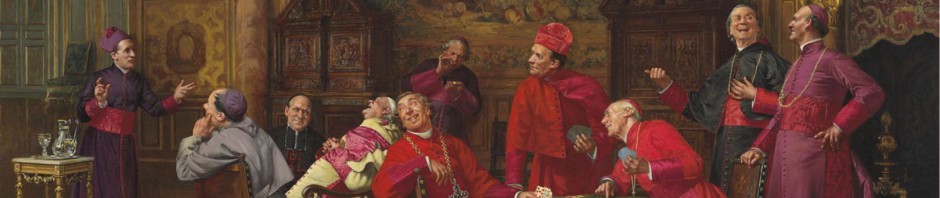
It is the First Friday of January and of a new year of salvation.
Think about 1st Friday devotions.
WDTPRS POLL
On the blog Called By Name we have the description from Fr. Kyle Schnippel, Director of Vocations for the Archdiocese of Cincinnati, about his first time as deacon for a Solemn TLM. My emphases and comments:
Introibo ad Altari Dei…Last night, I had the opportunity, for the first time, to attend/assist/celebrate a Traditional Latin Mass for the first time in public. (While on retreat after Christmas, I said a daily TLM in private, which is much preferable, to me, than saying the NO in private, but I’ll get to that in a later post, hopefully.)
Those following my twitter feed (@fatherschnippel) noticed the following yesterday, late morning: “Message to Cinci folk: TLM at OSM, 7:00 PM, tonight, Epiphany Solemn Mass, urs truly as Deacon”
Yep, first time: Deacon at a Solemn High Mass! A bit of training from a very good MC, and off we went. To say it is different than the NO Mass is, umm, selling it a bit short. I am still trying to get my head around the experience.
First thought: strangely, it is much harder to ‘pray’ this Mass than the NO as a priest. [This notion of “praying” the Mass as a sacred minister needs some attention. The fact that you are doing it reverently is itself a kind of prayer. There are different ways to pray, after all. It is great to pray with meditation, but paying attention to what you are doing is also a good thing. Liturgical action has, for the sacred minister, also a practical issue: being workman-like. You can’t pray as a sacred minister as if you were attending Mass, or you were celebrating privately with leisure. Also… how is it you pray during the Novus Ordo?] At least these initial run throughs (with rusty Latin), I am so concerned with the Rubrics, the hand positions, the genuflections, the kissing the altar, hand, etc., I’m trying to get through it rather than ‘pray’ it. [That’s okay. Pray later. You’ll get used to doing this and, when it is more comfortable, you’ll also have some space to pray. But first and foremost, your role as deacon is pretty busy: you have a job to do.] In TLM, it is not about the priest, it is about the ritual, the ceremony, the prayers; entering into a timelessness, almost. The prayers are beautiful in their wording, if sometimes wordy, even in the Latin (which can really get me tongue tied!)
Another thought, from a friend who was attending her first TLM: Afterwards, as we were digesting the experience over sandwiches at Cinci’s oldest bar, her comment was: ‘It seemed, ummm…, more masculine.’ The guys at the table agreed: if NO Masses were celebrated like that, there would be more vocations. [Do I hear an ‘Amen!’?] (leading a participant to quip this morning in a note: “Father, have you told your boss and your other priest friends that a very orthodox mass (even NO) with a very rigorous/demanding altar server program would help encourage vocations?” Well, we know it, harder to implement.
The chants (and the choir was really great last night!) all reflect that timelessness. Certainly, in TLM, there is not a notion of ‘I don’t get anything out of Mass,’ even the laity have to work to pray along.
Another buddy, also attending his first TLM, tried to follow along at first, but dropped the little red hand missal and just decided to soak it in. I think he was still trying to put it into words, too. (I really hope he was joking with the ‘needed more “active participation”!’ line!) [He needs, perhaps, a deeper understanding of “active participation”?]
Anyway, there is another chance to see me ply the trade of the deacon tonight, for the monthly ‘First Friday’ Mass at Old St. Mary’s in Cincinnati’s Over the Rhine. Hopefully, I won’t be quite as lost, be able to enter the prayer a bit more and ultimately, soon, be able to step up to the top step of the altar and bat leadoff for the Solemn High Mass.
As a contrast, since I hadn’t had my own Mass yet, I then celebrated a Low Mass at the same altar, with just two servers and maybe a few others at first in the Church. At least there, I was mostly getting the hang of things.
[…]
WDTPRS KUDOS to Fr. Schnippel.
I am struck by the contrast between this diocesan Vocations Director, and those who were in my home diocese back in the day. They were either trying to keep me out seminary or, once I was in, were actively trying to get me out. What fond memories I have of the vocations director who, having trashed me during my reviews, later came out of the closet in the pulpit of a church, wrote a nasty editor about the Church for the local paper, and then left the active priesthood… only to be welcomed back later with no requirement that he recant his publicly contumacious editorial.
Times have changed, of course. Slowly but surely things are changing.
UPDATE:
I think I fixed the combox.
Have at!
In New York City on Sunday the 30th of January, there will be a Solemn Mass at 5 P.M. at the Church of Our Saviour at 59 Park Avenue (at 38th Street) followed by a lecture in the undercroft at 7 P.M. by prize-winning German novelist and writer on the liturgy Martin Mosebach. The subject of the talk will be “The Old Roman Missal: Loss and Rediscovery”.
Mass will be celebrated in the “Extraordinary Form” with music provided by the St. Mary’s (Norwalk, CT) Schola Cantorum: Palestrina’s Missa sine nomine, motets by Palestrina and Victoria, and all the proper Gregorian chants. David Hughes directs the Schola.
According to kathnews, a German news outlet, the huge St. Peter bell in the tower of the Cathedral of Cologne fell silent today when its clapper broke.
Cologne Cathedral is where what tradition holds to be the remains of the Three Kings are venerated.
Surely this was a protest against the transferal of Epiphany in so many places around the world!
o{];¬)
Big bell…

“Epiphany” comes from the Greek word for a divine “manifestation” or “revelation”. The antiphons for Vespers in the Liturgy of the Hours reflect the ancient tradition that Epiphany was thought to be the day not only on which the Magi came to adore the Christ Child, but also the very day Jesus changed water into wine at Cana, and also the day He was baptized in the Jordan by St. John. All three events reveal Jesus as more than a mere man: He is God. There are many “epiphanies” or “theophanies” in Scripture, such as when Moses encountered God in the burning bush (Exodus 3).
The celebration of Epiphany stretches back to the Church’s earliest times. In the Greek East, Epiphany was of far greater importance than Christmas, which was a relative latecomer. In the Latin West, Christmas developed first, Epiphany later. In many countries people exchange presents on Epiphany, in imitation of the Magi bringing their gifts. Epiphany falls on 6 January, the twelfth day after Christmas, as in “On the Twelfth day of Christmas, my true love gave to me…”, and also the title of Shakespeare’s play Twelfth Night. In the reformed, post-Conciliar calendar Epiphany is usually transferred to a Sunday so that more people can attend that Mass. I think it is a mistake to transfer important feasts like Epiphany in Christmastide, and Ascension Thursday in Eastertide. These feasts are pegged to the key celebrations of Christmas and Easter for a reason. When we transfer these feasts to Sunday, we diminish the meaning of the entire liturgical year. As our obligations as Catholics are made ever more lax and easier to fulfill, a subtle signal is sent that none of our obligations, practices or teachings are important enough to warrant a sacrifice.
When you move Twelfth Night to Seventh Night we get short-changed.
 Exquisite customs grace Epiphany. The most famous is the blessing of chalk used to hallow homes. On the lintels of the doors the priest writes with the chalk “20 + C + M + B + 11”, i.e., the year and initials of the names of the Magi indicated in Rituale Romanum: Gaspar (G and C being related), Melchior et Baltássar. The names of the Magi are traditional, not scriptural and some ancient authors thought there were as many as 24. Some say “C + M + B” stands for “Christus Mansionem Benedicat… May Christ bless this dwelling”. Clever. Probably wrong.
Water is blessed at Epiphany because of Christ’s Baptism in the Jordan. People give presents and enjoy King Cake and Lamb’s Wool (a drink made from cider or ale with roasted apples, sugar and spices). Apple trees were blessed by pouring cider on them!
In Italy children wait for “la Befana” (from Italian “Epifania”). La Befana is old woman who was invited by the Magi to accompany them on their journey to find the newborn King. She declined because she was busy sweeping her house. Later, she realized her error followed the Magi but never caught up. Thus, la Befana is still searching for Jesus, zooming around Harry Potter-like on her broomstick. Santa-like, however, she visits homes and leaves toys and candy for good children, and the nasty lumps of coal for the naughty.
In today’s technological society, instead of coal she and jolly old St. Nick would do better to leave an obsolete cellular phone or maybe a first generation X-Box.
Santa gets cookies and milk by fireplaces to sustain him on his way, but Italians appropriately leave wine and oranges for la Befana.
COLLECT (1962MR):
Deus, qui hodierna die Unigenitum tuum gentibus stella duce revelasti:
concede propitius; ut, qui iam te ex fide cognovimus,
usque ad contemplandam speciem tuae celsitudinis perducamur.
This prayer, in the 8th century Gregorian Sacramentary, survived the scissors of the Annibale Bugnini’s post-Conciliar reform as the Collect in the Novus Ordo. Your revelatory Lewis & Short Dictionary manifests celsitudo as, in older Latin, a “loftiness of carriage”. In later Latin it points to “majesty”, as in the title “Highness”. The ending of revelasti is “syncopated” (abbreviated) from revelavisti. Stella duce is an ablative absolute (duce is from dux). The adjective hodiernus, a, um, is “of this day, today’s”, so hodierna dies literally is “today’s day”, stronger than a simple “today”. Perhaps we could say, “this day of days” or “this of all days”.
SLAVISHLY LITERAL CROWBAR:
O God, who this very day revealed your Only-begotten, a star having been the guide,
graciously grant,
that we, who have already come to know You from faith,
may be led all the way unto the contemplation of the beauty of Your majesty.
2008 CORRECTED ICEL:
O God,
who on this day revealed your Only Begotten Son to the nations
by the guidance of a star,
grant in your mercy
that we who know you now by faith
may be brought to behold
the beauty of your sublime glory.
2010 REVISED CORRECTED VERSION:
O God, who on this day
revealed your Only Begotten Son to the nations
by the guidance of a star,
grant in your mercy
that we who know you already by faith
may be brought to behold
the beauty of your sublime glory.
In this life we know God only indirectly, by faith. This is St. Paul’s “dark glass” (1 Cor 13:12) through which we peer toward Him in longing. In the next life we will not need faith. We will have direct knowledge. In the phrase usque ad contemplandam speciem (a gerundive construction indicating purpose) we pray to be brought “all the way to the beauty” of God “which is to be contemplated”. Our encounter with His beauty will increase our knowledge of Him, and therefore our love, for all eternity. This is what we were made for: His glory and splendor. St. Hilary of Poitiers (+367) spoke of the gloria of God as a transforming power which will divinize us, conform us more and more to His image. In our Collect, note the move from faith to knowledge in the Beatific Vision. Christ is the visible image of the invisible God. He is the Beauty and Truth of the Father.
Our Catholic faith, our splendid liturgy both show forth God’s truth and beauty. Proper worship requires the most accurate, the most beautiful words, actions, and music we can summon from human genius. What we do and say in church should be a foretaste of heaven and the Beatific Vision. Think simply of the effect music has on people. A couple years ago in National Review Michael Knox Beran wrote that, “if good music does not always save the soul, bad music never does. When the electric guitar sounds during the Sacrifice of the Mass, the cherubim weep” (“Mysterious Encounters – Benedict XVI resurrects the aesthetics of the Mass”, 24 Dec. 2007). Holy Church is reclaiming her great liturgical treasury, especially since Pope Benedict gave us Summorum Pontificum. The new translation of the Novus Ordo Missale Romanum will help.
Participation at Holy Mass should be truly full, conscious and active. We actively engage all we see and hear so as to receive what God offers through our Holy Church’s sacred mysteries. We will have our own “epiphanies” during Mass. We will have moments of revelation about ourselves and the state of our soul, or what we ought to do in life.
Remember that the Word, who is God eternal, became flesh also in order to reveal us more fully to ourselves (cf. Gaudium et spes 22). In the life to come, only the pure may see God. Is this not enough of a motive to participate actively, with interiorly active receptivity, in this encounter with mystery? Seek cleansing of your sins through confession and sacramental absolution. The reality of our unavoidable judgment must at some point dawn upon us like a thunderclap. When you finally grasp that you must one day die and face judgment, you will understand why Holy Mass must be nothing other than an encounter with mystery, and not a distracting celebration of ourselves.
When you go to Mass, go like Moses. He removed his sandals before the burning bush. He peered through the cleft in the rock as God passed. Be like Paul peering through the shadowy glass. Imitate the Magi, whose penetrating sight fixed on nothing other than the coming of the mysterious King, in whose perfect image something of the invisible Father is revealed.
I was recently sent a beautiful reprint of Benziger Brother’s 1962 Missale Romanum. It is from from Preserving Christian Publications. This is a fine book, beautifully bound, and very useful.
I am so grateful to have it, since my original 1962 edition is showing some wear. I will remember to pray for the intention of the one who sent it.
I wrote about this edition before, here and about the Vatican edition here. (I still want one of the those spiffy Vatican volumes.)
I recently had the chance to compare this reprint edition, from Preserving Christian Publications, side by side with the reprint by the Vatican Press of the typical edition. I used them on alternating days for a week.
The photos are from my iPhone in a poorly lit sacristy, but they more than suffice.
PCP on the left. Vatican on the right.


PCP edition.


PCP has differently colored ribbon.

Vatican edition, all the ribbons are red.

PCP on the left, Vatican on the right.

PCP… that is an American dime for perspective.

Vatican.

PCP

The PCP, since it is the Benziger edition, has supplemental texts in the back for the USA. The Vatican edition doesn’t have that, of course.

PCP has special prefaces.

Here is the PCP edition art style.

The Vatican’s art style.

Included in the back of the PCP edition was a loose sheet which has an adhesive edge with a strip you can remove so as to fix it into the book. It is of the Tabella Temporaria Festorum Mobilium.
It includes dates up to and including…

I think most of the “discontinuity and rupture people” will be long gone by then. Actually, much sooner than that.
Tick by tick.
Heh heh heh.
Finally… I lately used both editions, alternating days, at the altar for Mass. Found that the PCP edition laid open a little better, but that my be because it had been in use a little longer. My new edition lies open well.
Meanwhile….

Brick by brick.
On a lighter note for your Epiphany joy, here is an offering from the official WDTPRS Parodohymnodist, the great Tim Ferguson.
He provides an introduction:
I was just poking around my computer looking for a file and happened across a little ditty I wrote a couple years ago for Scripture Scholars attempting to celebrate Epiphany. In light of today’s feast, and yesterday’s comment about you being a symbologist, I thought it appropriate.
We three kings from the Orient,
Searching for the Christ-event,
Well, not really
“Kings” who rule, we
Aren’t what we representOh-ho, mythic figures in the plot
Drawn from pagan sources, not
Real kerygma
Just an enigma
For Jew, Greek and HottentotWere we three, or thirty, or less?
Bultmann, Brown and Crossan can’t guess,
Wise men wonder
Scholars plunder
The Bible’s symbolic excess,Oh-ho mythic figures we might be
To students of “symbology,”
Not geschichte,
Für vehrlichte,
But mere possibility.Devotees of Faharavars?
Students of the distant stars?
Luke’s creation?
Deviation?
Or Tri-racial avatars?Oh-ho mythic figures, from afar
Gaspar, Melch’or, Balthasar
If not kerygma,
Then go fig-ya
Just who you think we are.
Sing along!
 A snip from the Holy Father’s sermon for Epiphany:
Is there perhaps something of Herod also in us? Perhaps we also, sometimes, see God as a kind of rival? Perhaps we also are blind before His signs, deaf to His words, because we think the place limits on our life and don’t allow us to dispose of existence at our pleasure? Dear brothers and sisters, when we see God in this way, we end up feeling dissatisfied and discontent, because we don’t allow ourselves to be guide by Him who is at the foundation of all things. We must rid our minds and hearts the idea of rivalry, the idea that to give space to God is a limit on ourselves; we must open ourselves to the certainty that God is omnipotent love who takes nothing away, doesn’t threaten, on the contrary, is the One capable of giving us the possibility of living in fullness, to experience true joy.
This is an echo of the end of his sermon for his inaugural Mass in 2005.
“Are we not perhaps all afraid in some way? If we let Christ enter fully into our lives, if we open ourselves totally to him, are we not afraid that He might take something away from us? Are we not perhaps afraid to give up something significant, something unique, something that makes life so beautiful? Do we not then risk ending up diminished and deprived of our freedom? And once again the Pope said: No! If we let Christ into our lives, we lose nothing, nothing, absolutely nothing of what makes life free, beautiful and great.”
 Vatican Radio and Vatican TV (CTV or Centro Televisivo Vaticano) has been, finally, providing a video channel with the “raw” feed without voice-over commentary in various languages.
They are to be applauded! Thank you, thank you!
I was, for example, about to watch 1st Vespers of Mary Mother of God without the yaking. I believe this morning Mass for Epiphany was also available without the voice-over. Keep in mind that the voice-over of these video broadcasts came from Vatican RADIO…. RADIO…. no pictures, right? With video you don’t need as much commentary as for Radio. And some of us didn’t want any at all. Well… now we have what we wanted.
In any event, now that Vatican Radio and CTV have provided this great service… they need to start
…archiving their video broadcasts.
If they could make a video broadcast, without commentary, available for at least one week after the event, that would be a great service.
It is nice to have the broadcast live. However, let them also make the broadcasts available for people who are not in the same time zone as Rome, or who must miss the live feed broadcast.
Pretty please? At least one week?
This is where you readers come in.
The website of Vatican Radio is still an unintegrated mess, so it is hard to find the best email address for your kind notes of thanks and encouragement. Try this:
english@vatiradio.va
It’ll take just a moment.
Sample text:
Thank you for providing live audio and video streams of the Holy Father’s activities. Thank you for adding the option to watch the video stream without commentary.
Will you please consider archiving the video broadcasts for at least one week? In this way many more people will benefit from your good work and from the Holy Father’s good example, especially in the sacred liturgy.
Many thanks again and prayerful best wishes for your important apostolate,
[YOUR NAME]
They have a donation page. After making a donation to WDTPRS, you might try them as well if you listen to or watch their stream.
C’mon WDTPRSers! See if you can make a dent!
The Jesuit run America Magazine has an article by Paul Philibert, O.P. about the “pro multis” issue.
A Dominican writing for Jesuits about liturgy. Hmmmm.
I have written about this issue quite a few times. Let’s see what Fr. Philibert has to say with my emphases and comments.
Over the past 37 years, English-speaking Catholics became accustomed to hearing a particular translation of the Latin text for the eucharistic prayer [consecration of the Precious Blood]: “Take this, all of you, and drink from it: this is the cup of my blood, the blood of the new and everlasting covenant. It will be shed for you and for all men so that sins may be forgiven.” [Being “accustomed” to something isn’t an auspicious start. Catholics were accustomed to the pre-Conciliar form of Holy Mass, too. People are “accustomed” to their vices as well.]
Since 1985, the word men has been omitted, but never the word all. [The word “homines” can be translated more generically to indicate both sexes. On the other hand, “all“, however, has its own content of meaning.] Now, however, as many bishops are mandating liturgy workshops to prepare their clergy to use the new third typical edition of the Roman Missal, formerly referred to as the Sacramentary, [which in Latin has for centuries been known as the Missale Romanum and not Sacramentarium…] priests are being [note the word choice here…] commanded to replace the word all. Among the many infelicities that the new English text, slated to become normative in Advent 2011, holds in store for Catholics is the replacement of the translation of the Latin “pro vobis et pro multis” that we have known since 1973 as “for you and for all [men]” with the newly proposed “for you and for many.”
Why is this happening?
I recently returned from an international meeting (the general chapter of the Order of Preachers) in Rome, where the Eucharist was celebrated in the many languages of the participants. [Latin might have brought them together as one group even better, but I digress.] I was particularly interested to note how the phrase “pro multis” was rendered. What I discovered, in brief, is that in German, the Eucharistic prayer says “for you and for all” (“für euch und für alle”); [That must change, of course, in their new translation.] in Spanish the text is “for you and for all men” (“por vosotros y por todos los hombres”); [ditto] in Italian the text is “for you and for all” (“per voi e per tutti”); [ditto] and in French the text is “for you and for the multitude” (“pour vous et pour la multitude”), [Which is actually a good rendering of “multis”, since it implies a vast number of souls while not stating that it is every soul who ever lived.] which evokes the great multitude of the apocalypse in Rv 7:9 and 19:6. [Watch this. You would expect better argumentation from a Dominican…] In none of these translations of the Latin “pro multis” is there the implication, unmistakable in the proposed English translation “for many,” of a less-than-universal divine will for salvation in the mystery of Christ’s death and resurrection. [Nice claim. I wonder if he is right. When the vernacular translations first came out, there was enough concern that “all” did in fact imply the universal salvation so that the Congregation treated the issue twice in Notitiae. In their treatment the Congregation admitted that, yes, “all” could be interpreted as being universal, but ended with the argument, that surely Catholics don’t believe that. Well… go to a funeral as celebrated in most parishes these days and check to see of that is the case or not. I think we simply have to counter the writer’s statement with, “Piffle. Many people think that is exactly what “all” implies. Gratis asseritur gratis negatur.] These translations, of course, were all made before the instruction Liturgiam Authenticam was issued in 2001 by the Vatican Congregation for Divine Worship.
Still, as recently as September 2010, the German bishops’ conference rejected the Roman request for a new translation. [I refer the reverend writer to Apostolos suos. Ultimately, the German bishops’ conference has control over their Chinese take-out orders between sessions. It cannot tell Rome that it won’t do what Liturgiam authenticam says or what the Roman Pontiff has decreed for the translation of forms of sacraments. Reminder: Only the Pope has the authority to determine what the translations of forms of sacraments. Review AAS 66 (1974) 98-99. This is what Pope Benedict did. He directed the CDW to inform all bishops conferences that the translation of “pro multis” must be “for many” or its equivalent.] The conference explained that the present sacramentary was widely accepted by both priests and faithful—a fact of great merit—and that this reception must not be jeopardized by replacing “good German texts” with “unfamiliar new interpretations.” [Here we see his argument at the top of the piece. This is what people are used to. There was great concern for what people were used to in the 1960’s, wasn’t there. The writer’s argument is what Card. George once called “a “Lefevbrism of the Left”.]
Because the Latin language does not have articles, the phrase “pro multis” can be translated either as “for the many” or “for many.” In English, without the article, many is restrictive rather than universal, suggesting some—perhaps a handful, perhaps thousands, but certainly not a majority nor the totality of human beings. [Hmmm… I think the writer has made another empty claim here. I can think of some contexts in which many can imply the totality, just as it can imply the majority.]
In talking about the new Missal, many [!] U.S. bishops have expressed the opinion that a literally exact translation of the Latin text will restore the depth of meaning of the Mass text. Really? [Yes, really. They have in fact expressed that opinion.] In this case, [Here we go!] a slavishly literal translation of the Latin looks very much like the kind of mistake that a Latin teacher would correct in the work of a high school student learning the ancient language. “Don’t be afraid to add the definite article if the words don’t make sense otherwise,” the teacher might well say. [Again, we see some pretty sloppy thought. The writer moves from “literally exact” to “slavishly literal”. Which is it going to be?]
Making Sense?
The words do not make sense. [He seems still to be talking about “for many” instead of “for all”.] They run contrary to the church’s constant tradition of the universal salvific will of Christ. [No, actually, they don’t. They imply that not all will avail themselves of what Christ did for all. Many will. Not all.] This has been expressed with perfect clarity in the Catechism of the Catholic Church (No. 605), which reads:
[Jesus] affirms that he came to “give his life as a ransom for many”; this last term is not restrictive, but contrasts the whole of humanity with the unique person of the redeemer who hands himself over to save us. The Church, following the apostles, teaches that Christ died for all men [sic] without exception: “There is not, never has been, and never will be a single human being for whom Christ did not suffer.”
There is no ambiguity in this explanation (and several similar texts might be cited from the Catechism). On the contrary, the need for such an explanation raises the alarm that the new Missal’s translation of “pro multis” as “for many” is simply too narrow theologically and would require a similar explanation. [Hang on… isn’t the writer a member of the Order of Preachers? Isn’t it their job to preach and to teach? Why should “explanations” be in any way a problem? Furthermore, the writer might have taken a few more steps, beyond the Catechism of the Catholic Church to dig around for greater understanding of the problem at hand. For example… We read in the 1566 Roman Catechism of the Council of Trent (which is not wrong, by the way) that:
But the words which are added for you and for many (pro vobis et pro multis), were taken some of them from Matthew (26: 28) and some from Luke (22: 20) which however Holy Church, instructed by the Spirit of God, joined together. They serve to make clear the fruit and the benefit of the Passion. For if we examine its value (virtutem), it will have to be admitted that Blood was poured out by the Savior for the salvation of all (pro omnium salute sanguinem a Salvatore effusum esse); but if we ponder the fruit which men (homines) will obtain from it, we easily understand that its benefit comes not to all, but only to many (non ad omnes, sed ad multos tantum eam utilitatem pervenisse). Therefore when He said pro vobis, He meant either those who were present, or those chosen (delectos) from the people of the Jews such as the disciples were, Judas excepted, with whom He was then speaking. But when He added pro multis He wanted that there be understood the rest of those chosen (electos) from the Jews or from the gentiles. Rightly therefore did it happen that for all (pro universis) were not said, since at this point the discourse was only about the fruits of the Passion which bears the fruit of salvation only for the elect (delectis). And this is what the words of the Apostle aim at: Christ was offered up once in order to remove the sins of many (ad multorum exhaurienda peccata – Heb 9:28); and what according to John the Lord says: I pray for them; I do not pray for the world, but for those whom you gave to Me, for they are Yours (John 17:9). Many other mysteries (plurima mysteria) lie hidden in the words of this consecration, which pastors, God helping, will easily come to comprehend for themselves by constant meditation upon divine things and by diligent study. (My translation and emphases. Part II, ch. 4 (264.7-265.14) from the Catechismus Romanus seu Catechsimus ex decreto Concilii Tridentini ad parochos …. Editio critica. Libreria Editrice Vaticana, 1989, p. 250. Cf. The Catechism of the Council of Trent. Trans. John A. McHugh & Charles J. Callan. Joseph F. Wagner, Inc.: New York, 1934, pp. 227-28.)
What is this all about? Effectively the Church said that she can’t say “for all” in the consecration of the Precious Blood. And it explains why pretty clearly.]
Without one, [and explanation] the ecclesiological overtones of “for many” mirror [And here, friends, we see the writer nail his colors to the mast…] a growing tendency among “restorationists” to reinvent the church as a faithful remnant of those untouched by the ravages of secularization and cultural change — those, in other words, who are perfectly comfortable in a pre-Vatican II world, preoccupied with its own sanctity and well-being. [I believe the writer may have forgotten that it was BENEDICT XVI who made the determination that “pro multis” will be “for many”. In the meantime, is he not pre-occupied with his own sanctity? Furthermore, is it fair to characterize the pre-Vatican II view with being preoccupied with its “own well-being”? That was the age in which the great missionary work was done, schools and hospitals were build etc. Now those schools are used for an indifferent presentation of the Catholic faith and not a few “Catholic” hospitals provide abortions: the ultimate violation of social justice.] This runs counter, however, to the ecclesiology of the “Dogmatic Constitution on the Church” of Vatican II as expressed in its first statement of principle: “Christ is the light of the nations…and desires to bring to all humanity the light of Christ…. since the Church…is a sacrament—a sign and instrument of communion with God and of the unity of the entire human race…” (No. 1). [The writer has created a rupture between the ecclesiology of the Church before the Council and the ecclesiology of the Church after the Council. Enough said. Also, I believe the English translation of the Eastern Catholic Divine Liturgy have “for many”.]
In the May 1970 issue of Notitiae, the official periodical of the Vatican’s Congregation for Worship, the eminent Jesuit biblical scholar Max Zerwick gave an exegetical explanation for translating a Hebrew text that underlies Jesus’ words as “for all” [Gee… I wonder where he got that reference. I referred to it above, but in passing. Let’s see how he misreads it…]:
Pro multis seems to have been used by Jesus himself. [Zerwick and the writer’s first mistake. This is nothing but a guess based on the work of the Lutheran Joachim Jeremias who purposely set out to find an interpretation of the Greek which he had already predetermined.] This is so because calling to mind the Suffering Servant who sacrifices himself, as in Isaiah, it is suggested that Jesus himself would fulfill what was foretold about the Servant of the Lord. The principal text in question is Isaiah 53:11b-12: “Through his suffering, my servant shall justify many, and their guilt he shall bear.”… [At this point, you can usefully spend your time humming a tune, or something.]
Therefore the formula pro multis [for many] instead of pro omnibus [for all] in our texts (Mk 10:45; Mt 20:28; Mk 14:24; Mt 26:28) seems to be due to the intended allusion to the Suffering Servant whose work Jesus carried out by his death….
The Semitic mind of the Bible could see that universality connoted in the phrase “for many.” In fact that connotation was certainly there because of the theological context. Yet, however eloquent it was for ancient peoples, today that allusion to the Suffering Servant of Isaiah is clear only to experts. [Frankly, I thought St. Jerome got it right. Even if Zerwick were right, in parroting Jeremias (cf. Theologisches Woerterbuch zum Neuen Testament, vol. VI, 540.36-54.25), who got it wrong, that argument still wouldn’t be relevant. We are not dealing here with translation of Holy Scripture. This is liturgical translation. Joseph Ratzinger confronts this very issue of “pro multis” in God Is Near Us: The Eucharist, The Heart of Life (Ignatius Press, 2003). He makes three points (pp. 37-8, n. 10): 1) Jesus died to save all and to deny that is not in any way a Christian attitude, 2) God lovingly leaves people free to reject salvation and some do, and 3):
“The fact that in Hebrew the expression “many” would mean the same thing as “all” is not relevant to the question under consideration inasmuch as it is a question of translating, not a Hebrew text here, but a Latin text (from the Roman Liturgy), which is directly related to a Greek text (the New Testament). The institution narratives in the New Testament are by no means simply a translation (still less, a mistaken translation) of Isaiah; rather, they constitute an independent source” (emphasis added).
To recap: Translation of liturgical texts is not the same as translation of scriptural texts. Liturgical constitute their own theological locus and they must be respected as such.]
Stilted English
The new English translation of the liturgical texts, which some claim to be more accurate and more faithful, [Yes, indeed… some claim that. I claim that. Would the writer like to review with me some lame-duck ICEL texts side by side with the Latin?] is in fact expressed in English that is stilted, verbose and (as in the present case) theologically inadequate. [We have pretty much beaten the writer’s theological argument into the dust. But when it comes to the issue of style we may have some common ground.] What is lost especially is the matter of evangelization. The celebration of Sunday Mass is the most effective vehicle of evangelization for the greatest number of people. [Hmmm… is this a utilitarian argument?] In many people’s lives, it is the one chance the church has to reach them and to awaken their faith. Do church leaders want to signal that the grace of Christ is available only to the regular, traditional churchgoer? Is their intention to leave out the rest? [What is this? A high school essay?] More and more it looks as if the covert message [Oooooo!] beneath the written text is one of effective exclusion rather than antecedent inclusion of all humanity in God’s will for salvation. [Sorry, that’s just plain unworthy.]
In general, the new Missal’s language is of no help here. At a conference held in Raleigh, N.C., last October, the St. Mary of the Lake workshop presenters offered as an example of a supposedly significant improvement in the translation of the Mass the following Collect (for Dec. 17):Filled with the divine gift, Almighty God, we beg you to grant our desire that, enkindled by your Spirit, we may blaze like bright torches before the face of your Christ when he comes.
[That’s not the Collect for 17 December. I think our writer meat the Post Communion. So much for that. Still…
Here’s the Latin:
Divino munere satiati, quaesumus, omnipotens Deus,
hoc desiderio potiamur, ut, a tuo accensi Spiritus,
ante conspectum venientis Christi tui,
velut clara luminaria fulgeamus.Here is the LAME-DUCK VERSION:
God our Father,
as you nouish us with the food of life,
give us also your Spirit,
so that we may be radiant with his light
at the coming of Christ your Son.You decide. I agree that the corrected version leaves a lot to be desired. But it is better than the Lame-Duck version we have been using. I would like to see a better corrected version than that, however.]
The Latin teacher mentioned above might well say to the translator, “Come on now, you can do better than that. Who talks like that?” Well, it appears we all will have to in a matter of months. Unless…
[Having nailed his colors to the mast earlier – he doesn’t like Pope Benedict and he embraces a hermeneutic of rupture and discontinuity – he is now advocating disobedience to proper ecclesiastical authority. That is what I read in his ellipsis.]
Examples of the coming changes to the Roman Missal are available from the U.S. bishops’ conference. For more on America’s coverage of the controversy click here.
Paul Philibert, O.P., is the promoter of permanent formation for the Southern Province of the Dominicans in the United States.
Let’s sum up.
He argues that people are used to the lame-duck translation, and therefore we shouldn’t change it. That is “Lefebvrism of the the Left”. People are used to vices. People were used to the way the Mass was before the Council. None of that made a difference back then. The translation of “pro multis” was simply wrong. It had to be changed.
He argues from the same old tired arguments about Scripture and from guesses about what Jesus really said. Fail. Translation of liturgy is not the same as translation of Scripture.
He doesn’t deal with the Church’s previous explanations of why the Church says “pro multis” and not “pro omnibus” during the consecration.
He accuses Pope Benedict of a pre-Conciliar mentality, actually being against the Second Vatican Council’s ecclesiology and he suggests that Pope Benedict doesn’t care about “evangelization”.
He seems to be daunted by the possibility that he may have to explain what this means.
He suggests disobedience.

Coat of Arms by D Burkart
 Not on ROME 26/5– Day 57 & 58: doubled up: “Reminds me of going to Novus Ordo Christmas Mass. Priest came down from Altar with microphone with long cable and…”
 on ROME 26/5– Day 57 & 58: doubled up: “Agggh . . . The Keys, The Keys . . . “The Keys To The Kingdom”.”
 on ASK FATHER: “Ghost” or “Spirit”, which is it? Wherein Fr. Z Rants.: “@Les Buissonets, while I don’t disagree with your statement in a modern context, it’s amusing to consider that Tallis himself…”
 on ASK FATHER: “Ghost” or “Spirit”, which is it? Wherein Fr. Z Rants.: “In my mind, especially in my youth, I always thought of the “Holy Spirit” as more of a thing than…”
 on ROME 26/5– Day 57 & 58: doubled up: “Black to move and mate in 4 1) … Qxa2+ 2) Kxa2 (or Kc1 *1) Ra8+ 3) Qa6 (or Kb1…”
 on ROME 26/5– Day 57 & 58: doubled up: “Behold! The “reverent” Novus Ordo! (I’ve seen the reverent Novus Ordo in the field – this ain’t it.) Encouraging observation…”
 on ASK FATHER: Is it a sin to take a 15 minute leave during a terrible homily?: “Yes, I have done this. I am avoiding the near occasion of sin.”
 on ASK FATHER: “Ghost” or “Spirit”, which is it? Wherein Fr. Z Rants.: “Many thanks! It belatedly dawned on me to see what I could quickly find about ‘spirit’, too. In the relevant…”
A Daily Prayer for Priests










They find you a pro-life agent in your area who commits to giving a portion of the fee to a pro-life group!

PLEASE subscribe via PayPal if it is useful. Zelle and Wise are better, but PayPal is convenient.
A monthly subscription donation means I have steady income I can plan on. I put you my list of benefactors for whom I pray and for whom I often say Holy Mass.
In view of the rapidly changing challenges I now face, I would like to add more $10/month subscribers. Will you please help?
For a one time donation...



Help Monks in Wyoming (coffee – UPDATED LINK) and Norcia (beer) and the wonderful "Soap Sisters" of Summit, NJ!


Please follow me on Twitter!










Visits tracked by Statcounter
since Sat., 25 Nov. 2006:

 Over the past 37 years, English-speaking Catholics became accustomed to hearing a particular translation of the Latin text for the eucharistic prayer