
 From a sermon of now Cardinal Burke for the feast of St. Cecilia, virgin and martyr. This was at the North American College as Mass of Thanksgiving for having been made cardinal.
Note the attention given not just to St. Cecilia, but also St. John Fisher!
I ask… is this a different sort of tone from that which we usually hear from cardinals?
The sermon is pretty long, but there is content here to digest. My emphases and comments which I add as I read. Read with me now…
Hos 2:16bc, 17cd, 21-22
Ps 45:11-12. 14-15, 16-17
Mt 25:1-13Praised be Jesus Christ, now and for ever. Amen.
Saint Cecilia whose memory we celebrate today was a wise virgin who carefully provided oil for her lamp, so that when her Lord came, He found her waiting and ready to meet Him with her lamp burning brightly. We know little about her life, but, from tradition, we know the essence of her heroic holiness. She was a young Roman maiden, who was raised in the Christian faith.
She, in fact, developed so strongly in her love of our Lord, through prayer and penance, that she resolved to offer her virginity to Our Lord as a perpetual gift, that is, to espouse our Lord alone as her Bridegroom for ever. Contrary to her resolve, her father insisted that she marry a certain pagan by the name of Valerian, but, on the day of her wedding, we are told that “amid the music and rejoicing of the guests, Cecilia sat apart, singing to God in her heart and praying for help in her predicament.”[1]
[Watch the vocabulary…] One imagines that she was praying the words of the Psalms according to the ancient chant of the Church, which developed organically from the chant used in Jewish worship and continues today to be singularly suited to the raising of our minds and hearts to the Lord. [He is talking about Latin and Gregorian chant.]
The Lord heard her prayer, made even more pure and beautiful because it was offered to Him in sacred song. [St. Cecilia is the patroness of music.] Through the help of an angel, her new husband was converted to the faith and received Baptism at the hands of the Bishop of Rome, Pope Urban. Having come to life in Christ through Baptism, Valerian fully respected Cecilia’s virginal consecration. With Saint Cecilia, he rapidly grew in pure and selfless love, and soon gave, with her, the supreme witness of total and faithful love of our Lord by accepting a cruel martyrdom for the faith.
In the life [death] of Saint Cecilia, we see fulfilled, in a most striking manner, the promise of our Lord’s immeasurable and ceaseless love of all men, without exception, the divine love which we celebrate most fully and perfectly in this Eucharistic Sacrifice. Our Lord promises His holy people: “I will espouse you to me forever: I will espouse you in right and in justice, in love and in mercy; I will espouse you in fidelity, and you shall know the Lord.”[2] [Knowledge of the Lord may require death.]
Our Lord called Saint Cecilia to espouse Him in love, to offer to Him her virginity, her whole being. Saint Cecilia responded with all her heart, placing her heart completely into the glorious pierced Heart of our Lord. In the Sacred Heart of Jesus, her love was purified and strengthened, so that the witness of her virginal love reached its fullness with the crown of martyrdom. The pure white of her love as a virgin found its consummation in the courageous scarlet of her love as a martyr for the faith.
The life and martyrdom of Saint Cecilia, in the few details which have come to us, like the life of every consecrated virgin, [When in the USA Card. Burke was the USCCB’s point man for the consecrated virgins in the USA. Unlike some diocesan bishops, he really cared about pastoral guidance to them.] teaches each of us the reality of Christ’s love in our lives, a love which invites us to espouse Him, to be one in heart with Him in loving one another as He loves us, purely and selflessly.
[…]
Providentially, our celebration of the memory of Saint Cecilia coincides with the day on which we offer to our Lord the Holy Mass in thanksgiving for the Ordinary Public Consistory, held on this past Saturday, during which our Holy Father Pope Benedict XVI created new Cardinals to assist him in his shepherd’s care of the universal Church. The distinctive vesture of the Cardinal, the scarlet biretta and cassock, uncover the meaning of the position to which he is elevated. The purity and selflessness of the Cardinal’s love of the Church, [From Your Eminence’s lips to God’s ear.] to whom he, as a priest, is espoused in a way analogous to the consecrated virgin, must be further purified and strengthened, [I think Cardinal Burke is anticipating a rough road.] in order that, in the words of the Successor of Saint Peter at the imposition of the cardinalitial biretta, the Cardinal may show himself to be “intrepid, even to the shedding of his blood for the building up of the Christian faith, the peace and harmony of the People of God, and the freedom and the extension of the Holy Roman Church.”[3] [You can hear an echo of a famous prayer here, too.]
The Cardinal has a particular bond with the virgin martyrs. They are a sterling example to him of how he is to love Christ and the Church, while, at the same time, they intercede powerfully for him, so that he may be a sign to the faithful of our Lord’s ceaseless and immeasurable love, “to the end,”[4] to the very outpouring of His life for us, on Calvary, His Sacrifice made ever present for us in the Holy Eucharist.
[This should be of special interest to all bishops and priests who are reading. I suggest that lay people make sure that their clergy know this part.]
The cassock, the traditional and venerable vesture of the priest, Bishop and Cardinal, in carrying out the office of pastoral charity, above all in the Sacraments of Penance and the Holy Eucharist, is a sign of his belonging totally to Christ through priestly consecration.[5] When the priest puts on the cassock, he is reminded in a visible way that he has been configured to Christ, Head and Shepherd of the flock in every time and place, and that it is Christ Who is acting in Him, most especially in the offering of the Holy Sacrifice of the Mass and in the forgiveness of sins in the Sacrament of Penance, for the salvation of all men and of the whole world. The cassock also helps him to avoid the temptation to see himself, instead of Christ, as the protagonist in the works of pastoral charity, and, thereby, it is a practical help in the daily conversion of life, in the day by day emptying of himself, so that his priestly being may be filled with the grace of Christ the High Priest.
The change of the color of the cassock for the Bishop expresses the gift of the fullness of the priesthood, and for the Cardinal a particular service given to the Shepherd of the universal Church, in his office of “perpetual and visible principle and foundation of the unity of the faith and of communion.”[6] For my own part, I can testify that with the changing of the color of the cassock there comes an increase of responsibility, in Christ, for the life of the Church, which is daunting, but there is likewise a wonderful outpouring of grace for the bearing of the burden. The courageous bearing of the burden for love of Christ and His flock brings deep and abiding joy and peace. In this light, we understand the importance of our daily prayers for our priests, Bishops, Cardinals and the Holy Father. In this light, you will understand that I, as a Cardinal, need your prayers now more than ever.
In striving to understand the service of the Cardinal in the Church, one naturally turns to the lives of Cardinals who have been heroically virtuous in fulfilling the responsibilities of their office. I think, for example, of Saint John Fisher who received the Cardinal’s hat, when he was already in prison for his refusal to sign the Act of Supremacy of King Henry VIII, by which he would have betrayed Christ, denying that Christ alone is Head and Shepherd of the Church through His Vicar on earth, the Roman Pontiff, Successor of Saint Peter. When the Cardinal’s hat reached Calais in France on its way from Rome to London, the King was informed and immediately sent his secretary, Thomas Cromwell, to speak with Bishop Fisher in prison. When Cromwell asked the good Bishop whether he would accept the Cardinal’s hat from the Holy Father, Pope Paul III, should it be sent to him, Saint John Fisher responded:
“I know myself far unworthy of any such dignity, that I think of nothing less than such matters; but if he do send it to me, assure yourself I will work with it by all means I can to benefit the church of Christ, and in that respect I will receive it on my knees.”[7]
The King, [Henry VIII… monster…] whose heart had once been belonged to the Lord but had then turned against the Lord, understood the meaning of Saint John Fisher’s words and, in his angry rebellion against the law of Our Lord, written on his very heart, declared:
“Well, let the pope send him a hat, when he will. But I will so provide that, whensoever it cometh, he shall wear it on his shoulders, for head shall he have no more to see it on.”[8]
On June 22, 1535, Saint John Fisher was beheaded, intrepid in giving himself totally to Our Lord and His Church, to the very outpouring of his blood.
Although [I don’t think that Card. Burke is exaggerating at all when he frames this shift in his ministry in the context of the conflict of State and Church resulting in martyrdom of a Cardinal.] not every Cardinal will be called to give his life in red martyrdom for the sake of the Church and, above all, for the sake of the exercise of the ministry of the Vicar of Christ on earth, [See how he characterizes his service?] he is called daily to be intrepid, to give his life in white martyrdom, steadfastly and courageously defending the Catholic Church and her holy faith in the care of Saint Peter and his successors. How steadfast and courageous a Cardinal must be, today, in assisting Pope Benedict XVI in his pastoral ministry, announcing the truth of the faith, caring for the worthy celebration of the Sacraments as the privileged actions of Christ for our eternal salvation and for the life of prayer, devotion and penance, and governing lovingly and firmly the members of the Body of Christ, so that they may be one in Christ Who alone is “the way, and the truth, and the life!”[9]
[Here he moves from history and from theory to the present and the practical.] I think, for instance, of the Holy Father’s tireless teaching of the moral law to a world which, like King Henry VIII, is in rebellion against the law of God, written upon every human heart, above all in its violations of the dignity of human life and the integrity of the family as the first cell of society. In his address to representatives of British society, on this past September 17th, Pope Benedict lovingly and firmly taught the truth that our religious faith must inform our life in society, purifying and strengthening political action so that it may be coherent with right reason, with the law of God written upon every human heart. He declared:
“Religion, in other words, is not a problem for legislators to solve, but a vital contributor to the national conversation. In this light, I cannot but voice my concern at the increasing marginalization of religion, particularly of Christianity, that is taking place in some quarters, even in nations which place a great emphasis on tolerance. There are those who would advocate that the voice of religion be silenced, or at least relegated to the purely private sphere. There are those who argue that the public celebration of festivals such as Christmas should be discouraged, in the questionable belief that it might somehow offend those of other religions or none. And there are those who argue – paradoxically with the intention of eliminating discrimination – that Christians in public roles should be required at times to act against their conscience. These are worrying signs of a failure to appreciate not only the rights of believers to freedom of conscience and freedom of religion, but also the legitimate role of religion in the public square.”[10]
How pernicious it is that, in society which, for the pursuit of the common good, depends upon citizens acting in obedience to their conscience, her government attempts to compel her citizens to violate their conscience in its most fundamental tenets pertaining to the dignity of all human life and the integrity of the family!
The Church’s teaching on the service of the Church to society, also in the political realm, as the Holy Father himself noted, is not always welcome, [Can you say can. 915?] even as the Church’s teaching on the Petrine office was not welcomed by King Henry VIII, but the Church, the Virgin Mother of all the faithful, must keep her lamp trimmed and burning brightly, waiting always for the coming of Our Lord and welcoming Him each day, at every hour, as He offers us the grace of eternal salvation.
The Cardinal today is called, in a special way, to assist the Roman Pontiff in announcing all of the truths of the faith, but, in a particular way, the truth regarding the natural moral law to be observed for the good of all in society.
There are so many other aspects of the Petrine ministry of Pope Benedict XVI, to which a Cardinal must attend and be ready to offer his assistance to the Vicar of Christ on earth.
[Now we get to something we know is dear to His Eminence. Consider that he has been talking about assisting Pope Benedict in his Petrine ministry. Now he turns to liturgy.]
I think also of the tireless work of our Holy Father to carry out a reform of the post-Conciliar liturgical reform[11], [Would that be a “reform of the reform”?] conforming the celebration of the Sacred Liturgy to the perennial [continuity] teaching of the Church as it was presented anew at the Second Vatican Ecumenical Council, so that in every liturgical action we may see more clearly the action of Christ Himself who unites heaven and earth, even now, in preparation for His Final Coming, [Advent is coming, too.] when He will inaugurate “news heaven and a new earth,”[12] when we will all celebrate the fullness of life and love in the liturgy in the heavenly Jerusalem.[13] The Cardinal today is called, in a special way, to assist the Successor of Saint Peter, in handing on, in an unbroken organic line, what Christ Himself has given us in the Church, His Eucharistic Sacrifice, “the font and highest expression of the whole Christian life.”[14] The right order of Sacred Worship in the Church is the condition of the possibility of the right order of her teaching and the right order of her conduct. [Note the connection of liturgy and identity.]
May our celebration of the Holy Eucharist on the Memorial of Saint Cecilia, Virgin and Martyr, unite our hearts more totally to the glorious pierced Heart of Jesus, ever open to receive us, especially in the Eucharistic Sacrifice. Lifting up our hearts, with the Immaculate Heart of Mary, to the glorious Sacred Heart of Jesus, our lives will be purified and strengthened for a more pure and selfless love of God and of one another.
Lifting up our hearts to the Sacred Heart of Jesus, we lift up to Him, in a special way, the newly created Cardinals of the Holy Roman Church, thanking Him for them and praying that every Cardinal will always find in His glorious pierced Heart the purification and the strength to fulfill the particular responsibilities of service to His Vicar on earth, “intrepid, even to the shedding of his blood for the building up of the Christian faith, the peace and harmony of the People of God, and the freedom and the extension of the Holy Roman Church.”[15]
In the Heart of Jesus, may we all find the wisdom by which we will keep our lamps trimmed, provided with the unfailing oil of His grace, so that at every moment of our lives, we, with Saint Cecilia, will be waiting and ready to meet Him with our lamps burning brightly.
Heart of Jesus, King and Center of all Hearts, have mercy on us.Our Lady of Guadalupe, Mother of America and Star of the New Evangelization, pray for us.
Saint Cecilia, Virgin and Martyr, pray for us.
Saint John Fisher, Bishop, Cardinal and Martyr, pray for us.
—Raymond Leo Cardinal Burke
Archbishop Emeritus of Saint Louis (USA)
Prefect of the Supreme Tribunal of the Apostolic Signatura
NOTES
[1] Butler’s Lives of the Saints, Complete Edition, ed. Herbert Thurston, S.J. and Donald Attwater, Vol. 4, New York: P. J. Kenedy & Sons, 1956, p. 402; and Bibliotheca Sanctorum, Vol. 3, Roma: Istituto Giovanni XXIII nella Pontificia Università Lateranense, 1963, coll. 1064-1086.
[2] Hos 2:19-20.
[3] “usque ad effusionem sanguinis pro incremento christianae fidei, pace et quiete populi Dei, libertate et diffusione Sanctae Romanae Ecclesiae [vos ipsos] intrepidos [exhibere debere].” “Imposizione della berretta,” Consistoro per la creazione di nuovi Cardinali, 20 November 2010, Città del Vaticano: Ufficio delle Celebrazioni Liturgiche del Sommo Pontefice, p. 23.
[4] Jn 13:1.
[5] Cf. Herbert Thurston, “Costume, Clerical,” The Catholic Encyclopedia, New York: The Encyclopedia Press, Inc., 1913, pp. 419-421.
[6] “perpetuum ac visibile unitatis fidei et communionis principium et fundamentum.” Sacrosanctum Concilium Oecumenicum Vaticanum II, “Constitutio dogmatica de Ecclesia, Lumen gentium, 21 November 1964, Acta Apostolicae Sedis, 57 (1965), p. 22, no. 18.
[7] Quoted in: E. E. Reynolds, Saint John Fisher, rev. ed., Wheathampstead – Hertfordshire: Anthony Clarke Books, 1972, pp. 272-273.
[8] Ibid., p. 273.
[9] Jn 14:6.
[10] Pope Benedict XVI, “Reason and faith need each other,” 17 September 2010, L’Osservatore Romano Weekly Edition in English, 22 September 2010, pp. 12-13.
[11] Benedictus PP. XVI, “Allocutio ad Romanam Curiam ob omina natalicia,” 22 Decembris 2005, Acta Apostolicae Sedis, 98 (2006), pp. 45-52; and Benedictus PP. XVI, “Epistula ad Episcopos Catholicae Ecclesiae Ritus Romani,” 7 Julii 2007, Acta Apostolicae Sedis, 99 (2007), pp. 795-799.
[12] 2 Pt 3:13; cf. Rv 21:1.
[13] Cf. Heb 12:22-24; and Rv 21:2-27.
[14] “totius vitae christianae fontem et culmen.” Sacrosanctum Concilium Oecumenicum Vaticanum II, “Constitutio Dogmatica de Ecclesia, Lumen gentium,” 21 November 1964, Acta Apostolicae Sedis, 57 (1964), p. 15, no. 11.
[15] Cf. note 3.
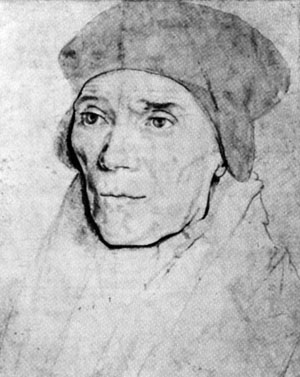 In striving to understand the service of the Cardinal in the Church, one naturally turns to the lives of Cardinals who have been heroically virtuous in fulfilling the responsibilities of their office. I think, for example, of Saint John Fisher who received the Cardinal’s hat, when he was already in prison for his refusal to sign the Act of Supremacy of King Henry VIII, by which he would have betrayed Christ, denying that Christ alone is Head and Shepherd of the Church through His Vicar on earth, the Roman Pontiff, Successor of Saint Peter. When the Cardinal’s hat reached Calais in France on its way from Rome to London, the King was informed and immediately sent his secretary, Thomas Cromwell, to speak with Bishop Fisher in prison. When Cromwell asked the good Bishop whether he would accept the Cardinal’s hat from the Holy Father, Pope Paul III, should it be sent to him, Saint John Fisher responded:
 When it comes to the Condom Conundrum the
  Genetic testing of villagers in a remote part of China has shown that nearly two thirds of their DNA is of Caucasian origin, lending support to the theory that they may be descended from a ‘lost legion’ of Roman soldiers.



 The Queen has spoken of the “difficult” and “painful” choices facing the Church of England as she formally opened the Church’s general synod.



 Fr. Reader on WDTPRS – Pentecost Sunday – Vetus Ordo: Savvy?: “Thanks. Interesting because I have been reading it for many years, missing something.”






























