ASK FATHER: Bowing to the priest when he enters for Mass

From a reader…

QUAERITUR:

I saw a tweet or whatever it is that they are called now starting an argument about whether or not people in the pews should bow to the priest when he enters to say the Traditional Latin Mass.   Some say okay and others are really strong against it.  One compared it to the “orans position” problem in the Novus Ordo that lay people should not do. What say you, Father Z?

What say I.  Leben und leben laßen… live and let live.

The X/Twitter thing is HERE

There are no rubrics for this in the Roman Rite.  If people want to do it, fine.  If not, fine.

Is this like the “orans position problem in the Novus Ordo”?  Not really.  There are some people who adopt the position of arms raised with palms either slightly upward or opposed to each other in the manner of the priest when he prays the texts of Mass.   They should not do that.   While it is true that they are baptized, and therefore share in Christ’s priesthood, they are not ordained and they should not comport themselves as the ordained.

Bowing to the priest on the way in.

I can see how this might have developed in some places.  I’ve seen it myself many times on entering for Mass especially if coming down an aisle instead of directly out of a sacristy to an altar.

I take it as a sign of respect for the arrival of the one who alter Christus, the priest who is also the victim, about to celebrate for them the source and summit of their lives.   I’ve never thought for a moment that they were bowing to me, insofar as I am “Father Z”.  They were bowing to “The Priest”.

It could have developed by analogy to signs of reverence toward the processional cross that is often carried.   I recall that that was done at my home parish which had traditionally celebrated Novus Ordo Masses.

It could have developed by analogy to the honorific gestures which are in the Roman Rite for when the priest and sacred ministers enter the sanctuary.   The custom for clergy and others in the choir in the sanctuary is to bow slightly as a sign of greeting and respect for the celebrant as he enters, passes by, or exits.   It is rude to ignore such a person, who is acting at the moment in persona Christi capitis.  Hence, a head bow or other sign of reverence.

It could have developed by analogy from the gesture people customarily make when receiving a blessing, as from a bishop who blesses as he enters and exits.

It could be that some priest told them to do this in the past, and the practice stuck.

I don’t think people should be instructed to do this.  Perhaps, yes, in the case of when the thurifer comes to incense the congregation at the offertory time.  It is a kind of mutual greeting: the thurifer and people bow to each other.  It is like a sign of peace, only dignified.

These small signs of respect are not harmful.  They can be helpful in a time when decorum is at low ebb.  While we mustn’t exaggerate by piling them on, these gestures are helpful on the human level.

Posted in ACTION ITEM!, ASK FATHER Question Box, Decorum, Liturgy Science Theatre 3000, Our Catholic Identity, Save The Liturgy - Save The World | Tagged
17 Comments

ROME 23/10 – Day 24: Ego enim sum Raphaël Angelus, unus ex septem, qui astámus ante Dóminum.

In the early morning the sun rose at 07:30 and it will set at 18:18.   The Ave Maria bell is in the 18:30 cycle.  In a few days, 29 October, the “legal hour” ends and we will set our clocks back an hour.  So, it will be much brighter in the early morning and get dark much earlier in the late afternoon.

Today is the Feast of St. Raphael the Archangel in the Vetus calendar.   It is unfortunate that the biblically named angels were put together on just on days in the Novus calendar.  We don’t, as a Church, pay enough attention these days to the Holy Angels.  We spend even less time considering the activities of the fallen angels.   This is ungrateful on the one hand and imprudent on the other.

Here is a lovely tondo at the parish that that was restored recently depicting the Archangel Raphael.

Raphael is the healing angel who acts in the Book of Tobit, one of the seven Archangels who stands before the Lord.

O Lord, thank you for this day.   I ask today the intercession of St Raphael to bring physical healing to my kind benefactors who are in need as well as spiritual healing to my malefactors.

In church today, all the side altars were being used, though you can’t at the moment I made this see every priest.   How I wish that the red vestments were being used!  That would be a sight.

On the way home I stopped at little St. Bridget’s and prayed especially for a donor who has stayed with the Brigettine many times and who are very attached to the place.

The Blessed Sacrament was exposed.  I spent a little time here remembering my kind donors and their requested petitions.

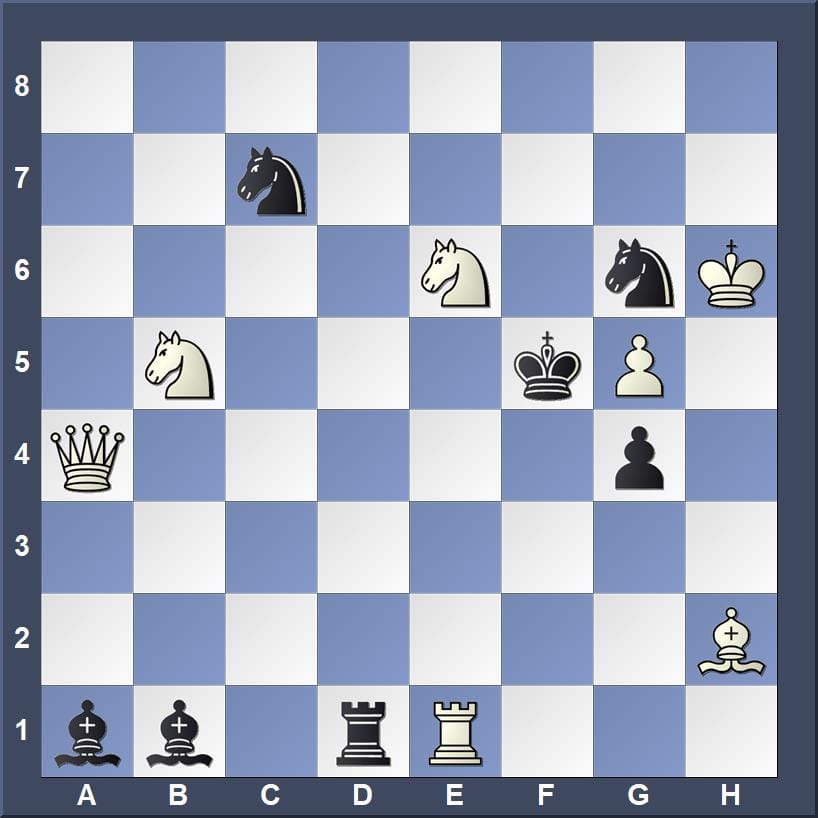
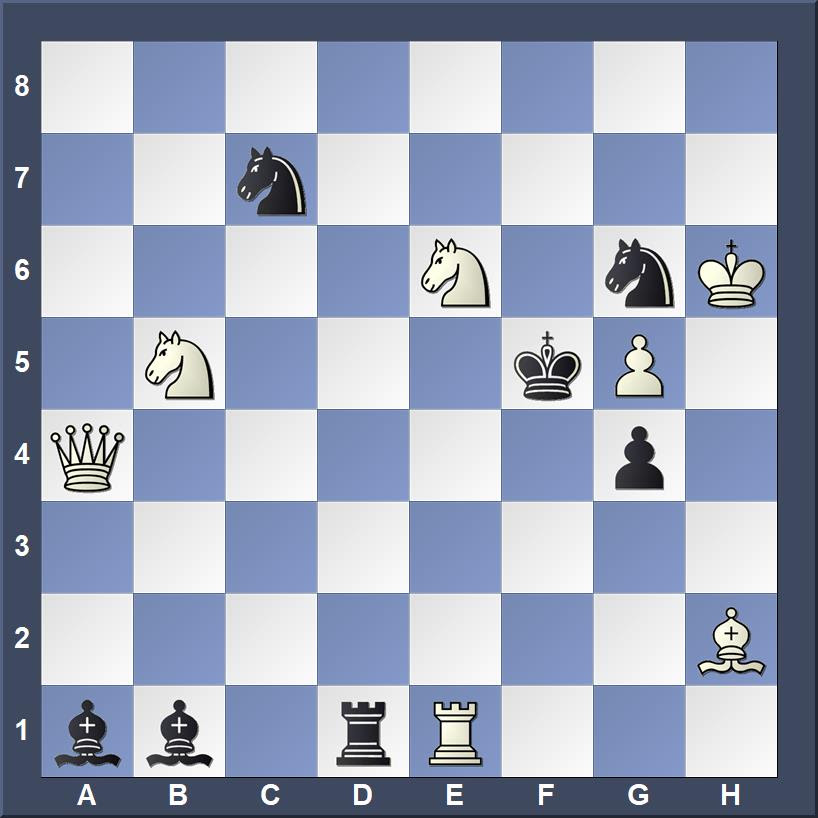
Meanwhile, you are white and it is your move.

Can you find mate in 3?

NB: I’ll hold comments with solutions ’till the next day so there won’t be “spoilers” for others.

Your use of my Amazon affiliate link is a major part of my income. It helps to pay for insurance, groceries, everything. Please remember me when shopping online. Thanks in advance.  US HERE – UK HERE

I saw a note that Anthony Esolen’s new translation of Augustine’s Confessions is now available from TAN Books.   This is great.

US HERE – UK HERE

I got the note about availability yesterday.  If you get a “sold out” note, retry.

Meanwhile, more from Esolen.

No Apologies: Why Civilization Depends on the Strength of Men

US HERE – UK HERE

Posted in SESSIUNCULA |
8 Comments

ROME 23/10 – Day 23: Cheery and bright

Sunrise: 07:29.  Sunset: 18:19.  Ave Maria:  18:30

It is the Feast of St. John Capistrano.  Also, in the “aliquibus” section there is a Mass today for the veneration of Christ called “Nazareno” which originated in Rome among the Trinitarians at San Crisogono and spread around the area.  The parish has an image which lead to the use of the Mass today.

Welcome registrant:

FatherCommentator

On the way to church.

The red vestments which you dear readers helped to procure.  Thank you.

My flowers were all played out and I wanted something cheery.

An afternoon stroll took me through Piazza Navona.

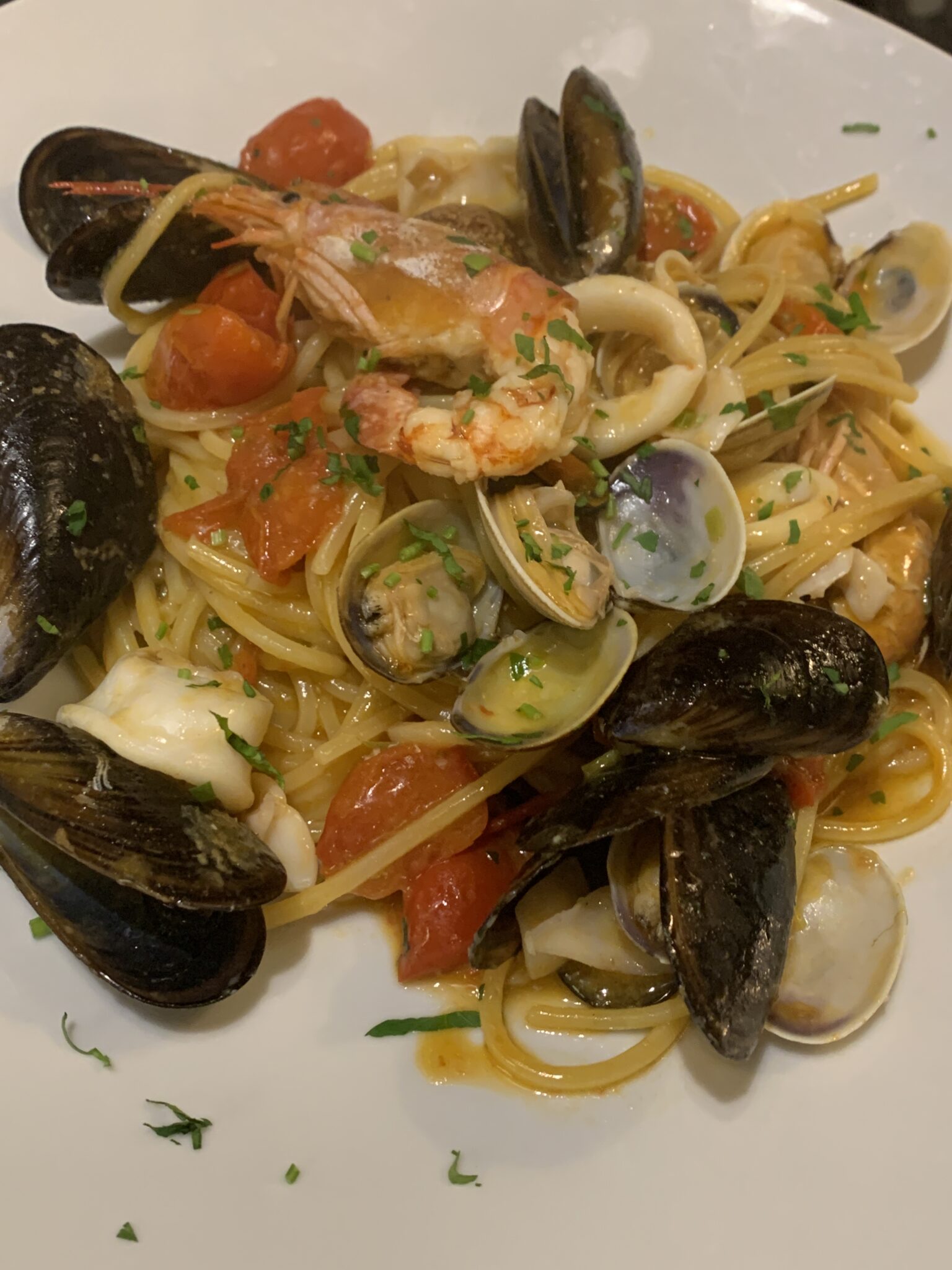
Some finocchiona for supper.

In the evening I watched a really interested documentary about four women chess players from Georgia

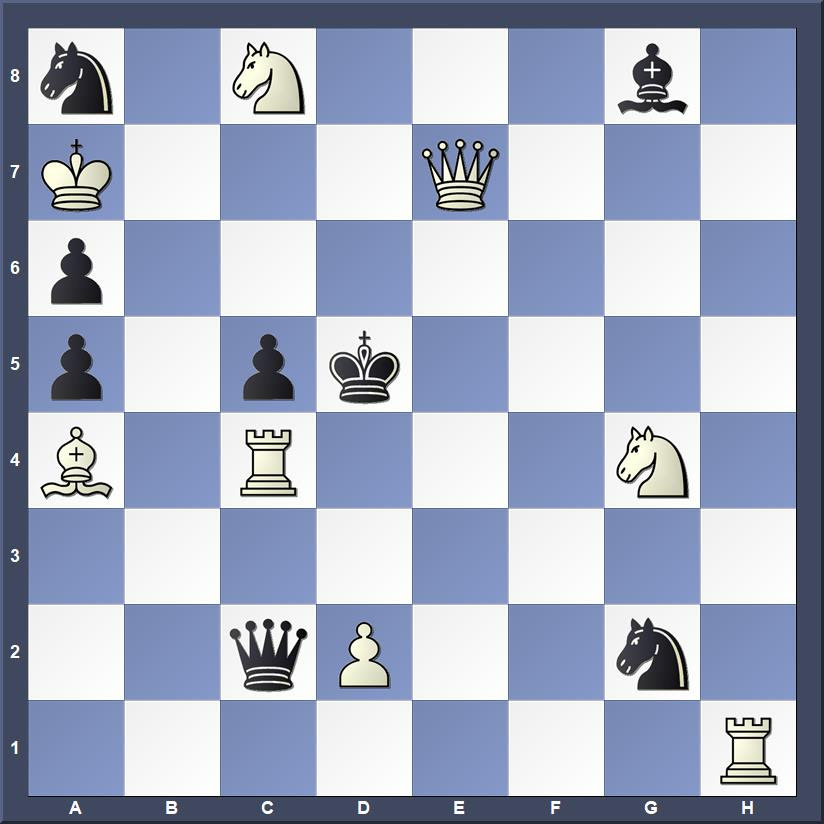
Meanwhile, white to move.  Can you mate in THREE?

NB: I’ll hold comments with solutions ’till the next day so there won’t be “spoilers” for others.

Your use of my Amazon affiliate link is a major part of my income. It helps to pay for insurance, groceries, everything. Please remember me when shopping online. Thanks in advance.  US HERE – UK HERE

Posted in SESSIUNCULA |
7 Comments

Synodality (“Walking Togetherity”) and “tesserae”

Looking at the Synod (“Walking Together: “W-T”) from as far as I can manage while being in Rome and as close as I need to be because I simply have to, the image that comes to mind is tied sack full of cats and parrots: something’s going on in there, alright, and it doesn’t sound very good. The sounds and the movements on the surface of the bag suggest that there are disagreeing participants in there and not a lot of organization.

As I have been saying all along, whatever they might produce in some sort of written form – which I firmly believe was already determined before the cat and parrot bag was filled and sewn shut – will not be the true message. The true message is that synodality (“Walking Togetherity”) must be perpetuated.

This is the establishment of “permanent revolution”, perpetual discontinuity, ongoing reinterpretation.

Some time ago I became convinced that those who have their hands on the levers and wheels behind the curtain are aiming at systematic reinterpretation of every aspect of the Church through their understanding of what Vatican II was all about. These folks are of a mind that the black on white texts of the Council are secondary in importance to the real content of the Council “event”, the “spirit”, which only a limited number of people are  authorized to discern. The V2 Gnostics have it in mind that every aspect of the Church through history, all her institutions (except those they hold that give them power for change), doctrine, liturgy (which is doctrine), etc., must be reinterpreted in the light of their discernments about the “spirit of the Council”. This is what we are seeing today in the Synod (“walking together”).

That said, there seems to be one issue that has come to the fore and is being pushed hard into our faces: the homosexualist agenda.

There are lots of mosaics in Rome, some fairly recent, others quite ancient. Mosaics are made up of little tesserae, blocks of color which, by themselves, tell you nothing. Examine the mosaic at very close range and you simply see little stones. Put these random pieces into order and then step back and images are discerned.

You can perhaps fill in more examples, but consider:

  • Timothy Radcliffe, OP addresses the participants in significant measure.
  • James Martin, SJ was a special appointment.
  • An activist from St. Joan of Arc in Minneapolis was appointed (who sat with the above)
  • Francis met with an actress and social commentatrix famous for her multiple abortions and support of homosexuality
  • Francis met for almost an hour with New Ways Ministry

One more piece of the puzzle emerged today. Close confidant and highly visible Antonio Spadaro, SJ, is published today in the Italian, daily La Stampa, recounting his years and years of labor over the works of the Italian homoerotic writer Pier Vittorio Tondelli, who died of AIDS in 1991. Spadaro has long maintained a website dedicated to Tondelli under his own name: HERE.

Look. This single item doesn’t mean much in itself. Neither does Francis meeting with New Ways or James Martin being anywhere at all. Put all the bits together and a picture emerges.

Someone perhaps can tell me how I am getting this wrong, and I will be grateful.

However, it seems to me that if other issues, such as married priests and women’s ordination, communion for the civilly remarried blah blah can be postponed to a future date when synodality (W-T) has been widely imposed, this issue, the homosexualist agenda, is decidedly not being held back. It is being firmly shoved in everyone’s face. By the highest authorities.

The Prefect of the Dicastery for Doctrine, Fernandez recently said that we shouldn’t use words like “sinner,” “sodomy,” “adultery,” “illegitimate”.

A German Bishop responded in a Synod (“w-t”) presser to a question about his own statements that even Apostolic Tradition is among the “traditionalisms” that have to go. He even clarified that that is what he meant in a follow up. I hate to break it to that bishop but he is supposedly a successor of the APOSTLES.  Will you kindly forego a salary, Your Excellency?

If there is no Apostolic Tradition… what is there?

All that remains is “walking togetherity”… to the edge of the modernist cliff.

The first command God gave to our First Parents is well-known: “be fruitful and multiply”. Homosexual behavior is exactly the undoing of that command. The Enemy knows where to strike. Make the human race so confused and arrogant that we don’t know who we are in God’s image, female or male, what the components we have are for, rearrange things by sheer brute force, manipulate the building blocks of life….  Sterility.

We see this in the larger world. We see something like it going on in the Church: confusion of roles, rearrangement by force, manipulating basic teachings.  Plummeting vocations.

UPDATE:

Robert Royal’s observations at The Catholic Thing today about “Walking Together about Walking Togetherity”.

Royal presents a good summary of the disruptive incoherence that is this Synod (“W-T”), mentioning several key speakers and statements and ancillary helps such as who is receiving papal audiences.

Posted in Sin That Cries To Heaven, Synod, The Coming Storm, The Drill, The future and our choices |
14 Comments

23 October – St. Boethius, philosopher: “A man content to go to heaven alone will never go to heaven.”

“A man content to go to heaven alone will never go to Heaven” – Boethius

What have you done, lately, to help someone get to Heaven?

Today is the feast of St. Severinus Boethius (+525), the author of the Consolation of Philosophy.  He was a pivotal figure at the cusp of late Antiquity and what are called the Middle Ages.

Boethius was a member of an ancient Roman family.  Among his accomplishments were translations and commentaries of Aristotle’s works on logic in Latin along with Euclid’s Elements.  He also wrote on arithmetic, geometry, music, and perhaps astronomy and he coined the term quadrivium (four-fold way), the basis of education for centuries, now revived in a way in homeschool circles (thank you, Dorothy Sayers!).

Boethius was an important figure in the court of Theodoric the Ostrogoth.  Theodoric would eventually come to believe that Boethius was conspiring against him and threw him in prison before executing him.  While he was in prison, he composed the astonishingly influential Consolation of Philosophy.

Here is his entry in the Martyrologium Romanum:

6*. Papiae in Liguria, commemoratio sancti Severini Boetii, martyris, qui, scientia ac scriptis praeclarus, in carcere detentus tractatum scripsit de consolatione philosophiae et Deo usque ad mortem a Theodorico rege inflictam cum integritate servivit.

Who wants to take a crack at the Latin?

Take note that the entry calls him “Saint” Boethius.  So does the official Vatican Curia’s calendar.  He is celebrated as a saint in Pavia.

You may be interested to know that Boethius’ tomb is in the crypt of the same church where St. Augustine’s remains are interred:  San Pietro in Ciel d’oro in Pavia, south of Milan.

Here is Lady Philosophy explaining God to Boethius in the guise of 15th c. France.

It’s too bad that hats are not more in style these days.

Posted in Saints: Stories & Symbols | Tagged
4 Comments

German Bishop at Synod (“Walking Together”) says we must stop “clinging to habits and traditionalisms” including APOSTOLIC TRADITION

I am forced to wonder if… forced to hope that… what a thing to think… that this bishop doesn’t know what Apostolic Tradition is.

What did I just write?!?

Posted in SESSIUNCULA |
13 Comments

Your Sunday Sermon Notes – 21st Sunday after Pentecost (N.O.: 29th) 2023

Share the good stuff.

It’s the 20th Sunday after Pentecost in the Vetus Ordo and the 28th Sunday of the Novus Ordo.

Was there a GOOD point made in the sermon you heard at your Sunday Mass of obligation?

Tell about attendance especially for the Traditional Latin Mass. I hear that it is growing. Of COURSE.

Any local changes or (hopefully good) news?

I have some thoughts about the Sunday Epistle reading posted at One Peter Five.

It can seem these days that we will never again see good things in the Church. Of course we faithful Catholics know that good things, and more than good – the best – things are ours in the Church, the Sacraments. We know where to look up the good things of Holy Church’s teachings on morals and the Faith even if (when) our shepherds lead us not to green pastures but rather the zoo, or maybe the abattoir. In these times our old catechisms and spiritual books, the writings of the Fathers and commentaries and biographies of the saints are like armor to put around ourselves and our loved ones and friends. The fiery darts of inanities or of outright error cannot get through to the well-catechized Catholic. Sometimes it feels to me as if the slow and steady dumbing down of the content of our liturgical worship (which is doctrine) and preaching and classes in seminaries, etc., was systematic, in view of these days now, when people at big gatherings talk about the future of the Church, blurp all manner of lunatic jibber jabber and are mechanically applauded.

Posted in SESSIUNCULA | Tagged
5 Comments

ROME 23/10 – Day 21: “Tastes like chicken”, a Solemn Mass vestment project, some video and audio

On this Feast of St. John Paul II, the sun rose at 07:28 and it will un-rise at 18:21.  The days are squeezing down.

The Ave Maria bell is in the 18:30 cycle as it chases the sun in fits and starts.

The weather has really shifted, which is surely a sign that we are all about to die.  The unseasonably warm October has cooled and some rain now sweeps through unpredictably.

Yesterday I decided to run a quick errand to a nearby grocery for something I was lacking in view of Sunday repast.  Heading out the door there was a slight drizzle.   I’m NOT a fan of rain.  I don’t do rain.  However, “Beh”, quoth I, “I can do this.  It’s not so bad.”

I got to P.za Farnese up the way and stopped in the relative shelter of the wall of the Bridgittine church – aptly named St. Bridget – and took this.

Stepping out again, the down pour began – BAM- like someone turned on a faucet soaking me in an instant.

Having arrived at the store, I noticed an interesting bottle of wine, a Bonarda.  I don’t remembering seeing an Italian Bonarda – then again, I haven’t looked for one either.

This is an “Oltrepò Pavese”, which is not the same grape as the Bonarda Piemontese. The OP Bondarda is also called Douce Noir and has been confused with other varietals like Barbera in California and Dolcetto Nero. In California it is Charbono, not surprisingly like Charbonneau. I recall that there are some OP Bonardas that have different names because over the centuries they figured it was its own thing. Turca? Nope, it’s really OP Bonarda.

I’ll have to head over there on Monday and get a bottle and try this for the first time. The price is good, too.

For supper, something that I have made with some frequency here … (as I write it is positively pouring rain outside)…

…chicken.  I really like the chicken here because it tastes like chicken!  You know what I mean.  Spatchcocked galetto, onion, carrots, a few tomatoes, a little white wine.

Having extracted the chicken from the pan, I reduced the juice adding chopped porcini mushrooms and, at the last minute, baby peas.   That stuff in the front right: slightly over-done but delightfully crunchy oven-roasted potato slices.

The rain is coming and going, like the women in the T.S. Eliot poem.

Meanwhile, solve this.

Things are looking a bit cramped for white, don’t they.  That black bishop is nasty.  Black’s horsey is rarin’ to leap onto d4 and supply additional irritation.

But it is white’s move, not black’s.  Exchanges won’t be so horrible after all.  And I am seeing that the enemy queen doesn’t have all that many squares…. hmmm.

White to move and win material.

1. Bc1 Qc5
2. Rb5 (with fist pump)
NB: I’ll hold comments with solutions ’till the next day so there won’t be “spoilers” for others.

Interested in learning?  Try THIS.

Here comes the sun, again.

Use FATHERZ10 at checkout

Please remember me when shopping online. Thanks in advance. US HERE – UK HERE  These links take you to a generic “catholic” search in Amazon, but, once in and browsing or searching, Amazon remembers that you used my link and I get the credit.   Sometimes the portion of the sale I get is just pennies, depending on what has been purchased, but it adds up over the span of a month.

NB: I received a note from one of the priests at Ss. Trinità, a fellow ham by the way, who does quite a bit of their vestment coordination.  I worked with him on the baptismal font project and on the recent red vestment project which you so generously participated in.  (They are so beautiful.)

I believe I mentioned before that there could be a project for a white solemn set which would also include a gremial for Pontifical Mass at the Faldstool, cope, an altar frontal, and tabernacle canopy.  Father wrote:

The idea is to make something in the style of our existing green solemn, namely damask and inserts from a stunning velvet fabric and short bushy fringe edging. In this case, the base damask would be white(ish) and the velvet would be kinda goldy with some red and blue in the pattern.

I’ll float this initial survey by you.  Don’t send money yet.  However, drop me a note.

    Finally, as I was writing, Noon struck.  The last time I was here, the bells of the Brigdittines up the street were way off noon, but they’ve updated.  Now they overlap with the bells of the VEC across the way.

    You can hear the Noon cannon from the Gianicolo and there are bells from Sant’Andrea in the distance.

    I thought you might enjoy a little Roman Sunday Noon and more rain.

    The first time I was in this apartment, I recorded the Noon bells across the way and I use it on my phone to ring Noon each day when I am NOT here.   Funny: when I arrived this time, I still had my Noon alarm on and I was getting the bells from two directions and slightly off.

    Posted in SESSIUNCULA |
    4 Comments

    UPDATED: Commentary on “synodality” (“walking togetherity”) from Ratzinger in 1975 and a lot more.

    UPDATE: At the end, I’ve updated this with some interesting info I was just sent.  I had missed it before and it is relevant to my rants.


    At the always useful The Catholic Thing there is a piece well-worth reading by Eduardo J. Echeverria. It is helpful because it identifies one of the driving influences behind so many of the odd things that have been perpetrated in the name of Vatican II, namely, the so-called “Bologna School” of interpretation. The main exponents of this movement are Giuseppe Dossetti, Alberto Melloni and Giuseppe Alberigo. This is the gang principally behind the yak yak about the “spirit” of the Council.

    They would be connected to the infamous Pact of the Catacombs and the St. Gallen Mafia.

    I’ve been writing that while the “Walking Together about Walking Togetherity” is exploring all manner of poppycock, such as the ordination of deaconettes, the real content of the “W-T” is its own process, its self-perpetuation as an instrument of permanent revolution.

    A taste of the piece at TCT:

    Ratzinger, Vatican II, and the Idea of Synodality

    In a 1975 essay on the reception of Vatican II, then Cardinal Joseph Ratzinger commented on the meaning and limits of councils. His main point is that councils are sometimes a necessity. But he adds, “they always point to an extraordinary situation in the Church and are not to be regarded as a model for her life in general or even as the ideal content of her existence.”

    Ratzinger concludes:

    In plain language: the council is an organ of consultation and decision. As such, it is not an end in itself but an instrument in the service of the life of the Church. . . .If a council becomes the model of Christianity per se, then the constant discussion of Christian themes comes to be considered the content of Christianity itself; but precisely there lies the failure to recognize the true meaning of Christianity.

    If this sounds like a critique of the idea of synodality, clergy and laity walking together (in Greek, syn-hodos, “on the way with”), that’s because it is. This critique directs itself to an interpretation of Vatican II represented by the late Giuseppe Alberigo (1926-2007), the director of the Institute for the Study of Religion, in Bologna, Italy, and the guiding scholar of the five-volume History of Vatican II.

    […]

    I interrupt to make a point.  A pretty good historian of councils, a deceased Jesuit John W. O’Malley wrote in his book about Vatican II something that explained the “spirit” of the Council this way.  In nutshell, O’Malley – not a theologian and clearly a lib – thought that the real content of the Council was not the black on white of the documents but rather the marked change in tone.  It is in this change of tone or attitude that we find the real message of the Council, so strong that it forces reinterpretation of everything that went before.  In short, justification for rupture.

    Back to the TCT piece:

    […]

    [T]he “spirit– the  deep motivating forces of the council that steered and shaped the council – is  associated with the reforming energy and dynamism present at the Council; what was later called the ‘event’, a historicization of the ‘spirit’, which is always greater than the text that only partially represents it.”

    Alberigo’s central thesis is that the Council’s texts – all sixteen documents – are not its primary elements. That would be a reductive vision of the Council that fastens on “the letter alone and [is] unable to penetrate to the deeper motivation and universal, historical significance of the Council.” Primacy should be ascribed to the event itself, that is, the event of an emerging “conciliar consciousness.”  [Sounding familiar?]

    According to Alberigo, “The Council as such, as an event of communion, of encounter and exchange, is the fundamental message that constitutes the context and kernel of its reception.”

    This is the “event” character of the Council denoting a “rupture,” a “break,” a marked “discontinuity” with the pre-Vatican II Catholic tradition. If I understand Alberigo correctly, this conciliar experience has to be extended to the Church as a whole because the Council – conciliar consciousness – should be taken to be the model of the Christian life as such.

    […]

    conciliar consciousness

    synodal way

    Take a look at the piece at TCT.   Read to the end where he has interesting conclusion that I only partially agree with.  Partially because I don’t think he goes far enough.   I think you’ll understand what I mean.

    Finally, while the Jesuit O’Malley was probably a heretic, he was a pretty good historian and he tamps down his own inclinations.  I think he had an agenda in writing his book on Trent, which if you are careful, you will pick up.  However, the book is just so darn packed with fascinating information that it is well-worth your time.  I learned a great deal about

    Trent: What Happened at the Council by John O’Malley. [US HERE – UK HERE]

    UPDATE: 21 Oct 23 1832

    At LifeSite there is more about this Bologna and Catacomb connection.

    Fri Oct 20, 2023
    Pope Francis gives Synod members Vatican II lobby group’s liberation theology text

    […]

    In an article published October 13, Jesuit-run America Magazine revealed that participants of the Synod on Synodality were given a controversial and secret text during their October 12 trip to the Catacombs of Sts. Sebastian, Callistus and Domitilla. (An archive of the America Magazine report is available here.)

    The report stated how the prayer booklet given to Synod participants “included the full text of the Pact of the Catacombs.” Of note is that this was not included in the booklet emailed to journalists of the Vatican press corps.

    […]

    What is the Catacombs Pact?

    On November 16, 1965, 42 bishops attending the Second Vatican Council met in the Catacombs of St. Domitilla to compile and sign the “Pact of the Catacombs,” or the Catacombs Pact. The text has remained largely out of the public eye, but is a formulation of 13 key points pertaining to Church life, organization and practice, all based on tenets of the heterodox ideology known as Liberation Theology. 

    […]

    Bishop Luigi Bettazzi’s signature on the 1965 Pact thus linked the document to the work of other prominent liberal forces at play during those years. Bettazzi, records de Mattei, signed as the representative of Cardinal Giacomo Lercaro – the Archbishop of Bologna.

    Lercaro was highly influential in compiling the Novus Ordo liturgy alongside Archbishop Annibale Bugnini, and was one of four moderators appointed by Pope Paul VI to oversee daily proceedings of Vatican II, only weeks after Paul VI was elected pope in June 1963.

    A certain Father Giuseppe Dossetti served as Cdl. Lercaro’s theological advisor. Dossetti was the leading figure behind the so-called “Bologna School,” which promoted the liberal “spirit” of the Council and portrayed traditionalists as enemies. 

    De Mattei describes the School of Bologna as “the intellectual laboratory of European ultra-progressivism.”

    […]

    There’s LOT more there about the web of connections which are now revealing their aims.

    Posted in Synod | Tagged , ,
    5 Comments

    WDTPRS – 29th Ordinary Sunday (N.O.): It’s about the children.

    At the “Walking Together about Walking Togetherity” (aka “W-T-F” – explained HERE) and in papal interviews there is increasing talk about blessing same-sex couples, which would effectively a betrayal of God who made man male and female.  God made us in His image and liknes, individuated in bodies which are male or female and He did so for good reasons.   Usurping those reasons and twisting them is a direct slap to the face of God.

    There are so many efforts today to make sterile that which is fecund.

    The very notion of children is under attack.

    I saw a piece of an interview in which some one said about airline travel that the people who run these airlines and choose the “entertainment” must hate children.   Kids are on airplanes, and next to them someone is watch a scene which is pornographic or has unnatural acts or has the most realistic kinds of splattering violence.   It’s as if they hate children… or they are on board with the twisting of their purity.  For what?

    Ultimate sterility, the Devil’s ultimate victory.

    Sterility means no more beautiful souls to multiply the glory of God.

    Hence, a little rant, before launching into this comment on a prayer for Mass, which called to mind a beautiful piece of art with a special theme.

    The Collect for this Sunday in the Novus Ordo, the 29th Ordinary Sunday, was in the the ancient Gelasian Sacramentary among the prayers for the 5th Sunday after Easter.  Those of you who participate in celebrations of Holy Mass according to the 1962 Missale Romanum will hear this Collect on the Sunday after Ascension.

    Omnipotens sempiterne Deus, fac nos tibi semper et devotam gerere voluntatem, et maiestati tuae sincero corde servire.

    We have to cook and pry this open and dig the marrow out of the ossobuco bone.

    The complex verb gero means basically “to bear, wear, carry, have”.  In the supplement to the great Lewis & Short Latin Dictionary, Souter’s A Glossary of Later Latin, we find that after the 3rd century A.D. gero can be “to celebrate a festival”.  This is confirmed in Blaise’s dictionary of liturgical Latin vocabulary; gero is “celebrate”.  In a construction with a dative pronoun (such as tibi) and morem (from mos as in the infamous exclamation O tempora! O mores!) it can mean “perform someone’s will.”  I think today’s tibi…gerere substitutes devotam voluntatem for morem.  That servio (“serve”) is one of those verbs constructed with the dative case, as in “to be useful for, be of service to”.

    In our Latin prayers maiestas is usually synonymous with gloria.  Fathers of the Church St. Hilary of Poitiers (+368) and St. Ambrose of Milan (+397), and also early liturgical texts, use this concept of “glory” or “majesty” for more than simple fame or splendor of appearance.  A liturgical Latin gloria can be the equivalent of biblical Greek doxa and Hebrew kabod.   Doxa was translated into Latin also with the words like maiestas and claritas, which in some contexts become forms of address (“Your Majesty”).  This “glory” or “majesty” is a divine characteristic.  God will share His gloria with us in heaven. We will be transformed by it, made more radiant as the images of God we are meant to be.  Our contact with God in the sacraments and liturgical worship advances the transformation which will continue in the Beatific Vision.  “And we all, with unveiled face, beholding the glory of the Lord, are being changed into his likeness from one degree of glory to another (a claritate in claritatem); for this comes from the Lord who is the Spirit” (2 Cor 3:18).

    LITERAL RENDERING:

    Almighty eternal God, cause us always both to bear towards You a devout faith, and to serve Your majesty with a sincere heart.

    OBSOLETE ICEL (1973):

    Almighty and ever-living God, our source of power and inspiration, give us strength and joy in serving you as followers of Christ.

    CURRENT ICEL (2011):

    Almighty ever-living God, grant that we may always conform our will to yours and serve your majesty in sincerity of heart.

    When God wished to speak with Moses, His Presence would descend on the meeting tent as a cloud (Hebrew shekhinah) and fill the tent. Moses’ face would shine so radiantly from his encounters with God that he had to cover it with a veil (cf. Exodus 34).  The shekhinah remains with us architecturally in our churches… in some places at least.  Even more than the burning presence lamp, a baldachin or a veil covering the tabernacle is the sign of the Lord’s Presence.

    When we enter the holy precincts of a church, our encounter with the Lord in mystery must continue the transformation which began with baptism.

    Commit yourselves to be well-prepared to meet the Lord in your parish church.  Be properly disposed in body through your fast, in spirit through confession.

    Today’s Collect always brings to my mind a fresco by Piero della Francesca (+1492) in little Monterchi near Arezzo. “La Madonna del Parto” shows Mary great with Child, a subject rare in Renaissance painting.

    The fresco, this wondrous depiction of life, was painted originally, ironically, for a cemetery chapel.

    One meaning of the Latin verb gero is “to be pregnant” as in gerere partum.  In the fresco, twin angels in Renaissance garb delicately lift tent-like draperies on each side to reveal Mary standing with eyes meditatively cast down, one hand placed on her hip for support, her other hand upon her unborn Child.

    The drapery and the angels invoke the image of a baldachin and the veil of a tabernacle.  It calls to mind the tent in the wilderness where the Ark with the tablets and its golden angels were preserved, wherein Moses spoke to God so that his face reflected God’s majesty.

    Mary, too, is Ark of the Real Presence, the Tabernacle in which Christ reposed.  She, like the tent of the Ark, was overshadowed.

    Our Sunday Collect reminds us also to look to Mary, the Mother of God and Mother of the Church, our Mother.  She is the perfect example of the service to others that flows from loving her Son, bearing the faith, serving God’s transforming glory.

    Posted in WDTPRS |
    2 Comments