From “The Private Diary of Bishop F. Atticus McButterpants” – 23-08-15: The return of Fr. Tommy. The dime drops.

August 15th, 2023

Dear Diary,

I had kind of a shock today, but I’m hoisting a scotch anyway and breaking out the caviar ’cause it’s a relief to have Fr. Tommy back. Things have kinda slipped through the cracks the last few months, even with Mrs. Kennedy scrambling to stay on top of stuff. I took Tommy out to lunch today, and said “I’ll drive.” I like to be thoughtful. Steak and potatoes and cheesecake. Feast day means FEAST!

It’s a relief that Fr Tommy is back because he is just a lot more precise than Fr. Gilbert. Except for the hair. Gilbert’s hair is really precise.

When Tommy stepped into my office this morning Chester woke up and gave out a low growl but he didn’t go into a full cannipshun fit. He actually went back to sleep.   Maybe it was that lumpia I gave him before Fr got there?

I was sorting through piles and piles of papers with Tommy even though the offices were closed for the FEAST and he stumbled across the MYLOS moolah invitation. He told me it’s a prank. I said, “You’re kidding, right?” But no, he insisted “It’s a prank.” Tommy said the word means “millstone”! As in, around your neck! Like what it says happens to bad guys in the Bible! You coulda fooled me. And, well, they did. What the heck are they so mad about? I’m not a bad guy! Why pick on me? What did I do? How was I to know some fancy Greek word?  The ladies aren’t even Greek! Their logo had this donut-shaped watermark thing in the background. A donut and I was thinking …

Dang it.  Did Dozer think this up?


Posted in Diary of Bp. McButterpants, SESSIUNCULA | Tagged
4 Comments

Daily Rome Shot 764

Photo by The Great Roman™

Welcome registrant:

greg************66@gmail.com [I don’t recommend using email for your nickname, btw.]

I will remind you about this terrific find which is turning out to be rewarding. From Fr. James Mawdsley, fellow cancelled priest,

Crucifixion to Creation: Roots of the Traditional Mass Traced back to Paradise

US HERE – UK HERE

Please remember me when shopping online. Thanks in advance. US HERE – UK HERE  These links take you to a generic “catholic” search in Amazon, but, once in and browsing or searching, Amazon remembers that you used my link and I get the credit.

White to move.  Can you force mate?

NB: I’ll hold comments with solutions ’till the next day so there won’t be “spoilers” for others.</span

Interested in learning?  Try THIS.

I have an affiliate program with chess.com and House of Staunton.

Chesscomshop Banner

Try these?

The Big Knight Series Plastic Chess Pieces…

We are proud to offer one of the world’s finest Plastic Chessmen – The Executive “Big K… [More]

Price: $19.95

Meanwhile, in Baku chess news… FOUR young Indians are in the FIDE World Cup quarter final: GMs Rameshbabu Praggnanandhaa, Dommaraju Gukesh, Vidit Gujrathi (who knocked out Nepo) and Arjun Erigaisi. Magnus, Fabiano, Leinier Dominguez and homeboy Nijat Abasov have advanced.

Today: Magnus v. Gukesh (#7 –  2761 – 17 yrs old)

Fabi v. Lenier

click for larger

Posted in SESSIUNCULA |
2 Comments

Assumption of the Blessed Virgin Mary: The 4th Glorious Mystery

NB: Today, the Feast of the Assumption of the Blessed Virgin Mary, we can begin a 54 Day Novena!

We might pray a 54 Day Novena using the Memorare, the Rosary, or another Marian prayer, for the mitigation of the cruel Motu Proprio Traditionis custodes.

Here is something I posted back in 2006 for my “Patristic Rosary Project“.  I drill into into the Mysteries we reflect on during recitation of the Rosary using the lens of texts from the Fathers of the Church. I will have to return to that PRP one day and do some editing and expanding. In the meantime, here is the post relevant to today’s beautiful feast.

_____

4th Glorious Mystery: The Assumption

Although Ven. Pius XII refers carefully to Mary having completed the course of her life, rather than explicitly to her death in the document whereby he declared infallibly the dogma of the Assumption, and St. John Paul II adverts to the end of Mary’s life in a General Audience in 1997 – as do other saintly writers – we do not have from the Church a definitive or infallible teaching beyond a shadow of a doubt whether Mary died and then was assumed body and soul into heaven at that moment or if she was assumed without dying.  That said, it was certainly fitting that, if her Divine Son tasted death, then she would as well.  On the other hand, it is possible that in some manner like to perhaps what unfallen man might have been able to do, Mary’s love for God could no longer be contained and so she went to God by loving choice rather than through the punishment of the Original Sin she did not have.

Even in the Eastern tradition, which speaks of the Dormition, the Sleeping, of Mary we have a sub-current of death.  Sleep is certainly a euphemism for death and they are closely related. Sleep is certainly a euphemism for death and they are closely related. Greek ???????? gives us ??????????? or Latin coemeterium, whence English “cemetery”, which is a “sleeping place”. Traditions are divided about her last earthly breaths. Some authors hold that she did not die before her Assumption. There is also a strong tradition that she was buried.  That said, no one really knows where, though the cult of the burial places of the holy has always been strong, even in the days before Christ.

Perhaps a good explanation is that Our Blessed Mother, desiring to be like her Son, who did die, chose herself to die though Satan had no hold on her.  It was fitting that she, the daughter of her Son and disciple of Her Lord, should be as He was.  So, after a brief interval during which no corruption touched her, her soul and body were reunited in heaven in the presence of God.

In any event, we know with our Catholic faith, and by infallible authority, that at the end of her earthly life, the Mother of God was assumed into heaven and no stain of the corruption of the grave touched her.

This was her Transitus, her “passing across”.

Our humanity is seated at the right hand of the Father in the divine Person of our Lord, but now also in the human person of our Lady.

Christ is consubstantial with the Father. Christ is consubstantial with His Mother.

Mary is Mother of a divine Person with two natures. She is not Mother of part of Christ, but Mother of all of Christ in His integrity. And so, we can call her Mother of God and Mother of the Church. Her heavenly Assumption was fitting.

There are not elaborate reflections in the writings of the Fathers on the Assumption, because it was not a main point of theological interest for them. Still, we can find their thoughts on some passages of Scripture which help us to understand Mary’s role in the plan of our salvation.

As a perfect model for our own Christian discipleship, we can consider, among many texts, Proverbs 8:

And now, my sons, listen to me: happy are those who keep my ways. Hear instruction and be wise, and do not neglect it. Happy is the man who listens to me, watching daily at my gates, waiting beside my doors. For he who finds me finds life and obtains favor from the LORD; but he who misses me injures himself; all who hate me love death.

While this concerns Wisdom, in a sense it harks to Mary, Wisdom’s seat. Here is the reflection of Athenagoras on this section of Proverbs:

[The Son] is the first offspring of the Father, I do not mean that He was created, for, since God is eternal mind, He had His Word within Himself from the beginning, being eternally wise. Rather did the Son come forth from God to give form and actuality to all material things, which essentially have a sort of formless nature and inert quality, the heavier particles being mixed up with the lighter. The prophetic Spirit agrees with this opinion when He says, “The Lord created me as the first of His ways, for His works.” Indeed we say that the Holy Spirit Himself, who inspires those who utter prophecies, is an effluence from God, flowing from Him, and returning like ray of the sun. Who, then, would not be astonished to hear those called atheists who admit God the Father, God the Son, and the Holy Spirit, and who teach their unity of power and their distinction in rank? … We affirm, too, a crowd of angels and ministers, whom God, the maker and creator of the world, appointed to their several tasks through His Word, He gave them charge over the good order of the universe, over the elements, the heavens, the world, and all it contains. [A plea regarding Christians 10]

This fellow sounds a bit like a subordinationist, but he is fascinating. This passage is interesting also for its hints at the cosmology and physics of late antiquity. Also, it aims at the spiritual hierarchy in which our wondrous Lady has a privileged place.

Consider that the reward of assumption into the beatific vision stems as well from her perfect act of free will when she gave her “Fiat” to God’s will as expressed by the angel. Here is St. Augustine speaking of the impact of free will:

Man in paradise was capable of self-destruction by abandoning justice by an act of will; yet if the life of justice was to be maintained, his will alone would not have sufficed, unless He who made Him glad had given him aid. But, after the fall, God’s mercy was even more abundant, for then the will itself had to be freed from the bondage in which sin and death are the masters. There is no way at all by which it can be freed by itself, but only though God’s grace, which is made effectual in the faith of Christ. Thus, as it is written, even the will by which “the will itself is prepared by the Lord” so that we may receive the other gifts of God through which we come to the Gift eternal – this too comes from God. [Enchiridion 28.106]

God’s grace and Mary’s “Fiat” which was by grace. Mary was drawn with love into God’s plan and, later, into God’s presence. The Fathers made frequent use of the Song of Songs. St. Gregory the Great writes about the exchanges of heaven and earth which marked the plan of salvation:

The Church speaks through Solomon: “See how he comes leaping on the mountains, bounding over the hill!” … By coming for our redemption the Lord leaped! My friends, do you want to become acquainted with these leaps of His? From heaven He came to the womb, from the womb to the manger, from the manger to the Cross, from the Cross to the sepulcher, and from the sepulcher He returned to heaven. You see how Truth, having made Himself known in the flesh, leaped for us to make us run after Him. [Forty Gospel Homilies 29]

Our Lady, who would feel Christ leap beneath her heart, herself leapt after Christ in her heart by her “Fiat”. She leapt to begin His public ministry when she said at Cana “Do whatever He tell you.” She leapt up Calvary with Him when the Blood and water flowed down. Her motherly and Christian heart leapt in joy in seeing Him gloriously risen. She leapt to Him in heaven when her earthly life was concluded.

In heaven Mary shines with the glory God shares with her. In the book of Revelation we have a description chapter 12 of the woman clothed with the sun. The Fathers speak about this image. They will mostly consider the woman as an image of the Church. We cannot reduce the Church to Mary. Nor in talking of the Church as Christ’s Body reduce Christ to the Church. But the three, Christ, Mary and Church are intimately associated. Hippolytus (+245) writes:

By the “woman clothed with the sun”, he meant most manifestly the Church, endued with the Father’s Word, whose brightness is above the sun. And by “the moon under her feet,” he referred to [the Church] being adorned, like the moon, with heavenly glory. And the words “upon her head a crowd of twelve stars” refer to the twelve apostles by whom the Church was founded.

Of course Christ founded the Church on the Apostles, and chiefly upon the Rock who is Peter. The description of the woman, however, fits Mary the Mother of the Church as well as the Church herself. Here is an extended piece by someone not too many in the West may read, Oecumenius (6th c.) called the “Rhetor” who wrote the earliest Greek commentary on Revelation:

The vision intends to describe more completely to us the circumstances concerning the antichrist…. However, since the incarnation of the Lord, which made the world his possession and subjected it, provided a pretext for Satan to raise this one up and to choose him [as his instrument] – for the antichrist will be raised to cause the world again to fall from Christ and to persuade it to desert to Satan – and since moreover His fleshly conception and birth was the beginning of the incarnation of the Lord, the vision gives a certain order and sequence to the material that it is going to discuss and begins the discussion from the fleshly conception of the Lord by portraying for us the mother of God. What does he say? “And a sign appeared in heaven, a woman clothed with the sum and the moon was under her feet.” As we said, it is peaking about the mother of our Savior. The vision appropriately depicts her as in heaven and not on the earth, for she is pure in soul and body, equal to an angel and a citizen of heaven. She possesses God who rests in heaven – “for heaven is my throne” – it says yet she is flesh, although she has nothing in common with the earth nor is there any evil in her. Rather, she is exalted, wholly worthy of heaven, even though she possesses our human nature and substance. For the Virgin is consubstantial with us. Let the impious teaching of Eutyches, which make the fanciful claim that the Virgin is of another substance than we, be excluded from the belief of the holy courts together with his other opinions. And what does it mean that she was clothed with the sun and the moon was under her feet? The holy prophet Habakkuk, prophesied concerning the Lord, saying, “The sun was lifted up, and the moon stood still in its place for light.” calling Christ our Savior, or at least the proclamation of the gospel, the “sun of righteousness”. When He was exalted and increased, the moon – that is, the law of Moses – “stood still” and no longer received any addition. For after the appearance of Christ, it no longer received proselytes from the nations as before but endured diminution and cessation. You will, therefore, observe this with me, that also the holy Virgin is covered by the spiritual sun. For this is what the prophet calls the Lord when concerning Israel he says, “Fire fell upon them, and they did not see the sun.” But the moon, that is, the worship and citizenship according to the law, being subdued and become much less than itself, is under her feet, for it has been conquered by the brightness of the gospel. And rightly does he call the things of the law by the word “moon”, for they have been given light by the sun, that is, Christ just as the physical moon is given its light by the physical sun. The point would have been better made had it said not that the woman was clothed with the sun but that the woman enclothed the sun, which was enclosed in her womb. However, that the vision might show that the Lord, who was being carried in the womb, was the shelter of His own mother and the whole creation, it says that He was enclothing the woman. Indeed, the holy angel said something similar to the holy Virgin: “The Spirit of the Lord will come upon you, and the power of the Most High will overshadow you.” For to overshadow is to protect, and to enclothe is the same according to power. [Commentary on the Apocalypse 12.1-2]

Take careful note of the image drawn on by the interesting Oecumenius, which also speaks to the cosmology of late antiquity. First, Oecumenius either knew that the sun gave light to the moon, as it does, or he extrapolates this from the glory that Christ gives to Mary.

All our Marian feasts, all our reflection, to keep the sunlight and moon theme going, always must draw us back to the Person of the Lord. We reflect on the face of the Lord who is reflected in the face of His Mother.

Our recitation of the Rosary brings us to know the Lord more and more and, in turn, know ourselves better.

We reflect His image and likeness and He came into the word to reveal us more fully to ourselves.

YouTube thumbnailYouTube icon

Posted in Classic Posts, Linking Back, Our Solitary Boast, Patristiblogging |
2 Comments

14 August – St. Maximilian Kolbe : priest, martyr, Ham Radio operator. Also, the 3rd path to beatification: “Oblatio Vitae”

Maximilian KolbeToday, 14 August, is the Vigil of the Assumption (purple).  It is also the Feast of St. Maximilian Kolbe (red), a Franciscan priest put to death at Auschwitz.

St. Maximilian Kolbe, has a special relevance for Catholic media.

Today, dear readers, say a prayer to him, asking his intercession with God for the conversion of catholics who use the media to confuse the faithful and to distort the teachings of the Church.  Pray especially for the conversion of the staff of the National Schismatic Reporter (aka Fishwrap), RU-486 (aka The Tablet), Jesuit-run Amerika, as well as several individuals who prate with tweets that distort the Faith or some aspect of the faith or morals.

Remember the prayer to St. Joseph for the Conversion of the National catholic Reporter which I posted HERE.

These catholic” outlets must be converted or, like the priests of Baal, they must fail and fail spectacularly.

Also, please ask St. Maximilian to intercede, asking God to keep those who are dedicated to making Christ and His Church known and loved in their fullness faithful, charitable and courageous.

My 1st Class relic of St. Maximillian Kolbe

St. Maximillian was beatified by Paul IV in 1971 as a confessor (he lived a life of heroic virtue) and canonized by John Paul II in 1982 as a martyr (killed because of the Faith).

The two categories are not exclusive.  As a matter of fact, in the moment of martyrdom, the virtues are perfected in a person.

However, the use of two categories does raise a question.  Which was it?  Heroic virtue?  Martyrdom? In fact, he probably wasn’t killed by the Nazis because of the Faith, or his priesthood: he offered to take the place of another prisoner.  His choice led to his death.  He offered his life, though it may not have been martyrdom, in the strict sense.

(His choice led to his death.  I’m reminded of the situation in Chicago with Cupich and the Institute.  He forced them into a corner where they had to sign something that they couldn’t possible sign without betraying their identity and the people they serve.  Then when he took away their ability to say Mass publicly his spox said “It was their choice!”   Right.. just like it was St. Thomas More’s choice… St. John Fisher’s choice….  I digress.)

There is, in the paths to beatification, both the way of heroic virtue and martyrdom, but also now, since fairly recent, what is called oblatio vitae.

I am not one for innovations, but this seems good to me.

The criteria for oblatio vitae include:

a) the free and willing offering of life and heroic acceptance propter caritatem of certain death and in a brief time limit;

b) the exercise, at least in an ordinary degree, of the Christian virtues before the offering of life and, thereafter, until death.

Again, this path describes a person who has during life, been living a virtuous life, but in at least an ordinary rather than extraordinary and heroic way. Out of true charity (properly understood as sacrificial love of God and neighbor exemplifying Christ’s own sacrificial love) he performs some act which results in death in a short period of time and because of the act performed.

Hence, St. Maximilian, living of life of virtue (he was beatified under that rubric), by his offering (not necessary because the Nazi’s chose him because he was a Catholic priest) died as a result.

Hence, Ven. Vince Capodanno, who lived a virtuous life, was killed when trying to help a wounded Marine.  The enemy didn’t shoot him because he was a priest, he was just another target.

Hence, St. Gianna Beretta Molla, who lived a virtuous life. She died offering her life for the life of her unborn child.  She made a choice in favor of the life of another that resulted in her death.

Of great importance in this new path is the necessity that it be shown that the person lived a virtuous life before the act of charity that lead to death, and that the act that resulted in death was performed from true charity properly understood.

After that, just as in the cases of martyrdom and of the life of heroic virtue, there must also be a reputation of sanctity and a miracle for beatification, etc., as in the other two paths.

I have a detailed post about this HERE.

Finally, I remind you hams out there that St. Maximilian, was also a ham.

SP3RN!

In 1930, Franciscan Father Maksymilian Maria Kolbe left Poland for Japan, China and India where he organized monasteries. When in Japan, Father Kolbe got acquainted with a network of small broadcasting radio stations. To supplement a large number of religious periodicals that he was publishing in Poland and abroad at that time, he decided to start a radio station as a new medium. In 1930, he applied for a radio broadcasting license in Poland. However, only the Polish Radio Warsaw (1925) and a military radio station held exclusive radio licenses at that time. Radio receivers were allowed to be owned by permission early in 1924.

[…]

More HERE.


Also, Zednet exists on the Yaesu System Fusion (Wires-X) “room” 28598, which is cross-linked to Brandmeister (BM) DMR worldwide talkgroup 31429, which essentially gives world-wide multi-mode access to a common ham radio network.  It is a bit “dormant” now. I’d like to fire it up again.

Thanks for remembering St. Max. He is an important man for our sad times, especially as the normal modes of communication are being co-opted by the forces of evil.

A great colorized photo of St. Max.


Posted in Saints: Stories & Symbols | Tagged ,
2 Comments

Daily Rome Shot 763

Photo by The Great Roman™

The Benedictines of Le Barroux are making wine.  Help them and enjoy!  10% with code “FATHERZ10”

Please remember me when shopping online. Thanks in advance. US HERE – UK HERE  These links take you to a generic “catholic” search in Amazon, but, once in and browsing or searching, Amazon remembers that you used my link and I get the credit.

White to move and mate in FOUR.

Yesterday in Baku, Magnus handily bested Kasparov’s nemesis, Vasyl Ivanchuk. Magnus was one of the signatories of a letter asking Ukraine to let Chucky travel out of the country to compete in the World Cup. Dommaraju Gukesh rose to #7 in the world by beating Wang Hao with the black. Leinier Dominguez spent 48 minutes on a single move and defeated Alexey Sarana.

CARLSEN,MAGNUS (2835) – IVANCHUK,VASYL (2667),
FIDE WORLD CUP 2023 BAKU 12.08.2023

The second classical game of Round 5 is today, Sunday 13 August.

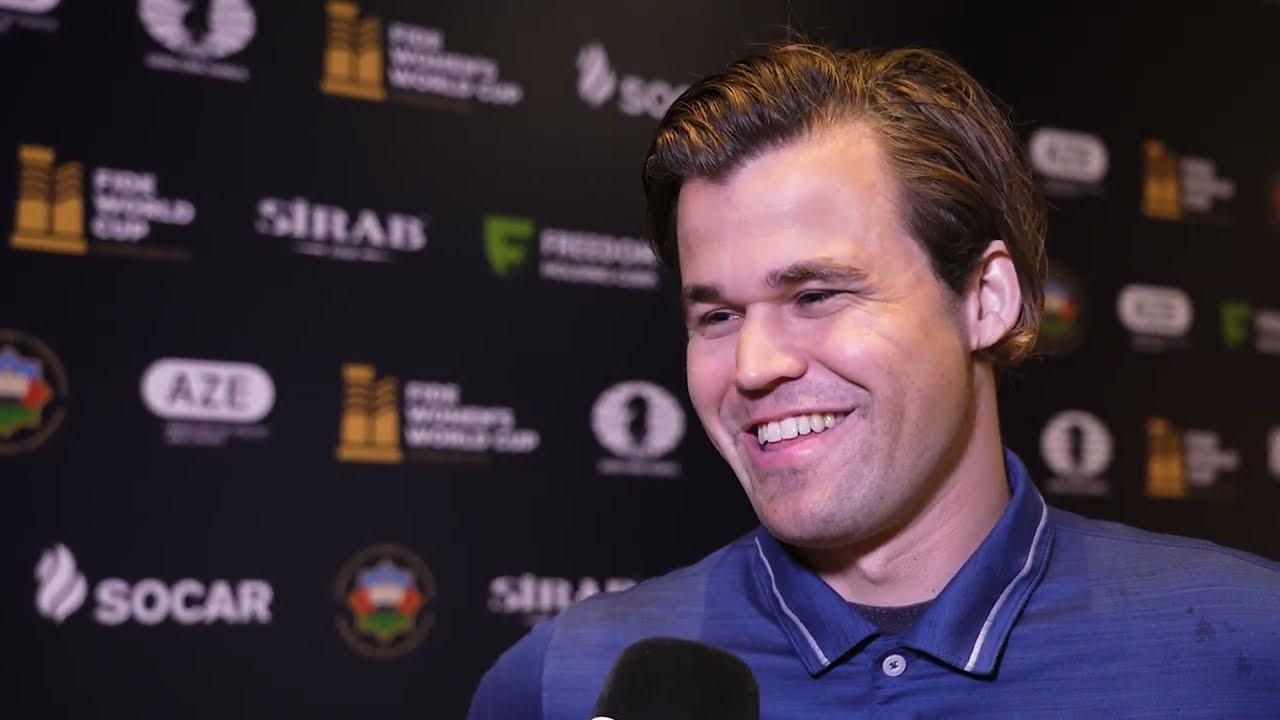
There are usually video interviews with the players after. Yesterday (I think) the cameras followed Magnus out the door into the public area where he was swamped mostly by kids looking for autographs. Very patient. Today the interviewer asked him about that… then watch to the end.

YouTube thumbnailYouTube icon

Posted in SESSIUNCULA |
3 Comments

Your Sunday Sermon Notes – 11th Sunday after Pentecost (N.O.: 19th) 2023

Share the good stuff.

It’s the 11th Sunday after Pentecost in the Vetus Ordo and the 19th Sunday of the Novus Ordo.

Was there a GOOD point made in the sermon you heard at your Sunday Mass of obligation?

Tell about attendance especially for the Traditional Latin Mass. I hear that it is growing. Of COURSE.

Any local changes or (hopefully good) news?

I have some thoughts about the Sunday Epistle reading posted at One Peter Five.

A taste:

Contrary to the notions of some in the Church today, Paul and his cohorts of catechists and bishops didn’t focus on soccer balls instead of doctrine.


Posted in Liturgy Science Theatre 3000 | Tagged
5 Comments

“Hail Mary, full of grace. Shoot the Devil in the face.” KID ART!

One of my favorite depictions of the Blessed Virgin shows her protecting a soul in the form of a child from the Devil whom she is beating with a club.  I also have one of St Margaret beating Satan with hammer.

I have a collection of some of these images HERE.  For example…

We need upgrades from time to time.   I spotted this on Fakebook (which I almost never look at… today it was worth it.)

Mary with a spiritual AR-15 shooting rosary beads.  Okay!

You can do that everyday.

Pray the Rosary.

However, pray it attentively.

A priest friend of mine who is an exorcist said that one time the demon taunted the people there for how they was saying a Rosary, in a rather distracted and hurried way.  When forced to explain more, the demon responded that their distracted Hail Mary’s were like, “laying wilted dried flowers at her feet”.   When asked what an attentive Rosary filled with love was like, the demon said, “What is a fragrant bouquet for her is our downfall.”

Flower power.

Now that’s a “combat rosary”.

“Hail Mary, full of grace. Shoot the Devil in the face.”

Posted in Lighter fare, Our Catholic Identity, Our Solitary Boast | Tagged ,
10 Comments

QUESTION FOR READERS: reMarkable (and digital notebooks)

As I look down the road to writing projects, I have a question for the readership.

During the wonderful conference for priests held by the St. Paul Center for Biblical Theology, I sat at most of the sessions next to a priest who had a reMarkable digital notebook.

It is sort of “digital paper”.  You can write on it, erase, whatever and then send what you’ve scribbled to other devices.  Somehow it learns your handwriting (all bets are off with mine).

What I saw of the reMarkable in use by the priest next to me was impressive.

I understand that there are various iteration of these “digital paper” devices.

I’m nearly entirely ignorant about these gizmos.  I’ll bet some of you readers have experience with them.  It seems that whenever I post a question… BAM!… answers come quickly.

In any event, I was looking at the reMarkable and thinking, “Gosh, I could notate my over the board chess games on this and then not have to transcribe them later for engine analysis.”  Also, I am forever having fleeting ideas.  I used to carry a small notebook (thanks to readers who sent some small books which I still use for taking notes in museums and for great quotes).

So… do you have one?  Do you use it?  Is it worth it?  Etc.?

Posted in "How To..." - Practical Notes | Tagged
6 Comments

WDTPRS – 11th Sunday after Pentecost: healthy “pessimism”

With a minor variation this week’s Collect was in the ancient Gelasian Sacramentary.  It survived the cut to live on in the Novus Ordo Missale Romanum as the Collect on the 27th Sunday of Ordinary Time.

Omnipotens sempiterne Deus, qui abundantia pietatis tuae et merita supplicum excedis et vota: effunde super nos misericordiam tuam; ut dimittasquae conscientia metuit, et adicias quod oratio non praesumit.

Our information-oozing Lewis & Short Dictionary, says votum means “a solemn promise made to some deity; a vow.”  It is therefore also the thing promised or vowed.  In a more general sense it is a “wish, desire, longing, prayer.”

Supplex is an adjective, used also as a substantive, meaning “humbly begging or entreating; humble, submissive, beseeching, suppliant, supplicant.”  This and other derivative forms are commonly used in our Latin prayers; for example, now and again we see the adverbial form suppliciter.

I never get tired of this word.  As we have seen the L&S says supplex is from sup-plico, “bending the knees, kneeling down”.  The article on supplex in the French etymological dictionary of Latin by Alfred Ernout and Antoine Meillet offers that supplex comes not from plico but from plecto, “to plait, braid, interweave”.  E&M offers also the possibility that it is from placo, “to reconcile; to quiet, soothe, calm, assuage, appease, pacify”.   The former describes the physical attitude of the suppliant.  The latter describes his moral attitude.  The more probable plecto gives us much the same impact as plicoL&S also says plico and plecto are synonyms.  Thus, the imagery I have invoked in the past of the supplicant being bent over or folded in respect to his knees (i.e., kneeling or bent low toward the floor) works well.  Also, in the ancient world it was usual for the supplicant to wrap his arms around (plecto) the knees of the one from whom he was begging his petition.

Let’s keep drilling into supplex for a moment.   In many places during Holy Mass instead of abasing ourselves humbly before the Real Presence of Almighty God, we celebrate ourselves in remembrance of Jesus our non-judgmental buddy.  The concept of humility, inherent in supplex, was systematically expunged from translations of prayers, contemporary music in parishes, and (in churches now lacking kneelers) architecture.

If I am not mistaken, in art sometime the Devil is depicted without knees.

You can understand why a comparison of the over-arching tone and content of the orations of the Vetus and the Novus could lead one to think that they belong to different denominations.  This is not to say that what the Novus emphasizes is bad.  It is just that certain really important things are lacking.   If the Novus stresses the eschatological hope and joy of heaven (not a bad thing), we still have to get there.  That means penance… propitiation… recognition of sin… guilt… the attack of the Enemy.  These were systematically expunged from the Novus Ordo orations.    The “spirit of Vatican II” is wrapped around an overweening optimism about man and a strong streak of anthropocentrism.  Surely this is the “spirit” that also informed the choice to edit down the ancient prayers and compose new ones reflecting that optimism and man-centeredness.   This is also why certain of the New catholic Red Guards, the papalotrous, are so triggered by the Vetus Ordo.  They see it as being out of continuity with the “spirit of Vatican II”, which is, for them, the lens that allows them to reinterpret all of Tradition and even the teachings of the Lord in the Gospels.   In fact, it is the “spirit of Vatican II” that is the break in continuity.  They reversed it so that Tradition is a break from the Vatican II, which is plainly absurd.  But that’s their game.

No, we need a healthy “pessimism”, a realistic view of who we are and who we aren’t.  Our prayers should reflect both the positive goals of heavenly joy, but also what we have to do to get there, the hard stuff.

One of the most “Catholic” of prayers, nearly eliminated after Vatican II, underscores an important dimension of healthy spirituality.  In the once familiar Dies irae, the haunting sequence of the Requiem Mass by the Franciscan friar Thomas of Celano (+ c.1270).  Sung amidst the inky vestments symbolizing our death to sin and the things of this world, in the Dies irae we contemplate our inevitable judgment by the Rex tremendae maiestatis… the King of fearful majesty, who is iustus Iudex, our just Judge.  In two of the verses we pray:

“Once the accursed have been confounded,
once they have been delivered to the stinging flames,
call me with the blessed.
(Knees) bent and leaning over (supplex et acclinis),
My heart worn down like ash, I pray:
Have a care for my end.”

The use of supplex in our Catholic prayers conveys an attitude of contrition for our sins which then shapes other more joyful and confident prayers.  This lowly attitude keeps in close view the reality of our sins, God’s promises of forgiveness, the ordinary means of their cleansing (confession) and thus the joyful comfort we have when we surrender to this merciful plan.

God takes our sins away, but only when we beg Him to.

We retain the memory of actual sins, but not their stain.  When we reduce ourselves to the ashes of humility and confess our sins we know those sins are not merely covered over; they are washed away clean.  Before modern times, soaps were made partly from ashes.

GO TO CONFESSION!

The Dies irae is not forbidden in Masses with the Novus Ordo, it simply is no longer obligatory.  The Church’s documentation on the use of sacred music establishes that suitable (i.e., truly sacred and truly artistic) pieces can be substituted into the Mass for the proper purpose and occasion.   Nothing is more suitable for Catholic piety than the use of the Dies irae.

LITERAL WDTPRS TRANSLATION:

Almighty and everlasting God, who in the abundance of Your goodness surpass both the merits and the prayerful vows of suppliants, pour forth Your mercy upon us, so that You set aside those things which our conscience fears, and apply what our prayer dares not.

That last line of the Collect is consoling: adicias quod oratio non praesumit…add that which prayer does not dare… or rather … anticipate.  Praesumo also means “foresee” or do something “in advance”.  With our limited powers of discernment we cannot see or pray about every contingency we must face in life, but God knows them all.  He can mitigate our fears, both about the sins we remember as well as the things we worry over and can only guess at.

I am glad that this Collect was preserved in the Novus Ordo Missale Romanum.  Being ancient, it retains a recognition that we need mercy and that we have something to fear.  It is a healthy prayer.

Let’s see what is used on the 27th Sunday of Ordinary Time in the Novus Ordo.  First, the bad old days.

OBSOLETE ICEL (1973):

Father,
your love for us
surpasses all our hopes and desires.
Forgive our failings,
keep us in your peace
and lead us in the way of salvation
.

I actually had to double-check to make sure I matched the correct Sunday in the respective editions of the Missal.

CURRENT ICEL (2011):

Almighty ever-living God,
who in the abundance of your kindness
surpass the merits and the desires of those who entreat you,
pour out your mercy upon us
to pardon what conscience dreads
and to give what prayer does not dare to ask.

Try reading these versions, my literal version and the old ICEL’s, bit by bit, alternately: “Almighty and everlasting God” becomes “Father”; “abundance of Your goodness” is reduced to the nebulous ICEL catch-all “love”;  “the merits and the prayerful vows of suppliants” is banalized into “our hopes and desires”; “pour forth Your mercy upon us” becomes “Forgive our failings” (not sins! … they’re just boo boos); “those things which our conscience fears” (our sins, the everlasting punishment of hell and having offended God) is rendered down to the amorphous “keep us in your peace”; and “what our prayer dares not” veers away from the misery of our true state into “lead us in the way of salvation”.

Some Collects we have encountered seem to refer to the Lord’s Prayer.  Perhaps this one does as well.  First, we have the word oratio.  In Latin the Lord’s Prayer is oratio dominica where dominica is an adjective, “lordly; of or pertaining to the Lord.”  In our Collect the “prayer”, oratio, is grammatically the subject of that last verb adicio.  After the Eucharistic Prayer the priest introduces the recitation of the Lord’s Prayer saying “audemus dicere…. we dare to say….” On our own we could never presume or dare to raise any petitions to the Father if the Son had not already enjoined them on us, given us permission, nay command, and made us members of His own mystical Person as coheirs.   A noble and even courtly style of speech our prayer helps us avoid being presumptuous.  The banal, humility-stripped style of the obsolete ICEL versions? Not so much.

In today’s Collect we must make a tricky translation choice.  In dimitto (used also in the Lord’s Prayer) we have “to send away; separate” and thus logically “to forgive”.  The verb ad(j)icio is “place a thing near; add as an increase, apply”.  It is hard to get the impact of this “spatial imagery” into English without circumlocutions.  We want to have sins and their lethal effects separated far away from us, but we want God’s favors and promises to stick to us.

Our Latin Collect gives us a model for an attitude of prayer.  We see the figure of one who is bowed down, folded, knees bent (supplex, – plico).  This suppliant is frightened by what the just Judge will apply to him because of the sins which bother his conscience.  This lowly beggar prays and prays, entwining (– plecto) his arms about the knees of his Lord.  He petitions the Almighty Father, merciful and good, to allay his fears by totally removing his damning sins and then supply him with whatever he dares not ask or does not even know he ought to beg for (non praesumit).  He simultaneously has the humility of the kneeling suppliant but also the boldness of sonship.  He can dare what is beyond his own ability because God the Father Himself made him His son through a mysterious adoption.  He is emboldened to ask many things of the Father with faith and confidence (cf. Mark 11:24 and 9:23).

The Gospel of Luke recounts (cf. ch. 11 and 18) three parables of Jesus about persistent, even audacious, prayer of petition.  When we pray with the right attitude, particularly during Holy Mass before the altar of sacrifice, turned in hope to the liturgical East with our mediator the priest, Christ makes up for what we are cannot do.  He takes our hearts, minds, voices, gestures and makes them his own so they may be raised to the merciful Father.

St. Augustine (+430) says that Jesus

“prays for us as our priest, prays in us as our Head, and is prayed to by us as our God.  Therefore, let us acknowledge our voice in Him and His in us” (en Ps 85, 1).

Holy Mass is all about what Christ does for us.

Mass is a sacred action in which God is the principal actor.  By our baptism we participate actively in His sacred action.  Christ is the Head, we the Body.  He takes our voices and makes them His own.  Our actions become His.  We must therefore never usurp the liturgy, change it around to suit our tastes.  With Christ’s own authority Holy Church gives us the Mass. She alone provides the proper prayers and rubrics.

When we pray as Holy Church directs, bending our will to hers, our earthly voices ring authentically with the celestial, and ecclesial, voice of the Risen Christ.

Posted in Liturgy Science Theatre 3000, SESSIUNCULA, WDTPRS |
1 Comment

Daily Rome Shot 762

Photo from A.

White to play and mate in 2.

NB: I’ll hold comments with solutions ’till the next day so there won’t be “spoilers” for others.

Your use of my Amazon affiliate link is a major part of my income. It helps to pay for insurance, groceries, everything. Please remember me when shopping online. Thanks in advance.  US HERE – UK HERE

In chess news, I’m watching (delayed) the Battle in Baku.  The field is thinning.  As I type, Magnus v. Vasyl Ivanchuk who is an “ancient” 54!  (Erigaisi is 19, Prag is 18, Duda is 25, Nepo is 33, Magnus is 32, Fabi is 31)

Posted in SESSIUNCULA |
4 Comments