Archbp. Vigneron’s blog

Archbishop Allen Vigneron of Detroit has started a blog for the coverage of his trip to Rome to receive the Pallium.
Posted in SESSIUNCULA |
3 Comments

French article on upcoming Ecclesia Dei & SSPX Motu Proprio

On the French language websit Golias there is an interesting article about the upcoming Motu Proprio which will concern the Pontifical Commission Ecclesia Dei.

I don’t have time to translate it for you today.  Perhaps some of our French readers here can divvy it up and give us an English text.

Here is an interesting line:

Le nouveau Motu proprio à venir, que préparerait déjà le principal rédacteur du Motu proprio de 2007, Mgr Nicola Bux, professeur de théologie à Bari et conseiller estimé de Joseph Ratzinger, justifiera l’importance accordée à la dimension doctrinale de la controverse intégriste. Le rôle de Don Nicola ne saurait être assez souligné.


UPDATE 2122 GMT

A reader sent a translation.  It is a little choppy, but hey!  I didn’t have time to do one and this person stepped up to the plate!


According to our informations, and on the eve of the lefebvrist ordinations of next June 27th in Germany, the Pope wishes for the coming months to write a second motu proprio. Document to be spent this time not only to the liturgy in Latin, but to a more comprehensive reintegration of Lefebvre in the Church. By asking, of course conditions, but also by engaging the whole Church in this process. That’s serious!
 
In other words, the bishops will no longer be entitled to express openly their reluctance and even less to slow the return of the traditionalists. In fact one knows that the representatives of these currents regularly are complaining to the Pope about the obstacles to their reinstatement placed by the bishops and their entourage. Until then, Rome and the Ecclesia Dei commission bypassed the local bishops without, however, in general, openly disavowing them.

Thus, in 1988, the commission very quickly and very caringly get the situation of the Benedictine abbey of the Barroux Abbey sorted out, without informing or consulting the Archbishop of Avignon at the time, Archbishop Raymond BOUCHEX. More recently, Rome proceeded in the same way with respect to the Institut du Bon Pasteur, without informing the archbishop of Bordeaux, in which he sat. Recently, another signal was given by the Vatican which restored to her parish a traditionalist parish priest in dissent with his bishop in Calvados, so to remind the French bishops. Following such a new Motu proprio, a bishop considered too reluctant to welcome newly joined traditionalists will certainly be severely rebuked
The bishops no longer will be able to express their reservations

Benedict XVI and his advisers intend to enjoy the quiet summer to advance on the path of reconciliation. After the authorization to celebrate according all the old liturgical books (Motu proprio of 2007), after the lifting of the excommunication of the four schismatic bishops ordained by Archbishop Lefebvre, a new stage is opening up, more delicate however: That is concerning the divisive theological background in particular with regard to Vatican II and the Magisterium of last popes. You should know that the Pope has chosen the new secretary of the International Theological Commission, the Dominican Father Charles Morerod, precisely according to its sensitivity close to the traditionalist partners. In fact one must be aware that Morerod is the author of a doctoral thesis submitted to the faculty of theology at the University of Freiburg, Switzerland, on the master general of the Dominicans, commentator of Thomas Aquinas, Thomas said Vio Cajetan (1469-1534) in his polemic debate with Luther.

Father Morerod for the theological agreement

But Father Morerod was especially noted for his work Tradition and Unity of Christians. The dogma as a condition of possibility of ecumenism (Word and Silence, Paris, 2005), in which he takes a very drastic stance against a more liberal ecumenism (as theologians Fries, Rahner or Tillard) in emphasizing the essential nature of a true Catholic thought, theologicallly and philosophically indivisible.

Hence, it accentuates the difference between Catholicism and Protestantism in a way that does not displease the most common "tradi" streams. The same Father Morerod strived to trounce the thought of a British Liberal Protestant, John Hick, wose relativist spirit he specifically denies. Oh, this reminds us of someone else … The choice of Morerod Father is therefore not a matter of chance! In a very concrete way, the Ecclesia Dei commission will be subjected to the congregation for the doctrine of the faith (cf. Golias Hebdo n ° 85). There was actually a consideration to join it to the congregation for divine worship, but this was to forget that the problem is not solely or mainly liturgical.
The new Motu Proprio to come, that is said prepared already tby he principal drafter of the Motu proprio of 2007, Monsignor Nicola Bux, professor of theology at Bari and advisor of Joseph Ratzinger, would justify the importance accorded to the doctrine of the traditionalist controversy. The role of Don Nicola will not be stressed enough.

The Italian prelate Nicola Bux for the new Motu Proprio

Consultor to the congregation for the doctrine of the faith and looking for a strategic promotion, Bishop Bux, an Italian priest of 63 years, friendly and discreet, but frighteningly conservative and accurate in its argument, is the determined and tireless craftsman not only of moving closer to the traditionalists but of a restoration of traditional Catholicism as a whole. He drafted the 2007 Motu Proprio on the Mass in Latin. In his latest book, released last October in Italy, "The Reform of Benedict XVI," prefaced by Vittorio Messori, Msgr Bux reckons that rebuilding the essence of the « sacred and divine liturgy, which cannot be made by the hand of man » is necessary. Otherwise, it "would serve no purpose other than to represent himself and upon all it would not save the man or the world, nor would it sanctify it." He is convinced that the liturgy of Saint Pius V better honors the sense of the sacred than that of Paul VI. He criticizes also quite fiercely the reform named of the pope Montini’s name, a true "decomposition" of the liturgy, according to him, expressing and exacerbating what the theologian Louis Bouyer called the "decomposition of Catholicism."

Indeed, Msgr Bux is not confined solely to the liturgical field. He denounces the opening to the world that defiles the Christian mystery and censures the relaxed life of priests in particular with regard to privacy (célibacy. ..). He also attacks the fundamental deviance of the contemporary theology, that he claims to operate an "anthropological turn" (which he also denounces, following Cornelio Fabro, in Karl Rahner). To thise he opposes a new theocentric and Christocentric turning as it may be symbolized by the celebration to the East, his back turned to the faithful. It is easy to imagine the content and tone of the future and near Motu Proprio with such a writer.

Cardinal William Levada, prefect of the Congregation of the Doctrine of the Faith, who is currently undergoing health problems, is distressed, frustrated and demoralized, no longer has the power nor the liveliness necessary to oppose such an ultra-conservative reversal .

Far from appearing as a defense of the Council, the Motu Proprio will propose a minimalist reading of it, erasing its novelties and questionning its spirit. In sum, a council "according to the tradition" like Archbishop Lefebvre reckoned he could accept it!

Is this still the Council of which Paul VI proclaimed the importance in 1976 when he was facing the integrist dissent? Nothing is less certain.

Posted in SUMMORUM PONTIFICUM |
28 Comments

Liturgical booklets for the Papal Ceremonies for Sts. Peter and Paul

Do you want to see the liturgical "aids", the booklets published for the closing of the Pauline Year and the Feast of Sts. Peter and Paul by the Holy See’s office for the papal liturgies?

Sunday 28 June

Solemnity of Sts. Peter and Paul
Basilica di San Paolo Fuori le Mura, 1800h (Rome time)
CAPPELLA PAPALE
1st Vespers for the closing of the Pauline Year

Notification

Booklet for the Celebration

Monday 29 June 2009

Solemnity of Sts. Peter and Paul
Vatican Basilica, 0930h (Rome time)
CAPPELLA PAPALE
Holy Mass and imposition of the Pallium on new Metropolitans

Notification

Booklet for the Celebration

Posted in Just Too Cool, SESSIUNCULA |
6 Comments

QUAERITUR: one confession for many indulgences?

From a reader:

The year of St. Paul and the year of the priest overlap by 10 days.  Assuming the other requirements for obtaining the indulgence are met, is only one confession necessary to obtain more than one plenary indulgence?

"Yes We Can!"

One confession of Holy Communion will suffice for the gaining of many indulgences, provided that the person did the works required and is properly disposed.

UPDATE:

A reader chimed in with this:

From the Apostolic Penitentiary, “The Gift of the Indulgence” (2000), n. 5, under the heading “General Remarks on Indulgences”:
 
One sacramental Confession suffices for several plenary indulgences, but a separate Holy Communion and a separate prayer for the Holy Father’s intentions are required for each plenary indulgence.
 
The same document also says these additional conditions may be fulfilled "about 20" days before or after the indulgenced act, the most generous interpretation of that condition that I’ve seen anywhere.

This helps to clarify the situation.

Posted in "How To..." - Practical Notes, ASK FATHER Question Box, Just Too Cool |
15 Comments

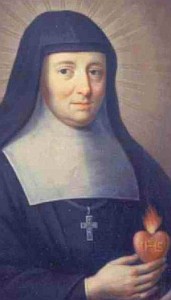
QUAERITUR: When is the feast of St. Jane Frances de Chantal?

The following is a piece from the May-June Newsletter of the USCCB’s Committee on Divine Worship.

It concerns the shifting date of the feast of St. Jane Frances de Chantal. 

People who are interesting in the TLM, the Extraordinary Use of the Roman Rite will find this interesting.  It mentions Summorum Pontificum.

My emphases and comments.

QUAERITUR: When is the feast of St. Jane Frances de Chantal?Memorial of Saint Jane Frances de Chantal: Which Date is Correct?

Over the past several years, there has been much confusion regarding the celebration of the memorial of Saint Jane Frances de Chantal. The Secretariat of Divine Worship has carefully researched this issue, and now hopes to resolve the confusion. The timeline of her shifting feast day is presented below:

1769-1969 – August 21

Sister Jane Frances de Chantal, co-founder of the religious Order of the Visitation of Holy Mary (commonly known today as the Visitation Sisters), died on December 13, 1641. [Very often the feast of a saint is fixed on the day the saint died, that is, their birth into heaven.  Sometimes it is fixed to the date the saints relics are "translated" from one place to another.  At times, the day used has to do with some other event.] Two years after her canonization by Pope Clement XIII in July 1767, St. Jane Frances’ feast day was fixed on August 21, and remained so until after the Second Vatican Council. (As a result of the Apostolic Letter Summorum Pontificum of Pope Benedict XVI, this date is still observed as her class III feast in the Extraordinary Form of the Roman Rite.)

1970-1988 – December 12

In the 1969 reform of the liturgical calendar, her feast day was made an optional memorial and set on December 12. [tinker tinker] December 13, the date St. Jane Frances died, was already occupied with the memorial of St. Lucy.) In November 1971, however, the Bishops of the United States, wishing to honor the role Our Lady of Guadalupe has played in the Americas, decided to insert Our Lady’s memorial – also on December 12 – into the proper calendar for the dioceses of the United States of America. That decision was confirmed by the Congregation for Divine Worship on December 28, 1971 (Prot. n. 2153/71).

Thus in the United States, St. Jane Frances’ optional memorial was impeded for 17 years by the obligatory memorial of Our Lady of Guadalupe. Our Lady’s memorial was later raised to a feast in the United States by its Bishops in November 1987 (a Marian Year) and confirmed by the Congregation for Divine Worship on January 8, 1988 (Prot. n. 1341/87).

1989-2001 – August 18

To allow St. Jane Frances’ feast to be celebrated, the Bishops of the United States voted in November 1988 to petition the Holy See to transfer the optional memorial of St. Jane Frances from December 12 to August 18 [! Not August 21.] in the United States – the date recommended by the Visitation Sisters. The request was granted by the Congregation for Divine Worship on January 20, 1989 (Prot. N. 1609/88).

2002-present – August 12

Finally, [whew!] on December 18, 2001, the Congregation for Divine Worship and the Discipline of the Sacraments decreed that, because her memorial was continually being impeded by the celebration of Our Lady of Guadalupe, the optional memorial of St. Jane Frances was transferred in the universal calendar to August 12. This decree (Prot. n. 2492/01/L) has superseded the 1988 request of the U.S. Bishops. Therefore, [the bottom line is….] in the Ordinary Form of the Roman Rite, the optional memorial of St. Jane Frances de Chantal is August 12; on the Extraordinary Form calendar, her class III feast is celebrated August 21.

When tinkeritis sets in, you never know what is going to happen.

But, it remained the same date for the TLM since 1767.

In the 2004 Martyrologium Romanum St. Jane has two entries!  12 August for the memorial and 13 December for her death.

Posted in "How To..." - Practical Notes, ASK FATHER Question Box, SUMMORUM PONTIFICUM |
15 Comments

A few thoughts on the CDF and the PCED

This is a season of changes for the Congregation for the Doctrine of the Faith.

First, let me say that I think His Holiness is trying slowly to restore the CDF to its proper importance.

We have seen in recent times the changing of the guard in the Undersecretary’s office.  

I have heard from three different places in the last week that when the Pontifical Commission Ecclesia Dei is assumed under the aegis of the CDF, that it will have a new seceretary, perhaps a present official of the CDF.  Keep in mind that the Secretary of the PCED, Msgr. Mario Marini died recently.  That chair is open. 

Some have suggested to me that the new Secretary of the PCED may be Msgr. Guido Pozzo, who is an official of the CDR and a member of the International Theological Commission.

The CDF and PCED will have to take care of the doctrinal discussions with the SSPX.

I think that the liturgy dimension of the PCED will probably be shifted to the CDW.  There are good people at the CDW right now, but I still think that, since liturgy is also doctrine, it would also be best treated by the PCED, even with its closer alignment with the CDF.

Just some thoughts.

Posted in SESSIUNCULA |
11 Comments

OLDIE PODCAzT for St. John the Baptist

Here is a reworking of a post from last year it includes PODCAzT 36.

OLDIE PODCAzT for St. John the BaptistToday is the Feast of the one whom the Lord called the greatest man ever born of woman.
Here is his entry in the new Martyrologium Romanum:

Sollemnitas Nativitatis sancti Ioannis Baptistae, Praecursoris Domini, qui iam in utero matris, Spiritu Sancto repletae, exsultavit gaudio ad humanae salutis adventum cuiusque ipsa nativitas Dominum Christum prophetavit; et tanta gratia refulsit in eo, ut ipse Dominus de illo diceret neminem maiorem inter natos mulierum Ioanne Baptistae.

I’ll et you readers tackle that in your own perfect versions.

Let’s have a look at the Collect

COLLECT:
Deus, qui beatum Ioannem Baptistam suscitasti,
ut perfectam plebem Christo Domino praepararet,
da populis tuis spiritalium gratiam gaudiorum,
et omnium fidelium mentes dirige
in viam salutis et pacis.

I like the sound of the ends of the clauses – suscitasti… praepararet… gaudiorum and then a big change with salutis et pacis.   Remember!  These prayers are to be sung!   Suscitasti is, as you now recognize, a syncopated form, short for suscitavi­sti, which would have diminished the rhythmic coherence in the first three clauses.

LITERAL TRANSLATION:
O God, who raised up blessed John the Baptist,
so that he would prepare a perfect people for Christ the Lord,
grant to your peoples the grace of spiritual joys
and guide the minds of all the faithful into the way of salvation and peace.

This modern Collect of the 1970 Roman Missal is based on the Collect of olden days:

Deus, qui praesentem diem honorabilem nobis in beati Ioannis nativitate fecisti: da populis tuis spiritualium gratiam gaudiorum; et omnium fidelium mentes dirige in viam salutis aeternae.

Perhaps the terrible wars of the 20th c., by far more bellicose than even the 16th c., drove the composers of the newer version to include the petition for peace.  One can hardly object.  The first part of the present Collect also is a bit more theological and significant.  All in all, it seems to me that the newer Collect represents an improvement over the older version: which we cannot always say when comparing old and new prayers.

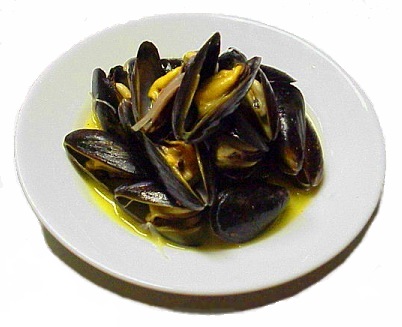
In Rome today on the feast of St. John it is the custom to eat snails.    It is nice to have as your Patron the great Baptist, for I get two feasts a year, his Nativity and his Beheading!  In honor of the memory, if I can’t get snails tonight, I might try for mussels or some other mud bug.

OLDIE PODCAzT for St. John the BaptistSnails apart, I cannot help but remember a marvelous St. John’s Day when rather than snails I had wonderous mussels with a dear friend, an occasion I would repeat every year, if I could. 

For the Vigil of St. John in the old Roman Ritual the priest would once bless bonfires!  

This is lovely custom calls to mind that many places celebrated the feasts of saints with great festivity.  By this day all the cuttings and trimmings of the orchards and vineyards were dried and crackly and ready to be burned.  The evening is about as long as the year can offer, so a great party could be had well into the night with much cooking in the open and revelry. 

On the Vigil of the Feast, after the usual introduction, the priest would bless the fire:

Lord God, almighty Father, the light that never fails and the
source of all light, sanctify + this new fire, and grant that
after the darkness of this life we may come unsullied to you who
are light eternal; through Christ our Lord.
All: Amen.

OLDIE PODCAzT for St. John the BaptistIt is almost as if the fire, and our celebration, is baptized.  At this point the fire is sprinkled with holy water and everyone sings the hymn Ut quaent laxis which is also the Vespers hymn.


For the feast of St. John in June for centuries the Church has sung at Vespers the hymn beginning Ut queant laxis.  Those of you who are lovers of the movie The Sound of Music will instantly recognize this hymn as the source of the syllables used in solfège or solmization (the use of syllables instead of letters to denote the degrees of a musical scale).  Both the ancient Chinese and Greeks had such a system.   The Benedictine monk Guido d’Arezzo (c. 990-1050) introduced the now familiar syllables ut re mi fa sol la for the tones of the hexachord c to a… or, more modally, the tonic, supertonic, mediant, etc. of a major scale.   The Guidonian syllables derive from the hymn for the feast of St. John the Baptist:

Ut queant laxis resonare fibris
Mira gestorum famuli tuorum,
Solve polluti labii reatum
Sancte Ioannes.
 

After the medieval period (when music became less modal and more tonal) to complete the octave of the scale the other syllable was introduced (si – probably taken from S-ancte I-oannes) and the awkward ut was replaced sometime in the mid 17th c. with do (or also doh – not to be confused in any way with the Homeric Simpsonic epithet so adored by today’s youth, derived as it is from the 21st century’s new liturgical focal point – TV) and do came to be more or less fixed with C though in some cases do remains movable.

So, now you know where Doh, Re, Mi comes from!  

Finally, here is a PODCAzT I did on St. John, an oldie.

St. Augustine of Hippo (+430) preached about St. John in Carthage in 401 (s. 288).  This isn’t, btw, the same reading as you would find in today’s Office of Readings, which is from s. 293).  We also get into Ut queant laxis.


Build a fire tonight, eat snails, and sing something in honor of St. John
!

Posted in SESSIUNCULA |
18 Comments

Amerika should have read Charles Curran on subsidiarity

Read my take on Amerika‘s 22 June editorial.

Response to America Magazine’s Editorial “Community of Disciples” (22 June 2009)

It is a sad state of affairs when America Magazine‘s editors can’t even get "subsidiarity" right.  After all, it is a something dear to the hearts of all liberals.

We use Charles Curran to instruct them.

Posted in SESSIUNCULA |
Comments Off on Amerika should have read Charles Curran on subsidiarity

QUAERITUR: St. John the Baptist and blessings

From a reader:

Dear Fr. Z,
 
Happy Solemnity of the Birth of St. John the Baptist!  Again, I want to thank you for all you do and especially for your clear analysis.
 
I have a question regarding this solemnity.  When I was growing up, my father would never allow us to go swimming before St. John the Baptist day because, he said, the water was blessed that day (and we would be protected from drowning). 
 
I have never heard about this from any other source.  Are you aware of any Church tradition regarding blessing of the water on this day?  Is it, perhaps, just a Polish tradition?

My my,… I have never heard that one.

Perhaps some reader can chime in.

Posted in ASK FATHER Question Box |
26 Comments

Feed the Black – Feed the Red

Feed the Black - Feed the RedFeed The Black – Feed The Red

Feed the Black - Feed the Red

"tuppence a bag…"

Feed the Black - Feed the Red

Posted in SESSIUNCULA, The Feeder Feed |
9 Comments























