Bp. Wenski’s Mass of Reparation – sermon (Orlando, 3 May)

I had posted about the Mass of Reparation in the Cathedral of Orlando to be celebrated by Bp. Wenski on 3 May.  This Mass was brought about by alumni of Notre Dame because of the recent scandal there.

A priest reader sent the text of the sermon.

Prepare to be edified.

My emphases and comments:

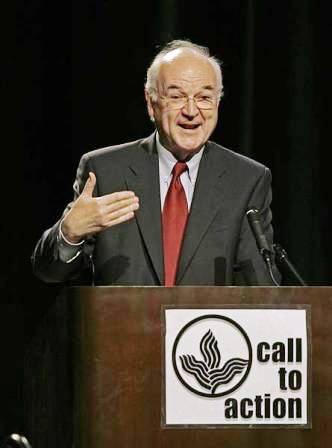
Mass of Reparation – May 3. 2009

Today’s Mass is offered in reparation for the sins and transgressions committed against the dignity and sacredness of human life in our world today.  We do this at the initiative of Notre-Dame alumni here in Central Florida who, like many other Catholics across the country, are confused and upset that their alma mater would grant an honorary doctorate to President Obama despite his rather extremist views on abortion.  In granting this honorary degree, Notre-Dame chose to defy the Bishops of the United States who have said that “the Catholic community and Catholic institutions should not honor those who act in defiance of our fundamental moral principles. They should not be given awards, honors or platforms which would suggest support for their actions." 

The hurt felt by many throughout the United States is real, for Notre-Dame’s actions, despite its protests to the contrary, seem to suggest that it wishes “to justify positions that contradict the faith and teachings of the church; to do so, as Pope Benedict reminded Catholic educators in Washington, DC last year “would obstruct or even betray the university’s identity and mission.” At the very least, Notre-Dame’s actions suggest that, unlike a beauty queen from California, it lacks the courage of its convictions. [Zzzzzot!]

However, our purpose here this evening is not to rail against the insensitivity or thoughtlessness exhibited by Notre-Dame’s president and board.  As I told a reporter who asked me last week, why I am celebrating a Mass of Reparation, “I am a bishop; and so I am not going to send upset Catholics to storm Notre-Dame with pitchforks, I am going to tell them to pray.”   [Excellent]

Our proper response is prayer – but our prayer should not resemble that of the Pharisee who, in the presence of the remorseful Publican, prayed: “Thank you, God that I am not like the rest of men. In our prayer, we seek to make reparation not just for Notre-Dame’s regrettable decision, but more importantly we seek to make reparations for our own complacency. [Indeed… it took a long time to get to this point, didn’t it?]  Yes, we pray for Notre-Dame – for Notre-Dame holds a unique place in the heart of most American Catholics and not just its alumni; but we pray for ourselves as Catholics in America. [Once again we hear the emerging theme of "Catholic identity in the public square".]

We live in a nation where abortion laws are among the most liberal among the Western democracies. We Catholics have become too complacent about the legal killing of unborn children in America and elsewhere.  This complacency contributed to the climate that led Notre-Dame’s president to think that it would be no big deal to defy the bishops in granting this honorary degree to President Obama. And, as the world’s lone superpower, with President Obama’s setting aside the Mexico City policy, we as a nation are once again using our wealth and influence to export abortion to nation’s weaker and poorer than ourselves. [promotion of abortion abroad is framed as exploitation of the weak]  Before the completion of his first 100 days in office, President Obama has already expanded federal funding for abortion, directed tax payer funded support for embryonic stem cell research which requires the destruction of living human beings, and has challenged conscience protection provisions that allow health care workers and institutions to refuse to participate in abortions and other procedures that violate their ethical or religious views.

Soon after the election, the Bishops promised their prayers and support to the then newly elected president.  Cardinal George, president of the USCCB, pledged our cooperation in working with the new administration to advance the common good.  And we do hope to work with the President and his team on any number of important issues.  We do this because we are Catholics and Americans; and as Catholics and Americans we can and must engage and work with people of good will, even those with whom we might disagree to promote the common good.  [To contribute properly in the public square Catholics must have a clear identity.]  But, at the same time, as Catholic journalist, John L. Allen observed, “how to engage public figures who hold pro-choice views without seeming to endorse, or wink at, those views is critically important”.  We must always insist that the common good is never served by making wrongs –like abortion- into rights. [Read carefully…] That President Obama speaks at Notre-Dame is not the issue – and certainly, the President takes the dignity of his Office with him to Notre-Dame.  The issue is that giving him an honor is understood by many to indicate approbation – and thus undermines the efforts of bishops and others who want to offer [wait for it…] a Catholic perspective to the shaping of public policy.  [Again… Catholic identity in the public square.]

But, let’s return to the issue of our complacency.  We have become complacent, because we have become comfortable – too accommodated and too uncritical of the larger culture in which we live.  [Comfort lulls us into thinking that there really isn’t a war going on.] Perhaps, as Catholics, we have become victims of our own success. For much of American history, the Catholic Church and Catholics were viewed with great suspicion by our fellow Americans.  In fact, we still are –Anti-Catholicism is the last acceptable prejudice in American life.  The US government established diplomatic relations with Red China long before it did with the Vatican.  It would be considered impolite and politically incorrect to make jokes about Muslims, Jews, gays or African Americans – but, it is still open season on Catholics. If you don’t think so, just tune in any comedy show on HBO.

We have craved “respectability”; we have wanted to be accepted.  Ironically, Catholic education – our grammar schools, our high schools and our universities opened the way to upward mobility and social acceptance the children of immigrant Catholics in America. Catholics schools aimed to teach us not only how to do good, but how to do well. Thanks in large measure to Catholic education, our Catholic laity are among the best educated, and the most affluent, in America today.  Catholics – 25% of the American population – are now part of the American mainstream.  But, at what price?  [If those Catholics don’t have a clear identity, what good can they contribute as Catholics?]

A few months ago, the State government of Illinois was shaken by “the pay to play” scandal over the senate seat vacated by President Obama.  But, today, too often Catholics are being told that in order to play in America one must pay the price of surrendering one’s own convictions and principles. Catholics who want to enter public life more often than not have to pay the price “privatizing” their religious faith and convictions to play roles of significance in the halls of power.  You can be sure that President Obama would not consider a Catholic for the position of Supreme Court justice – unless that Catholic “bracketed” his beliefs on the dignity and the rights of the unborn.

The options before us are not just between flight and capitulation:  we need not retreat into a Catholic ghetto – for Christ calls us to be in the world; nor, must we necessarily surrender to the culture around us and accept to be absorbed by and assimilated into the ascendant secularism – for Christ tells us not to be of the world. [IN the world but not OF the world… this is also the problem with most inculturated liturgy.  The logical priority of what the Church has to give to the world is set in second place to what the world then gives back after having been formed according to what Christ entrusted to the Church.] There is a third option, to be for the world. [Good.  Now watch the "clear Catholic identity" theme I keep harping about all the time…]  We are best for the world, when we preach and live the gospel coherently. In a world which pretends that God doesn’t matter, we must witness that life is meaningful and joyful only when we live in a way that shows that God does matter.

Jesus in the gospel says:  I am the good shepherd: I know mine and mine know me. The challenge is not how to change the gospel message to make it more palatable, more relevant to the world, but to allow the gospel message to change the world. [See the logical priority here?]  But, it will not change the world unless the gospel changes us first.  [identity]

In today’s first reading, Peter says: “There is no salvation through anyone else, nor is there any other name under heaven given to the human race by which we are to be saved."  This is a rather bold statement – but because Peter and those who share Peter’s faith believed it – it inspired an equally bold evangelical movement to bring the gospel to the ends of the earth. 
As Catholics, we need not flee from the world, nor should we surrender to the world; rather we need to recover that bold conviction of Peter and the early disciples that will make it possible for us to change the world – not by imposing our beliefs but by making our proposal, informed by gospel values, about what constitutes the best conditions for human flourishing in our society..  Peter, in our first reading, spoke truth to power; today we need that the truth be spoken to our complacency.  [Good one!]

This is the first Sunday of May.  The month of May is considered Mary’s month.  Let’s us pray to Our Lady, – or as they say in French – Notre-Dame.

Most Holy Virgin, and Our Mother, we listen with grief to the complaints of your Immaculate Heart surrounded with the thorns placed therein at every moment by the blasphemies and ingratitude of ungrateful humanity. We are moved by the ardent desire of loving you as Our Mother and of promising a true devotion to Your Immaculate Heart.

We therefore stand before You to manifest the sorrow we feel for the grievances that people cause You, and to atone by our prayers and sacrifices for the offenses with which they return your love.

Obtain for them and for us the pardon of so many sins.

Hasten the conversion of sinners that they may love Jesus Christ and cease to offend the Lord, already so much offended.

Turn you eyes of mercy toward us, that we may love God with all our heart on earth and enjoy Him forever in Heaven. 

Notre-Dame, our Mother, pray for us!

I am reminded of the prayer said for many decades after every Low Mass:

Oremus. Deus, refugium nostrum et virtus, populum ad te clamantem propitius respice; et intercedente gloriosa, et immaculata Virgine Dei Genitrice Maria, cum beato Joseph, ejus Sponso, ac beatis Apostolis tuis Petro et Paulo, et omnibus Sanctis, quas pro conversione peccatorum, pro libertate et exaltatione sanctae Matris Ecclesiae, preces effundimus, misericors et benignus exaudi. Per eundum Christum Dominum nostrum. Amen.

LITERAL VERSION:
Let us pray. O God, our refuge and strength, look with favor upon the people crying to Thee; and as glorious and immaculate Virgin Mary, Mother of God are interceding along with Blessed Joseph her spouse and the Blessed Apostles Peter and Paul and all the saints, hear Thou, merciful and kind, the prayers we pour forth for the conversion of sinners, and for the liberty and exaltation of Holy Mother Church. Through the same Christ Our Lord. Amen.
Posted in Our Catholic Identity | Tagged , ,
23 Comments

McBrien: a study of the progressivist mind

McBrien: a study of the progressivist mindFrom the ultra-dissenting National Catholic Reporter comes this sustained whine from Richard McBrien, still at the University of Notre Shame in Indiana.

In this piece McBrien "anonymizes" correspondence he received from someone, which is fair enough.  But not to this ridiculous degree. 

Keep in mind the writer’s penchant for dyspeptic dissent when assessing the veracity of his correspondent’s claims.

Read carefully for a good lesson on how the radical progressivists see the world… see the truly normal Catholic.

My emphases and comments.

The grieving church
By Richard McBrien
Created Apr 27, 2009

I received an e-mail recently from a lay pastoral associate, whose ministerial focus is on adult education and who possesses a graduate degree from a Catholic university. I have his permission to cite a portion of our exchange.

I have suppressed some of the details lest his pastor identify the source and seek to jeopardize the pastoral associate’s job.  [Apparently that pastor is a bad man!]

The e-mail came from a large suburban parish in which the pastor has [watch this] apparently done everything that he can to remove most traces of the reforms initiated by the Second Vatican Council.

The pastor has done away with all contemporary music at Mass, and has restored pre-conciliar devotions along with auricular confession. He even gives the impression that confession is the greatest of the sacraments.  [He is basing this on someone’s report about an impression?]

[So… McBrien contends that Vatican II promoted "contemporary music" at Mass – and we know that he means the usual poorly played commercial-jingle stuff that "contemporary groups" tend to play in "large suburban parishes".  Also, Vatican II did away with pre-Conciliar "devotions".   I suppose that means, for example, recitation of the Rosary before Mass or perhaps Stations of the Cross on Fridays of Lent, or a devotions to Our Lady of Perpetual Help or maybe even Adoration of the Blessed Sacrament.  McBrien thinks that "auricular confession" is also something pre-Conciliar and that Vatican II did away with it also.  I would say to Richard McBrien… what are your proofs for the claims that Vatican II did away with those things?  In what document of the Council are these things eliminated?]

Perhaps there is some misunderstanding here because the Council of Trent, back in the 16th century, made clear that the greatest of the seven sacraments is the Eucharist.  [He is basing this on someone else’s report about an impression.  Furthermore, I’ll bet that if we could contact that priest, he would have a sounder understanding of the importance of the Eucharist and its relationship with the sacrament of reconciliation than McBrien.]

Under the pastor’s control, ["control" is a liberal code word.  Control is bad… but only when people who don’t agree with you are in control.] the parish has no youth ministry, no parish council, nor any other consultative body. [Really?  Perhaps it is merely that this person in that parish wasn’t invited to serve?]  According to my correspondent, “consultative is not in his vocabulary.”  [Perhaps the pastor is simply not asking for his opinion?] He also gave vocal support to the minority of U.S. Catholic bishops who proclaimed in effect that “Catholics could burn in hell” if they voted Democratic in the recent presidential election.  [First, I suspect that the pastor did not actually name either political party.  But liberal brains are wired differently.  When you say things like, "Catholic Universities must not give honors to pro-abortion politicians" a special chemical reaction takes place and they hear – I am not making this up – they actually hear you to say, "Vote Republican".  When a liberal hears you say "The right to be born and live is a fundamental human right", that switch in their heads make them hear, "It’s okay to ignore the poor!"   This is the only possible explanation.  In charity we simply cannot believe they are too stupid to hear the actual words.  We cannot believe they would just lie.  Therefore, it must be a special liberal chemical reaction in their brain when certain sound vibrations contact their eardrums.]

My correspondent reported that other members of the parish staff are hurting “terribly.”  [Remember, long with the chemical change problem, for liberals emotions trump everything.  You must never… never… even risk hurting someone’s feelings.  Therefore, you must never, for example, suggest that Vatican II did not actually get rid of auricular confession. That suggests that people… well… people might sin!  That’s hurtful because it might make someone feel less than self-actualized.  Very bad.   Just repeat to these people over and over, "You’re okay just the way you are!" and they ever helpful "I’m there for you!"] Indeed, they share the feelings of the woman who darted out of church recently during the homily – in tears.

She informed the pastoral associate that she could no longer handle the situation, and that she had to leave the parish. She said that all that she ever hears from the pulpit is what sinners the parishioners are, and why it is so necessary for them to “go to Confession.”  [Who wants to guess what the topic of the sermon, or that comment was about.  Could it have been … lemme see… contraception?  Also, did you note how far afield we are getting now?  McBrien is reporting what someone else reported about what someone else reported about what someone said in a sermon.  Yes, friends.  It takes special skills to do this.]

That particular Sunday, with the old-fashioned church music, all the statues covered in purple as they were before Vatican II, and the usual severe words in the homily, the pressure was simply too much for her to bear.  [Okay… so… it was LENT.  And the priest was talking about the need to go to confession and confess sins.  He might have actually mentioned some sins common to our age.   WHAT AN OUTRAGE! Jesus would never use severe words or hard sayings!  At this point you are probably saying "But Father! But Father!  Surely McBrien is now having a joke with everyone.  Really!  After all, even the recent Ordo for the Church’s liturgical year states that statues can be covered from the 5th Sunday of Lent.  There is nothing wrong with ‘old-fashioned’ music…. just what is that, anyway?  Something written in the 19th century? Surely, Father, McBrien is kidding around now.   No, friends.  He is serious.  For this sort of person, anything but complete rupture with the Church’s pre-Conciliar tradition is simply too much to be borne.]

The woman [we have this third hand … what was that old childhood game… telephone?] poured out her frustrations, saying that the pastor had taken the parish back to a church that she knows nothing about [If she didn’t know anything about it, then how did she get the idea that what he was doing was wrong?] and in a manner that showed no understanding of others’ feelings.

At the end of his first e-mail, my correspondent asked, “Are we expected just to get used to it?”  [Here is the BIG QUESTION.  When the partisans of the "hermeneutic of discontinuity and rupture" took over and made overnight changes to everything, weren’t people simply expected to "get used to it"?  Now that the shoe is on the other foot, they think that is unfair?]

In my reply, I wrote: “No, you are not simply to ‘get used to it’. Parishioners need to go elsewhere, like the woman who left Mass in tears.”  [This reminds me of the "Bitter Pill" and their bashing of Fr. Finigan.]

I continued: “If there are no parishes or other worshipping communities in the vicinity where the pastoral leadership is healthy rather than driven by a narrow ideology, [If you want narrow ideology, find a liberal.  They are, by definition and the root of the word "liberal", people with whom you are free to agree.] then one simply has to ‘take a vacation’ from the church until the skies finally clear and we are bathed in sunlight once again.”  ["Take a vacation from the church"…. did I just read that McBrien is, in public, telling people that if they don’t like the pastor or what he says, they should not go to Mass?  Not go to confession?  Not get married in the Church?  I think that is what he said.  Would this fit the definition of scandal?]

In response, the pastoral associate noted that “the number of our parish families who are already on vacation from the church is amazing. It hurts to see it.”  [Yes… that indeed should hurt anyone who has even half his heart with Holy Mother Church.]

“It’s new territory, dealing with people grieving for their church,” he wrote.  [ROFL!  What about all the people who for decades who saw their Church and her flock devastated by changes having nothing to do with the Council or authentic conciliar reforms? This is risible beyond words.]

The lead article in America magazine’s 100th anniversary issue (4/13/09) is by a Dominican who is justly admired the world over. It is Timothy Radcliffe’s [LOL!] “The Shape of the Church to Come.”

What follows here is a continued commentary on the problem of the “grieving church” and not meant as a criticism of Timothy Radcliffe’s fine article in which he deplores the polarization that is “deeply wounding and inhibits the flourishing of the church.”

However, [pay attention!] he does identify this polarization as consisting of self-defined “traditionalist” Catholics in open conflict with self-defined “progressive” Catholics.  [Which is exactly what McBrien and his lot are striving to perpetuate.  People in the same camp as Pope Benedict are striving to heal that division.]

My experience with the worldwide Catholic church is surely much more limited than Timothy Radcliffe’s, and I would defer to his experience [again, pay attention!] if indeed he has come across a significant number of Catholics who actually identify themselves as “progressive.” On the other hand, [watch this] I know of countless numbers of Catholics who proudly call themselves “traditional” or “orthodox.”

The pastor in the true story above surely would regard himself as “orthodox,” but the woman who left the church in tears would never have defined herself as a “progressive” Catholic. That adjective would mean nothing to her.  [… ?!? … How on earth could he know that about her?  Because that is the only way what happened can be interpreted properly according to his world-view.  I will drill into this below.]
 
She and other Catholics like her grieve simply for the loss of their church, a church renewed and reformed by Vatican II.  [A fantasy about what the "reformed Church of Vatican II" is about, pal.  But that has little or nothing to do with the actual documents of the Council.]

It is not polarization but the pastor of the story and many like him who are responsible for the grieving church.  [In the end, he descends to mere bullying.  But we will get into what he is really saying, below.]

Fr. McBrien is [still] the Crowley-O’Brien professor of theology at the University of Notre Dame.

Here we need a little lesson. 

First, the technique.  McBrien and his lot set up false premises and then, through them, attempt to lead to lead your through the looking glass.

There are many such false premises in the above.  For example, McBrien asserts weird things about what the Council did away with.  Auricular confession is pre-Conciliar.  The Council did away with auricular confession. The pastor as reinstituted auricular confession.  The pastor is against the Council.  That sort of BS blah blah.

Here is another, subtler thing to watch for when reading this sort of rubbish.

Liberals, progressivists, leftists – call them what you will, it doesn’t matter – do not want to allow "maps".  What do I mean by "maps"?

They don’t want to concede that there are real splits, divisions in the Church along certain lines.  This is because they don’t want to concede that there is an reasonable alternative view, and alternative to their own view which you are simply required to accept.

McBrien is the sort of liberal, usually in their 60’s or 70’s, who won’t admit that there is on the map of the Church an extreme fringe on the far left, radical progressivists. 

Of course he doesn’t want to admit that: that is where he is. 

In his piece, above, he doesn’t want to admit that there are really any "progressives" out there.  There are self-defined conservative, but surely not any progressivists.

For McBrien there is the huge mushy mass of Catholics and there is a radical right wing fringe, a small minority.  They are cranks, not important… unless they get control of something. 

For McBrien, Pope Benedict is one of these cranks.  But Benedict has control.  Anyone on Pope Benedict’s side of things, anyone who wants continuity with our liturgical tradition and body of doctrine before the Council, is a dangerous crank. 

And since for progressivists, numbers really matter (they authentic their positions with polling data), it is important that there be very few right-wing cranks.  Liberals think that majorities verify their positions.  Thus, they refuse to allow on their maps of the Church that too much ground be conceded to tradition.

There is another type of liberal, more reasonable, who will concede that there is also a liberal far left fringe, also very small, also not so important.  They are not as dangerous as conservatives if they get control of anything.  The progressive extremists are not cranks in the sense that conservatives are cranks.  But there remains, even in this vision, the huge mushy mass of those who are not on the fringe.  They don’t like that their maps should include much other than what they fantasize: almost everyone agrees with us and those who don’t really are normal.

But that doesn’t describe McBrien.  He is a liberal of the first group, not this more reasonable second.

McBrien would reject that there are two poles. That would concede too much ground that he thinks by divine right belongs to his party.  It is a psychological thing, a necessary trope, an unavoidable lens.  They can’t help it.  There is no no real division in the normal Church.  Instead, a nutty fringe is trying to hijack the Church.  Ratzinger and his curia and his followers have control.  They are the lone aberrant fringe to be resisted.  For McBrien, the real Church, the normal Church includes fringe progressivists but excludes tradition. 

Progressivist = mainstream. 

The Church is a huge mass of lay people with "sane" clergy, "tame" priests who have embraced what clearer thinking people know is really the agenda of a radical progressivist fringe.

For McBrien some few hurtful traditional wackos are out there and everyone else is normal.  We mustn’t allow the true and normal Church the – we are church – to be victimized by the mean-spirited.  That is why you can simply take a vacation.  In the face of loss of control to the extremists (read: conservatives) it is okay not to go to Church for the sacraments.  Remember, for McBrien there are no liberal extremists.  Thus, whatever is done by progressivists, no matter how discontinuity and rupture they inflict, is still "normal".

Go back and read McBrien’s comments about the "minority of U.S. Catholic bishops".  Reread his comments that there are self defined conservatives but not progressives.  Read his recommendation that if you can’t find a parish which doesn’t lay mean-spirited guilt trips about sin on you during Lent, then it is better to avoid going to Church.

The McBrien Catholics can legitimately "grieve" for a Church they think has been hijacked.  It is not even in their world-view that people could legitimately grieve for a Church they saw as hijacked and led in bondage away from our Catholic tradition.  McBrien’s Catholics have legitimate standing in the Church, not anyone else.

I think we have to say that there is another paradigm.  There are also those who see that the Church is polarized into three basic groups, a traditional conservative right, a center, and a progressivist liberal left.  However, this group thinks that right and the left are far larger than mere fringe groups.  This group understands that there is a serious polarization between these groups and the polarization is getting deeper.  This is an impossible paradigm for the progressivists because it cedes too much ground to an alternative on the traditional side.  For liberals, conservatives are always cranks and when they have power they are dangerous.  Instead, a more reasonable view, while seeing the polarization, does not see they right as being made up merely of SSPSers or people who want Latin, etc.  They are often simply people who are far closer to what they mainstream really ought to be: they want reverent Catholic worship by the book and clear teaching delivered in charity, and joyful engagement in works of mercy.  They are also tired of being pushed around by liberals.

Take this little scholion to heart and learn to examine what the progressivists are trying to feed you.  Find their false premises and keep in mind their world view, their psychological framework.  They are dying out, but they still have positions of influence.

Posted in Our Catholic Identity, SESSIUNCULA | Tagged , , , ,
130 Comments

QUAERITUR: Communion in the time of Swine Flu … again

Folks… people from all over the USA are sending me copies of notices from dioceses about the provisions for Mass during the Swine Flu outbreak.  Their questions tend to run along the same lines, so I will answer collectively.

All the copies of provisions have so far indicated a recommendation (at least) that Holy Communion is to be given only in the hand.

At this point, I do not think that it is unreasonable to remind people that they have the right in the USA (and most other places I believe) to receive Holy Communion in the hand if they so desire.

Keep in mind what the Holy See’s document Redemptionis Sacramentum 92 clearly states, namely:

Although each of the faithful always has the right to receive Holy Communion on the tongue, at his choice, if any communicant should wish to receive the Sacrament in the hand, in areas where the Bishops’ Conference with the recognitio of the Apostolic See has given permission, the sacred host is to be administered to him or her. However, special care should be taken to ensure that the host is consumed by the communicant in the presence of the minister, so that no one goes away carrying the Eucharistic species in his hand. If there is a risk of profanation, then Holy Communion should not be given in the hand to the faithful.

You may also receive in the hand if you so choose.

In some places/parishes someone who dislikes Communion on the tongue may try to take advantage of the situation and attempt to say that people are forbidden to receive on the tongue.

No one may be prohibited from receiving on the tongue. A lower authority (e.g., bishop, pastor) cannot amend the legislation issued by the Holy See.  They can recommend, but they cannot forbid. 

At the same time, people should carefully consider their circumstances and consider what is best to do in charity.  Try to determine if the recommendation is reasonable and don’t freak out.


Posted in "How To..." - Practical Notes, ASK FATHER Question Box |
70 Comments

PRAYERCAzT 26: 4th Sunday after Easter (1962MR)

PRAYERCAzT 26: 4th Sunday after Easter (1962MR)Welcome to another rapid installment of What Does the Prayer Really Sound Like? 

Today we will learn the antiphons, orations and readings for the 4th Sunday after Easter in the 1962 Missale Romanum.  I read the texts and then sing the prayers the priest must sing in the Festal and Solemn tones and sing also the Epistle and Gospel in tones you can use on Sundays and feasts.

NB: I had lots of interruptions making this installment… phone calls and vehicles whizzing by outside.  As a result, I had some stops and starts.  Thus, my pitch might drift a little. 


https://wdtprs.com/wp-content/legacy/audio-archive/prayercazt/090504_easter_4.MP3PRAYERCAzT 26: 4th Sunday after Easter (1962MR)

If priests who are learning to say the older form of Holy Mass can get these prayers in their ears, they will be able to pray them with more confidence. So, priests are my very first concern. 

However, these audio projects can be of great help to lay people who attend Holy Mass in the Traditional, or extraordinary form: by listening to them ahead of time, and becoming familiar with the sound of the before attending Mass, they will be more receptive to the content of the prayers and be aided in their full, conscious and active participation.

My pronunciation of Latin is going to betray something of my nationality, of course. Men who have as their mother tongue something other than English will sound a little different.  However, we are told that the standard for the pronunciation of Latin in church is the way it is spoken in Rome.  Since I have spent a lot of time in Rome, you can be pretty sure my accent will not be too far off the mark.

Let your priest friends know this resource is available. 

Pray for me, listen carefully, and practice practice practice.

Posted in "How To..." - Practical Notes, PRAYERCAzT: What Does The (Latin) Prayer Really Sound L, SESSIUNCULA | Tagged , , ,
Comments Off on PRAYERCAzT 26: 4th Sunday after Easter (1962MR)

PRAYERCAzT 25: Preface of Easter – Missale Romanum 1962 & 2002

PRAYERCAzT 25: Preface of Easter - Missale Romanum 1962 & 2002Welcome to another rapid installment of What Does the Prayer Really Sound Like? 
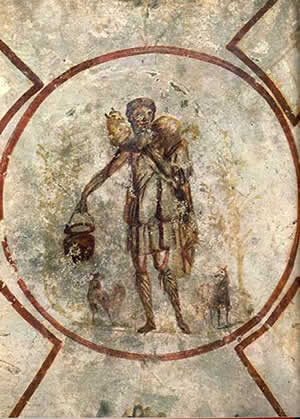
Today we will hear the Preface of Easter as it is in the 1962 Missale Romanum as well as the 2002 edition.  I speak the Preface and then sing it in the Solemn Tone.  I use the text as it is during Easter Season rather than as it is on Easter Sunday or the Octave.


https://wdtprs.com/wp-content/legacy/audio-archive/prayercazt/090504_easter_preface.MP3

If priests who are learning to say the older form of Holy Mass can get these prayers in their ears, they will be able to pray them with more confidence. So, priests are my very first concern. 

However, these audio projects can be of great help to lay people who attend Holy Mass in the Traditional, or extraordinary form: by listening to them ahead of time, and becoming familiar with the sound of the before attending Mass, they will be more receptive to the content of the prayers and be aided in their full, conscious and active participation.

My pronunciation of Latin is going to betray something of my nationality, of course. Men who have as their mother tongue something other than English will sound a little different.  However, we are told that the standard for the pronunciation of Latin in church is the way it is spoken in Rome.  Since I have spent a lot of time in Rome, you can be pretty sure my accent will not be too far off the mark.

Let your priest friends know this resource is available. 

Pray for me, listen carefully, and practice practice practice.

Posted in "How To..." - Practical Notes, PRAYERCAzT: What Does The (Latin) Prayer Really Sound L | Tagged , , ,
1 Comment

Help WDTPRS in the NCMA 21009

Would some of you be willing to help WDTPRS once again?

It is nomination time for the New Catholic Media Awards 2009.

Perhaps in your kindness you might give us some support.

Posted in SESSIUNCULA |
7 Comments

Guardian (UK): an interesting TLM first impression piece

I was alerted by a reader to a piece on the site of The Guardian.

The following was written by a non-Catholic who seems to be stuck in the externals.  My emphases and comments.

The mysteries of the Latin mass

At a Latin mass, the congregation are more witnesses than participants

David Shariatmadari
guardian.co.uk, Sunday 3 May 2009 11.00 BST

Location: Corpus Christi, Maiden Lane, Covent Garden, London
Denomination: Catholicism
Service: Sung mass of the Tridentine rite (Latin mass)
Texts: 1962 Missal
Age range and numbers: The youngest members of the congregation are in their 20s, but most are older; numbers gradually increase as the service continues, reaching about 30 people in total
Architecture: A small gothic revival church built in 1874

At Vatican II, the great reforming conference [writing with secular terms, at least non-Christian] of the Catholic church at the beginning of the 1960s, sweeping changes were made to the way people worshipped. Use of local languages, rather than Latin, was encouraged, [permitted…at least in the documents…] ritual was made less elaborate and less deferential; [I am not sure what he means by that.  But consider the juxtaposition of "worship" with "less deferential".] the overall aim was greater involvement and understanding by the congregation. 

In 2007, Pope Benedict XVI "liberated" the pre-reform 1962 version of the mass. This horrified many progressive Catholics, but was just what a lot of conservatives had been (quite literally) praying for – a return to a more formal, more reverent mode of worship.  [This time we juxtapose "more formal" and "more reverent".]

Up to that point, members of groups like the Latin Mass Society had lobbied for the liberation of the old mass – now they encourage its use and provide services for those who want to experience it. I found Corpus Christi, Maiden Lane, where a mass is held in Latin every Monday, through the society’s website.

[The writer isn’t very knowledgeable, but in a way that makes his impressions more interesting.]

Arriving early, I take my place towards the back of the church, [a typically "Catholic" thing to do… come early and get a place in back!] a slightly dingy, late-Victorian space whose main appeal is it’s complete lack of presence on the street – you’d never guess a church was hiding behind the Peabody-esque facade, and that lends it a kind of secret charm. (An aside: I was slightly surprised to find, among the name plaques screwed into the pew in front of me, one for Radclyffe Hall, the lesbian novelist. Next to her was a "Lady Troubridge" – whom later googling reveals to have been Hall’s partner. So Corpus Christi, as well vying with for the title of "actor’s church" with St Paul’s Covent Garden, could also lay claim to be the spiritual home of London’s Christian lesbians.)  [I think many people have the impression that the Catholic Church claims to be the Church of the pure, of the perfect.  Nothing could be farther from the true. The Church is more like a hospital ward for ailing souls than it is a fashion runway for flawless saints.]

Already a few older women, wearing their mantillas, and piously reading from bibles or missals, [Piously?  Either he reads minds or… the image brought something of piety to mind.  ] have gathered in the pews in front. The mantilla is a strange thing – if you’re used to chilly northern Protestantism, it gives the whole experience a Mediterranean flavour: exotic, oriental almost. [Something out of the ordinary… in this context, something quite Catholic.] Since this is a sung mass, there is a choir in the bay to the left of the altar. All men, they sing beautifully, without accompaniment. As the service gets underway a bell sounds and the priest enters, wearing a biretta, amid elaborate choreography. The myrhh roasting in a censer being swung around in the chancel moves slowly down the nave towards us.

There is, of course, a lot of Latin. Some of it whispered by the priest, much of it sung by the choir, a little intoned by the congregation in answer to the blessing Dominus vobiscum ("Et cum spirtu tuo"). To the devout Catholic, this mass is no doubt as clearly signposted as the evensong I attended a few months ago. But to me, it feels like I am witnessing a series of inscrutable – and therefore, rather powerful – rituals. I’m reduced to the level of an illiterate medieval peasant: [Watch this….] all I can do is wonder at the mystery and beauty of the spectacle.  [Exactly.]

Gradually it becomes clear that all the ceremony I’ve seen so far has been geared towards a single moment – towards making it more solemn, more obviously the crux of the mass. This is the point at which the bread and wine are consecrated and transubstantiation is believed to occur. It is marked by the ringing of hand bells, echoed by the bell of church, heard faintly from outside.   [I would not discount the moment of Communion.]

I visited this Corpus Christi twice. After the first time, I found that I could remember few of the details [interesting] I thought I needed in order to get a clear idea of the service across: who stood where and when, at what points incense was used, when the sign of the cross was made and when the priest and acolytes kneeled or bowed. So I went again, and it was just as difficult. Of course, the precise running orders of the various versions of the Tridentine rite mass are easy enough to find online, in all their complex glory. But I began to wonder if my sense of the mass as somehow inaccessible was significant.  [Well… yes and no.  No, in that you can learn with more experience.  Yes, in that you are having an encounter with mystery.]

I didn’t go up to take communion of course, and were I Catholic, that would have been the really important element of participation. [Above, he saw the consecration as the climax.] But even so, with all the action happening in the chancel, the priest often talking inaudibly, the language alien, there must be (even for the seasoned churchgoer) a stronger sense of witnessing than of joining in. [This is where he goes off the rails.  One can understand why he says this, at his level of experience, but he got this point wrong.  Witnessing and participation are not contradictory.]  Does that breed unthinking religion? [Wow… no.] You go to church, you see the mystery repeated in front of you, you’ve done your duty. In some, it might, and I can see why many at Vatican II thought it necessary to try to reinvigorate worship. Going further back in time, I can also understand how, for the more pedantic mind, this comfortable spectator sport wouldn’t have satisfied: perhaps this is why a split, and the rise of more indivdualistic churches, was always inevitable.


The writer’s strong suit is clearly assessing first impressions.  When it comes to analysis, he seems to lack some necessary tools.

Still… there are a few points of interest here.  He groped his way to the all important encounter with mystery.

I wonder if he won’t go back some day….
 

Posted in SESSIUNCULA |
75 Comments

PODCAzT 85: Gregory the Great on the Good Shepherd

PODCAzT 85: Gregory the Great on the Good ShepherdIn this brief PODCAzT I drill into an excerpt from a sermon by St. Pope Gregory I, “the Great” (+604).


What we hear from Gregory’s sermon is found in today’s Office of Readings in the Liturgy of the Hours for this 4th Sunday of Easter, nicknamed Good Shepherd Sunday.  In the older, traditional Roman calendar, the second Sunday after Easter, that is a week after the Octave, is Good Shepherd Sunday, because of the Gospel on that day from John 10.  In the newer, traditional calendar, Good Shepherd Sunday is the 4th Sunday of Easter, three weeks after Easter.

Gregory’s s. 14 was preached on the Second Sunday after Easter in the Constantinian Basilica of St. Peter on the Vatican Hill.  The same Gospel had been read in the ancient Roman order of Mass formularies since his time.

Tinker, tinker.

The Successor of Peter teaches us on this Good Shepherd Sunday to stir ourselves… to rekindle our faith and our longing.  We must be determined to reach our destination.

The core message of the Good news is that Christ won for us citizenship as sons and daughters of God in the Kingdom of Heaven.  But we can lose that gift by our lack of determination and action based on conviction and Faith.

PODCAzT 85: Gregory the Great on the Good Shepherd
https://wdtprs.com/wp-content/legacy/audio-archive/podcazt/09_05_03.mp3

John 10, 11-18:

Jesus said:
“I am the good shepherd.
A good shepherd lays down his life for the sheep.
A hired man, who is not a shepherd
and whose sheep are not his own,
sees a wolf coming and leaves the sheep and runs away,
and the wolf catches and scatters them.
This is because he works for pay and has no concern for the sheep.
I am the good shepherd,
and I know mine and mine know me,
just as the Father knows me and I know the Father;
and I will lay down my life for the sheep.
I have other sheep that do not belong to this fold.
These also I must lead, and they will hear my voice,
and there will be one flock, one shepherd.
This is why the Father loves me,
because I lay down my life in order to take it up again.
No one takes it from me, but I lay it down on my own.
I have power to lay it down, and power to take it up again.
This command I have received from my Father.”

084 09-04-30 St. Pius V and Quo primum
083 09-04-19 St. Augustine on the challenge of remaining faithful
082 09-03-19 St. Joseph: a hymn dissected & sermon of Bernardine of Siena

On Gregory the Great:

046 07-10-08 Gregory the Great on when pastors should SPEAK UP; priests and getting your way
032 07-05-28 Gregory the Great on Job; rubrics; sacred music


Posted in Our Catholic Identity, Patristiblogging, PODCAzT | Tagged , , ,
7 Comments

Don’t forget…

Don’t forget the PODCAzT about Pius V’s Quo primum. 

I’d like to get a few more listeners before it scrolls off the feed.

There is also an interesting discussion under that entry as well.

Posted in Linking Back |
Comments Off on Don’t forget…

Just how stupid is “Angels and Demons”?

With a biretta tip   o{]:¬)   I refer you to an article by John Wright about the new stupidity deepening flick Angels and Demons.

If you thought The DaVinci Code stupid, just wait!  There’s more!

Golly. I thought ANGELS AND DEMONS by Dan Brown would turn out to be just an ordinary run-of-the-mill Catholic-bashing hate-fest. But, no, the whoppers told strain credulity. Do people actually know that little about history? It seems that they do.

Here is what I picked up here and here.

Brown claims: Copernicus was murdered by the Catholic Church. [No… really… he does… stop laughing…]
Fact: Copernicus died quietly in bed at age 70 from a stroke, and his research was supported by Church officials; he even dedicated his masterwork to the Pope.

Brown claims: “Antimatter is the ultimate energy source. It releases energy with 100% efficiency.”
Fact: CERN, the lab which plays an important role in his story, actually debunked this claim on their website: “The inefficiency of antimatter production is enormous: you get only a tenth of a billion of the invested energy back.”  [Oh yah?  Tell that to Scotty!]

Brown claims: Churchill was a “staunch Catholic.”
Fact: Any history buff could tell you that Churchill wasn’t Catholic, he was Anglican; nor was he particularly religious. The only things Churchill was staunch about were cigars, whiskey, and defending the British Empire.

Brown claims: Pope Urban VII banished Bernini’s famous statue The Ecstasy of St. Teresa [ROFL!] “to some obscure chapel [?!?] across town” because it was too racy for the Vatican.
Fact: The statue was actually commissioned by Cardinal Cornaro specifically for the Cornaro Chapel (Brown’s “obscure chapel”). Moreover, the sculpture was completed in 1652 — eight years after Urban’s death.

Brown claims: Bernini and famed scientist Galileo were members of the Illuminati.  [You have to love anything with the Illuminati!]
Fact: The Illuminati was founded in Bavaria in 1776. Bernini died in 1680, while Galileo died in 1642 — more than a century before the Illuminati were first formed.  [oooops]

The idea that Copernicus was murdered by the Church is just too stupid for words. I mean, I have a pretty low threshold when it comes to Illuminati fiction. I love that ‘secret-history‘ stuff.

I am not a hard sell. If you want to put in your book that Atlantis was a superhightech civilization destroyed by the extra-dimensional Eddorians in order to thwart Arisian attempts to breed mankind to create the Kwisatz Haderach, child of the Lens and the father of the race that will rule the Sevagram, I will suspend my disbelief like it was bouyant with helium.

You want to establish that a race of robots hidden in a secret base in Mount Ararat has been guiding human history since the time of Enoch, I am your man.

You want to say the Freemasons (who built the temple of Solomon) are the archenemies of the Slavemasons (who build the Great Pyramid of Cheops) have been fighting a duel to place or remove feng-shui-significant stonehenge, monuments, and Cathedrals at goethermal accupuncture points across Europe, Asia and the New World since the Bronze Age, and that all major wars and architectural firms are under their control, and involved in a secret aeons-old Cold War to prevent the telluric current from destroying this world as unwise abuses of the geomancy of the canals of Mars did that remote, dying world? Sure!

Shiwan Khan is actually a time-travelling alien from planet Mongo, granted eternal youth by the powers of alchemy, and he long ago replaced the royal family of England with Life-Model-Decoys which he controls with the ten magic rings he found in the wreckage of a spaceship from planet Maklu IV? Why not?

Lord Byron was a vampire? You would have to pay me money not to believe that.  [I hope they never find out about the secret order of Vatican Vampire Assassins I have been researching… ]

Queen Elizabeth ran of coven of witches whose stormcrafty drowned the Aramda of Philip of Spain, after he had secretly adopted the practice of mass human sacrifice from his wife who was secretly an Aztec princess in order to gain magical control of an entire hemisphere’s worth of demon-cursed Mexican gold? Not only possible, but likely!

The entire Middle Ages is an elaborate fraud perpetrated by the Roman Empire, which never fell but simply went into hiding once Virgil the Magician discovered the tunnels leading to Pellucidar in the Hollow Earth? Seems reasonable to me!!

The US Congress killed and replaced by shape-changing seals from the Dreamlands who talk like movie pirates? Brother, I wrote it!

But the Catholic Church MURDERED Copernicus? Oh, my aching back. He was a churchman himself: why not simply order him to recant his findings?

Posted in SESSIUNCULA |
64 Comments