Breakfast with a bright future

I was my great pleasure this morning to have breakfast with four seminarians. They read that I would be in town and contacted me.

These men are all bright and intensely focused on their studies and the Church. They are interested in and open to the older form of Mass in a very healthy way, without taking away anything due to the Novus Ordo.

If, God willing, they persevere to ordination, people will have solid men will good minds, prayerful spirits, kind hearts and NO BAGGAGE.

We talked about their courses, liturgy, politics, life and the world in general, war stories for my seminary days… so very different from their seminary experience now, thanks be to God.

I was impressed and I compliment their bishops, vocation directors, pastors, family and rector for these good catches.

It leaves one boyant and hopeful.

Breakfast with a bright future

Posted in SESSIUNCULA |
17 Comments

Thanks to the men who came last night

My warm thanks to the many men who attended the "Argument of the Month" last night at St. Augustine’s in South St. Paul, MN, as well as to the organizers and the pastor, Fr. Echert.

It was a great success.

I am sure there will be reports to come.

Posted in SESSIUNCULA |
12 Comments

Pope Benedict speaks up at the Synod on problems and directions of exegesis

A ZENIT story in Italian relates something about what Pope Benedict said, working from personal notes, during the Synod of Bishops on Scripture.

I don’t have time to translate it for you alas.

He spoke about the need to overcome a dualism between exegesis and theology.

This was a matter address in his book Jesus of Nazareth.

Working from Dei Verbum … "Since Scripture must be read and interpreted in light of the same Spirit through whom it was written – the Council said – to gleen with precision the sense of the sacred texts one must take care with no less diligence for the content and the unity of Scripture, taking necessary account of the living tradtional of the whole Church and of the analogy of the Faith."

The Pope observed that often exegetes take the first part into account, but not the second, the Tradition of the Church.  Exegesis thus becomes historiography.

So, Pope Benedict is giving shape to the discussion by participating in it and guiding it.  He proposed that two propositions be given to the Synod: to develop not only historical exegesis but also theological and to deeping the preparation of exegetes in this sense in order to expand the vision of exegesis itself.

Benedetto XVI chiede di superare il dualismo tra esegesi e teologia

In un intervento al Sinodo dei Vescovi

CITTA’ DEL VATICANO, martedì, 14 ottobre 2008 (ZENIT.org).- Benedetto XVI ha preso la parola questo martedì al Sinodo dei Vescovi per proporre di superare il dualismo tra esegesi e teologia, che a volte porta a una lettura senza fede della Bibbia.

Il Papa ha espresso la sua opinione traendo spunto dal suo quaderno di appunti personali, seduto al suo solito posto al centro dell’aula sinodale e parlando in italiano con la precisione dei suoi lunghi anni da docente universitario.

Le sue parole hanno risuonato dopo la pausa della 14ma congregazione generale e, come ha spiegato egli stesso, si ispirano al lavoro che sta compiendo per redigere il suo libro “Gesù di Nazaret”, di cui sta preparando il secondo volume.

In particolare, ha presentato i criteri offerti dal Concilio Vaticano II nella Costituzione Dogmatica Dei Verbum, per l’interpretazione delle Sacre Scritture.

“Dovendo la sacra Scrittura esser letta e interpretata alla luce dello stesso Spirito mediante il quale è stata scritta – diceva il Concilio –, per ricavare con esattezza il senso dei sacri testi, si deve badare con non minore diligenza al contenuto e all’unità di tutta la Scrittura, tenuto debito conto della viva tradizione di tutta la Chiesa e dell’analogia della fede”.

Il Papa ha osservato che in generale gli esegeti tengono conto del primo criterio, l’unità di tutta la Scrittura, ma tralasciano il secondo, la Tradizione viva della Chiesa.

Questa trascuratezza, secondo il Pontefice, ha delle conseguenze, ad esempio il fatto che la Bibbia diventi un libro del passato: “l’esegesi diventa storiografia”.

In base a questa visione, in Germania alcune correnti esegetiche negano l’istituzione dell’Eucaristia, e il corpo di Gesù sarebbe rimasto nella tomba. In questo modo, ha constatato, scompare la presenza del divino nello storico.

Questa interpretazione, ha proseguito, crea una distanza tra esegesi e lectio divina, e suscita perplessità al momento di preparare le omelia.

Con questa visione, la Scrittura non può essere “l’anima della teologia”, e quest’ultima smette di essere interpretazione della Scrittura nella Chiesa.

Per la vita e la missione della Chiesa è del tutto necessario superare il dualismo tra esegesi e teologia, perché sono dimensioni di una stessa realtà.

Per questo, il Vescovo di Roma ha suggerito di introdurre due proposizioni per questo Sinodo: sviluppare l’esegesi non solo storica ma anche teologica e ampliare la preparazione degli esegeti in questo senso per ampliare anche la visione dell’esegesi stessa.

L’intervento del Papa ha avuto lo stesso formato di quelli preparati dai Vescovi nel dibattito ed è stato ricevuto con un applauso.

UPDATE: 16:15 GMT


The nearly ubiquitous fair-minded former Rome correspondent for the ultra-lefty dissenting NCR, John Allen, has more details:

Synod: For the first time, the pope speaks
By John L Allen Jr Daily
Created Oct 14 2008 – 08:37

By JOHN L. ALLEN JR.
Rome

For anyone with a spare dollar looking to make a wager about the Synod of Bishops, here’s the safest bet in the world, in the wake of this morning’s session: There will be a proposition on the relationship between exegesis and theology among the final recommendations presented to Pope Benedict XVI.

Truth to be told, the relationship between Biblical interpretation and other areas of Catholic theology had already emerged as a major concern. This morning, however, Pope Benedict himself took the unusual – indeed, quite possibly unprecedented – step of explicitly recommending that the bishops adopt a proposition on how exegetes and theologians can better inform each other’s work.

The recommendation was delivered viva voce, as Benedict XVI took the microphone at the synod for the first time. He spoke immediately after the customary 10:30 am coffee break; Archbishop Nikola Eterovich, secretary of the synod, informed the group that they would have to interrupt their normal program “because our president wishes to address us.”

Technically, the pope is also president of the Synod of Bishops.

The Vatican is expected to release a transcript of the pope’s remarks either later today or tomorrow. For now, the official Vatican bulletin has simply reported: "Starting from the consideration of the work for his book Jesus of Nazareth, the Holy Father dwelt upon the fundamental criteria of Biblical exegesis, upon the dangers of a secularized and positivistic approach to the Sacred Scriptures and upon the need for a closer relationship between exegesis and theology."

Synod sources said that he spoke for a little less than ten minutes, drawing upon notes that he had apparently made in a small notebook.

In broad terms, those sources said, his topic was the need for historical-critical interpretation of the Bible to take Christian faith as its point of departure, because otherwise its risks treating the Bible as simply a “book of the past.” In that regard, the pope apparently suggested that exegesis needs to be better integrated into theology, so that it is seen less as a self-standing enterprise, and more as part of a broad effort to combine reason and faith.

As part of his reflection, Benedict reportedly suggested to the bishops that a proposition on the relationship between exegesis and theology would be helpful – making it all but a foregone conclusion that at least one such proposition will be offered.

Since the propositions are addressed to the pope in any event, as suggestions for whatever document he may eventually issue on the topic of the synod, it’s also a safe bet that Benedict XVI will discuss the need to treat scripture as “the soul of theology” in that text.

Sources said that the pope was greeted by a hearty round of applause at the close of his remarks.

This is the second Synod of Bishops under Benedict XVI, and the second time the pope has chosen to address the bishops towards the end of the initial round of speech-making, as the agenda for the synod’s final documents is beginning to take shape. In each case, Benedict has reflected briefly on what had emerged as a central concern during those opening speeches. During the Synod on the Eucharist in 2005, Benedict spoke about the relationship between the horizontal and vertical dimensions of the Mass, meaning the twin images of the Mass as a meal and as a sacrifice – suggesting they need to held together rather than put in tension.

The pope appears to have struck a similar note this time around about the relationship between exegesis and theology – suggesting that offering both/and solutions to seemingly either/or problems may be emerging as what one might call the "synodal specialty" of Benedict XVI.

Benedict has been present for most of the synod’s deliberations thus far, including the hour set aside for “free discussion” at the end of each day. That hour was set aside at Benedict’s request for the 2005 synod, and has now become a part of the event’s formal structure.

Fr. Bryan Massingale of Marquette University, President-elect of the Catholic Theological Society of America, acknowledged that sometimes exegetes and theologians struggle to stay on the same page — not, for the most part, because of ill will or intellectual disagreements, but rather the compartmentalized nature of the academy these days.

"As theology becomes more and more specialized, we need to create opportunities in which theologians and exegetes can pursue collaborative projects," Massingale said in a telephone interview this afternoon.

Massingale said one such initiative is already underway at Marquette: a new inter-disciplinary seminar titled "Theological Interpretation of Scripture."

"We may still run into disagreements over what constitutes theological interpretation of the Bible," Massingale said, "but at least there’s the beginnings of a conversation."


Posted in SESSIUNCULA |
54 Comments

14 Oct: S. St. Paul, St. Augustine’s – The Argument

I will be engaging in "The Argument" at St. Augustine’s Church in St. St. Paul.

This event is for men only.

I will be speaking to issues surrounding the assertion:

14 Oct: S. St. Paul, St. Augustine's - The Argument

Detail’s may be sought from the parish.

I understand that the evening includes a meal of several courses and the cost is $12.

Posted in SESSIUNCULA |
15 Comments

Mass at the bottom of the hour

Mass at the bottom of this hour, 14:30 GMT (10:30 Eastern US).

Please unite your prayers to the Sacred Action.  Send your angels to be present.

Also, please pray for a particular intention of my own, something I am dealing with difficult, annoying and expensive.

Posted in SESSIUNCULA |
4 Comments

Trooping the Sabine line

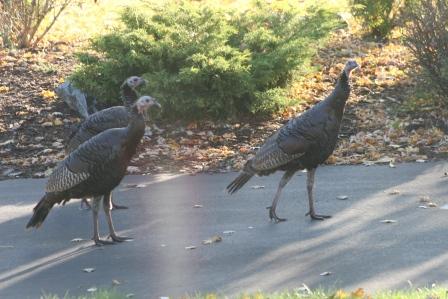
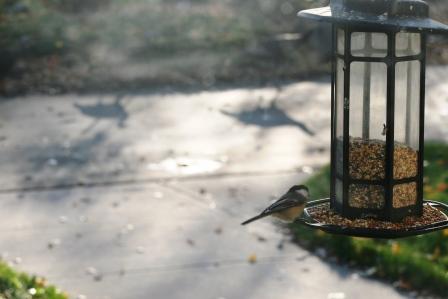
Birds both large and small are here this morning.

About 20 wild turkeys trooped the line this morning.

Trooping the Sabine line

I only had the big lens handy, so I couldn’t get the whole line.

Still… as a contrast…

Trooping the Sabine line

Posted in My View |
8 Comments

More about the upcoming CDW changes

From Paolo Rodari’s Palazzo Apostolico comes this analysis of the CDW, Archbishop Ranjith situation, about which so many rumors are going around.

As you know, there are those who say that Archbishop Ranjith, a favorite of WDTPRS, may be moved to Colombo, Sri Lanka.  Also, Cardinal Arinze will be 76 soon.  It is rumored that Cardinal Canizares LLovera might be moved from Toledo to the Prefect’s spot.
It will be hard to change them both Ranjith and Arinze in a short time for reasons of continuity.  One will have to stay for a while after the other is moved.  Which ever one is moved first, the other will be the one who stays a bit longer.

Here is part of the piece by Rodari:

Benedict XVI put Ranjith in the place of Domenico Sorrentino, who was promoted as Bishop of Assisi, and whose ideas were probably, liturgically speaking, not consonant with those of the Pontiff.  In fact, the Pope asked Ranjith one thing above all: to help with the implementation and understanding of the Motu Proprio Summorum Pontificum dedicated to the Mass in Latin according to the old rite.  But then something changed.  Ranjith, in effect, set himself several times again the so-called "rebellion" of some world episcopates which were resisting to implement in their own dioceses a correct application of the Motu Proprio.  But there are those who sustain that this continual denunciation was forwarded with too much emphases, so much so that it seemed that, behind the promuglation of Summorum Pontificum, there was a desire to discredit what followed the old rite: the post-Conciliar liturgical reform and therefore the Novus Ordo.  From this, still according to some, the distancing of Ranjith, which could in some way be a life-line for those who, in the Church, don’t love the Motu Proprio and the consequent return of the old rite.  But, in reality, it seems that things are still in another path.  Benedict XVI is very worried about the lot of Christians in Asia and in particular in south east Asia.  Sri Lanka, like India, is a theater of violence forwarded by Buddhist traditionalists against Christians guilty of ruining the "millennial harmony of the country".  Sending Ranjith to a prestigious diocese such as Colombo, which would guarantee him a Cardinal’s hat, is a way of responding to this offensive.  Concerning the liturgy and the old Mass in Latin, now derestricted – for the Pope the rite is only one rite celebrated but in two uses, old and new – someone else will have to take care of it.

Posted in SESSIUNCULA |
9 Comments

Progress on the chapel at TAC

I was alerted by a reader about the progress being made on the chapel at Thomas Aquinas College in California:

Progress on the chapel at TAC

Looks like a Roman church!

Posted in SESSIUNCULA |
43 Comments

Notes from man after his first TLM

I found interesting this post, by a fellow named Christopher Humphries.

My emphases and comments.

Got a Hand Missal (1962) & My First TLM (FSSP)

Submitted by Christopher on Monday, 13 October 2008

Got a Hand Missal (1962) & My First TLM (FSSP)

Disclaimer: these are my personal opinions and I am only sharing experiences. It is relative to my growth in faith and personal experience. I have no desire to tell another person the right and wrong methods of obedient Catholic practice. This is what works/fails for me growing closer to God and Our Lady of Grace.

The Hand Missal

As I spoke of before, I wanted a hand missal (1962) for the Traditional Latin Mass. The missal doesn’t change, so it’s nice that all you need is one missal. So, I ordered one from Amazon (Angelus Press edition).

I was planning on going to a TLM this past weekend and so I needed a missal to follow along. It came in on Friday, so had it in time to get familiar with it. Now that I have my missal, I’m ready for the Mass!

The TLM ran by FSSP

Arriving into the parish, I realized that I wasn’t dressed properly enough. I was in jeans, yet had fancy shoes and a nice button-up dress shirt. Everyone else was wearing suits and most men had ties on. They all had dress pants on.  [This isn’t something to worry about.  Adjustments can be made along the line.]

All the women had veils over their heads, which to my surprise was quite beautiful. One women I saw in the sunlight, as she was walking back from receiving the Eucharist, looked like Mary surrounded in light. It was quite amazing. I believe that that is what the image of women is to be like, at least in our hearts. So, that part was interesting. [And no surprise either!]

The choir was just amazing; they sounded like angels. While I didn’t understand what they were singing, the intent and beauty was communicated. [That’s it!] That was one of my favorite parts and the choir even has a CD!

One interesting and a touch uncanny tidbit, not the liturgy or Mass itself, was that Father Orlowski, FSSP, was the Mass celebrant. This name may not ring any bells with anyone and he is a good priest, yet probably not famous as far as priests go. He is important in my faith and vocation experiences. The reason is that we spoke on a plane from Scranton, PA to Detroit airport. The hour long conversation meant a great deal to me and helped to get the priesthood vocation wheels turning.

I found out later that he was stationed at another parish in another state, and he just happened to be in town this past Sunday and celebrated the high Mass.

His topics on grace, computers (he used to be a programmer also), history, priesthood vocation, and sacraments were very interesting to me. Yet, it wasn’t until over time that I remember them and meditate on them in prayer. The discussion with this humble priest, of great love and passion for God and Our Lady, was a very special experience for me. I was very grateful for this time. God does work in mysterious ways, the Holy Spirit is amazing.

Thank you, Father Orlowski.

My Impression Of The Mass

While I did have my missal, I still didn’t know what was going on. This was to be expected, as noted by Father Z. I was excited, yet didn’t know what to expect or do. I felt nervous as I genuflected before entering pew, as I didn’t know if I was supposed to or not! If unsure, genuflect to the Lord, right?

Well, the priest and all the altar boys entered. There were about eight boys and teenagers. I wasn’t expecting that, as that just doesn’t exist in the Novus Ordo Masses I’ve been to. So was a ‘hrm interesting’ moment. Father then blessed everyone with holy water from the aspergilum and everyone genuflected as the holy water came their direction (seemed like a genuflecting wave as he started up one side and came down the other [stopping to pray halfway through], was amazing).

The entire Mass seemed to all have direct focus on the altar and priest. Everything was very reverent. There wasn’t much in the way of distractions. The wasn’t anything uncomfortable. There seemed to be much more focus on prayer during the Mass also, which I appreciated.

Something which I think got lost in communication with the Novus Ordo Masses I’ve been to. Maybe I needed a better missal?

This is text from the Angelus Press hand missal, in the Ordinary of the Mass part, II-A, 13. The Offertory Verse (page 859), that is written in the side notes, which I found very awesome:

This moment brings us back to our true place before God and purifies us. It prepares us to enter into God and share in His divine activities. The Offertory opens the door to the secrets of God and to union with Him.

As this bread on the paten and this wine in the chalice are in a state of expectancy of becoming Christ’s Body and Blood, so we present ourselves to God in voluntary expectancy of a change to be made in us–an expectancy of divinization.

In the Offertory, Christ unites our desires and prayers to His own offering of Himself to the Father. As our intentions are joined to the Passion of Christ, the yassume the value of the Passion in the eyes of God.

In the Agony in the Garden, Christ performed His offertory, giving Himself in advance to all the sufferings of Calvary. This is the spirit we should take from the Mass; an entire acceptance in advance of what God’s grace will ask of us.

The Offertory reminds us that the law of salvation is generosity without discussion.

A parallel contrast look on the Mass from the TLM perspective will help any future Mass I go to.

Everyone finished the song after priest and altar boys left. Everyone stayed on their knees in prayer and all focus to the altar till the priest removed the Mass chalice, paten and other items. That is something I’ve never seen at Mass before. [Excellent!] I felt at home there.

All focus is on Christ, from start to end. It is quite amazing. In a sense, the orders of the Mass didn’t matter. The missal was enough to know what was going on. I was too busy focusing on the Mass to worry about too much of the details, there is plenty of time to explore that later.

After Mass

After Mass had ended and people started to exit the church, I stopped one person and asked if it was normal for the priest to come to the front of the church and speak with the people, as in all the other Masses I’ve been to. The gentleman that I spoke with happened to know Father and his son was an altar boy. So, he took me to the back where I got to see Father again, face to face.

We spoke for a bit and caught up briefly. He then introduced me to the other priest of the parish, whose name escapes me now. Then we went downstairs into where they have tables set up, with a kitchen and coffee/donuts. Apparently, everyone gets together and eats a meal together after Mass. This was truly amazing to me! There is a real sense of community.  [Of course!]

Everyone was very friendly and welcoming. I couldn’t stay for a meal, and Father even offered to buy for me (to which I could never accept, I help pay for priests not the other way around). I look forward to meeting everyone.

After Thoughts

I’ll definitely be going back to this parish for Mass whenever possible. While I do not have a car, I’ll gladly pay the price for cab fare ($20 round trip). I feel this is where I belong. Maybe I can speak to someone eventually that happens to live near me that I could get a ride from? [Indeed!]

Another thing I need to do is purchase nicer clothes. I need to get some nice dress pants and dress shirts (and a tie or two).

I was curious of the FSSP seminaries, so I researched it a bit from their site and found they have two: one in the US and one in Germany (I used to live in Germany and relearning German wouldn’t be that difficult). While I am still not accepted into the Church yet, I am discerning the priesthood and was curious what FSSP seminary was like and requirements for acceptance, etc.

Interesting, no?

Posted in SESSIUNCULA |
37 Comments

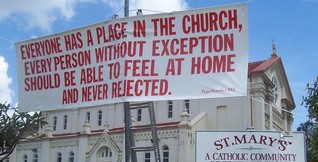
Brisbane: priest of invalid baptisms clashes with man with phone

You know about the hijinx in Brisbane’s St. Mary’s Church over the persistent use of invalid baptismal forms despite the instruction of the CDF and local Archbishop.

Recently we had an entry on this here.

This is from CathNews.

Brisbane: priest of invalid baptisms clashes with man with phoneSt Mary’s South Brisbane churchgoer, Richard Stokes, has asked police to press charges against parish priest Fr Peter Kennedy after a mobile phone camera was knocked from his hand at a baptism yesterday.


Mr Stokes has written to the Vatican and to Brisbane Archbishop John Bathersby in a campaign to have St Mary’s and Fr Kennedy, follow official protocols or be removed from the church, The Australian reports.

Yesterday, after travelling 40 minutes from his home in Caboolture to attend Sunday Mass at St Mary’s, Mr Stokes stayed behind to watch some baptisms, which have brought the church into controversy on previous occasions.  [Obviously the fellow was hunting up more dirt on the priest.]

Incensed that a priest was performing baptisms in casual clothes, and not his vestments, Mr Stokes positioned himself to take a photo on his mobile phone, whereupon Fr Kennedy allegedly knocked the phone from his hand, The Australian says.

Fr Kennedy, who was not performing the baptisms but has had previous encounters with Mr Stokes, would not comment on the incident yesterday.

Mr Stokes, who was not hurt and put his phone back together, said: "I saw a blur out of the corner of my eye and then bang, the mobile phone was knocked out of my hand and on to the ground," Mr Stokes said.

"It all happened so quickly."

Fr Kennedy’s supporters say Mr Stokes was being deliberately provocative [well… that’s sound like it is indeed the case…] and ignored pleas by parishioners and the children’s families not to cause trouble.

After being hustled out of the church, and admonished by parishioners, Mr Stokes and his supporters went to a nearby police station where they made an assault complaint and asked that charges be laid.

SOURCE

Parish row leads to police report (The Australian, 13/10/08)

LINKS

St Mary’s parish, South Brisbane

ARCHIVE

Brisbane church’s controversial baptism (CathNews, 6/10/08)


A couple things must be said here.

First, something like this happens because the parish hasn’t been definitively put in order.  Until that happens, this sort of thing is likely to occur again.

Baptisms are not "secret" events, but they aren’t exactly public either.  They are, … but they are not. 

I don’t know how things are in Australia, but in my native place, it is illegal to disturb a religious service.

Sometimes people suggest to me that there should be individuals or even teams who go around to places and record liturgical abuses in such a way that the recordings and accounts can be proofs useful to the CDF or CDW.

I am of two minds about that. 

First, if a parish/priest is doing what is required, there is no reason to worry about recordings, etc.  Of course there are aberrations from time to time, but if they are not representative of what goes on in a place, that is not a problem.

The biggest problems in my mind come from the fact that not everyone who thinks he knows what ought to be done really knows very much at all.  Also, if a person is going into a church with a malicious or a "gotchya" attitude… well… that’s a problem.

It is hard to know what to do, however, in the face of persistent abuses or even invalid sacraments, which are not being corrected despite repeated reoprts and requests of the faithful.  The faithful too have both the right to sound worship and valid sacraments and they have the responsibility to make problems known.

6. Complaints Regarding Abuses in Liturgical Matters

[183.] In an altogether particular manner, let everyone do all that is in their power to ensure that the Most Holy Sacrament of the Eucharist will be protected from any and every irreverence or distortion and that all abuses be thoroughly corrected. This is a most serious duty incumbent upon each and every one, and all are bound to carry it out without any favouritism.

[184.] Any Catholic, whether Priest or Deacon or lay member of Christ’s faithful, has the right to lodge a complaint regarding a liturgical abuse to the diocesan Bishop or the competent Ordinary equivalent to him in law, or to the Apostolic See on account of the primacy of the Roman Pontiff. It is fitting, however, insofar as possible, that the report or complaint be submitted first to the diocesan Bishop. This is naturally to be done in truth and charity.


"… in truth and charity…"

First, work up the ladder if you can.

Second, do what you do in truth and charity.

Third, consult a sound spiritual director before you undertake anything like this.  Don’t fool yourself that in your zeal you are actually acting in charity.  Do not fall into self-righteousness.

Posted in SESSIUNCULA |
23 Comments