D. of St. Cloud, MN: norms for TLMS

I had this strong sense of déjà vu when I opened the e-mail containing the following.  Had I fallen through a fracture in the time/space continuum?  Had a wormhole of hermeneutical "discontinuity and rupture" drifted through my inbox bringing up something from the past?

But no… I found a new set of diocesan norms for the Motu Proprio.

I received the text of the norms for the implementation of Summorum Pontificum issued by H.E. Most Reverend John F. Kinney, Bishop of Saint Cloud.

Let’s have a look with my emphases and comments.  I lost a lot of formatting converting the document to a less clunky form.

In accord with the Apostolic Letter of His Holiness Pope Benedict XVI, Summorum Pontificum, issued motu proprio on July 7, 2007, and the Holy Father’s accompanying letter to the Bishops of the Church; and in response to requests of the faithful of the Diocese of Saint Cloud, I hereby issue the norms for the celebration of the Most Holy Eucharist according to the extraordinary form (forma extraordinaria) following the 1962 Missal promulgated by Blessed John XXIII. [I am forced to muse on the reasons why dioceses need norms for Summorum Pontificum.  Wouldn’t it be better to work with the Motu Proprio itself… while we await the document that will clarify some of the confusing points?]

In past years, such Masses with the permissions required at the time were celebrated at Saint Mary’s Cathedral and in more recent times, at Sacred Heart Church in Flensburg. With Summorum Pontificum, I received renewed requests from members of the faithful for such celebrations in the Saint Cloud area as well.

It is my intention that the forma extraordinaria of the Mass will continue to be celebrated according to current practice at Sacred Heart Church in Flensburg as long as both a capable celebrant and a stable community of the faithful who request it remain present to allow for this celebration.

In addition to the Mass in Flensburg, and hearing those requests from the faithful, I intend to make the cerebration of Mass in the forma extraordinaria available in the Saint Cloud metro area as well. [You know.. that’s great!  The bishop intends to do this.  Wonderful!  At the same time, remember that the Motu Proprio says that pastors of parishes can do this on their own.  I bring this up only to remind that the Pope put this matter in the hands of priests.] Therefore, beginning , 2008, I hereby designate the Church of Saint John Cantius in Saint Cloud as the place for this celebration of one Mass in the forma extraordinaria on all Sundays and holy days of obligation, as assigned in the Ordo of the Missal of Blessed John XXIII. This celebration of the extraordinary form is to be scheduled on a regular and stable basis in consultation with the pastor of the Church of Saint John Cantius, in consideration of and with precedence to the existing parish schedule for Mass and other liturgical rites and parish activities.   [Note that this is not a "personal parish".  All Extraordinary Form Masses seem to be taking a secondary role in the parish.  But remember: the parish priest can do this without the bishop being involved.  My concern is that this gives the impression that the bishop’s permission is needed to do with this "decree" established.  Again, it is wonderful that the bishop want to be supportive.  But let’s not distort what Summorum Pontificum established.]

All other details regarding these celebrations are outlined in the accompanying norms.
I am grateful for the faith and dedication to the Church demonstrated by those who have contacted me regarding the celebration of the forma extraordinaria. It is my hope that these norms will help meet the spiritual needs of the faithful of the Diocese and achieve the "interior reconciliation in the heart of the Church" and the unity that motivated Pope Benedict XVI to issue Summorum Pontificum.
Sincerely in Christ,

+ John F. Kinney Bishop of Saint Cloud

NORMS FOR THE IMPLEMENTATION OF THE APOSTOLIC LETTER MOTU PROPRIO OF HIS HOLINESS BENEDICT XVI SUMMORUM PONTIFICUM IN THE DIOCESE OF SAINT CLOUD

1) In the Diocese of Saint Cloud, the places designated for the celebration of the Mass in Latin, according to the forma extraordinaria as outlined in Summorum Pontificum and following the 1962 Missal of Blessed John XXIII, will be two:
— the Church of the Sacred Heart in Flensburg, as currently
— the Church of Saint John Cantius in Saint Cloud, beginning September 14, 2008
In these churches, one Mass following the forma extraordinaria may be celebrated [because Summorum Pontificum says so] on all Sundays and holy days of obligation according to the liturgical calendar in the 1962 Missal. It may also be celebrated in these churches for funerals and weddings, when the faithful request such celebration, a capable celebrant is available, and the celebration does not conflict with the ordinary liturgical needs of the parish. [All others must go to the back of the bus, or use that other drinking fountain.]
The current Lectionary for Mass may be used for the readings while following the 1962 liturgical calendar. [Really? I wonder how that would go over, but okaaay….] Whatever edition for the Scriptures is used must, however, have received the recognitio of the Holy See.

[Do you see how, more and more, we find that now that Summorum Pontficum is in force, some people want to implement Ecclesia Dei adflicta?  Implement the 1988 Motu Proprio which still left the matter entirely in the hands of the bishops regarding public Masses?]

2) The scheduling, requisites for the celebration of the Mass, musicians, and other specific matters pertaining to these celebrations are to be coordinated with the pastor of the host parish or his delegate. All applicable universal and particular laws are to be observed in the celebration of the Mass in the forma extraordinaria and other liturgical rites. [What does aim at, I wonder?]

3) The forma extraordinaria of the Mass in these churches will be celebrated by priests designated by the local ordinary;   these priests must possess the required liturgical formation and facility in the Latin language to allow for a truly reverent and fitting celebration of the Mass. [How is that decided?]

4) The people who participate in the forma extraordinaria of the Mass are not constituted as a personal parish, but remain members of the parish in which they reside, in accord with canon 102 of the Code of Canon Law, with all the rights and responsibilities attached thereto.

5) Offerings made for these celebrations of the Mass for a specific intention will be the property of the celebrant. Offerings made in a collection among the faithful will be the property of the host parish, who will administer these funds through a separate account. [A separate account.] The host parish will pay a stipend, determined by the diocesan chancellor, to the celebrant of each Mass, and will make available funds from this separate account for the payment for requisites for celebration of the Mass in the forma extraordinaria in that church at the direction of the diocesan chancellor.  [Okay… something is becoming clearer.  There are questions of the administration of the funds that a) result from these Mass and b) are required to reimburse the parish and priests.  Perhaps this is the motivation for this set of "norms"?]

6) For the administration of the sacraments of Baptism, Penance, Anointing of the Sick, and Marriage: Summorum Pontificum directs that the pastor of the place, all things duly considered, may grant permission for the administration of these sacraments according to the older ritual in force in 1962 if the good of souls suggests it. I hereby direct that the administration of the aforementioned sacraments may take place according to the older ritual at the Church of the Sacred Heart in Flensburg and the Church of Saint John Cantus in Saint Cloud under the following conditions:

a) the recipients of the sacraments are properly disposed, [This would be the case for the reception of any sacrament with any book, right?  For example, careful consideration of the state of couples requesting marriage in a Catholic parish would be carefully reviewed?  The level of preparation for candidates for confirmation?  The level of competence in Latin for candidates for ordination, as per the 1983 Code of Canon Law?  So… this is clearly reasonable.] ask at opportune times, and are not impeded by law (canon 843);
b) the recipients of the sacraments are properly prepared for their reception according to applicable diocesan standards and all other universal or particular laws;
c) the recipients of the sacraments, or those legitimately responsible for them in the case of minors, request such a celebration according to the older ritual on their own volition;
d) the faithful remain free to request these sacraments according to the current rituals as well;
e) as applicable, the celebration of these sacraments as well as funerals are to be recorded in the parish where they are celebrated, with notification to the parish of baptism, in accord with Canon Law.
7) As regards the celebration of First Communion and First Penance: children are to be prepared in accord with the program of their proper parish and are to receive these sacraments first in the ordinary form. [Huh?  They are not permitted… according to their right… to have a sacrament in the older form?  What if the parents desire that they have First Communion in a TLM?  If a person is well-disposed, properly disposed and prepared, as it must be assumed First Communicants are, then … it is right to impede them from exercising their rights?  Can one really impose this choice on parents and their children?  I know that the Code says that pastors of souls have their role in the decision process about the proper moment of First Penance and Communion, but can he determine that they may not make that Communion at a TLM?]  If, afterwards, they and their families choose to celebrate these sacraments according to the older ritual, they may do so. Because of the concrete circumstances of availability of these two forms, facility in receiving these sacraments in both the ordinary and extraordinary form is encouraged.  [I suspect that this would not hold up were someone to ask the Pontifical Commission about it.  Just a guess.]
8) As regards the sacrament of Confirmation, candidates for Confirmation are to be prepared in accord with the program of their proper parish and receive this sacrament in their proper parish in the ordinary form.
9) These norms will be adapted as may be necessary to conform to the direction of the Holy See. All other questions that may arise regarding the Mass or other sacraments according to the forma extraordinaria are to be directed to the Chancery of the Diocese. [Remembering always that every Catholic also has the right to recourse directly to the Holy See.]

Given at the Chancery of the diocese of Saint Cloud,

DATE …

Most Reverend John F. Kinney Bishop of Saint Cloud

There are a few puzzling things here.

First of all: why the norms at all?  It has been a long time since we have seen that flurry of activity about Summorum Pontificum from chanceries.  So, something must have prompted this, especially in light of the fact that the Holy Father has on his desk a document which might change all this.  So, I am guessing that they arose from some tussle or other.

I note with interest that these norms deal with money.   I think that is reasonable.

Don’t fall into the trap of thinking, as many people do, that anything having to do with Church is "free".  Someone, somehow, has to pay for the upkeep of the church and the just compensation of the priest.  Priests don’t do things just for money, generally.  But they have expenses and the right to have their living from the Lord’s altar.   This has to be regulated in some way.  The norms bring a little clarity to that.   I think it is reasonable also to require that if people want to have X,Y, or Z in a parish, they should also provide the means so that it can be done.

There are probably local dynamics here.  People will chime in, I am sure.

At last, however, two things are bothersome.

I am not so concerned about the use the Novus Ordo Lectionary with the 1962MR as I am about the following.

First, I cannot get my head around requiring, or trying to require, that parents may not have their children receive First Communion at an Extraordinary Form Mass.  That reminds me of the uncharitable manipulations of seminary faculty and chancery people who want to place a seminarian or priest somewhere quite wrong for that individual, or parish, so as to "stretch" him.  Try to force him into some sort of "mainstream" which is perceived as superior to what the guy is is inclined to or – in most cases – actually suited to.  So… imagine now a family who has been involved in some independent chapel or a slip-off group such as the SSPX or sedevacantists, or some family driving many miles for a TLM, because that is all they want to attend according to their sensibilities.  They intended to attend only the TLM, as a family, in the future.  These people have to go to a Novus Ordo Mass for Junior’s first Hooly Communion?  Is that the right thing to impose?   Take away the parents legitimate right to attend the form of Mass that is legitimately made available in a legitimate church or chapel of Holy Catholic Church in the Roman Rite to which they belong?

Second, I must repeat, now that Summorum Pontificum is out, we see willingness on the part of some to implement Ecclesia Dei adflicta.  We should be very aware of this trend.  

Posted in SESSIUNCULA |
33 Comments

Anointing with “Oil of Gladness” will now stop

Do you remember my post QUAERITUR: Who should receive Anointing of the Sick?

I spoke of inappropriate administration of the Sacrament of Anointing and even its abuse.

Today I found this interesting entry on a blog called Summorum Pontificum Johannesburg.

The writer received a letter from the Congregation for Divine Worship and Discipline of the Sacraments about Anointing.  It is signed by the Secretary Archbishop Ranjith.

Anointing with "Oil of Gladness" will now stop

Apparently there are "anointing" service in which lay people or deacons anoint others with something called "Oil of Gladness".

The Church doesn’t not have amongst its consecrated oils anything called "Oil of Gladness" and lay people must never be allowed to do anything that can be mistaken as "simulating" a sacrament they cannot confer.

Posted in SESSIUNCULA |
33 Comments

CDW changes… curial politics at work

The intrepid Andrea Tornielli writes today on his blog:

In today’s Il Giornale in the Sunday culture section insert dedicated to books, I’ve published a review of the new work by Fr. Nicola Bux, [of "The Bux Protocol"] a theologian from Bari esteemed by Papa Ratzinger, a deep scholar of the orthodox world.  It is entitled "The Reform of Benedict XVI" issued by Piemme, available from Tuesday in bookstores.  It is a very interesting book for your understanding and framing in their real meaning what the Pope desired to accomplish in promulgating the Motu Proprio on the old liturgy (all post the article in the first comment for your convenience).  In the passage of some weeks there are expected important developments at the Congregation for Divine Worship and Discipline of the Sacraments.  The Nigerian Cardinal Francis Arinze, in fact, has already arrived at 75 years, and on 23 November he will celebrate his 50th anniversary of priesthood.  Before Christmas or at the beginning of the year, the Archbishop of Toledo, the Spanish Cardinal Antonio Cañizares Llovera should leave his post.  But it seems that the Secretary of the Congregation, Sri Lankan Malcom Ranjith Patabendige Don is also on his way, destined for the role of Archbishop of Colombo, the capitol of Sri Lanka.  It is very hard to make at the same time changes of the Number One and Two in a dicastery: it is therefore probable that, is certain rumors can be confirmed, some months will pass between one appointment and the other.

This is very much along the lines of conversation I have been having with friends in Rome in various offices.

The main point is this.  If Cardinal Arinze retires first, then Archbishop Ranjith with stay well into the time of the next Prefect, whoever that may be, Card. Canizares or another we don’t know. 

If Archbishop Ranjith leaves, then Cardinal Arinze would probably stay on a little longer, until there is a new Secretary in place and at work.

The behind the scenes, a struggle is going on over control of the direction of the CDW.

Dog bites man.

First, Archbishop Ranjith is a formidable figure.  He would surely have some influence in the difficult problems in Sri Lanka.  I suspect that the government there would love to have a man like him in place to help calm things down. At the same time, Archbishop Ranjith was hand-picked by Pope Benedict for his harmony of liturgical vision.  He is resisted by others in the curia who are clinging to the old Piero Marini/Bugnini vision.  The enemies of Pope Benedict’s reforms will with great determination be pressing for "balance".  That is code for undermining Pope Benedict’s work, and Pope Benedict himself.  In this case "balance" would mean either a Marini-ish/Bugnini-ish figure as either Prefect or Secretary of CDW… for "balance" to the extreme projects of Pope Benedict.

It is not impossible that a Secretary moves directly up to Prefect of the same Congregation, but it would be a rare move.  It’s just not really done that way.  However, if Archbishop Ranjith is allowed simply to be pushed out of the Curia under the cover of his being needed in Sri Lanka, and a squishy Marini/Bugnini guy is placed in the CDW for "balance", it will be very hard for many of Pope Benedict’s supporters in the Curia to want to raise their heads above the common herd. 

To my mind, the appointment of strong men with a liturgical vision in keeping with Pope Benedict is balance, true balance, after the decades of devastation of the Lord’s vineyard through the misapplication of the post-Conciliar ideals of liturgical reform.

We need Benedict’s men in these key dicasterial posts, not the sort of men who will cling to the washed-up rubbish that so damaged worship for decades.

Posted in SESSIUNCULA |
37 Comments

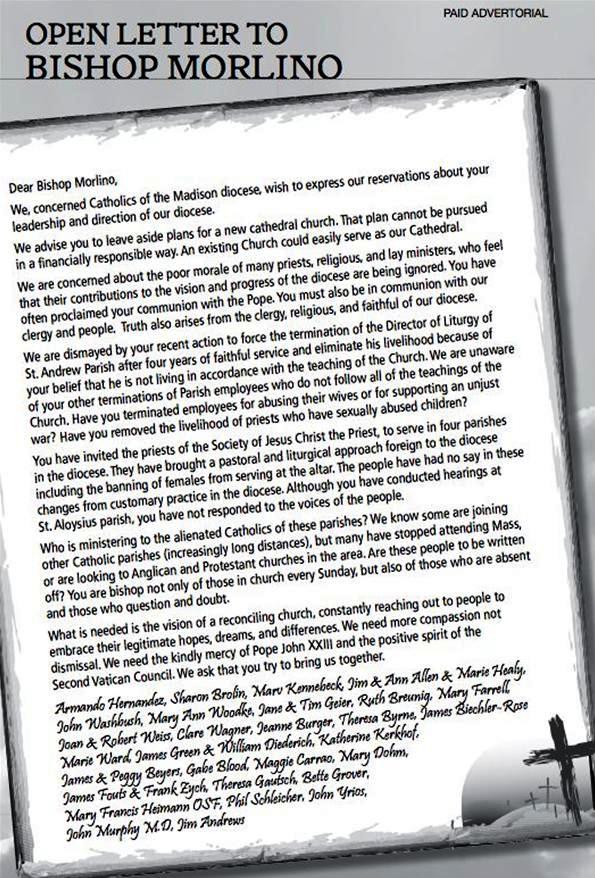
Madison, WI: Call To Action types attack Bp. Morlino in the local newspaper

Madison, WI: Call To Action types attack Bp. Morlino in the local newspaperAnd now for a public attack on a Catholic bishop on the part of dissidents in the Diocese of Madison.

Fr. Z RANT WARNING.  SQUISHY CATHOLICS ARE ADVISED TO GO HERE or HERE INSTEAD OF READING ON.

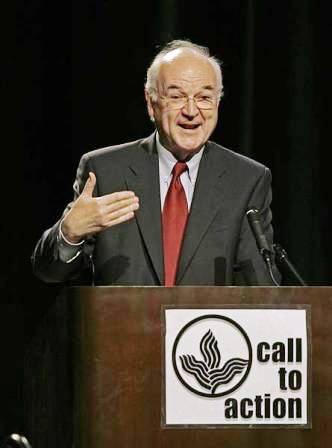
Some members of Call To Action and others took out an ad in the local newspaper, the Wisconsin State Journal attacking Bp. Morlino. 

If there was ever a case for interdiction, it is membership in Call To Action.

You might remember that H.E. Most Reverend Robert Morlino has made very strong gestures in support of Summorum Pontificum, even changing his own mind about this matter, and also very strong pro-life stands against bad legislation.  He spoke clearly about the Speak Pelosi Sen. Biden gaffs on Meet The Press.

As a matter of fact, I am sure this attack on Bp. Morlino is probably coming mostly from pro-abortion Catholics.  They are probably trying to goad him into some strong statement of rebuttal so that they can whine all the more loudly and sneer at him about how mean and narrow he is.  Boo hoo.

Bishops such as Bp. Morlino are standing up and the lefties are very displeased.

Let’s have a look at the newspaper article with my emphases and comments.  You can see the ad at the right and click it for a larger version.  Keep an emesis basin or barf bag handy.

Madison-area Catholics decry Morlino’s leadership in open letter

DOUG ERICKSON
608-252-6149
derickson@madison.com

SAT., OCT 11, 2008 – 10:30 PM

A group of Madison-area Catholics says in an open letter [In a newspaper.  Cowards.] to Bishop Robert Morlino that he is ignoring the input of clergy and lay people, causing some parishioners to stop attending Mass and hurting the morale of priests. [Gratis asseritur gratis negatur.  I just don’t buy that.  If people are not going to Mass because Bp. Morlino has been strongly pro-life (and that is really what this is about, bet on it, then there problems go deeper than the bishop.]

The letter writers point to priests banding together for fear of retribution if they dissent, [Should they be dissenting?  Should they?] pursuit of a new cathedral despite opposition, the firing of an openly gay music director, the hiring of priests who ban female altar servers and the alleged alienation of Catholics who disagree with church doctrine as examples of problems in the diocese.

"We need more compassion not dismissal," the letter says.  [What a weasle word, "compassion".  If someone does something you don’t agree with, just say he lack "compassion".  What about compassion towards those who want to adhere to the Church’s teachings about the beginning of life? About the authority of the Church to define liturgical laws?  About the traditional expressions of worship?  What about compassion for people who have been shoved to the back of the progressivists bus and forced for decades to go drink at separate liturgical water fountains?]

The letter, which appears as a paid advertisement in the Business section of today’s Wisconsin State Journal, is the latest flare-up in an increasingly vigorous debate over Morlino’s leadership of 270,000 Catholics in the 11-county Madison diocese.

In a statement, the diocese said Morlino is sorry that "certain groups, who claim to be Catholic, would assume postures which clearly are not in accord with the teachings of the church."

James Green of Madison, one of the organizers of the effort, said the advertisement cost about $3,500 and was paid for by more than 40 people, 36 of whom are listed by name. Seven others are remaining anonymous because they work for the church, Green said.

Many of the contributors are members of the Madison branch of Call to Action (CTA), a national organization of Catholics whose positions on issues such as women’s ordination and priest celibacy are at odds with church hierarchy. The Catholic Media Coalition, a group loyal to church teachings, describes CTA as the leading organization of liberal, dissenting Catholics.

Brent King, spokesman for the Madison Catholic Diocese, said CTA members gave Morlino a copy of the letter Friday.

The diocese statement said Morlino hopes and prays that members of the group "return to full acceptance of the faith" that comes from the apostles.

"It also very much saddens the bishop when groups, such as Call to Action, resort to the use of the mass media to address internal family problems within the church," the statement said.  [Let’s, however, not think that the "problems" are well-founded on both sides.  One side is wrong (the dissenters) and the other is right.]

Priests start group

Asked for evidence of poor morale among priests, several of the letter signers mentioned the Association of Madison Priests. The group was formed by priests to support each other and to provide a unified voice on issues in which they differ with Morlino, according to people familiar with the group.

"They feel the need to protect each other," [They wouldn’t if they were on the right side of things.] said Joan Weiss of Prairie du Sac, a CTA leader. [May I wonder out loud what this woman could possibly have to say about what priests think?] "They’re concerned about retaliation if they speak out in opposition in any way." 

Weiss and others said the priest group began shortly after Morlino required all priests to play a taped message prior to the 2006 general election in which he spoke against stem cell research, the death penalty and same-sex marriage. Priests were told they could face serious consequences if they expressed disagreement.  [This is really it, isn’t it?  These priests oppose the Church’s teachings.  Why would should there not be consequences for these guys?]

A priest who is a leader of the association confirmed the group’s existence Saturday but said the group did not want to go public at this time.  [Cowards.]

Another priest who is involved but not a leader said about 50 of the 135 or so active and retired priests in the diocese formed the group "to promote sociality among priests and to formulate a response to some of the diocesan policies as expressed by the bishop."  [They formed to pressure the bishop not to be true to the Church’s teachings and to justify their own dissent.]

The priest said Morlino has tried to squelch the group. "The bishop right from the beginning said he saw no reason for such a group and has tried to torpedo it without success," he said.

The State Journal agreed to give both priests anonymity because they said they didn’t want to anger Morlino. A bishop can reassign priests to smaller parishes or take action that affects their pay and pension.  [It is entirely true that a bishop can make a priest’s life very bad indeed.  But the problem comes from… over what issues?  If the priest is demonstrably trying to be loyal to the Church’s teaching and the bishop is not, that is a different siuation.  The issues and the motives have to be explored.  I am not an adherent of "the bishop right or …. right".  Bishops need to be accountable too.  They are not untouchable.  But for me, dissent is a dealbreaker.]

King, the diocese spokesman, said Morlino has had conversations with the group’s leaders. At this point, Morlino views the group "neither negatively nor positively, but in a more exploratory way," King said.

King strongly disagrees that priest morale is a problem. "I know a lot of priests, both traditional priests and those who may be a little more progressive, and they all seem to have pretty good morale."  [Right.  This must be the case.  The other side of the coin has to be examined as well.]

Independent voice

There are 195 archdioceses and dioceses in the U.S., and each one is required to have a priest council. This group advises the bishop on governance, but the group generally is not open to all priests and the agenda usually is set by the bishop, the council’s president.  [Which would be abhorent to anyone who thinks that the Church should be "democratic", run like a city council.]
 
A priest association is much different, said Vic Doucette of the National Federation of Priests Councils in Chicago. Priest associations crop up independently, and their members set the agenda.

"It’s fairly rare," Doucette said. "I know of not even a dozen or so in the country."

In Milwaukee, a priest alliance formed about seven years ago to give members brotherly support and an independent voice, said the Rev. Dave Cooper, a founder.

The Milwaukee group’s 126 members have a good relationship with the church’s hierarchy but take opposing stands at times, Cooper said. In 2006, the priest alliance opposed a state constitutional ban on same-sex marriage despite the church’s strong support of it. [Again… dissenters.   Wouldn’t like to see a priest group spring up that wasn’t a dissenting group?  I think the Confraternity of Catholic Clergy might be something like this.  And I believe none of its membership cower in the shadows like frightened little girly men.]

Cooper said he has attended one meeting of the Madison group but declined to comment more specifically.

"Some of the issues they’re dealing with are different than ours," he said. "I really can’t address that without getting into trouble or making accusations."

Critics of Morlino’s five-year tenure contend he rules through intimidation and fear and focuses too much on homosexuality and abortion to the detriment of other issues.  [I have warned about being alert to "code language".  When you hear Catholics express "concern" that perhaps we don’t have a nuanced enough balance of abortion with, say, "the full spectrum" of other issues, that is when your alarm bells need to sound.]

"You don’t hear him talking about the poor. [See?] You don’t hear him saying much about the war," [Why should he talk about the war?   Let’s have a guess at the age of St. Heimann, shall we?  Do you suppose she became a liberated sister around 1968?  ]  said Sister Mary Francis Heimann of Madison, a Catholic nun and one of the letter signers.

Another letter signer, Jim Beyers, who attends St. Maria Goretti Parish in Madison, said he wants Morlino to respect priests in the diocese.

"He treats them like children. He’s punitive toward them," Beyers said. 

Others say Morlino inspires them with his approach and his teaching.  [For every three negative comments, the writer tosses in a handful of dirt from the other side.]

"We just love him," said Ron Faust of Cross Plains. "I like that he tells the truth and doesn’t back away from it. I think there are more Catholics who support him, by far, but the unhappy speak the loudest."

Morlino has riled some Catholics from the start. [Good.] Early on, he seemed to suggest in a public comment that Madison lacks public morality. [! I wonder…. is he right?  We are talking about a city with one of the most liberal schools in the country.]  (He has since said he was merely pointing out that there are few common starting points for discussions about moral reasoning in such a diverse city.)  [Note the stress on "diversity", as if the bishop is in favor of a heterogeneous society.]

Other actions, such as his service on an advisory board for a controversial Army training institute, have led some Catholics to question whether Morlino is a good fit for a diocese with many progressive Catholics.  [Oooooo….. ARRRRMMMYYYY……   baaad…   Progressivist Catholics should never have to be challenged with such a shocking idea such as, well, that the military isn’t automatically evil.]

Selection of bishops

Madison, WI: Call To Action types attack Bp. Morlino in the local newspaper[And now the dinosaur liberals are trotted out.]

A larger issue is whether there are any bishops other than "conservative" ones to choose from, said the Rev. Richard McBrien, a [dissenting] theology professor at the University of Notre Dame who often clashes with the Catholic Church.  [Remember his association with Call To Action?   I’ll post the photo again, just to remind you of the stellar example he gives.]

"Under Pope John Paul II, the motive was clear: Replace all progressive bishops who were formed by Vatican II with conservative bishops, and thereby change the face of the U.S. hierarchy," McBrien said. "The plan has been successful."  [Not successful enough.  McBrien still has a job at Notre Dame.]

Before 1980, bishops were appointed because they excelled at pastoral care as priests, McBrien said.  [What a slimey thing to say.  The implication is that men today aren’t chosen because they are "pastoral".  BTW… many times here I have written about the false dicotomy so dear to the liberals.  They oppose "pastoral" and a whole range of qualities such as "faithful" "liturgically reverent", etc.  The idea is that if you are faithful to the Church’s teachings and laws… you are unwilling to dissent or bend or break the law of the regula fidei, you are therefore not "pastoral".   The worst examples of this crap come from people who don’t have a clear sense that the word isn’t really pronounced "pastoreal".] That pattern was replaced with one in which bishops were appointed "who were uncritically loyal to the Holy See and had absolutely clean records on such issues as contraception, priestly celibacy and the ordination of women. Bishop Morlino fits the pattern."

This theory — that bishops are no more than "yes men" for the Pope — is "absurd," said Jimmy Akin, director of apologetics and evangelization for Catholic Answers in El Cajon, Calif., and a leading Catholic author.

"There is no way that the Holy See can make all of the local pastoral decisions affecting the billion-plus Catholics in the world," he said. "Those decisions are made by the bishops."  [Also involved with the liberals’ distorted vision is that there should be a radical subsidiarity, that the Holy See shouldn’t have a clear role in any "local Church", which should have even greater automony.  Bishops should be chosen locally.  Parish leaders who preside should be chosen by the community because they best exemply the community at that moment.  Blah blah.]

Terms such as "progressive" and "conservative" are drawn from politics and not useful in this discussion, Akin said. [Well… they are… sort of useful.  Especially when so many of the progressivists line up nearly perfectly with certain political parties.] "The question is not whether bishops — or any other Catholics — are progressive or conservative, but whether they are faithful to the teachings passed down from Christ and the apostles."  [True enough.]

Morlino’s fans are just as passionate as his detractors.  [A final handful of dirt from the newspaper.]

Huan Hoang of Madison said he was "a sleeper" Catholic until two years ago when he heard a Morlino homily.

"He awakened my faith," Hoang said. "He needs to know that he’s leading us to Jesus Christ, and at the end of the day, that’s the only thing that’s important."

I am of various minds about this article and the ad.

If I were Bishop Morlino, I would be sorely tempted to write back to them, through the paper, a letter something like this:

Dear People of God (as you like to be called),

Forgive me for not taking your counsel to me seriously. Or don’t forgive me. A newspaper ad? And you want to tell me how to act in a financially responsible way? The phone is cheaper. I tend to take counsel more seriously when those offering it are not engaged in a publicity stunt.

For your information, there’s a priest shortage in the Church and in this diocese. If I want to invite priests who are members of Religious Orders or or Institutes of consecrated life to staff parishes in the diocese, I will.  It is my choice to make the Extraordinary Form of the Roman Rite Mass more available to the faithful in this diocese who want it. Furthermore, females do not traditionally serve at the altar in the Extraordinary Form of the Roman Rite Mass… or in the Ordinary Form if you will recall.

If some Catholics in the diocese feel better off in the Anglican Communion or in Protestant denominations, I would have thought you’d welcome their choice to join them. I certainly do, especially if their sense of Roman Catholic worship is so impoverished that they prefer Protestant worship to it. Perhaps now they and you will understand that many Catholics in this diocese have been forced for four decades to accept the scores of liturgical abuses and just plain bad taste that parish directors of liturgy, along with complicit priests, have heaped upon them.

You appeal to the "positive spirit of the Second Vatican Council." I wish you would read the Council documents, beginning with the one on the Sacred Liturgy.

Your servant in Christ,

etc.

But I am not a bishop and this fantasy letter is a merely one example of why I should never be one… nor will ever be.

Just in case you have forgotten, here is a reminder of what sort of liturgy these Call To Action disserters want.  Remember this video from the May 2008 Call To Action meeting in San Jose, CA?

Via skype this morning, I had an interesting tale from a priest about an encounter after saying Holy Mass… er um… sorry… presiding at community…

I share it here, with my emphases and comments as a good counterpoint to the lunacy of the ad and article above:

Yes, the operative word is "said."  We "presided."  [The Royal We might surprise at first, but given the source and the spirit of levity, you can make a quick adjustment and embrace it as entirely appropriate.]

Worse yet, We had a woman assault us after We presided. 

She’s not a bad person, a daily communicant in fact.  She taught in the parochial school for 30 years before retiring two years ago.  Her husband has taught at ___ for nearly 40 years.  They both are sincere Catholics. 

Well, she’s gone to school and is a certified "spiritual director."  One of her directees is a female bishop.  So, You can already guess what’s coming next. 

"Just why can’t women be ordained?  Don’t give me all of the answers that  I’ve heard so many times.  Here’s a woman who God has called to the priesthood and to a bishop and she would be wonderful for the Catholic Church.  And, think of all the women who, if they could be ordained, could bring the Eucharist to places where it’s not possible now, given the priest shortage." 

We were in no mood to play that game, so We asked: "If you sincerely believe what you do, why do you remain in the Church?"  [That is the question that must be put to them every time.]

Her answer: "We have the true Eucharist."  [With its consequences.]

Our retort: "If the Church is so corrupt that its teaching is errant, how could it possibly have the true Eucharist?  Would it not be more honest of you to become an Episcopalian which teaches the truth as you see it and would, ipso facto, have the true Eucharist that the Holy, Roman, Catholic Church has forsaken because its wedded to outdated patriarchy?  Were not the reformers like Luther far more honest than people are today who want to make the Church in their image and likeness?  Think about it: maybe God is calling you to protest…to be a Protestant…by joining the Episcopalian Church where you can have female priests, homosexual and lesbian priests, divorced priests, and lesbian bishops who have children." 

She was not happy with us but We are beyond wasting Our time on this feces. 

As you can tell, dear readers, I am in a bit of a mood.

I applaud Bishop Morlino, therefore, all the more loudly for what he has been doing.   If some lefty-dissenters don’t like him …. well… tough. 

Wake up and smell the incense.

Posted in SESSIUNCULA |
50 Comments

Arizona: TLM news

A friend alerted me to the following from Arizona:

Latin Mass makes a return to the Valley

by John Faherty – Oct. 12, 2008 12:00 AM
The Arizona Republic

Standing outside the church, Marie Shoban stops to make sure her head is covered properly.

Then she checks her four young daughters to ensure that their veils are also in place.

Shoban, 44, and her husband, Mark, are attending a Latin Mass.

The service is solemn, ritualistic, and intelligible to only a very few. [I deny the premise.  It might be that not very many understand all the Latin without the help of a side-by-side translation.  It certainly is the case that people know what is going on and that something very important is taking place.]

But for the Shobans, and others who kneel in the pews, the Mass offers reverence and awe in a time when almost nothing seems sacred.  [Well put.]

It offers quiet in a loud world.  [I am reminded that C.S. Lewis’s Screwtape looked forward to the hideous constant noise that would reign in hell.]

They find comfort in the constancy of the Mass because the world around them is changing faster than they can keep track.

The Latin Mass, a relic from the 16th century, [First, let’s not call it "the Latin Mass", which is misleading.  Second, it is not a "relic": it is alive and well.  Third, this is far older in its structure than the 16th c.]  is returning to churches across the Valley, the nation and the world one year after Pope Benedict XVI loosened restrictions on priests performing it.

The irony, of course, is that it has become relevant again by not changing at all. [Well said.]

So the women cover their heads with veils or manilas as a sign of respect. The priest turns his back to the congregation so he can face the altar, which represents God.  [He has turned around, not turned his back on people.]

The sound of Gregorian chants fills the church.

"There is a desire for a return to a better place," [I like the qualification "better".] said Richard Rosengarten, dean of the University of Chicago Divinity School.

"It’s not fundamentalism, but the impulse that fundamentalism reflects – of recovering something – is very strong."

For the Shoban family, the Mass offers a time to think and pray and be still.

"It’s the Mass of the saints; it’s perfect," said Shoban of Chandler, who comes to St. Thomas the Apostle Catholic Church in central Phoenix each Sunday.

"If they don’t change anything, I know that’s OK."  [This is an important element.  Constant change gave people the impression that everything could change and that what there was was not so important.]

A change to tradition

The Latin Mass makes sense to some people as a bulwark against change.

It is nearly the exact same Mass as the one established by the Catholic Church during the Council of Trent in 1563.

For 400 years, Catholics around the globe sat through the same services.

In the 1960s, the church held the Second Vatican Council, and one of the results of the conference was a series of significant changes to the Mass.

The priest, who always had his back to the congregation, [grrr    The writer seems particularly focused on this, however.  Which is interesting.  That is because this position is immediately sensed to be significant.] would face the faithful and address them in their own language, not Latin.

There would be modern music, [Umm… there was modern music for the older form of Mass too.] and lay people would be encouraged to take part in the services.

The old Latin Mass was never banned by the church, but Vatican II made sure it could be said only with permission from a bishop.

With that, the Latin service was placed on a shelf and quickly started gathering dust.

In July 2007, Pope Benedict XVI issued his Motu Proporio, a decree, which loosened restrictions on the Latin Mass.

He wrote, in Latin: "In parishes where there is a stable group of faithful who adhere to the earlier liturgical tradition, the pastor should willingly accept their requests to celebrate the Mass."

Suddenly, any priest, or parish, could perform the Mass without getting permission from a bishop.

It turned out there was an audience – and not just of people who remember the Mass from their youth and felt nostalgic about it.

"The desire for a Latin Mass isn’t limited to a few elderly attempting a return to their childhood," said Roger Finke, a professor of sociology and religious studies at Penn State University. "It includes members of all ages seeking a tradition with a long history, theology and sense of meaning."

Tiffany Kpodonu, 34, goes to Latin Mass in Phoenix as often as she can.

For her the service is more reverential and meaningful.

At a service in September, she was 8 1/2 months pregnant. She had recently moved from Chicago to Phoenix and would soon be moving again to California.

"This Mass is so peaceful. It’s very, very solemn," she said. "It calms me."

‘Quiet is good‘

The 6:30 Mass held each morning at St. Thomas feels like stepping back in time.

Typically, 20 people or so are at the service and they are spread across the large church.

For much of the service, the only noise is the occasional cough or the sound of somebody shifting in the wooden pew.

"There isn’t much quiet in the world today," said Father Kenneth Fryar, pastor of the Mater Misericordiae Mission. "Quiet is good."

The mission was established by Bishop Thomas Olmstead in 2005 to provide Latin Mass to the faithful in Arizona.

The parish, which does not have its own church, holds services at St. Thomas.

In September, Bishop Thomas J. Olmsted gave Mater Misericordiae permission to buy a church.

It will be dedicated entirely to the Latin Mass.

"I am sure it is closer to what God wants," Fryar said. "We should expect deference to the majesty of God."

Father Fryar is a pious man wholly devoted to the Latin Mass.

It is the best way, he believes, to give "thanks and adoration to God."

He does not allow himself to be concerned with how people feel about the service.

"This is for God," Fryar said in the rectory of St. Thomas. "It doesn’t matter what the people think. It wouldn’t matter if nobody was there." [RIGHT!]

Fryar’s single-minded devotion to the service was a blessing for Myrna Maney of Phoenix.

At 72, she is old enough to remember the Latin Mass and says she was never comfortable with the new services.

"That Mass was noisy. The constant music, the constant singing, bothered me," Maney said. "The difference is that the Latin Mass is aimed at God totally. As a sacrifice."

Before the Pope’s decree, Maney and her husband would drive for hours to find a church where a priest had received permission for a Latin Mass.

"This is not nostalgia, like they always say," Maney said. "This is the way I want to worship."

She was not alone in her search.

"There is a migration to more traditional services, especially among the young, in part because there is a solemn art form to it, a ritualized performance," said Rodney Stark, a Baylor University professor who studies the sociology of religion. "It’s not rap or rock and roll or some idiot priest with a guitar." [YES! YES!  "some idiot priest with a guitar"  YES!]

Reverence at what price?

The 1 p.m. Sunday Latin Mass at St. Thomas the Apostle is far more ritualized than the daily Mass.

More than 200 people attend the service, where a choir sings Gregorian chants, the liturgical music of the early Catholic Church.

The priests’ moves are practiced and precise.

The six altar boys move in choreographed perfection.

The ripe smoke of burning incense is spread across the church. Holy water is sprinkled.

In nómine Patris, et Fíllii, et Spíritus Sancti. Amen.

In the name of the Father, and of the Son, and of the Holy Ghost. Amen.

Intoíbo ad altáre Dei.

I will go unto the altar of God.

Many in the congregation hold a missal, Latin on the left page and the English translation on the right.

Some follow along. Others simply listen.

[And now the "price" being paid…] There are no altar girls at a Latin Mass. There is also no layperson participation [except for those who are praying…] because the Mass follows what is called the 1962 Missal, which means that the service will be held just as it was in 1962.

That was before the church began its modernization. It was before altar girls or lay ministers and before people at the service took time for the handshake of peace.  [gak]

There are no musical instruments or video screens. There is no band.  [I don’t know… there is a band when the music is Mozart’s Coronation Mass… which was modern music in its time… and laypeople played it…]

Michael Malone, 51, of Phoenix, learned the Mass as an altar boy in Connecticut.

Now, he attends the services again because the Latin Mass is "beautiful and reverential," he said.

Malone, the father of seven children, thinks the Mass holds a special appeal to people searching for something real in their lives.

"We live in a world of 15-second sound bites," he said. "Religion has to be more than that. There is substance here."

But some fear the search for tradition or reverence may come at a price.  [What was that price?  No altar girls?  No video screens?  No idiot priests with guitars?]

"The real issue here is not limited to liturgy but has wider implications for church life," the Rev. Keith Pecklers, a Jesuit liturgical expert, told the Associated Press.  [Fr. peckler’s is probably the one who wrote Archbp. piero Marini’s fascinating panegyric of Bugnini and the work of the Consilium.]

Proponents of the old Mass, he said, "tend to oppose the laity’s increased role in parish life [I don’t buy that at all.  I think there were lot’s of parish organizations and events back in the day.  I don’t we can reduce parish involvement to being a unncessary "cup minister" as the jazz combo in the sanctuary irritates the congregation with poorly played "hip" music.] and worship since Vatican II along with the Catholic Church’s ecumenical collaboration with other Christians and its dialogue with Jews and Muslims."

Learning the old ways

How much the Latin Mass might grow in popularity may be limited by the fact that not a great number of priests are capable of conducting the service. [Yet.]

Most of the priests who were performing the Latin Mass more than 40 years ago are no longer practicing.

Some orders and societies of priests are still teaching the Latin Mass, like Father Fryar’s Society of St. Peter, but the number of people capable of doing it properly is likely to remain low.

But Father Fryar can, and he will.

"This is an historical treasure," he said. "But instead of putting in on a shelf in a museum, this treasure is still at our disposal."

Marie Shoban will continue to cover her head and attend Latin Mass.

It’s where she will find peace.

"I have a house full of children, and the world is crazy around us," she said.  [This implies that the children behave well during the older Mass, doesn’t it.]

But she would attend the Mass even if her life were not hectic.

"The old Latin Mass is eternal. It’s unchanged, word for word. There are too many changes around us."

Posted in SESSIUNCULA |
21 Comments

A Sabine oddity

I’ll get to the oddity but first a pretty picture.

A Sabine oddity

Let me preface this by saying there are robins right now.  I have never seen so many robins.

I got a few snaps in the dimming light, but these are fairly good.

A Sabine oddity

A Sabine oddity

Click for larger image.

Clearly they are flocking before their migration southward. 

It was odd.

Posted in My View |
10 Comments

Leaves

All of these were taken with my phone and this post was created directly from my phone.

Leaves

Leaves

Leaves

Leaves

Leaves

Leaves

Leaves

Leaves

Leaves

Leaves

Leaves

Leaves

Leaves

Leaves

Leaves

Leaves

Leaves

Leaves

Leaves

Leaves

Leaves

Posted in My View, SESSIUNCULA |
10 Comments

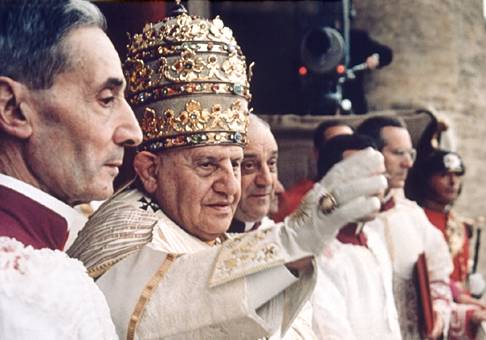
11 Oct: Blessed John XXIII

BTW… today at the Vatican Basilica it is the feast of Bl. John XXIII.

11 Oct: Blessed John XXIII

Today is also the 46th anniversary of the opening of the Second Vatican Council.

Posted in SESSIUNCULA |
23 Comments

UK seminaries: the seminarians are making the difference

I found a very engaging post at Damian Thompson’s place Holy Smoke:

Let’s have a glance with my emphases and comments.

The fight against Futurechurch: seminarians

Posted By: Damian Thompson at Oct 10, 2008 at 14:38:45

Do you know what makes liberal Catholic clergy wake up in a cold sweat in the middle of the night? It’s not the return of the Tridentine Mass. It’s not the fact that Ratzinger is Pope. It’s not their rapidly dwindling congregations.

Gallery Photo
Seminarians are taking over the world

What terrifies the old trendies is a new generation of conservative seminarians, who are gradually turning into a new generation of conservative priests – just as the supply of liberals is drying up.  [This is certainly the case in the USA as well.  The seminary I was in the US was a hell-hole of heresy and sheer dopiness.  But then the student body began to shift.  The faculty simply couldn’t throw that many guys out, and word was getting back to bishops about how bad things were there.  Slowly but surely the student body changed the seminary, and eventually the bishop made some changes as well, good ones.  Now that seminary is for the most part sound.  The aging hippies now openly lament the loss of their 60’s dreams and mutter gloomy warnings about how "conserrrrrvativvvve" the seminarians now are.]

Until very recently, seminaries managed to screen out the more orthodox candidates. "Psychologically immature" was the code for "obedient to the Magisterium", and so effective was the process that dozens of vocations were successfully squashed. In the 1980s and 90s, English seminaries were run by a grey-shirted Magic Circle politburo, assisted (not to say bullied) by frightful middle-aged women whose liturgical preferences were only just the right side of Wicca.  [LOL!  Well put.  But I must say that they weren’t to the right of Wicca where I was.  At our place there were invocations of the "earth mother goddess", "Sophia", and the "Bringer of Light" – all blended with tacky silliness.]

One or two conservatives slipped through the net, by hiding copies of Fortescue under their beds and slipping each other photographs of fiddleback chasubles that they could admire in private. In public, however, they were careful to wear the seminary uniform of jeans and CND T-shirt, and even to swallow the Bitter Pill without gagging.  [The "Bitter Pill" is the lefty UK weekly "The Tablet".]

But times are changing. Dreary Leftist seminary rectors have retired or became Magic Circle bishops, the Wiccan "pastoral advisers" have fallen out of favour, and conservative candidates for the seminary have started presenting themselves faster than they can be turned down. "It’s a bit like the Somme – no sooner have you wiped out one wave of infantry than another appears," says my source.  [LOL!]

Futurechurch is losing this battle. Some Magic Circle rectors are ready to run up the white flag. I could mention a couple of English seminaries where orthodox doctrine is taught pretty rigorously. That’s in sharp contrast to the situation 20 years ago. (As one London priest told me this week, "I came away from seminary knowing only two things – that St Augustine of Hippo and St Augustine of Canterbury were different people, and that Julian of Norwich was a woman.")

The other day, I saw a photograph of seminarians and staff at Allen Hall, Westminster. I reckon you could tell just by looking at them that the students were more conservative than their teachers. [YES] The same is true of the Venerable English College in Rome, where – perhaps because it is a breeding ground for bishops – the Magic Circle is clinging on to power. "Students still have to don a false beard if they slip out to attend a Tridentine Mass," I’m told. [I think rubber nose and glasses might work better.]

Some of the really Left-wing dioceses have adopted a disgraceful tactic: rather than put forward conservative candidates for ordination, they’ve stopped looking for future priests completely. Hence all this guff about "lay empowerment": the lay people being empowered are all "made men" (if I can use such a sexist term) in the mafia of the mediocre.

But don’t despair. Conservative seminarians are getting ordained, and in a few years’ time the dioceses will run out of goody-goody Tabletistas on whom to bestow plum parishes. And then, who knows? A conservative bishop? Stranger things have happened.

Just what are the odds these days on His Hermenuticalness being named the next Archbishop of Westminster?  Are odds still being offered?

Posted in SESSIUNCULA |
28 Comments

QUAERITUR: Black pall for caskets in the Novus Ordo?

A question via e-mail:

With the common occurrence of white vestments at funerals and a corresponding color funeral pall, I wondered about the practice of a black funeral pall for the OF. While black vestments can be used for funerals in the OF, can the funeral pall also be black as it was in the EF? Is the connection between the white funeral pall and the white garment worn at baptism something that might prevent the use of a black funeral pall?


Yes… we must remember that before the post-Conciliar innovations the pall, if one was used, was always black, as were the draperies for a catafalque.

I do not believe in the new rite the color of the pall is prescribed.  I have seen various palls, most white, but some of other colors, of elaborate fabrics, brocade, etc. 

The idea behind white is that the last "clothing" of the body echoes the first "clothing" with the white baptismal garment in the rite of baptism. 

However, I haven’t seen anywhere – maybe I simply missed it – anything that prescribes that the color of the pall must be white in the Novus Ordo.

I assume a black pall could be used in the newer funeral rites.

Posted in ASK FATHER Question Box |
16 Comments