SCOOP: Milwaukee – Archbp. Dolan sets up a house for the ICK

I received this news.

Archbishop Dolan of Milwaukee today issued a decree erecting a house of the Institute of Christ the King in Milwaukee at St. Stanislaus Parish.

The Institute will control the parish with one of their men as parochial administrator and some Institute fellows joining him. 

A secular priest will care for the Ordinary Form liturgy there.

Posted in SESSIUNCULA |
28 Comments

PETRUS: Amazing interview with Card. Noè: Paul VI’s “smoke of Satan” remark concerned liturgy

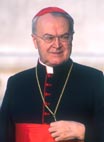
On the site Petrus there is an interview by Bruno Volpe with His Eminence Virgilio Card. Noè, [pronounced "No-eh"] "former papal MC, the predecessor of Archbp. Piero Marini.

These are very interesting comments.  He speaks of the phrase of Paul VI that the "smoke of Satan" had entered the Church and what Paul VI meant by that phrase. 

My translation and emphases.

Exclusive: the revelation of Card. Noè:" When Paul VI denounced the smoke of Satan in the Church, he was referring to liturgical abuses following Vatican II."

by Bruno Volpe

PETRUS: Amazing interview with Card. Noè: Paul VI's "smoke of Satan" remark concerned liturgyCITTA’ DEL VATICANO – He speaks with a thread of a voice and at times laboring for breath he it is so difficult he has to stop.  But his mind is lucid and his heart is sound.. The interview with Virgilio Card. Noè, 86, Master of Liturgical Ceremonies during the Pontificates of Paul VI, John Paul I, and John Paul II, once the Archpriest of the Basilica of St. Peter and Vicar of the Pope for Vatican City, showed himself to be at the same time both touching and engaging.  The Cardinal, who has very much abandoned public life because of the infirmities of old age, helps us, taking us my the hand, better to know a Pontiff – wrongly forgotten in history’s haste: Giovan Battista Montini.  He reveals for the first time what Paul VI was referring to precisely when in 1972 he denounced the presence of the smoke of Satan in the Church.

Your Eminence, who was Pope Paul VI?

A real gentleman, a saint.  I remember still how he lived the Eucharistic Mystery, with passion and participation.  When I think of him I tear up, but not in the way of a hypocrite. I am truly moved.  I owe him a great deal, he taught me a lot, he lived and paid a great price for the Church.

You had the privilege to be Master of Liturgical Ceremonies precisely because of the assignment from Papa Montini in the time of the post-Conciliar reform.  How do you remember those times?

Splendidly.  Once the Holy Father said to me, personally, and in a very tender way, how the MC ought to carry out his role in that particular historical period.  He came into the sacristy.  I drew near and he said: "The MC must foresee everything and taken everything on himself, he has the task of making the Pope’s road smoother."

Did he add anything else?

He affirmed that the spirit of the MC must not be shaken up by anything, large or small, that may be his own personal problems.  An MC, he stressed, must remain also the master of himself and be the Pope’s shield, so that Holy Mass can be celebrated in a dignified way, for the glory of God and His people.

How did the Holy Father take the liturgical reform desired by Vatican II?

With pleasure.

It is told that Paul VI was quite a sad man, true or legend?

A lie.  He was a good and gentle father, a gentleman and a saint.  At the same time, he was saddened by the fact of having been left alone by the Roman Curia.  But I would prefer not to talk about that.

As a whole, against the historians, You, as one of his closest and trust collaborators, describe Papa Montini as a serene person.

He was.  Do you know why?  Because he also affirmed that whoever serves the Lord cannot ever be sad.  He he served Him especially in the Sacrifice of the Mass.

Paul VI’s denunciation of the presence of the smoke of Satan in the Church is unforgettable.  Still today, that discourse seems to be incredibly relevant.

You from Petrus, have gotten a real scoop here, because I am in a position to reveal, for the first time, what Paul VI desired to denounce with that statement.  Here it is.  Papa Montini, for Satan, meant to include all those priests or bishops and cardinals who didn’t render worship to the Lord by celebrating badly (mal celebrando) Holy Mass because of an errant interpretation of the implementation of the Second Vatican Council.  He spoke of the smoke of Satan because he maintained that those priests who turned Holy Mass into dry straw in the name of creativity, in reality were possessed of the vainglory and the pride of the Evil One.  so, the smoke of Satan was nothing other than the mentality which wanted to distort the traditional and liturgical canons of the Eucharistic ceremony."

It is thought that Paul VI was the real culprit as the cause of all the ills of post-Conciliar liturgy.  But based on what you have revealed, Eminence, Montini compared the liturgical chaos, even if in a veiled way, actually to something hellish.

He condemned craving to be in the limelight and the delirium of almighty power that they were following the Council at the liturgical level.  Mass is a sacred ceremony, he often repeated, everything must be prepared and studied adequately, respecting the canons, no one is "dominus" [lord] of the Mass.  Sadly, in many after Vatican II not many understood him and Paul VI suffered this, considering the phenomenon to be an attack of the Devil.

Your Eminence, in conclusion, what is true liturgy?

It renders glory to God.  Liturgy must be carried out always and no matter what with decorum: even a sign of the Cross poorly made is synonymous with scorn and sloppiness.  Alas, I repeat, after Vatican II it was believed that everything, or nearly, was permitted.  Now it is necessary to recover, and in a hurry, the sense of the sacred in the ars celebrandi, before the smoke of Satan completely pervades the whole Church.  Thanks be to God, we have Pope Benedict XVI: his Mass and his liturgical style are an example of correctness and dignity.

A few observations. 

First of all, I have good and bad memories of Card. Noè. 

He was the one who tore out the altar of the Chair in the apse of St. Peter’s.  He was one of the main causes of the emasculation of the style of papal ceremonies and the minimalism we experience still in many places. 

At the same time, I remember what a gentleman he was.  I would from time to time encounter him in the Basilica in the mornings.  I said Mass there everyday.  In the corridor between the sacristy and the basilica he would step reverently aside for any priest going to or coming from Mass.  He would say quietly to those going, "Memento" and to those returning, "Prosit".   Old school. 

Also, he made sure the Basilica was clean, which was a real change in those day that persists to today.

Still, while I take what His Eminence says about Paul VI cvm grano salis, I was very interested to read his high praise of Pope Benedict, whom he respects for his liturgical style.

Card. Noè wasn’t a real fan of the Polish Pope’s style, for sure, and there was some tension there.  As a matter of fact Noè was just a little impatient and bossy with him, who wasn’t all that interested in the finer points of liturgy.  I remember a story from a papal MC who was present one day toward the end of Msgr. Noè’s service as MC to John Paul II.  The Pope would descend using an elevator to the floor of the basilica and then, after being greeted according to protocol by the MC and others, would go to vest.  One today, as I said close to the end of Noè’s time, when the MC greeted the Pope, John Paul II responded "Oggi, Monsignore, faccio io papa!…. Today, Monsignor, I think I’ll be the Pope." Msgr. Noè moved along to a new post in the Congregation not long after that.

In any event, the comment Card. Noè made about decorum and the need to celebrate Mass well are spot on and he gets WDTPRS kudos.

As a matter of fact, there is something in his remarks that echos very strongly two of the main points I am trying to drive home on this blog.

First,

PETRUS: Amazing interview with Card. Noè: Paul VI's "smoke of Satan" remark concerned liturgy

Celebrate Mass well, participate properly – affect the whole world. Celebrate poorly – affect the whole world.

What is most fundamental to celebrating Mass well?

PETRUS: Amazing interview with Card. Noè: Paul VI's "smoke of Satan" remark concerned liturgy 

Simply putting yourself aside and obeying the rules in the book, saying the texts well and properly, is already a huge step in the right direction. 

They are the sine quibus non of a sound ars celebrandi, which Noè mentioned.  This is the phrase that was used during the Synod on the Eucharist in 2005 and then which Benedict explained in Sacramentum caritatis.

Posted in SESSIUNCULA |
93 Comments

L’OssRom: Personal parish for the Extraordinary Form set up – Card Castrillon comments

In L’Osservatore Romano for 16 May, there is an article on the establishment of the fully Extraordinary Rite parish in central Rome, staffed by the FSSP at the fabulous church Ss. Trinita dei Pelegrini.

My translation:

Erected in application of the Motu Proprio Summorum Pontificum

The first "personal parish" in Rome for traditionalist faithful

An important act to apply in Rome the recent Motu Proprio Summorum Pontificum of Benedict XVI.

In this way Darío Card. Castrillón Hoyos, President of the Pontifical Commission "Ecclesia Dei" underscored the importance of the institution of a parish in the center of Rome for the spiritual needs of traditionalist faithful, who usually attend the "Extraodinary Form" of liturgy of the Roman Rite,

A decree of the Cardinal Vicar of Rome, Camillo Ruini, has in fact set up in the last few days as a "personal parish" Ss. Trinità dei Pellegrini, entrusting it to the pastoral care of the Priestly Fraternity of St. Peter (FSSP). 

"It is an act laid down by the Pope for the Diocese of Rome which has value in an of itself, in the continuing process now underway of the implementation of the Motu Proprio for the use of the Roman liturgy before the reform effected in 1970", explained the Cardinal President of the Vatican commission that oversees relations with the faithful bound to the preceding Latin liturgical tradition, in particular those who till now in various ways have joined to the Fraternity founded by Archbp. Marcel Lefevbre, who wanted to remain united with teh Successor of Peter in the Catholic Church.

"However," the Cardinal added, "the achievement of a personal parish also has value as an example to other dioceses, both in Italy and elsewhere."

The church, belonging to the Archconfraternity of the Most Holy Trinity of Pilgrims and the Sick, is found in the region of the first municiple ward of Rome and is a subsidiary to the Parish of San Carlo e Biagio ai Catinari, in a central pastoral district of the Diocese.

One reads in Card. Ruini’s decree that for the parish and its pastors "pro tempore" there are recognized all the rights enjoyed by others of the Ciry and their pastors according to the common law; at the same time it has the same obligations and duties as the others, while for the administration and support of the pastor the norms promulgated by the Italian Bishops Conference and the Vicariate of Rome will be observed.

This not very well written (In Italian) piece conveys little that is new, other than the fact that this is in L’Osservatore Romano, which means that every single progressivist bishop in Italy will see and and very many open-minded younger priests will as well.

Also, I liked Card. Castrillon’s comment about this being an example for the rest of Italy and elsewhere.

Rome is taking the lead! 

Let personal parishes be set up everywhere… Brick by brick, if necessary!
 

Posted in SESSIUNCULA |
8 Comments

Ventura, CA: Misión San Buenaventura, Dominican Rite

Apparently at the Misión San Buenaventura in Ventura, CA, the visitor can enjoy Holy Mass celebrated in the Dominican Rite.

Ventura, CA: Misión San Buenaventura, Dominican Rite

Posted in SESSIUNCULA |
11 Comments

QUAERITUR: disposing of Sacred Chrism

I received the following:

What is/are the proper way/s to dispose of Sacred Chrism.  Is it only to be burned or, like many other things, can it be buried and thus "returned" to the earth?

The very best way would be to burn it. 

Hmmm….

It would be a wonderful thing to burn it in an olive oil based lamp, perhaps used as a presence lamp.


Otherwise, it is would be impossibel to burn it in a dignified way, I suppose it would also be possible to pour it into the ground, though I think I would put my effort into finding a way to burn it.

Perhaps there is a cathedral sacristan reading with experience of dealing with large quantities of sacred oils who can chime in.


Posted in ASK FATHER Question Box, SESSIUNCULA |
13 Comments

Toronto Catholic Register: op-ed attack on Archbp. Ranjith and Benedict XVI

A reader alerted me to this article in the Catholic paper of the Archdiocese of Toronto.  The author is the former edition of this paper.  I am told he was also an associate of retired Bp. Remi do Roo, who celebrates puppet Masses for Call to Action. 

Let’s have a look with my emphases and comments.

http://www.catholicregister.org/content/view/1671/852/

Don’t step back on Vatican II reforms
Friday, 28 March 2008

Written by Bernard Daly, Catholic Register Special,

Recently it would appear that top Vatican officials are joining the attack on liturgy changes approved by Pope Paul VI after the Second Vatican Council.  [Right away we get the idea that these "Vatican officials" are probably "bad men".]

Archbishop Malcolm Ranjith, secretary of the Congregation for Divine Worship and the Discipline of the Sacraments, challenges widespread use of the vernacular, priests facing the people and communion in the hand.  [A may God give him health and length of days for that!]

In a June, 25, 2006, interview with La Croix daily newspaper in Paris, Ranjith’s target was the full use of the vernacular language at Mass and turned altars. More recently, in his preface to a book by Bishop Athanasius Schneider of Kazakhstan, Ranjith questions communion in the hand.  [May God shine His light upon them.]

He argues that these changes are not approved by the Vatican II Constitution on the Sacred Liturgy. This of course is true. The constitution deals with general principles. Paul VI slowly approved specific changes after the council closed in December 1965.  [Okay… so if we are going to be faithful to the documents of the Church, we really should read them and then be faithful to them.  No where will you find a document that abolishes Latin as the liturgical language of the Church.  Furthermore, the Church permitted Communion in the hand as an aberration, a variation from the norm which is on the tongue.  Also, altars ad orientem remain the standard, the norm, if you read the rubrics carefully.  The author here seems to be saying "don’t bother me with the facts, Archbp. Ranjith is … is… is… doing something bad!]

Ranjith often notes [correctly] that Cardinal Joseph Ratzinger, now Pope Benedict XVI, made similar points in a foreword to a 2003 book by the English Oratorian U.M. Lang. [And not only there.] Then prefect of the Congregation for the Doctrine of the Faith, Cardinal Ratzinger wrote: “To the ordinary churchgoer, the two most obvious effects of the liturgical reform of the Second Vatican Council seem to be the disappearance of Latin and the turning of the altars towards the people. Those who read the relevant texts will be astonished to learn that neither is in fact found in the decrees of the council.”  [Unbelievable.  He leaves aside entirely Ratzinger’s reason for why ad orientem worship is important, or how the argument for versus populum altars was based on bad scholarship.]

Ranjith says “it is clear that despite certain ‘steps forward’ to make the liturgy the vehicle of a true ecclesial renewal, there have also been some ‘backward steps.’ These are especially those changes in the liturgy that were effected hastily without proper research or due reflection.”

This can only mean that Ranjith thinks Paul VI approved changes “hastily without proper research or due reflection.”  [Ummm… yep.  That’s what it means.]

Unfortunately, most bishops who joined Paul VI in the slow renewal process, such as Bishop Albertus Martin and Cardinal Gerald Emmett Carter in Canada, are dead. [Let’s look backwards, not forwards.  Also, is this anything other than a slap at the last two Archbishops of Torontom Ambrozic and Collins?]  We must pray that some of their successors will act vigourously to defend Paul VI and the liturgical renewal he approved.  [If only they would defend the reforms as they are actually documented.  That would mean the Novus Ordo in Latin, ad orientem with Gregorian chant and polyphony.]

Fr. Gilles Routhier of the Laval University theology department has made a career of researching how Vatican II was received in Canada. Regarding liturgical changes, he argues that any abuses that occurred locally happened mainly because changes, such as use of the vernacular, took so long to come into effect, and not because they were brought in too hastily or without due reflection. In Canada, by far the majority of Catholics welcome the renewal. 

Of course, attempts to explain past events in absolute terms can never fully satisfy everyone.

As for the future of liturgical renewal, Archbishop Piero Marini, who recently ended long service as the head papal liturgist, [And now deserves a long and fruitful retirement.] makes a crucial point in his new book, A Challenging Reform: Realizing the Vision of the Liturgical Renewal. He points out that no place in Holy Scripture is God pictured standing behind His people, calling us to turn back to the past.  [THAT is the great insight available from that book about this issue?   I wonder if the author caught Archbp. Marini’s comment that the reforms the Consilium were jamming down the Church’s throat intended also to change the Church’s doctrine?  Go back and read the top of page 46 carefully.]

Even in calling us to abandon old sins, God is urging us forward to a new life. [Did the writer just draw a moral equivalence between traditional liturgy and sin?] Old liturgical forms and practices had their glorious days, and now is the time to keep the Vatican II renewal moving forward in the direction Paul VI approved.

(Daly, now living in Toronto, is publisher emeritus of The Catholic Register. He also worked for the Canadian Conference of Catholic Bishops for 35 years.)  [So I assume he was in part responsible for the Winnipeg statement?]

Posted in SESSIUNCULA |
45 Comments

PODCAzT 59: Leo the Great on Pentecost fasting; Benedict XVI’s sermon for Pentecost Sunday

PODCAzT 59: Leo the Great on Pentecost fasting; Benedict XVI's sermon for Pentecost SundayToday is Thursday in the Octave of Pentecost, or at least it ought to be in in the Novus Ordo as it is in the older, Traditional Roman Calendar. 

This is the fourth PODCAzT for the Pentecost Octave.

Thanks to your feedback for the last couple days I decided to do continue.  Your donations helpd inspire me also! Seriously.

Today we learn what St. Leo the Great (+461) thought about the fasting Christians should engage in after Pentecost, in other words on the Wednesday, Friday and Saturday of this very week!  These are our Ember Day’s those beautiful days which helped Catholics for may centuries regulate the rhythm of their lives in the consecration of the seasons of the year, and learn to use God’s creation with moderation.  Leo has a fascinating insight about how we cannot truly be Christians, in a deeper sense, without fasting and almsgiving.  These two necessary practices, shape in inner man in Wisdom…Sapientia.

Then we hear the Pentecost sermon of Pope Benedict XVI, now gloriously reigning.  He speaks about the diversity of our Church which must, as a necessary characteristic have unity, without which a group cannot truly be called a Church.  This has ecumenical implications, bet on it!

Of course, I have lots of comments along the way.

For music,
there is a festive paschal Alleluia from the Catheral of Notre Dame in Paris, just to remind us of the connection of Easter and Pentecost.  We have some Gregorian chant from the Monastery of Sant’Antimo is Tuscany, an Alleluia: Veni Sancte Spiritus and also the Sequence Veni Sancte Spiritus, which is one of my very favorite of all the chants of the year.  Also, there is a text of Hildegard von Bingen, an O Sapientia.  Moreover, Thomas Tallis’s Loquebantur variis linguis helps us stay focused on what this Octave is about.

Finally, we have a prayer invoking the help of the Holy Spirit, appropriate in this Octave of Pentecost.

Again, your feedback will determine if I keep this up for the rest of the Octave.PODCAzT 59: Leo the Great on Pentecost fasting; Benedict XVI's sermon for Pentecost Sunday


https://wdtprs.com/wp-content/legacy/audio-archive/podcazt/08_05_15.mp3


08-05-15 Leo the Great on Pentecost fasting; Benedict XVI Pentecost sermon

Posted in Patristiblogging, PODCAzT, SESSIUNCULA |
11 Comments

The “Positio” for the cause of beatification of John Paul II is ready

Andrea Tornielli has reported that the positio for Servant of God John Paul II is ready.  Here is my translation:

The cause for beatification and canonization of John Paul II is proceeding smoothly.  The work on the Positio, the redaction of the volumes including the documented biography of the Servant of God and the testimonies, was completed, as Il Giornale confirmed through reliable Vatican sources.

This is another step towards beatification.  Now the Positio must be examined by the theologians of the Congregation for the Causes of Saints.  Over a period of some months – some foresee not less than 8-9 – there may come a decree on his "heroic virtue", a fundamental stage of a cause.

At first a cause begins because an Actor requests that a cause, a like a juridical case trial, be opened to examine the question.  Then proofs are gathered, in the form of documents and testimonies, if there can be oral interviews.  Everything is assembled in the proper juridical order and the diocesan stage of the case is closed.  All the documents are sent to Rome and the Roman phases begins.

First, the Congregation examines the documents to see that everything was handled with the correct procedure.  If it was, they move to the next stages.  A Postulator has to make sure that the right selection of documents is made to demonstrate the heroic virtue of the person, or that he was a martyr, or that there was a miracle.  This selection of proofs is called the positio, whereby the case in question is "posited".

In the case of heroic virtue, the usual route for a blessed, unless it is a case of martyrdom, theologians must examine the proofs to determine if there is indeed heroic virtue.  Also, another groups is studying the documents and verifying that everything possible was collected and there was no problem on that score.  If everything works out, then the positio is placed before the members of the Congregation by the ponens, a member of the Congregation, Cardinal or Bishop.  If they issue a decree on the heroic virtue, that decree goes to the Pope in a secret consistory, and does with it what he wishes.

That is an abbreviated description of what is going on.
 

Posted in SESSIUNCULA |
86 Comments

Let this be a warning to you all

Those of you who are regular reades know that I am not much for the via media approach to things unless it is in reference to the principle in medio stat virtus. 

Nevertheless, I also hold fast to the old phrase of the late Msgr. Richard Schuler, who was wont to say, "You can go into the ditch on either side of the road, right or left, but either way you are still in the ditch."

With that in mind, consider these following videos.

First, I drag back into view, much like a decaying badger than needs closer examination, the closing "liturgy" of the Left Coast Call To Action folks.  This is pretty wacky… and tasteless!  An unbeatable combination, that.  As I mentioned elsewhere, I wouldn’t rule out alien life being involved with this.  just think, they got a retired bishop into enneagrams to do this, with big puppets, even. 

If you have seen this already, just skip ahead.

(This video is no longer available.)

Creepy.

In the meantime, let’s play dress up!

Over in the other ditch, we find the liturgical hijinx of anti-pope Gregory XVII.

Yes, friends, we still have anti-Popes. 

This video, from 2001, shows the Spaniard, known for taxt purposes as Clemente Domínguez y Gómez aka "Gregory XVII", who proclaimed himself Pope back in 1978.  He is head of the Palmarian Catholic Church

He has visions! But without liturgical dancers or puppets… unless you count those dupes who are around him,

Play video

Biretta tip to Hallowed Ground for the video…   o{]:¬)

You will be pleased to know that His Anti-Holiness was succeeded in 2005 by Manuel Alonso Corral who omniously took the name of Peter II.  Ooooo…

We can find groups to fit our every ecclesiological fantasy.  And some of them have their own Popes!

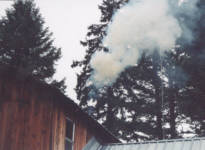
For example, you can be a follower of Pius XIII, who probably has to pay state taxes in Montana as Lucian Pulvermacher.  He even had some white smoke to signal his election from his cottage’s chimney.

Let this be a warning to you all

So it isn’t the Sistine Chapel… but hey!  Traditions are cool!

It is very important to stay in union with the Vicar of Christ, folks.  It is important to follow faithfully the liturgical books and stick to the Church’s teachings and laws. 

There is no precise "middle of the road" for Catholics… and the road is fairly wide.  And you can go off the road into the ditch.  Frankly, I think the right side of the road is the fastest, smoothest and safest lane to get to heaven. 

But pay attention there, too! 

Posted in SESSIUNCULA |
89 Comments

PODCAzT 58: Ember Days; Chrysostom on St. Matthias; Prayer to the Holy Spirit

Today is Wednesday in the Octave of Pentecost, or at least it ought to be in in the Novus Ordo as it is in the older, Traditional Roman Calendar. 

This is the third PODCAzT for the Pentecost Octave.

Thanks to your feedback after yesterday’s I decided to do another.  And thanks also for the donations!  That helped.

Today we learn about what Ember Day’s are, these beautiful days which helped Catholics for may centuries regulate the rhythm of their lives in the consecration of the seasons of the year, and learn to use God’s creation with moderation. 

Then we hear from St. John Chrysostom (+407) on the choice of St. Matthias to replace Judas who had fallen away.  I have comments about bishops.

Finally, we hear a marvelous old prayer invoking the help of the Holy Spirit, appropriate in this Octave of Pentecost.

Again, your feedback will determine if I keep this up for the rest of the Octave.


https://wdtprs.com/wp-content/legacy/audio-archive/podcazt/08_05_14.mp3PODCAzT 58: Ember Days; Chrysostom on St. Matthias; Prayer to the Holy Spirit


08-05-14: Ember Days – Chrysostom on Matthais – Prayer to the Holy Spirit

Posted in Patristiblogging, PODCAzT, SESSIUNCULA |
26 Comments