Fr. Z’s Kitchen: A bit of Rome in Chicago

I’m visiting friends and we decided on saltimbocca alla romana. Happily, even with chain supply problems, since we are in a heavily Italian neighborhood, there was plenty of veal and good prosciutto.

There was a lot more than this.

The basics.  Prosciutto di Parma,

A slight dusting a flour to help thicken the juices when done.

I did these in batches and then removed to a tented platter. It worked in two pans.  Thereafter I combined all the juices and clarified butter and oil and let it reduce.

Back into the pan for serving.

One of my hosts prepared the spinach and garlic.

Roasted potatoes with rosemary and salt.

Food doesn’t have to be complicated.  The best part is being with friends for leisurely meal and

Posted in Fr. Z's Kitchen, On the road, SESSIUNCULA |
3 Comments

My View For Awhile: Society Edition

A couple of hops and I’ll be … not in but near the Windy City. That sad sad city, civilly and ecclesially. It ain’t my kinda town right now. Thence northward for meetings and personal chores and a glimpse of people from whom I was sundered.

I don’t think there will be an opportunity for a blognik. Remember those?

I’ve noticed of late that flights are jammed, probably because of reduction of flights. Thanks Dems. Good job all around! Ergo, if any of you are planning travel, don’t procrastinate in arranging flights, etc.

UPDATE:

Since I hadn’t been to this concourse for a while, I tried a burger place which I used to like.  The burgers are still pretty good, though way more expensive now.  Thanks Dems.  And the yung’uns “working” there… were, let’s say, less than focused on their jobs than one might expect.

And these “are you a human” challenges are starting to get out of hand.

What are we going to do when they start using photos of the German “Synodalweg”?  (“walking together”)

Posted in On the road, What Fr. Z is up to |
8 Comments

Daily Rome Shot 565, etc.

Be sure to check out the good monks of Le Barroux who are making wine from the ancient papal vineyards in S. France.

It’s black’s move to attain total domination.

Please remember me when shopping online. Thanks in advance. US HERE – UK HERE

Posted in SESSIUNCULA |
1 Comment

Do know what “Maranatha” is in the Catholic Church? Really?

What passed through my mind when I read this… I’ll say, below.

From NASA:

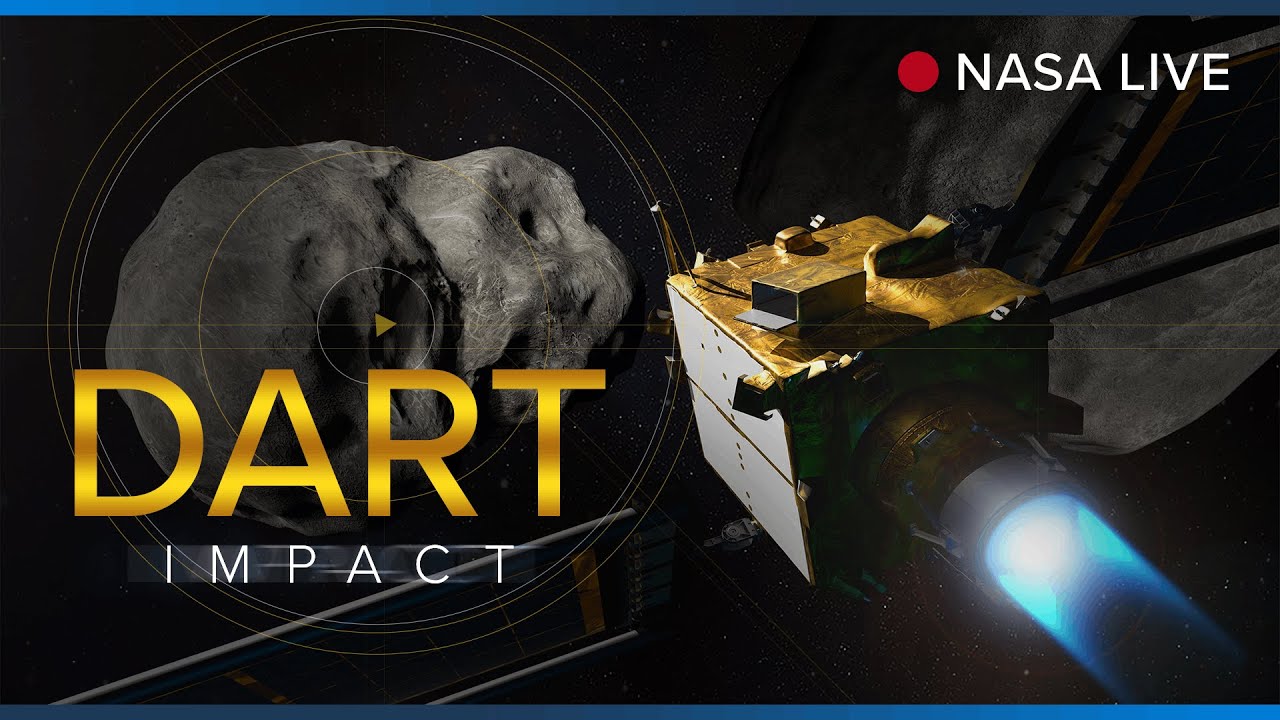
Watch Live as NASA Spacecraft Collides With Far-Off Asteroid

NASA’s Double Asteroid Redirection Test (DART), the world’s first mission to test technology for defending Earth against potential asteroid or comet hazards, will impact its target asteroid—which poses no threat to Earth—at 7:14 p.m. EDT on Monday, Sept. 26.

DART’s target is the binary near-Earth asteroid Didymos and its moonlet, Dimorphos. Launched in November 2021, the mission will see if intentionally crashing a spacecraft into an asteroid is an effective way to change its course, should an Earth-threatening asteroid be discovered in the future. This test will also show that a spacecraft can autonomously navigate to a target asteroid and intentionally collide with it in a way that can be measured using telescopes on Earth.

You can tune in for our live broadcast coverage of DART’s impact with Dimorphos starting Monday, Sept. 26 at 6 p.m. EDT on NASA TV, the agency’s?website, and on Facebook,?Twitter,?or?YouTube.

YouTube thumbnailYouTube icon

The phrase, “What could go wrong?”, occurred to me when I read this. Wouldn’t it be a kick if, in changing the course of this asteroid, it became the danger to Earth that they are trying to figure out how to avert?

Quod Deus avertat!”, and all that.

And yet, some are praying for The Meteor… or the return of the Lord.

Maranatha?

That word has been used both for “come”, as in “come Lord”, and in formulas of excommunication and pronounced anathemas, as in “go away”.

The Catholic Encyclopedia says:

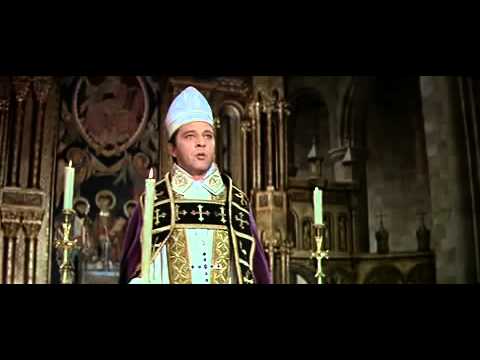
Anathema remains a major excommunication which is to be promulgated with great solemnity.  A formula for this ceremony was drawn up by Pope Zachary (741-52) in the chapter Debent duodecim sacerdotes, Cause xi, quest. iii. The Roman Pontifical reproduces it in the chapter Ordo excommunicandi et absolvendi, distinguishing three sorts of excommunication: minor excommunication, formerly incurred by a person holding communication with anyone under the ban of excommunication; major excommunication, pronounced by the Pope in reading a sentence; and anathema, or the penalty incurred by crimes of the gravest order, and solemnly promulgated by the Pope. In passing this sentence, the pontiff is vested in amice, stole, and a violet cope, wearing his mitre, and assisted by twelve priests clad in their surplices and holding lighted candles. He takes his seat in front of the altar or in some other suitable place, amid pronounces the formula of anathema which ends with these words: “Wherefore in the name of God the All-powerful, Father, Son, and Holy Ghost, of the Blessed Peter, Prince of the Apostles, and of all the saints, in virtue of the power which has been given us of binding and loosing in Heaven and on earth, we deprive N– himself and all his accomplices and all his abettors of the Communion of the Body and Blood of Our Lord, we separate him from the society of all Christians, we exclude him from the bosom of our Holy Mother the Church in Heaven and on earth, we declare him excommunicated and anathematized and we judge him condemned to eternal fire with Satan and his angels and all the reprobate, so long as he will not burst the fetters of the demon, do penance and satisfy the Church; we deliver him to Satan to mortify his body, that his soul may be saved on the day of judgment.” [Sound familar?] Whereupon all the assistants respond: “Fiat, fiat, fiat.” The pontiff and the twelve priests then cast to the ground the lighted candles they have been carrying, and notice is sent in writing to the priests and neighbouring bishops of the name of the one who has been excommunicated and the cause of his excommunication, in order that they may have no communication with him. Although he is delivered to Satan and his angels, he can still, and is even bound to repent. The Pontifical gives the form for absolving him and reconciling him with the Church. The promulgation of the anathema with such solemnity is well calculated to strike terror to the criminal and bring him to a state of repentance, especially if the Church adds to it the ceremony of the Maranatha.

YouTube thumbnailYouTube icon

Yes, there’s more! Continuing from the Encyclopedia:

At the end of the first Epistle to the Corinthians, xvi, 22, St. Paul says, “If any man love not our Lord Jesus Christ, let him be anathema, maranatha,” which means, “The Lord is come.” But commentators have regarded this expression as a formula of excommunication very severe among the Jews. This opinion, however, is not sustained by Vigouroux, “Dict. de la Bible” (s.v. Anathème). In the Western Church, Maranatha has become a very solemn formula as anathema, by which the criminal is excommunicated, abandoned to the judgment of God, and rejected from the bosom of the Church until the coming of the Lord. An example of such an anathema is found in these words of Pope Silverius (536-38): “If anyone henceforth deceives a bishop in such a manner, let him be anathema maranatha before God and his holy angels.” Benedict XIV (1740-58–De Synodo dioecesana X, i) [“walking together”] cites the anathema maranatha formulated by the Fathers of the Fourth Council of Toledo against those who were guilty of the crime of high treason: “He who dares to despise our decision, let him be stricken with anathema maranatha, i.e. may he be damned at the coming of the Lord, may he have his place with Judas Iscariot, he and his companions. Amen.” There is frequent mention of this anathema maranatha in the Bulls of erection for abbeys and other establishments. Still the anathema maranatha is a censure from which the criminal may be absolved; although he is delivered to Satan and his angels, the Church, in virtue of the Power of the Keys, can receive him once more into the communion of the faithful. More than that, it is with this purpose in view that she takes such rigorous measures against him, in order that by the mortification of his body his soul may be saved on the last day. The Church, animated by the spirit of God, does not wish the death of the sinner, but rather that he be converted and live. This explains why the most severe and terrifying formulas of excommunication, containing all the rigours of the Maranatha have, as a rule, clauses like this: Unless he becomes repentant, or gives satisfaction, or is corrected.

Let’s have a poll.  Anyone can vote, but only registered users can post comments.

Did you know that the "Maranatha" was a solemn ceremony of severe excommunication? Honestly?

View Results

BTW… I looked up the solemn anathema in the Pontificale Romanum and, yep, there it is!

Here is some of the Latin, animi caussa!

[…]

Igitur quia mónita nostra, crebrásque exhortatiónes contémpsit, quia tértio secúndum Domínicum præceptum vocátus, ad emendatiónem, et pæniténtiam venire despéxit, quia culpam suam nec cogitávit, nec conféssus est, nec missa legatióne, excusatiónem áliquam præténdit, nec véniam postulávit, sed diábolo cor eius induránte, in incépta malítia perséverat, iuxta quod Apóstolus dicit: Secúndum durítiam suam et cor impǽnitens thesaurízat sibi iram in die irae: idcírco eum cum univérsis complícibus, fautoribúsque suis, iudício Dei omnipoténtis Patris, et Fílii, et Spíritus Sancti, et beáti Petri príncipis Apostolórum, et ómnium Sanctórum, necnon et mediocritátis nostræ auctoritáte, et potestáte ligándi et solvéndi in cedo et in terra nobis divínitus coláta, a pretiósi Córporis et Sánguinis Dómini perceptióne, et a societáte ómnium Christianórum separámus, et a limínibus sanctæ matris Ecclésiæ in cælo et in terra exclúdimus, et excommunicátum et anathematizátum esse decérnimus; et damnátum cum diábolo, et ángelis eius, et ómnibus réprobis in ignem ætérnum iudicámus: donec a diáboli láqueis resipíscat, et ad emendatiónem, et pæniténtiam rédeat, et Ecclésiæ Dei, quam læsit, satisfáciat: tradéntes eum sátanæ in intéritum carnis, ut spíritus ejus salvus fiat in die iudícii.

Et omnes respondent: Fiat. Fiat. Fiat.

Quo facto, tam Pontifex, quam Sacerdotes debent proiicere in terram candelas ardentes, quas in manibus tenebant.

Posted in Hard-Identity Catholicism, Just Too Cool, Look! Up in the sky!, SESSIUNCULA | Tagged , , ,
7 Comments

♬ “Let Church Bulletins Keep Silence” ♬

As you may remember “Rome”, in their micromangerial zeal for the faithful being mauled by their pastoral care, forbade that Mass times for TLMs be put in parish bulletins. Some priests started calling their TLM the “Youth Mass”, for obvious reasons.

Really, folks, it’s not going away. It is going to grow and grow.

Meanwhile, this was posted by in a comment, but it deserves its own post.

YouTube thumbnailYouTube icon

They can’t win.

ACTION ITEM! Be a “Custos Traditionis”! Join an association of prayer for the reversal of “Traditionis custodes”.

Posted in Lighter fare, Liturgy Science Theatre 3000, Traditionis custodes |
10 Comments

The effect of lay participation on the souls of priests

I was requested by a reader to repost something I wrote back in the relatively happier times of 2017. Upon re-reading it, I think it stands still, adjustments having been made for the cruelty of Traditionis custodes.


Published on: Jun 4, 2017

communion

Today during Mass I was struck hard with something, which reinforced an observation I read recently in an email.  In effect, the priestly writer said that priests, who are under constant and insidious attacks by the Devil, are therefore also constantly at risk of losing their faith in the Eucharist.

It shouldn’t surprise anyone, by the way, that priests sometimes struggle with belief.  Think of the priest who, having doubts about the Eucharist while on his way to Rome, had a Host at his Mass bleed upon corporal, thus leading to the establishment of the Feast of Corpus Christi.  Moreover, John Paul II wrote in Ecclesia de Eucharistia that priests are at risk of losing their focus because of the onslaught of the things of this world.

We all must contend with the three great foes: the world, the flesh and the Devil.

Back to my priestly writer.   Given the trials and risks, the sight of the faithful kneeling at the altar rail to receive with such reverence, reminds us that what we do, what they are doing, is of the greatest importance.  The reverence of the people in that humble and reverent way of receiving can be extremely helpful for priests.

Do you, dear lay readers, think about that at all?  If how the priest celebrates Mass, his ars celebrandi, has an effect on you, doesn’t it make sense that your comportment and actions, your ars participandi will have an effect on the priest?

More and more I weigh the importance of the gift of Summorum Pontificum to the whole Church.

Learning to say Holy Mass according to the older, traditional Roman Rite has a huge effect on priests who didn’t know it before.  Moreover, learning how to participate at the Traditional Mass, the Extraordinary Form – and, yes, people have to learn how to participate – is also going to have its own knock-on effect, most immediately on the priest celebrant.

Think about this.  A seminarian, a deacon, who has been going to Mass with the Novus Ordo Missal for a goodly amount of time needs about 10 minutes to learn how to say Mass in the Novus Ordo.

However, even if a man has served at the older, traditional Mass for quite a while, he has to study and work on what to do as a priest celebrant.

Why would it not be the same for lay participation?

It takes work and time and effort.

On that note, I saw a post at Liturgy Guy about a priest, a convert (former Methodist), who learned how to say the TLM.  He wrote:

“After 9 years of offering the Latin Mass, I can say that it’s made me a better priest. I’ve loved being steeped in its tradition and being formed by its rubrics and prayers. Most importantly, offering the Latin Mass has improved the way I offer the Novus Ordo Mass. The discipline that the Latin Mass requires in offering it has certainly carried over into the way I offer the Novus Ordo Mass. I’ve certainly experienced the mutual enrichment that Pope Benedict XVI hoped would happen when the Latin Mass and Novus Ordo are offered side by side, and I believe our parish has, too. I definitely have a renewed and greater appreciation for the awesome dignity of the Mass.”

This is from Fr. Timothy Reid.  I’ve written about him before.  HERE  Also, he was recently on Marcus Grodi’s show, The Journey Home.  In a few ways he had some remarkably similar experiences in his conversion to Catholicism that I had.  But I digress.

It is hardly a leap to imagine that that experience, that transformation, would not have its own effect on the people of his parish.   However, it was a group of people who approached Fr. Reid and asked for the older Mass.   There is an interplay of roles.

Imagine the impact that you, dear readers, can have.  I, for example, as a priest am profoundly moved by people who devoutly practice their faith.  I am blown away by good confessions.  I am stirred and edified when distributing Communion to people whom I know are really striving.  Imagine, what it is like for a priest to give Communion to saintly people.  Try to fathom the knock on effect that that must have, you on him, him on you.

Posted in "How To..." - Practical Notes, Hard-Identity Catholicism, Mail from priests, Priests and Priesthood |
4 Comments

17 Sept 2022 – Washington DC – Pilgrimage for the Restoration of the Traditional Latin Mass for all Catholics

In Washington DC, on Saturday, 17 September 2022, the faithful will mark the 15th anniversary of Summorum Pontificum, the motu proprio of Pope Benedict XVI, which went into effect on 14 September 2007, liberating the Traditional Latin Mass for all Catholics.

In response to the cruel and unjust restrictions being placed on the celebration of the usus antiquior in the Archdiocese of Washington and the Diocese of Arlington, as well as in many other places throughout the world, faithful Catholics will go on pilgrimage in a public act of sorrow for the destruction of the Western liturgical patrimony, and in support of its full and immediate restoration.

Arlington’s restrictions go into effect on 8 September, and Washington’s on 21 September.

Here is a link to the necessary information, time, gathering sites, etc.  HERE


Posted in Events, Si vis pacem para bellum!, SUMMORUM PONTIFICUM, The Campus Telephone Pole, Traditionis custodes | Tagged ,
2 Comments

1960: What the year 2000 will be like.

Legendary left-wing radical Walter Cronkite – redeemed a little by being a ham radio operator – gave us this in 1960. I couldn’t not post it:

Posted in Lighter fare | Tagged
2 Comments

WDTPRS – 15th Sunday after Pentecost: We will come home to a safe landfall!

Barque ChurchThis Sunday’s Collect for Holy Mass in the Traditional Roman Rite survived the long knives of the Consilium to live on the in the Novus Ordo editions of the Missale Romanum on Monday of the 3rd Week of Lent.  Figure that one out. We find it in the 8th century Gelasian Sacramentary for a Sunday, with a minor spelling variation.  Hence, it is ancient.  There are reasons to think that the prayer is even more ancient.  But here is the text:

COLLECT (1962MR):

Ecclesiam tuam, Domine, miseratio continuata mundet et muniat: et quia sine te non potest salva consistere; tuo semper munere gubernetur.

We must not pass over the sound of this prayer.

The Roman, Latin prayers, particularly those which were handed down intact from earlier centuries, such as the time of St. Pope Leo the Great (+461), are elegantly sculpted both in their rhythm and their sounds.  Notice the wonderful alliteration throughout.  Tying the whole thing together from top to bottom are the glottal sounds (made in the back of the throat with the tongue), on the voiced or unvoiced “k” sound of Ecclesiamcontinuata…quia…consistere…gubernetur.    Then we have an interlocking series of alliterations.  There are many humming “m” and “n” sounds: Ecclesiam tuam, Domine, miseratio continuata múndet et múniat…. Keep in mind that in ancient times, the final “m” was pronounced in a very nasal way, which survives in many instances in French and Portuguese.  So, this pray begins with a deep hum.  Then you shift to sibilants, the hissing “s”, with snappy “t”s along the way: et quia sine te non potest sálva consístere; tuo semper….  Then we go back to our humming “m” and “n”, but with a lovely rhythmical closure or clausulasemper múnere gúbernétúr.

Speak or sing this to get at the real beauty of this gem, with its glittering facets of phonemes.

And now vocabulary.

Gubnero was a favorite word of the great ancient Roman orator Cicero.  That feast of Latin lemmata, our thick and juicy Lewis & Short Dictionary,  says guberno is “to steer or pilot a ship”.  Logically, it also means “to direct, manage, conduct, govern, guide”. The Liddell, Scott, Jones Greek Lexicon, or LSJ, says that kubernao is “steer”, “drive” and metaphorically “guide, govern” and then “act as a pilot, i.e., perform certain rites in the Ship of Isis”.

I can’t quite imagine – don’t want to imagine – what those “rites of Isis” are.  I suspect they are used now by certain Jesuits.

The super-charged word munus is a little hard to get at in English is this Collect.  A munus can be “a service, office, post, employment, function, duty”.  Should we avoid reducing God to a functionary?   It is true that God is often said in our prayers to have pietas, which carries a strong sense of “duty”, but in Latin prayers pietas, when applied to God, is really more like “mercy”.  For man the term pietas  is “duty”.  In this instance of munere, we ought to lean toward another, less common meaning in the L&S, namely, “a service, favor”.  In fact the liturgical Latin dictionary we call Blaise/Dumas has, “don, faveur (de Dieu)”.   There is a connection between munus as “duty, service” and as “gift”, in that munus stood also for a public work given to the city by an individual. For example, a great Roman might put on public games and feasts for the people, or erect a temple or public building as a munus given from civic duty as well as to increase his and his family’s gloria, that is, his share in the honor of the state.

Let’s leave aside the debate about the meaning of munus in Benedict XVI’s odd resignation speech.

The verb consisto is “to stand still, stand, halt, stop, make a stop” but also many other sorts of “taking a stand”, such as what soldiers do when about to fight, or what you do in court to defend your position.  There is a “moral” stand one takes, as well as “stand with” someone.  However, both in the L&S and Blaise/Dumas we see that consisto can simply mean “to be, exist”.  In fact, this notion of “standing” (sisto) is also the root for existo.  It is as if, in the case of the later, that as things come into being, they “stand forth” (ex-sisto) from nothingness.

It seems to me that our author was also having a good time with the similar sounds of mundet, muniat, and munere, all very different but with phonic hooks that pull them conceptually together.

This week allow me also to play around with some alliteration in rendering our prayer, still sticking to a slavish version of the Latin lines.  I will also try to capture something of the nautical imagery.

LITERAL TRANSLATION:

Let Your continuous compassion, cleanse and defend Your Church, O Lord, and because without You she cannot stand to, safe, may she forever by Your favor be steered.

In nautical parlance, to “stand to” means to “stay on a certain course”.  This is how I try to unpack the meaning of consisto, which aims at the concept of “consistency” and “staying” firm.  Because in this world the Church is on a journey, as a pilgrim, I didn’t want simply to say “stand firm”.  But gubernator, as the master of the ship’s course, who “governs” where the ship goes, helped me think of “stand to”.  Also, I could have said “safely”, but salva is an adjective, not an adverb, and I am feeling a bit more archaic than usual as I write today.

CURRENT ICEL VERSION (2011 – during Lent):

May your unfailing compassion, O Lord, cleanse and protect your Church, and, since without you she cannot stand secure, may she be always governed by your grace.

They didn’t go for the nautical image.  Too bad.  It is impoverished as a result.

One of the meanings of munio, which gives us the muniat in the prayer (“to build a wall around, to defend with a wall, to fortify, defend; to guard, secure, strengthen, support”, for munio stems from moenia “walls”) is also “to open a road”,  viam munire.

Maybe we can get our heads into this prayer by thinking of the Church, often portrayed as a ship, as in Peter’s Barque or the sailing ship in the vision of St. John Bosco, as that fortified way through the heaving waters of the world, with its distractions both sensual and diabolical, that threaten to blow us off our course.

As they sail in dangerous waters, ships need a well-prepared steersman to govern her through the shoals and currents, to avoid the reefs and rocks hidden beneath the waves.

There are times when we have a following wind, that favors smooth and direct sailing.  At other times, we must tack back and forth to make slow headway, or even run before the wind, when the sea and the storms rise in frightful force against us.

In all these conditions, the captain and navigator and steersman seek the best course for the good of the whole ship and all who sail in her, according to the charts available, personal experience, the smell of the wind, the look of the sea, and the map of the sun, moon and stars.

In many ways these images of the ship at sea exemplify the experience of the Church.  Our Popes, bishops and pastors seek the best course as they know how, seeking to guide the barque in perilous waters and times.   Well… most of them them try to do that.

In human terms we do our best to steer our course and we can make mistakes.  But in divine terms we know that no matter how terrifying are the winds and seas which buffet us and threaten to bear away our spars and sails, Christ’s sure hand rests on the wheel.

We can take a couple things from this.

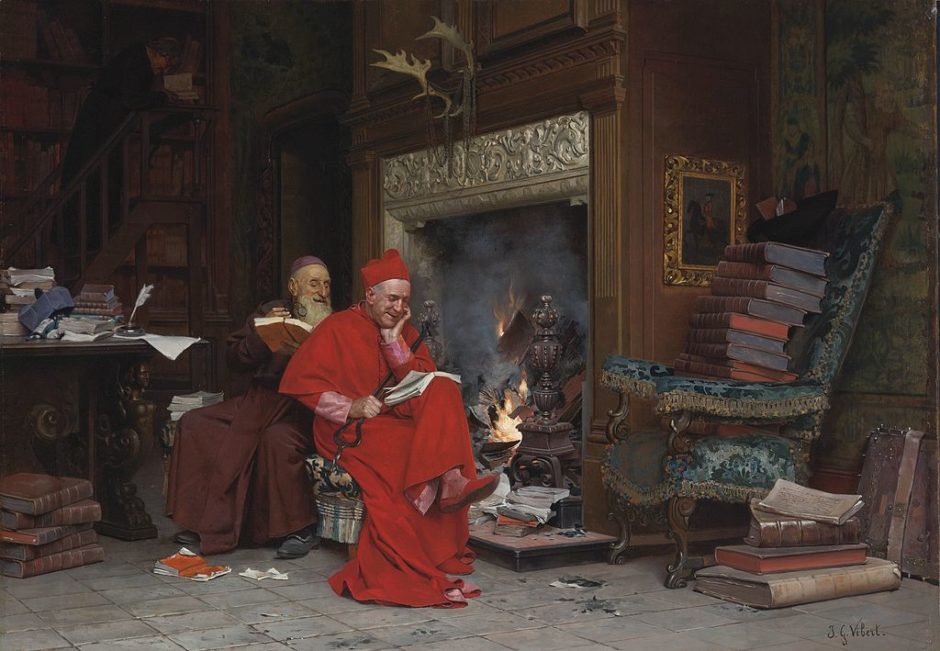
It might feel sometimes that the Church heading for this…

Instead of this…

Firstly, nothing contrary will prevent Holy Church from finding safe harbor in Him.  We will come home to a safe landfall.  Eventually, though storms and becalmings, we will make it.

Also, when we personally get off course, we can find our way back… in the confessional.  GO TO CONFESSION.
Posted in Liturgy Science Theatre 3000, WDTPRS |
Comments Off on WDTPRS – 15th Sunday after Pentecost: We will come home to a safe landfall!

A canceled priest speaks. ACTION ITEM!

The ramifications for a priest of being canceled are manifold.  Depending on their past (whether they are late vocations and have a pension) or their families (perhaps well-to-do), life can be really complicated.


“Canceled” usually means not just emotional turmoil and enduring moral injury but also financial devastation.

There is a Coalition for Canceled Priests now, which is a good initiative. They too, as I have tried to do with Gregorian Masses, help to arrange Mass stipends to help men get by.  Give them some consideration.

Here is a concrete instance of a canceled priest and a concrete way of support.

Fr. James Mawdsley was ordained in 2016 for the FSSP. He was subsequently suspended because he refused to go along with COVID restrictions about Communion on the tongue and face diapers and because on account of Traditionis custodes which complicated reassignment. He is a man of very firm will. For example, he once spent 17 months in solitary confinement in Burma as a prisoner of conscience.

Fr. Mawdsley has some books.  You can give him some support by getting his books and perhaps also giving them to others.  HERE  For example, for the Kindle edition (there are also paperback and hardback)

Adam’s Deep Sleep: The Passion of Jesus Christ Prefigured in the Old Testament

US HERE – UK HERE

Here is a video in which he explains his situation.  Biretta tip to Ann.  o{]:¬)

Posted in "How To..." - Practical Notes, Cancelled Priests, Mail from priests, Priests and Priesthood | Tagged
1 Comment