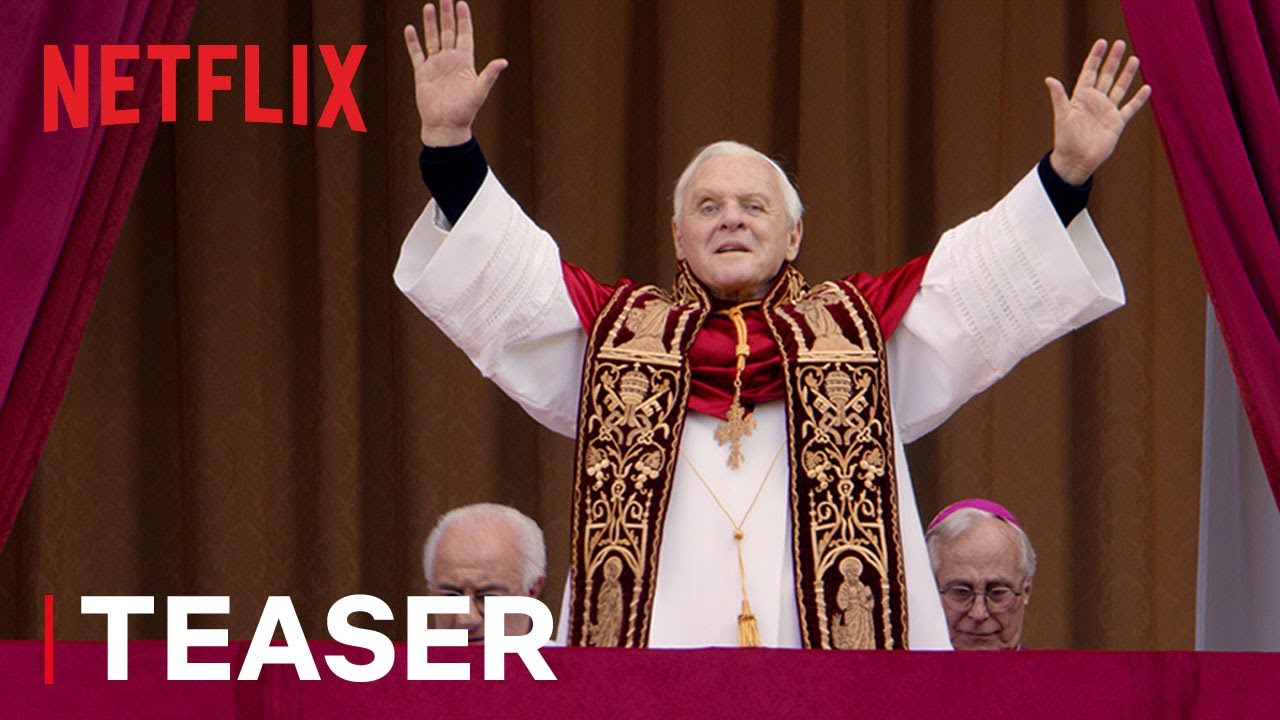
VIDEO: Trailer for Anthony Hopkins and Jonathan Pryce as Benedict XVI and Francis in upcoming ‘The Two Popes’

Well, this is going to be … interesting.

YouTube thumbnailYouTube icon

It will be interesting to see if their portrayal of Benedict (Hopkins is a great actor) is anything like the real Benedict. Back in the day, I had an awful lot of good conversations with Card. Ratzinger and we were friendly. From this trailer, I am not optimistic about accuracy of character.

Also, you might remember the day after Francis was elected and he went back (spontaneously?) to his “hotel” to pay his own bill. Well, I lived in that residence for years. Bergoglio would stay there (never with Jesuits). I’ve had numerous meals, back in the day, with Card. Bergoglio. We’ll see if he portrayed well. I didn’t get to know him as well as I did Ratzinger.

Meanwhile, I couldn’t help thinking of Francis whenever that Grand Sparrow, or whatever the title was, was the video episodes of Game Of Thrones. I always thought that they were consciously riffing on Francis in that character. Now it turns out that that actor is the one playing Bergoglio. The type casting is spot on. Hopkins is a good choice, too… a good choice it is a good idea to make something like this at all.

___

UPDATE

Before too long, you should all get your hands on a couple of books to help understand the thought of the men in the movie.

First, Tracey Rowland’s Ratzinger’s Faith.  

US HERE – UK HERE

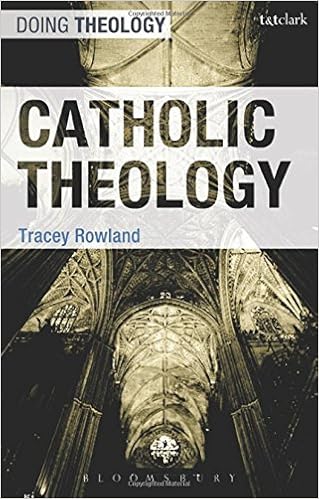
Also, from the same, this splendid “state of the question” book.  In the last section she explores Bergoglio’s theological stance, as far as it can be deciphered.

 Catholic Theology.  

US HERE – UK HERE

Posted in ¡Hagan lío! | Tagged ,
30 Comments

Support a project of evangelization through beauty, music and the TLM

I thought y’all might want to know about this.

This comes from the choir director at Sacred Heart Church in Grand Rapids, MI… which has an amazing school and a great liturgical program.  I have visited the parish and celebrated Mass there several times, and given conferences.  It’s terrific.

I have a “brick-by-brick” project that I humbly ask you to promote on your blog:
Gaudete Grand Rapids is a professional choral ensemble devoted to singing the venerable music of the Roman Rite in the context for which it was written, the Traditional Latin Mass, in the diocese of Grand Rapids, MI.  Our mission is to evangelize through beauty and spread the TLM to parishes not yet familiar with the form, as well as fortify the traditional communities already established here.
We need $6,000 to fund an inaugural season. The five founding members of Gaudete have recorded a promotional album titled “Woman, Behold Thy Son, which we’re selling it at gaudetegr.bandcamp.com — $15 for a digital copy, $20 for a CD.
Readers of WDTPRS can use the promo code “frzblog” to get 10% off their order.

How’s’bout it?

You could at least click and visit the site, right?

Posted in Liturgy Science Theatre 3000, New Evangelization, The Campus Telephone Pole | Tagged
Comments Off on Support a project of evangelization through beauty, music and the TLM

NB: new registrations approved after a delay

I’ve been on the road for a couple of days, and so not able to review and approve registrations.

This morning I approved a whole raft of them.  Thanks!

BTW… I get emails from people who say that they’ve tried several times to register.  Invariably, they already are registered and approved and they just need a new password.    I assign a temporary password – which can be changed – and they are good to go.

FWIW.


Posted in "How To..." - Practical Notes |
Comments Off on NB: new registrations approved after a delay

Creepy, unsettling evil. Yes, a Jesuit was involved. UPDATED: Fr Z rants about idiotic false compassion.

UPDATE 30 August:

This is a very important update, which, in justice, people should follow up on and read.

Jesuit-run (of course) Amerika has an interview with the Jesuit who was the celebrant of “Bob’s” last Mass, where he seems to have engineered the blessing by children in front of the photographer. He disavows any previous knowledge. He says he didn’t really get what was going on. He states that he has no pastoral role at that parish, other than the occasional Mass. He has had a few tough days since this story broke.

You should go and read that interview as Jesuit-run Amerika and decided for yourselves. HERE

If what he says is true.  Then I feel for the guy.

That said, why choose that parish to go to for Sunday Mass… ever?  Why that parish, when I suspect he could chose others and be welcomed.

UPDATE 30 August:

Since I originally posted on this, pretty early out of the gate for this story, more information came out.  I had one update, inserted below, in which the Seattle Archdiocese stated that the Jesuit priest didn’t know what “Bob” was up to.   The problem is that the internet exists.  A lot of people knew, as it turns out.  He had consulted at the parish.  He had written, online, that the Jesuit approved. By process of elimination, that points to the Jesuit in question.

This whole thing oozes evil like sore on the back of a very sick hyena.

One Mad Mom has a pretty good summation of the situation (emphases mine):

Let me be clear. Trying to compare this to a run of the mill suicide is ridiculous. Bob Fuller’s thoughts were documented to the end. And to allow anyone to pre-schedule their own funeral is simply awful. Maybe, at that point, someone might have least looked into the rest of his problems.

This man was a public, obstinate sinner who showed no remorse, even after counselling from his pastor for his suicide. On his way out the door he chose to marry his homosexual partner hours before, he thought he was a shaman, boasted of his past affairs on Facebook, etc. and very little was done to stop and correct him. He was intent on doing it and his funeral was approved by the archbishop.  Bob at least knew, according to the archdiocese, the Church’s teaching on the dignity of life and still did it. What in THE heck were they all thinking? Scratch that! Was anyone thinking? How many more have been scandalized by this???  How many more think it’s just fine because the Church will simply roll over and give them their lovely funeral as if it means absolutely nothing but a nice goodbye? This is, simply, hideous. At THE very least, the pastor or archbishop should have manned up and been there to hear confession at the end if he was willing but they just signed off on it as “Well, there’s nothing else we can do because he’s determined to do it!” The Church has failed Bob Fuller and those that will follow his example. I hope those that threw up their hand hit the confessional this weekend. Prayers for you Bob. You were failed beyond belief.

One of the reasons why the Church had the seemingly – to modern, and therefore foggy and filmy eyes – harsh law about denying burial to obstinate public sinners and to suicides was for the sake of prevention of scandal.  Holy Church is the greatest expert on humanity that there has ever been.  She knows that there lurks in the back of the minds of some disturbed people the black specter of self-slaughter.  Hence, a stern reminder of the eternal consequences of informed and willed suicide is embedded in what seems to many today to be a cold law.

Yes, yes, we all know the perfectly accurate insights of saints such as St. John Vianney about what might happen in the mind of a suicide between the bridge and the water.  But this compassionate optimism mustn’t make us stupid.    These days suicide is on the rise and states are actively abetting this subcategory of homicide.   The option of suicide is moving forward like a juggernaut.  Will the Church stand in its path or simply cede the moral ground … again?

Each and every case of suicide is its own case and merits individual consideration.  However, there remains great wisdom in the severe stand that our forebears developed over a great deal of time and from oceans and oceans of tears, both of the despairing and of the surviving.   Just as God did not impose the Decalogue in order to ruin what otherwise might have been a good time in this earthly life, so too, the Church did not come up with laws about cemeteries and suicides to be cruel.  In another moral issue, there is a reason why the parishes and dioceses make the decision to terminate the employment in schools of open and active homosexuals.   It is not mere cruelty.  It’s called avoidance of scandal.   Not to terminate would be both more cruel and an abdication of God-given responsibility for souls.

And even to suggest the opposite is mean-spirited and pusillanimous to the enth.

It is a common tactic of those who coddle immorality to launch the word “cruel” at the Church for laws and teachings that have been inspired by God and verified for centuries.  think of a 16 year girl screaming, “I HATE YOU!” at her father who won’t let her leave the house dressed like a whore.

So many today have gone flaccid in the face of evil. Straightening the back and saying, “No!” is not in vogue.  It remains, however, the primary job of a mother, and especially of a father, to say “No” to their children, precisely because they love their children and don’t want them to hurt themselves.  Saying, “No”, is hard-wired into the job of being a parent.

Saying, “No”, and often, is the what Popes, bishops and priests are supposed to do, and for a very good reason: people have a real talent for hurting themselves.

This business with “Bob” is what happens when false compassion snuffs out reason and 2000 years of history and 3000 years of divine revelation and eons of the natural law.

Finally – ceterumsomething must be done about Jesuits, in general and in particular.

____

Originally Published on: Aug 27, 2019 @ 16:16

A friend sent this with the single word:

“Vile.”

The story from Associated Press is:

The day he picked to die, he had the party of a lifetime

The story is about a 75 year old man, homosexual, Catholic, with a background of suicidal tendencies, terminally ill with cancer, who made use of the Washington state “Death with Dignity Act” to kill himself, surrounded by helpers, etc. “Aid in dying” is allowed. They had a party, he announced his intention, and injected himself.

[…]

Fuller began returning more often to the Catholic church he had long attended. His spiritual views were hardly orthodox – he considered himself a shaman, and described his impending death as a state of “perpetual meditation” – but Seattle’s St. Therese Parish was known for accommodating a range of beliefs. Fuller was beloved there, and he craved the community. He had sung in the gospel choir and read scriptures from the lectern during services, sometimes delivering insightful or funny remarks off the cuff, said Kent Stevenson, the choir’s director.

Stevenson credited the “tenacity and clarity” of Fuller’s choice.

“It was hard to even cry because he was so forthcoming and so sober about it,” Stevenson said. “He was just so outrageously unique and such a character, this was completely in keeping with who Bob was.”

The Roman Catholic Church opposes aid-in-dying laws, citing the sanctity of life. But Fuller’s decision was widely known and accepted among the parishioners. At the service where he received his last communion on May 5, the Rev. Quentin Dupont brought over a group of white-clad children who were receiving their first communion.

They raised their arms and blessed him.

[…]

There’s a photo of the moment.  UPDATE: The Archdiocese of Seattle issued a statement saying that, at the time of the photo, the “the parish leadership was not aware of Mr. Fuller’s intentions.”  HERE

Something twitched in the back of my mind, so I did a search for “Quentin Dupont”.

SJ

Ahhh…. how to romanticize suicide!

[…]

In the kitchen, two volunteers with the nonprofit End of Life Washington mixed the drugs and Kahlua in a glass measuring cup. They said they considered themselves to be like midwives, helping usher people out of the world instead of into it.

“You know if you do this, if you put this in your system, you’ll go to sleep and you won’t wake up?” one, Stephanie Murray, told him as she delivered the syringes.

“I do,” Fuller answered.

Fuller plunged the syringes.

After a few moments of tense quiet, he led his friends in singing, “I’m so glad we had this time together,” the sign-off from the old Carol Burnett television show.

His eyes closed for longer and longer periods.

“I’m still here,” he said.

And then, he wasn’t.

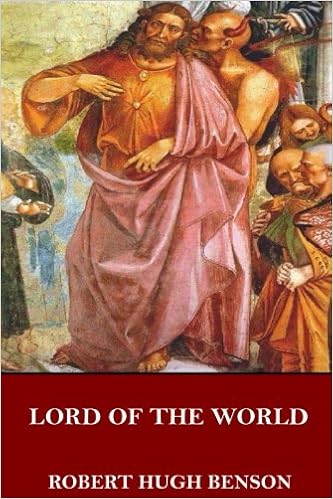
It’s like something from Lord Of The World.

US HERE – UK HERE

Posted in Jesuits, Pò sì jiù, The Coming Storm, The future and our choices | Tagged ,
37 Comments

VIDEO – Bp. Hying of @MadisonDiocese on minimalism. Then Fr. Z rants at length.

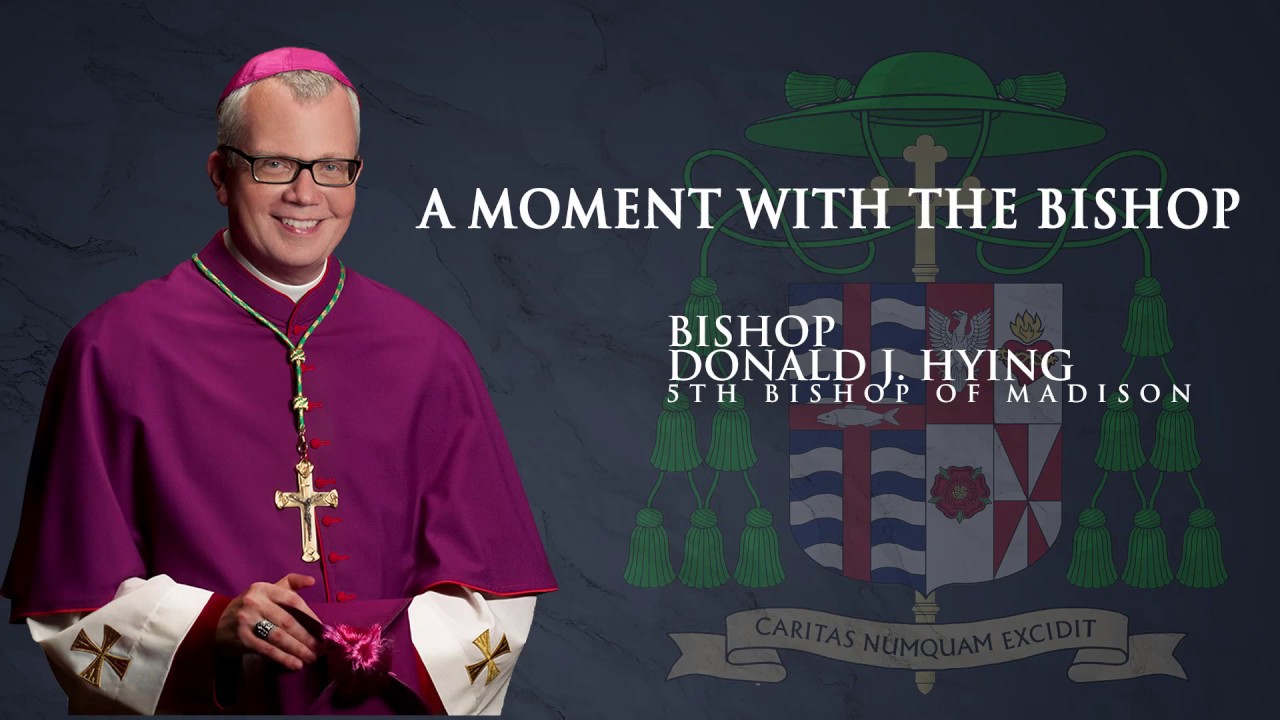
Bp. Donald Hying of the Diocese of Madison is issuing brief daily videos.  Today he talks about “minimalism and maximalism”.

This is really important for our individual lives and for the whole life of the Church, especially in these troubling times when a majority of Catholics, demonstrably, have lost the Faith and are leaving the life of the Church – the means Christ established for our salvation – by indifference or old age and death. We are at a critical fork in the road.

In the video, Bp. Hying speaks of minimalism and maximalism in turns of love. Love, or its lack, produces in the minimalist the attitude of, “What do I have to do?”, which it draws from the maximalist, “What can I do?”. “Do I have to do more?” or “I want to do more!”

YouTube thumbnailYouTube icon

I fully endorse what Bp. Hying says.

Moreover, in a practical view, I am reminded of the distinction we use in the confessional to identify the type of sorrow the penitent has for the sake of valid absolution. We can have attrition, which is fear of punishment and Hell. We can have contrition, which is sorrow for having offended God and His Love. Both qualify as adequate sorrow for sins, and therefore for valid absolution, but clearly the latter is more perfect.

When we love we want more and more, the better and better, not just the adequate or the minimum.

This brings me to today’s rant.

Bishops almost never talk in real terms, for any length of time or depth, about liturgy.  Of course Bp. Hying had about two whole minutes to squeeze in his point.  You cannot say much more than your basic point in a 2:00 video. His videos are not intended to be in-depth expositions, but rather starting points.  Hence, Bp. Hying did not have the opportunity to speak to minimalism and maximalism in our sacred liturgical worship.

Allow me to take the baton and run.

Our sacred liturgical worship is exactly where we need to avoid minimalism and to foster maximalism.

The whole life of the Church, at every level, is at stake.

For confirmation of this, look to the Pew Research study about how many Catholics believe in the Real Presence.  That’s not just from bad catechesis and preaching.  That’s the direct result of bad liturgy.  Mark my word.

To those  who want to study the problem, issue new DVDs and videos, form committees, ponder and wring hands, I respond, “It’s the liturgy, stupid.”

The virtue of Religion orders what we owe to God and, as a direct result, how we order our loves and priorities.  Religion requires us always to set what is due to the Trinity in the first place. We fulfill the duties of Religion, firstly, through sacred liturgical worship, as a whole Church, as smaller communities and families, and as individuals. If this aspect of our life (Church life, community life, family life, your and my life) is not properly fostered, then every other aspect of our lives will be disordered.

No effort we undertake in the Church – including renewal of any aspect of the life of the Church – will succeed if it does not start in worship and return to worship. Otherwise, it is the undertaking of an NGO or a committee or a functionary.

Sometimes questions come up about the “minimum” elements of Holy Mass we must be present for to fulfill our obligation. It’s a good question if – if – in a pinch you are forced to be late, etc. Of course if there are circumstances beyond your control, your obligation is lifted. It’s still good question. However, some people use the answer to justify coming late and leaving early. These minimalists are in serious trouble. More on that sort of minimalism HERE.  Their love is loafing or limping or leaving. When you love, you want to be there.

When you truly love, you really want to be there.

Of course there is the sort of celebration of Holy Mass that is so painful, so cringe-worthy, so face-palm inducing that it is hard to blame people who want to come late and leave early.

This is due to priests and bishops who, when it comes to the critically important ars celebrandi, have turned minimalism and maximalism inside out. They, willful, want to increase themselves, while the true and authentic sacred liturgical worship is decreased. They think they are increasing worship by their ad libs and their antics and their additions. They think that they are increasing the role of the laity by dragging them into doing things that are really clerical roles. Instead they are making worship and laity smaller, minimalizing them.

Our sacred worship is it’s own theological locus and its own proper way to fulfill the virtue of Religion. Our lay people are their own dignified members of Christ’s High Priesthood without being clericalized. To violate either one is to make them smaller, not larger.

The principal way we know we are worshiping God properly is by using the proper liturgical worship set down by the Church.  The approved rites of the different Churches are trustworthy.

Before the Chattering Id of Tradydom has a seizure, let’s make distinctions.  Qui bene distinguit bene docet.

In the case of all of our rites these days, there are better options and lesser options.

Let’s say that we have, in macro terms (looking at the rites themselves) a maximalist and a minimalist approach.  For this sake of this, think minimalism or maximalism in this Mass as the micro, while macro applies to the whole rite.  By the way, Summorum Pontificum gave us a juridical solution when it comes to the Roman Rite, not a historical, liturgical, theological solution.  The whole “two forms of one rite” thing is juridical.  It is clear to anyone who has eyes and a brain that these two forms are two rites.   Both of them are juridically legal options in the Roman Rite.  If the priest has faculties to say Mass (a juridical reality), then he can choose this missal or or that missal.

However, some options (missals) are better than others.

Thinking micro, some options for this Mass are better than others.  Yes, that applies to the TLM, too.  Low Mass, Sung Mass, Solemn?  Vestments?  Music?  Choice of votive?  Sanctus candle?  It really applies to the Novus Ordo, which has so many options that the defaults are often forgotten.  But that’s also the macro problem for the Novus Ordo.  So many options are built into the Novus Ordo that it is hard to know what to do.  It comes down to personal taste and that never goes wrong these days, right?  It’s a macro problem when it comes to, you know, things like ad orientem celebration which is the norm according to the rubrics and Latin, which the Council Fathers commanded be retained.  After that, in this Mass (micro), what about this prayer option or that prayer option.  It’s so laden with micro options that it becomes a macro problem.  It hardly every ends.   That’s absolutely the opposite with the Vetus Ordo. I will leave it to Easterners to have their discussion elsewhere about vernacular worship or retention of their rite’s language (e.g., Greek, Slavonic, Ukrainian, etc.).

The East respectfully apart, with both the Vetus Ordo and the Novus Ordo minimalism and maximalism must be considered, both in this Mass (micro) and your overarching approach (macro).

At this point, those contentious liturgically conservative Catholics who embrace mostly the modern, post-Concilar Mass are saying, “Wait! Wait!  There’s legitimate diversity!  One is not better than the other and we can choose according to what makes our own socks roll up and down.  For you it’s Latin and stuff.  For us its… well.. Latin, too… but, mostly not, maybe a little, and traditional hymns with organ, and hopefully Communion rails and reverence.   One way isn’t better.  It’s not it’s not it’s NOT! They’re just two ways of doing the same thing!”

Yes, in a sense, they both are doing the same thing.

The Sacrifice of Calvary is renewed, we are sacramentally present in the Upper Room and Calvary and the Tomb and the Ascension of the Lord.  Transubtantiation guarantees that we receive the Eucharistic Lord, Body, Blood, Soul and Divinity, in each sacred Host.  We hear the Word of God.  We offer pleasing sacrifices.  We pray and honor and petition and thank.  Yes, all those things are possible at both the rites, the Vetus Ordo and the Novus Ordo.

Pretty good!  The Novus Ordo was what I experienced when I was brought into the Church.

In the Roman Church, however, I believe the traditional rites are superior. I stand on deep foundations and long experience, as a priest, of both, at home and in Rome (also home).

The Novus Ordo’s genesis and implementation and very bones are fraught with question marks.  The rites are approved, but I think we can do better.  It is a minimalism and maximalism question. We fulfill our obligations and give God what is due.

Can we do more?  Because we love?

That’s why I sometimes use the analogy of food for children and food for grown ups: each have their moment according to what can be handled at the time.

Some people want to be offended by this analogy, but absolutely no offense is intended.  It’s just an image that is so human, so much a part of everyone’s lived experience, that it’s quick and useful.

As I have written many times before, to be grown up Catholics we need a Mass for grown ups.  

Our Mass should give us thick red steak and Cabernet, not pureed carrots and milk for baby teeth.

I want meat for you, not goop.   That means I want some of you to grow up into something more than you have hitherto desired.  I want more for you, not less.   I don’t want you to languish in the livable.  I want you to long for the lavish.

Goop is fine for babies.  Babies need goop.  If you love your baby, you give the best that your baby can accept at this age.  But when baby grows up, when you grow up, you and baby need more.  Baby’s can’t eat a T-Bone.  Adults can survive on goop, but they won’t thrive.

You don’t show love to your baby by shoving a T-Bone into it’s toothless mouth.  You don’t love your grown ups by giving them baby goop… unless, as Jacques points out, they’ve come to that age of life when we may be “sans teeth, sans eyes, sans taste, sans everything.”

I want you to thrive through our Mass not just survive.  I want more for you.  I want you to want to have more.

Let me explain more about T-Bone and Goop in the TLM and Novus Ordo.  Remember, I’m using an image that is beautiful and normal and human and tender: feeding children.  Paul did the same.  1 Cor 3: ” But I, brethren, could not address you as spiritual men, but as men of the flesh, as babes in Christ.  I fed you with milk, not solid food; for you were not ready for it; and even yet you are not ready…”.

In the revisions and recreation of new prayers for the Novus Ordo we lost most of what could be characterized as “negative” concepts: sin, guilt, penance, propitiation, etc.  But these are vital nutrients for Catholics.  Grown up Catholics, that is.  Catholics who understand that we are sinners, and that one day we are going to die and meet our Maker, who is our Savior and our Judge.   When we deal with very young children we don’t, mustn’t drum on and on about the Four Last Things.  They shouldn’t be ignorant of them, but we shouldn’t hammer them, either.  Let children be children.   But we must not infantilize adults by denying them the sustenance of TRUTH.

“Goo goo ga ga” is not enough for adults. To preach “goo goo” to them is precisely the opposite of charity, which seeks to serve the good of others.

Alas, the Novus Ordo has a lot of “goo goo” built right into now, because the experts who cobbled it together stripped the rites and prayers of many essential nutrients.

The deficiencies can be partly made up for by a good ars celebrandi and good preaching, just as in the TLM some of the optimistic eschatology stressed in the Novus Ordo can be brought in.   Mutual enrichment is not an option!

But it is far easier to do that with the later than to evolve the former.

Bottom line…

Mass must be succulent, not insipid.

People fulfill their duty to worship with the Novus Ordo, and can do so well and with benefits.  But, over time, I hope they begin to long for something better, something more.

I want so much more for you.  I want you to want more.

Minimum and maximum.  Micro and macro.   Maybe these categories will help you to sort out your life of Religion.


Posted in Hard-Identity Catholicism, Liturgy Science Theatre 3000, Mail from priests, SUMMORUM PONTIFICUM, The future and our choices, Wherein Fr. Z Rants | Tagged , , , ,
17 Comments

PODCAzT 176: How to sing Table Prayers in Latin

Today I talk about prayer before and after meals.  What inspired me is the recent arrival of beautiful little books – new – for singing the table prayers in Latin.  They are from the Monastery of St. Benedict, in southern France.  HERE  I contacted them and they sent me some copies.

At that page you can see some images of examples of pages.  Also you can use PayPal, which simplifies things.

Moreover, if you order and pay for booklets by 30 August 2019, you can have a 10% discount.

In the course of the podcast, I relate a couple of personal experience of singing these prayers and using the Proper Meal Prayers for certain feasts.

An example (close to real size on a normal screen)

Posted in Liturgy Science Theatre 3000, Our Catholic Identity, PODCAzT, PRAYERCAzT: What Does The (Latin) Prayer Really Sound L | Tagged , , , , ,
7 Comments

ASK FATHER: A man at work wants to be addressed as a woman.

From a reader…

QUAERITUR:

Dear Fr. I’m hoping for some advice as to how to charitably and prudently deal with a gender dysphoric coworker without giving a pinch of incense to Jupiter. Specifically, it is likely that I will need to formally enter this person’s name into an official log (e.g. stationed Mr. X as…). What should I write if I don’t know with certainty whether he is actually a man or woman even if I’m reasonably sure he’s a man? And if I do find out with certainty, is it correct to say that I’m morally obligated to write Mr. even if he tells me to write Ms. and risk losing my livelihood over a discrimination claim? I am more than willing to do this, I’m just wondering where the line is. Thanks and God bless.

GUEST PRIEST RESPONSE: Fr. Tim Ferguson

Ah, our brave new world.

Which is, in so many ways, not new at all.

History is replete with situations wherein names and titles have not matched the biological sex of the title holder. The Pharaoh Hatshepsut is depicted with all the regalia, including the false beard, used by her male predecessors. Even today, Elizabeth II bears the titles of Duke of Lancaster and Lord of Mann.

The Church has always recognized the right of people to change their names. She has even endorsed the notion, and for centuries, when one entered into a religious order, one either chose or was given a new name. Not infrequently, the name one was given in religion did not coincide with one’s biological sex. Hence, our history is replete with stories of Sr. Urban, Sr. Thomas Aquinas, Sr. Bonaventure, and Br. Maria Joseph et c.

Here now we are in a situation where folks are changing their names (and tragically, their physical bodies), not out of devotion to the saints, but largely out of psychological anomalies, fostered and abetted by a compliant medical industry and a sick culture.

What should our response be?

Prayer, no doubt. Prayer for our world and our sickened, God-less society. Prayer for the victims of this societal abandonment of reason and the Lord of Reason.

In addition to prayer, common sense.

While not giving in to the depredations of society, utilizing a name that does not correspond with the biological sex of the person is not inappropriate. And applying a title that similarly does not correspond when one is forced by office to do so could not really be called into question. Pronouns can be studiously avoided, even if it leads to awkward sentences, “Ms. Bathstone has requested that the file intended for Ms. Bathstone, be given directly to Ms. Bathstone, who is currently attending to the shaving of Ms. Bathstone’s hirsute visage.” “Mr. Witherdon would like a new lumbar pad installed in the office chair, as the discomfort caused by the seventh month of pregnancy is wearing on Mr. Witherdon’s ability to sit for a lengthy period of time.”

It’s all a silly game, in one sense, but it’s specifically utilized by certain elements of society to “catch” us in order to label Christians as intolerant boobs.

So be it. We need to determine which hills are the ones we need to die on. I’m not convinced that changed names and pretend titles are that hill.

If anyone wants to know, my preferred pronouns are “His Imperial Majesty/My Sovereign Lord, the Emperor”.

Posted in "How To..." - Practical Notes, ASK FATHER Question Box, Sin That Cries To Heaven, The Coming Storm, The future and our choices | Tagged
17 Comments

ASK FATHER: If adoration of the Blessed Sacrament will end, why do we say, “without end” when we pray?

From a Sister…

QUAERITUR:

We are trying to revive the practice of Perpetual Adoration in our congregation. Previously (1882-1986), when there was a change of adorers the incoming adorer would say “Praised and adored be without end” and the outgoing adorer would respond “the Most Blessed Sacrament”. I wanted to bring back this exchange but was told my leadership it was inaccurate because the adoration of the Blessed Sacrament will come to an end. Were my sisters of days past wrong in using that phrase?

No, they were not wrong.

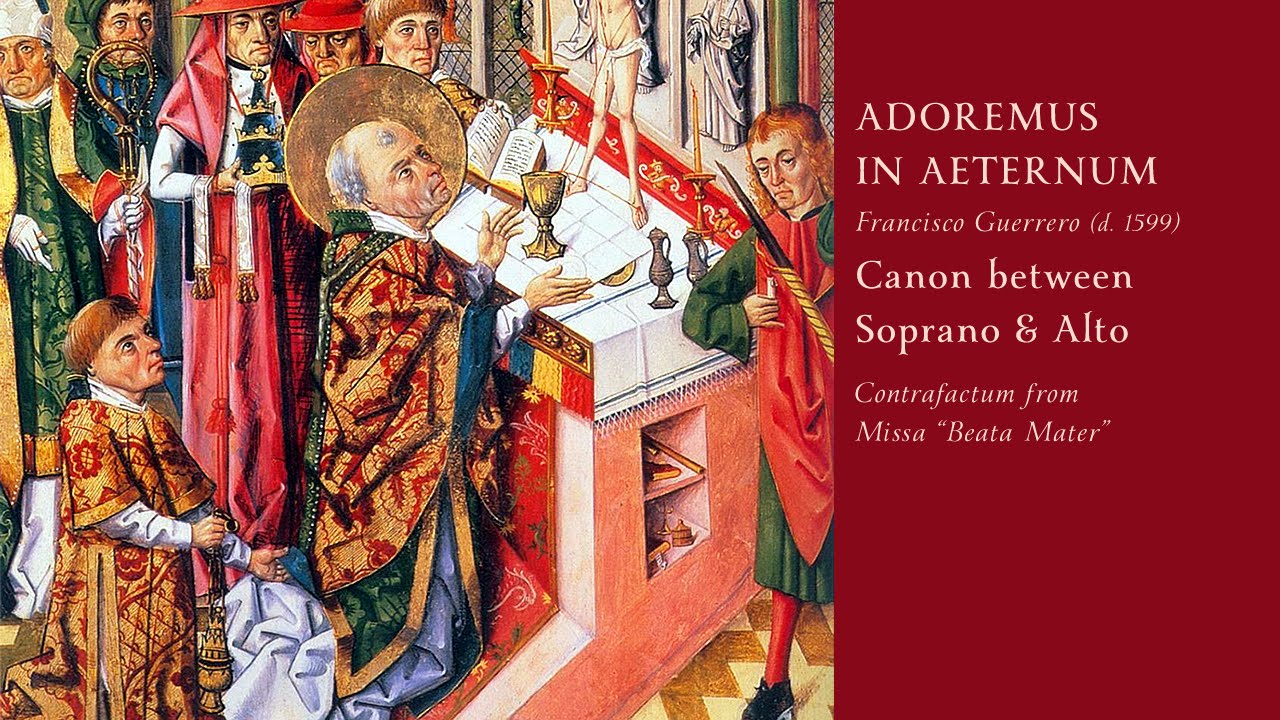
That phrase is a translation of the Latin antiphon sung for centuries in honor of the Blessed Sacrament: Adoremus in aeternum 

Adoremus in aeternum sanctissimum Sacramentum.
— Laudate Dominum omnes gentes: laudate eum omnes populi.
— Quoniam confirmata est super nos misericordia ejus:
et veritas Domini manet in aeternum.
Gloria Patri, Filio, et Spiritui Sancto: Sicut erat in principio,
et nunc et semper, et in saecula sæculorum. Amen.
Adoremus in aeternum sanctissimum Sacramentum.

Let us adore unto eternity the Most Holy Sacrament.
–Praise the Lord, all ye nations: praise Him all ye peoples.
–Because his mercy is confirmed upon us:
and the truth of the Lord remains forever.
Glory be to the Father, and to the Son, and to the Holy Ghost:
As it was in the beginning, is now, and ever shall be, world without end. Amen.
Let us adore unto eternity the Most Holy Sacrament.

This is a good, traditional prayer, helpful for our minds and hearts.  Only the pedantic cannot see its beauty and propriety.

The question does bring up other questions, however.

Will there be sacraments in heaven?

Not in any earthly sense, no. Sacraments, by their nature, use outward signs to convey supernatural realities. For example, the water poured in baptism symbolizes the cleansing of the soul and the passing through death to the “old man” and into the “new”, rising in new life in Christ. The water is the sensible symbol used. Only the Blessed Sacrament truly IS what it symbolizes. In heaven, the baptized will remain baptized, the confirmed confirmed and the ordained ordained. But there will no longer be need for baptism, confirmation or ordination. We will be, face to face, with the Trinity. The sacraments are our pathway, the means to arrive in the bliss of the Beatific Vision.

Of course our human minds will still not be able to take in everything about God, who is infinite. So, we will be shown something of God’s glory, if not all of it. It may be that God will use outward signs also in heaven to mediate some aspects of our new relationship. I am speculating, of course. No one knows what God has prepared for us.

So, will adoration of the Blessed Sacrament end in heaven?

Yes, but… it’s complicated.

We won’t need the Eucharist because we will be in heaven. We will be with the Risen Christ and we won’t need to sense His presence mediated through the outward accidents of the bread and wine which was transubstantiated.

Of course, before the summation of all things the Eucharist continues. In a sense, those who enjoy heaven now are adoring the Eucharistic Lord, but not through the accidents of the earthly Eucharist. After all, the Eucharistic Lord is one, not many, and He is present in our tabernacles and on our altars and also in heaven.  With His Ascension, Christ entered into the heavenly temple and, as High Priest, continues to raise the Sacrifice of praise and thanksgiving and propitiation to the Father.  Because He is now out of time and space, His action can be our action everywhere, in every church and on every altar.  After the summation of all things, however, Holy Mass will cease. Still, it seems that the Son will remain the High Priest forever raising the Sacrifice of Himself – in Thanksgiving – to the Father in the heavenly Temple of the new Jerusalem. We will be participants at the heavenly liturgy with the Holy Angels, singing in praise and adoration. That won’t be Mass, of course. Mass is the making present of what was done and, at the same time, the foreshadowing of what is to come.

Hence, while it is true that adoration of the Eucharist will not continue forever – unto eternity – in aeternum – adoration of the Lord, Bread from Heaven, will certainly continue.  “I am the living bread that came down from heaven”, said the Lord.  He won’t stop being that.  Our praise will also be thanksgiving (therefore, “eucharistic”).   The Eucharist is our “pledge of future glory.

It is perfectly acceptable to say “without end” while in this world. We are not stupid, after all.  We know that some things end and others continue.

We shouldn’t be too pedantic when it comes to devotions, which are good for the heart and which, over time, stir us to new depths of understanding. Nisi credideritis, non intelligetis! They help our belief, which helps our understanding. And, it’s good human psychology. How helpful is it to think in terms of, “We do this now, but one day we won’t”.

No, “forever” is a good word to use when adoring the Blessed Sacrament in this world.  I could get into a deeper discussion of the distinctions we make when using words like “eternity” and “sempiternity”, etc.   But that’s for another time.

Also, I like the idea of the old phrase being divided by comers and goers, like a baton being passed in a relay race. It underscores continuity and builds unity between all who participate. It’s good for team-building, which I imagine is important in a religious community.

Let us also not forget what our forebears in the Faith have handed down. For how long have we been saying, “without end” in our prayers? Since the very beginning! Very smart people, who contemplated the echatological dimension of sacraments and worship, have been entirely content with saying and singing “in saecula saeculorum… in aeternum” in  prayers and devotions.

For generations upon generations Adoremus in aeternum has been sung at Benediction of the Blessed Sacrament. It has been set to beautiful music, to lift fitting praise to God. The Gregorian chant version is forever fixed in my mind and heart from my years in Rome and other places. The same thing is sung across the world and across centuries. These are bridges through space and time all leading heavenward. Some settings of the Adoremus are superb. Here’s Allegri:

YouTube thumbnailYouTube icon

US HERE -UK HERE

And how about this one?  Just four voices!

YouTube thumbnailYouTube icon

The Gregorian version (alas, with organ accompaniment, but it was the best I could find):

YouTube thumbnailYouTube icon

Are we now so very sophisticated that we dare to spurn the treasures of prayer they handed down to us?


Posted in "How To..." - Practical Notes, ASK FATHER Question Box, Hard-Identity Catholicism, Pò sì jiù, You must be joking! | Tagged , , ,
8 Comments

ASK FATHER: How to make a good confession, especially after many years

From a reader…

QUAERITUR:

Hello, Father. I have a request. Since you often exhort people to go to confession, and since many haven’t gone in years and have anxiety about the form it takes, what to do or what to say, please provide a concise primer on the basics. Thank you.

This is a good question.  Thanks.

It is good to have a solid structure to rely on and a dependable priest who gets it and doesn’t throw any surprises at you.  It is hard enough to make a confession.  Penitents are generally a little nervous.  Being a little anxious can provoke clear thinking, but a lot of anxiety can produce paralysis.  Hence, structure.  This is especially important for children.   When children get into the box and I can tell that they haven’t been prepared, taught what to do, I could seriously beat the people responsible for their neglect… tantamount to cruelty.

I cannot do better than the concise lessons of the trusty Baltimore Catechism, especially Lessons 19 and 20. 

Lesson 19 goes into the background and Lesson 20 explains the nuts and bolts of getting into a confessional and making a good confession.  It’s masterful in its comprehensive clarity.

I also have my 20 Tips For Making A Good Confession.

On the last point in Baltimore Catechism Lesson 20, namely, “While the priest is giving us absolution we should from our heart renew the Act of Contrition”, I’ll add this.

Sometimes priests will begin the form of absolution without having told you to say the Act of Contrition, or they will start it while you are saying the Act and say the final part, the “meat” of the form, when you are done.  Don’t worry.  This is a long established, traditional way to proceed.  Sometimes a priest will ask a couple questions: Are you truly sorry for your sins? Do you promise to amend your life?  After he hears the answers, he might then just launch into the form of absolution.

As far as the Act of Contrition is concerned, the one which I think superior to others is:

O my God, I am heartily sorry for having offended Thee, and I detest all my sins, because I dread the loss of heaven and the pains of Hell, but most of all because they offend Thee, my God, who art all good and deserving of all my love. I firmly resolve, with the help of Thy grace, to confess my sins, to do penance and to amend my life. Amen.

This is popular in these USA and it is so for a reason: it is comprehensive and concise.  A variation is, “… to confess my sins, to do my penance, and to avoid whatever leads me to sin.”

May I stress a couple things?

The three pillars of a good confession are a) knowing what a mortal sin is and knowing what grave matter is b) a good (ruthless and brutally honest) examination of conscience and c) absolute sincerity when making your confession.

My good friend Fr. Tim Finigan has a great aid for making an Examination of Conscience.  The one for adults is HERE.

You can take some notes with you into the confessional, if you need to.  It’s okay.  Just make sure that you don’t forget the list on the counter at the coffee shop.

Also, if you get stuck, Father can help you if you ask him.

All of the above aside for a moment, I’ll end with this.

  • Don’t hold anything back.  Just say it.
  • When you say you are sorry – either out of love of God or simple fear of the loss the Heaven – really mean it.
  • Be sincere when you state your intention to avoid sin in the future.
  • Do your best and God’s forgiveness will be yours.

The confessional isn’t a torture chamber.  It is the most consoling place in the universe.

There is nothing so bad that we can do that God won’t forgive, provided we ask for forgiveness.

GO TO CONFESSION!

Posted in "How To..." - Practical Notes, ASK FATHER Question Box, GO TO CONFESSION | Tagged , , ,
1 Comment

@LMSChairman Joseph Shaw on relentless marginalization of “trads”

Joseph Shaw, Chairman of the Latin Mass Society in the UK, is doing some heavy lifting.  Thanks to my friend Fr. Tim Finigan – biretta tip o{]:¬) – I spotted this twitter thread of some 10 tweets in which Shaw addresses how marginalized in the Church are those who prefer traditional liturgical worship, et al.  There’s food for introspection hereunder.

Posted in Our Catholic Identity, The Drill | Tagged ,
7 Comments