ASK FATHER: My unbaptized wife insists on contraception

From a reader…

QUAERITUR:

I’m a youngish Catholic man who very much wants closeness with Christ through the Church in Her teachings and Sacraments. I’m also a Catholic man married to an unbaptized woman, who has been insistent on taking hormonal contraceptives.

I’m well aware of the difficult and dangerous situation I’ve put myself in (the Vademecum for confessors has us between a rock and a hard place- I am unable to receive the sacraments). I beg daily for my wife’s conversion and for the sanctification of our marriage. Do I have any hope of my prayers being heard? What more can I do?

Please pray for us, and thank you for for your constant truthfulness.

I will continue to pray for you.

GUEST PRIEST RESPONSE: Fr. T Ferguson

In his encyclical Caritas in veritate, Pope Benedict XVI said that “Without truth, charity degenerates into sentimentality.” Attempts at truth without charity also fall flat.

You state, “I am unable to receive the sacraments.” This is not entirely true – presuming, of course, that your marriage either took place in the Church or with the appropriate permission.

What you are unable to do is to receive the sacraments and engage in contraceptive sex with your wife. You have to make a choice. Granted, it is a very difficult choice.

Interfaith marriages are difficult. Marriage is difficult, but marriage between two people who don’t share a basic outlook on life (and faith is – or at least should be – an essential part of that) is exponentially more difficult, as you are finding out.

It is a shame that, in many places, the Church’s requirement that Catholics marry other Catholics is taken lightly. That requirement should be dispensed only in cases where it is clear that the Catholic party will be able to continue practicing his faith to the fullest (and that’s more than just being able to get to Mass on Sunday).

Even more tragic is the fact that, when an interfaith marriage is permitted, it seems rare that adequate marriage preparation is done. The couple is not given sufficient preparation for the difficulties that will surely arise once the bright sheen of limerence has begun to wear off.

Praying for your wife’s conversion is certainly key, and, until such time as she is willing to engage in intimacy that is open to the transmission of life, refraining from all sexual activity is the other essential element.

Posted in "How To..." - Practical Notes, ASK FATHER Question Box, One Man & One Woman, Our Catholic Identity | Tagged
25 Comments

What went through my during the Gospel this morning?

This morning at Mass a detail in the Gospel pericope struck me with force.  Buried in the longish reading is the key, probably, to its selection by our forebears, who so lovingly polish the gems of our sacred liturgical rites and bequeathed them to us with hope.  Yes, there is the chronological element, but there’s more to it.

As a bit of a preamble, two points.

The first has to do with “active participation”.  This in its fullest sense means, for most people at Mass, active receptivity to what is being offered.   When you are the priest, reading the Gospel, you are in mainly offering mode, though hopefully you are open to receiving as well.   So, keeping your head in the Mass as lay participant can be a real challenge.  Listening with full attention to what is being offered is hard.  Minds and thoughts can drift.   Something that can help you remain in the game, as it were, is to condition yourself to remember that every reading ought reflect the fact that it, too, is a sacrificial offering being raised back to God from whom it came.   That’s the second point.  The readings are also sacrifices raised back to God.  Words of Scripture, during the sacred liturgical action, rise like incense.  Readings should be offered vocally to God.  They aren’t dramatic pieces.  They aren’t educational moments, though all Scripture which, is God-breathed or inspired, is always useful for instruction (cf 2 Timothy 3:16).  So, the priest or deacon or subdeacon – or in junior mode – installed lector (can we please stop with people trooping up to read?) has a responsibility to read well and properly so that the transforming power inherent in God’s word can be properly received by the baptized.   You, as baptized Christians, share in Christ’s priesthood in your own way.  This enables you to offer pleasing sacrifices.  When you are receiving the Word, you are also offering it by your active receptivity.

That’s really easy to do, right?   NO!  But what is easy about what occurs during Holy Mass?  Why should you be infantalized and treated like dopes who can’t fulfill your roles without also sorts of choochoo or airplance noises as daddy or mommy raises the pre-chewed and easily digestible goop spoon?

Okay… I’m ranting.  Back to my ramble.

It’s not just during Mass that my lumber-yard of a mind makes connections.

After Mass today I baptized infant twins, a week old.  In the sacred ritual we have the ephphatha moment.  The priest touches the ears of the one to be brought into the Church, saying, “Be opened”.

In a way, doesn’t this sum up everything about Christ’s message and our participation at Mass?

“But Father! But Father!” some of you less nimble libs might squeak, “you are now running wild.  That’s not at all what ephpa…apath… that word is about.  It’s all about fellowship and sharing, like when Jesus performed the miracle of getting everyone to share their food with each other.  But you don’t get this because you HATE VATICAN II!”

Okay… fine.  Be obtuse.  I will, however, quote Benedict XVI, who in a 2012 audience said of ephphatha, “a small but, very important word; a word that in its deepest meaning sums up the whole message and the whole work of Christ.”

So, what goes through this priest’s head during the Gospel of Mass and during a baptism?

Let’s have the whole Gospel from this morning first.

Continuation +?of the Holy Gospel according to John
R. Glory be to Thee, O Lord.
John 12:10-36
At that time, the chief priests planned to put Lazarus to death also. For on his account many of the Jews began to leave them and to believe in Jesus. Now the next day, the great crowd which had come to the feast, when they heard that Jesus was coming to Jerusalem, took the branches of palms and went forth to meet Him. And they cried out, Hosanna! Blessed is He Who comes in the name of the Lord, the King of Israel! And Jesus found a young ass, and sat upon it, as it is written, Fear not, daughter of Sion; behold, your King comes, sitting upon the colt of an ass. These things His disciples did not at first understand. But when Jesus was glorified, then they remembered that these things were written about Him, and that they had done these things to Him. The crowd therefore, which was with Him when He called Lazarus from the tomb and raised him from the dead, bore witness to Him. And the reason why the crowd also went to meet Him was that they heard that He had worked this sign. The Pharisees therefore said among themselves, Do you see that we avail nothing? Behold, the entire world has gone after Him! Now there were certain Gentiles among those who had gone up to worship on the feast. These therefore approached Philip, who was from Bethsaida of Galilee, and asked him, saying, Sir, we wish to see Jesus. Philip came and told Andrew; again, Andrew and Philip spoke to Jesus. But Jesus answered them, The hour has come for the Son of Man to be glorified. Amen, amen, I say to you, unless the grain of wheat falls into the ground and dies, it remains alone. But if it dies, it brings forth much fruit. He who loves his life, loses it; and he who hates his life in this world keeps it unto life everlasting. If anyone serves Me, let him follow Me; and where I am there also shall My servant be. If anyone serves Me, My Father will honor him. Now my soul is troubled. And what shall I say? Father, save Me from this hour! No, this is why I came to this hour. Father, glorify Your name! There came therefore a voice from heaven, I have both glorified it, and I will glorify it again. Then the crowd which was standing round and had heard, said that it had thundered. Others said, An angel has spoken to Him. Jesus answered and said, Not for Me did this voice come, but for you. Now is the judgment of the world; now will the prince of the world be cast out. And I, if I be lifted up from the earth, will draw all things to Myself. Now He said this signifying by what death He was to die. The crowd answered Him, We have heard from the Law that the Christ abides forever. And how can You say, ‘The Son of Man must be lifted up’? Who is this Son of Man? Jesus therefore said to them, Yet a little while the light is among you. Walk while you have the light, that darkness may not overtake you. He who walks in the darkness does not know where he goes. While you have the light, believe in the light, that you may become sons of light. These things Jesus spoke, and He went away and hid Himself from them.
R. Praise be to Thee, O Christ.
S. By the words of the Gospel may our sins be blotted out.

Just a few thoughts.

Context: In vv 1-11 we are six days out from Passover. Hence, it is about the same point for us in relation to Good Friday. The Lord was just a Bethany where He had raised Lazarus from the dead. Mary has anointed His feet and dried them with her hair as the thieving Judas complained that the nard should have been sold. He wanted the money. The next day, five days from Passover, huge crowds are flooding to Jerusalem, singing the Ascent Psalms. They see Jesus riding on the foal of an Ass and in light also of Zachariah they immediately understand Him to be, like Solomon, the Davidic priest king who, according to Ps 118 would go to the Temple to offer sacrifice. They associate the moment with the realization of the fulfillment of what they celebrated at Sukkot when palms were waved at the altar. They shift from Passover mood to Sukkot mood and wave branches at Christ, meshiach. Christ enters Jerusalem.

Then we hear that Greeks want to meet Jesus. Gentiles. Christ says, “the HOUR has come for the Son of Man to be glorified” and the Father’s voice booms, as it did as His baptism and transfiguration, revealing Him to be divine.

His HOUR had come.  h?ra

The Lord was furious with the money changers, etc., especially because they had taken over the Temple’s Courtyard of the Gentiles, denying them a place to pray. They, too, came to worship on high holy days. That Gentiles came to the Lord, in this context, was a sign that at last the time had arrived when all things had been fulfilled and His Passion would begin. The conversion of the Gentiles was an eschatological sign. John 10:16: “And I have other sheep, that are not of this fold; I must bring them also, and they will heed my voice. So there shall be one flock, one shepherd.” This would be the “day of the Lord” or the “hour”. During the Agony in the Garden of the “olive press” , Gethsemane, Christ repeated the word “hour” several times.

This is the definitive moment when Christ’s destiny was to be fulfilled.

From the CCC:

1165 When the Church celebrates the mystery of Christ, there is a word that marks her prayer: “Today!” – a word echoing the prayer her Lord taught her and the call of the Holy Spirit.34 This “today” of the living God which man is called to enter is “the hour” of Jesus’ Passover, which reaches across and underlies all history:

Life extends over all beings and fills them with unlimited light; the Orient of orients pervades the universe, and he who was “before the daystar” and before the heavenly bodies, immortal and vast, the great Christ, shines over all beings more brightly than the sun. Therefore a day of long, eternal light is ushered in for us who believe in him, a day which is never blotted out: the mystical Passover.35

34 Cf. Mt 6:11; Heb 3:7-4:11; Ps 95:7.
35 St. Hippolytus, De pasch. 1-2 SCh 27,117.

And, at the end of this strange ramble, I would remind you that when Christ used the word ephphatha as he healed the man who was deaf and mute, he did so in the region of the Decapolis, that is, in the territory of the Gentiles.  And so we come full circle.

Anyway, those are some thoughts and thoughts about thoughts, for what they are worth.
Posted in "But Father! But Father!", Wherein Fr. Z Rants |
6 Comments

More thoughts on Benedict XVI’s 6000K word essay on The Present Crisis

I wrote a rapid reaction to Benedict XVI’s piece HERE.

Here are some fuller, additional thoughts.

Ratzinger/Benedict writes from a unique perspective of age and the experience of key positions in the Church from post-WWII directly through to the present.  Hence, his retrospective on what happened in the Church after and partly because of Vatican II is valuable.   Also, consider his direct and his remote audience.  Since this was destined for the German Klerusblatt it is without question a deserved scolding of the German Church.  However, he knew that it would make instant world headlines, so his audience is also everyone, everywhere.

Benedict opined in the past about the decline of the social influence and of the Church in the world and the resulting potential of an influential creative minority.  He thinks that this time has arrived.   Remember that he is a scholar.  When he writes, he provides a status quaestionis.  His digression on Job is surely about the state of the Church.  For Benedict, Job is Christ foreshadowed.   Foreshadowing is realized in Christ, but it must, therefore, also be realized in the Church before the Second Coming.   It seems that Benedict thinks that the Church is in her Job phase, being challenged in her externals and in her identity.  Has Benedict has an experience akin to that of Leo XIII hearing God and Devil dicker over a century of trials for the Church?   We, as a Church shall prevail, but only if we are true to God.  We are not being true to God if we try to recreate the Church in human terms.  We must be faithful to the Church as God designed.

As a good student of Augustine, who labored through the Donatist crisis, Benedict underscores that the Church is corpus permixtum malis et bonis.   The Church has highly visible weeds in her fields and deeply evil fish in her nets intermingled with the good.   The times and challenges we face today reveal the reality of this mix and, in fact, the rapidly accelerating sorting of the two.  The Church’s accelerating polarization is a sign of this.  One could aptly interject into Benedict’s tripartite essay, motus in finem velocior!

The MSM will latch onto the essay’s title and be titillated by his comments on the 1960’s, aka oh so golden halcyon days for most liberals and progressivists.  Benedict doesn’t offer specifics about solutions to the problem of, say, abusive clerics.  His is a more integral view.   He emphatically rejects any call to remake the Church in human terms to address our problems.  How many times have we heard that the Church, to address “Burning Problem X”, must change and conform to the world!  We need lay control of newly designed structures which, we are assured, are inspired by the “spirit”.  We need married priests and women deacons!  Away with patriarchy and distinctions and outdated theologies based on so-called natural law. We determine what’s natural now.  We need change!  While Benedict endorses a refining of the Church’s laws, he strongly warns in his latest offering against abandoning a natural law approach in our moral theology and discussions, or an overturning of constitutive elements of the Church.  He gives us an autopsy of the post-Conciliar DOA attempt in Germany to split moral theology from natural law.

Benedict says, in effect, even as we are being tried like Job, stripped of everything as Our Lord was before the Cross, that reinventing the Church in human terms won’t solve anything.  “[A] self-made Church cannot constitute hope.”  And again, with surprising bluntness, “What must be done? Perhaps we should create another Church for things to work out? Well, that experiment has already been undertaken and has already failed.”

What Benedict surely means is that conforming the Church to the world, and sticking to the failed path we are on, will hand the Devil a victory.  His approach is, and allow me to quote the spiritual, “Gimme that ol’ time religion”.  In the wake of the terrible scandals which deluged Ireland, Benedict urged in a letter to the Irish people that they return to traditional faith and faith practices.  He is doing the same here.  Trying to reinvent the Church through changes in structures or the introduction of innovations that result in the jettisoning of the useful gains of our forebears will play into the Devil’s hands.   However, if his words to Ireland were urgent, they are, today, imperative.  And Benedict doesn’t want just a return to the practices or formulae of the past.  His is a deeper call.
Benedict calls in his piece for a radical rediscovery and recognition of the love of God, both His love for us and ours for Him.  He stressed that the content of our Faith is Love Incarnate.  This is what is personalized in the Catholic Faith, and without which the Church’s structures and teachings are soulless.  But with God’s love, they are alive and life giving.  I am reminded of question I heard Ratzinger answer after a conference.  He was asked about Karl Rahner’s notions about God as an Existenz-Modus.  After delving briefly into what Rahner meant, Ratzinger concluded, “What Fr. Rahner forgets is that you cannot pray to an Existenz-Modus!”

Benedict today is calling for the formation of “faith habitats”, places where the Faith and love of God can “dwell” and be recognized.   Though we are being emptied and becoming smaller as a Church – through the auto-enervation of the weeds – we can still be a creative minority, giving witness to the Truth to whatever end we are called to bear.

Something that critics and defenders of Francis are sure to notice, is Benedict’s reference to the Veritatis splendor and the context of its genesis. Pace today’s prominent papalotrous antinomian and theological vandals, Benedict defends Veritatis splendor, so undermined during this pontificate, as a guidepost.  Veritatis splendor was, as Benedict explains, John Paul’s necessary response to a challenge from Germany that would have had disastrous results.   Yes, the former Pope affirms, just as Pope’s of yore have always been willing to affirm, there are some things that are intrinsically evil.  We jettison that truth at our existential peril, as a society and as a Church.  But, nolens volens, that’s what’s happening.  How must we respond?

In effect, Benedict’s unspoken line is the integral interconnection of Cult, Code and Creed.  I think he would agree that his underlying foundation is the intimate and simultaneously operative ecclesial dynamic force inhering in lex orandilex credendi – lex vivendi.

For example, Benedict calls for a recapturing of Mystery in our liturgical worship when he speaks to how so many today receive Holy Communion thoughtlessly.  “Our handling of the Eucharist”, he wrote, is a “central issue”.  We must embrace the whole of the Church’s teaching on Faith and morals: the Church’s teachings and her laws are inextricably interwoven. “It is very important to oppose the lies and half-truths of the devil with the whole truth”.

Oh, yes. He calls – albeit implicitly – for new criteria for the appointment of bishops.  That was fun.  And, more seriously, we must be willing to die, to be martyrs.  That was sobering.

What captured my attention in a more focused way, as I read through the often familiar themes, his Ratzingeriana as it were, was what must surely be a longing for us “to establish habitats of Faith and, above all, to find and recognize them”.  What do I mean?

Benedict ranges around a bit as he puts down various markers, some familiar tropes, but there is a cri de coeur moment when he reveals his pain, how heartsick he is at what is going on today.

Apart from all the business about pedophilia and crises, etc., Benedict gets down to it, I think, when writes of the loss of Mystery, the Mystery in liturgical worship and the Mystery of the Church.   For Ratzinger, and he even from the years I had the privilege to speak often with him, and for me, everything comes from and flows back to our sacred liturgical worship, which must bring us into transforming contact with Mystery, much as Moses left the tent of meeting shining so brightly his face could not be looked at.  If we recognize the connect of Cult, Code and Creed, then even reflection on law reveals the Mystery of God, as does more obviously doctrine.  Encountered rightly, they transform.  However, after lamenting a loss of Mystery, Benedict poignantly turns inside out a phrase of his perennial spiritual guide, Romano Guardini, a phrase which in his earlier writings Ratzinger called a “standard quotation in German Catholicism”.  Mind you, just as Christ’s quotes of the prophets were instantly recognized by 1st century Jews, the German clergy, Benedict’s immediate audience will get this.  Guardini, writing between the wars and during the rise of the Liturgical Movement wrote positively, “An event of incalculable importance has begun; the Church is awakening in [people’ s] souls.”  On the contrary, Benedict herein mourns that a negative event of incalculable importance has begun, namely, “The Church is dying in [people’s] souls.”

The last 50 years have borne that out and, in fact, the necrotic effects are accelerating, which makes them daily more obvious.

What could be the take away from this somewhat rambling collection of observations and Ratzingerian tropes? This may be Benedict’s prophetic call to those who are listening.  We are seeing the Church experience a Job-like testing.  If Christ endured a Passion, the Church must endure a Passion as well.  The Passion reveals the radical, unfathomable depths of God’s love.  We must learn to recognize this love, and manifest it.  We are going to experience painful but purifying down-sizing.  We must creatively form places where the Faith and love can “dwell”, habitats of Faith.

Posted in Benedict XVI, Clerical Sexual Abuse, Sin That Cries To Heaven, The Coming Storm, The future and our choices | Tagged ,
11 Comments

NEW VESTMENTS! Stunning new Pontifical Set has arrived!

It has been a long time coming, but the day has arrived. Today we received the new Pontifical Mass vestments from Rome.

Gammarelli always packages things perfectly, with layers of poly/plastic to protect the contents.

The shipment had been help up for a while, which made me a little nervous, but it got here on the scheduled date.

The first box I opened had lots of the bits and pieces for the set, all the maniples and so forth.  Since I had ordered a couple of additional chasubles (a Roman in addition to the Neri) and since there are two more chasubles coming (with coats-of-arms) they sent all the small pieces: stoles, veils, burses, etc.

You can see the difference in the sizes of the burse for the Neri cut and the Roman cut.

Behold, the Neri cut chasuble.  And this is not the “plus-size” we ordered.  That will come later with a coat of arms embroidered on it.

A different angle of light.

There is an amazing stack of maniples, enough to freeze the hearts of libs everywhere.

The Roman.

I decided to leave most of the set in the boxes though I really wanted to pull everything out!  Easier to transport.  We have a meter of fabric and lining and trim and now we have to make our tabernacle veils.  We have to prep the antependium for use.

We have labels to sew… two labels.  One demonstrates ownership by the TMSM.  The other will honor someone who gave a major – seriously major – donation to the TMSM.

Her name will go into these vestments and everyone who wears them will be prompted to pray for her.

We will first use parts of the set for Holy Thursday and then on Easter.  They will be magnificent.

The next project begins in earnest in May.

BLACK

I wonder if we will have a big donor for that set.

Brick by brick.  Maniple by maniple.


Posted in Just Too Cool, Liturgy Science Theatre 3000 | Tagged , ,
10 Comments

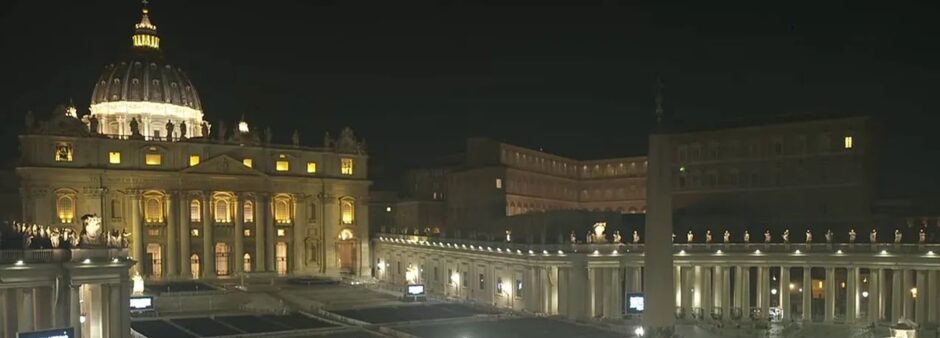
UPDATE: Beresheet Moon Landing expected to start at 3:05 p.m. EST (2005 GMT).

Israel spacecraft Beresheet will attempt Moon landing today.

Moon Landing expected to start at 3:05 p.m. EST (2005 GMT).

YouTube thumbnailYouTube icon

UPDATE:

A selfie from Beresheet…

UPDATE:

The lander did NOT safely land.

UPDATE:

We were using ZedNet during the landing process.  Just sayin’

HERE and HERE

UPDATE

In honor of the landing attempt, I am attempting a new recipe for oxtails.   I put it together from scraps in the fridge.

UPDATE:

After some hours, I am ready to dig in.   After the fact, I can affirm that everything fell off the bones.

Yum.

Posted in Fr. Z's Kitchen, Look! Up in the sky! | Tagged
7 Comments

Benedict XVI: Make The Church Credible Again!

From Benedict XVI’s latest essay:

The extent and gravity of the reported incidents has deeply distressed both priests as well as laity, and has driven more than a few to call into question the very Faith of the Church. It was necessary to send out a strong message and seek out a new beginning, so to make the Church again truly credible as a light among peoples and as a force in service against the powers of destruction.


In other words…

Make The Church Credible Again!

The powers of destruction are discussed in his essay.  They are, as you might anticipate, long-standing themes, tropes of Ratzingeriana, including the Three Enemies of the Soul as well as the Dictatorship of Relativism.

Posted in Benedict XVI | Tagged
3 Comments

Pope Francis kneels, kisses the feet of the leader of South Sudan

From Vatican Insider:

Papa Francesco bacia i piedi ai leader del Sud Sudan: basta guerre
Il Pontefice in ginocchio davanti al presidente Salva Kiir e ai vicepresidenti designati del Paese africano che dovranno avviare a maggio un nuovo governo: «La pace è possibile, l’armistizio sia rispettato. La gente è esausta dai conflitti del passato»

Pope Francis kisses the feet of the leader of South Sudan: enough with wars
The Pontiff kneels before President Salva Kiir and the Vice Presidents designate of the African nation who ought to inaugurate a new government in May: «Peace is possible, the armistice must be respected. People are exahausted by the conflicts of the past.»

Comments are OFF.

Posted in Francis | Tagged
Comments Off on Pope Francis kneels, kisses the feet of the leader of South Sudan

Animi caussa: Some spittle-flecked nutty lib reactions to Benedict XVI’s latest

How are the papalotrous reacting to Benedict XVI’s reflections?

Let’s look at Twitter.

And


This fellow seems to be reading a different letter…

Nut jobs…

Here’s Beans!

Other loons.

Posted in Benedict XVI, Green Inkers, Liberals |
17 Comments

Initial reaction to Benedict XVI’s latest essay: a cri de coeur

Benedict XVI has released a three part essay address, firstly, it seems, to the clergy of Germany. It is a scolding. However, it is also clearly for the whole watching world.

The MSM will be excited about the title: The Church and the Scandal of Sexual Abuse

The MSMS will latch on to his criticism of the oh-so-golden-halcyon 60’s, which, for Benedict were the turning point.

Benedict doesn’t give specific, curiosity pleasing solutions and he left a lot of things unsaid… that he could have said. He approached a few issues, such as homosexuality in formation of priests in seminaries. He doesn’t make explicit connections, which will leave some unsatisfied and others delighted.

However, there is a poignant cri de coeur in this piece, which leads the attentive reader to his point. He describes the Church as going through her Job period of testing and purification and serious down-sizing. I wonder if he had an experience like Leo XIII, who overheard God and the Devil dickering over the Church for a century of trial. Benedict points to the loss of the sense of Mystery in worship, especially regarding to Eucharist, and the Church. He underscores the importance of natural law in moral theology and the connection of doctrine and law. Hence, he interconnects, Cult, Code, and Creed. His underlying foundation is lex orandi, lex credendi and lex vivendi. It has to be. But these are out of sorts, because weeds in the field and evil fish in the nets have disconnected them and tried to rebuild the Church in human terms. I especially liked his shot: “What must be done? Perhaps we should create another Church for things to work out? Well, that experiment has already been undertaken and has already failed.”

Against those who would tear everything down, he contextualized the genesis of Veritatis splendor and then defends it against the German attacks on theology which would have resulted in disaster.  He has, surely, the papalotrous in mind.

Benedict includes in this piece, which rambles in and out of his familiar tropes, a poignant cri de coeur. And he calls for radical recovery of the love of God, our love for him and our recognition of His for us, and the establishment of “habitats of faith”, where Faith can dwell.

As I read it, I sensed Benedict’s great pain.

More tomorrow.

Posted in Benedict XVI, Cri de Coeur | Tagged
13 Comments

A public “Amoris Laetitia” celebration of getting around adultery

It has been some time since we’ve looked into issues arising from the ambiguity laden Ch. 8 of Amoris laetitia.  Remember that those who wish to distort the words of the Lord and Catholic moral theology will read it one way, while those who want to be true to the same will read it another way.  I suspect very few people changed positions.

I read at the ultra-liberal La Croix edited by the ultra-lib Robert Mickens, about now “happy” divorced and remarried couple joyously receiving Communion after some “accompaniment” by a French priests. The piece was originally from a French outlet, Le Pèlerin.

Divorced and remarried, they receive communion once again This is one of the first concrete outcomes of the apostolic exhortation Amoris laetitia

“This couple, deprived of the sacraments for many years, will receive communion once again today,” proclaimed the priest at the beginning of the celebration.

On Pentecost 2018, Benoît and Chantal walked down the nave alongside other members of the congregation in their Church in Eu, Normandy to receive the Eucharist. Neither of them made a “great fuss,” but all were well aware of the day’s significance.

This is one of the first concrete outcomes of the apostolic exhortation Amoris laetitia, published three years ago. In Chapter 8 there is a footnote (no. 351) that encourages pastors to accompany divorced and remarried couples if they want to return to the sacraments.

Benoît was a widower and Chantal a divorcee when they married in a civil ceremony seventeen years ago. As members of the Church, they knew that this meant renouncing the sacraments.

In the eyes of the Church, the indissoluble marriage bond between man and woman is a reflection of the union between Christ and the Church. It therefore does not recognize Chantal Vivant’s second marriage with another man, which left her and Benoît in an “irregular situation.”

With the publication of Amoris laetitia in 2016, the Church’s approach shifted, placing greater emphasis on the notion of mercy.

It didn’t go as far as fully reinstating the right to communion or reconciliation, but as Pope Francis noted, encouraged us to remember that the Eucharist “is not a prize for the perfect, but a powerful medicine and nourishment for the weak.”

It is up to priests to interpret the text as they see fit, and so far, most have been reluctant to champion it. But Chantal and Benoît live in the diocese of Rouen, which is particularly keen to explore the topic, as are those of Lyon, Évreux and Annecy.

[…]

This is the definition of scandal, by the way. The priest even announced it.

A public celebration of getting around adultery.

Nobody wants people to be perpetually sad and cast down.  However, false mercy is not the way to avoid sadness.

Posted in One Man & One Woman, Pò sì jiù, The Drill, The future and our choices | Tagged ,
9 Comments