SCOTUS Justice RBG falls, breaks ribs, hospitalized

According to accounts, 85-yr old Justice Ruth Bader Ginsberg had a fall, broke some ribs, and is not in the hospital.

While one mustn’t wish ill on another, it could be that this episode might prompt in the Justice some thoughts of retirement.   Also, hospitals, with their growing super-bugs, are not always the best places for older people to linger.

I am imagining, as every one of you are right now imagining, a THIRD Trump nominee for the SCOTUS.

Amy Coney Barrett?

Imagine the WAR in the Senate Judiciary Committee, especially now that numbskulls like letter-leaker and Chinese employer DiFi (D-CA), “Flatulence” Whitehouse (D-CA), Crazy Mazie (D-HI), Franken-backer Klobuchar (D-MN) have won their re-elections and now must feel off even the flimsy chain they were on.


Posted in The Coming Storm, The future and our choices | Tagged ,
22 Comments

“I had the image of a bishop sinking head downward…. sinking… sinking… clawing at the heavy miter on his head”

Even as I stared at the title of the piece I am about to recommend, this passage from Luke about millstones came to mind.   I had the image of a bishop sinking head downward…. sinking… sinking… clawing at the heavy miter on his head dragging him relentlessly into the ever greater pressure of the depths… sinking… clawing… wild-eyes bulging.

Miter as millstone.

The annual plenary meeting of US bishops is coming up.  I suspect that there are going to be large crowds of lay protesters near their venue.  I suspect that the bishops may tip toe up to the real core of The Present Crisis, but that, in the end, they will do little or nothing.  I doubt that they have the collective cajones, especially when the brow-beating from the papalatrous favorites begins, the subtle messages and warnings that their opinions must conform or else be “noted”.

Miter as millstone.

One writer at The Catholic Thing has a piece a calm but penetrating cri de coeur directed at their collective Excellencies.  His well chosen title is highly suggestive of his central message:

Miters and Millstones

You get, I trust, the point.

Remember the Lord’s warning in Luke 17:1-6 about the fate of those who cause others to fall into error.

“Things that cause sin will inevitably occur, but woe to the one through whom they occur. It would be better for him if a millstone were put around his neck and he be thrown into the sea than for him to cause one of these little ones to sin.

The writer the provocative article is Stephen P. White, and he’s got some game.   He gives the US bishops an ear full before their meeting.  And rightly so!

Some may squawk under – under their miters – “Who is this guy to tell Us what do to?!?”

Clearly, it’s a guy who doesn’t want to see our bishops sinking… sinking… clawing at the end.

BTW… the Novus Ordo Gospel Reading on the Monday when the US bishops hold their meeting is, exactly, Luke 17:1-6, about leading little ones (us) astray and millstones.

I hope that a few of the ideologues in the conference will try to wrap their heads around that millstone image as they put on their headgear.

UPDATE:

Perhaps it would be good to read the above-mentioned in tandem with, in dialogue with so to speak, another piece at Crisis:

“Cometh the hour, cometh the man.” The saying means that a time of crisis invariably brings forth the man to meet the challenge.

Well, the hour is here, but where’s the man? That’s what many Catholics must be wondering. The Church is in the midst of what may be the worst crisis of its existence, yet the man of the hour is nowhere in sight. The pope and the men around him—the ones we would ordinarily expect to lead us out of the crisis—are the ones who have led us into it. By all appearances they are not up to the challenge. They are over their heads in the mess they have helped to create.

Perhaps the distinguishing characteristic of the men who now lead the Church is a lack of seriousness. Because they are not serious men, many if not most of them do not even comprehend the seriousness of the current situation. Although they make statements expressing regret over past mistakes, they blithely continue on the course that has led to the “mistakes.”

[…]

Posted in Cri de Coeur, Dogs and Fleas, Hard-Identity Catholicism, The Coming Storm, The future and our choices | Tagged , , , ,
9 Comments

MUST READ: The Papalatrous catholic Left and “Horizonal Schism”

Speaking of brilliant, you will want to pay attention to the following.

Canonist Ed Peters turns the canonical sock about schism, can. 751, inside out.  There are two dimensions of schism, you see.   The papalatrous catholic Left has probably fallen into one of them.

Definitely visit his place – HERE – but he doesn’t have a combox.  My emphases:

A note on the other kind of schism

Most Catholics correctly, but incompletely, understand schism as “the refusal of submission to the Supreme Pontiff” (1983 CIC 751). Overlooked here—perhaps because it is much rarer than is typical ‘anti-papal schism’ and is harder to spot when it does occur—is the second kind of schism, namely, “the refusal … of communion with the members of the Church subject to him” (1983 CIC 751). In other words schism comes in two varieties, ‘vertical schism’ whereby one refuses submission to the Roman Pontiff and ‘horizontal schism’ whereby one refuses to extend that Christian unity owed to others who are, in fact, in union with the pope. If the poster boy for vertical schism was, say, Martin Luther, the horizontal schismatic is, I suggest, [NB!] one whose devotion to the pope is so extreme that he regards as disloyal those who don’t share his opinions on all things papal and, for that reason, shuns them.

Of course Catholics’ opinions on popes and prelates may vary widely, and, to be sure, the canonical requirements for proving schism, vertical or horizontal, in actual cases are high. But Catholics critical of Pope Francis and/or his governance of the Church—Catholics, mind, in full communion with the Church per Canon 205—notwithstanding their demonstrable communion with the pope, are frequently disparaged these days, sometimes by ranking bishops, as being adversaries, accusers, and gossip-mongers. To some extent, of course, such [boorish and stupid] verbal insults should be written off as Life in This Valley of Tears and those subjected to them simply reminded that others have endured far harsher treatment for the Faith. But lately I wonder whether this demonizing of papal critics risks taking a canonical turn.

Long-time Vaticanista Marco Tosatti recently claimed (Eng. trans. here) that word has been passed down by papal representatives to bishops not to invite Raymond Cdl. Burke to their dioceses and that, should Burke appear at an event in their churches, they should not even appear with him. If this report is true, then understand: bishops working in close collaboration with the pope are instructing other bishops to avoid and, if necessary, to refuse manifestations of Christian unity due to a bishop who is, beyond any question, in full communion with him and them. That report, if true, would suggest something well beyond mere verbal disparagement of a fellow bishop.

Again, journalist claims of such counter-catholic (in the sense of ‘unity’ and ‘oneness’) directives are a long way from constituting proof of horizontal schism in their authors, but that such measures could even be plausibly alleged is a sign of the times and deeply troubling. Like Catholics admonished to avoid sin and even near occasions of sin so prelates should avoid schism and even actions suggestive of schismatic attitudes. If such disgraceful directives were quietly issued may they be quietly and quickly withdrawn; if they were even contemplated may be they be rejected lest they open the door to even deeper divisions than we already suffer.

This, friends, is why Prof. Peters is a treasured resource.  That was not only a workshop on canon law about schism, but it was a work of mercy towards those who are at risk of falling into a “horizontally schismatic attitude”.   The behavior of many on the Left suggests such an attitude.

Posted in 1983 CIC can. 915, Liberals, The Drill | Tagged , ,
5 Comments

UPDATED: Holy See repression of a certain kind of bishop with a certain kind of message

UPDATE 8 Nov:

But wait.  There’s more.

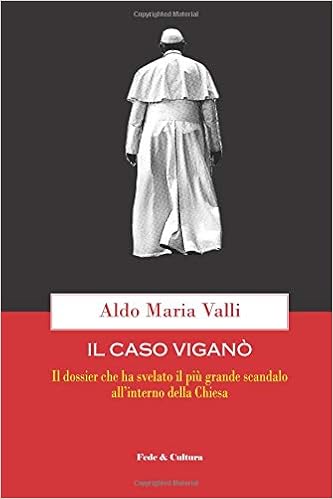
Over a Church Militant, Michael is reporting that an Italian author, Aldo Maria Valli, has published a book about whistleblower Abp. Carlo Maria Viganò. However, the publishing company has been pressured to restrict future editions.

Recently Church Militant learned that Fede & Cultura, the publishing house for Valli’s Il Caso Viganò, was compelled to restrict further editions of the book. It was the first time Valli had worked with Fede & Cultura, whom he called “courageous” for their publishing choices. Fede & Cultura confirmed with Church Militant that they were put under “irresistible pressure from within the Church not to publish anything else that would depict the Pope in a bad light.” Perhaps Pope Francis’ next surprise motu proprio will announce the reform of the Index librorum prohibitorum (the “List of Prohibited Books”).

What’s amusing about this is how this will backfire for anyone in the magic circle around Francis who wants this book stomped out.  They have not a single clue.  They create a market for the book.  Next, they seem not to realize that, in an age of e-readers and the internet books don’t have to be printed.

You can order the Italian KINDLE edition NOW and have it either on  your e-reader or on your computer’s screen in mere seconds.

Heck, you might get it anyway, even if you don’t read Italian just to let them (Curia and Publisher) know what’s what.

Il caso Viganò: Il dossier che ha svelato il più grande scandalo all’interno della Chiesa (Italian Edition)

US HERE – UK HERE

____

Originally Published on: Nov 7, 2018

Everyone knows that the plural of anecdote is “data”.

Something seems to be up.

First, Italian Vaticanista Marco Tosatti says that Francis, through the US Nuncio, is telling bishops not to invite Card. Burke to their dioceses, and if they can’t prevent his presence, not to attend the event.   HERE

Another story was circulating that the Holy See had forbidden the great Bp. Athanasius Schneider, auxiliary in Astana, to travel.   It seems, however, that they have only told him not to be outside of his diocese – except for necessary meetings of conferences, etc. – for more than the designated 30 days (can. 395 §2). HERE

The last thing they want is the circulation of certain ideas.

George Orwell wrote that some pigs are more equal than others.

It would be interesting to start a Bishop Watch effort. I wonder how many days bishops such as Card. Maradiaga or Cupich are outside their dioceses.

Posted in Liberals | Tagged ,
40 Comments

ASK FATHER: “Properly blessed” devotional objects

From a reader…

QUAERITUR:

What does it mean for an article of devotion to be “properly blessed” as stated in the Enchiridion of Indulgences? Many of our sacramentals have been blessed by priests or deacons, and two by bishops (my daughter’s crucifix and an icon of Christ Pantocrator). However, only a handful were blessed according to a given formula. Most (including the two by bishops) were generally blessed with a quick sign of the cross and perhaps a brief off-the-cuff prayer. I have no doubt they are blessed, but I do wonder what the Enchiridion means by “properly” blessed and whether this has any bearing on indulgences.

The Latin says: “N. 15 – Christifidelis indulgentiam consequi valet si devote utitur aliquo ex sequentibus pietatis obiectis, rite benedicto: nempe crucifixo vel cruce, corona, scapulari, numismate.

In the concession in the Enchiridion, I sense that “rite benedicto” probably means something along the lines of “blessed by a priest or bishop” rather than “once touched to a relic or the tomb of a saint or dipped in Lourdes water, or waved with kisses at the Pope’s receding back”, etc.  Get my meaning?

The key here is “rite benedicto“. The adverb “properly” is used to render the Latin adverb “rite“. Properly is “fitting, suitably” and “according to the circumstances”, etc. Rite is the same, but deeper. You will see the connection of rite with “rites” and “ritual”. Rite is properly insofar as it also has reference to the fitting way of doing things according to the rites that are prescribed. Latin rite is, literally, “according to religious ceremonies or observances” and “in the usual way, manner, or fashion; according to custom or usage” and again, “especially in the manner or form prescribed by law, legally, formally, solemnly”.

In English we might say something along the lines of “we built a bridge” or “we built a proper bridge”, as in the Bridge Over The River Kwai. Of course the irony there, is that it wasn’t at all a proper bridge, from the get go. But that’s one way: doing the job well (in the movie they did a bad job well, a job that ought not to have been done at all).

A “proper” cuppa involves hotting the pot, having the right amount of tea, etc., rather than dipping a bag. Are both products cups of tea? Sure they are. One is arguably better than the other.

However, with devotional objects which are sacramentals by the blessings they received, we are into a whole other level of proper. We have to have due respect for the sacredness of the devotional object and respect for the beauty and dignity and needs of the souls of those who use them.

It is possible for a priest to bless something on the fly, as for example many times when, caught by a visitor in St. Peter’s Square as I flew off to an appointment, asked me to bless a Rosary, saying with intent and the sign of the Cross, “Benedictus benedicat!… May the Blessed One bless this!”, as I learned from my old boss the late great Card. Mayer.

Those things were properly blessed, in that they were truly blessed, but not properly blessed in the better sense of duly, what is owed on a deeper level, Latin rite.   Even in audiences with Pope’s, when at the end he gives the blessing with the intention of blessing objects, he gives the Apostolic Benediction, with the responses as so forth.  There is some due rite in there.

There are blessings for many things designated by the Church, in the Rituale Romanum, as good ways to bless objects. The Rituale was intended as a model for local books, but it is hard to improve on for what it is. Of course it can’t cover every possible thing, so it also includes a Blessing for All Things.

I think that there are levels of rite, but they ought to involve ritual.   Even when I blessed on the fly, I would stop and do what I did slowly and with obvious intent.  Otherwise, the prepared priest – semper paratus – gets out his stole and holy water, if he has it (the blessing for a Rosary does not call for holy water, by the way) and says the designated (proper) prayers.   I have an app on my phone that has many of the common blessings and, just as priests would do well to memorize a Mass formulary in view of their future incarceration, priests would do well to memorize the Blessing for All Things.

Rite benedicto… implies that a thing is truly blessed.  When I blessed things even on the fly, they were truly blessed.  However, that rite goes farther than just up to the edge of efficacy.   It involves proper and due rites, rites which are owed to the meaning of the moment.

This is part of the problem with the Novus Ordo, isn’t it?  Utilitarianism… the reduction of rites to the minimum for efficacy.

We should all strive against that minimizing attitude.

One of the things that I do in the parish in the announcements is tell people that it they have objects to be blessed, to bring them to the sacristy directly after Mass where I will bless them.  We use the proper prayers in the Rituale and holy water when needed and do it right.   When we are done, there is no doubt in the person’s mind that these things were properly blessed.

Father, bishops, when blessing, when possible, do it right (rite).  Put on the stole you no doubt carry and say the prayers which you have memorized or have on a card in your wallet, etc.  Make a bit of a deal out of it, even if it isn’t a huge deal or a big deal.

And, please, Fathers, if people ask for a blessing for themselves, don’t ramble or struggle to recreate the wheel as if what you come up with is meaningful.  Just use the good old formula.  Please?

Lastly, yes, you can gain the indulgence using an object that was truly blessed, even if not very ritually blessed.

Posted in "How To..." - Practical Notes, ASK FATHER Question Box | Tagged ,
10 Comments

Fr. Z muses: repression of Catholic speech and what we can do about it.

Right now we are told that transparency and dialogue are important.  When the Synod (“walking together”) opened, Francis called for openness, dialogue, even criticism, saying, “all to speak with courage and parrhesia (candour), that is combining freedom, truth and charity….  Only dialogue can help us grow. Honest and transparent criticism is constructive and helps, while useless chatter, rumours, innuendo or prejudice don’t.”

A few items to consider.

First, the 2018 Synod (“walking together”) in the final document indicated that it could be necessary to impose a kind of approval standard on Catholic websites.  In the present regime, I think we know what that means.

Next, it seems that Francis has communicated through the Nuncio that bishops should “black ball” Card. Burke.

Also, Bp. Schneider has been told that he shouldn’t be outside the Archdiocese of Astana and/or he must communicate to the Secretariat of State where he might go.

One of the things that just popped into my head is a horrifying episode from history.

In the 1950’s Mao Zedong called for intellectuals of the time to share their criticisms so that there could be flourishing of the ‘ongoing revolution’.  Mao quoted a poem saying, “Let a hundred flowers bloom; let a hundred schools of thought contend”.  What happened was predictable.  Intellectuals spoke up and they were, subsequently, crushed.

Historians are divided about Mao’s intentions: Did he set a trap?  It seems so.

One is reminded also of Thrasybulus and the Tall Poppies.

When the Synod (“walking together”) brought forth the final document, they force marched the multi-lingual voters paragraph by paragraph through texts provided transparently only in Italian.

We may need – before too long – a Catholic “samizdat” movement.

Here’s an idea.  Let’s imagine something for a moment.

Someone (don’t know who) creates a company/foundation which can raise money to provide

  1. super fast internet for certain figures who are or will be repressed or not allowed to travel
  2. good camera, microphone and tech assistance to the same
  3. big screen and necessary tech for two way video conferencing on an ad hoc basis for long distance AV conferences

I don’t know if I got my point across with that.  Here’s the idea.  Say that Bp. Schneider is stuck in Astana because the Secretariat of State commands him not to leave to go to the Diocese of Black Duck at the invitation of Bp. Noble and Msgr. Zuhlsdorf to pontificate and to speak.   Instead, the foundation/company has been providing faster than usual internet to Bp. Schneider, and then to Black Duck, so that Bp. Schneider can deliver is high quality stream of his talk and even take questions etc.  It could be made live and then on demand.

Get my idea?

I’m just thinking in print.  Of course this sort of thing could also be used for bring great people and their ideas to places which ordinarily wouldn’t be reachable.

Perhaps some of you who are far more tech savvy than I am will have ideas.

Samizdat.

Posted in The Coming Storm, The Drill, The future and our choices | Tagged , , ,
14 Comments

Did an alien vessel just pass by? The mystery of Oumuamua.

Fascinating piece today at Spaceweather:

DID AN ALIEN LIGHT SAIL VISIT THE SOLAR SYSTEM?:

It sounds like a tabloid headline, but in this case it could be real. Mainstream researchers from the Harvard Center for Astrophysics have made the case that interstellar asteroid ‘Oumuamua could in fact be an alien light sail. Their original research was posted Oct. 31st on the moderated preprint server arXiv.org.

The story of ‘Oumuamua begins in October 2017 when it was discovered by Robert Weryk using the Pan-STARRS telescope atop Hawaii’s Haleakal? volcano. Astronomers quickly realized that ‘Oumuamua was something special: The object was hurtling through the Solar System on an unbound “hyperbolic” orbit. It came from the stars. Dramatic changes in the object’s brightness suggested that it was tumbling and asymmetric–thin and wide like a cigar or perhaps a pancake.


Above: This artist’s concept shows how ‘Oumuamua is usually depicted: as a cigar-shaped asteroid.

On its way out of the Solar System, something unexpected happened. ‘Oumuamua accelerated as if jets of gas were pushing it forward. Astronomers who initially thought ‘Oumuamua was an asteroid now turned their attention to the comet hypothesis. Comets naturally develop jets after close approaches to the sun, and such jets could explain ‘Oumuamua’s behavior.

Just one problem: “Despite its close Solar approach of only 0.25 AU (inside the orbit of Mercury), ‘Oumuamua shows no sign of any cometary activity, no cometary tail, nor gas emission/absorption lines,” point out the Harvard researchers Shmuel Baily and Abraham Loeb. Moreover, “if outgassing was responsible for the acceleration, then the associated torques would have driven a rapid evolution in ‘Oumuamua’s spin, incompatible with observations.”

So if it’s not an asteroid, and it’s not a comet, what could it be? Loeb, who is the chair of the astronomy department at Harvard University and also chairs the advisory board for the Breakthrough Starshot light sail project, realized that the acceleration profile was key. The non-gravitational acceleration of ‘Oumuamua scaled with distance from the sun (r) as r-2 — just like a light sail would behave.


Above: The comet hypothesis. Credit: NASA/JPL [more]

Modeling ‘Oumuamua as a thin object pushed by solar radiation pressure, Baily and Loeb found that it would fit the observations if it were a sheet of material 0.3 mm to 0.9 mm in thickness with a mass surface density of ~0.1 grams per square cm. “Although extremely thin, such an object would survive an interstellar travel over Galactic distances of  about 5 kiloparsecs, withstanding collisions with gas and dust-grains as well as stresses from rotation and tidal forces,” they wrote.

The researchers are now calling for more observations to look for ‘Oumuamua-like visitors to the Solar System. “A survey for lightsails as technosignatures in the Solar System is warranted, irrespective of whether ‘Oumuamua is one of them,” they conclude.

Although technical, Baily and Loeb’s paper is well written and unusually readable for nonspecialists. Check it out.

I checked out the paper, in PDF form.  “Unusually readable” means that there is some prose in it.  I followed part of it and a little of the math, but most of it was beyond me.   Still, this is really cool stuff.

And, if we prescind from this spinning, gas-jetting object zooming towards void and the brains of democrats that it resembles, this story has NOTHING to do with election day!

Posted in Global Killer Asteroid Questions, Look! Up in the sky! |
25 Comments

My While For Awhile: Election Day Edition

I’m off to southern regions to visit my mother for a few days.   Florida is hotly contested.  I hope that my mere presence in the state will tip the election.

My flight is delayed.

Most Delta lounges these days have FNC on the screens.  Not this one in Chicago: CNN.  It’s like the bad end of the multiverse on the other side of the tracks.  Brrrrrr.

UPDATE

I tracked our delayed flight into ORD …

… and when I saw it was taxiing, I turned to look and there it was about to pull up to the gate.

Ah the things we do to amuse ourselves when on the road.

UPDATE

I slept through the first flight, long delayed. I normally build in extra time in my layovers now because of delays and such. This delay was long enough that I reached my next gate a couple minutes after boarding commenced. It’s a good thing that I didn’t check a bag.

Posted in On the road, What Fr. Z is up to |
3 Comments

JUST TOO COOL! Move to rename Hubble’s Law… for a priest

A reader alerted me to something for a Just To Cool entry, or perhaps Look! Up In The Sky!

There has been a recommendation to rename, or rather amplify the name of Hubble’s Law after Fr. Georges Lemaître.   HERE

The statement reads, ““To honour the intellectual integrity and the supremely significant discovery by Georges Lemaître, the IAU (International Astronomical Union) is pleased to recommend that the expansion of the Universe be referred to as the Hubble–Lemaître law,” the association stated Oct. 29”.

So much for the misguided and ignorant view of (sadly) many today that The Church is “anti-scienc.

Some of the piece:


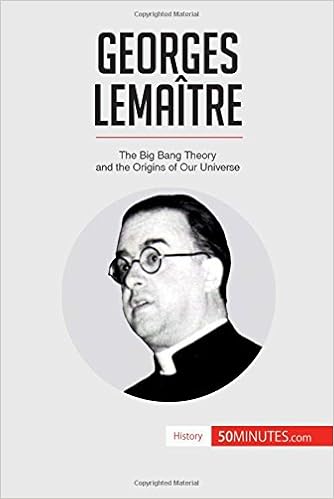
Fr. Georges Lemaître, who died in 1966, was a physicist and mathematician who is widely credited with developing the big bang theory to explain the physical origin of the universe.

Hubble’s law describes how objects in the expanding universe move away from each other with a velocity proportional to their distance apart.

[…]

Of Lemaître interest:

US HERE – UK HERE

And…

Evidence for God from Physics and Philosophy: Extending the Legacy of Monsignor George Lemaître and St. Thomas Aquinas (The University of Dallas Aquinas Lectures)

US HERE – UK HERE

Posted in Just Too Cool, Look! Up in the sky! | Tagged ,
2 Comments

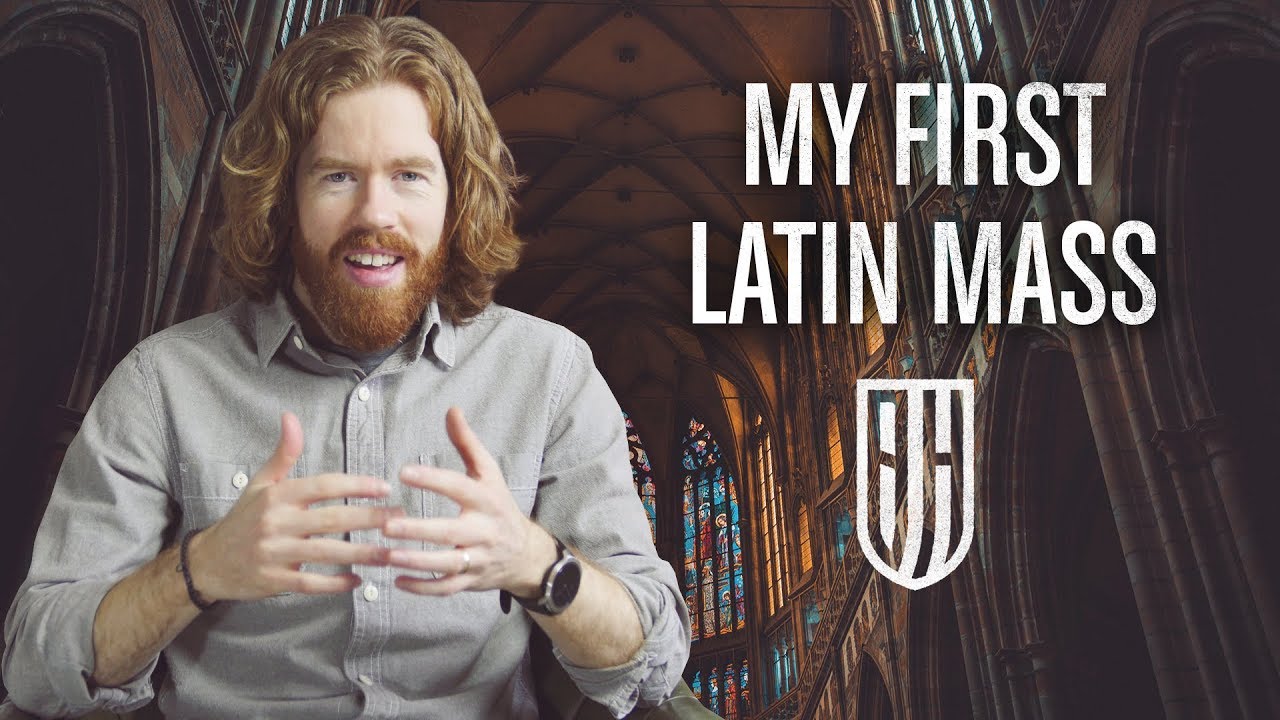
VIDEO: A reaction to a first Traditional Latin Mass

This is pretty interesting. Here is a thoughtful young man with his observations about participating at a Traditional Latin Mass for the first time.

YouTube thumbnailYouTube icon

Posted in Hard-Identity Catholicism, Liturgy Science Theatre 3000, SUMMORUM PONTIFICUM, The Coming Storm, The future and our choices | Tagged ,
4 Comments