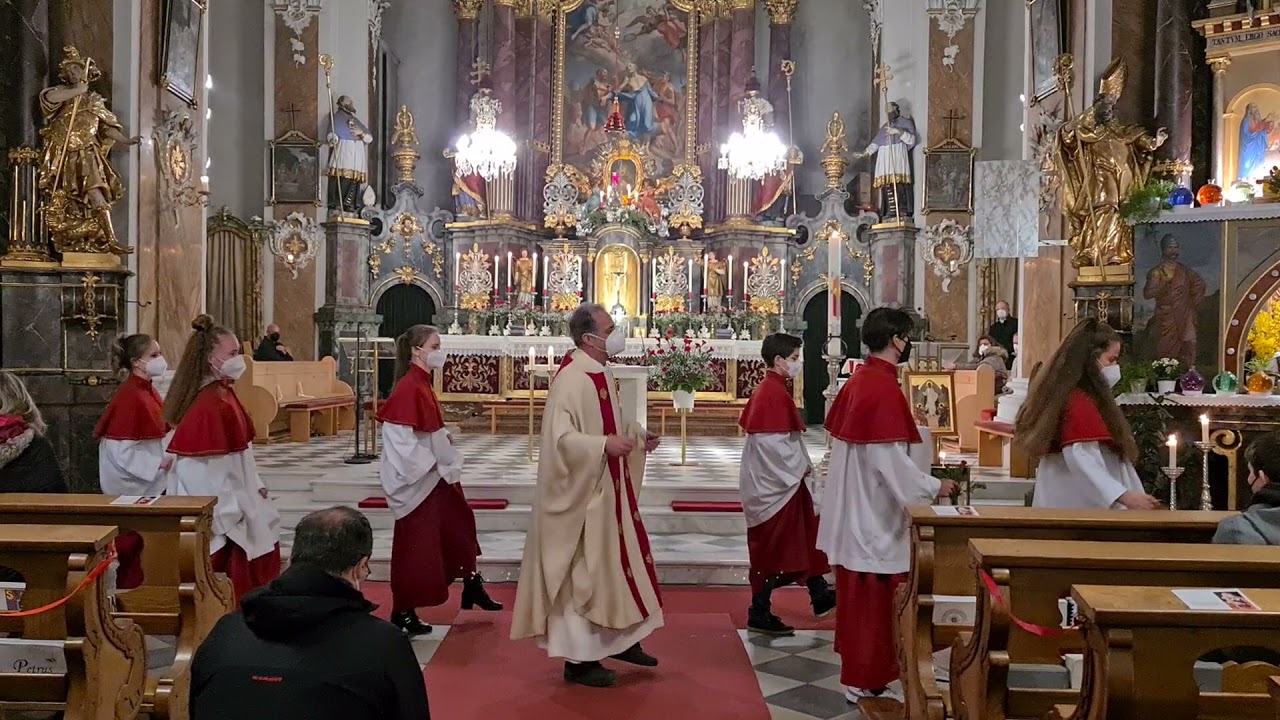
13 May 609: Dedication of the Roman Pantheon, “Santa Maria ad martyres”. An account of Boniface IV’s exorcism of the temple and the screaming of the demons.

In keeping with a couple of other recent posts about the supernatural battle going on around us, between the holy angels and apostate demons, here is something to chew on for your Catholic identity.

In 609 the Emperor Phocas gave the magnificent ancient Roman Pantheon, the temple to “all the gods” to the Church. Pope Boniface IV got rid of all the pagan stuff and consecrated it to the Mother of God and the martyrs on this day, 13 May.

Of course before anything is to be consecrated, it first had to be exorcized. This is especially the case with church buildings. And the Pantheon had been a pagan temple dedicated in reality to demons.

We have an account of the exorcism of the Pantheon before it was consecrated this day.  In Italian HERE.

“In 608 the Byzantine emperor Phoca gave [the temple] to Pope Boniface IV and there was organized an evocative ceremony to consecrate it to the Christian God.   On 13 May 609 a huge crowd gathered near the Pantheon to witness the event. Chronicles recount chaos and chilling screams that were felt from within: the pagan demons were aware of what was about to happen. The doors were thrown open and the Pope, in front of the entrance, began to recite the formulas for the exorcism. The screams from the idols increased in intensity, and the commotion deafened the ears of the onlookers.  Fear gripped the crowd and no one was able to stand on their feet, looking and hearing that terrible spectacle. Only Boniface IV resisted and, undaunted, prayed and consecrated the Pantheon to Christ. It is said that the demons left the ancient temple chaotically and with a great din, fleeing from the open “eye” of the dome or from the main doors.  Once the ceremony was over, the Pope dedicated the building to the Mad

onna dei Martiri, in memory, perhaps, of the many Christians killed in honor of those filthy idols … “

Messa in Latino also calls to mind a vision of Catherine Ann Emerich:

One of the visions of Bl. Catherine Emmerich was precisely about the exorcism and consecration of the Pantheon: “…  I saw again the whole ceremony of the consecration of the temple: the holy martyrs assisted with Mary at their head.  The altar was not placed in the middle, but was was up against the wall.  I saw carried into church more than 30 carts of holy bones.  Many of these were put into the walls.  Others could be seen, where there were round holes in the wall, closed up with something that looked like glass. (p. Schmoeger, ‘Vie d’Anne Catherine Emmerich’, tomo III, pp. da 69 a 71)

Battles with the Enemy are fought on many levels.  Let is not forget that demons are territorial and legalistic.  Once they claim a toehold, it requires effort to break their hold and get rid of them from places, things and persons.

And Pachamama is a DEMON and use of those demon idols was idolatry.

Posted in Our Catholic Identity, Save The Liturgy - Save The World | Tagged ,
6 Comments

“Our ordinary world, the one in which we work and fall in love and watch TV—it’s thinner than paper, and the demons pour through it in hordes.”

According to the Talmud, the demons are more numerous than we are. “They stand over us like mounds of earth surrounding a pit.” Rav Huna teaches that “each and every one of us has a thousand demons to his left and ten thousand to his right.” Abba Binyamin tells us that “if the eye had the power to see, no creature would be able to withstand the demons.” Fourteen centuries before Lovecraft, the Talmudists knew that what we see is only the tiniest portion of what’s really there, and the rest is monsters. Our ordinary world, the one in which we work and fall in love and watch TV—it’s thinner than paper, and the demons pour through it in hordes. This planet isn’t our home; it’s a hive. And though seeing the demons is fatal, the rabbis tell you how it may be done. Scatter a circle of fine black ashes around your bed at night, and in the morning, you will see their footprints, their claws like a rooster’s, their terrible number. What they don’t tell you is how you will ever sleep comfortably again.

[…]

click

At First Things this is the first paragraph of a review of an English translation of Dostoevsky’s Demons: A Novel in Three Parts.

I post this link not because I am entirely satisfied with the Jewish angelology, but because of something I wrote yesterday.

Yesterday I mused about the number of priests and bishops who truly believe in the spiritual battle being waged around us at every moment, who truly believe in the difference between the sacred and the profane.  Their actions and inactions, the manifest choices of many of the brethren, lead me to suspect that they don’t.   There is a strong current of Modernism even among the well-meaning and even devout, well-meaning, hard-working clerics.  They can hardly be blamed, given their formation and the domination of the world we live in.  They’ve been taught to set aside the supernatural in favor of the natural.

Anyway, I posted that paragraph because – I’ll admit – I want to scare you a little.

If I am not entirely on side with Jewish angelology, that snippet conveys something of the attitude we should have about demons.  Putting aside that disturbing imagery of their claw marks in the dust around your bed… yeah… they are around, alright.  They are all around.

It has been surmised that for every moving thing in the cosmos, there is an angel.  It is thought that a third of the angels fell and apostatized.   I’ve seen one estimate that there are 1080 atoms in the universe and atoms are not the smallest moving particles. The angelic realm is far vaster than our imaginings. I sometimes wonder if God didn’t make the material cosmos so big so as to give us little humans some inkling of eternity.

Demons are relentless.  They see everything.  They never forget.  They watch and learn about us from our outward actions and, like supernatural FBI profilers, know our ways and weaknesses.

Happily, demons are restrained by God.  They are weaklings compared to the Holy Angels who guard us.  They can be commanded to depart by priests.

The Devil, the Enemy, wants us to be prostrate with fear.  But joy is one of the Fruits of the Holy Spirit. If we don’t manifest joy, it may be that we should examine our consciences and get to confession soon. Yes, it is possible to get to confession for most people. Otherwise, try to make a perfect Act of Contrition.

Si vis pacem para bellum!

I think that bishops should exorcise their dioceses using the Rituale Romanum with Title XI Chapter III, the long St. Michael Prayer.  Lay people should not use this prayer.  Ever.

Bishops should give permission to all their priests to use the Rituale Romanum with Title XI Chapter III even publicly.  (They can use it now privately, but it helps to have the bishop’s explicit authority.  It must be done in Latin.  I have some help for that. HERE  For priests only.)

Priests should go around all the buildings of their parish grounds and bless them and the grounds.  They should go through every room of their rectories and every nook and cranny of their churches.  Say the exorcism (in Latin) and bless with Holy Water (properly blessed in Latin with the Rituale Romanum).  Even use incense if you won’t set off the alarms.

This should be done in Latin.  The Rituale Romanum states that the blessings and exorcisms must be done in Latin.

This is REAL, brothers.  And you priests and bishops are in this war whether you want to be or not.  To paraphrase, you might not be interested in demons, but demons are interested in you.   Get into the fray.

How do you, as the point at the top makes, ever sleep comfortably again?

GO TO CONFESSION!

Use sacramentals well.

Ask for the priest’s blessing.

Receive the Blessed Sacrament in the state of grace.

Say your prayers and perform good works.

Be confident in the Church and in Christ’s promises.

That’ll do it.

Posted in ¡Hagan lío!, "How To..." - Practical Notes, Be The Maquis, GO TO CONFESSION, Hard-Identity Catholicism, Save The Liturgy - Save The World, Si vis pacem para bellum! | Tagged
13 Comments

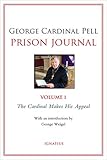
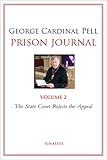
BOOK RECEIVED: Card. Pell’s – Prison Journal, Volume 2: The State Court Rejects the Appeal

I received the second volume of George Card. Pell’s “prison journal”.

I am nearly finished working my way through the first volume. It is inspiring.  I read a little each night and reflect on my own lot.  It’s humbling.

This man was falsely accused. The accusations were so obviously ludicrous that Card. Pell returned to Australia from Rome for the trial. However, anti-Catholic bias ran deep and he was eventually sentenced and spent over 400 days in prison until the land’s highest court overturned the previous sentence.

The Cardinal kept a good journal during his time in prison, noting the events of the days and also making comments on spiritual issues, readings in the Liturgy of the Hours, correspondence. Each entry ends with a prayer relevant to one of the points he made.

Like I said, it’s humbling.

Prison Journal, Volume 1

US HERE – UK HERE

Prison Journal, Volume 2: The State Court Rejects the Appeal

US HERE – UK HERE

I am thanking St. Joseph in a special way these days.  I sang his Litany today after Holy Mass.   I would like to help to spread devotion to him.  A good way to do that, is to clue you in about a marvelous book:

Consecration to St. Joseph: The Wonders of Our Spiritual Father by Fr. Donald Calloway

US HERE – UK HERE

St. Joseph is a mighty intercessor.  I’ve been blessed several times by his help in times of real need and stress.  I have zero doubt that he was the one who intervened, so concretely that it’s amusing.

I will also add another good book for priests.

And because the priest’s self-understand is tied to everything in the Church…

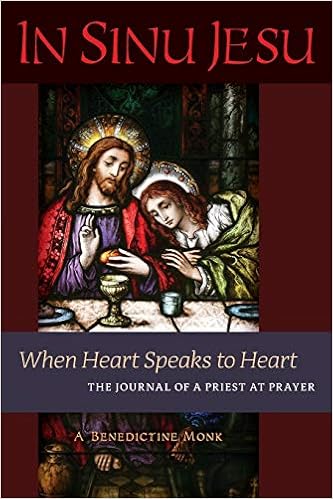
In Sinu Iesu

US HERE – UK HERE

Posted in REVIEWS | Tagged
1 Comment

Sign of the Times #8470

This from American Conservative:

The ‘Terrorist’ Chaplain by Rod Dreher

The Rev. Dr. Bernard Randall is a Church of England priest who worked as a chaplain at a private British school, one founded on the Evangelical tradition, where an LGBT activist gave a rousing talk on the importance of “smashing heteronormativity” and suchlike. In a subsequent sermon, he told students that there was nothing wrong with them if they disagree with LGBT ideology. The school reported him to the government’s anti-terrorism agency. The program to which he was reported is one in which people are encouraged to report those believed to be at risk of radicalism and terrorism. The agency ruled that the vicar was not a terrorism risk. But that wasn’t the end of the story.

[…]

You don’t suppose that the ideologues will make his life a living hell and continue to persecute him.  Do you?

Posted in Sin That Cries To Heaven, The Coming Storm, The future and our choices | Tagged
1 Comment

Daily Rome Shot 156

Posted in SESSIUNCULA | Tagged
1 Comment

“Quam pulchri super montes pedes adnuntiantis et praedicantis” – Ascension Thursday and Lordly Feet

There are many images of the Lord’s Ascension to heaven through history, and rightly so.  This is probably the greatest of all the Feasts of the Lord and for our own humanity.  Imagine!  Our humanity is seated – RIGHT NOW  – at the right hand of the Father.

The depictions I like the most are the medieval illustrations which show the Apostles, often with Mary, looking upward as a pair of lordly Feet at all that remains to be seen.

The Ascension of Christ, historiated initial ‘C’, Italy, 15C (State Library of Victoria, RARES 096 IL I)

Who better to turn to for some insight into this than Ratzinger?

From the site Ignatius Insight, providing an excerpt from “The Ascension: The Beginning of a New Nearness,” from Joseph Ratzinger’s Images of Hope: Meditations on Major Feasts (Ignatius Press, 2006 – UK HERE).  My emphases and comments:

You are surely familiar with all those precious, naïve images in which only the feet of Jesus are visible, sticking out of the cloud, at the heads of the apostles. The cloud, for its part, is a dark circle on the perimeter; on the inside, however, blazing light. It occurs to me that precisely in the apparent naïveté of this representation something very deep comes into view. All we see of Christ in the time of history are his feet and the cloud. His feet—what are they?

We are reminded, first of all, of a peculiar sentence from the Resurrection account in Matthew’s Gospel, where it is said that the women held onto the feet of the Risen Lord and worshipped him. As the Risen One, he towers over earthly proportions. We can still only touch his feet; and we touch them in adoration. Here we could reflect that we come as worshippers, following his trail, close to his footsteps. Praying, we go to him; praying, we touch him, even if in this world, so to speak, always only from below, only from afar, always only on the trail of his earthly steps. At the same time it becomes clear that we do not find the footprints of Christ when we look only below, when we measure only footprints and want to subsume faith in the obvious. The Lord is movement toward above, and only in moving ourselves, in looking up and ascending, do we recognize him.

When we read the Church Fathers something important is added. The correct ascent of man occurs precisely where he learns, in humbly turning toward his neighbor, to bow very deeply, down to his feet, down to the gesture of the washing of feet. It is precisely humility, which can bow low, that carries man upward. This is the dynamic of ascent that the feast of the Ascension wants to teach us.

Let’s have a few more, animi caussa!

From the Parisian Missal

With footprints on his blasting off pad.

And there is the more, “It’s a bird!  It’s plane!” style.

Note the reactions…

Getting a helping hand.  Christ is carrying a scroll.  What could be written on it?  It must mean something.

Here’s 15th c. Flemish version where we see Christ getting to the right hand of the Father.  Nice!

Posted in SESSIUNCULA | Tagged ,
10 Comments

ASK FATHER: Is Mass valid if it is offered in a desecrated place? Wherein @fatherz rants.

From a reader…

QUAERITUR:

After a black mass or an occult rite occurs that consecrates the sanctuary of a Catholic Church to Lucifer (heaven forbid), but before that sacred space has been reconsecrated and restored for Catholic use, what would be the consequences of a Mass that was celebrated in that same sanctuary? Would the Mass still be valid?

Were a church to be mistreated like that, desecrated, before the space is used for liturgical worship again it ought to be re-consecrated.

If, by chance, that doesn’t happen, re-consecration, and Mass is celebrated in that place, there is no question that the Mass would be valid.

The true celebrant of every Mass is the High Priest, Jesus, Son of God.  Christ is not thwarted by the “Prince of this world”.  As the Lord says, the Enemy has nothing on Him (John 14:30).

When the ordained priest, alter Christus, acting in Christ’s person, in persona Christi, says the words of consecration over bread and wine, the wonderous change of transubstantiation takes place.   The two-fold consecration separates the Body and Blood.  The priest consumes both species of the Eucharist.  The Sacrifice is renewed.

There is nothing that the enemy can do to change that or thwart that, short of some sort of demonic party trick to distract the priest.

The Mass, even in a desecrated place, would be valid.

I am more and more concerned about the lack of awareness that many Catholic priests and bishops seem to have about the supernatural battle that is being waged around us and about the real difference between, for example, invocative and constitutive blessings, the transcendent and immanent, the sacred and the profane.

There are sacred – sacred – things, places and people.   Sacred means that they have been removed by constitutive blessings and by consecrations from the realm of the “Prince of this world” and handed over to the King.  Sacred does not necessarily mean “better” in a worldly sense.   Ordination to the priesthood, which makes a man a sacred person, doesn’t confer on him greater intelligence or strength, etc.  Sacred means that the person (priests and consecrated religious) or places (churches, cemeteries) or things (chalices, rosaries, vestments, bells, etc.) are now set apart for the service of God.

One of the dire effects of Modernism that pervades every level of the Church right now, involves a need constantly to try to reduce the supernatural to the natural, to discount the sacred and bring it into the profane or secular.  “Profane”, as an opposite of sacred, doesn’t mean “bad”.  It means “not sacred”, in the sense that it is not consecrated.  It still belongs to the world.  It is “pro+fanum … outside the fanum, the temple“.   Something that is sacred is dedicated to the service of God.  The profane is still under the domination of the “Prince”.  That doesn’t mean that thing is “evil”.  And there are sacred persons and places and things that are used for evil purposes.  The sad horror is that living sacred beings, such as priests who do not lose their consecration, can be true agents of evil… a horrible distortion of the sacred.  Misuse of the sacred is “profanation”.

Sometimes when I look around at what is going on, I read the news about churchy issues, I wonder if any of the movers and shapers have a sense anymore – if they had it at all – of the spiritual realm and the battle that is perpetually going on, between the faithful holy angels and the fallen apostate angels.  I look at how Mass is celebrated, consider the music and the vestments and the comportment of all involved (especially manifested in the ars celebrandi of the priest or bishop) and wonder if they have any notion of the sacred and the profane, the transcendent and immanent.

Quite a lot of Catholics today are mired in what might be called Immanentism Lite.  It’s not that they deny the transcendent.  They just don’t ever think about it.  If pushed, they will sort of get the idea that there is a difference.  But they’ve never been led to think about it.  Why would they?

Think about what they see in their churches on Sundays, the catechesis they had, the sermons they’ve heard, the news stories about corrupt priests and bishops, mad and even plainly idolatrous antics at the highest levels.

Do they get a sense of the sacred from all of that?

YouTube thumbnailYouTube icon

No wonder Traditional Catholics are the most marginalized demographic in the Church.    They and what they want give a large number of our leaders the willies: they fear what they don’t grasp.

There is obviously a spectrum of awareness of the sacred and the profane, transcendent and immanent.

Back to the question.

Would Mass be valid in a church so desecrated?  Yes.  However, lingering problems would more than likely remain, probably to manifest themselves “sideways”, as it were, in and around the place.

This would be the case if the church were tiny and humble St. Ipsidipsy in Tall Tree Circle or St. Peter’s Basilica on the Vatican Hill.

Posted in "How To..." - Practical Notes, ASK FATHER Question Box, Hard-Identity Catholicism, Priests and Priesthood, Save The Liturgy - Save The World, The Drill, Wherein Fr. Z Rants | Tagged , ,
14 Comments

ASK FATHER: “Can a priest say the Latin Mass if he doesn’t know Latin formally?”

From a reader…

QUAERITUR:

Can a priest say Latin mass if he doesn’t know Latin formally?

Message:
For instance, could a Novus Ordo priest be convinced to do a Low Mass even though he is not fluent in Latin? By reciting the Latin?

Context: was going to ask my parish school to do Low Mass and Leo XIII prayers for the school children.

Say what you want about the late Card. Egan of New York, but he was indisputably a good canonist and an even better Latinist.

When he commented on Benedict XVI’s Summorum Pontificum in 2007, Egan – not a friend of Tradition – wrote that:

Priests who choose to celebrate Mass in the “extraordinary” form must have a sufficient knowledge of the Latin language to pronounce the words correctly.  

This is excellent.  It applies the proper interpretive principals.  A priest does not have to be an expert Latinist.  He must have sufficient knowledge to pronounce the words.  That is what is wrapped up in idoneus along with proper faculties: idoenus points to minimum qualifications, not to expertise.

Let’s use an analogy.  Say there is a priest who does not speak Hmong fluently, but he has learned to say the texts of the Mass in Hmong.  Should he not be allowed to say the Novus Ordo Mass for the Hmong community because he is not fluent?  Say that they want the Traditional Latin Mass and he has someone who will translate his brief sermon into Hmong with proper transliteration.  Should he not be allowed to preach?

So, a priest whose knowledge of Latin is not all that strong, but who is able to pronounce it properly, can use the 1962 Missale Romanum.

Fathers.  Put on your Big Boy Underwear and learn your Rite!

If little boys can learn to pronounce the Latin prayers and memorize them, so can a grown up Roman Catholic priest.

Posted in Canon Law, Liturgy Science Theatre 3000, PRAYERCAzT: What Does The (Latin) Prayer Really Sound L, Save The Liturgy - Save The World | Tagged
9 Comments

The Lord’s Ascension, Beans, and You

I so very much wanted to be in Rome this month.  My anniversary is coming up.  The strawberries and artichokes are around, along with broad beans.

We have lovely customs in our wonderful Roman Catholic Church, including special blessings on certain feast days, often tied to the changing of the seasons… in Rome, that is.  It’s the Roman Church, after all.

Tomorrow, the Feast of the Ascension of the Lord, was and is decorated with the opportunity to bless beans.

In Rome at this time of year the “broad beans” are usually at their peak. Broad beans are best enjoyed simply with pecorino cheese and cold white wine.  The combination of which is a material proof of God’s love.

The connection of this time of year in the Roman calendar with beans is ancient indeed.  Remember: I am not talking here about a certain attention seeking, bomb-throwing sociologist.  I mean the vegetable.  Although… the two can often produce similar effects.

During May in ancient Rome the master of the house would walk around the dwelling on the nights of the Lemuria (9,11, 13) waving beans to ward of evil spirits.  On the Kalends of June (1 June) there was a pagan feast of the Sacrum Carnae Deae when beans and bacon were offered in sacrifice and consumed.  In fact, the June Kalends were called Kalendae Fabariae.  Latin faba is, of course, “bean”, and the Italian is still the same, “fave”.  The essentials don’t change much.  For this feast the ancient Romans ate a mess of beans and bacon.  Any excuse, right?  In his Fasti the poet Ovid writes of beany blessings:

Pinguia cur illis gustentur larda Kalendis
Mixtaque cur calido sit faba farre, rogas?
Prisca dea est, aliturque cibis quibus ante solebat,
Nec petit adscitas luxuriosa dapes.

I enjoy Ovid… it just rolls and rolls out so effortlessly.  In any event, beans and bacon were as big back then as they are now.  It’s amazing how consistent we are.  You get much of the same effect with your fave and pecorino cheese (salty fat).

And don’t forget the awe inspiring fave in tegame.

The the ancient Roman cookbook complied in the 4th c. and attributed to Apicius (US HERE – UK HERE), there are various bean and pea recipes. A good one.  HERE and HERE

Pisam Vitellianam sive fabam (Peas or Beans à la Vitellius)

Pisam coques lias. teres piper, ligusticum, gingiber, et super condimenta mittis vitella ovorum, quae dura coxeris, mellis uncias III, liquamen, vinum et acetum. haec omnia mittis in caccabum et condimenta quae trivisti. adiecto oleo ponis ut ferveat. condies pisam, lias, si aspera fuerit. melle mittis et inferes.

Peas or beans with yolks are made thus: cook the peas, smoothen them; crush pepper, lovage, ginger, and on the condiments put hard boiled yolks, ounces of honey, also liquamen, wine and vinegar; mix and place all in a sauce pan; the finely chopped condiments with oil added, put on the stove to be cooked; with this flavor the peas which must be smooth; and if they be too harsh in taste add honey and serve.

If you don’t have a lot of liquamen, use garum (or substitute colatura or even Vietnamese fish sauce, which is similar).

A Bean Blessing is not, alas, in the Rituale Romanum, but another blessing, for any sort of food, can be used.  Bring lots of beans, perhaps along with bacon, to Father and ask him to bless them.  Remember that the Rituale says that blessings are to be done in Latin or they are invalid.  Sorry…I’m not making that up.

I’ll give the Latin below.  The intro is familiar.  In the bean blessing I made plurals and used an adjective rather than genitive.

P: Our help is in the name of the Lord.
All: Who made heaven and earth.
P: The Lord be with you.
All: May He also be with you.

Let us pray.

Bene+dic, Domine creaturas istas fabales, ut sint remedium salutare generi humano: et praesta per invocationem tui sancti nominis; ut, quicumque ex eis sumpserint, corporis sanitatem et animae tutelam percipiant.  Per Christum Dominum nostrum.

Lord, bless + this creature, [beans – “beany creatures”)], and let it be a healthful food for mankind. Grant that everyone who eats it with thanksgiving to your holy name may find it a help in body and in soul; through Christ our Lord.

All: Amen.

It is sprinkled with holy water.

There is a separate blessing for bacon (“lard”… ascension of the lard?):

P: Our help is in the name of the Lord.
All: Who made heaven and earth.
P: The Lord be with you.
All: May He also be with you.

Let us pray.

Bene+dic, Domine, creaturam istam laridi, ut sit remedium salutare generi humano: et praesta per invocationem tui sancti nominis; ut, quicumque ex eo sumpserint, corporis sanitatem et animae tutelam percipiant.  Per Christum Dominum nostrum.

Lord, bless + this creature, lard, and let it be a healthful food for mankind. Grant that everyone who eats it with thanksgiving to your holy name may find it a help in body and in soul; through Christ our Lord.

All: Amen.

It is sprinkled with holy water.

I hope you will all be “full of beans” for this Feast of the Ascension of the Lord!

Fr. Hunwicke once had a fun post about Ascension Beans! HERE

He includes the blessing for grapes… “Benedic +, Domine, hos fructos novos vineae…”.

The Ritual has blessings for all sorts of food items, such as bread and pizza or cake, beer, cheese and butter, birds, eggs, lamb, oils, whatever other food (ad quodcumque comestibile).


Posted in "How To..." - Practical Notes, Fr. Z's Kitchen, Lighter fare |
4 Comments

REMINDER: Ascension THURSDAY – usually Holy Day of Obligation

It ought to be clear to everyone that THURSDAY 13 May is the Ascension of the Lord.  THURSDAY is Ascension… not Sunday.  There really is no such thing as Ascension Thursday Sunday.  It ought to be either Sunday after Ascension (TLM) or 7th Sunday of Easter (NO).


In many places, diocesan bishops are ending their dispensations from Sunday and Holy Day Mass participation.   In other words, in most places people were not obliged to attend Mass on Sundays, etc., because of the CCP Virus which has resulted in ongoing COVID Theater.   Bishops here and there are ending that dispensation.  That means that, where you are, you may be once again obliged to attend Holy Mass on Sundays and Holy Days of Obligation.

Ascension Thursday is – in normal circumstances – a Holy Day of Obligation.   All Sundays are Holy Days of Obligation.

You should check in your local diocese to see what the dispensation situation is.  Has the obligation been restored?   Find out.


Posted in "How To..." - Practical Notes, Canon Law, Liturgy Science Theatre 3000 | Tagged
8 Comments