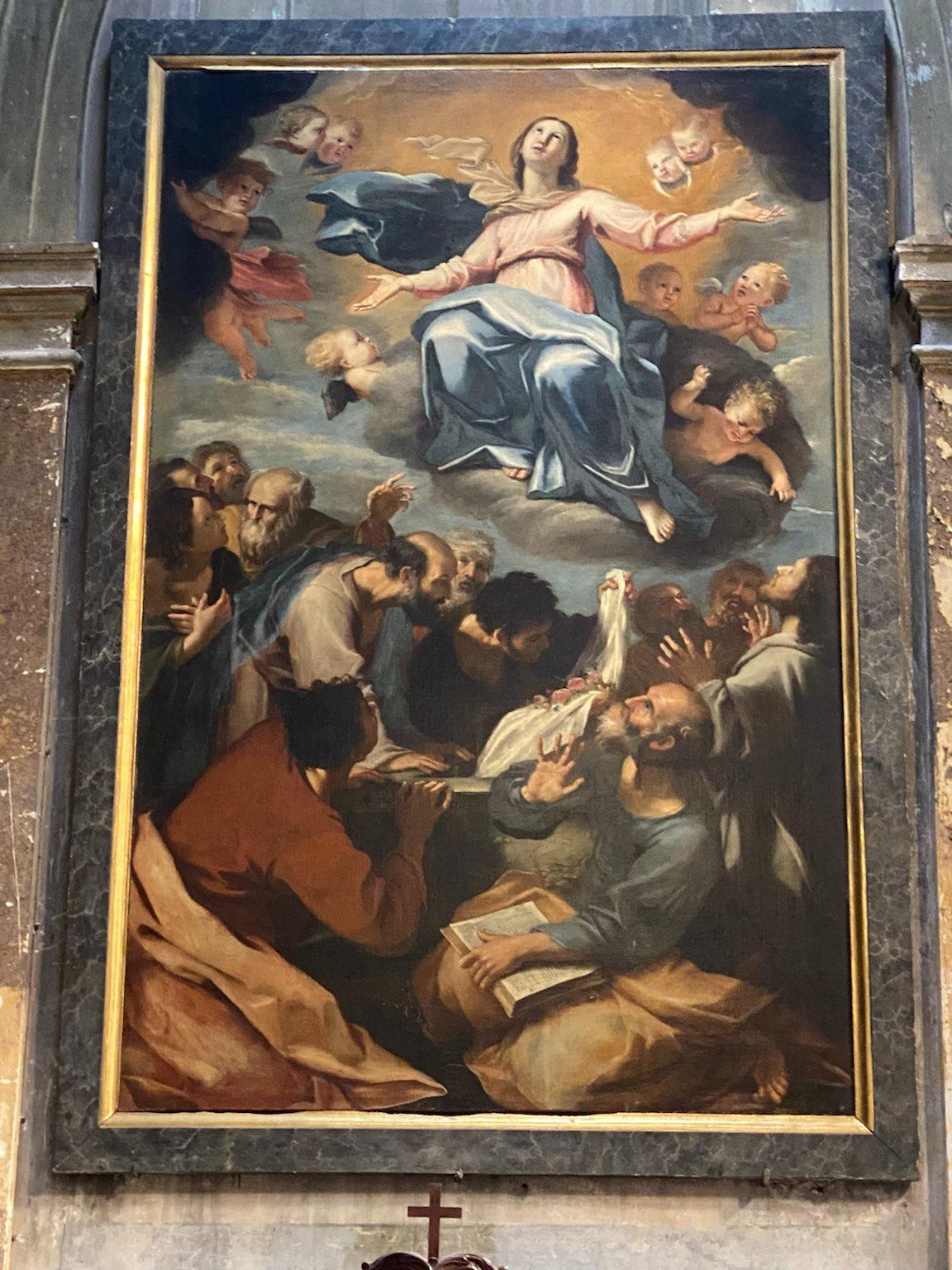
VIDEO: 1950 – Pius XII infallibly proclaims the Assumption of the Blessed Virgin Mary

In 1950 my late pastor, Msgr. Schuler, was in Rome on a Fulbright working on the manuscripts of Giovanni Maria Nanino, the successor of Palestrina for the Sistine Chapel.  He had great stories about being a priest in Rome in that Holy Year and, specifically, of the Proclamation of the Dogma of the Assumption.

It was a different world.  Think about it: the war had ended just 5 years before.

Posted in Our Solitary Boast | Tagged
2 Comments

Rome Shot 247

Photo by The Great Roman™

UPDATE YOUR LINK!

Posted in SESSIUNCULA | Tagged
Leave a comment

A small dose of dystopian situational awareness

Dip the tip of your finger into a small dose of dystopian situational awareness.

Looking Backward at Stay Safe.

I don’t even want to post a teasing excerpt.  Just read it.  717 words.  About 2 and a half minutes.

Posted in The Coming Storm, The future and our choices | Tagged ,
8 Comments

With the latest attack on the roots of our Catholic identity the Church is one step closer to becoming a punchline. Wherein Fr. Z rants.

From Le Figaro via National Catholic Register… with my emphases and comments… by the great Robert Card. Sarah.

On the Credibility of the Catholic Church

Doubt has taken hold of Western thought. Intellectuals and politicians alike describe the same impression of collapse. Faced with the breakdown of solidarity and the disintegration of identities, some turn to the Catholic Church. [If there were ever a time for the Church to be coherent in her messaging….] They ask her to give a reason to live together to individuals who have forgotten what unites them as one people. They beg her to provide a little more soul to make the cold harshness of consumer society bearable. When a priest is murdered, everyone is touched and many feel stricken to the core. [If you didn’t know, a priest in France was recently murdered by an (illegal?) immigrant who also set fire to the Cathedral of Nantes last year.]

But is the Church capable of responding to these calls? Certainly, she has already played this role of guardian and transmitter of civilization. At the twilight of the Roman Empire, she knew how to pass on the flame that the barbarians were threatening to extinguish. But does she still have the means and the will to do so today?  [It’s not looking good.  Not when people like Jeffrey Sachs are on the Vatican short list and the body of Chinese Catholics have been sacrificed to Mammon.]

At the foundation of a civilization, there can only be one reality that surpasses it: a sacred invariant. Malraux noted this with realism: “The nature of a civilization is what gathers around a religion. Our civilization is incapable of building a temple or a tomb. It will either be forced to find its fundamental value, or it will decay.”

Without a sacred foundation, protective and insuperable boundaries are abolished. An entirely profane world becomes a vast expanse of quicksand. [This is why there cannot be a “state Church”.] Everything is sadly open to the winds of arbitrariness. In the absence of the stability of a foundation that escapes man, peace and joy — the signs of a long-lasting civilization — are constantly swallowed up by a sense of precariousness. The anguish of imminent danger is the seal of barbaric times. Without a sacred foundation, every bond becomes fragile and fickle.  [At this point you should be chanting Lex Orandi… Lex Credendi… Lex Orandi… Lex Credendi…. Save The Liturgy… Save The World…Save The Liturgy… Save The World….] 

Some ask the Catholic Church to play this solid foundation role. They would like to see her assume a social function, namely to be a coherent system of values, a cultural and aesthetic matrix. But the Church has no other sacred reality to offer than her faith in Jesus, God made man. Her sole goal is to make possible the encounter of men with the person of Jesus. Moral and dogmatic teaching, as well as mystical and liturgical patrimony, are the setting and the means of this fundamental and sacred encounter. Christian civilization is born of this encounter. Beauty and culture are its fruits.  [Change the setting and you change the encounter.]

In order to respond to the world’s expectations, the Church must therefore find the way back to herself and take up the words of Saint Paul: “For I resolved to know nothing while I was with you except Jesus Christ, and Jesus crucified.” She must stop thinking of herself as a substitute for humanism or ecology. These realities, although good and just, are for her but consequences of her unique treasure: faith in Jesus Christ.

What is sacred for the Church, then, is the unbroken chain that links her with certainty to Jesus. A chain of faith without rupture or contradiction, a chain of prayer and liturgy without breakage or disavowal. [What was that, again?] Without this radical continuity, what credibility could the Church still claim? In her, there is no turning back, but an organic and continuous development that we call the living tradition. The sacred cannot be decreed, it is received from God and passed on.

This is undoubtedly the reason for which Benedict XVI could authoritatively affirm:

“In the history of the liturgy there is growth and progress, but no rupture. What earlier generations held as sacred, remains sacred and great for us too, and it cannot be all of a sudden entirely forbidden or even considered harmful. It behooves all of us to preserve the riches which have developed in the Church’s faith and prayer, and to give them their proper place.”

At a time when some theologians are seeking to reopen the liturgy wars by pitting the missal revised by the Council of Trent against the one in use since 1970, it is urgent to recall this. If the Church is not capable of preserving the peaceful continuity of her link with Christ, she will be unable to offer the world “the sacred which unites souls,” according to the words of Goethe.

Beyond the quarrel over rites, the credibility of the Church is at stake. If she affirms the continuity between what is commonly called the Mass of St. Pius V and the Mass of Paul VI, then the Church must be able to organize their peaceful cohabitation and their mutual enrichment. If one were to radically exclude one in favor of the other, if one were to declare them irreconcilable, one would implicitly recognize a rupture and a change of orientation. [NB] But then the Church could no longer offer the world that sacred continuity, which alone can give her peace. By keeping alive a liturgical war within herself, the Church loses her credibility and becomes deaf to the call of men. Liturgical peace is the sign of the peace that the Church can bring to the world.

What is at stake is therefore much more serious than a simple question of discipline. If she were to claim a reversal of her faith or of her liturgy, in what name would the Church dare address the world? Her only legitimacy is her consistency in her continuity.

Moreover, if the bishops, who are in charge of the cohabitation and mutual enrichment of the two liturgical forms, do not exercise their authority to this effect, they run the risk of no longer appearing as shepherds, guardians of the faith they have received and of the sheep entrusted to them, but as political leaders: commissars of the ideology of the moment rather than guardians of the perennial tradition. They risk losing the trust of men of good will.

A father cannot introduce mistrust and division among his faithful children. He cannot humiliate some by setting them against others. He cannot ostracize some of his priests. The peace and unity that the Church claims to offer to the world must first be lived within the Church.

In liturgical matters, neither pastoral violence nor partisan ideology has ever produced fruits of unity. The suffering of the faithful and the expectations of the world are too great to engage in these dead-end paths. No one is too much in the Church of God!

There is great depth here.

Card. Sarah gives voice to something I have written about for many years now, in the wake of Benedict XVI’s “Emancipation Proclamation” Summorum Pontificum.

I think Benedict had a Marshall Plan for the Church in the “modern world”.  (BTW… the young Ratzinger was a critic of Gaudium et spes).

After the devastation WWII these USA helped to rebuild Europe in order to foster trade and support a bulwark against Communism.  In the wake of the devastation caused by a hermeneutic of discontinuity after the Second Vatican Council, Pope Benedict tried to revitalize our Catholic identity as a bulwark against the dictatorship of relativism.

The renewal of our Catholic identity requires a realigning of the Roman Rite.  How we pray has a reciprocal relationship with what we believe.  This realignment requires the Traditional Roman Rite.  There is no way around it.  We have to renew our liturgical worship in order to be who we are within Holy Church, so that we can have an impact, as Catholic disciples of the Lord, on the world around us.

The Traditional Roman Rite is an antidote to the secularization of the Church.

Find a bishop or priest who resists, forbids the Traditional Rite, and you find a priest or bishop for whom the Church is an NGO.

If we don’t know who we are, no one will pay attention to us or what we might have to offer in the public square.  If we are incoherent, for example giving Communion to radically pro-abortion Catholics, why should anyone pay attention to anything we have to say on any other issue?  Bishops have squandered out moral capital for decades.

Given the demographic disaster that we face, the sinkhole opening up under the Church, we have to face the fact that changes are necessary. Great swathes of “Catholics” will soon disappear.  Those left will be of a traditional leaning together with converts from Evangelical backgrounds and well-rooted charismatics who are enthusiastic about their Faith.  There will be some frictions, but these groups will find each other out of need.  The result, I predict, will be amazing.

The Traditional Latin Mass is the key to the future.

It must become widespread and frequent and beautifully executed.  All attempts to sideline or repress it must be met with firm, humble resolve and resistance.

We need all the devotions and other rites as well.

WE ARE OUR RITES.

With the latest attack on the roots of our Catholic identity, Traditionis custodes, the Church is one step, one giant leap, closer to becoming a punchline.

The revitalization for the Church through a restoration of our Catholic identity will require nearly heroic courage from priests.  An alarmed Enemy is fighting back and fighting hard.

Priests will need to work harder than ever to acquire tools that they were systematically cheated out of in their formation.  They will be intimidated.  They will fear that they can’t do it.  At first they may have to quietly seek out instruction and then lock their doors to practice. Samizdat. They can do it, but it will take hard work and support from others.  Graces will be given in this undertaking, because the connection of the priest and the altar is fundamental to the Church’s life.  No other thing that the priest does is more important.

Priests must also be willing to suffer attacks from libs, many of whom are not malicious but who are blinkered and nearly brainwashed.   There is a parallel, I think, between the way some people in the Church perceive every wafting word from the Umbilicus Mundi in Rome and the way some people wear their COVID masks while riding alone in their cars or riding bicycles.   There is a parallel between the way some people would jail those who don’t want “the jab” and the animus of some in the Church for the Traditional Mass.

It all goes to demonstrate how important it is that we shed unhealthy papalotry and preserve our liturgical worship.

The near future is going to require nearly heroic courage and a spirit of sacrifice from lay people who must support their priests and encourage them in projects that they will be reluctant to undertake.  Lay people must also be ready to engage in their parishes and with their priests on a new level.   Remember what  Fulton Sheen said:

“Who is going to save our Church? Not our bishops, not our priests and religious. It is up to you, the people. You have the minds, the eyes, and the ears to save the Church. Your mission is to see that your priests act like priests, your bishops act like bishops.”

Remember, friends, that we are our rites.  As the Church prays, so do we believe and live.

Be a CUSTOS.  HERE

Posted in Be The Maquis, Hard-Identity Catholicism, SUMMORUM PONTIFICUM, The Coming Storm, The future and our choices, Traditionis custodes, Wherein Fr. Z Rants | Tagged , ,
19 Comments

Just For Nice

This is wonderful….

Posted in Lighter fare |
2 Comments

Chilean Archbishop “forbids” Traditional Mass by internet. HA! HA! HA! HA! HA! HA! HA! HA! HA! HA! HA! HA!

This is just lunatic stuff. Do you suppose he still uses a rotary dial phone?

All the more reason for priests everywhere to start live streaming their TLM.

Posted in ¡Hagan lío!, Be The Maquis |
16 Comments

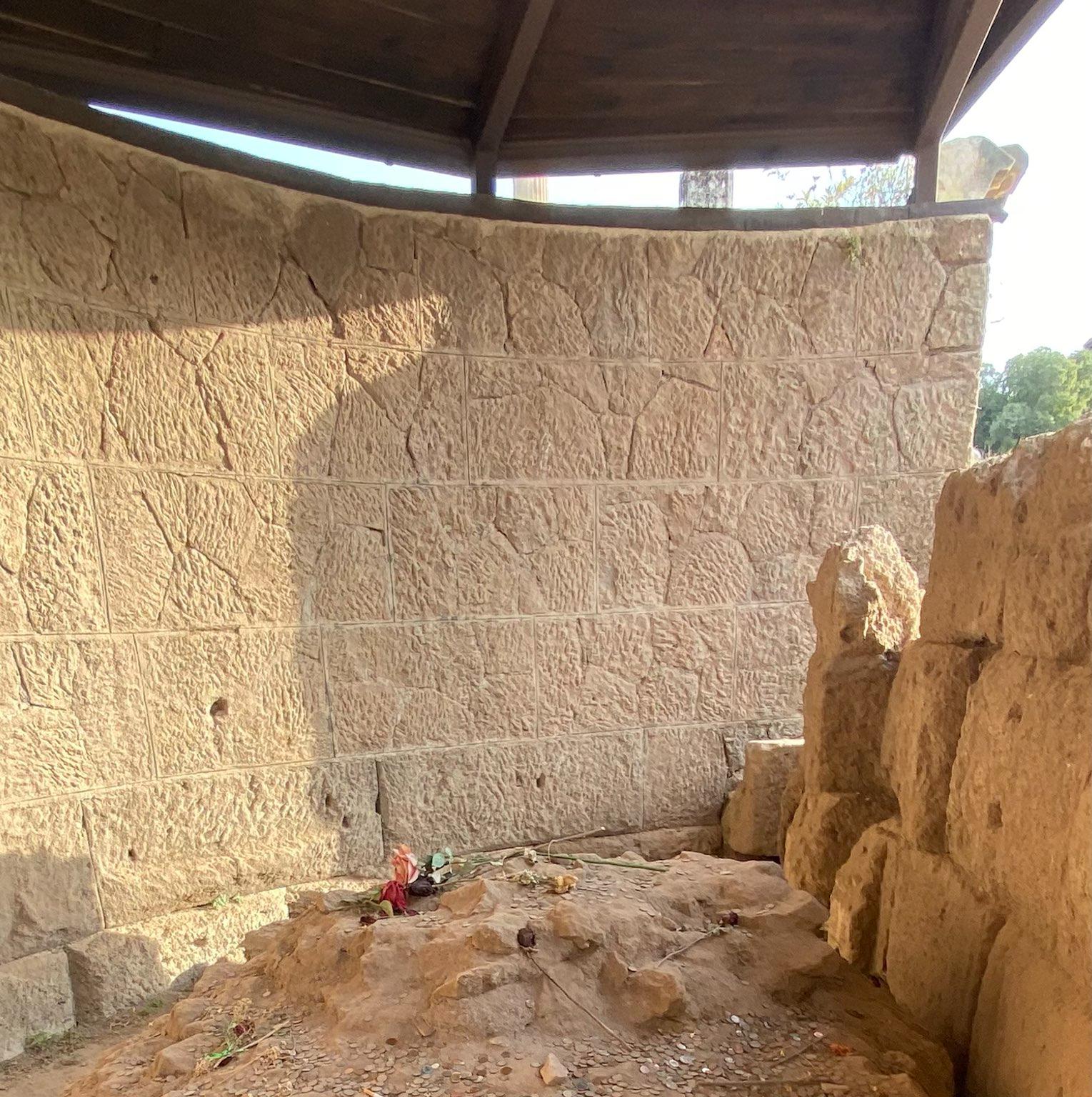
Rome Shot 246

Photo by The Great Roman™

click

Posted in SESSIUNCULA | Tagged
2 Comments

ASK FATHER: May a Catholic elope?

From a reader…

QUAERITUR:

May a Catholic elope? Is this a valid marriage? If not, how did one correct it?

GUEST PRIEST RESPONSE: Fr. Tim Ferguson

May a Catholic elope? Presuming said Catholic has a paramour of the opposite gender, sufficient finances to pay for the bus fare, and a free afternoon, certainly!

May a Catholic elope and have it considered to be a true and valid marriage? That’s perhaps a bit more complicated.

Catholics understand that marriage is a contractual, covenantal arrangement. Catholics understand that, between baptized persons, marriage has been raised by Christ the Lord to the dignity of a sacrament. Catholics understand that a wedding – the sharing of consent between two persons to bring about their lifelong commitment – manifests a living symbol of God’s love for His people, Christ’s love for His Church, and a remedy for that soul-achingly angsty question asked by each and every human soul: despite our uniqueness, we were not made to be alone. Marriage – and the wedding that sets it off – is not “about the couple” despite what decades of Hollywood and Madison Avenue solons have attempted to say. Marriage takes place within the context of a community. It belongs to all of us. Your family, friends, colleagues, compadres, associates, well-wishers, fellow parishioners, and even a few disinterested strangers have a reasonable expectation that they will be included in the wedding, and allowed to bask in the effluent grace emanating from your act of matrimonial consent. It need not be a big, complicated, and expensive affair. Flowers are optional, as are an elaborate ball gown, a rented tuxedo, a harpist, professional photographer, silken bags of Jordan almonds, and diminutive tumblers with bells on their slippers.

Centuries of literature about elopement demonstrate that there are situations and circumstances where a marriage can be done in this manner, and sometimes there are circumstances that warrant it. Personally, I think those circumstances are quite rare. If your father would fly into a murderous rage at the thought of you daring to marry a Montague, perhaps running off to Friar Lawrence (though I’m not sure that barely turning 14 is a good time for making such a life altering decision). If your village elders rigidly refuse to allow persons with considerable melanin in the basal layer of their epidermis to marry persons with very little melanin in their epidermis, traveling to the next county where more reasonable laws prevail might be justified.

Regardless, for the marriage of a Latin Catholic to be valid, the couple will need to marry in the presence of at least two witnesses and a qualified minister of the Church. The law presumes that the couple will marry at their own parish church, or at least at the parish church of one of them (canon 1115). If not, the couple should get permission from their pastor to marry elsewhere. If the couple were to elope without seeking their pastor’s permission, the marriage would still be presumptively valid, if they marry in the presence of the pastor of the church where they wed, or in the presence of a priest or deacon delegated by that pastor. Most pastors aren’t going to take kindly to a couple simply showing up on the front porch asking to be wed – some form of marriage preparation is customary, and in some dioceses, legislated. Six months seems to be the common average. Marriage is not something to rush into.

If a couple has eloped without getting their marriage officiated by a priest or deacon who is qualified to do so (e.g.,, if they ran off and got married in Vegas by an Elvis impersonator), they will need to have their marriage regularized. See your local, friendly pastor for advice on the steps that need to be taken to fix the situation, as there may be particular wrinkles that need to be ironed out.

Posted in "How To..." - Practical Notes, ASK FATHER Question Box, HONORED GUESTS | Tagged ,
3 Comments

From Hell’s Bible: “Pope Francis Is Tearing the Catholic Church Apart”

Yesterday Hell’s Bible (aka New York Times) published an op-ed which is a cri de coeur about what is going on in the Church today.   Take this together with Damian Thompson’s recent podcast.  My emphases and comments.


OPINION
GUEST ESSAY

Pope Francis Is Tearing the Catholic Church Apart
Aug. 12, 2021

By Michael Brendan Dougherty

Mr. Dougherty, a senior writer at National Review, has written extensively about faith and the Roman Catholic Church.

In the summer of 2001, I drove up to Poughkeepsie, N.Y., to find what we called “the traditional Latin Mass,” the form of Roman Catholic worship that stretched back centuries and was last authorized in 1962, before the Second Vatican Council changed everything. Back then, conservative Catholics called people who sought it out “schismatics” and “Rad Trads.”

The Mass-goers there weren’t exactly a community; we were a clandestine network of romantics, haters of Pope John Paul II, people who had been jilted by the mainstream church [lots of those] and — I believe — some saints.

There I learned that the Latin language was not the only distinguishing feature of this form of worship. The entire ritual was different from the post-Vatican II Mass. It wasn’t a mere translation into the modern vernacular; less than 20 percent of the Latin Mass survived into the new.

It took me a month to adapt to its rhythm. But in that thick August air, the long silence before the consecration of the host fell upon my heart, like sunshine landing on the bud of prayer for the very first time.

Years later, Pope Benedict allowed devotees of this Mass to flourish in the mainstream of Catholic life, a gesture that began to drain away the traditional movement’s radicalism and reconcile us with our bishops. Today, it is celebrated in thriving parishes, full of young families.  [If he knows anything accurate about Traditional Catholics one would think that Francis wants the radicalism and breaks with bishops to return.  Otherwise, … why the brutality?]

Yet this Mass and the modestly growing contingent of Catholics who attend it are seen by Pope Francis as a grave problem. He recently released a document, Traditionis Custodes, accusing Catholics like us of being subversives. To protect the “unity” of the church, he abolished the permissions Pope Benedict XVI gave us in 2007 to celebrate a liturgy, the heart of which remains unchanged since the seventh century.

For those of us who travel long distances to participate in it, its perseverance is a religious duty. For the pope, its suppression is a religious priority. The ferocity of his campaign will push these young families and communities toward the radicalism I imbibed years ago in Poughkeepsie, before Benedict. It will push them toward the belief that the new Mass represents a new religion, one dedicated to the unity of man on earth rather than the love of Christ.

In the Latin Mass, the priest faces the altar with the people. It never had oddities, as you sometimes encounter in a modern Mass, like balloons, guitar music or applause. The gabby religious talk-show host style of priest is gone. In his place, a priest who does his business quietly, a workmanlike sculptor. By directing the priest toward the drama at the altar, the old Mass opens up space for our own prayer and contemplation.

In the years after Pope Benedict liberalized the old rite, parishes began to bring back the mystical tones of Gregorian chant, the sacred polyphony written by long-dead composers like Orlando Lassus and Thomas Tallis as well as contemporary composers like Nicholas Wilton and David Hughes.

These cultural offshoots of the Latin Mass are why, after Vatican II, the English novelists Agatha Christie and Nancy Mitford and other British cultural luminaries sent a letter to Pope Paul VI asking that it continue. Their letter doesn’t even pretend to be from believing Christians. “The rite in question, in its magnificent Latin text, has also inspired a host of priceless achievements in the arts — not only mystical works, but works by poets, philosophers, musicians, architects, painters and sculptors in all countries and epochs. Thus, it belongs to universal culture as well as to churchmen and formal Christians.”

But the Vatican Council had called for a revision of every aspect of the central act of worship, so the altar rails, tabernacles and baldachins were torn up in countless parishes. This ferment was accompanied by radical new theologies around the Mass. A freshman religious studies major would know that revising all the vocal and physical aspects of a ceremony and changing the rationale for it constitutes a true change of religion. Only overconfident Catholic bishops could imagine otherwise.

The most candid progressives agreed with the radical traditionalists that the council constituted a break with the past. [I recall that Karl Rahner thought it was the most important event since the Council of Jerusalem.] They called Vatican II “a new Pentecost” — an “Event” — that had given the church a new self-understanding. They believed their revolution had been stalled in 1968 when Pope Paul VI issued “Humanae Vitae,” affirming the church’s opposition to artificial contraception, and then put it on ice in 1978 with the election of Pope John Paul II.

To stamp out the old Latin Mass, Pope Francis is using the papacy in precisely the way that progressives once claimed to deplore: He centralizes power in Rome, usurps the local bishop’s prerogatives and institutes a micromanaging style that is motivated by paranoia of disloyalty and heresy. Perhaps it’s to protect his deepest beliefs.

Pope Francis envisions that we will return to the new Mass. My children cannot return to it; it is not their religious formation. Frankly, the new Mass is not their religion. [What an incredibly sad thing to read. I am right now pondering the amazing grace I was given to have come into the Faith and the Church at St. Agnes in St. Paul, MN during the pastorate of Msgr. Richard Schuler.   But so many Catholics had simply to suffer the lunacy of the 60’s-90’s without any relief, not even a decently celebrated Novus Ordo Mass.  It is incredible that people still go to Mass at all in some places.] In countless alterations, the belief that the Mass was a real sacrifice and that the bread and wine, once consecrated, became the body and blood of our Lord was downplayed or replaced in it. With the priest facing the people, the altar was severed from the tabernacle. The prescribed prayers of the new Mass tended never even to refer to that structure anymore as an altar but as the Lord’s table. The prayers that pointed to the Lord’s real presence in the sacrament were conspicuously replaced with ones emphasizing the Lord’s spiritual presence in the assembled congregation.

The prayers of the traditional Mass emphasized that the priest was re-presenting the same sacrifice Christ made at Calvary, one that propitiated God’s wrath at sin and reconciled humanity to God. The new Mass portrayed itself as a narrative and historical remembrance of the events recalled in Scripture, and the offering and sacrifice was not of Christ, but of the assembled people, as the most commonly used Eucharistic prayer in the new Mass says, “from age to age you gather a people to Thyself, in order that from east to west a perfect offering may be made.”

For Catholics, how we pray shapes what we believe. [And vice versa.] The old ritual physically aims us toward an altar and tabernacle. In that way it points us to the cross and to heaven as the ultimate horizon of man’s existence. By doing so, it shows that God graciously loves us and redeems us despite our sins. And the proof is in the culture this ritual produces. Think of Mozart’s great rendition of faith in the Eucharist: “Ave Verum Corpus” (Hail True Body).

The new ritual points us toward a bare table, and it consistently posits the unity of humankind as the ultimate horizon of our existence. In the new Mass, God owes man salvation, because of the innate dignity of humanity. Where there was faith, now presumption. Where there was love, now mere affirmation, which is indistinguishable from indifference. It inspires weightless ditties like “Gather Us In.” Let’s sing about us!

I believe the practice of the new Mass forms people to a new faith: To become truly Christian, one must cease to be Christian at all. Where the new faith is practiced with a zealous spirit — as in Germany now — bishops and priests want to conform the religion’s teaching to the moral norms of the nonbelieving society around them. When the new faith was young, after the council, it expressed itself in tearing up the statues, the ceremonies and religious devotions that existed before.

I don’t know if bishops will adopt Francis’ zeal to crush the Latin Mass. I don’t know how painful they are willing to make our religious life. If they do, they will create — or reveal — more division in the church. The old slogan of the traditional Latin Mass movement comes to mind: We resist you to the face.

I have faith that one day, even secular historians will look upon what was wrought after Vatican II and see it for what it was: the worst spasm of iconoclasm in the church’s history — dwarfing the Byzantine iconoclasm of the ninth century and the Protestant Reformation.

Pope Benedict had temporarily allowed us to begin repairing the damage. What Pope Francis proposes with his crackdown is a new cover-up.

Michael Brendan Dougherty, a senior writer at National Review and a visiting fellow for the social, cultural and constitutional studies division at the American Enterprise Institute, is the author of “My Father Left Me Ireland: An American Son’s Search for Home.”


I am interested in your reactions to this.

Meanwhile, become a CUSTOS!  HERE
Posted in Cri de Coeur, Traditionis custodes | Tagged
43 Comments

The Lord promised that Hell would not ultimately prevail. But….

Holy Mother Church is indefectible.  The Lord promised that Hell would not ultimately prevail.

He didn’t, however, promise that it wouldn’t prevail quite a lot.

He made no promises about the mighty Church in N. Africa or Asia Minor… or these USA… or Rome.

Take 18 minutes and listen to Damian Thompson’s sobering new podcast.

HERE

I am reminded of an answer I got from a bishop as we were relaxing after a conference where we were both speakers.   I asked him about the state of the Church and, as a follow up, what we had to do to reverse the situation.  His answers, in rapid response…

“TERRIBLE!”

“The first thing we have to do it stop blowing sunshine up everybody’s …..”


Posted in The Coming Storm, The future and our choices | Tagged
7 Comments