ASK FATHER: Can we Catholics observe Jewish feasts like Purim?

From a reader…

QUAERITUR:

I have a friend who, with his family, observe several of the historical Jewish holidays, including Purim which apparently is this week. In his defense, I don’t know exactly what they do to “observe” the holiday, but I don’t think they go so far as to attend a Jewish temple.

Is it appropriate for Catholics to observe such holidays? In the case of things like Purim and Hannukah, it seems they’re more in the nature of Jewish civic holidays, celebrating the victories of the Israelites over their enemies. But I’m also aware that there are usually aspects of the holidays that anticipate the coming of Christ, aspects that would surely be inappropriate for a Catholic to observe since we believe Jesus was the Christ.

As I write, Purim ends this evening.

Should Catholics observe Jewish holidays?  Good question.

Firstly, if there is some Christian feast on the Church’s calendar on some day when a Jewish feast occurs, then that’s a no brainer.  We give all things Catholic priority.

That said, our Church and Faith flowed and flows forth from what God in His providence wrought before.  I cannot find any reason why Catholics could not, for example, observe some Jewish custom on a Jewish feast day.

The Jewish festivals pointed backward to important events in salvation history and pointed forward to their fulfillment in the Lord’s life and mission.

Take, for example, Purim.

Purim is not one of those major festivals like Passover or Tabernacles, but it was a time of rejoicing, annually celebrated with traditions.  Purim celebrates how God, through Esther and her adoptive father Mordechai, saved the Jewish people from the hateful Hamman and the King during the Persian captivity.

It is probable that when the Lord went up to Jerusalem for a “feast of the Jews” in John 5, and when he healed a man at the Pool of Bethesda, it was Purim.  Coincidently, today in the Roman calendar for Ember Friday of Lent, the reading for Holy Mass in the traditional rite is about that very incident!  How the stars sometimes do line up.  I digress.

One of the customs of Purim is to read or sing the whole Book of Esther, which is called “the whole megillah (megillat – scroll)”.   Now you know where that phrase comes from. There are several “megillah books”, but Esther is probably the most associated with the word.

During the singing of the whole megillah, when the name of the evil Hamman is pronounced, the people often shout and make noise with noisemakers to blot out his name, a kind of damnatio memoriae.  There are some interesting Youtube videos of the singing of Esther that have this blotting out of “Hamman”.   For example, HERE, at synagogue in Tampa, they really get into it.  Check out about 1:30.

By the way, don’t be puzzled by the seemingly cheerful raucous music that introduce some of these Megillah Esther videos.  Purim is a time of serious partying.   There is a lot of dressing up in costumes and feasting.  We, however, are in Lent, so serious partying might not be how we honor old Purim.

Speaking of feasting, yes, it is Lent, but perhaps you could make Hammantaschen.  Today is a Friday of Lent, and an Ember Day to boot.  Today is not the best day to make and eat Hammantaschen.  However, even in Lent every Sunday is a little Easter.  Perhaps a couple of Hammantaschen after the family meal on the Lord’s Day would be in order.

Perhaps at Hanukkah a family might have, after taking care of the proper Christian ornaments and customs for Advent/Christmas a menorah.  Then one could explain to the kids about the rebuilding of the Temple and how the Temple represented the whole created cosmos, the lights of the great menorah being the seven known planets, the bronze water basin being the oceans, the great veil adorned with stars being the heavens, etc., and how Christ is the new High Priest in the heavenly temple renewing His offering to the Father so that we can have Mass simultaneously on thousands of altars.

In any event, I don’t see why we can’t take stock, from a Catholic perspective, ceteris paribus, of the Jewish Feasts which the Holy Family observed together.

Finally, knowing about the Jewish feasts, and how the Lord fulfills what they foreshadow is a super enrichment for our faith lives and our participation in our sacred liturgical worship.  Knowing, for example, that when the Lord road into Jerusalem before the spring feast of Passover, suddenly the people switched to singing the psalms from the autumn harvest festival of Tabernacles because they thought the Lord was going to go to the Temple as Davidic Priest and offer sacrifice.  Knowing that it was after the lighting of the enormous oil lamps, 70 feet tall candelabra, on the second night of Tabernacles is when Jesus, standing in the gold-covered Temple reflecting the flames across the city, said “I am the light of the world” (John 8:12), might be an enrichment of our Faith.

We must always give priority to our Catholic Christian identity.  But that doesn’t mean that we should be ignorant of or ignore the Jewish heritage of our magnificent God-guided family history.

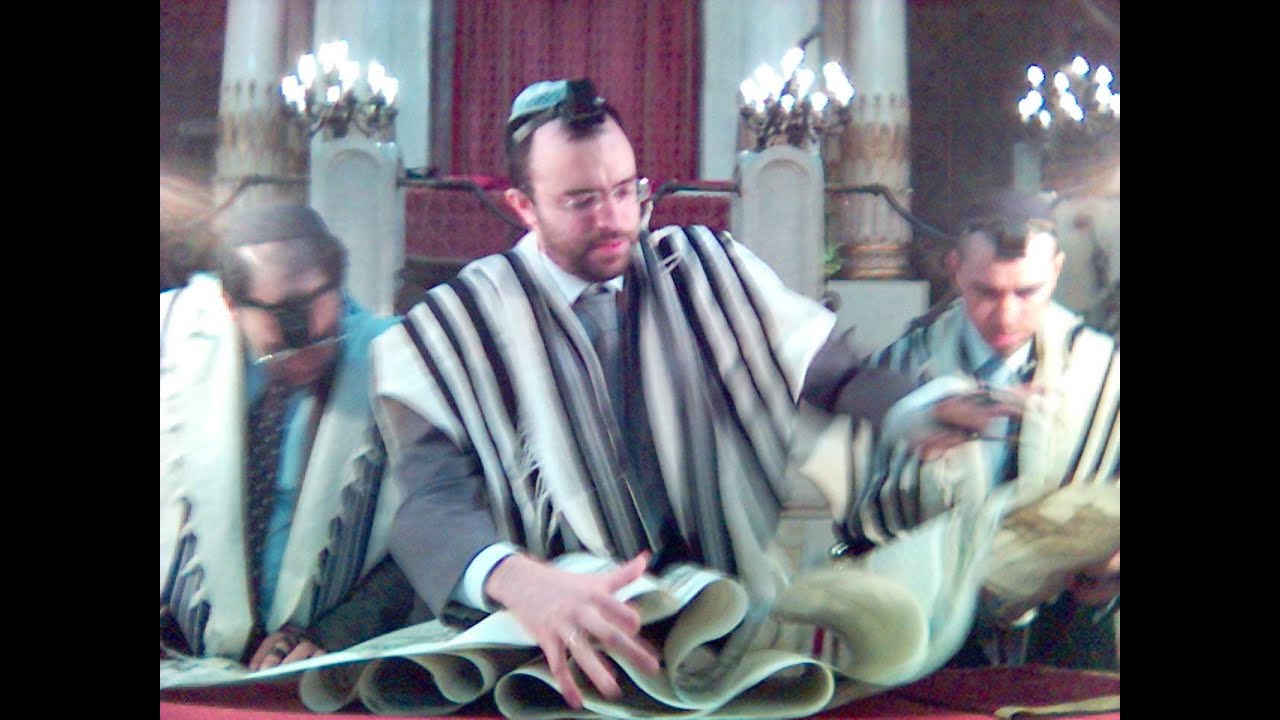
Here is a singing of Esther from the Synagogue in Rome (Hebrew with an Italian accent).  Chapter 3 starts at 12:35 or so and right after is a mention of the hated Hamman.
YouTube thumbnailYouTube icon


Posted in "How To..." - Practical Notes, ASK FATHER Question Box, Liturgy Science Theatre 3000, Our Catholic Identity |
10 Comments

Priest weeps at irreverence for Eucharist, tells people to receive on the tongue. Wherein Fr. Z rants.

From ChurchPop comes a video and article about a priest who, clearly reacting to some act(s) of irreverence in regard to the Blessed Sacrament, had enough of the sacrilege.  There is a video of him literally weeping and then explaining in Spanish that from now on Communion would be distributed on the tongue, while kneeling.

I have little doubt that this priest was immediately attacked by some parishioners who then probably complained to the chancery.  I have little doubt that great pressure and even threats were applied to get him to change his mind and back down.

Different factors have to be balanced here.

First, as far as the Novus Ordo is concerned, there is an indult that people can ignore the perennial and still normative way to receive and opt to receive in the sub-optimal modernist way, on the hand.    It’s a terrible law, but it’s the law.

That said, Redemptionis Sacramentum 92 says: “If there is a risk of profanation, then Holy Communion should not be given in the hand to the faithful.” (Congregation for Divine Worship and the Discipline of the Sacraments, Dubium: Notitiae 35 (1999) pp. 160-161.)

As far as the first point is concerned, one way to deal with the indult is to switch some Masses from the Novus Ordo to the Traditional Latin Mass.  Communion may not, must not, be distributed on the hand during the TLM or Communion outside of Mass using the older, traditional rite.   Pastors can implement Summorum Pontificum in their parishes at will.  Of course there should be some preparation and catechesis so that things go smoothly.  Tradition should be revitalized with charity, unlike the brutality of despotic liberal innovation.

Another factor these days is media induced COVID-1984 paranoia.  We have to start making more strong coffee for people to smell.   Properly distributed, and this takes some care and instruction, Communion on the tongue is not going to spread the Wuhan Devil.  That said, it remains a factor right now.

That Pew Research survey – which found that only about a third of self-identifying Catholics believe what the Church teaches about the Eucharist –  should haunt every one of us.   It should haunt us all, since we are all in this together.  We have a collective responsibility.  All these years, parents – let me stress – PARENTS were responsible to teach their children our Faith.  They didn’t.  Those parents, however, picked up as if by an inexorable knock on effect, from their priests and bishops that the Eucharist, Communion, is hardly the Body, Blood, Soul and Divinity of Our Lord Jesus Christ, but rather is that white thing we give you so you’ll feel good about yourself while we sing one of those self-affirming songs.

The Pew Survey should haunt us all but it should be as a daily waking nightmare for priests and bishops, lashing them to do something about it.

It should be like that glimpse of the T-Rex in the rear view mirror in Jurassic Park.  Talk about disaster being closer than we think!

What to do?

  • Preach about the Eucharist and other sacraments.
  • Celebrate Holy Mass in a more reverent and traditional way (hint: Latin, chant, TLM)
  • Turn our altars ad orientem
  • Gently promote Communion on the tongue (hint: have altar boys with patens)
  • Put in altar rails and promote their use (hint: put housling cloths on them).
  • Eliminate lay ministers of Communion

Put these things into action in parishes and that Pew study will disappear in the rearview mirror.

Some people, Fathers, will be outraged that they can’t have the white thing in the way they want.  They will bully you and/or leave for Father “Just call me Bruce” Hagalot’s parish over in Idealia, the “Engendering Togetherness Community of Welcome” and you will be rid of them and their mostly gray hair.  Meanwhile, you’ll pick up a lot of new families, with children.

Yes, it is admittedly sad that parishes will become more specialized and distinguished by different styles, choices, etc.  But that is reality.  It has been going on for a long time now and the polarization is strong.  People will drive across town or to another city for a parish that suits their tastes.  Too bad that has to be the way it is, but that’s the way it is.  People have cars and they are free to go where they want.  There are no address checks at the doors of churches to see if you live within the parochial boundary.    The geographical, territorial parish is still the norm, still on the books as it were, but in a lot of places those boundaries are fictions and eventually the law is going to catch up.  As a matter of fact, it already has, in a way, a hint that parishes will have more fluid definitions.  The 1983 Code of Canon Law from the onset describes a parish as a stable community associated with a particular church.  Only some canons latter does the the issue of territories or personal parishes come up.   I digress.

Things are changing.

But that T-Rex is still there and we had better figure something out fast.

Posted in "How To..." - Practical Notes, ACTION ITEM!, Hard-Identity Catholicism, Liturgy Science Theatre 3000, Mail from priests, New Evangelization, Save The Liturgy - Save The World, The Coming Storm, The future and our choices, Turn Towards The Lord, Wherein Fr. Z Rants | Tagged , ,
4 Comments

Rome Shot 87

Photo by Bree Dail.

Posted in SESSIUNCULA | Tagged
2 Comments

VIDEO PILGRIMAGE to the Holy Land: Day 5

Continued from HERE.

Last year when we were teetering on the brink of normal and 1984, I was chaplain for a Traditional Mass pilgrimage to the Holy Land.  We had wonderful participants, whom I think of with fondness to this day.  We visited the important places and, when we had Mass, we used special Mass Propers composed for those places.

Along the way, I made super short videos.

Since we are one year out, I thought I would take you on a mini pilgrimage with those videos.

From 24 February 2020:

Posted in What Fr. Z is up to | Tagged , ,
1 Comment

Rome Shot 86

Posted in SESSIUNCULA | Tagged
8 Comments

ASK FATHER: “Any tips about a Last Rites “kit”?”

From a reader…

QUAERITUR:

As part of my Lenten practices, I’m trying to seriously keep before my mind, on a daily basis, the fact that eventually I will die. As you yourself often say, we should practice dying well and plan for our eventual demise. With this in mind, do you have any tips or resources on how one could amass a Last Rites “kit”? What would such a kit include, and how might one collect these items for just such an occasion?

It is VERY good that you are regularly considering the Four Last Things: Death, Judgment, Heaven and Hell.  Constant reflection on the reality of these outcomes is salutary.  Literally.

Last Rites “kit”.

We should make distinctions.   The priest is ultimately the one who has to have the “kit”, including, for the whole, continuous “last rites”, his stole, oil stock, cotton, book, pyx.   That’s the “kit”.  Even when going about on his personal errands, Father should always have a stole and oil stock with Oleum Infirmorum.

For lay people, however, in the home.  Yes, you should have some things.

I recommend that every home have a “Sick Call” Set.   These sets often double as wall Crosses.  They have inner compartments in which you keep candles to light when the priest arrives with Blessed Sacrament.   These days, it is rare that the priest would walk to some place with the Blessed Sacrament, accompanied by acolytes with candles.  In a more perfect world, that would be the case.  However, you should have candles ready for lighting as soon as the priest pulls up.

When deployed…


And there were/are more elaborate sets, too.

The idea was that everything should be prepared for the coming of the KING into the house!

In addition to the sick call set, if someone is going to be anointed and not just receive Holy Communion, you should have something ready to help Father clean his thumb of the oil.  Traditionally, a slice of lemon and piece or two of bread work.  They, afterward, should be burned or buried.

A nice set up where I went to anoint a fellow.

Hence, a sick call set will include, at minimum,

  • a white tablecloth
  • 2 blessed candles (matches)
  • a Crucifix
  • Holy Water
  • regular water
  • linen cloth and/or cotton balls

Set up a table with the cloth near the bed or place where the sick person is, especially so he can see it.

Set up the crucifix and light the blessed candle on either side

  • You could have a piece of a blessed palm from Palm Sunday which the priest could use to sprinkle the Holy Water if the water is in a dish.  [Usually Father will have some in a little bottle.]
  • Have some regular water for when he cleans his fingers.
  • I recommend also a piece of bread and/or lemon and cotton balls.
  • Some include a small bell that the priest can ring after the sick person makes a confession to let people know they can reenter the room.

Another thing you should have is a card with the Apostolic Pardon/Blessing printed on it in Latin and the vernacular.  Yes, Father should know it.  Yes, it should be in Father’s book.  No, many priests don’t think of it.  Sometimes lay people have to do the thinking.

I think every home should have a sick call set.  For example US HERE – UK HERE.

Posted in "How To..." - Practical Notes, ASK FATHER Question Box, Four Last Things, Liturgy Science Theatre 3000 | Tagged , ,
1 Comment

VIDEO PILGRIMAGE to the Holy Land: Day 4

Continued from HERE.

Last year when we were teetering on the brink of normal and 1984, I was chaplain for a Traditional Mass pilgrimage to the Holy Land.  We had wonderful participants, whom I think of with fondness to this day.  We visited the important places and, when we had Mass, we used special Mass Propers composed for those places.

Along the way, I made super short videos.

Since we are one year out, I thought I would take you on a mini pilgrimage with those videos.

From 24 February 2020:

Posted in SESSIUNCULA | Tagged , ,
3 Comments

Rome Shot 85

Photo by Bree Dail.

Posted in SESSIUNCULA | Tagged
6 Comments

Rome Shot 84

Photo by Bree Dail.

Posted in SESSIUNCULA | Tagged
3 Comments

VIDEO PILGRIMAGE to the Holy Land: Day 3

Continued from HERE.

Last year when we were teetering on the brink of normal and 1984, I was chaplain for a Traditional Mass pilgrimage to the Holy Land.  We had wonderful participants, whom I think of with fondness to this day.  We visited the important places and, when we had Mass, we used special Mass Propers composed for those places.Along the way, I made super short videos.

Since we are one year out, I thought I would take you on a mini pilgrimage with those videos.

From 23 February 2020:

Posted in On the road | Tagged , ,
3 Comments
























