14 Feb 2018 – St. Valentine’s Day and Ash Wednesday

Each year that St. Patrick’s Day falls on a Friday, in Lent, we witness the lunacy of dispensations so that people don’t have to do their regular Friday, lenten penance.

This year, the Feast of St. Valentine – transmogrified, commercialized and warped by big business into something nearly perverse – coincides with Ash Wednesday, one of only two days remaining in the Church year when most Catholics are bound to both fasting and abstinence.

The UK’s best Catholic weekly, the Catholic Herald, has a piece about how this year Catholics are bound to fast and abstain on Ash Wednesday – St. Valentine’s Day insanity notwithstanding.

Catholic in good health aged 18 to 59 must fast and abstain from meat on Ash Wednesday. They may eat one full meal, supplemented by two smaller meals that together do not equal the full meal.

If you have been successfully programed and pressured through incessant advertising into a secular observance of St. Valentine’s Day, perhaps you can shift your observance to the day before Ash Wednesday, Shrove Tuesday.

Yes, I think that would work well.  After all, “shrive” (whence, “shrove”) means both to present oneself for sacramental confession and, for the priest, to absolve a penitent.

So, by all means, this year, anticipate your celebration of St. Valentine’s Day on the day before Ash Wednesday and…

GO TO CONFESSION!

Posted in "How To..." - Practical Notes, GO TO CONFESSION, Saints: Stories & Symbols | Tagged ,
17 Comments

ASK FATHER: Re-bless a ring that has been re-plated?

From a reader…

QUAERITUR:

I have a sterling silver ring from a private vow I made a number of years ago. My spiritual director who witnessed my vow blessed my ring using the Blessing for any object from the Roman Ritual. Over the years it has become scratched and lost its shininess, so I was going to take it in to the jeweller to get polished and possibly plated with rhodium. Would doing this cause my ring to lose its blessing and require re-blessing? (Supposedly getting a chalice re-plated inside requires it to be consecrated again, which is where my thoughts on this are coming from).

You mention the case of the chalice.  While some authors are divided, the strong consensus is that, if you gild the cup again, then – yes – the chalice must be reconsecrated before use.  I know about “simply use the chalice and it will be consecrated again” blah blah.  We are not minimalists.  Our objects for worship are important.  We are our rites.  Let’s be more of who we are rather than less.

In the case of your ring, sure… have it plated.  In that case, you could have it blessed again.   But the blessing of that ring isn’t quite the same as the consecration of a chalice.   It not hurt anything to bless the ring again.  Necessary? Probably not.

On the other hand, that ring has been through lots of experiences with you and it shows wear just like you do.  Spouses show wear to each other (and cause the wear) and they stick it out… sometimes without facelifts, if you get my drift.

Posted in "How To..." - Practical Notes, ASK FATHER Question Box | Tagged ,
3 Comments

ASK FATHER: Can a diocesan priest say Mass in an SSPX chapel?

From a reader…

QUAERITUR:

Is it OK for a diocesan priest to offer Mass in an SSPX chapel on a regular basis?

Interesting.

Let’s consider a couple points.

Can. 932 §1 states:

“The eucharistic celebration is to be carried out in a sacred place unless in a particular case necessity requires otherwise; in such a case the celebration must be done in a decent place.”

The law says that Mass can be celebrated in a decent place. There is no question that a SSPX chapel is a “decent place”. One might debate about what “necessity” means. That’s a pretty flexible term. It seems to me that it could include the fact that Father wants to say Mass and he needs a decent place to do it and have proper furnishings, etc.

I don’t think there is a problem with this in a “one off” situation, or even a few times. Say a priest is traveling and the local SSPX priest says that the priest can use their chapel for private Mass.

If there is question of public Masses, it seems to me that the priest should have the good will of the local bishop where the SSPX chapel is located even for ONE public Mass.

While Francis has greatly altered the situation of the SSPX through his concessions regarding faculties for confession and for marriages in their chapels, there is still a ways to go. I think this situation requires the knowledge and consent of the diocesan bishop. Of course the SSPX superior should know about it, too.

That said, if the bishop is okay, and the SSPX superior is okay, then… why not?

After all, if a church has to close for some reason, sometimes a neighboring Protestant church will generosity lend their space for Masses. If in Protestant churches, why not in a clearly Catholic SSPX chapel?

Posted in 1983 CIC can. 915, Liturgy Science Theatre 3000, SSPX | Tagged ,
7 Comments

2 Feb – Rosary To The Interior: For the Purification of the Church

I received an email about an interesting project.

On February 2, 2018, which is the day celebrating the double Feast of the Presentation of Jesus in the Temple and the Purification of the Blessed Virgin Mary, there will occur throughout the United States the gathering of faithful in their parish churches to pray the Rosary for the intention of the Purification of the Church, and the Triumph of the Light of Christ over all sin and error.

While being inspired by the Rosary on the Borders in Poland, this Rosary event – titled Rosary To The Interior: For the Purification of the Church does indeed have a different and very specific intention. Recognizing that the Catholic Church alone in this world was blessed and commissioned with the Light of Christ necessary for triumph over the Darkness of sin and error, and that this Light has now been severely obscured by the sin and errors of its own members, this Rosary asks us to turn our eyes inward in order to effect that interior purification which alone can once again make Christ’s Light manifest in its fullness to the world.

A website has been established, which offers a more complete explanation of both the nature and structure of this event. It is found here:

www.rosarytotheinterior.com

Posted in ACTION ITEM!, Our Solitary Boast | Tagged
4 Comments

Fr. Murray looks again at the Profession about marriage issued by the Bishops of Kazakhstan

Not long ago, the Bishops of Kazakhstan issued a document, a Profession of the Immutable Truths about Sacramental Marriage.   I wrote about it and provided an audio reading of it HERE.

At The Catholic Thing my friend Fr. Gerry Murray has written a piece about it.  Let’s have a taste, with my emphases and comments:

A Second Look at the Kazakh Bishops’ “Profession”

As has been widely reported, three bishops in Kazakhstan – Tomash Peta, Jan Pawel Lenga, and Athanasius Schneider – issued a Profession of the Immutable Truths about Sacramental Marriage on December 31, 2017. This precisely reasoned defense of Catholic teaching on marriage gets to the heart of the problems occasioned by the eighth chapter of Amoris Laetitia.

Now that the initial flurry of commentary has died down, I’d like to examine calmly here three paragraphs that summarize why permission to receive Holy Communion given to people who are in “second marriages” and have the intention to continue to commit acts of adultery is a grave offense against Catholic teaching on the sacredness and indissolubility of marriage. This permission abolishes the perennial sacramental discipline that protects and upholds this teaching. [The Church’s laws are not pulled out of a pointy hat.  They are founded on divine law, revelation, and the experience of centuries.  Cult (worship), Code and Creed are interwoven. Undermine one and you undermine the others.  This is especially the case when changes touch on our most fundamental teachings and life events.]

The Kazakh bishops write: “Sexual relationships between people who are not in the bond to one another of a valid marriage – which occurs in the case of the so-called ‘divorced and remarried’ – are always contrary to God’s will and constitute a grave offense against God.” This is plainly true. Adultery is never pleasing to God, is never authorized or tolerated by God, is always evil.

They continue: “No circumstance or finality, not even a possible imputability or diminished guilt, can make such sexual relations a positive moral reality and pleasing to God. The same applies to the other negative precepts of the Ten Commandments of God. Since ‘there exist acts which, per se and in themselves, independently of circumstances, are always seriously wrong by reason of their object.’ (John Paul II, Apostolic Exhortation Reconciliatio et Paenitentia, 17)”

This is a key point sometimes overlooked in the debate. Adultery can never be never “a positive moral reality and pleasing to God.” Therefore, the Church must never encourage people to engage in acts that are always per se offensive to God. It is pastorally deficient [that’s a diplomatic way to put it] to advise that a person committing such evil acts may responsibly judge himself not to be guilty of giving serious offense to God due to alleged circumstances that diminish his culpability for his sins.

How can he be so sure of his innocence of his persistent mortal sin that he thinks God will not hold him to account, but rather wants him to receive the Holy Eucharist without repenting of his sin? And why would a priest advise someone that he may continue to commit the sin of adultery as long as that person thinks he will not be held guilty by God for that sin?

The priest’s job is to tell people not to sin, not to tell them to discover reasons why their sin is not sinful for them. It is an act of spiritual arrogance in God’s sight for the priest advisor or the civilly “remarried” person to claim that, because of some alleged exculpatory reason, he does not have to obey the Sixth Commandment now and in the future, and that he can worthily receive Holy Communion. We are called by Christ to conform our lives to God’s law, which includes the recognition by our intellect of the justice and holiness of that law.

[…]

Read the rest there.

Looked at from one point of view, the main job of the priest is to say, “No.”  I suspect that most parents find that to be true.

Just as good parents do not make rules simply to ruin what might have been a great time for their children, so too neither God’s laws nor the Church’s are intended simply to screw with our heads and repress our fun.

They are given to us in love to help us not to hurt ourselves and others and to see more easily amidst the rocks and thorns what path to tread towards heaven.


Posted in Canon Law, One Man & One Woman, Our Catholic Identity, The Coming Storm, The Drill | Tagged , ,
8 Comments

WDTPRS – 4th Ordinary Sunday: Billy loves bugs

bugsToday’s Collect prayer for the 4th Ordinary Sunday (it’s Septuagesima in the traditional calendar) was not in the post-Tridentine editions of the Missale Romanum but it does have its origin in the ancient Veronese Sacramentary.

Were you to hear this prayer intoned in Latin, or at least in an accurate translation, you would be thereby transported back 1500 years to our most Roman of Catholic roots.

Concede nobis, Domine Deus noster,
ut
[et (in Ver.)] te tota mente veneremur,
et omnes homines rationabili diligamus affectu
.

OBSOLETE ICEL (1973):
Lord our God,
help us to love you with all our hearts
and to love all men as you love them.

Is this what the Latin really says?

CURRENT ICEL (2011):
Grant us, Lord our God,
that we may honour you with all our mind,
and love everyone in truth of heart
.

SLAVISHLY LITERAL TRANSLATION:
Grant us, O Lord our God,
that we may venerate you with our whole mind,
and may love all men with rational good-will
.

“Affection” just doesn’t cut it for affectus and something more pointed than “love” is needed too.  I came up with “rational good-will”.  We mustn’t reduce all these complicated Latin words to “love”.  Why not?  Note in the prayer the contrast of the themes “reason” and “mood”, the rational with the affective dimension (concerning emotions) of man; in short, the head and the heart.   The fact is, a properly functioning person conducts his life according to both head and heart, feelings under the control of reason and the will.  The terrible wound to our human nature from original sin causes the difficulty we have in governing feelings and appetites by reason and will.

Today’s prayer aims at the totality of a human person: our wholeness is defined by our relationship with God.

We seek to know God so that we may the better love Him and His love drives us all the more to know Him.  Furthermore, possible theological and Scriptural underpinnings of this prayer are Deuteronomy 6 and Jesus’ two-fold command to love God and neighbor: “You shall love the Lord your God with all your heart, and with all your soul, and with all your mind. This is the great and first commandment.  And a second is like it, You shall love your neighbor as yourself. On these two commandments depend all the law and the prophets” (cf. Matthew 22:36-38; Mark 12:2-31; Luke 10:26-28).  In Deut 6:5-6 we have the great injunction called the Shema from the first Hebrew word, “Hear, O Israel: The LORD our God is one LORD; and you shall love the LORD your God with all your heart, and with all your soul, and with all your might….” Jesus teaches the meaning and expands the concrete application of this command in Deuteronomy 6.

There is no space here for the subtle relationships between the Latin words St. Jerome chose in his translations and the Greek or Hebrew originals of these verses.  Suffice it to say that in the Bible the language about mind, heart, and soul is terrifically complex. However, these words aim at the totality of the person precisely in that dimension which is characteristic of man as “image of God”.  Heart, mind and will distinguish us from brute animals.  We are made to act as God acts: to know, will and love.  Thus, “mind” and “heart” in man are closely related faculties and cannot be separated from each other.  Mind and heart are revealed in and expressed through our bodies and thus they point at the “real us”.

Love is at the heart of who we are and it the key to our prayer today.

We are commanded by God the Father and God Incarnate Jesus Christ to love both God and our fellow man and God the indwelling Holy Spirit makes this possible.

But the word and therefore concept of “love” is understood in many ways and today, especially, it is misunderstood.  “Love” frequently refers to people or stuff we like or enjoy using.  Bob can “love” his new SUV. Besty “loves” her new kitten.  We all certainly “love” baseball and spaghetti.  But “love” can refer to the emotions and affections people have when they are “in love” or, as I sometimes call it, “in luv”.

Luv is usually an ooey-gooey feeling, a romantic “love” sometimes growing out of lust.  This gooey romantic “love” now dominates Western culture, alas.   The result is that when “feelings” change or the object of “luv” is no longer enjoyable or usable, someone gets dumped, often for a newer, richer, or prettier model.

There some other flavors of “love” you can come up with, I’m sure.  But Christians, indeed every image of God in all times everywhere, are called to a higher love, the love in today’s prayer, which is charity: the grace-completed virtue enabling us to love God for His own sake and love all who are made in His image.  This is more than benevolence or tolerance or desire or enjoyment of use.

True love is not merely a response to an appetite, as when we might see a beautiful member of the opposite sex, a well-turned double-play, or a plate of spaghetti all’amatriciana.

True love, charity, isn’t the sloppy gazing of passion drunk sweethearts or the rubbish we see on TV and in movies (luv).  Charity is the grace filled adhesion of our will to an object (really a person) which has been grasped by our intellect to be good.

The love invoked in our prayer is an act of will based on reason. It is a choice – not a feeling.

Charity delights in and longs for the good of the other more than one’s own.  The theological virtue charity involves grace.  It enables sacrifices, any kind of sacrifice for the authentic good of another discerned with reason (not a false good and not “use” of the other).  We can choose even to love an enemy. This love resembles the sacrificial love of Christ on His Cross who offered Himself up for the good of His spouse, the Church.  St. Augustine, as a matter of fact, taught that “enemy love” is the perfection of the kind of love we can have in this earthly life.  Rationabilis affectus reflects what it is to be truly human, made in God’s image and likeness, with faculties of willing and knowing and, therefore, loving.

Knowledge and love are interconnected.

The more you get to know a person, the more reason you have to love him (remember… love seeks the other person’s good in charity even if a person is unlikable).  Reciprocally, the more you love someone or (in the generic sense of love) something, the more you want to know about him and spend time getting to know him.

For example, Billy is fascinated by bugs.  From this “love” for bugs Billy wants to know everything there is to know about them.  He works hard to learn and thus launches a brilliant career in entomology.  Given Our Creator’s priority in all things, how much more ought we seek to know and love God first and foremost of all and then, in proper order, know and love God’s images, our neighbors?  He is far more important that the bugs He created.  Even spouses must love God more than they love each other.  Only then can they love each other properly according to God’s plan.

We also have a relationship with the objects of both love and knowledge.  What sort of relationship?  With bugs or spaghetti it is one thing, but with God and neighbor it is entirely another.

In seeking to understand and love God more and more we come to understand things about God and ourselves as his images that, without love, we could never learn by simple study.  The relationship with God through love and knowledge changes us.  St. Bonaventure (+1274) the “Seraphic” doctor wrote about “ecstatic knowledge”. This kind of knowledge is not merely the product of abstract investigation or analytical study (like Billy with his bugs).  Rather, it comes first from learning and then contemplating. According to Bonaventure, by contemplation the knower becomes engaged with the object. Fascinated by it, he seeks to know it with a longing that draws him into the object.

Consider: we can study about God and our faith, but really the object of study is not just things to learn or formulas to memorize: the object of our study and faith is a divine Person in whose image and likeness we ourselves are made.  To be who we are by our nature we personally need the sort of knowledge of God that draws us into Him.  Knowledge of God (not just things learned about God) reaches into us, seizes us, transforms us.  To experience God’s love is to have certain knowledge of God, more certain than any knowledge which can be arrived at by means of mere rational examination.

Bring this all with you back to the last line of our prayer and the command to love our neighbor, all of them made in God’s image and all individually intriguing – fascinating, in a way that resembles the way we love God and ourselves.  This we are to do with our minds, hearts, and all our strength.


Posted in Liturgy Science Theatre 3000, WDTPRS | Tagged , , , ,
2 Comments

Fr @RayLBlake explains Peronism

My friend Fr. Ray Blake, intrepid PP of Brighton, has a strong post upon which you might reflect.

Peronism and Corruption

I had a lesson in Peronism from an Argentinian waiter recently, in Argentina he was a PPE graduate.

Peronism, he said, was the most corrupt form of politics, because you could be a Communist, or a Facist, or a Capitalist, the only thing that mattered was support for Peron, post Peron any other head of State. It is a remnant of 1920/30s Facism, where the will of the Fuhrer or Il Duce was all that mattered. Right or Wrong, Good or Bad, Custom or Tradition, Law or Morality or anything else pale into insignificance and have no validity compared to the Will of the Leader.

Therefore the ideal is to be as close as possible to the Leader, failing direct proximity the next best thing is to be close either to those who are close to the Leader or those know, or claim to know, the mind of the Leader. Under such a system moral automony is reduced to slavery because is no mral compass, such abstracts as Right and Wrong are of no importance. All that does matter is Dux Vult. If the leader is somewhat erratic that doesn’t really matter, it just means his followers have to be closer and listen even more intently and it could be that what was the Leader’s will last year or even this morning, might not be so now, or his will expressed to A might be the complete opposite of what was expressed to B.

To the Peronist the old elite, who based their authority on intellectual expertise or their understanding, or knowledge, even their fidelity to the law must be supplanted, nothing other than the leaders will matters. They represent an alternative authority, and therefore a possible alternative source of power, and certainly a source of evaluation and criticism. Peronism hates intellectuals, they are always totally arbitary and concerned with what is expedient, what adds to or deepens the leaders power.

[…]

Read the rest there.

Posted in The Drill | Tagged ,
9 Comments

My View For Awhile: Debate Edition

I’m on my way to NYC, for errands, fun, meetings and to attend a debate.

UPDATE:

Next leg… running a little behind, but I see that my bag is with me! These text notifications are helpful.

There is a new UBER Protocol in place at LGA now. Because of the nightmarish construction, all “rides”, black cars, etc., can’t pick us up at the arrival/baggage claim. We must take a shuttle bus to a lot somewhere else. Taxis, however, are still at baggage level. We shall see.

UPDATE

And see we have.

UPDATE

And the room gets blessed, first thing.

Posted in On the road, What Fr. Z is up to |
8 Comments

VIDEO: A remarkable vocation story.

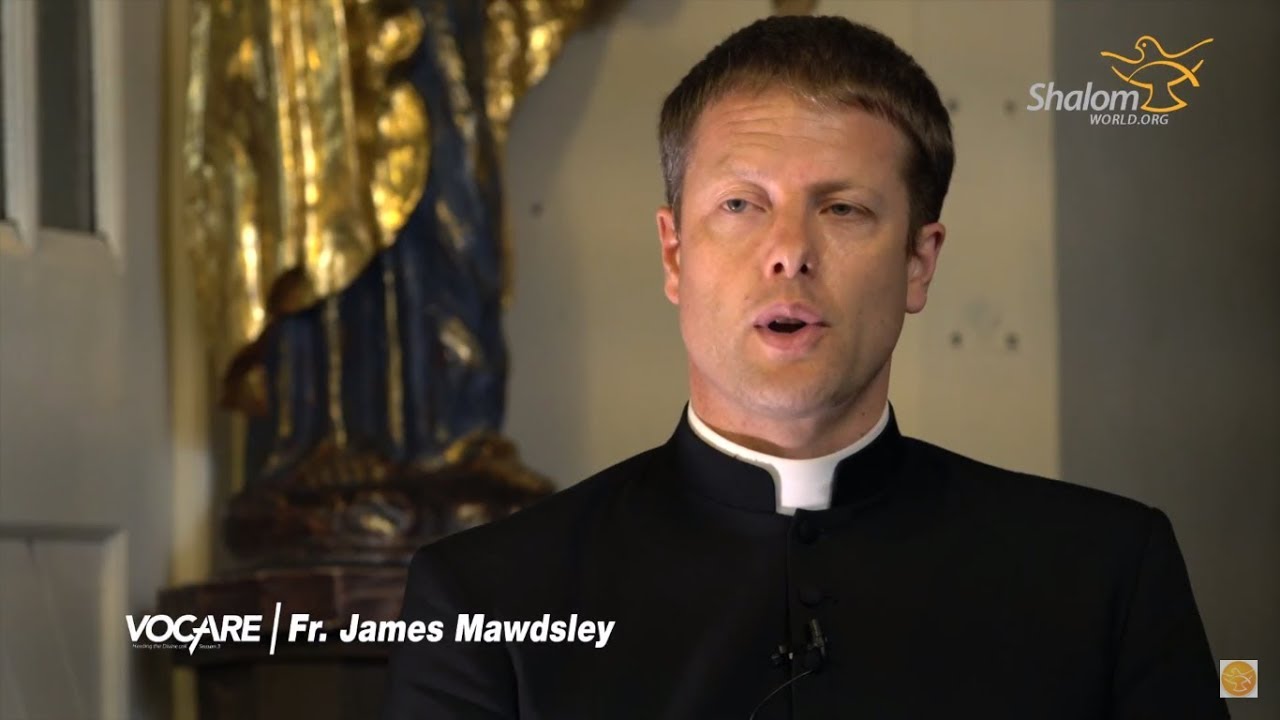
A remarkable vocation story. Fr. James Mawdsley, FSSP.

YouTube thumbnailYouTube icon

For years I’ve written about how learning and celebrating the traditional form of Mass forms a priest. This priest touches on this transformative experience.

(He mentions that blogs played a role. I found an old email from him. This blog was one of them.)

Posted in Just Too Cool, Mail from priests, Priests and Priesthood | Tagged , ,
5 Comments

ASK FATHER: Can a bishop forbid kneeling for Communion?

Good enough for them.
Good enough for us.

From a reader…

QUAERITUR:

I have a few sincere questions and I believe answers to them may help other readers, too.

For years I have heard it said that the “universal norm” for receiving Holy Communion is kneeling and on the tongue. Therefore, even though the US Bishops obtained a rescript for communion standing and in the hand, no Catholic may be refused communion in the traditional manner.

I have three questions:

1. Where can we find the documentary evidence that the universal norm is kneeling, in case someone challenges this?

2. How do we respond to the claim that the US Bishops’ norm, because it is a “local adaptation,” trumps the universal norm?

3. If an individual, due to the universal norm, is permitted to receive kneeling, in spite of the US Bishops’ norm, could an entire community decide to kneel in preference to standing — either because the pastor decided it, or because it was a shared sentiment?

4. Could there ever be legitimate grounds for a bishop to forbid kneeling in any community?

Ad 1:

When one wants to know the “universal norm” for something, particularly a liturgical action, one should check the “universal language” – Latin.

In the Latin Institutio Generalis Missalis Romani, we read:

“160. … Fideles communicant genuflexi vel stantes, prout Conferentia Episcoporum statuerit. Cum autem stantes communicant, commendatur ut debitam reverentiam, ab iisdem normis statuendam, ante susceptionem Sacramenti faciant.”

Now let’s look at the English equivalent:

160…. The norm for reception of Holy Communion in the dioceses of the United States is standing. Communicants should not be denied Holy Communion because they kneel. Rather, such instances should be addressed pastorally, by providing the faithful with proper catechesis on the reasons for this norm.

When receiving Holy Communion, the communicant bows his or her head before the Sacrament as a gesture of reverence and receives the Body of the Lord from the minister. The consecrated host may be received either on the tongue or in the hand, at the discretion of each communicant. When Holy Communion is received under both kinds, the sign of reverence is also made before receiving the Precious Blood.

UPDATE:

The amended text of 160 now reads: “The norm established for the Dioceses of the United States of America is that Holy Communion is to be received standing, unless an individual member of the faithful wishes to receive Communion while kneeling (Congregation for Divine Worship and the Discipline of the Sacraments, Instruction, Redemptionis Sacramentum, March 25, 2004, no. 91).”

Thanks to the commentator, below.

Not exactly a translation, is it? This English version is the adaption of norm 160 for the Church in these United States. The US bishops didn’t receive a rescript to permit standing: they used the right given to them by the Institution itself to establish a norm.

Hence, the universal norm specifies that Holy Communion should be received “genuflexi vel stantes, prout Conferentia Episcoporum statuerit” – “kneeling OR standing, as the Bishops’ Conference will have determined.

In these USA, the bishops have determined that the norm is standing, but they further demand that no one be denied if he or she chooses to kneel.

Oddly… seriously oddly… the Institutio Generalis in Latin doesn’t seem to be available on the Vatican.va website.  Hmmm…

Ad 2:

There is a general canonical principle that particular law does trump universal law. See, for example, can. 20, which states in part, “A universal law however, does not derogate from a particular or from a special law, unless the law expressly provides otherwise.”

However, since the particular law makes provision for those who choose to kneel, this seems to be something of a moot point.

Ad 3:

A parish community in these United States could choose to kneel, as a community.  That choice of the majority of the community, with the pastor, etc., however, would not thereby prevent some people from opting to stand, as is their right according to the particular law. Moreover, were they as a community to maintain the practice of kneeling for thirty years, a case could be made that they have established a custom which is contrary to the law in accord with can. 26, provided that, during those 30 years, they do not receive any official contrary instruction from a proper authority, such as the local diocesan bishop or the Holy See.

Ad 4:

A bishop could, I suppose, instruct – beg- cajole – harangue – bully – admonish – plead with a community not to kneel, but he could not rescind Article 160 of the General Instruction, even with the American adaptations, which permits individuals – or many individuals together – to kneel with impunity.

So, over in the Diocese of Libville, the parishioners of Holy Martyrs of Islamic Terrorism Church, qua parishioners, could be instructed by their bishop, Most Rev. Fatty McButterpants, with all manner of high-falutin’, legal sounding phrases, always and only to stand for the reception of Holy Communion, but as individuals they could collectively make the decision to kneel.

I suspect that The Flexible-Knee Challenged parishioners would eventually hie their way over to the Engendering Togetherness Community of Welcome where Fr. “Just call me Bruce” Hugalot tries to drag the kneelers back to their feet before putting the white thing in their hand as a sign that everyone is, indeed, Welcome™.

Finally, the 2004 (hence, subsequent to the 2002 GIRM) Instruction Redemptionis Sacramentum states:

[91.] In distributing Holy Communion it is to be remembered that “sacred ministers may not deny the sacraments to those who seek them in a reasonable manner, are rightly disposed, and are not prohibited by law from receiving them”. Hence any baptized Catholic who is not prevented by law must be admitted to Holy Communion. Therefore, it is not licit to deny Holy Communion to any of Christ’s faithful solely on the grounds, for example, that the person wishes to receive the Eucharist kneeling or standing.

That applies to celebration of Holy Mass according to the Novus Ordo, the 2002 Missale Romanum.

For Masses with the 1962 Missale Romanum, one should kneel if one is able.  If one can’t, no problem.  Tradition is flexible.

I trust that that helps.

Posted in "How To..." - Practical Notes, ASK FATHER Question Box, Canon Law, Liturgy Science Theatre 3000 | Tagged , , ,
18 Comments