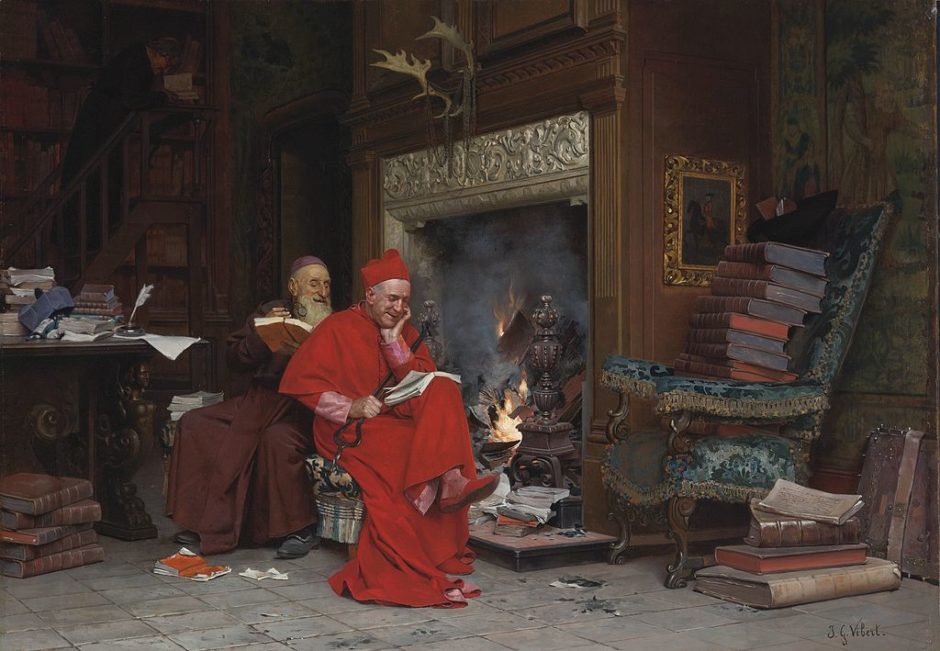
Fr. Rutler has a terrific piece at the invaluable Crisis.
Read the whole thing, but here is some with my usual treatment.
Where Are the Churchmen With Chests? [“Chests”… a great image. It was famously used (as Rutler mentions, below, by C.S. Lewis in his Abolition of Man. For Lewis “chests” are the “indispensable liaison officers between cerebral man and visceral man. It may even be said that it is by this middle element that man is man: for by his intellect he is mere spirit and by his appetite mere animal.” Hence, “chest” allows a man to face reality and act with confidence.]
[…]
But carrying the heavy baggage of his many calamitous missteps, such as Gallipoli in 1915, Dieppe in 1943, the Bengal famine of 1943 and his ambiguity about the Normandy invasion, Winston [Churchill – arguably one of the greatest figures of the 20th c., if not they greatest] could honestly fit the same [Teddy] Roosevelt’s 1910 description in a lecture at the Sorbonne:
The credit belongs to the man who is actually in the arena, whose face is marred by dust and sweat and blood; who strives valiantly; who errs, who comes short again and again, because there is no effort without error and shortcoming; but who does actually strive to do the deeds; who knows great enthusiasms, the great devotions; who spends himself in a worthy cause; who at the best knows in the end the triumph of high achievement, and who at the worst, if he fails, at least fails while daring greatly, so that his place shall never be with those cold and timid souls who neither know victory nor defeat.
[A famous speech, and very long. That was the most famous bit.]
[NB] These observations provoke an anxious solicitude for the present state of the Church, for it would be hard to find a surplus of church leaders in the arena of such men. [Do I hear an “Amen!”?] The common instinct for Rotarian jocularity rather than true Christian prophecy resembles the manner of Churchill’s Home Secretary, Herbert Morrison, whom the prime minster called “A curious mixture of geniality and venom.” [Which describes a certain mid-western prelate and a fishwraper ghostwriter.] Those anointed to proclaim Christ seem not infrequently reticent about enlisting his Holy Name in what is no less than a spiritual warfare that cannot be won by appeasement. When our bishops were assured by President Obama that there would be no imposition of civil regulations on the Church’s moral standards, specifically in matters of health care, they left a meeting in the White House boasting that they had been promised a good deal. It was their Munich. That conjures the ghost of Neville Chamberlain waving his piece of paper securing “peace for our time.” When Chamberlain died, Churchill refused to humiliate his memory and paid an eloquent tribute in the House to his predecessor’s virtue, but he could not hide the naiveté that paved the steps winding the way down to near destruction.
As it is a nervous business for prelates to court and be courted by civil power, one might question the wisdom of popes addressing the United Nations or parliaments. A pope is not merely another head of state, and the whole history of the economy of Christ and Caesar makes clear that popes are never stronger than when they are weakest in things temporal. Surely a man resolved as Pope Francis is to do what is right for mankind, was ill-served by those who counseled him on what to say in addressing a joint session of Congress. On that awkward day, the Holy Father spoke of refugees, human rights, the death penalty, natural resources, disarmament, and distribution of wealth, but there was no mention of Jesus Christ. The speech invoked acceptable figures like Abraham Lincoln, Martin Luther King, Dorothy Day, and Thomas Merton, but no canonized saint that the nation’s legacy boasts.
The resources of the Church in the material order are vast, if fading, but her supernatural resources are beyond calculation an indicting finger points to the neglect of such treasures of talent and grace in lands of privilege, as for example in the mercenary hypertrophy of the Church in Germany. This affects all limbs of the Body of Christ. Where there are bishops of moral vigor, there will be an abundance of young men willing to take up the call of priestly service. [Bingo. Trees and fruits, right? Relatively small dioceses with sturdy bishops produce as many or more seminarians than great metropolises.] Where the spirit is tepid and refreshes itself on the thin broth of a domesticated and politically correct Gospel, seminaries will be vacant. As C.S. Lewis gave account: “We make men without chests and expect from them virtue and enterprise. We laugh at honor and are shocked to find traitors in our midst.” [You see, it is merely that we may ultimately lack true men: men become traitors. One might say that we don’t just lack men, we also see a rise of effeminacy and sodomy.]
In his Idea of a University, Newman wrote: “Neither Livy, [born in Cisalpine Gaul] nor Tacitus, [Gallia Narbonensis] nor Terence, [Carthage] nor Seneca, [Hispania] nor Pliny, [Gallia Transpadana] nor Quintillian, [Hispania] is an adequate spokesman for the Imperial City. They write Latin; Cicero writes Roman.” The Church needs a Roman vigor that persuades men to rise above self-consciousness. [This next bit is gold…] An English bishop reflected: “Wherever St. Paul went, there was a riot. Wherever I go, they serve tea.” In spiritual combat, there is no teatime, and effective strategies cannot be plotted at conferences, synods, workshops, and costly conventions at resort hotels with multiple “break-out” sessions and mellow music. One fears that a fly on the wall at any of those conversations would drop to the floor out of boredom. “For if the trumpet give an uncertain sound, who shall prepare himself to the battle?” (1 Cor. 14:8)
That last image, was constantly used by my late mentor, Msgr. Richard Schuler to describe the disastrous approach to vocations to the priesthood that was, back in the day, pursued in the Archdiocese. Men will not follow an uncertain trumpet.
“Cicero writes Roman.”
Romanitas… Roman-ness, the Roman Thing… is the sum of the enduring values and practices of Romans, especially ancient Rome and, now, in the Roman Catholic Church. It is hard to pin it down, but you “know it when you see it”. However, it always includes the virtue of gravitas. Moreover, it also includes a seemingly contradictory fusion of sternness with humor, inflexibility with the adaptive, mercy with justice, austerity with extravagance. Consider the Roman ability to fuse, for example, Hellenism, Judaism, and later the Gaulish and Teutonic, etc. The Baroque movement is the perfect example of Romanitas, and how Romanitas then transforms cultures. Romanitas is the key to a correct understanding of inculturation, whereby what the Church has to give always has logical priority in the ongoing, simultaneous process.
Concerning the splendid quote about the “man in the arena” I would add two points.
I have often remarked to people that “arena” refers to the sandy surface of the gladiatorial battleground. Participation in the area of blogs, writing articles in print or electronic media, is a descent onto the sands of the arena. If you tread the sands, don’t whine when people go for your guts. If you don’t have the stomach for it – the chest – then this is not for you.
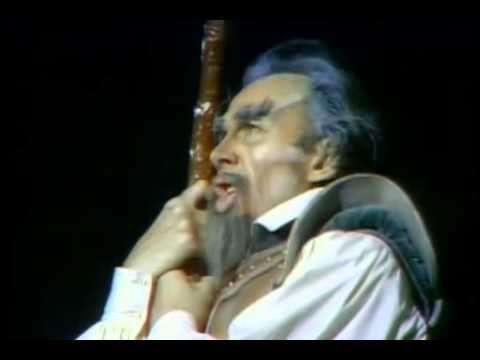
Next, that “man in the arena” passage has always reminded me of the climax tune of the musical Man of Lamancha about Don Quixote, “The Impossible Dream”. When I was pretty young I saw Richard Kiley, who created the role on Broadway, and it has stuck in my head for that last half century.

Decades of terrible education, both secular and from the church, dreadful catechesis and feckless preaching, temporizing, compromising, enervating leadership, caving in to the Zeitgeist with enthusiasm…
Are there men with chests anymore.
Damn straight there are! But for men of chests to discover themselves, they will need trumpet calls.
Not to devolve this into a musical review, but in the spirit of clarion, I am also reminded of a song from a Christian “rock” group called “Courageous”, which serves as the theme of a movie. HERE USA BlueRay+DVD HERE. Just DVD HERE. UK DVD HERE.
We were made to be courageous
We were made to lead the way
We could be the generation
That finally breaks the chains
We were made to be courageous
We were made to be courageousWe were warriors on the front lines
Standing, unafraid
But now we’re watchers on the sidelines
While our families slip awayWhere are you, men of courage?
You were made for so much more
Let the pounding of our hearts cry [chest]
We will serve the LordWe were made to be courageous
And we’re taking back the fight
We were made to be courageous
And it starts with us tonightThe only way we’ll ever stand
Is on our knees with lifted hands
Make us courageous [grace… and elbow grease]
Lord, make us courageousThis is our resolution
Our answer to the call [trumpet]
We will love our wives and children
We refuse to let them fallWe will reignite the passion
That we buried deep inside
May the watchers become warriors
Let the men of God ariseWe were made to be courageous
And we’re taking back the fight
We were made to be courageous
And it starts with us tonightThe only way we’ll ever stand
Is on our knees with lifted hands
Make us courageous
Lord, make us courageousSeek justice [women sing this in the background]
Love mercy
Walk humbly with your GodIn the war of the mind
I will make my stand
In the battle of the heart
And the battle of the hand[“chest” is the liaison of the intellective and affective which leads to action]
In the war of the mind
I will make my stand
In the battle of the heart
And the battle of the handWe were made to be courageous
And we’re taking back the fight
We were made to be courageous
And it starts with us tonightThe only way we’ll ever stand
Is on our knees with lifted hands
Make us courageous
Lord, make us courageousWe were made to be courageous
Lord, make us courageous




 I fairly dread papal trips these days. You never know what is going to happen on the papal airplane. Will there be another presser in which the Holy Father will say something like, “Who am I to judge?” That was a gift – now perpetually taken out of context and abused – that keeps on giving.


 From a reader…




























