
 Back in December, First Things published a piece by the former Prefect of the CDF, Gerard Ludwig Card. Müller on the sacrament of penance. His observations on objective sin and subjective guilt, about knowledge, etc., are germane to a whole raft of questions being raised today, from the admission of the civilly remarried to Communion (some claim that with Amoris laetitia this is now permitted), to the celebration of funerals of manifest sinners (I wrote about that today in another post).
Today I see a new piece by Card. Müller in First Things about the Pope’s authority and teaching.
How do the pope’s Magisterium and the Tradition of the Church relate? When he interprets the words of Jesus, must the pope be in continuity with the Tradition and the previous Magisterium, including that of the most recent popes? Or is it rather the Church’s Tradition that has to be reinterpreted in the light of the pope’s new words? What if there are contradictions?
Really good questions. Several Cardinals respectfully offered questions in this vein to the Pope about how certain aspects of Amoris laetitia seem to contradiction earlier, crystal clear teachings of Pope St. John Paul II.
Read the whole thing, but here is the last part…
[…]
What has been said above refers to the teaching of the Church, but also to the administration of her means of grace in the sacraments. In its Decree on Holy Communion, the Council of Trent declares that the Church has the power to determine or modify the external rites of the sacraments. [For example, after the Council a new form of the sacrament of Confirmation was introduced.] At the same time, the Council denies that the Church has the right or ability to interfere with the essence of the sacraments, insisting that “their substance is preserved.” [For example, the Church cannot say that rice cakes and sake can be used for the Eucharist. No Pope can change that.] When the Council of Trent defines that there are three acts of the penitent that form part of the sacrament of penance (repentance with the resolve not to sin again, confession, and satisfaction), then the popes and bishops of subsequent ages, too, are bound by this declaration. [NB] They are not [NOT] free to grant sacramental absolution for sins, or to authorize their priests to do so, when penitents do not actually show signs of repentance or where they explicitly reject the resolve not to sin again. [No expression of sorrow for sin committed, no expression of firm purposes of amendment… no absolution. It must not be given.] No human being can undo the inner contradiction between the effect of the sacrament—that is, the new communion of life with Christ in faith, hope, and love—and the penitent’s inadequate disposition. Not even the pope or a council can do so, because they lack the authority, nor could they ever receive such authority, because God never asks human beings to do something that is both self-contradictory and contrary to God himself. [Those who do not have a firm purpose of amendment of their lives cannot be validly absolved and, hence, cannot be admitted to the Eucharist, which is to be received when the communicant knows she is not in the state of grace, and the minister must not administer when there is a PUBLIC manifestation of sin and probability of scandal.]
One must keep in mind that doctrinal statements have varying degrees of authority. They require varying degrees of consent, as expressed by the so-called “theological notes.” The acceptance of a teaching with “divine and Catholic faith” is required only for dogmatic definitions. [The controversial bits of Amoris are no where near that level. Nor are innovative interpretations of those controversial bits.] It is also clear that the pope or bishops must never ask anyone to act or teach against the natural moral law. The obedience of the faithful toward their ecclesial superiors is therefore no absolute obedience, and the superior cannot demand absolute obedience, because both the superior and those entrusted to his or her authority are brothers and sisters of the same Father, and they are disciples of the same Master. Therefore, it is harder to teach than to learn, because teaching is associated with a greater responsibility before God. The affirmation “We must obey God rather than men” (Acts 5:29) has its validity also and especially in the Church. Against the principle of absolute obedience prevailing in the Prussian military state, the German bishops insisted before Bismarck: “It is certainly not the Catholic Church that has embraced the immoral and despotic principle that the command of a superior frees one unconditionally from all personal responsibility.” [Earlier, Müller had introduced his topic with a review of Bismark and the Kulturkampf and the reaction to the Church’s teaching about papal infallibility.]
[NB] When private opinions or spiritual and moral limitations enter into the exercise of ecclesiastical authority, then sober and objective criticism as well as personal correction are called for, especially from the brothers in the episcopal office. Thomas Aquinas will not be suspected of relativizing Petrine primacy and the virtue of obedience. All the more elucidating is the way in which he interprets the incident in Antioch, culminating in Paul’s public correction of Peter (Gal 2:11). According to Aquinas, the event teaches us that under certain circumstances an apostle may have the right and even the duty to correct another apostle in a fraternal way, that even an inferior may have the right and duty to criticize the superior (cf. Commentary on Galatians, Chap. II, lecture 3). This does not mean that one may reduce the magisterium to a private opinion, so as to dispense oneself from the binding power of the authentic and defined teaching of the Church (cf. Lumen Gentium 37). It only means that one must understand well the precise meaning of authority in the Church in general and the role of Peter’s ministry in particular. This is especially true when the conflict does not arise between the pope’s teaching and one’s own vision, [HERE IT IS…] but between the pope’s teaching and a teaching of previous popes that is in accordance with the uninterrupted tradition of the Church. [That’s it. There is a seeming conflict between what Pope Francis taught in Amoris and what St. John Paul taught in Familiaris consortio, 84, Reconciliatio et paenitentia, 34, Sacramentum caritatis, 29, and Veritatis splendor, 56, 79 and 81, etc.]
As Pope Benedict XVI explained during the Mass on the occasion of his taking possession of the Chair of the Bishop of Rome on 7 May 2005, “The power that Christ conferred upon Peter and his Successors is, in an absolute sense, a mandate to serve. The power of teaching in the Church involves a commitment to the service of obedience to the faith.” He continues, “The pope is not an absolute monarch whose thoughts and desires are law. On the contrary: The pope’s ministry is a guarantee of obedience to Christ and to his Word. He must not proclaim his own ideas, but rather constantly bind himself and the Church to obedience to God’s Word, in the face of every attempt to adapt it or water it down, and every form of opportunism.”
Thus, Card. Müller.
 From a reader…
 The
The  My inbox is being pelted with a story that some Armenian Orthodox bishop in Tehran “ordained” a female deacon. For example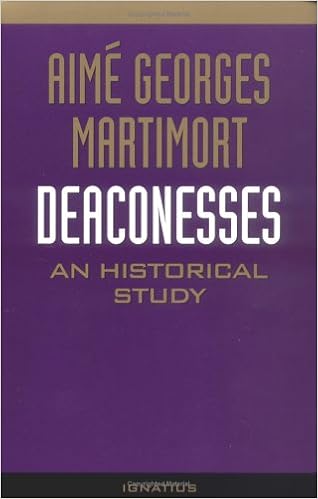





 From a reader…

 I received this request from TFP. It is a good cause.
 From a reader…




























