VIDEO Bp. Athanasius Schneider interview about “Amoris laetitia” Controversy

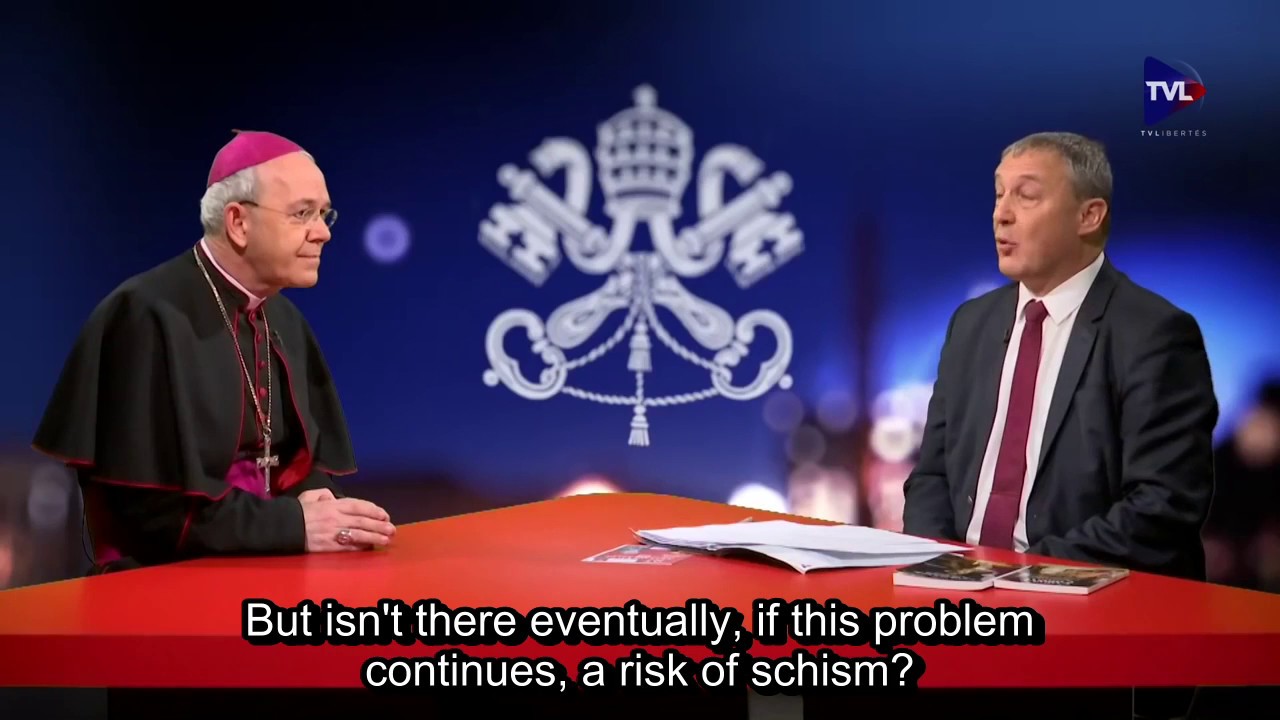
His Excellency, Bishop Athanasius Schneider, gave an interview on French TV about Pope Francis and the Amoris laetitia controversy that is tearing apart of the unity of the Church in many spheres.  The video is available.  There are English subtitles.

He hits hard those ecclesiastics who want a “Gospel without the sixth commandment”.

“They use tactics and evil means, such as “ruses, deceptions, masterful rhetoric and dialectics, and even the tactic of intimidation and moral violence in order to attain their goal of admitting so-called “remarried” divorces to Holy Communion” without the latter fulfilling the condition of living in perfect continence…”.

“It is not only a risk of schism, but a certain kind of schism already exists in the Church. … “We are witnessing today a strange form of schism. Externally, numerous ecclesiastics safeguard formal unity with the pope, at times for the good of their own career or out of a kind of papolatry. And at the same time they have broken their ties with Christ, the Truth, and with Christ, the true head of the Church. On the other hand there are ecclesiastics who are denounced as schismatics despite the fact they live in canonical peace with the pope and remain faithful to Christ, the Truth by assiduously promoting His Gospel of Truth. It is evident that those who are internally the true schismatics, in relation to Christ, make use of calumnies for the sole purpose of silencing the voice of Truth, by absurdly projecting their own state of internal schism on those ecclesiastics who, regardless of praise of rebuke, defend the divine truths. In fact, as Sacred Scripture says, the word of Divine Truth is not bound. Even if a number of high-ranking officials in the Church today temporarily obscure the truth of the doctrine of marriage and its perennial discipline, this doctrine and discipline will always remain unchangeable in the Church because the Church is not a human foundation, but a divine one.”

He compares the present controversy to the Arian controversy of the 4th c. Church.

YouTube thumbnailYouTube icon

UPDATE:

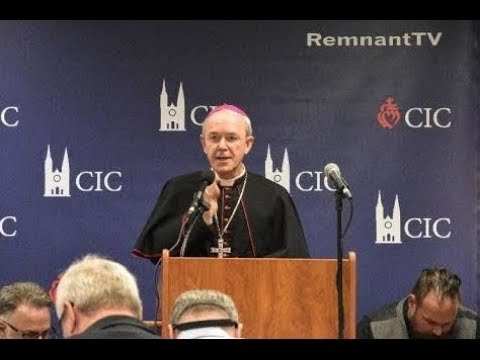
I just found another video with Bp. Schneider. He spoke at the “Catholic Identity Conference” last October 2017. Apparently the video was posted only yesterday, 13 Jan 2018. It only has 1530 views as I repost it, so it must be pretty recently added to YouTube. This is the same conference at which Ed Pentin gave his terrific talk. HERE

His theme: The crisis of faith in the world today.

YouTube thumbnailYouTube icon

Posted in Hard-Identity Catholicism, Our Catholic Identity, The Coming Storm, The Drill, The future and our choices | Tagged ,
3 Comments

ASK FATHER: Should I tell a noisy penitent that we can hear everything said in the confessional?

From a reader…

QUAERITUR:

There is a young lady who regularly takes a very long time in Confession (25-30 minutes, sometimes longer). She is not making a long confession, and it’s not the priest spending long amounts of time giving her counsel. It’s her repeatedly asking questions about what the priest says and just a whole lot of being loquacious (she’s very loquacious and it’s hard to get a word in if she’s part of a conversation). How do I know all this? She’s also very loud, so everything she says during that half hour is heard by anyone within a 20 foot radius of the confessional (which is pretty well sound resistant). The priest is of a more timid disposition and not going to say anything (if he can even get a word in). Is it ever appropriate for someone in line to knock on the door of the penitent and kindly let them know that everyone in line can hear what the person is saying, or to please wrap it up because the line up is growing exponentially? It’s so frustrating to know that it will take only a few minutes to make my confession, but I’ll be waiting in line for a half hour or longer because said person went straight for the confessional when they got into the church and I opted to Spiritually prepare for a minute beforehand.

Should you knock on the door?

No.  You should not.

However, you can tell the person afterward that people outside could hear everything she said.   Do NOT say what you heard.

You could, as you get into the confessional after that noisy penitent, tell the priest that you could hear everything.

It is the priest’s responsibility to handle the pace and length of the confession.  I wouldn’t get into that with the noisy penitent.

You might also – on another occasion – ask the priest to preach occasionally about how to make a good confession, or to put some instructions in bulletin and to make a pamphlet of some kind available.

And there are my 20 Tips.

Also, I will remind everyone reading this that overhearing something in someone else’s confession places an obligation on you.   You are not to reveal or talk about what you have overheard.  In a sense it is an extension of the Seal that binds the confessor.

The 1983 Code of Canon Law deals with this.

Can. 983 §1. The sacramental seal is inviolable; therefore it is absolutely forbidden for a confessor to betray in any way a penitent in words or in any manner and for any reason.

§2. The interpreter, if there is one, and all others who in any way have knowledge of sins from confession are also obliged to observe secrecy.

Can. 1388 §1. A confessor who directly violates the sacramental seal incurs a latae sententiae excommunication reserved to the Apostolic See; one who does so only indirectly is to be punished according to the gravity of the delict.

§2. An interpreter and the others mentioned in can. 983, §2 who violate the secret are to be punished with a just penalty, not excluding excommunication.

So, anyone who overhears the content of a confession cannot reveal what she has heard to anyone else.  Doing so could incur a censure, if the person is aware that it is wrong to reveal the content of a confession.

NB: A person who is genuinely unaware of the law and the gravity of the situation does not incur a penalty.  You have to know that it is wrong before you can incur the penalty.   This is another thing that priests should explain in their preaching and bulletin notes.

Some might wonder if, having overheard a person’s confession, it would violate the “seal” to go up to the person afterward and tell her that she could be heard.  Isn’t that a way of making use of information learned from someone else’s confession?  Answer: No, that would not violate the law about secrecy.  You would merely be acting on the fact of the volume of sound coming from the confessional, which anyone else nearby could hear, not the content of what was said.  Also, in no way would it be to the detriment of the noisy penitent to be so informed.  It would be a positive benefit so that she knew to correct her noisy practice in the future.  However, under no circumstances should you tell her what you overheard.

All necessary steps should be taken to preserve the secrecy of the confessional.

Confessionals should be adequately sound-proofed.  Penitents should be instructed where to wait for confession so that, over time, good practices take root.  Priests should preach about confession practices and remind people while making their confession to lower their voices if they are loud.  Confessors should help penitents not to ramble aimlessly.

And, it seems appropriate to add here:

GO TO CONFESSION!

Posted in "How To..." - Practical Notes, ASK FATHER Question Box, GO TO CONFESSION, Liturgy Science Theatre 3000 | Tagged , , , , ,
9 Comments

A false #missilethreat is NOTHING compared to this REAL DEATH THREAT

It’s 8:08 Saturday morning. You’ve slept in on a day off. Your phone has awakened you with a PING. With a measure of resentment you check The Precious™ for its message.

You read it once. And again. And – with the strange feeling that marks the arrival of adrenaline – again.

NOW WHAT?!?

How much time do you have? 15 minutes? 30 minutes? Where do you go? Do you try to call people? Go somewhere?

When did you last…

GO TO CONFESSION?

You realize that it has been a … how long? … long time, since you’ve been to confession and the memory of a bunch of things floods your mind.

NOW WHAT?!?

Unless you are across the street from the parish, you are pretty much out of luck.

What do you do?

Do you… start praying?  Say you’re sorry to God?

People develop habits of prayer and thought through their lives that don’t suddenly change in the face of a catastrophe.

We have to practice for dying, just as athletes and soldiers practice drill endlessly to win.

How many times have I written about a sudden and unprovided death?

We don’t know the day or the minute when we will go before our Judge. Whether it is a natural event like a storm or meteor, or a man-made event like a drunk driver, a nutjob with a rifle, or a ballistic missile, we just don’t know.

Avoid the trap of thinking that these things only happen to other people. YOU are other people. It’s always someone else… until it’s you.

So, examine your consciences and …

GO TO CONFESSION.

I would also add as a regular feature of your daily prayers that important petition in the Litany of Saints:

“A subitanea et improvisa morte… From a sudden and unprovided death, spare us O Lord.”

Sudden is one thing. Unprovided is another.

An “unprovided” death is a death without access to the last sacraments, especially absolution from a priest.

That’s a scary thought…. especially if you haven’t been to confession for a long time.

What happened with that false alarm in Hawaii was dramatic and pretty awful.

This post is NOT a false alarm.

You. ARE. Going. To. DIE.

When did you last go to confession?

Posted in "How To..." - Practical Notes, Global Killer Asteroid Questions, GO TO CONFESSION, Going Ballistic | Tagged , ,
7 Comments

Fr. Murray on EWTN with outstanding commentary on recent developments

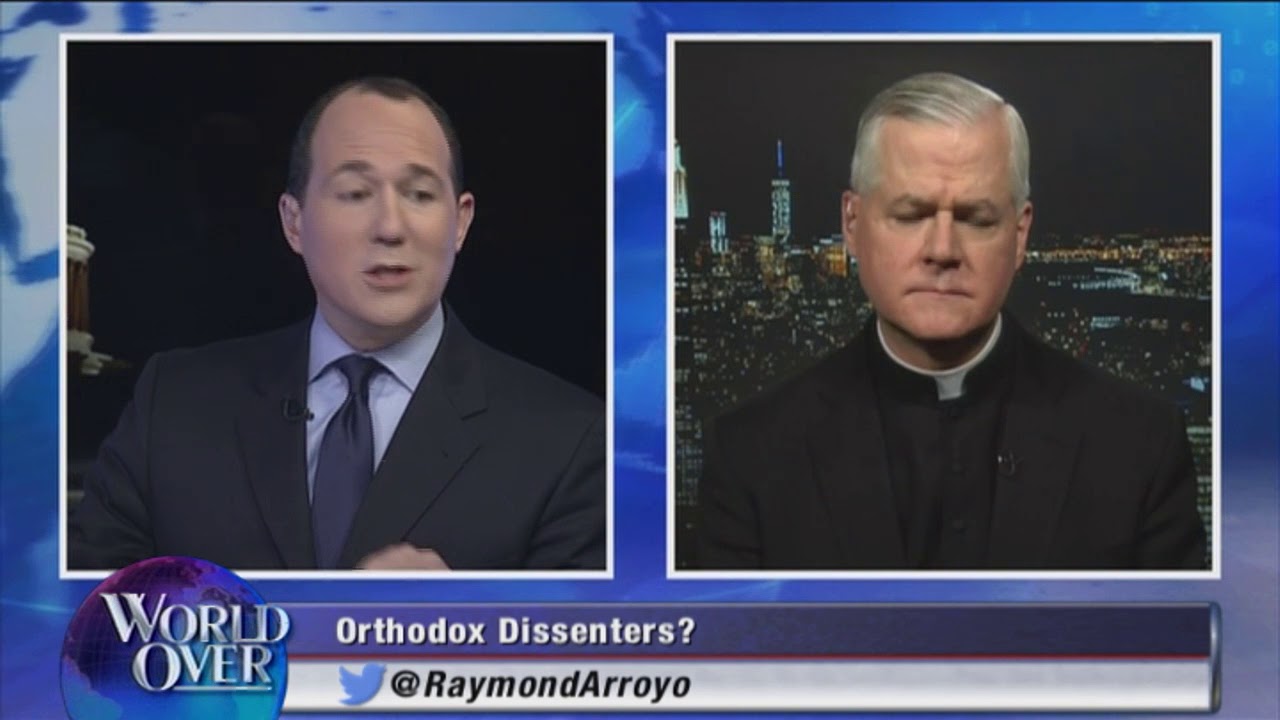
My friend Fr. Gerald Murray held the lone guest chair with Raymond Arroyo on EWTN the other night, and the video is now available.

Fr. Murray is no-nonsense.

YouTube thumbnailYouTube icon

Posted in ¡Hagan lío!, The Coming Storm, The Drill | Tagged
15 Comments

Wherein Fr. Z comments on a @RorateCaeli post about priests, permissions and exorcism prayers. Then @fatherz rants.

Dunstan 1 - Devil 0

Dunstan 1 – Devil 0

At Rorate there is a post especially for priests about the proper and improper use of the exorcism prayers in the older Rituale Romanum.  It’s a good service.

After providing images of a 2009 letter from the Pontifical Commission “Ecclesia Dei” with responses to questions  (back in the day we got answers to dubia), about deacons blessing with the older Rituale (sort of important, but … not really), they got down to the far more important issue: the danger to priests (or others) which can result from using the restricted exorcism prayers without the proper permission.

The Rorate post adds a anonymous (alas) note about how sins and playing with things like oujia boards can open the door to entrance by demons.   The writer correctly states – and this is accurate and salutary – that demons are legalistic.  Therefore, if a priest uses these restricted prayers without permission, he could be opening the door to the demons attacking him!   I often warn lay people in these electronic pages to avoid getting at all into these matters, these texts.  Avoid them!  If even a priest – having the character imposed by orders – without a permission can get into trouble, how much more lay people?

Some explanation is in order:

The traditional rite of exorcism is found in the traditional Rituale Romanum.

Summorum Pontificum 9, §1 allows the use of the Ritual in force in 1962, that is, the 1952 edition, which was the last official edition prior to 1962. Universae Ecclesiae 35, a document explaining the implementation of SP, says that the Ritual can be used in its entirety. That means that the rites for Exorcism can be used.  HOWEVER… these rites were restricted to bishops and those to priests to whom the ordinary gave permission.  They still are.  Always have been.

The rites of exorcism are found in Title XI of the 1952 Rituale. Title XI is in 3 chapters.
1. De exorcizandis obsessis a daemonio – An introductory chapter which explains exorcisms, etc. It doesn’t contain rites of exorcism.
2. Ritus exorcizandi obsessos a daemonio – This rite may be pronounced only by bishops and and by priests who have authorization from the Ordinary (keep in mind that that are different kinds of “ordinaries” – a Vicar General is an “Ordinary”). The rite includes the litany, long prayers with signs of the Cross, readings from Scripture, the Athanasian Creed, psalms, etc.  If I wanted to drive the devil out of some Jesuit, I would use this prayer, with the permission of the local bishop or ordinary.
3. Exorcismus in satanam et angelos apostaticos – This prayer – for driving the infesting enemy from people and from places – can be used by bishops and by priests who have authorization from the Ordinary. It consists of a prayer to St. Michael, a couple of exorcism prayers, etc.  For example, if I wanted to exorcise the offices of the Fishwrap I would use this prayer with permission from the local bishop or vicar general (unless the bishop restricted this to himself in KC).

In each case, a priest must have permission.  Any bishop can use them pretty much anywhere.

It was very good that Rorate posted on this.  Hopefully priests will read the post and take it seriously.  Dealing with demons is not a game of bean bag.   They are angelic beings, restrained in large part by God, but angelic nonetheless.

The Rorate post’s comment, however, may go astray on a point.   The writer seems to imply that the 2009 PCED letter (the “protocol”) might have changed something.  After commenting that some priest used the Ch. 3 of Title XI with good effects for some time apparently without specific permission, and that that was recommended in a book which had an imprimatur by Card. Pell, (emphases added):

this protocol makes it clear that it is now unquestionably at least a material disobedience each and every time any priest in the world uses this prayer without the proper permissions. And certainly every devil in the world is well aware of this.”

This is a small matter, but Card. Pell’s book couldn’t have given any permission to use Ch. 3 and I don’t believe there was ever a question about whether or not a priest could use ch. 3 without permission.  If Summorum Pontificum gave permission to use the entire Rituale, it did not thereby remove the restrictions on exorcisms.

Therefore, the 2009 PCED letter did not once again place restrictions on the use of those prayers.  The restrictions were always there.  Period.  It was always wrong and even dangerous for the aforementioned priest to use either ch. 2 or 3 without the permission of the ordinary, before SP and after.

That said, it is true that demons know the law and that they are legalistic.   That’s a good point in the Rorate post.  This is one of the reasons why the Church’s traditional exorcism prayers are seemingly repetitive when breaking demonic bonds.  Demons claim rights to be where they are, because they were invoked or invited by curses or “spells” or through objects and sins, etc.  Once there, they attach like leeches and get legalistic.  The prayers of the Church systematically break their claims and eradicate them and expel them.

And they really hate Latin.

Demons get so legalistic that they will mock priests whose Latin isn’t very good.  That’s why I made this post HERE.

Folks, I’m not making this stuff up.

If after Vatican II the Church’s shepherds stopped talking about sin and its consequences, that doesn’t mean that sin stopped having consequences.

Demons can infest places and things and people like vermin or ringworm or parasites and they are decidedly unhelpful for everyone around.

Don’t kid yourselves.   This is one reason why in our traditional practices as Catholics we use lots of sacramentals, we say prayers before meals asking God to bless our food, etc.  We had – have – blessings for everyday things, tools, foods, common and important places (homes or perhaps sick rooms).  We have blessings and rites for feasts and changes of seasons.  All these practices wove us as individuals into the rich fabric of the Church’s life in the practice of the virtue of religious, and braided us all together in our rites and our identity together with our forebears and descendants.

We are our rites!  Change them, drop them, denigrate them… there are consequences.

Holy Church is the greatest expert on humanity there has every been.  Through centuries of experience she developed what is good for us and WHAT WORKED.  These things can slowly change and shift over time, but they do so slowly.  Human beings don’t really change over the millennia.  Circumstances do, but even then not too much.  So, when the Church figured it out, making sudden changes to… everything, I guess, was consequential.

In the creeds we recite, we say that we believe in things that are “invisible”.  That means the angelic realm, with its good and holy angels who are our friends and guardians as we as the fallen angels, who are demons and who desire our spiritual isolation from God and ultimate torment.  There are hierarchies of angels, good and bad.  Some are vastly more powerful than others, each one being his own species, as different from each other as a giraffe from a spiny hedgehog.  But all angels transcend our human nature.  Thanks be to God we have our Church with sacramentals and even more mighty sacraments.  We have angels and the restraining will of God over all the forces of Hell.

This is why I never fool around with rites for blessings and sacramentals.  I use the older Rituale, with its permitted exorcisms in Latin and clear intentions.

Finally, listen up!

The rite of exorcism is just a sacramental.   Confession and the Eucharist are sacraments and are immensely powerful.   If you are having problems of some kind and suspect demonic involvement, make plans to make a good Holy Communion, examine your conscience and…

GO TO CONFESSION!

UPDATE:

Some priests have written to ask for the aforementioned recordings. One of them wrote,

I am a Priest of ___ I have just been appointed Exorcist for ___. I offer the TLM regularly but but Latin doesn’t come easily for me. I would appreciate you sending me your recordings. I intend using the old ritual in this ministry. As one priestly wag commented: “The only reason the demon would leave when the new prayers are used is out of boredom.”

LOL! Thanks, Father, for the chuckle.
Posted in GO TO CONFESSION, Hard-Identity Catholicism, Liturgy Science Theatre 3000, Si vis pacem para bellum!, The Drill, Wherein Fr. Z Rants | Tagged , , ,
21 Comments

ASK FATHER: URGENT EMERGENCY PREDICAMENT! Mass in Presence of a Prelate but we don’t have a Pax Brede!

When I see the word “brede” I can’t help but think of the novel In This House Of Brede by Rumor Godden (US HERE – UK HERE).

From a reader…

QUAERITUR:

Our little EF congregation would like to invite our Bishop to attend a Mass. we do not have the items or people sufficient for a Ponitifcal Mass. we are thinking of Mass in the Presence of a Prelate. however, we are having trouble finding a pax-brede. any suggestions.

First, good for you for getting what you are able to do, done.  Quantum potes, tantum aude…. brick by brick… and all that good stuff.

Some of you are probably scratching your heads wonder what a “pax-brede” is.

Explanations are in order.

There is a moment in the Roman Rite designated for the “Sign” or “Kiss of Peace”.  You all know.  Most of you dread it.

In ancient times that kiss was done in the Roman manner, formally.  It wasn’t an undignified free for all of idiot waving and roaming about, no longer mindful of the sacred.  Giving the “pax… peace” flowed out from the altar, as the bishop/priest would bestow it on the sacred ministers, who in turn would go to the other clergy nearby, and so forth and so on.

At one point there developed an object to facilitate this kiss of peace.  It came to be called a instrumentum pacis or osculatorium (Latin osculum = kiss).  In English was was called the “pax brede” or simply “the pax”.

Brede is an archaic spelling of “board”, for that is what this object is: a flatish board, often highly decorated or with a decorated frame, usually having a some kind of handle, presented for people to kiss.  It is often decorated with the Lamb of God or another eucharistic symbol.

It is possible that this liturgical critter evolved to speed the process of giving the sign of peace among quite a few participants, or to avoid any embarrassments, etc.  In any event, the presenter presents the “pax brede” with a “Pax tecum”, whereupon the presentee kisses it and responds “Et cum spiritu tuo.”

The use of the pax brede, or pax, pretty much died out except in fancier Masses, as those of higher prelates such as bishops or involving them.  Even in those Masses, use of the pax didn’t widely survive.

However, it remains an option today, under Summorum Pontificum.

Now, to your specific situation: Mass in the presence a prelate.

If you have a Solemn Mass in the presence of the prelate, the deacon could take the Pax to the bishop, who is at that moment parked, kneeling at his bench and faldstool set in the sanctuary directly before the altar.

However, in the Low Mass or Missa Cantata there is no deacon to bring the Pax to His Nibs.  The priest is not supposed to leave the altar!  Quod Deus avveruncet!

So.  What to do?  How to get the kiss of peace to His Nibs the Bishop?

DING! The pax brede.   But wait!  You don’t have a pax brede.   Thus, the question.

Well, sonny, I say…

IMPROVISE, ADAPT and OVERCOME!

If you don’t have a motivated, dedicated, yah ha, oorah pax brede, then overcome its lack by adapting something else to serve the purpose.

What could substitute for a pax brede?  Let’s see…

You don’t want to use just anything, for this is sacred worship.

It should be flatish, as the pax brede is flatish.

It should probably have a handle, as the pax brede usually does.

DING!

Why not improvise your pax brede by using the Communion paten?

It is a sacred vessel, blessed because the Host and particles may contact it.  It isn’t decorated, but… hey!  You don’t have a pax brede and you need a solution.

The priest’s paten is, at this moment during Mass, busy with other duties.  The Communion paten, however, is waiting for its queue.  Give it a TDA (Temporary Duty Assignment).

The MC can carry the TDA brede to His Nibs, and then keep it at hand for the distribution of Communion, to follow soon thereafter.

IMPORTANT:  Explain to His Nibs beforehand what you are going to do at the sign of peace.  Explain that, because you don’t have a pax brede, you will substitute a paten.   Don’t take His Nibs by surprise.  In my experience, bishops don’t like surprises.  Also, it is the common sense, correct thing to do.

You might send His Nibs to this blog post!  On the other hand, it is possible that he will already have read it.


Posted in "How To..." - Practical Notes, ASK FATHER Question Box, Lighter fare, Liturgy Science Theatre 3000 | Tagged ,
3 Comments

How bad is the situation of vocations to the priesthood tragic Germany?

How bad is the situation of vocations to the priesthood tragic Germany?

“In 2017, only 76 priests were ordained in Germany; in 2000 there were still about twice as many, namely 154.  When the German Bishops’ Conference tallied this number nationwide for the first time in 1962, there were even 557 ordinations to the priesthood.”

A friend sent a link to an article in katholisch.de and included an ironic observation about the photo used with the article.

Germany would appear to have so few priests, they can’t even get photos of their own!

The photo shows a seminarian reading his breviary… at Dunwoody seminary in New York.

The German bishops are killing the Church in Germany and poisoning the rest of the Body of Christ as well.

UPDATE:

On a related note, a story from 2013 about the German Church selling off churches.  Think about it.  If the German Church takes in billions of euro, why sell a church… unless there is some other agenda than money or the parishes are well and truly dead?  HERE

Posted in Liberals, Lighter fare, Seminarians and Seminaries, The Coming Storm, The future and our choices | Tagged ,
5 Comments

Esolen on virtue and chastity in “Wonder Woman” (not the one you immediately thought of)

When I would explain the Decalogue to children, I’d say something like: God didn’t give us rules because he wanted to ruin our fun.  These rules are God’s way of saying, “Don’t hurt yourself.  You are made in my image.  I love you.  I want you to be happy.  Do these things and avoid these other things, and you’ll truly be happier.”

That’s a segue in to the terrific essay by Anthony Esolen today at Crisis. He drills into virtue in general and chastity in particular using The Tempest as his spring board.

Esolen gets Shakespeare, as he gets Dante.  I’m a sucker for Shakespeare and for Dante.

Here is a taste of Esolen’s piece:

[…]

Now the power the Miranda possesses, both as subject and object, is ineradicable from her innocence and purity, which in her assume a distinctly womanly form. I imagine that everyone has seen a man who appears unpleasantly handsome, because the vicious life he leads has begun to show in his countenance—the leering eye, the cold smile, debauchery in the lip and jowl; or a woman unpleasantly beautiful, because of a vicious life of her own—the look of a whore, perhaps, without the poverty and suffering. Miranda is what she is because of her virtue, the very thing that the feminist critic found appalling. It is as if the critic were railing against Prospero for having fed his daughter good food and given her plenty of fresh air and sunshine for the health of her body.

For virtue is like health. That is something Shakespeare understood quite well, and the feminist critic did not. The typical charge against Prospero is that he has used his magic art to cause Ferdinand [not the bull in the book] to fall in love with Miranda, [not the planet in the Firefly movie] stealing her freedom from her—“freedom” understood as self-will, autonomy, the spoiled teenager’s “I want it!”—but Miranda needs no art to make her wondrous, and when the young people meet, Prospero suggests that the magic is in them: “They are both in either’s powers.”

Virtue is a power, a liberating power. Let us repeat it every day. Virtue is not the possession of the “right” political opinion, no more than it was, among the upper classes in Victorian England and in the growing American state, the possession of the right books and objets d’art, attendance at the right religious services, knowing the right people, speaking with the right accent, wearing the right clothes in public, and extending the right pinky while you were drinking the right tea from the right china arranged in the right way.

[…]

Read the rest there.  It’s great.

Just as a reminder…. Esolen translated Dante’s Divine Comedy into English and did a great job of it.

If you have never read the Divine Comedy, you should.  You could start with Esolen (Part 1, Inferno US HERE – UK HERE) or perhaps with Dorothy Sayer’s fine version (Part 1, Inferno, US HERE – UK HERE).  There are many renderings to choose from.  I would very much like to teach on Dante someday.  Maybe it’ll happen.

When you make the excellent choice to read the Divine Comedy, here are a couple tips.  First and foremost, make the decision that you will read the whole thing.  Don’t read just the Inferno.  The really great stuff comes in Purgatorio and Paradiso.  Also, read straight through a canto to get the line of thought and story and then go back over it, also looking at the notes in your edition.  Dante was, perhaps, the last guy who knew everything (with the possible exception of Erasmus).  Each Canto is dense with references.  You will need notes to help with the history, philosophy, cosmology, poetic theory, politics, theology, etc.  Really.  You will need help.

Posted in "How To..." - Practical Notes, The Drill | Tagged , , , ,
1 Comment

DISGUSTING LBGT story reveals something about homosexualist agenda in the Church. Wherein Fr. Z rants.

This is disgusting, but it is necessary for you to know.

A forward, which I have offered before:

I’ve argued here – often – that the homosexualist agenda has been patiently engaged for a long time and is still reaching for that brass ring.

The brass ring is the lowering of the age of consent.

The homosexualists have slowly been shifting the language about deviant same-sex acts and those who regularly commit them.

Through the MSM and entertainment industry the image of homosexuality as something hidden and unclean was broken by replacing it with victim status during the flaming up of the AIDS epidemic in certain populations.

Then the victim image had to be broken and replaced, which was accomplished through cool and “with it” characters in TV shows and other culture movers.  Think of the absurdly high percentage of homosexuals in TV shows, increasing every year.  You can’t turn on a TV series now and not find it filled with deviants, now doing deviant things in prime time.

BUT!  They are cool and emotionally sensitive, who have answers for the dysfunctional and often less attractive “hetero” characters.

Fuse this culture shift with the rise of no-fault divorce and nearly universal contraception and we have the perfect deadly storm that can rip the sexual act conceptually away from marriage (what’s that?) and procreation (what’s that?).

Shall we mention the near total silence of the Catholic Church?

Now that subcultures are multiplying like viruses, we are just about ready, I think, for the next stage of the assault on the human person and God’s plan.  Not content for legalization of same-sex “marriage”, the next phase of the homosexualist agenda will soon be implemented: lowering of the age of consent (aka the aforementioned the brass ring).

And now they have helpers within the Church who are highly visible and often in positions of authority.   Certain Jesuits are blatant homosexualists, their superiors do nothing to stop them and bishops allow them to speak anywhere.  Bishops themselves in Germany are talking about blessing same-sex relationships.

Within the Catholic Church very highly placed authorities are working incrementally to detach procreation from human procreative powers and potentials and acts.

If you can successfully detach procreation from the use of procreative acts, etc., then it’s game over for Catholic moral teaching and, subsequently, for all Catholic doctrine.  Once you say that what is true (in nature and revelation) isn’t true, it’s over.

And, to be clear, the brass ring they are all reaching for is the lowering of the age of consent of those whom you can rape … have sex with.

And to hell with those who are trying to live chaste lives and who fight various inclinations.  Now, highly placed teachers in the Church are offering justification for mortal sins because, after all, people can live according to “ideals”.  And, well, in our “lived experience”, we see that living chastely can be difficult, and that many fall.  The ideal remains the ideal but we all know that it is is simply too hard.  Therefore, let’s stop calling acts that violate the ideal an obstacle to receiving the sacraments (which are also “ideals”, I guess).

If some at the very pinnacle of those behind the scenes fueling these movements – not their Jesuit tools, German bishops, etc. – have the ultimate transformation of the Church in mind, those who are at lower levels of the movements really want to have sex with anyone or anything, and to start recruiting while their young.

Now look at LifeSite‘s story about

LGBT fetish underwear designer defends making 9-year-old drag queen its ‘covergirl’

January 11, 2018 (LifeSiteNews) – The designer behind an “LGBT luxury brand” is defending using a 9-year-old drag queen to advertise a sequined onesie alongside a “BDSM Bondage Leather Star and Chain Dress,” bondage-themed nipple pasties, and glittery anatomy-highlighting men’s underwear.

House of Mann, run by Brandon Hilton, is a Charlotte, North Carolina-based online shop that sells clothing and lingerie for drag queens and gay men. It uses “vegan leather,” sequins, and various bondage and sex motifs to make its products.  [It’s safe for the environment?]

Nine-year-old Nemis Quinn Mélançon Golden, also known by his drag name “Lactatia,” became a sensation after appearing onstage at the Montreal stop of the “Werq the World Tour.” His mother, Jessica Mélançon, encourages Nemis to be a “drag queen.”

Breitbart and the Daily Caller originally sounded the alarm at Nemis named House of Mann’s “covergirl,” and being featured alongside “vegan leather harness jackets” and “fetish stripper boxer briefs.”

[…]

Mark you… this is what the homosexualists within the Catholic Church also want.

Posted in "How To..." - Practical Notes, Pò sì jiù, Sin That Cries To Heaven, The Drill, Wherein Fr. Z Rants | Tagged , , ,
17 Comments

Irish “Mass Path”, for secret worship, mapped and photographed (and some BOOKS)

Occasionally a friend of mine in England makes weekend adventures to visit sites where there are preserved “priest holes”, and he sends photos.  They really give you pause.  As you know, in the 16th and 17th centuries, Catholics who refused to give up their now-illegal faith would at times hide priests, who would have been arrested, tortured and murdered.  Moreover, there has been a recent series about the “Gunpowder Plot” in which some brutal scenes show how Catholics were treated.

Today, by the way, they’d find us priests.  There would be no place to hide, I’m afraid.

Another friend just sent a link to a fascinating piece about “Mass paths” in Ireland.

When Catholics were persecuted in Ireland during the Penal Times and could not have churches, they had to go out to some remote place and have clandestine Masses.  Over time, their feet beat paths that, apparently, remain to this day.

Let’s see a bit from Atlas Obscura:

On Ireland’s southwest coast, in County Kerry, there is a small village called Caherdaniel. Nearby, there is a national park, a fort that offers glimpses of the Skellig Islands, and the sloping shores of Derrynane Bay. And, etched into this countryside, is the Caherdaniel Mass Path. Like other such paths around Ireland, this narrow track was used by Catholics to attend mass 300 years ago, during a time of religious persecution.

The locations of these passages were closely held secrets, which is why it took Irish photographer Caitriona Dunnett years to research her project Mass Paths. It was the one at Caherdaniel that first sparked her interest. “I photographed it and remembered learning about the penal times at school,” she says. “It inspired me to research and find other penal paths to photograph.”

Beginning in the 1690s, the Protestant-controlled Irish Parliament, in conjunction with the English Parliament, passed a series of increasingly stringent, brutally wide-ranging penal laws that imposed serious restrictions on the already oppressed Catholic majority. No Catholic person could vote, or become a lawyer or a judge. They could not own a firearm or serve in the army or navy. They could not set up a school, or teach or be educated abroad. They could not own a horse worth more than £5. They could not speak or read their native Gaelic.  [Sort of like …early Dems.]

In an attempt to decrease Catholic land holdings, in the early 1700s, a new law prohibited primogeniture, and instead, when an Irish Catholic died, his land was divided among his sons and daughters. But any son who became Protestant could inherit everything. According to one report, Catholics made up 90 percent of the country’s population. A the end of 1703, they owned less than 10 percent of the land.

Catholic bishops were forced to leave the country. One priest per parish could remain, if he registered with the authorities. [An important development for our liturgical worship today, I think.  More below.] The rest were banished, and any who returned would be executed. In 1709, another law was enacted that forced priests to take an oath of abjuration to Protestant Queen Anne. Only 33 priests are recorded to have taken this oath, and the rest had effectively been outlawed. The law also forced people to declare where and when they had attended mass during the prior month, and report any hidden clergy.

These hidden priests held mass in secret, away from watchful eyes. It might be in a shed, or outdoors, with a rock as an altar. Priests sometimes obscured their faces, so if anyone in attendance was later questioned, they could honestly assert they did not know who had led the mass. Priest hunters, who received a bounty for any bishop, priest, or monk they captured, created further peril.

Mass attendees were at similar risk. Some walked to mass along streams, to mask their footsteps, while many took these secret mass paths to worship. Penal law reforms began late in the 18th century and continued throughout the 19th century, but it was only in 1920 that the last laws were finally repealed[1920!]

Dunnett’s project Mass Paths will be exhibited at the Custom House Studios and Gallery in Westport, County Mayo, Ireland, from March 22 to April 15, 2018. She is also running a crowdfunding campaign. Atlas Obscura spoke to the photographer about memory and landscape, researching oral histories, and how she produced her evocative images.

[…]

Read the rest there.

Lessons for religious liberty!

Not many things could entice me for a visit to Ireland – where I haven’t been since the early 80s – but I would like to see this.

On the note of liturgical worship…

First, many of the Irish clergy had to go to France for formation and survival.  Hence, many of them fell into the clutches of Sulpicians, whose formation was rigid and Jansenistic (in the less technical use of the word).  Eventually they and the Sulpicians would go to the New World, bringing their problems with them.

Also, because of the repression, the Irish did not develop any tradition of church architecture or – and this is important – grand liturgical worship or – and this is even more important – sacred music.

All of this formed part of the Irish experience and ethos when they came to the New World, where they – as speakers of English had advantage over the immigrating Germans, Italians, etc.  The Irish came to dominate the hierarchy but effects of repression continued to work its influence in Church through a certain kind of inflexibility and low church worship.   As an exercise sometimes, compare old American Irish churches and German churches built around the same time.  The German churches will, in general, have large choir lofts and probably large pipe organs (or they did).  Irish churches, small organs and lofts: they had no tradition of music that required lots of musicians and singers.  Hence, some of the “hymns” that developed in English wound up sounding like the sentimental slop one might sing about the old sod or about a barefoot cathleen after a pint or two at the pub.

In any event, things that happened a long time ago, still influence us today.  It’s good to drill in and remember.

Remembering might not prevent persecution of Catholics from happening again, but it might fend it off for a while.  Perhaps we’ll know more about that after the 2018 midterm elections and 2020.

Meanwhile, that project is interesting.  I noticed that there is some “crowd funding” involved, which those of you of Irish background might look into more deeply.

Finally, off the top of my head, I might recommend a trilogy of early books by Michael O’Brien.  They spoke back into his foundation work Father Elijah (US HERE – UK HERE).  The trilogy – the Children of the Last Days – covers a 100 year span up to the “millennium” (now past, of course, but that doesn’t make a difference): Strangers and Sojourners (US HERE – UK HERE) and Plague Journal (US HERE – UK HERE) and Eclipse of the Sun (US HERE – UK HERE).   In the last of these, there is a time of persecution.

Most of Michael D. O’Brien‘s books are well worth the time.

Posted in "How To..." - Practical Notes, Just Too Cool, Liturgy Science Theatre 3000, Our Catholic Identity, Religious Liberty, Si vis pacem para bellum!, The Coming Storm, The future and our choices | Tagged , , , ,
15 Comments