FATHER ASKS: Planning for computer upgrade, practical pointers

As this new year comes in, I foresee the day down the line when I may have to get a new computer.  What I am using is working for now, but tech doesn’t last forever.  Moreover, I am a firm subscriber to Zuhlsdorf’s Law.

Zuhlsdorf’s Law

Murphy was an optimst. Therefore…

When you need your technology to work, that is when it will fail.
The extent of the failure is proportioned to the urgency of the need.
When you want to show someone the great gizmo or program you have, that is when it won’t work.

Hence, we have to have backups for our backups and we have to have a plan.

I have been thinking about the unpleasant move to a new computer.  I don’t have one in mind yet.  I thinking about it.

I have PC at home. On the road I have a Mac.  I also use the Mac for somethings at home, but the PC is the workhorse.

I’ll bet some of you have practical pointers gained from experience.  I’ve done this a couple times and I know that I have to have a good plan in place before I make a move.

Some of the things that occur to me to wonder about…

  • Programs that promise to transfer data to a new computer.
  • Partitioning the drive.
  • Monitors.

Right now I have four, yes four, monitors going, two run from USB gizmos.   They all form one desktop.  I am considering simply getting one really big monitor or HD screen.

Something that I must have is a Virtual Box that runs Windows XP and multiple virtual drives so that I can use an extremely useful ancient text database that won’t work on 64bit.

Also, here’s a question for you tech savvy types:

These days memory is getting cheaper.  USB drives now pack 1TB.  What are the uses/advantages of cloning a system onto a USB drive?

I’d welcome some discussion on these and related points.

Posted in "How To..." - Practical Notes | Tagged
23 Comments

Is the #AmorisLaetitia agenda just the warm up for the full assault on #HumanaeVitae?

If the unrepentent sinner, unshriven and without a firm purpose of amendment, can officially be admitted to Holy Communion, it’s game over for discipline in the Church.  It’s over for authoritative teaching on faith and morals.

If Christ was wrong about marriage and divorce, then He isn’t God and everything we are doing is pointless and idolatrous.

In the Catholic Herald:

There’s a movement to undermine Catholic morality – Communion is just the start
by Ed Condon

Modern-day Pharisees are trying to get round the Church’s teaching on objective right and wrong. Their next target? Humanae Vitae [It’s always about sex, isn’t it.]

I am going to risk a prediction: 2018 will be the year we see an end to the fighting over Amoris Laetitia.

This might seem rather presumptuous, given that just this week five bishops [Kazakhs + 2 Italians – and now Card. Pujats.] have underscored the Church’s traditional teaching on the reception of Communion by the divorced and remarried. The bishops’ statement is a positive delight to read for its clarity of thought and expression – especially after some of the tortured sophistries we have had to endure of late.

The document unflinchingly reminds us that some things are just wrong, and no amount of personal reflection or mitigating circumstances can change that.

Seeming to address directly the various interpretations of that single contentious footnote in Amoris Laetitia (the one Pope Francis cannot remember), the five bishops quote St John Paul II: “The confusion created in the conscience of many faithful by the differences of opinions and teachings … about serious and delicate questions of Christian morals, ends up by diminishing the true sense of sin almost to the point of eliminating it.” This describes all too well the results, and I would say the intentions, of many of the opaque and tendentious “pastoral” guidelines which have followed Amoris Laetitia.

The doctrinal errors in interpreting Amoris Laetitia are part of a serious movement afoot in the Church to undermine her clarity of thought and expression on the moral order, especially regarding marriage, sexuality and personal conscience. What drives this movement? Let’s be clear: it has nothing to do with helping divorced and remarried Catholics. [Exactly.] Those of us who work in marriage tribunals, where canonists and priests have more contact with such couples on a daily basis than most working in bishops’ conferences have in a year, can tell you that the divorced and remarried are, in the vast majority of cases, desperately seeking clarity from the Church, not to be told to “do whatever they think is right.”  [That’s why this push of false “mercy” without truth is destructive and evil.]

Those so vocally opposing a “legalistic” approach, in which some things are objectively right or wrong, show themselves to be a peculiar kind of Pharisee. The law of the Church, including canon law, is made up of Divine Law, which no power on earth can change, and ecclesiastical law, which the Church promulgates on her own authority to better help the faithful understand their situation, live in accord with Divine Law and, ultimately, get to heaven.  [Remember: If Christ is wrong, then he isn’t God, we are all idolatrous, and the Eucharist really is just what it is more and more becoming in the eyes of the poorly catechized and their “pastors” who don’t shepherd them: the white thing they put in my hand before we sing the song – my token that I am okay just as I am.]

Contrast this with many of the “interpretations” of Amoris Laetitia which call for the divorced and remarried to be admitted to Communion, even if they are living as husband and wife. Some are arguing that canon law can be twisted to vindicate a person’s situation through their desire for it to be different, even if they have no intention to change it. Essentially, as long as someone wishes they were really married, or wishes they were able to live according to the truth that they are not, that is close enough.

It is a nonsense solution which, even if it could technically be argued to satisfy ecclesiastical law (which it does not), would do nothing to change the Divine Law regarding the sinfulness of living with someone who isn’t your husband or wife as if they were. Those who think it could, do so from a dangerously flawed and warped legalistic mentality, one which thinks that the Church makes laws, and we get to heaven by following them. In fact, the Church uses law as a means of guiding us towards God’s truth, not reinventing it. Canon law is a tool, not a means of salvation. It is a light for our steps. Those using tortured philosophical and legal rationales to justify what the Church knows and says to be wrong are marking out a very different path, with a different destination.  [Ironically, the antinomians who label the faithful as “legalistic” are the real legalists.]

The push for a change, or “development,” in Church teaching regarding the divorced and remarried has much wider implications. The real goal is to spin the Church into an abdication of her objective and absolute moral authority, especially in the realm of human sexuality. [It’s always about sex, isn’t it.  And that means that, in the long run, it’s about more ways to abuse women.] The language of “personal conscience” is being used to dress up the grave evil of moral relativism. Those fighting for it are the remnant and inheritors of the liberal generation of the 60s and 70s.

Which brings me to the reason I am predicting that the debates around Amoris Laetitia will come to an end in 2018. The reason is not that the Communion issue will be resolved, but that the faction will move on to their real agenda. This year will mark the 50th anniversary of the issuing of Humanae Vitae, Pope Paul VI’s affirmation of the dignity of human sexuality, and the intrinsic and unbreakable link between the unitive and procreative aspects of the sexual act. [It’s always about sex, isn’t it.]

Last year the National Catholic Register’s Edward Pentin quoted a “well-respected Church figure” as telling him during the 2014 family synod: “Of course, you realise this is all about Humanae Vitae. That’s what I think they’re after. That is their goal.” Pentin says the current mood in Rome suggests his source knew what she was talking about. I have to agree with him: the efforts to “interpret” Amoris Laetitia and the Church’s teaching on the indissolubility of marriage will prove to have been a mere dress rehearsal for an all-out assault upon Pope Paul’s great encyclical[I’m afraid he’s right.]

At the time of the cultural and sexual revolution, the Church spoke powerfully and prophetically against the inevitable consequences of what was happening. In the last half-century, Paul VI’s encyclical has proven ever more prescient and relevant. It is a bitterly comical irony that, just as wider society is beginning to wake up to the consequences of a sexual ethic based solely on consent and the pursuit of personal fulfilment, the Church is having to defend herself against those within who deny not just the Church’s teaching, but the last 50 years of history which have so convincingly vindicated it.

Alas, we had better buckle on the armor.

Watch the activity of the New catholic Red Guards.  Keep an eye on what they write and at whom they take aim.

Posted in Liberals, One Man & One Woman, Our Catholic Identity, Pò sì jiù, Si vis pacem para bellum!, The Coming Storm, The Drill, The future and our choices | Tagged ,
10 Comments

INTERNET PRAYER UPDATE: ARABIC and TELUGU! – UPDATED AUDIO

One of you kind readers has helped me start the New Year on an upbeat.

Here is a translation of the now widespread Internet Prayer in

ARABIC
LISTEN

صلاة قبل الولوج الى الأنترنت

. ايها الأله العظيم، الكلي القدرة،الأبدي،الذي خلقتنا على صورتك وأمرتنا ان نسعى وراء كل ما هو جيد وحقيقي وجميل، وخاصة من الشخص الألهي ، سيدنا يسوع المسيح ابنك الوحيد، امنحنا، نحن نتوسل اليك من خلال شفاعة القديس ايزيدور، الأسقف والطبيب، خلالرحلتناعبر الأنترنت، سوف نوجه ايدينا وأعيننا فقط لما يرضيك وأن يمنح الصدقة والصبر لكل النفوس التي نواجهها من خلال المسيح ربنا، امين.

UPDATE:

The fellow who sent the recording wrote, saying:

Please pray for this family with me – they have been away from “home” (Syria – Damascus, then the Wadi al Nusra, or the Christian Valley) for 2.5 years now since the war has been raging.

And also a version in…

TELUGU (spoken in S.E. India):

ఇంటర్నెట్ లోనికి ప్రవేశించటానికి ముందు ప్రార్థన:

సర్వశక్తిమంతుడవు మరియు శాశ్వతమైన దేవుడా, మీ రూపములో మమ్ము సృష్టించినవారా, మమ్ము మంచివాటిని, నిజమైనవాటిని మరియు అందమైనవాటిని వెతుకునట్లు చేసేవారా, ప్రత్యేకంగా మీ దై వీక ఏకైక కుమారుడైన, మా ప్రభువైన యేసు క్రీస్తు అనుమతి ద్వారా, మేము మిమ్ము తిమాలుకొనుచున్నాము. పునీత ఇసిడోర్ బిషప్ మరియు వైద్యుడుగారి మధ్యవర్తిత్వం ద్వారా, మేము ఇంటర్నెట్ ఉపయోగించేటప్పుడు మా చేతులు మరియు కన్నులు మీకు ఆనందం కలిగించేటట్లుగా, మేము ఎదుర్కునే అన్ని ఆత్మల తో ఓర్పుతో సేవ భావంతో ప్రవర్తించేటట్లుగా, మా ప్రభువైన క్రీస్తు ద్వారా. ఆమెన్.

I look forward to having recordings of both of these.

Also, I really do want to have an updated and corrected version in KLINGON.

Anyone?

When sending a new version, please send the TITLE and also a RECORDING by a native speaker of the language. It would be good also to run it by a Catholic priest of that language, to make sure that the idiom is correct.

Posted in Just Too Cool | Tagged , ,
3 Comments

6 Jan NASHUA, NH – Pontifical Mass with Bp. Libasci – first since 1960s – UPDATED: Minneapolis!

This is no just a Pontifical Mass where there hasn’t been a Pontifical Mass for decades.  I really like the fact that it is advertised by the diocese on their diocesan website and facebook page.

That caught my eye.

Not all diocese put these events on their websites.  In fact, even where the TLM is well-received there isn’t much support on the diocesan websites.

Fr. Z kudos. 

The Mass is in the morning!

Saturday 6 January 2018
9:00 AM

St. Stanislaus Church
43 Franklin St
Nashua, NH 03064

MEANWHILE…

On Saturday, 6 January, there will be another Pontifical Mass at All Saints in Minneapolis at 9AM.

They are singing Palestrina’s Missa Aeterna Christi Munera and Victoria’s O Magnum Mysterium.


Posted in Events, Just Too Cool, Liturgy Science Theatre 3000, The Campus Telephone Pole | Tagged ,
4 Comments

EPIPHANY traditions: exorcisms, blessings, special chants, eggs, etc.

Let’s be clear about something.  Epiphany falls on 6 January.  Always has, always will.  This year, the year of grace 2018, 6 January is a Saturday.

Great feasts have vigils.  Vigils are moments of penance, preparation, recollection.  We fast before our feasts.

In the ancient Church, Epiphany was more important than the feast of the Nativity, celebration of which developed later.

In the Western, Latin Church, on Epiphany we traditionally mark manifestations or revelations of the Lord’s Divinity during His earthly life.  So, the Vespers antiphon for Epiphany sings of the acknowledgement of the Lord by the heathen Magi, the Baptism of the Lord by John when the Father’s voice was heard, and the first public miracle the Lord worked at the Wedding at Cana.  All three were manifestations, epiphanies, of the Lord’s Divine nature.

On the preparatory Vigil of Epiphany, today, there is a custom of blessing special “Epiphany Water”.     It was once reserved to bishops, but priests can do it.  The texts are wonderful and the accompanying rites are beautiful.  It is carried out in the context of a service like Lauds or Vespers.  There is a long exorcism against Satan and apostate angels, which includes:

Therefore, accursed dragon and every diabolical legion, we adjure you by the living + God, by the true + God, by the holy + God, by the God who so loved the world that He gave His only-begotten Son, that whoever believes in Him shall not perish but shall have life everlasting; cease your deception of the human race and your giving them to drink of the poison of everlasting damnation; desist from harming the Church and fettering her freedom. Begone Satan, you father and teacher of lies and enemy of mankind. Give place to Christ in whom you found none of your works; give place to the one, holy, Catholic, and apostolic Church, which Christ Himself purchased with His blood. May you be brought low under God’s mighty hand. May you tremble and flee as we call upon the holy and awesome name of Jesus, before whom hell quakes, and to whom the virtues, powers, and dominations are subject; whom the cherubim and seraphim praise with unwearied voices, saying: Holy, holy, holy, Lord God of hosts!

There are exorcisms of salt and water, of course, before their mixing, and the Te Deum is sung. It is seriously, in-your-face CATHOLIC, and therefore boldly to be done everywhere.

On Epiphany there are special blessings for chalk for marking the doors of homes to be blessed, along with a special home blessing.  We also bless gold, frankincense and myrrh.  Bring all your myrrh to church for a blessing.

Also, on Epiphany we sing what is known as the Noveritis.  This is the solemn announcement of the movable feasts –  from the Pontificale Romanum – for the year now underway. (Remember that Epiphany isn’t supposed to be a movable feast!)  The dates of Easter, etc., change every year, so you have to adapt the chant each year.  For this year’s chant, go HERE for a PDF with the proper dates in Latin, in Gregorian notation.  The chant is rather like the Exsultet.

In some countries, we bless salt, bread and eggs, which were then distributed to the poor.  It would be great to have these things blessed, and perhaps take them to a food shelf (along with other foods that can be blessed).


Posted in "How To..." - Practical Notes, ASK FATHER Question Box, Hard-Identity Catholicism, Just Too Cool, Liturgy Science Theatre 3000 | Tagged
6 Comments

Head exploding juxtapositions (literal and figurative)

Here’s a jocular head exercise for the readership.

Today I saw a video (sent by an old staffer of the COL Forum) about drone warfare.

It’s terrifying. Watch this, please, and try not to freak out about the potential misuse of this tech.

YouTube thumbnailYouTube icon

Okay… are you scared yet? It is like something that the Avengers will have to stop.

The audience was applauding.

Shifting gears, over at New Liturgical Movement – whiplash? – David Clayton also has a piece about drone warfare. HERE

This time, it is about sacred music and the power of a single note sung continuously alongside the melody, much as you hear in Byzantine chant and some medieval music. He talks about acoustics. Many modern churches – designed to look more like municipal airports than sacred temples of God – have dreadful acoustics. What kind of music can help them out. He also nimbly goes off into architecture (i.e., harmonious proportion). He includes some embedded videos of the sort of music he is talking about. His a good examples. Here is one of my one.

YouTube thumbnailYouTube icon

You can feel your head about to explode after a bit, and not in a bad way.

So… drone warfare, ladies and gentlemen.

On an entirely different level, I note that the German bishops conference this year made a lot of money. From Handelsblatt:

Germany’s Catholic Church counts its many financial blessings
Controversial church taxes brought in a record €6 billion last year, a Handelsblatt investigation has uncovered. Transparency is still as interpretational as scripture in Germany’s 27 Catholic dioceses.

[…]

That’s a head exploding amount of money. Not bad for a year. Of course, they Germans also caved in on Amoris laetitia. They found emanations of penumbras which allowed them to admit those who are divorced and remarried to Holy Communion.

Shifting gears, who else made more money this year?

Lifesite reports that big-business abortion – Planned Parenthood – beloved and defended by the DNC,…

New Report: Planned Parenthood Abortion Business Makes More Money Than Ever Before

The Planned Parenthood abortion business released its newest annual report over the New Year’s weekend. The report indicates the abortion company made more money than ever before.

Although Planned Parenthood bills itself has a woman’s health organization, in reality it is little more than an abortion business. Multiple exposes indicate that it does not provide adoption referrals or prenatal health care for women, but it does more abortions than any other company in the United States.

The report shows that the abortion organization had a record income of $1.46 billion and the fifth highest annual profit—$98.5 million—in its history.

In fact the newest annual report indicates that Planned Parenthood killed over 320,000 unborn children and abortions. That is well over one-third of all the abortions that take place on an annual basis in the United States.

[…]

Talk about head exploding….

Not as much as the head-swelled German bishops, however.

BANG!

Posted in Emanations from Penumbras, Lighter fare | Tagged , , , ,
12 Comments

ASK FATHER: Are blessings, holy water, etc., less effective if Latin isn’t used? Wherein Fr. Z rants.

From a reader… who picked up on something I wrote about blessings and holy water in the traditional form compared to the new, post-Conciliar form… HERE

QUAERITUR:

“The exorcisms of the salt and water are to be done in Latin.”

Father, how essential is this? I had my house blessed using the old rite at my insistence, but the priest knew little Latin and so used English at his insistence. Is the holy water any less efficacious?
God bless

The last thing that I intend to do is introduce doubts about the efficacy of blessings or the validity of sacraments.

Holy Church has provided for translations of Mass and other sacraments (Novus Ordo).   Even before Vatican II the Church allowed for some blessings of sacramentals, etc., in the vernacular.  Let’s look at that for a moment.

For example, I have a copy of an officially approved edition of the Collectio Rituum (a selection of commonly used texts from the larger Rituale Romanum) for use in these USA.  It is dated 1954.  There are side by side texts for most of the rites in Latin and English, meaning that the priest can choose either Latin or English.  However, within some rites, such as the blessing of holy water and the rite of the sacrament of baptism, only the Latin text is given, without the English in a side by side column (though the English is provided in a footnote).  That means that – in 1954 – the Latin was be used.  This is the case whenever there is an exorcism to be performed (as in the case of salt and water) and the forms of sacraments (“I baptize you…”, confirmation of the marriage bond, etc.).

Hence, in 1954 the Church didn’t compromise on the language to be used: for the really important bits, exorcisms and forms of sacraments, Latin was to be used.  For the parts of the rites that were more instructive, descriptive, hortatory, the vernacular could be chosen at will.

That makes sense.  When we are dealing with blessings and so forth, we are dealing with popular devotions.

I have also a US Collectio Rituum from 1964.  Remember that, according to Summorum Pontificum we use the books in force in 1962, not later.  The 1964 edition refers in the introductory decree to the 1954 edition (which I have) and then also a 1961 adaptation of the 1954 edition (which I don’t have).   However, in the 1964 edition, even for forms of sacraments (“I baptize you…, etc.”) the Latin and English are on facing pages.  In the 1954 facing columns are used, but that’s just a formatting point.  So, in 1954 Latin was obligatory for some things.  In 1964 (an edition which we technically shouldn’t use) English could be used.

I don’t know what the 1961 reveals.  Maybe someone out there has a 1961 Collectio.  Was the change already made in 1961?

Nevertheless, 1961 or not, the fact that the Church had allowed for the vernacular in 1954 for some of the rites of sacraments and blessings is significant.  When I baptize, I use the English for everything that can be read in English according to the 1954 edition and I use Latin for exorcisms and forms of sacraments.

That makes sense.

Latin is our language as Latin Rite Catholics.  Moreover, time and time again I hear from exorcists about the efficacy of Latin.

Does this mean that not using Latin in, say, the exorcism of salt and water before their blessing and mixing makes for “weaker” holy water?   I don’t know.  I have no way of telling.   For example, I haven’t made a study of the reactions of the possessed to different waters blessed with different languages.

But I remain convinced that, whatever the vernacular does or doesn’t do, the Latin DOES without a doubt.  Since Latin presents no special challenges to me, I use Latin for these clearly important bits, bits so important that the Church insisted that they remain in Latin not a very long time ago.

Abandoning Latin in the Church was and is spiritually dangerous.

What does it mean for our identity as Catholics of the Latin, Roman Church, not to use the language of our sacred worship and rites?  It erodes our identity.  That’s dangerous on many levels.

There are practical reasons for the use of Latin … or for its abolition.

Some people, when an opening for use of the vernacular was created, wanted to use people’s mother tongue for well-motivated pastoral reasons.  I am all for that (as I describe in my own practice, above).

However, others were not benign in their move into the vernacular.

These others – let’s call them “libs” –  intended to change practice and doctrine.  One way to accomplish that was to slam shut the doors of the Church’s vast, rich, long-acquired wisdom and devotions and music, etc., by creating a less well-educated clergy, dependent on translations and commentaries, incapable of reference of primary texts and without the indisuputable forma mentis and the genius, the Romanitas, that training in Latin imparts.   To effect the sweeping innovations concerning law and faith and morals, they had to get rid of Latin and all that it implied for world-view, clerical formation, sacred worship, popular devotion.

Slam the treasury shut. Let the Devil in through “some fissure”.

And, yes, I think some of the people who worked – and who now work – to effect these innovations in the Church are servants of Satan.   Most of them are manipulated dupes.  A few of them – buried deeply behind the scenes – were and are conscious agents of the Enemy of our souls.

Training in any languages beyond the mother tongue has a powerful impact on a person.  Training in Latin, however, is particularly powerful.  There’s something inherent in the language that is special.   Moreover, constant use of Latin in the Latin, Roman Church has over many centuries “consecrated” it as our sacred language.  Religions have their sacred languages.  We have ours.  It provides for us the opposite of the Tower of Babel.  Latin is our anti-Babel, with – by now – Pentecost overtones.

And, I repeat, the Devil really hates it.  That’s good enough for me.  “Libs” hate it.  That’s also good enough for me.  If they don’t want it, then I am confident that that’s what we need.

So, was your home not blessed because the priest didn’t use Latin?  I would never say such a thing.  I’m sure it was.  Was the blessing as “strong” as it could’ve been were it in Latin?  I don’t know for sure, but probably, since this sort of invocative blessing didn’t involve any exorcisms, etc.  When the priest blesses, the priest blesses.  Was your home less blessed because the priest used English for the exorcisms of the salt and water in the traditional blessing of the holy water used after he blessed your home in English?   I don’t know about “levels” or “degrees” of blessings.  I would love to have Benedictometer, to test the level of local blessings.

Maybe “libs” are the meter?  I should start showing them more sacramentals and watch for reactions.  But I digress.

On another point, what happens if the place or thing is blessed more than once?  Is it more blessed?  At what point should it glow in the dark?  It doesn’t work that way.  At least it hasn’t for me.

All I know is that I will always use Latin when I bless holy water.  I will always use Latin for the important bits, such as forms of sacraments and exorcisms.

I am never going to leave anyone with the slightest whisp of a doubt about what just happened.  When you come to me for blessings or sacramentals or sacraments, I owe that to you.  It is my duty to make sure that you have no doubt as to what happened.  Latin always resolves that and the vernacular can resolve that.

The Church has always been concerned that people don’t fall into the trap of seeing blessings and sacramentals and sacraments as a kind of theurgy or magic.   We are confident that, when the priest blesses, God blesses in the person of the priest.  We are confident that, when the priest exorcises, God exorcises.  We are confident that when the priest consecrates items or places or persons, God acts in the priest to constitute them as blessed or consecrated, to tear from from the grip of the Prince of this world and set them apart for the King and the advance His Kingdom.  The efficacy of the blessings depends ultimately on God, who desires what is good for us.

It seems to me that at the same time as we saw the war on Latin arise, we also saw a decline in prayers against Satan, such as the canceling of the “Leonine Prayers” with the Prayer of St. Michael the Archangel.  We saw around the same time an increase of what can only be demonically driven movements in the world.  Coincidence?

We have nothing to lose by using Latin and, if the millennial experience of the Church teaches us at all, probably a great deal to gain for our identity, and for our well-being of body and soul.

Posted in "How To..." - Practical Notes, ASK FATHER Question Box, Hard-Identity Catholicism, Latin, Liberals, Wherein Fr. Z Rants | Tagged , , , ,
14 Comments

BOOK NOTES – What I’m receiving and reading about the “spirit of Vatican II”, the Devil, priests in history

I have a lot of books stacked up.  Happily, I receive them from authors and publishers.  I can’t possibly get to them all.  But I can get to some.

For example…

Among the books I have recently received I note especially…

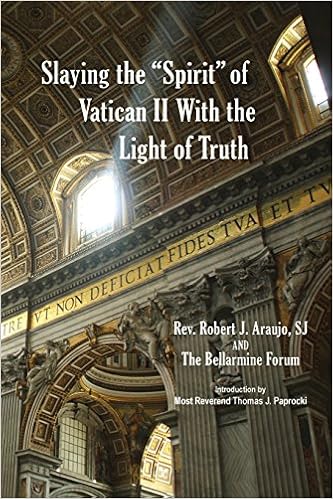
Slaying the “Spirit” of Vatican II With the Light of Truth by Fr. Robert J. Araujo S.J. and The Bellarmine Forum with an introduction by the great Bp. Paprocki.

US HERE – UK HERE

First, I love the title.  Second, I love the fact that the title is over the name of a writer with “SJ”.  Third, Bp. Paprocki.  Fourth, I have an essay in it.  What’s not to like?

Here are photos of the table of contents.

Unfortunately, this is not yet available also for Kindle.  C’mon!  Get with it!

Next, here’s a provocative title…  again, not for Kindle… yet…  GRRRR….

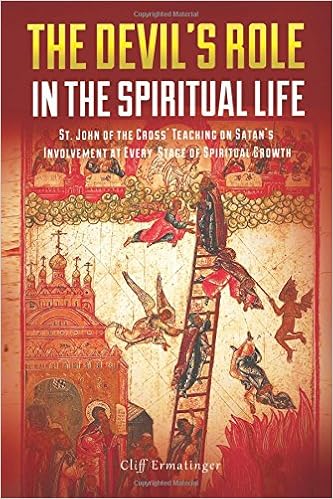
The Devil’s Role in the Spiritual Life: St. John of the Cross’ Teaching on Satan’s Involvement in Every Stage of Spiritual Growth by Cliff Ermatinger

US HERE – UK HERE

I look forward to drilling into this book.  It is heavily salted with quotes from St. John of the Cross, an author I would like to know more about, and the themes are presented thematically.  Given that today there are some foolish writers who deny or repudiate the use of any martial imagery when it comes to our Catholic lives, I immediately read through the chapter on “Spiritual Warfare”, which covers time-honored wisdom of John of the Cross, a great spiritual warrior standing on the shoulders of many others.

Also, last night I wound up and sleepless because I read into the depths of the night in a book I recently wrote about in these electronic pages.  HERE

Heroism and Genius: How Catholic Priests Helped Build—and Can Help Rebuild—Western Civilization by Fr. William Slattery

US HERE – UK HERE

This is really good.   Last night I read about Alcuin and his influence on Charlemagne and his subsequent heritage, passed on through other clerics.  It is very well written.  There stuff in this book I’ve never heard of before… and I’ve heard of a lot.

So… here’s some good reading ideas for you!


Posted in "How To..." - Practical Notes, REVIEWS | Tagged , , , ,
5 Comments

Midweek Lighter Fare

And now a tune from Death and the Marginalia.

The video was made by HERE

Posted in Lighter fare |
2 Comments

ASK FATHER: How long does holy water stay blessed?

From a reader…

QUAERITUR:

I got to wondering about the properties of holy water. Since so much water has been blessed before and recycled throughout time, does the church have comments about the length that water stays “holy”? Or is it a possibility that the tap water from the faucet could contain holy water if the water stays blessed to the end of time?

Speaking of wondering… I have sometimes wondered about the effective range of a blessing… 20 meters?  I’m pretty good with a 9mm at that range, but not with an aspergilum.   But I think I could manage a blessing at some distance.

But, duration of the blessing?  That depends on what is being blessed.   Let’s make a few distinctions.

Firstly, let’s think about things that go bad or get corrupted and those that don’t.

For example, we have food stuffs, obviously meant for relatively quick consumption.  If on the Easter Vigil I bless all sorts of foods people bring to church, I know that they will be consumed quickly.  If I bless, for example, wine, it could be years before it is consumed, but it will be consumed.  If I bless salt… salt is really stable, so it will endure as long as it is not diluted by water, etc.   But, blessed wine that is opened can corrupt, as can blessed sausages and cakes etc..  As in the case of the accidents of bread and wine remaining in the Eucharist, if the elements are corrupted and they cease to be what they were (wine turns to vinegar, etc.) they stop being blessed.

Water can go bad.   If you let water stagnate (not move) it can develop algae and get nasty in a hurry.  I am sure that no one wants to use that.  This is probably one of the reasons why, in the traditional blessing of Holy Water, exorcised and blessed salt is added.   Salt makes the water inhospitable to many critters.   There is also a scriptural, symbolic basis for adding salt to water, and the blessing prayers reference it.  The prophet Elijah poured salt into the waters at Jericho.  Our Lord talks about salt.  Holy Church has used blessed salt since her earliest years.  For example, it is placed on the tongue of those to be baptized in the rite of baptism.  In ancient times, salt was given to catechumens several times before they were baptized.

Next, things are blessed because God blesses them.

God blesses things on His own or through those who can bless, usually the priest in the case of the constitutive blessing.  Contrary to the horrid Books of Blessings (which I will never use, because the texts don’t bless things), there are two kinds of blessings.  The invocative blessing calls down a blessing by God on a person while the constitutive blessing establishes something as a blessed thing in a way that persists.  A more solemn and deeper version of this is the consecration.  For example, we bless medals and statues and water and so forth, but we consecrate altars and cemeteries.  People can be consecrated, too, as in the case of religious and the ordained.  If the bishop blesses you on the way out of church, you have received a blessing.  If the bishop consecrates you at solemn profession or ordination, then you are thereafter a consecrated person.

By the way, abuse of a consecrated thing, place or person is the sin of sacrilege.  If you vandalize a church, you commit two sins, destruction of property and sacrilege.  Both must be confessed.  If you visit the Diocese of Libville and, irritated after one of Bishop Fatty McButterpant’s sermons you bust him in the chops, you have to confess two sins: you hit a person and you hit a consecrated person, which is sacrilege.  There are mitigating circumstances for your guilt, of course… but I digress.

Back to blessings.

God blesses things and people, usually through God’s agent.

Sure, God can bless a faucet such that whatever water might issue forth from thence would be blessed water.  Perhaps that’s what God does with the spring that popped up at Lourdes.  Apparently many miraculous healings have occurred in conjunction with contact with “Lourdes water”.  God can do that.  I don’t know how to do that.  It is well beyond the pay grade of a human being, ordained or not, to bless a faucet or spring such that it will thereafter produce holy water in perpetuity.

So, turn on the faucet and I can bless what is in the sink or the container underneath, but that’s it.  And as long as that water is water (it hasn’t dried up and it hasn’t turned into a mass of green algae clogged goo) it is blessed.

On another note, sometimes I get questions about adding more regular water to holy water to increase its quantity.  Is it, for example, possible to add less than 50ml to 100ml and get 150ml?   25mm to 100ml?   If at the offertory the priest can up to 20% of water to the wine in the chalice without making substance of the wine doubtful, can less than 20ml be added to 100ml of holy water to produce 120ml… and so on and so on?

This practice isn’t forbidden.  Neither is it recommended.  It seems to me that people do this because they want holy water and Father isn’t blessing enough or often enough.  Hence, they creatively figured out a work around.

I would not do this.

Instead, work on Father to bless more water (hopefully with the older, traditional Rituale Romanum).

We are dealing with a sacramental.

“Sacramental” reality is not less real than what we perceive by our senses.  Blessed water is perceptibly saltier than usual, but so is regular water that has salt added.   We can’t taste test it and tell the difference.

Demons can tell the difference.

The Enemy really hates holy water.   One of the explicit purposes of holy water is to put demons to flight wherever it is sprinkled.  In exorcising and blessing the salt used for holy water, the priest says: “may [it] rid whatever it touches or sprinkles of all uncleanness and protect it from every assault of evil spirits.”  In exorcising and blessing the water: “I exorcise you so that you may put to flight all the power of the Enemy, and be able to root out and supplant that Enemy with his apostate angels”.  In blessing the combined water and salt: “Let whatever might menace the safety and peace of those who live here be put to flight by the sprinkling of this water”.

Heavy lifting, indeed!

St. Teresa of Avila in chapter 31 her autobiography explains how she was being tormented by demons.   She used holy water against them and wrote:

“From long experience I have learned that there is nothing like holy water to put devils to flight and prevent them from coming back again. They also flee from the Cross, but return; so holy water must have great virtue.”

Demons can tell the difference, even if we can’t

So, why use anything iffy?

BTW… just for your additional instruction, here is a side by side comparison of the older, traditional rite of blessing holy water, and the newer, post-Conciliar rite.  I won’t concern myself with matching them up because I have plenty to do today.

Read these and then ask yourself which you would rather use.

Try to find the specific words of blessing in each version.

ORDER FOR THE BLESSING OF HOLY WATER OUTSIDE MASS

1391  The celebrant begins with these words:

In the name of the Father, and of the Son, and of the Holy Spirit.

All make the sign of the cross and reply:

Amen.

1392  The celebrant greets those present in the following or other suitable words, taken mainly from Scripture.

May God, who through water and the Holy Spirit has given us a new birth in Christ, be with you all.

All make the following or some other suitable reply.

And with your spirit.

1393  As circumstances suggest, the celebrant may prepare those present for the blessing in the following or similar words.

The blessing of this water reminds us of Christ, the living water, and of the sacrament of baptism, in which we were born of water and the Holy Spirit. Whenever, therefore, we are sprinkled with this holy water or use it in blessing ourselves on entering the church or at home, we thank God for his priceless gift to us and we ask for his help to keep us faithful to the sacrament we have received in faith.

READING of the WORD of GOD

1394  A reader, another person present, or the celebrant reads a short text of Sacred Scripture.

[VARIOUS POSSIBLE SCRIPTURE READINGS]

PRAYER of BLESSING

1396  After the reading, the celebrant says:

Let us pray.

All pray briefly in silence, then with hands outstretched, the celebrant says the prayer of blessing.

Blessed are you, Lord, all-powerful God,
who in Christ, the living water of salvation,
blessed and transformed us.
Grant that, when we are sprinkled with this water or make use of it,
we will be refreshed inwardly by the power of the Holy Spirit
and continue to walk in the new life we received at baptism.
We ask this through Christ our Lord.

R. Amen.

1397  Or:

Lord, holy Father,
look kindly on your children,
redeemed by your Son
and born to a new life by water and the Holy Spirit.
Grant that those who are sprinkled with this water
may be renewed in body and spirit
and may make a pure offering of their service to you.
We ask this through Christ our Lord.

R. Amen.

1398  Or the celebrant says:

O God, the creator of all things,
by water and the Holy Spirit
you have given the universe its beauty
and fashioned us in your own image.

R. Bless and purify your Church.

O Christ the Lord, from your pierced side
you gave us your sacraments
as fountains of salvation.

R. Bless and purify your Church.

O Holy Spirit, giver of life,
from the baptismal font of the Church
you have formed us into a new creation
in the waters of rebirth.

R. Bless and purify your Church.

1399  After the prayer of blessing, the celebrant sprinkles those present with holy water, as a suitable song is sung; as circumstances suggest, he may first say the following words.

Let this water call to mind our baptism into Christ,
who has redeemed us by his death and resurrection.

R. Amen.


RITE FROM THE ROMAN RITUAL

(Priest vests in surplice and purple stole)

P: Our help is in the name of the Lord.
R: Who made heaven and earth.


Exorcism and Blessing of Salt (necessary for Exorcism of Water)


P: O salt, creature of God, I exorcise you by the living + God, by the true + God, by the holy + God, by the God who ordered you to be poured into the water by Elisha the prophet, so that its life-giving powers might be restored. I exorcise you so that you may become a means of salvation for believers, that you may bring health of soul and body to all who make use of you, and that you may put to flight and drive away from the places where you are sprinkled; every apparition, villainy, turn of devilish deceit, and every unclean spirit; adjured by him who will come to judge the living and the dead and the world by fire.

R: Amen.

P: Let us pray. Almighty and everlasting God, we humbly implore you, in your immeasurable kindness and love, to bless + this salt which you created and gave to the use of mankind, so that it may become a source of health for the minds and bodies of all who make use of it. May it rid whatever it touches or sprinkles of all uncleanness, and protect it from every assault of evil spirits. Through Christ our Lord.

R: Amen.

Exorcism and Blessing of Water

P: O water, creature of God, I exorcise you in the name of God the Father + Almighty, and in the name of Jesus + Christ His Son, our Lord, and in the power of the Holy + Spirit. I exorcise you so that you may put to flight all the power of the enemy, and be able to root out and supplant that enemy with his apostate angels, through the power of our Lord Jesus Christ, who will come to judge the living and the dead and the world by fire.

R: Amen.

P: Let us pray. O God, for the salvation of mankind, you built your greatest mysteries on this substance, water. In your kindness, hear our prayers and pour down the power of your blessing + into this element, made ready for many kinds of purifications. May this, your creature, become an agent of divine grace in the service of your mysteries, to drive away evil spirits and dispel sickness, so that everything in the homes and other buildings of the faithful that is sprinkled with this water, may be rid of all uncleanness and freed from every harm. Let no breath of infection and no disease-bearing air remain in these places. May the wiles of the lurking enemy prove of no avail. Let whatever might menace the safety and peace of those who live here be put to flight by the sprinkling of this water, so that the health obtained by calling upon your holy name, may be made secure against all attack. Through Christ our Lord.

R: Amen.

(Priest pours exorcised salt into the water, in the form of a cross – three times)

P: May a mixture of salt and water now be made, in the name of the Father, + and of the + Son, and of the Holy Spirit. +

R: Amen.

P: The Lord be with you.
R: And with your spirit.

P: Let us pray. O God, Creator unconquerable, invincible King, Victor ever-glorious, you hold in check the forces bent on dominating us. You overcome the cruelty of the raging enemy, and in your power you beat down the wicked foe. Humbly and fearfully do we pray to you, O Lord, and we ask you to look with favor on this salt and water which you created. Shine on it with the light of your kindness. Sanctify it by the dew of your love, so that, through the invocation of your holy name, wherever this water and salt is sprinkled, it may turn aside every attack of the unclean spirit, and dispel the terrors of the poisonous serpent. And wherever we may be, make the Holy Spirit present to us, who now implore your mercy. Through Christ our Lord.

R: Amen.


I, for one, will never use the newer form.  Eh-vur.

Posted in "How To..." - Practical Notes, ASK FATHER Question Box | Tagged
20 Comments