
From a reader…
QUAERITUR:
My question is, what am I required to participate in vocally when attending the Novus Ordo Mass. Where I attend, we are prompted to participate in singing four songs, sometimes five, and they are only songs, not many worship worthy. Then at the Responsorial Psalm we are to participate in either singing or praying a phrase. I remember in the Extraordinary Mass, the only requirements were to adore, pray, and follow the Latin if we desired. Of course I now do pray and sing enthusiastically the Credo, Gloria, Sanctus, Agnus Dei, and Pater Noster. It just seems now I am being ushered continuously through the whole Mass, with private devotion and thanksgiving left for after.
Right now I’m on an airplane typing on my phone. Forgive me if I am slightly telegraphic.
I am glad that you want to fulfill your role as a layman at Mass. As a baptized member of Christ’s mystical Body, when you speak and sing and move liturgically Christ the High Priest speaks, sings and moves in you. Christ the Head acts in the priest, Christ the Body in the congregation.
There is a strong impulse for the praying, liturgical Catholic, to make the responses, to rise, to kneel, when appropriate.
It seems to me that when it comes to hymns, which aren’t really liturgical texts, you can make your choices according to your desire. When it comes to the true texts of the Mass, however, official and assigned by the Church, I think there is more weight applied to the baptized congregant.
Are we obliged to speak and sing? No. But we are obliged to be open to speaking, singing, moving according to the texts and flow of the sacred liturgical action.
I think this applies to both Forms, newer and traditional. Popes of the 20th century thought so too, and tried to forward greater participation by responding, especially in singing. Singing, after all, is what one does when he loves (cf Augustine – “cantare amantis est“). The lover loves silently and still. The lover loves singing and gesturing.
A deficiency in the Novus Ordo, magnified by how it is usually celebrated, is the constant sound, the incessant urging to do something, sing, blah blah. There are more controlling rubrics in the Novus Ordo whereas custom guided people in the traditional form.
The traditional form, in its sung forms, Missa Cantata, Solemn, the whole Church, Head and Body together, should sing. After all, they love their roles and being there and doing what they do in fulfilling religion.
Balance must be sought. This is why, by the way, reclaiming the older, traditional form can help calm down the Novus Ordo. It’ll be around for a while yet.
Have I answered?


 In the last few months I have written about the return of the finest rosaries I’ve ever seen. Especially
 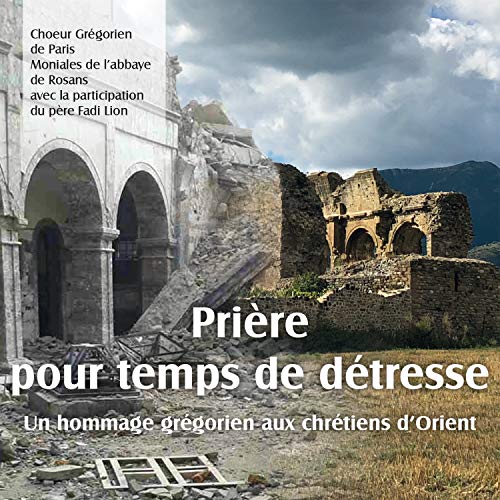 I received a note from a friend, a recommendation about a sacred music “disc”. “Great”, quoth I, “Yet another recording of the Requiem Mass,” or some such.
 APX on Detroit’s Archbishop attends mosque opening, says: “There is no place where I feel more respect, fraternity, and kindness”: “Meanwhile I’m watching a video on YouTube posted two days ago by a Detroit news station about the Archdiocese’s restructuring…”






























