The “logical union of women’s ordination and sodomy”

I have noticed lately an uptick in chatter about women deacons, deaconettes, deaconesses, whatever.  There was a conference at Fordham recently at which speakers (read: promoters) blew past the obvious problems of our lack of certainty about what ordination may have meant for women in the ancient Church, etc., and the fact that Lumen gentium definitively identifies diaconate, with priesthood and episcopacy, as a grade of Holy Orders (reserved to men), and also made assertions about how deaconettes would be accepted in parishes, etc.

Essentially, promoters of women’s ordination, even to the diaconate, comes down to this:

Maybe we don’t know some essential points about ancient deaconettes, but we want them now because they could be useful for ministry today.

This is a deadly trap.

However, there is a brilliant response to the trap available at this month’s number (Jan/Feb 2019 – Vol. 32, No. 1) of Touchstone James A. Altena.   This superb article is a must read for anyone even slightly interested in the issue of women’s ordination to any of the three grades of Holy Orders.

Sex, Women’s Ordination and the Rejection of Hierarchy and Equality.

The article is, alas, behind a paywall.  You can subscribe monthly online with Kindle – US HERE – UK HERE.

The author lays down the “irreducible theological connection between women’s ordination and ethical normalization of homosexuality.

The article slays women’s ordination.  The fact that Altena writes from an Anglican perspective makes no difference whatsoever for the inescapable logic of his conclusions.

The writer, James A. Altena, carefully sets forth his argument, to which in a single blog post I can hardly do justice.

He begins by showing how the Trinity is a hierarchy of equal persons.  Equality and hierarchy do not conflict.  Man (human beings), as God’s images, reflect in his relationships both equality and hierarchy.  The ease of harmony of human equality and hierarchy was marred in the Fall.  Maleness and femaleness reflect equality and hierarchy.

The relationship of man to woman, who signify in living forms the divinely created principles of male and female that in turn manifest the divine triune relations of hierarchy and equality, is one such unalterable symbolic relation, because it signifies the relation of Christ to his Church.  It is in the Church that the principles of the Incarnation – God made man – and of man and woman – complimentary persons made in the image and likeness of God – are brought together.

As Paul states,

the relation of Christ to his Church, and hence of male to female within it, is that headship and submission, in short, one of hierarchy…. And yet St. Paul also states that in the Church the salvific relation between its members, conferred by baptism, is neither male nor female… in short, is one of equality.    Both principles… are fully present and operative in the Church, and when rightly understood and applied, they cannot contradict each other.

Thus, the hierarchic relation of male headship to female submission cannot be one of dominance to subjugation that violates the principle of salvific equality, and the relation of equality cannot be one of undifferentiated egalitarianism that denies the principle of hierarchic relation.  Instead, as reflective of the ordered relations within the Trinity, the relation of headship to subjection, of male to female, is one of service and response – of self-sacrificial service by the head in union with the consenting and enabling cooperation and support of the subject, each selflessly seeking the greatest good of the other.

From here, Altena moves into examining ordained ministry as a sign of the Church.  As you might guess, ordained ministry, too, “embodies and manifests the principles of hierarchy and equality, and of headship and submission within hierarchy”.  Note the use of “sign”, which is a theological principle.

[T]he ordained minister does not just do things…. Rather, and far more importantly, he is something – a living sign, an ‘icon’ or ‘image’ of Christ to the Church, just as Christ as the Incarnate Son is the divinely given image of God to man (Heb 1:3), and the husband is the image of God to his wife and children in marriage and the family.

Then Altena moves into an important distinction between what he calls essentialism and functionalism.  Everything has an essential principle which makes it what it is, which orders its relations, goals and ends.  However, there is a modern, secular concept of functionalism,

“which denies the existence of any such inherent and irreducible essence, and hence of any intrinsic ontological or teleological character to things.  Instead, it asserts that a thing is nothing more than the sum of its parts and capacities for action or uses at a given moment, a particular collection of accidents which man chooses to conceptualize as a unity and to assign a name to.

Dear readers, I am harshly compressing Altena’s carefully argued article into a quick outline.  Do not assume that there are not well-argued connections and foundations for all of these moves.   However, you can see where he is going, even with my rough sketch.

Stepping away from Altena for a moment, the promoters of women’s ordination deny this hierarchal dimension when in comes to male and female.  They don’t like the “iconic” argument, that males reflect the male Christ in ordained ministry and maleness is necessary.  They say that women are also icons of Christ. Sure they are!  In the salvific dimension of equality.  But the way God has it set up, as revealed in the Trinity, equality can’t be considered alone.  There is also hierarchy, an ordering of headship and submission, in the Trinity, in nature, in the Church, in ministry.

Proponents of women deacons refer to how “useful” they would be.  This is a functionalist argument that does not account for what Altena calls essentialism.   The idea is this.  If ministry is a function, a job, in the Church, then anyone qualified should able to fulfill it because all in the Church, men and women, are equal.   Some men who are ordained can barely put three coherent sentences together in the pulpit and some women are brilliant orators and scholars.  Why shouldn’t they be ordained?  That reduces ministry to a function.  That’s a trap.

Going back to Altena, you can see where he is going with the connection between those who promote women’s ordination (to any grade of order) and those who promote sodomy. If sex is just a detail, then why shouldn’t men have sex with men?

When it comes to promotion of women’s ordination and of homosexuality

both positions deny or reject essentialism in favor of functionalism.  Apologists for sodomy deny that there his any underlying significance or purpose to sexual relations as essentially procreative and unitive, which naturally constitutes them and orders their use to those specific ends.  Rather, since they they can be conceived of and use (physical and emotional pleasure), these become [pace James Martin!] ends in themselves, and the means to them is asserted to be ‘natural’ in a reductionist sense.

Likewise, apologists for women’s ordination deny that there is any underlying significance of purpose to the ordained ministry as essentially hierarchical and authoritative, which naturally constitutes it and orders its use to that specific end.  Rather, since it can be conceived of and used functionally to obtain other desired results (e.g., pastoral care, Bible study, church administration, etc.), these become [pace Phyllis Zagano, Fr. Pottier, etc.] ends in themselves, and the means to them is asserted to be ‘natural’ in a reductionist sense.

Second, both sets of apologists deny or reject the Christian belief in divine signs, symbols, and signification.  For both, there is no belief that created things – whether sexual relations or the ordained ministry – are divinely constituted with any essential power or meaning to signify and point beyond themselves to revealed, eternal divine verities.  Instead, all symbols are purely human concepts which may be created, altered, and discarded at will, since their signifying power and meaning are determined by man (not God) to satisfy human desires and needs.

Altena keeps arguing through eight different points with two more quickly mentioned.   One of them, point eight, mentions a long-time reader of this blog…

Eighth and last, the final fruit of support for both women’s ordination and “sanctified sodomy” (to borrow William Tighe’s term) is the fundamental inversion of divine human relations.  Both the ability and the asserted right to take as a sexual partner a member of one’s own sex, or to ordain as a minister a woman rather than a man, presume that it is man and not God who sets the terms. As with inclusive language – the assertion of the right to name God as man desires rather than as God reveals – these are (as with all acts of disobedience) ultimately acts of idolatrous self-worship that seek to conform God to the image of and likeness of fallen man.

Do you hear the cosmic echo of the Fall of man?  Remember the lie of the serpent?   “Did God really tell you that?  You shall be as gods!”

Altena goes on to shoot down the counter-arguments, which I won’t summarize here.  You should get that article.  But if you have followed this, you can hear anticipate them: there is a priesthood of all believers… ministry is a job, a function… ministry shouldn’t reflect any sort of hierarchy…etc.

Altena shows in his superbly argued article – 9 densely argued pages – that the same line of thought and desire underlying the defense of and promotion of sodomy undergirds the promotion of women’s ordination.  And that applies to ordination all grades of Holy Orders.  The fact that Altena writes from an Anglican perspective makes no difference whatsoever for the inescapable logic of his conclusions.

Posted in Deaconettes, Our Catholic Identity, Sin That Cries To Heaven, The Drill | Tagged , , , , , , , ,
17 Comments

ACTION ITEM! For the Covington men at a crucial turn in their young lives!

Since I have been in Tokyo, I haven’t been tracking the US news very much.  I’ve only slightly followed the disgusting Covington Matter.

This morning I caught up.

I learned that Bp. Foys addressed the school, but parents weren’t allowed in.  He seems to have said that he backs them, but ….   The diocesan website has been replaced with a single page statement.  The offices of the diocese had to be cleared because of a threat.

The sky is coming down on these young men.

Over in Cincinnati there are radio spots demanding that Foys back the boys.  Even the Archdiocese of Cincinnati is getting calls, because no one can get through to Covington.

There is something truly demonic driving this.   Remember that this world has its Prince.  Family and life itself are the, as Sr. Lucia said, the final battle ground.   The very first attack on humanity by the Enemy was an attack on creation itself.   It is no surprise that this mess arose from a public march in support of life.

May I suggest to the readership to pray for the boys involved in this storm?   This is a life changing event.   This experience could help some of these young men become true warriors of the Faith.   If the world hates them, it is because they hated the Lord first.  Hence, in their conformity to Christ, so insulted and abused, they could be given mighty grace.  In a time of formation of their manhood for the future, this is a pivotal moment.

Rosaries for them, please?  Hours before the Blessed Sacrament?  Friday penances?

Give these young men your spiritual support.   As St. Augustine says, where there is charity, there are no distances.

Si vis pacem para bellum!

Posted in ACTION ITEM!, PRAYER REQUEST, Si vis pacem para bellum!, The Coming Storm, The future and our choices, The Last Acceptable Prejudice, Urgent Prayer Requests | Tagged ,
15 Comments

ASK FATHER: Confession before suicide

From a reader…

QUAERITUR:

I haven’t been to confession in a long time, and I’d like to go soon. But I’ve also been very depressed and considering suicide. So I feel like one of my motivations to go would be to prepare my soul before I do that act.

Would such a confession even be valid? If one of the requirements for a valid confession is a sincere resolve to try not to sin anymore, I’m not sure I could honestly meet that requirement if I am considering suicide in the future.

Whatever I might end up doing in the future, I’d still like to be
forgiven of whatever I’ve done in the past, but it feels like this isn’t an option.

What do you suggest I do?

First, of all… just… NO.   No.  This isn’t the right path.   You simply must tell more people around you what you are thinking and then let them help you.

Next, a basic point of confession – for validity – is that you must have a firm purpose of amendment.  That is, to stop committing the sins you confess and to resolve not to sin in the future as best you can.

Contemplating suicide in s serious way, not just a fleeting moment, with coolness of mind, etc., is itself a mortal sin.  You are not the “lord” of your own life.  God gave you your life and it is His.   Killing oneself is still the killing of a human being, who happens also to be you.  There are circumstances which can mitigate the guilt of any sin, but cooly to approach thoughts of suicide suggests deep problems but not the sort which, as in a moment of despair or fright, etc., lead to self-slaughter.

Also, you cannot get absolution for a sin that you are going to commit.  As for being forgiven for past sins, if you are confessions some sins, but holding out on confession serious thoughts of suicide, then NONE of your sins are forgiven.   For absolution to be valid, we must confession ALL mortal sins in kind and number.  Deliberate withholding of a sin – that is, remembering or knowing it but refusing to say it, rather than forgetting it in a moment of nervousness, etc. – invalidates your confession and absolution.  You are either forgiven or your aren’t.  Withhold serious mortal sins – seriously contemplating suicide is a serious mortal sin, just as seriously contemplating murder is – and you are not absolved of any sins.  You can’t be partially absolved.

Remember: God cannot be fooled and eternity really is forever.  There is no changing one’s mind after the fact.  Period.  Exclamation point.  For-eh-vur.

I suggest that you a) fight these thoughts when they come up by prayers especially to the Holy Spirit.  Suicide smacks of the sin that Christ said is unforgivable: because it involves despair.   Also, b) ask other people around you, who know and want the best for you, for help.  Otherwise, call a hotline… drop into a clinic… tell a cop… tell a teacher… tell a parent… tell a priest… tell someone.

I am sure that people here will, right now, stop and pray for you.

I entrust you to the Mother of God, who loves you as her own, to intercede with the Lord to help you in whatever must be given for peace.

Your life is precious to you for the sake of your soul and heaven.  Your life is also precious to us because we are all in this together.

And…when you find your balance again do go to confession… remembering what I mentioned above.  ALL mortal sins, in number and kind with a firm purpose of amendment.  Consider what a great thing it is to receive Holy Communion – which the dead can’t do – the ultimate sacrament of the living!

Posted in "How To..." - Practical Notes, ASK FATHER Question Box, Four Last Things | Tagged , ,
Comments Off on ASK FATHER: Confession before suicide

Fr. Rutler on the Covington Matter and a certain bishop

I’ve been out of sync with the US news cycle and, so, I’m catching up.  What I’ve read about these Catholic kids at the March for Life in what we might call the “Covington Matter” is horrifying.

The old Latin phrase in cauda veneno… the (scorpion’s) poison is in its tail…, meaning that the really important point is generally found at the end of a letter, applies to Fr. Rutler’s look at the ruthless and feckless virtue signalers who have so mistreated those kids.    Fr. Rutler does a good job of framing the players, especially irresponsible “journalists”.  (Yes, the scare quotes are ever more appropriate as members of that guild commit self-slaughter.)   Then he gets to the Bishop of Convington.

Our Lord condemned “virtue signaling” in his parable of the Pharisee and the tax collector in the Temple. “I thank you, Lord, that I am not like this sinner.” There are Pharisees in every corridor of society, but they find a most comfortable berth in the Church. So it was that the very diocese of the Covington students, without interviewing them or asking for evidence outside the media, promptly threatened to punish them. There was no reference to the hateful racism and obscene references to priests chanted by the cultic Hebrew Israelites as they threatened those Catholic youths. Instead, bishops issued anodyne jargon about the “dignity of the human person” without respecting the dignity of their own spiritual sons. The latest advertisement of the Gillette razor company portraying examples of “toxic masculinity” did not accuse any bishop, but only ecclesiastical bureaucrats would consider that a compliment. Pope Francis, off-the-cuff and at a high altitude in an airplane, once asked, “Who am I to judge?” There might at last be some application of that malapropism to shepherds who jump to judgment and throw their lambs to the wolves of the morally bankrupt media in a display of virtue signaling and in fear of being politically incorrect.

UPDATE

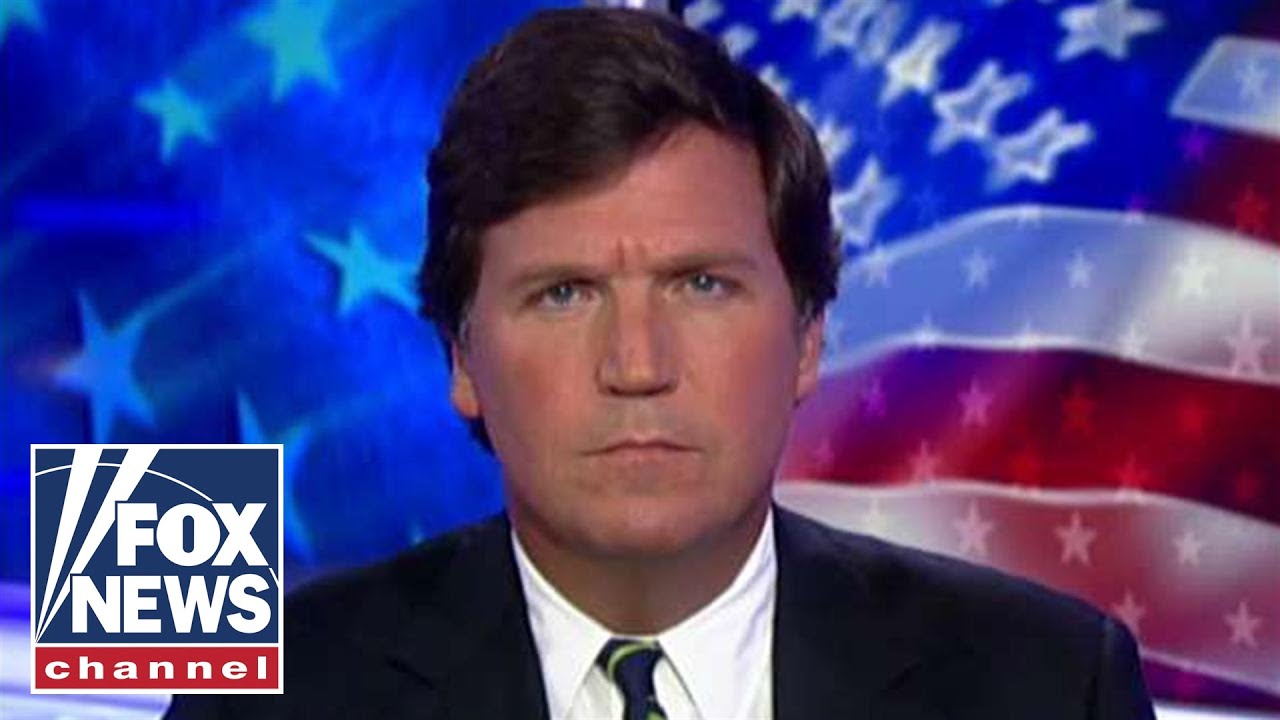
And here is Carlson.

YouTube thumbnailYouTube icon

Posted in Liberals | Tagged
52 Comments

TOKYO – Day 1-3: Feeding soul and body

Elsewhere I said that I was in Tokyo. I’m still in Tokyo. I am here with a great group of guys for some R&R.

On the evening of my arrival, one of the key figures of Una Voce Japan graciously met me at the airport.   I am deeply grateful to Augustin-san!   When I was settled at the hotel, we met two more Una Voce members and went out for tori nabe, a good way to get to know each other.

My view from my room. I look west and a bit south. I was hoping that in the morning I might be able to see Fuji-san.

The next morning, I was picked up and whisked away to the chapel where the TLM is usually offered.

Alas, the photos I was sent were small, so this is the largest of them.  However, Augustin-san told me that videos of the whole Mass will be posted.

UPDATE 23 Jan:

Here are links to the videos which the great Augustin-san sent this morning.

1 Sprinkling of Holy water to Graduale

2 Alleluja to Homily

3 Homily to Offertory

4 Offertory to Consecration of the Host

5 Consecration of the Chalice to Holy Communion

6 Holy Communion to the end of Mass

Here is the great and well-known Fr. Ikeda, 90 years young, who often says the TLM.  This Sunday he heard confessions.

Fuji-san!

And again.

We went for sukiyaki at a place in the Ginza area.  They do transcendent things with tomato.

Everything that is cooked passes through your small bowl which contains a beaten egg.

Sake… dry… cold.

We also have had shabushabu.   The word comes from the sound the food makes as you swish it in the boiling broth.  One the brethren was shy.

And… yes… I do love my PASMO.

At the Hokusai Museum, I found the best image for the Women’s March I have ever seen.

From the One Hundred Ghost Stories, c. 1983, a demoness holds a freshly-severed child’s head covered in blood.

That just about sums it up.

Below, from a drawing manual by Hokusai, images of lib writers, especially of the Fishwrap, Amerika, etc., trying not to write the truth.

Onward.  To the great Sumo Stadium and the January basho.

If you haven’t seen sumo you are missing something terrific.

Anyway, that’s a partial catch up on what is going on in Tokyo.

My still injured foot is really slowing me (and my friends) down.  But, I am managing.

UPDATE:

Augustin-san sent an update to one of the videos.  HERE

Posted in In The Wild, What Fr. Z is up to | Tagged
18 Comments

What’s up with the SSPX?

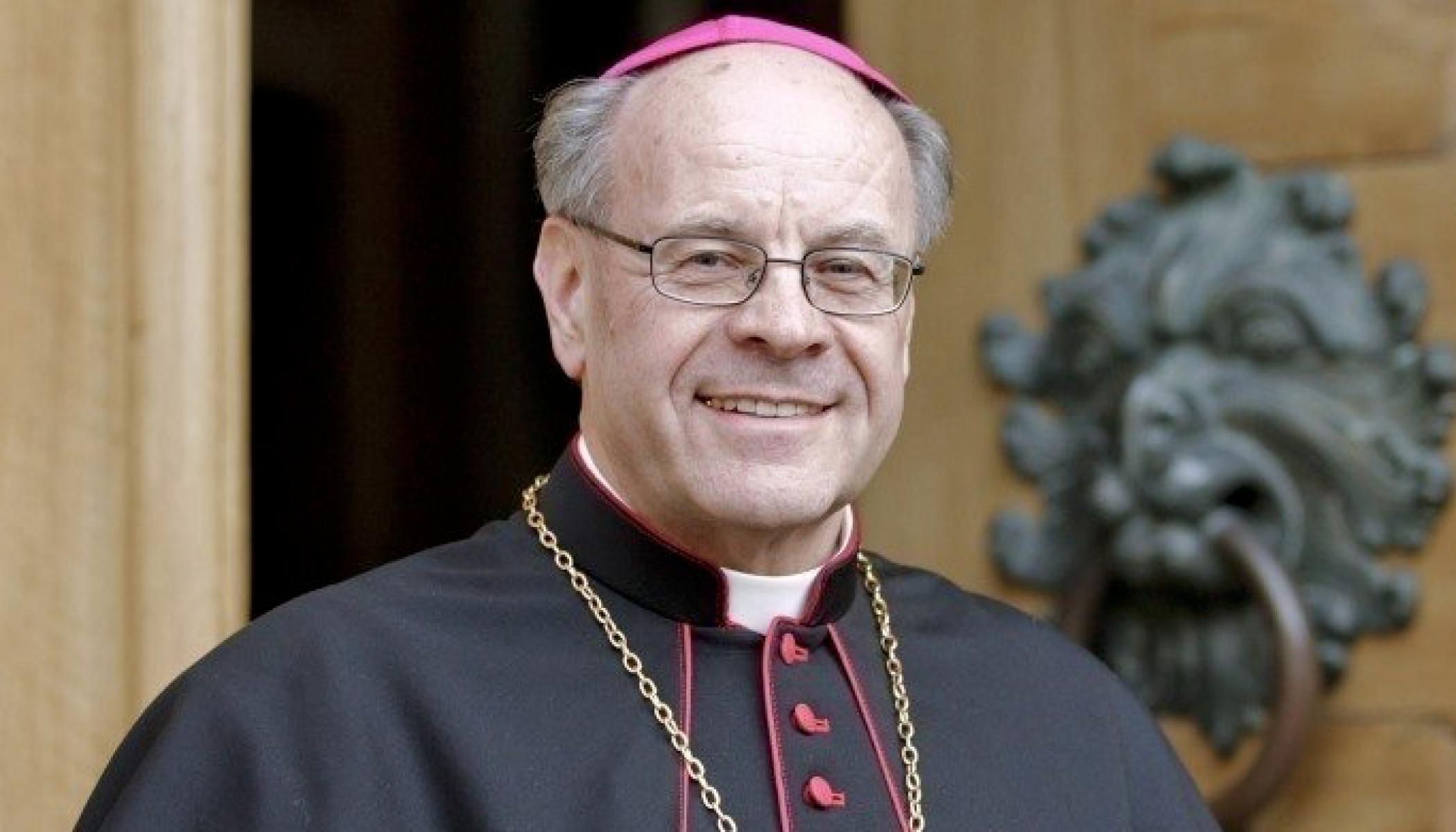
People are asking me about the meaning of a Swiss Bishop, 76 and retiring, who will live with the SSPX at one of their schools.  Rorate has a pretty good round up from different stories.

Basically, the Bishop of Chur, Vitus Huonder, wanted to retire some years ago, but Francis kept him on. Now, with Francis’ blessing, he will retire and live at a boarding school of the SSPX in Switzerland.

Chur has had some conservative bishops, including Wolfgang Haas, now in Liechtenstein. Their tenure has been hard.

What does this mean?

First, consider that, years ago, Benedict XVI lifted the excommunications of the SSPX bishops. That didn’t change the status of the priests, who did not have faculties.

In 2007, Benedict issued the “emancipation proclamation”, Summorum Pontificum.  That was huge.   The impact of that move will have a massive knock-on effect across many sectors of the Church.

Benedict then put the PCED under the aegis of the Congregation for the Doctrine of the Faith, seeing that most of the problems facing the Holy See and the SSPX were now doctrinal.

Then, Francis, in the Year of Mercy, found a sideways method of giving the SSPX faculties hear confessions and absolve. That was big. He extended that indefinitely. Then Francis found a way for SSPX priests to witness marriages, in conjunction with bishops of dioceses.

Recently, Francis suppressed the Pontifical Commission “Ecclesia Dei” (my old gig).  It is now wholly subsumed into the CDF as a “section”.  Its head is the Cardinal Prefect.  The personnel remain in their old digs.  The work goes on.   If now someone messes with Summorum Pontificum, they are messing not with little PCED, but with La Suprema.  Under Francis, the CDF isn’t quite what it once was, but it is still the heaviest of the heavy weight congregations of the Curia.

What we are seeing is a kind of creeping incrementalism.   It is commonly used on the Left to obtain permission of abuses, such as communion in the hand, girl altar boys.   The usual suspects like James Martin or Phyllis Zagano, are employing it to obtain approval of sodomy and women’s ordination.   It is a slow … pick your analogy… drip drip or chip chip or nudge nudge until you get what you want.   It is slow and patient and relentless, like cooking the frog in the slowly heating water.

I often say here, “Brick by Brick!”  Eventually you have built up the edifice… or have torn it down, without making a dramatic move that everyone notices and fights against.

Small gestures of recognition are being given to the SSPX.  Some not so small, when they involve the sacraments of matrimony and of penance, but you get my drift.

The fact is, Francis has okayed that a Bishop live with an SSPX community.   That’s not nothing.

If we turn the sock inside out, there could be other elements to this, which will have to be verified over time.  For example, if this bishop is with the SSPX, it is possible that he will be called upon to confirm and to ordain for the SSPX.  That’s what the other SSPX bishops do, but they are also getting older.   That might contain Bp. Huonder within the SSPX.    If Huonder were not with the SSPX, might he be – in his retirement at some blah blah place – another Athanasius Schneider (bless him)?  Free to travel, pontificate, speak?

In any event, I look forward to seeing what happens next.

It seems to me that we can look with optimism on the recent developments, until anything contrary comes up.

Meanwhile, I believe that these moves, along with what the PCED affirmed in the past, when I was around the place, that the SSPX is not formally schismatic, that you can attend their chapels, that you can fulfill your Sunday obligation at their chapels.  Now it is possible to go to confession and to get married in their chapels.   Those chapels are not parishes.  Their priests are not pastors (parish priests).  Hence, they cannot grant certain dispensations or delegations.   They don’t have, strictly speaking, the cura animarum as a parish priest does.   Nevertheless, you can see which way things are going.

Posted in SSPX, SUMMORUM PONTIFICUM, The Drill | Tagged ,
28 Comments

Your Sunday Sermon Notes

Was there a good point made during the sermon you heard at your Mass of Obligation for this Sunday?

Let us know what it was!

For my part, I celebrated Mass, TLM, in Tokyo.  I said a few things in Japanese, but the sermon was in English, with ongoing (not simultaneous) translation.   I spoke about how Paul urged the Romans to patience and to joy.   I spoke about the challenge presented to what was probably a modest family when a bunch of extra guests showed up for the wedding (the Lord and followers).   The lack of wine, the challenge it presented, resulted in the miracle.  The difficulty eventually produced abundance and joy.

This is how we must approach our challenges, with patience and joy.

Specifically, for those present, I suggested that the wine running out symbolized the lack of TLM that the Japanese congregation want so much.  They don’t always have the Mass.   I suggested that they ask Mary to intercede with the Lord to fill their wines jars with beautiful and abundant wine of the TLM.  Also, they should do whatever the Lord tells them: they have to get busy, too.

I was deeply moved by the people I met for the TLM.  These are such good and devout Catholics.   They sang well, making all the responses (as is proper for the Missa Cantata).  They were prayerful.   They wanted Benediction and brought many objects to be blessed.   One earnest man pressed me with a request for Mass for the Poor Souls, which I happily accepted.  Afterwards, a group of men went to a local diner, much as we would have in Rome or New York or elsewhere.  I hope to have some photos and perhaps some video to post.

Pray for this community in Tokyo.  They need the help of good young priests.  Their present priest helper is 90 years old!

Posted in SESSIUNCULA |
19 Comments

Super-Wolf-Blood Moon!

Tonight… for a lot of you. Alas, I won’t be able to view it. Rats. I would have loved to see this thing against the background of downtown Tokyo, where I am as I write.

We have a Super-Wolf-Blood Moon.

I find the order in which we English speakers want to place our adjectives fascinating.   This order feels right.  But… Super-Blood-Wolf Moon works.

It’s the Wolf Moon, because of the month, Blood because it an eclipse, and Super because the Moon is at perigee with your planet.  It should appear larger than most full moons.

From SpaceWeather.

Explanation: Tonight a bright full Moon will fade to red. Tonight’s moon will be particularly bright because it is reaching its fully lit phase when it is relatively close to the Earth in its elliptical orbit. In fact, by some measures of size and brightness, tonight’s full Moon is designated a supermoon, although perhaps the “super” is overstated because it will be only a few percent larger and brighter than the average full Moon. However, our Moon will fade to a dim red because it will also undergo a total lunar eclipse — an episode when the Moon becomes completely engulfed in Earth’s shadow. The faint red color results from blue sunlight being more strongly scattered away by the Earth’s atmosphere. A January full moon, like the one visible tonight, is referred to as a Wolf Moon in some cultures. Tonight’s supermoon total eclipse will last over an hour and be best visible from North and South America after sunset. The featured time-lapse video shows the last total lunar eclipse — which occurred in 2018 July. The next total lunar eclipse will occur only in 2021 May.

Posted in Look! Up in the sky! | Tagged
13 Comments

WDTPRS: 2nd Sunday after Epiphany – liturgical unicorn

Here is what I offered for my weekly column for the UK’s best Catholic weekly the Catholic Herald – now also in the USA.

This week we encounter a liturgical unicorn. We shall celebrate the Second Sunday in Ordinary Time in the Ordinary Form of the Roman Rite, and the Second Sunday after Epiphany in the Extraordinary. What makes this Sunday rare is that the collect is the same prayer in both.  

Although the Council Fathers of Vatican II said that, in the liturgical reform they mandated, nothing should be changed that wasn’t truly for the good of the people and that changes had to flow organically from what went before (SC 23), the editing, re-arranging, transforming and wholesale creating of new prayers was of tectonic magnitude. The traditional Roman Missal has 1,182 orations, of which 36 per cent made it into the newer Missal and, of them, half were altered. Only 17 per cent of the orations remained unchanged. Moreover, many were shifted to other times of the year. This Sunday, however, we have, unchanged, the same collect on the same day in both forms. 

Speaking of unchanged, our collect remains as it was in the ancient Hadrianum Sacramentary which Charlemagne gave to Pope Hadrian I in about 785. Of interest in England, the Sarum Rite had this collect on the Second Sunday after the Octave of Epiphany. Let us see our liturgical unicorn:

Omnipotens sempiterne Deus, qui caelestia simul et terrena moderaris, supplicationibus populi tui clementer exaudi, et pacem tuam nostris concede temporibus.

That simul et connects two or more co-ordinate terms or facts and represents them as simultaneous, “and at the same time, and also”. The deponent verb moderor means “to manage, regulate, rule, guide, govern, direct”.  A moderator is a governing official. Tempus means mainly “time” in general, together with “seasons of times, conditions, circumstances”, or like the Greek kairos, “the appointed time”.

Literal translation: “Almighty eternal God, who govern at the same time things heavenly and earthly, mercifully hearken to the supplications of Your people, and grant Your peace in our temporal affairs.”

Current ICEL translation: “Almighty ever-living God, who govern all things, both in heaven and on earth, mercifully hear the pleading of your people and bestow your peace on our times.”

Today we beg God, as omnipotent guide of all things, for peace in our temporal affairs now, not just later in heaven. And we want the peace that comes from Him, not as the world gives (John 14:27). Remember: no passing, created thing can give us the peace that truly lasts. God alone endures.

Posted in Liturgy Science Theatre 3000, WDTPRS |
2 Comments

Francis suppressed the Pontifical Commission “Ecclesia Dei”. Fr. Z remarks.

The new “pipe” (some of you will get that) of the Holy See’s communication commisariat issued an editorial about the formal suppression of my old office, the Pontifical Commission “Ecclesia Dei”.    Well… my old office is still there.  And my old desk, etc.

Tornielli made two points.

First, because there are far more and widespread numbers of the older form being celebrated there is less pastoral need for what the PCED was doing.  Thanks, SP.

Also, because most of the problems with the reconciliation of the SSPX have to do with doctrinal issues, it seems best to put the whole thing in the doctrinal congregation.

There are problems here and there are advantages.

Tornielli made the point that the same personnel are kept on in the new section of the CDF… and the PCED was already a section of the CDF.

Remember, the PCED – which was born as an ad hoc Commission – was already\Po absorbed into the CDF.

Getting my drift?

Some idiots out there will run around with their hair on fire, colliding from the left and from the right.  One idiot shouted BOOM.  But everything he does is for attention, merely. He has kinder to feed, I guess.

Let’s see what happens.

I am tempted to say “plus ça change…”

Posted in SESSIUNCULA | Tagged
48 Comments