This is how I occasionally see my day develop.

Wow. Right?

 Last Saturday, 3 March, we had a Requiem Mass for in the intention of the late Fr. Alfred Kunz. It was the 20th anniversary of his murder. His body was found on 4 March 1998, though he was probably killed the night before.
This was not only the sin of murder, but also the sin of sacrilege. One act, two sins.
Remember how David could have killed his enemy and persecutor King Saul, but refused because we must not raise our hand against the Lord’s anointed. Harming a priest is sacrilege.
20 years ago. There still has been no resolution.
It is possible that someone out there knows something that might make a difference in this case.
The Dane County Sheriff’s Office hopes to re-invigorate the investigation of this case, and encourages anyone with information to contact the TIPS line at 608-284-6900 or email at
tips@danesheriff.com
I can’t imagine keeping something like this bottled up. I can’t imagine how it must gnaw inside.
Here are photos from the Requiem on the 20th anniversary of Fr. Kunz’s brutal murder.


This shot, with the juxtaposition of birettas, touched me and makes me consider my own impending death.

Here is my sermon after the Mass. [UPDATE 7 March 2018 – I’m told that it was auto-playing, so I shifted it over to another audio plugin.]
Podcast: Play in new window | Download
Subscribe: RSS
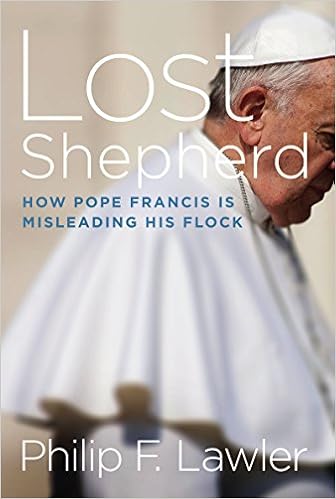 I’m still reading the book, which will be vilified – with its author – by papalotrous libs who will not have read it. The New catholic Red Guards don’t permit questions. They don’t have to read, either. They react.
Lost Shepherd: How Pope Francis is Misleading His Flock.
US HERE – UK HERE
Lawler presents a heartfelt cri de coeur.
Lawler was once very positive Pope Francis. He describes how, eventually, something in him “snapped”. He came to the view that the Pope was trying to change unchangeable teaching, which is a contradiction. Confusion is growing and the one who is given to the Church to resolve confusion is bringing it about.
So far, what I’ve read in this new book is fair and balanced. He remains supportive and respectful and hopeful.
For example, Lawler looks at the Pope’s encyclicals praising what is praiseworthy and pointing to what is confusing. When looking at Laudato si’ he first underscores what is solid and then points out that
A spiritual leader weighing in on a scientific debate, Francis is obviously out of his element. Man-made climate change either is or is not a scientific reality. A pronouncement by the pope—who has no special authority on scientific issues—will not affect that reality one way or another. In Laudato Si’, the pontiff sides with the majority opinion, and he does so unnecessarily, because the question of climate change is not central to the moral argument that he is exploring. (Kindle Locations 524-528).
In any event, I’m still working through the book.
The title is really provocative, but I have found him to be respectful while making his concerns known. The analogy that he uses is that of a concerned child who, seeing that his father has put his foot wrong, speaks up out of love.
Having read as much as I have read, I have every reason to believe that Lawler is sincere.
On EWTN, Raymond Arroyo interviewed Phil Lawler.
Go to 23:00 for Lawler. You can tell that Lawler is not a bomb thrower. You make the call.
BTW… his comment on the weird new stamp for Easter issued by the Vatican Post is DEAD ON.
In addition to this interview, you might also have a look at a piece penned by Sam Gregg about Lawler’s book at Catholic World Report.
Gregg says:
The power of Lawler’s narrative was derived from its calm tone, a meticulous attention to facts, a refusal to overstate or downplay how bad things were, a comprehensive knowledge of Catholic teaching and history, and an obvious love for the Church. … As in his previous work, Lawler doesn’t embellish facts. Indeed there’s nothing by way of fact in Lawler’s text which isn’t already known. Lawler’s focus is upon helping his readers understand Francis’s papacy and what it might mean for the Catholic Church in the long-term.
[…]
But one of his book’s strengths is that it tries, at every point, to give Francis the benefit of the doubt. In addition to avoiding the hyperbole, polemics, and more bizarre theories about Francis which populate some of the internet’s weirder outposts, Lawler prudently distinguishes between the pope’s words and actions, and the more flagrantly outrageous statements of some of the garrulous characters surrounding him.
This judicious approach won’t save Lawler from the barrage of insults, frenetic name-calling, splenetic tweets, conspiracy theories, and limp non sequiturs which, alas, we’re come to expect from some of Francis’s defenders. [And we know whose non sequiturs he means!] That, it seems, is how they roll. But just as Lawler’s The Faithful Departed made its case carefully and without exaggeration, so too does Lost Shepherd neatly and charitably summarize many faithful Catholics’ reservations about Francis’s pontificate.
To which, I think it is appropriate to add:

Our Lady of the Column over the altar of Mary, Mother of the Church in St. Peter’s Basilica
Pope Francis has decreed the insertion into the calendar of the ORDINARY Form the Memorial of Mary, Mother of the Church, to be celebrated on Pentecost Monday.
The decree is dated 11 Feb 2018, the 160th anniversary of the first apparition of Our Blessed Mother at Lourdes.
How this will work with the Extraordinary Form is a bit of a puzzle, since we celebrated the Octave of Pentecost. It seems to me that adding her orations to the Collect, etc., would be a good approach.
The title goes back at least to St. Ambrose and has been used by many Popes. Paul VI explicitly named her “Mother of the Church” in the Credo of the People of God and created an altar for her under this title in St. Peter’s Basilica which has an ancient icon of Mary that was the model for the mosaic that John Paul II added in 1981 to the external wall of the Apostolic Palace over St. Peter’s Square.
There is a deep theology to this Marian title and celebration.
The great Card. Sarah, Prefect of the Congregation for Divine Worship said (HERE), that this elevation of her Votive Mass to a Memorial comes from “maturation of liturgical veneration given to Mary following a better understanding of her presence ‘in the mystery of Christ and of the Church’, as explained in Chapter 7 of Vatican II’s Lumen gentium.” It also underscores, “the importance of the mystery of Mary’s spiritual motherhood, which from the awaiting of the Spirit at Pentecost has never ceased to take motherly care of the pilgrim Church on earth”.
Prot. N. 10/18
DECREE [It’s in Latin.] on the celebration of the Blessed Virgin Mary Mother of the Church in the General Roman Calendar [HERE]
The joyous veneration given to the Mother of God by the contemporary Church, in light of reflection on the mystery of Christ and on his nature, cannot ignore the figure of a woman (cf. Gal 4:4), the Virgin Mary, who is both the Mother of Christ and Mother of the Church.
In some ways this was already present in the mind of the Church from the premonitory words of Saint Augustine and Saint Leo the Great. In fact the former says that Mary is the mother of the members of Christ, because with charity she cooperated in the rebirth of the faithful into the Church, while the latter says that the birth of the Head is also the birth of the body, thus indicating that Mary is at once Mother of Christ, the Son of God, and mother of the members of his Mystical Body, which is the Church. These considerations derive from the divine motherhood of Mary and from her intimate union in the work of the Redeemer, which culminated at the hour of the cross.
Indeed, the Mother standing beneath the cross (cf. Jn 19:25), accepted her Son’s testament of love and welcomed all people in the person of the beloved disciple as sons and daughters to be reborn unto life eternal. She thus became the tender Mother of the Church which Christ begot on the cross handing on the Spirit. Christ, in turn, in the beloved disciple, chose all disciples as ministers of his love towards his Mother, entrusting her to them so that they might welcome her with filial affection.
As a caring guide to the emerging Church Mary had already begun her mission in the Upper Room, praying with the Apostles while awaiting the coming of the Holy Spirit (cf. Acts 1:14). In this sense, in the course of the centuries, Christian piety has honoured Mary with various titles, in many ways equivalent, such as Mother of Disciples, of the Faithful, of Believers, of all those who are reborn in Christ; and also as “Mother of the Church” as is used in the texts of spiritual authors as well as in the Magisterium of Popes Benedict XIV and Leo XIII.
Thus the foundation is clearly established by which Blessed Paul VI, on 21 November 1964, at the conclusion of the Third Session of the Second Vatican Council, declared the Blessed Virgin Mary as “Mother of the Church, that is to say of all Christian people, the faithful as well as the pastors, who call her the most loving Mother” and established that “the Mother of God should be further honoured and invoked by the entire Christian people by this tenderest of titles”.
Therefore the Apostolic See on the occasion of the Holy Year of Reconciliation (1975), proposed a votive Mass in honour of Beata Maria Ecclesiæ Matre, which was subsequently inserted into the Roman Missal. The Holy See also granted the faculty to add the invocation of this title in the Litany of Loreto (1980) and published other formularies in the Collection of Masses of the Blessed Virgin Mary (1986). Some countries, dioceses and religious families who petitioned the Holy See were allowed to add this celebration to their particular calendars.
Having attentively considered how greatly the promotion of this devotion might encourage the growth of the maternal sense of the Church in the pastors, religious and faithful, as well as a growth of genuine Marian piety, Pope Francis has decreed that the Memorial of the Blessed Virgin Mary, Mother of the Church, should be inscribed in the Roman Calendar on the Monday after Pentecost and be now celebrated every year.
This celebration will help us to remember that growth in the Christian life must be anchored to the Mystery of the Cross, to the oblation of Christ in the Eucharistic Banquet and to the Mother of the Redeemer and Mother of the Redeemed, the Virgin who makes her offering to God.
The Memorial therefore is to appear in all Calendars and liturgical books for the celebration of Mass and of the Liturgy of the Hours. The relative liturgical texts are attached to this decree [You have to hunt for them. Let’s save you some time. HERE] and their translations, prepared and approved by the Episcopal Conferences, will be published after confirmation by this Dicastery. [“all Calendars”? And in the Extraordinary Form we use the Breviarium Romanum not the Liturgia Horarum. Read on…]
Where the celebration of the Blessed Virgin Mary, Mother of the Church, is already celebrated on a day with a higher liturgical rank, approved according to the norm of particular law, in the future it may continue to be celebrated in the same way. Anything to the contrary notwithstanding.
From the Congregation of Divine Worship and the Discipline of the Sacraments, 11 February 2018, the memorial of the Blessed Virgin Mary of Lourdes.
Robert Card. Sarah, Prefect
Arthur Roche, Archbishop Secretary
UPDATE:
Here is the Collect for the Mass (and hours) for Memoria Beatae Mariae Virginis Ecclesiae Matris, which is simply from the Votive Mass Mary, Mother of the Church:
Deus, misericordiarum Pater, cuius Unigenitus, cruci affixus, beatam Mariam Virginem, Genetricem suam, Matrem quoque nostram constituit, concede, quaesumus, ut, eius cooperante caritate, Ecclesia tua, in dies fecundior, prolis sanctitate exsultet et in gremium suum cunctas attrahat familias populorum.
I guess the could have squeezed a few more commas into that oration… sheesh.
LITERAL VERSION:
God, the Father of mercies, whose Only-Begotten affixed to the Cross established His Mother the Blessed Virgin Mary also as our Mother, grant, we beg, that as her charity is also at work, Your Church, ever more fruitful each day, may exalt in the sanctity of progeny and may draw into her bosom all the families of peoples.
Hmmm… so much for that whole thing about not proselytizing. Right? Didn’t the non-note-taking 90+ year old Communist Eugenio Scalfari of La Repubblica claim that Pope Francis said that proselytism was “solemn nonsense”?
I am lingering in Providence… which doesn’t sound so bad on the face of it. Alas, I’m at the Providence airport and not heavenly Providence.
Since Saturday I’ve preached the Masses and parish mission. We concluded last night with a well attended Solemn Mass.
And so I head back West with the likelihood of many hours of delay if they can’t get us out of here soon enough for me to make my connection in DTW.
Moreover, we are to arrive at terminal B and my connection is at A73. If you know DTW you know what that means.
Meanwhile, I confirmed with someone here that this is indeed the team’s ride:

More later.
UPDATE:
Fun!

And I’m reading the new CDF letter

UPDATE
WELLLLL…. this flight has been diverting.
Engine trouble. We were diverted to Hartford.
I was in premium and happened to be first to the gate agent who after some serious and long calls to The Whatever High Atop The Thing, got me on the next flight to DTW in time, theoretically, for The Last Plane To Mad City.
It seems it is snowing in DTW.
This reminds me of the line from Holy Writ: “Let your flight be not in winter.”
Will Father Z get home?
Will he be stuck in Detroit?
Stay glued.
UPDATE
*sigh*
I’m on an airplane again. I MIGHT make my connection in DTW if everything goes well. I’ll have about 15 from our scheduled arrival to scheduled departure which is at the other end of the airport.
As I took my seat some gal was singing a song playing over the PA, “Everything’s going my way!” She seemed pretty cheerful about it.
In other news I got upgraded.
UPDATE 00:02AM 2 March
They delayed my flight from DTW to MSN. They delayed it until TOMORROW. So, I gave a priest friend a jingle and I’m staying overnight at a parish. I am fortunate. I heard one guy on the phone say that there weren’t any hotels available within 30 miles.
That said, I have a ferociously early flight.
I had planned on making the Friday LENTACAzT when I got home tonight… yesterday… whenever. Now it’ll be a little late.
UPDATE:
I’m back at the airport for a 0600 departure… scheduled. Even with my level and clearances etc. it took an hour to get to the gate. And I’m told it’ll be really crazy here in an hour or so.

Quite a few people spent the night in the airport. Some of them perhaps got more sleep than I did, but I got to see a priest friend for a while.
That said, I’m now pretty sick of this trip. It’ll be good to bring it to a conclusion.
Meanwhile, I’m told that poor Beans has been trying to harm my reputation on Twitter, which, while predictable, is also sad. Apparently he is against converts who come into the Church as believers.


 From a priest…
QUAERTUR:
Are partial immersion baptisms valid?
Where the baby is dipped up to the waist 3x, with valid words of baptism spoken.
Here’s the deal.
The “proximate matter” of baptism is ablution. This means physical contact of the water and the person’s body. The ablution symbolizes outwardly what happenes in the soul.
There are different ways to accomplish this ablution. There is dipping or immersion (immersio), pouring (infusio) or sprinkling (aspersio).
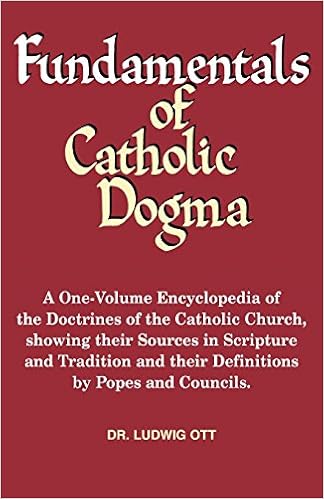 The immersion does not, apparently, even have to be a three-fold immersion. Pope Gregory the Great, in a letter to the Church in Spain, permitted a single immersion. According to Ott’s helpful book this was to symbolize against the Arians the unity of the divine substance of the Trinity.
However, in all cases, the water must flow on the head.
I have had to write about this in the past. Hence, back when I consulted a friend of mine who worked in the Congregation for the Doctrine of the Faith about validity of baptism when the water a) does not touch the head or b) flows only on the hair, and doesn’t touch the skin of the head. In the case of b) yes, that is valid. However, in the case of a) there are big problems.
If the water does not touch the head, at least the hair of the head, the baptism is invalid.
However, it is possible to find in some manuals – and we like manual – that if water touches, say, only the shoulder, the baptism could be valid. The far away from the head, the more doubtful. In all those cases where the water touched something other than the head, there should be a conditional baptism. Consider: in an emergency where someone is stuck in a hole and you can only reach a leg, and water is poured on the leg, that baptism is doubtful and should be repeated conditionally.
That’s why I wrote to my friend in the CDF with the question. He responded: water must flow on or touch the head, at least the hair of the head.
To be sure, the water should be poured in enough quantity and on a place of the head where there is exposed skin, while the Trinitarian form is recited: “I baptize you in the name of the Father, and of the Son, and of the Holy Spirit.” In my opinion it is best to do this in Latin, though approved translations are allowed. The form is absolutely essential. In no circumstance can it be altered. These words must be pronounced simultaneously with action of making the water contact the head. Not before. Not after.
A good practice is to pour the water thrice, with the Names of the Persons of the Trinity, or continuously as the whole form is pronounced, directly on bare skin of the head. That way there is no question about validity.
There is no reason to FOOL AROUND WITH SACRAMENTS!
Bishops would do well to quiz priests about how to baptize. Some might find this insulting, but I have heard some pretty crazy things. It may be that men trained – this includes permanent deacons, by the way – in certain places during certain years cannot be assumed to know how to baptize properly.
I mean … how hard is it, guys, to do it right? To do it in such a way that there can be no doubt in the minds of those watching that it was valid?
How hard is it?
For all love, if priests and deacons can’t do these basic things right, say the black and do the red, they should be sent to some… I dunno… remedial summer camp. No air-conditioning or screens on the windows until they can demonstrate that they know the words and actions.
For those of you near Tiverton, RI (and anywhere in Rhode Island is near Tiverton by default) tonight there will be a Solemn TLM at 7 PM (with deacon and subdeacon) for the close of the parish mission which I have delivered over the last few days at Holy Ghost Church where the legendary “iPadre” Fr. Jay Finelli is pastor. MAP HERE
We really hammered away!
We are to celebrate Wednesday in the Second Week of Lent. The Roman Station is St. Cecilia in Trastevere.
Here’s some fascinating trivia for you.
The first reading for Holy Mass in the Extraordinary Form is from the Book of Esther, which is rather unusual. We hear part of Mordechai’s prayer for protection for his people, the Jews, who were in mortal peril because of the machinations of the evil Haman. The reading includes…
ne claudas ora te canéntium … shut not the mouths of those who sing to You
Remember, this would have been read and sung for centuries at St. Cecilia’s Basilica in Trastevere. It is possible that this phrase from the Station Mass reading was an influence in associating Cecilia with music, thus resulting over time in her being seen as the patron saint of music and church musicians.
Also, you might remember that Esther interceded with the Persian King to save the Jews in exile from certain death. This reversal of fortunes is celebrated by the Jews as the Festival of Purim.
It happens that today, when sing Esther in church for Mass, is the Jewish feast of Purim.
Five years ago today we watched the helicopter take off. Posts HERE

Say a pray for Benedict XVI. He gave inestimable gifts to the Church in his too short pontificate.
 Summoning the nastiness of which liberals are duly known, Rita Ferrone demonstrates how mean-spirited a lib can be in piece penned for Commonsqueal. She attacked Robert Card. Sarah because he has called for a rethinking of Communion in the hand.
Card. Sarah opined in a preface he wrote for a recent book (HERE) that Communion in the hand (with other practices and influences) has diminished faith in the Eucharist. He is, of course, right. Hence, the spittle-flecked nutty from Ferrone.
It’s soooo predictable.
She doesn’t offer much in the way of counter arguments, except to cite the tired old claim that in the ancient Church some people received Communion in the hand and some writers wrote eloquently about that. Never mind that the practice of Communion in the hand dropped away for a good reason, such as deepening appreciation and understanding of the Eucharist. She also makes the point lots of people receive Communion that way in good faith. In other news, water is still wet, the sun still rises in the East, 2 plus 2 still equals 4… well… you get what I mean.
In effect, Ferrone’s attack on the Cardinal consists mainly of calling him stupid and mean.
“…Sarah manages to slander…”
“…Sarah’s comments reveal either an appalling ignorance of or an indifference to liturgical history…”
“… he is disparaging the faith of many centuries of Christians…”
“… Sarah’s remarks display a lamentable lack of pastoral sensitivity…”
“Why did Pope Francis appoint Sarah—not to a niche position, but to a mainstream post in a field about which he knows little? And why does he let him go on blundering in this way?”
She goes on and on and on.
Ironically, however, the first sentence of her piece is:
In an arena where, arguably, the most important thing he could do is to encourage charity and an irenic spirit toward various forms of Eucharistic piety,…
Hypocritical much?
Look, these issues are really important and – simply put – we have to “have the fight“. Heated language is part of that. But clearly Sarah scared the stuffing out of Ferrone and she lashed out with a clear meanness, a littleness of spirit, because he is writing on a wholly different level: spiritual.
Her accusation that Card. Sarah denigrated people who receive Communion in the hand is simply A LIE. Libs are seldom checked by facts. Clearly what Sarah did – as when he made a call for ad orientem worship – is attempt to promote a more thoughtful, prayerful attitude of worship and reception of the Eucharist.
Pointing out that profanation of the Eucharist takes place more easily because of Communion in the hand is NOT a denigration of people who have never been taught about Eucharist. Most people, when they are well-instructed, rethink Communion in the hand. It’s not their fault if they haven’t been well instructed. Card. Sarah isn’t blaming people for something that isn’t their fault. His call is for a deeper understanding of what we do at Communion.
Here’s a taste of what Card. Sarah wrote in the preface she has reacted against so violently with my emphases:
May this book encourage those priests and faithful who, moved also by the example of Benedict XVI — who in the last years of his pontificate wanted to distribute the Eucharist in the mouth and kneeling — wish to administer or receive the Eucharist in this latter manner, which is far more suited to the Sacrament itself. I hope there can be a rediscovery and promotion of the beauty and pastoral value of this method. In my opinion and judgment, this is an important question on which the Church today must reflect. This is a further act of adoration and love that each of us can offer to Jesus Christ. I am very pleased to see so many young people who choose to receive our Lord so reverently on their knees and on their tongues. May Fr. Bortoli’s work foster a general rethinking on the way Holy Communion is distributed. As I said at the beginning of this preface, we have just celebrated the centenary of Fatima and we are encouraged in waiting for the sure triumph of the Immaculate Heart of Mary that, in the end, the truth about the liturgy will also triumph.
Here’s one of Rita’s comments about the Cardinal:
“… What a cruel and unnecessary affront to the person in the pew! What a pernicious viewpoint to endorse…”
I think we are all familiar with the startling statistics about knowledge of and acceptance of what the Church teaches. I think we know that huge numbers of those who go to Communion at Mass are committing acts of sacrilege.
Card. Sarah, who regularly retreats from the hurly-burly and spends days in prayer and fasting, in his preface wrote openly about the war that Hell and demonic forces wage on people’s belief in the Blessed Sacrament.
If you were looking for confirmation that Card. Sarah’s call for consideration of ad orientem worship and the reduction of Communion in the hand are dead on target, look no farther than Ferrone’s mean-spirited spittle-flecked nutty.
I suspect that most of the unhinged reactions which will be flung – chimp-like – at Sarah stem from his unambiguous reference to the spiritual battle being waged for souls even on the angelic plane. Card. Sarah believes in the Devil and the spiritually deadly effect of Hell’s war on souls. Libs don’t believe these things. As a matter of fact, when they are brought up libs become either a) dismissive about such fairy tales, thus confirming the truth that the Devil’s greatest victory is to wipe out people’s belief in him or b) angry and violent, which is another kind of confirmation.
The Enemy doesn’t like resistance. When challenged demons commonly raise a hellish squeal.
You might try an experimental gut check.
Read a little bit of one of Card. Sarah’s books. Then read some of Ferrone’s invective.
The Power of Silence: Against the Dictatorship of Noise.


I received a note from one of you readers, who was channelling his inner Zuhlio.
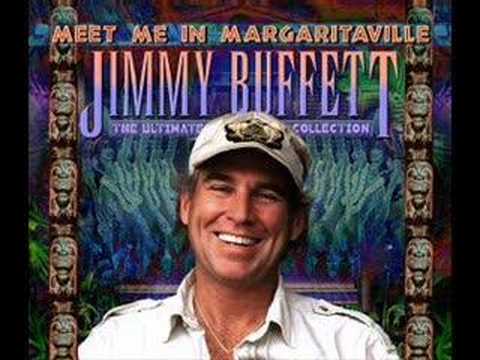
Frequent reader, occasional poster. I’m stationed up at ___ Air Base waaaaay up in ___, and we’ve been stuck in doors due to a winter storm. While listening to Jimmy Buffett and talking with a friend about liturgy, I penned the following, sung to the tune of A Pirate Looks at Forty. Clearly we have too much time on our hands.
Enjoy.
__
Solemn and High Masses,
I have heard you call.
Wanted to listen to your Missal
Since I discovered you last Fall.
They’ve changed it all.
They’ve changed it all.Read that men who prayed you
Switched to new routines,
But in your pages you hold the treasures
That few have ever seen.
The new one’s so lean.
The new one’s so lean.Yes, I am a Catholic
One hundred years too late.
The organs don’t thunder.
There’s no sense of wonder.
I’m an under forty victim of fate.
Arriving too late.
Arriving too late.I’ve done a bit of chanting,
And I’ve heard a Solemn Mass.
I’ve sang a few psalms
And keep my rosary,
But I still don’t enjoy the new Mass.
The priest speaks too fast.
The priest speaks too fast.And I have skipped Mass now for over two weeks.
I’ve stayed up, and I’ve slept in,
And I’ve not turned my cheek,
But I’ve got to stop missing
And go to confession
And do some more penance again.
Just a few sins.
Just a few sins.I go for older hymnals,
And sang from several a while.
Though they took them away,
They’ll come back, I pray,
And that’ll bring me a smile.
It just takes a while.
Just takes a while.Solemn and High Masses,
After all the years I’ve found,
Liturgy that’s haphazard means
That reverence just won’t abound.
I can’t look around.
Just keep my head down,
And kneel on the ground.
And keep my head down. . .
In case you need a refresher for the tune. I did!
And it’s not even 19 September!

Coat of Arms by D Burkart









A Daily Prayer for Priests


They find you a pro-life agent in your area who commits to giving a portion of the fee to a pro-life group!

PLEASE subscribe via PayPal if it is useful. Zelle and Wise are better, but PayPal is convenient.
A monthly subscription donation means I have steady income I can plan on. I put you my list of benefactors for whom I pray and for whom I often say Holy Mass.
In view of the rapidly changing challenges I now face, I would like to add more $10/month subscribers. Will you please help?
For a one time donation...



Help Monks in Wyoming (coffee – UPDATED LINK) and Norcia (beer) and the wonderful "Soap Sisters" of Summit, NJ!


Please follow me on Twitter!










Visits tracked by Statcounter
since Sat., 25 Nov. 2006:

