
Concelebration.
Fama volat, it is said. No aphorism is truer than this when it comes to Rome all the way back to Virgil, who coined it.
So, reminding everyone that we are in the realm of Rumor, I’ve been exchanging texts with Roman sources today about alarming possible developments in Rome.
Two rumors, one worse than the other, follow.
GloriaTV and Rorate have something Roberto de Mattei posted at Corrispondenza Romana about the possibility – contained in a working (not yet official) document – that the Congregation for Clergy will effectively impose concelebration on all priests living in Rome. That is, Clergy – in a working document – will so strongly impose concelebration in clerical residences that they will in effect ban individual, private Masses by priests living in Rome.
This of course is a direct contradiction to the Code of Canon Law can. 902, which guarantees that priests can celebrate Mass individually and privately. I think that concelebration should be safe, legal and rare.
I also hear that there is a Vatican sponsored conference going on right now until about 7 July in Rome on Clergy’s Ratio Fundamentalis (the document that contains guidelines for formation of seminarians for the priesthood). The Pope mentioned the conference during his General Audience yesterday. One report from that conference – remember that we are in the realm of rumor – is that ordination to the transitional diaconate is to be moved to the end of the 4th year of theology. At that point there is a break with the seminary. In the next phase the deacon must be in a parish. Moreover – and this is still rumorville – ordination to the priesthood can be conferred only after a kind of extended pastoral apprenticeship reviewed by laity, who tell the bishop whether the candidate is “mature”. If this lay approval is not forthcoming the candidate is to be dismissed. Of course that would result in the deacon asking to be “laicized”, right? Think about it.
This sounds really protestant to me: he isn’t ordained to priesthood unless he gets a call.
Apparently there was strong push back against this really bad idea.
Think this through. A deacon is in a parish, where he will remain in a kind of apprenticeship to be judged by the pastor and laity. The most organized laity will control this process. I come from Minnesota, where there is a caucus process in political seasons. I know how this is done. The most organized and determine faction will decide the man’s fate. Will the feminazis be heard in the discernment process? You betchya.
What could possibly go wrong?
If these developments are true, the result will be the death both of clerical studies in Rome and of vocations to the priesthood in general in dioceses. Seminary programs will shrink and bump along until they wither out. Licentiate programs will die off. Moving diaconate till after the fourth year and then imposing time in a parish would interrupt a program of study. It would be unlikely that a bishop would be able to send a man back to Rome to finish studies. No man is going to put himself through this, in this present environment.
Gosh. That’s sounds idea for the libs, doesn’t it. They will finally get what they want. Everyone is her own priest. We’ll all be Lutherans who get to pick the “minister” that most resembles ourselves.
Mind you, a Ratio like this goes to conferences of bishops who then make their own adaptations. It could be that much of this will be “adapted” out by your bishops. One can only hope. Nevertheless, this is alarming.
More on concelebration.
I am not opposed in principle to concelebration (which is a Novus Ordo thing, of course). I will concelebrate occasionally, for example, at ordinations to the priesthood and on Holy Thursday, especially with the bishop. Otherwise, I want to say my own Masses. Concelebration is too prone to wandering minds, inattentiveness, sloppiness, abuses. I’ve seen horrid examples of this, including priests not saying anything at all during the consecration and bizzare handling of the Eucharist. Can there be poorly celebrated private Masses? Sure. However, a man who is dedicated to saying Mass privately – because of devotion and because saying Mass is a good thing for him and for those for whom he offers it – is less likely to celebrate in a sloppy manner.
Moreover, it seems to me that a concelebrated Mass is one Mass, not many. Why is that a good thing? People can talk about priestly brotherhood and unity blah blah blah. Why are fewer Masses good for anyone? It seems to me that many Masses, properly and reverently celebrated, are good for the Church and for the world. I wrote about this in an early manifesto on this blog, in 2007: Save The Liturgy Save The World:
Celebrate Mass well, participate properly – affect the whole world. Celebrate poorly – affect the whole world.
In each age since Christ’s Ascension, people have felt they were in the End Times. They were right. In any moment, when the conditions are right, the Lord could return.
Considering what is happening in the world now, I am pushed to think about the way Mass is being celebrated, even the number of Masses being celebrated. Once there were many communities of contemplatives, spending time before the Blessed Sacrament or in contemplation, in collective and in private prayer. There were many more Masses.
Many more people went to confession.
Who can know how they all lifted burdens from the world and turned large and small tides by their prayers to God for mercy and in reparation for sin?
In addition, the imposition of concelebration for all priests in clerical residences in Rome will also undercut the right of priests to use the 1962 Roman Missal in accord with Summorum Pontificum. The use of the older, traditional Missale Romanum is on the rise among younger priests. Many seminarians want it. I’ll bet that scares the daylights out of some who are in power.
As one of my Roman correspondents put it:
This is scorched earth tactics. They’re going Carthage on everything distinctively Catholic to make sure we don’t turn back the Hegelian flow of history again.
We are living in strange times, my friends.
Of course the moderation queue is ON.
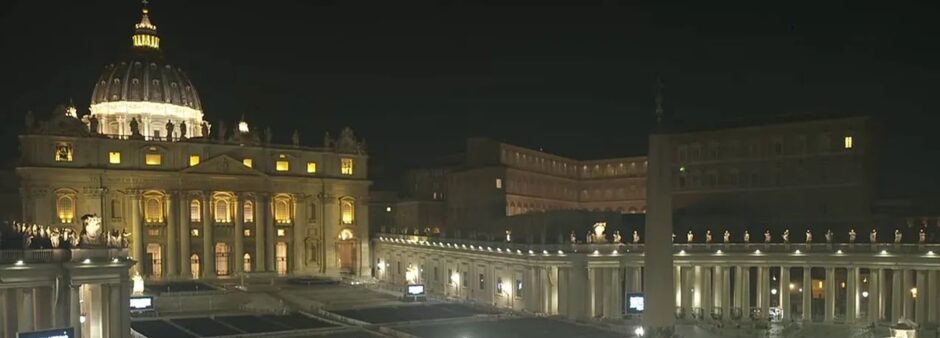

 From a reader…


 A few days ago
  Catholic World Report



 hwriggles4 on From “The Private Diary of Bishop F. Atticus McButterpants” – 26-06-15 – Ordination?: “A few years ago I went to daily Mass mostly because I was off work that day. There was a…”






























