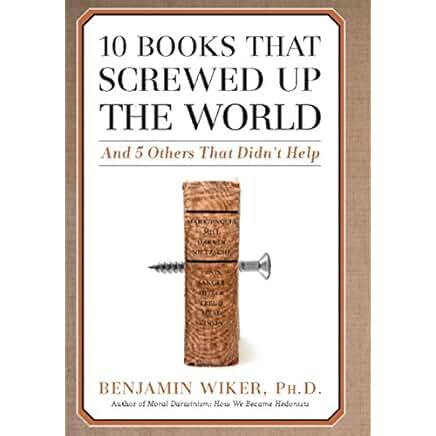
For your Just Too Cool file.
And now … available for PRE-ORDER at a reduced price. Release date: 12 May 2017
For your Just Too Cool file.
And now … available for PRE-ORDER at a reduced price. Release date: 12 May 2017

See the end of the post!
It has been 1 year already since the unleashing of the text of the Post-Apostolic Exhortation Amoris laetitia.
It seems longer, in some ways.
Since it’s release, sharp divisions have developed in the Church over objectively ambiguous, now infamous elements of Chapter 8. You know the issues all too well.
Unity is breaking down. Bishops conferences now have differing policies, as do bishops of dioceses. You can now step across invisible, arbitrary borders and find yourself in a place with a different approach to Communion for the divorced and civilly remarried (adulterers) who have no true purpose of amendment.
The implications for doctrine, and the practice which flows from doctrine, are manifold and potentially devastating. A clue as to a possible future could rest in the remarks made about divorce and remarriage by the Superior General of the Jesuits a while back. In a clear defense of the antinomian and innovation approach to Chapter 8, the Jesuit General said that we can’t really know what Christ said about marriage. HERE and HERE The implications of such a view completely undermine Christianity itself, in that they shift belief from being Christocentric to being anthropocentric. We would no longer have any firm basis for … well, anything!
As I have written before, the ever-broadening controversies sparked by Amoris laetitia will lead more conservative and traditionally (i.e., faithful) clergy to continue to do what they do in keeping with the Church’s clear teaching in unambiguous documents and will lead more liberal and progressivist clergy to continue to disobey the Church’s laws and teachings with impunity.
The latter, some of whom are very powerful, are accelerating their antinomian efforts with an increasingly sanctimonious tone, while the former are becoming increasingly frustrated as they dig in and await open persecution.
A lot of us are trying to make sense of this as we ask God for direction and insight.
I recently found something useful in a terrific new book by Tracey Rowland, Catholic Theology. US HERE – UK HERE
This book is in a series about how various religions are “Doing Theology”. As such, it is a status quaestionis book, in that it describes the present state of affairs. This book is intended to help (especially) students, who go from class to class in a bewildering tangle of various approaches, to figure out what is going on.
A lot of us ask: “What is the Pope up to?”
In her chapter on types of Liberation Theology, and in dealing with the tension between theory and praxis, Rowland drills into the possible approach of Jorge Mario Bergoglio. She writes (emphases and comment mine):
Situating Pope Francis
While much has been written about Pope Francis’s agenda for his pontificate and his personal history as a Jesuit Provincial and Archbishop, little has been written on his attitudes to the practice of theology as an intellectual discipline. This is because with Francis the accent is on social problems, not ideas, praxis rather than theoria. As he said to a Jesuit student who explained that he was studying Fundamental Theology: ‘I can’t imagine anything more boring.’ When a person says that he ‘can’t imagine anything more boring than Fundamental Theology’, it is not likely that his publications will be full of treasure to be mined for a book on how to do theology. In an article published in The Atlantic, Ross Douthat observed:
Francis is clearly a less systematic thinker than either of his predecessors, and especially than the academically-minded Benedict. Whereas the previous pope defended popular piety against liberal critiques, Francis embodies a certain style of populist Catholicism – one that’s suspicious of overly academic faith in any form. He seems to have an affinity for the kind of Catholic culture in which mass attendance might be spotty but the local saint’s processions are packed – a style of faith that’s fervent and supernaturalist but not particularly doctrinal. He also remains a Jesuit-formed leader, and Jesuits have traditionally combined missionary zeal with a certain conscious flexibility about doctrinal details that might impede their proselytizing work.
Nonetheless, it has been suggested by several academics and papal commentators that if Pope Francis has sympathy for any particular approach to Catholic theology, it is that of ‘People’s Theology’. One of the most extensive articles on this subject is Juan Carlos Scannone’s ‘El papa Francisco y la teologia del pueblo’ published in the journal Razón y Fe. In this paper Scannone claims that not only is Pope Francis a practitioner of ‘People’s Theology’ but also that Francis extracted his favourite four principles – time is greater than space, unity prevails over conflict, reality is more important than ideas, and the whole is greater than the parts – from a letter of the nineteenth-century Argentinian dictator, Juan Manuel de Rosas (1793– 1877) sent to another Argentinian caudillo, Facundo Quiroga (1788– 1835), in 1834. These four principles, which are said to govern the decision-making processes of Pope Francis, have their own section in his Apostolic Exhortation Evangelii Gaudium and references to one or other of them can be found scattered throughout his other papal documents. Pope Francis calls them principles for ‘building a people’.
A common thread running through each of these principles is the tendency to give priority to praxis over theory. [NOTA BENE…] There is also a sense that conflict in itself is not a bad thing, that ‘unity will prevail’ somehow and that time will remove at least some of the protagonists in any conflict. The underlying metaphysics is quite strongly Hegelian, and the approach to praxis itself resembles what Lamb classified as ‘cultural-historical’ activity and is associated primarily with Luther and Kant rather than Marx. (Kindle Locations 4226-4252)
There is quite a bit more, but this might provide a clue as to why His Holiness allow the chaos to grow without, for example, responding to the Five Dubia of the Four Cardinals which were submitted 200 days ago at the time of this writing. This may be why he sends mixed signals, such as telling Chilean bishops during their ad limina visit that Communion shouldn’t be given to the divorced and remarried, while having Card. Baldisseri (Synod of Bishops) write an approving letter to the bishops Malta after their shocking guidelines were released (The Maltese Fiasco).
Again, we wonder “What is Pope Francis up to?”
Again, I turn to Rowland, who writes specifically about Amoris laetitia and the conflict it has aroused. She describes the praxis and theory tension again and then:
[C]hapter eight of the document, or what might be described as the praxis chapter rather than a theory chapter, emphasised that those who find themselves in ‘irregular situations’ (what were formerly described as situations of mortal sin or morally disordered situations) should be spiritually and emotionally accompanied along the path of a gradual reintegration into the life of the Church. Whereas in previous Church teaching emphasis was on how the person’s rational intellect makes it possible to discern the true and the good and the beautiful, [NOTA BENE] the subtext of this document was that many contemporary people are in effect so far post-Christian as to be pre-Christian. The cultural environment in which they breathe, in which their wills and intellects develop, is so toxic to a Christian understanding of sexuality and marriage that their levels of moral culpability in what is an objectively sinful situation are not easily amenable to judgement, and thus the Church has to be for them a ‘field hospital’ when their life choices, based on subjective conceptions of the good, detached from Christian Revelation, cause all manner of damage. Notwithstanding the earlier endorsements of selected teachings of John Paul II, chapter 8 gives the impression that the role of the Church as ‘teacher of the Truth’ and ‘guardian of the deposit of the faith’ should be muted so as not to scare people away from the Church operating in her capacity as a ‘field hospital’. The change of language from ‘morally disordered’ or ‘mortally sinful’ to an ‘irregular situation’ is symptomatic of this muting. (Kindle Locations 4377-4389).
I have a strong sense that this is an accurate assessment of the subtext of Amoris laetitia Chapter 8.
I wonder: is it true? Often, I am struck with the thought that many people who might self-identify as “Catholic” in fact belong to some other religions than I do. If they pick and choose about important aspects of Catholic life and teaching, are they Catholic? Are so many people now, who are nominally Catholic, in fact pre-Christian? Is it, therefore, necessary to dumb-down or even distort doctrine so as “not to scare them away”? Is this the state of affairs today? And, if it is, does this accurately describe Pope Francis’, et al., strategy?
That said, I fear that this approach, IF that is Pope Francis’ true approach – and we can’t know for sure until he tells us clearly – this elevation of praxis over doctrine, will result in devastation. One could use this as a starting point to justify just about anything. Where does it stop?
Rowland rightly speaks of “subtext”. We can drill deeper and find, in that subtext, subtly threaded through, the denial of what the Council of Trent affirmed about the help of grace, and to which Trent applied an anathema. HERE God’s commandments are not impossible ideals. Neither God nor Holy Church impose impossibilities. That, however, is what is suggested by many who endorse the antinomian/innovation interpretation of Amoris.
For my part, I pray that God will guide us swiftly out of this time of conflict and uncertainty. I fear for souls.
To pave the way for such a grace-filled intervention, we had all better examine our consciences and…
GO TO CONFESSION.
Finally, I have put Rowland’s new book on my Amazon Wish List with a request for 30 copies.
Each year the seminarians of the diocese gather with Bp. Morlino (aka The Extraordinary Ordinary) for a solid jam-packed week in August. For the last few years I have given them copies of a good book which YOU readers have sent. For example, a couple years ago you sent copies of another spiffy book by Rowland, Ratzinger’s Faith.

Another time I gave them, with your help, Fr. Lang’s book on ad orientem worship, Turning Towards The Lord.
I make my request quite early this year because, in years past, the books I’ve asked for have sold out! Not only do you send them to me, but you get them for yourselves, which is great! However, that can slow the delivery. In order to have all the copies well before August, we should start now, just to be sure.
The moderation queue is ON.
Today, Fr. John Hunwicke of the Ordinariate has a terrific post which every priest and seminarian should read before Palm Sunday (that means “today”, right now as a matter of fact).
I won’t give you clippings. Take and read.
From a deacon
Could you please address the all too common occurrence where Deacons are asked (or told by the priest) to relinquish their liturgical role to a lay person?
Case in point: I was told to allow the music minister to chant the General Intercessions on Good Friday this year, not because I’m unable to, but because the music minister had done it through the years and is retiring. It was urged that I allow this to proceed. I am unsettled with this in that I believe I should have stood my ground in accord with the rubric. This is but one example…
I have witnessed and experienced personally (many times) the Deacon’s part being given to laity at the discretion of the priest and worse, the deacon relinquishing his part to laity. It shouldn’t be this way, am I being too rigid?
I was unaware that this is a common problem.
It is simply wrong to force a deacon out of his proper liturgical role in order to give it to a lay person.
First, that violates the deacon’s identity.
Second, that violates the lay person’ identity.
Moreover, the deacon is being asked to participate in a condescending clericalism.
Let deacons be deacons. That’s why the Church ordains them.
From a reader…
At mass on Sunday, after the congregation stood for the Gospel, the pastor asked us all to sit because he was going to combine his sermon with the Gospel. The best way to describe it is to say it was a like a poorly done line-by-line Bible study. I know enough to know such an action by the priest is not permitted at Mass. I have a two part question about this:
1. How should I have handled it on Sunday? Would walking out have been inappropriate?
1a. How should I handle it after the fact? A letter to the pastor? The bishop?
If it helps at all, this parish is my territorial parish, although, because these weird actions by the pastor are somewhat common place, I am registered at and regularly attend a neighboring parish. I was only at this church because I was unable to make it to the parish I usually attend and wanted to fulfill my Sunday obligation.
GUEST PRIEST RESPONSE – Fr. Tim Ferguson:
Ugh.
Once again, our liturgical lives are held captive by the terrorism that is “creativity.”
One wonder how countless generations were brought to the faith and catechized sufficiently before these liturgical jihadis were unleashed upon an unsuspecting Church.
Of course, one need not say that there are no rubrics in the Missal that provide cover for this kind of innovation. The proclamation of the Gospel is one thing, the preaching of the homily is another thing. If were in the spirit of combining things – how about we combine the collection with the sign of peace? Whilst hugging one’s neighbor and whispering sweet nothings into his or her ear, one can reach into that person’s back pocket and pull out a sawbuck or a c-note and drop it in the passing basket. How about combining announcements with the first reading? “and lo, the messenger of the Lord saith unto the people of Judah, ‘don’t forget the pancake supper this Friday for the support of the youth group’s planned trip to Wyoming Catholic College.'”
If one were to parse the levels of liturgical absurdity and violations of rubrical law, on a scale of one (Father deliberately used the collect of the second Sunday of Lent on the third Sunday of Lent) to ten (Father just attempted the consecration of pumpkin bread), this would probably hover in the range of three – but the faithful people of God have the right to the Holy Mass as the Church has laid it out.
I don’t think this would be something to warrant a walk-out, especially if it were a one-time thing. I think a polite word with the priest after Mass would be warranted, “Father, I’m curious, where did you get this idea to combine the Gospel and the homily? Personally, I felt that the Lord’s Word was somewhat diluted.”
If one is not able to be in full control of one’s actions in the moment, a letter would probably be better than a confrontation that might get both parties unnecessarily flustered – such a confrontation seldom does anyone any good. A letter to the pastor, first, is the step to take – then, depending on the answer, going up to the bishop.
Sadly, Father is probably being told – even as we speak – how WONDERFUL his homily was, and how much it made the Gospel come alive, and how it made people feel all warm and fuzzy inside and what a great gift he has as a preacher. There are always those at the ready to provide “positive feedback” and puff up the pride of those who seek to bring in liturgical innovation. Pastors who insulate themselves from criticism by surrounding themselves with fans of this sort are unlikely to be changed in their approach, even in the face of reasoned arguments or threats of punishment from the bishop.
In fact, if at all possible, the best approach is probably to avoid this priest and his liturgical aberrancies as much as possible.
Here in the Diocese of the Extraordinary Ordinary, we are getting ready for a solemn Palm Sunday and Triduum. There are many details to work out ahead of time so that the rites can run smoothly and prayerfully. Happily, I have the best crew anywhere! They will perform expertly.
Among those tasks on my To Do List is the extraction of my pre-Conciliar Passionale which is in 3 parts: Chronista (the “narrator” who handles all the text that is not of a person speaking), Christus (who sings only the words of Christ), and Synagoga (who sings all words spoken by anyone not Christ) The duties of the Synagoga are sometimes divided between a single singer in the sanctuary, who takes the words spoken by one person, and a choir which sings the words spoken by crowd, called the Turba, sometimes in polyphonic settings.
Here are my books, which pre-date the 1955 chances to Holy Week. They therefore have the Chronista’s haunting ad libitum Passion tone for the part of the Gospel that the reformers in 1955 (Bugnini et al.) denied us. I fully intend to do it anyway.
Each volume has the chant notation only for the part that that person is to sing. Handy.
Here is the first page of the Passion of St. Matthew, sung on Palm Sunday.
Here is page from Christus. You can see that the Chronista has text without notation.
From the Synagoga book. He has a lot less to do. His parts are marked with S., but the Turba is SS.
Some years ago, as a service to priests and deacons preparing to sing the Passion, I recorded the Passion of Matthew and of John. They are at my PRAYERCAzT page. Matthew is HERE.
Your attention is urgently needed.
Last year, St. John Cantius in Chicago ascended the brackets to be Numero Uno in the Church Madness tourney.
This year we see that the last surviving churches are the Institute of Christ the King’s Oratory in St. Louis, Missouri…

…and St. James in Louisville, KY….

Last year, I made the argument that what happens inside the church, liturgically, must be taken into consideration in determining its beauty.
I think we know what goes on at the Institute Church in St. Louis.
QUAERITUR: What goes on in St. James in Kentucky?
A trip to the website show me that at St. James they have a “Children’s Liturgy” (FAIL!), and that that post online which priest is scheduled for which Mass (FAIL!). It is hard to find their Mass schedule (FAIL!). They call most of their Masses “liturgies” (FAIL!).
Furthermore, you can see in their photo, above, that they have unspeakable things in their church, things which grate the very eyeball which which we are asked to gaze. They have twisted their pews and they have in a prominent, visually unavoidable location … I can hardly bring myself to say it… a PIANO!

The horror!
No. No, a thousand times no. This is infra dignitatem and St. James will not receive my vote. This is the sort of place that would have altar girls. No. No. No.
The rest of the building, as beautiful as it is, is not enough to outweigh these defects.
What happens in the building counts for a great deal.
Therefore…

As of now the results are…

To VOTE for the St. Francis go…
>>HERE<<
For even thinking about voting for St. James go… HERE. And then…
GO TO CONFESSION!
UPDATE 7 April:
The contest is officially closed. They haven’t announced the winner yet, but the situation looks to be well in hand.

Pewsitter can be useful in finding, quickly, what’s going on. One of my gripes, however, is that they link to googly-translated pages. Grrr.
Today, however, that produced an amusing moment.
They linked to an interview in German with Walter Card. Kasper for the occasion of his 60th anniversary of ordination. This is how the googly-translated page came up for me:

Walter Kasper, courtesan cardinal!
The headline in German (original HERE):
“Ich war immer gern Priester” [I’ve always been glad to be a priest.]
Vor seinem 60-jährigen Priesterjubiläum hat katholisch.de mit dem emeritierten Kurienkardinal Walter Kasper gesprochen. Im Interview gab der 83-Jährige auch Einblicke in Privates.
If could have been worse, I suppose, given that last part. But then Fishwrap, Pill and Jesuits would liked it even more.
Walter Kasper, courtesan cardinal! Perhaps this is Google’s Freudian-cyber slip, given that His Eminence’s desire that those who are living in a impenitent state of adultery should be given Holy Communion?
In any event, this is just a light moment and there is no need to get too serious with this post.
Google Translate! Hours of linguist fun!
From my email:
Thanks for all you do. I’ve enjoyed your blog for years.
I’m just contacting you to spread word of a new religious community starting which is called the Hermits of Our Lady of Mt. Carmel (“Eremitae Dominae Nostrae De Monte Carmelo”).
They are a group of laymen currently seeking canonical approval to observe the unmitigated Rule of St. Albert. They use the 1938 Carmelite Breviary, and seek to (…when they have priests) celebrate exclusively the EF (Carmelite Rite).
They are in need of prayer, some more notoriety, as well as financial assistance (’tis the season for alms!) in beginning their foundation. They have a property available to them in North Carolina, but need help raising the funds to pay for the land.
Anyway, thanks for whatever you might think good to do for them. And my apologies if you’re already familiar with the community.
Here’s their website: https://www.eremitaednmc.org/
Pray. Please, pray.
One of the reasons why in today’s LENTCAzT I included a prayer for priests is because I have had emails and other contacts from good, traditionally oriented priests who are being persecuted by their superiors. Even today, I had a note:
Pray for me… Today I have a meeting with the [personnel director of his diocese]. They are trying to sideline me into full-time hospital ministry.
I know another who has unjustly and without basis been stripped of faculties. They won’t even talk to him.
I know another who is being forced to take a sabbatical year when all he wants to do is parish work.
I know another who… and another who… and another….
Common threads? They want tradition. Their superiors are liberals.
The persecution is rising with a panoply of tactics.
Seminarians, keep your heads down. Fathers, be patient and use the sacrament of penance.
Everyone: GO TO CONFESSION.