ASK FATHER: Can SSPX priest still give absolution validly after the Year of Mercy?

confession-731x1024From a reader…

For the Year of Mercy, Pope Francis gave permission to receive Absolution from SSPX priests. Has that permission ended with the Year of Mercy or is it still in effect? We can’t find an official answer explaining this.

You can read this for more. HERE

The statement is buried in a super long, not to say verbose (6000 words), Apostolic Letter for the close of the Year of Mercy called Misericordia et misera.

The bottom line is, yes, the Holy Father extended the opportunity to receive absolution validly from SSPX priests, even though they are suspended.

this settles the issue of valid sacramental confessions.   It does not settle the issue of valid marriages.  The priests of the SSPX are still not proper witnesses of the sacrament, thus not satisfying proper canonical form.

To all those who are attached to chapels of the SSPX…

… GO TO CONFESSION!

Posted in "How To..." - Practical Notes, ASK FATHER Question Box, GO TO CONFESSION, SSPX | Tagged , ,
12 Comments

Help from readers: Find the banding!

Okay folks… who can find this banding (the red embroidered part) for us?

16_12_26_banding

Posted in ACTION ITEM! |
7 Comments

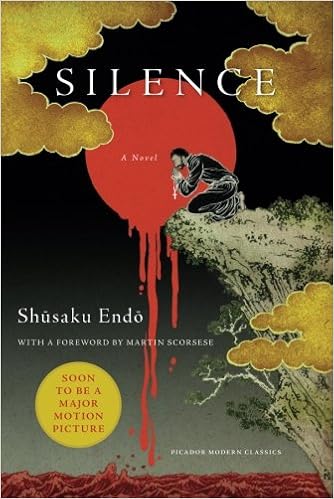
Concerning the movie ‘Silence’ movie by Scorsese, book by Shusaku Endo

I just read at The Catholic Thing a review by Brad Miner of the movie from Martin Scorsese Silence, from Shusaku Endo’s book.

Here is the bottom line from the review:

Scorsese’s Silence is not a Christian film by a Catholic filmmaker, but a justification of faithlessness: apostasy becomes an act of Christian charity when it saves lives, just as martyrdom becomes almost satanic when it increases persecution. “Christ would have apostatized for the sake of love,” Ferreira tells Rodrigues, and, obviously, Scorsese agrees.

I think I won’t go to the movie… which is three hours long.  And it is promoted by certain Jesuits… no thanks.  I would very much like to see the first version of Silence by Masahiro Shinoda.

I read the book and it left me deeply disturbed.  We should all spend time thinking about the Four Last Things… every day.  I also firmly believe that we should all try to get our heads into that mental place against the day when we might be called upon to make the Big Choice.   Endo raises these questions for the reader, especially the priest reader, in a particularly brutal way.  However, he left me depressed.

Fathers, you would do well to read the book.

US HERE – UK HERE

You might also want to read Lucy Beckett’s The Time Before You Die.

US HERE – UK HERE

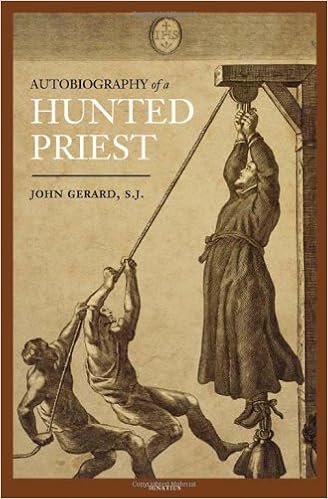
And also John Gerard’s The Autobiography of a Hunted Priest

US HERE – UK HERE

And… on that note…  MERRY CHRISTMAS everyone!

Hmmm… the lyrics become a little melancholy, not to say ominous, in light of the books mentioned above.

Posted in Mail from priests, Priests and Priesthood | Tagged
33 Comments

Merry Christmas Octave!

We are in the Octave of Christmas.  Merry Christmas everyone!

Here is a shot from our Midnight Mass.

16_12_25_Midnight_Mass_SMPB_02sm

The word “immemorial” came to mind when I saw it.  We have a beautiful continuity with our many forebears who sacrificed so much to hand down what we have.  We should remember them in our grateful prayers.

Also, during Midnight Mass and the other Masses of Christmas I remembered at the Memento of the Living all of you my benefactors who contribute with donations, to me and also to our projects for the celebration of worthy sacred liturgical worship.

¡Hagan lío!

Posted in SESSIUNCULA | Tagged
6 Comments

The Angry Man

A friend sent me this.  It’s good. It explains a lot.

The Angry Man

For all the interest group pandering that shapes modern American politics, the group that may well have decided the election has come down to the demographic of “The Angry Man.”

The Angry Man is difficult to stereotype. He comes from all economic backgrounds, from dirt-poor to filthy rich. He represents all geographic areas in America , from sophisticated urbanite to rural redneck, Deep South to Yankee North, Left Coast to Eastern Seaboard.

No matter where he’s from, Angry Men share many common traits; they aren’t asking for anything from anyone other than the promise to be able to make their own way on a level playing field. In many cases, they are independent businessmen and employ several people. They pay more than their share of taxes and they work hard. Damn hard, for what they have and intend to keep.

He’s used to picking up the tab, whether it’s the Christmas party for the employees at his company, three sets of braces, college educations or a beautiful wedding or two. Not because he was forced to, but because it’s the right thing to do.

The Angry Man believes the Constitution should be interpreted as it was written. It is not as a “living document” open to the whims and vagaries of appointed judges and political winds.

The Angry Man owns firearms, and he’s willing to pick up a gun and use it in defense of his home, his country and his family. He is willing to lay down his life to defend the freedom and safety of others, and the thought of killing someone if necessary to achieve those goals gives him only momentary pause.

The Angry Man is not, and never will be, a victim. Nobody like him drowned in Hurricane Katrina. He got his people together and got the hell out. Then, he went back in to rescue those who needed help or were too stupid to help themselves in the first place. He was selfless in this, just as often a civilian as a police officer, a National Guard soldier or a volunteer firefighter. Victimhood syndrome buzzwords; “disenfranchised,” “marginalized” and “voiceless” don’t resonate with The Angry Man. “Press ‘one’ for English” is a curse-word to him.

His last name, his race and his religion don’t matter. His ancestry might be Italian, English, African, Polish, German, Slavic, Irish, Russian, Hispanic or any of a hundred others. What does matter is that he considers himself in every way to be an American. He is proud of this country and thinks that if you aren’t, you are whole-heartedly encouraged to find one that suits you and move there.

The Angry Man is usually a man’s man. The kind of guy who likes to play poker, watch football, go hunting, play golf, maintain his own vehicles and build things. He coaches kid’s baseball, soccer and football and doesn’t ask for a penny. He’s the kind of guy who can put an addition on his house with a couple of friends, drill an oil well, design a factory or work the land. He can fill a train with 100,000 tons of coal and get it to the power plant so that you can keep the lights on while never knowing everything it took to do that. The Angry Man is the backbone of this country.

He’s not racist, but is truly disappointed and annoyed, when people exhibit behavior that typifies the worst stereotypes of their ethnicity. He’s willing to give everybody a fair chance if they’re willing to work hard and play by the rules. He expects other people to do the same. Above all, he has integrity in everything he does.

The Angry Man votes, and he loathes the dysfunction now rampant in government. It’s the victim groups being pandered to and the “poor me” attitude that they represent. The inability of politicians to give a straight answer to an honest question. The tax dollars that are given to people who simply don’t want to do anything for themselves. The fact that, because of very real consequences, he must stay within a budget but for some obscure reason the government he finances doesn’t. Mostly, it’s the blatantly arrogant attitude displayed implying that we are too stupid to run our own lives and only people in government are smart enough to do that.

The Angry Man has reached his limit. When a social justice agitator goes on TV, leading some rally for Black Lives Matter, safe spaces or other such nonsense, he may bite his tongue but, he remembers. When a child gets charged with carrying a concealed weapon for mistakenly bringing a penknife to school, he takes note of who the local idiots are in education and law enforcement.
But when government officials are repeatedly caught red-handed breaking the law and getting off scot-free, The Angry Man balls-up his fists and readies himself for the coming fight. He knows that this fight, will be a live or die situation, so he prepares fully. Make no mistake, this is a fight in which he is not willing to lose and he will never give up.

Obama calls him a Clinger
Hillary Calls him Deplorable
Bill calls him Redneck
BLM calls him a Racist
Feminists calls him Sexist
ISIS calls him an Infidel
Donald Trump calls him an American

Posted in The Drill |
60 Comments

26 Dec: The Protomartyr, The Octave, and You

In addition to Boxing Day, and the day good King Wenceslaus went out, it is the feast of St Stephen.

St. Stephen’s feast has been celebrated this day since the earliest centuries of the Church’s life.

We are also in the Octave of Christmas. Octaves are mysterious. For Holy Church time is suspended so that we can rest in the mystery of the feast.  In her wisdom, Holy Church “stops” her clock so that we contemplate the mystery of the feast from different angles, through different lenses.

St. Stephen reminds us of the consequences of discipleship.  He is usually depicted surrounded by people who are beating him to death with rocks.  As I said, there are consequences of discipleship.

Are you ready for consequence in the days remaining to you?

Consequences can be more or less dramatic.  I think we need to get our heads into mental places wherein we can imagine even dire consequences.

Today I also congratulate all the members of the Archconfraternity of St. Stephen!  This is a guild of altar boy that started in England.  The first chapter ever outside of England was at my home parish of St. Agnes, in St. Paul.  In the sacristy there was a letter from the Archbishop of Westminster approving the chapter and each year on this day the new boys were enrolled.

I hope today that all your snow is neat and crisp and even.

Posted in Saints: Stories & Symbols | Tagged , , ,
2 Comments

The 1914 Christmas Truce

From History.com:

Just after midnight on Christmas morning, the majority of German troops engaged in World War I cease firing their guns and artillery and commence to sing Christmas carols. At certain points along the eastern and western fronts, the soldiers of Russia, France, and Britain even heard brass bands joining the Germans in their joyous singing.
At the first light of dawn, many of the German soldiers emerged from their trenches and approached the Allied lines across no-man’s-land, calling out “Merry Christmas” in their enemies’ native tongues. At first, the Allied soldiers feared it was a trick, but seeing the Germans unarmed they climbed out of their trenches and shook hands with the enemy soldiers. The men exchanged presents of cigarettes and plum puddings and sang carols and songs. There was even a documented case of soldiers from opposing sides playing a good-natured game of soccer.
The so-called Christmas Truce of 1914 came only five months after the outbreak of war in Europe and was one of the last examples of the outdated notion of chivalry between enemies in warfare. In 1915, the bloody conflict of World War I erupted in all its technological fury, and the concept of another Christmas Truce became unthinkable.

More at the Imperial War Museum. HERE

Posted in SESSIUNCULA | Tagged , ,
5 Comments

OLDIE: Fanon Alert! Benedict XVI and Christmas Mass

From 24 December 2012, of happy memory….

His Holiness has his fanon again for the First Mass of Christmas. Nice to see. More on the fanon, hated by liberals and the ungodly, HERE.

20121224-161448.jpg

20121224-161456.jpg

20121224-161505.jpg

Posted in Benedict XVI, Classic Posts, Liturgy Science Theatre 3000 | Tagged ,
13 Comments

WDTPRS – 24 December – Novus Ordo: The consolations of Thy Coming

TissotThe Collect for today’s Mass in the Novus Ordo, the last of Advent, stares at the very threshold of the humble place where the Lord was born.

COLLECT (2002MR):

Festina, quaesumus, ne tardaveris, Domine Iesu,
ut adventus tui consolationibus subleventur,
qui in tua pietate confidunt
.

The tardaveris form is a perfect subjunctive as a kind of imperative.  Remember that adventus here is a genitive with tui.   Pietas, when it refers to man has to do with “duty”, but when applied to God, it becomes “mercy… pity”.

Sublevo means, basically, “to lift up from beneath, to raise up, hold up, support”, but it comes to mean, “to sustain, support, assist, encourage, console any one in misfortune”.  The perfect way to describe this vale of tears in which we journey.

WDTPRS LITERAL VERSION:

Hurry, we beseech Thee, O Lord Jesus, and tarry not,
that those who rely upon Thy mercy
may be sustained by the consolations of Thy Coming.

Had the Lord not entered into human history, what would sustain us?  What would sustain creation itself, groaning as it does under the weight of the Fall.

The Collect looks simultaneously back to the Nativity of the Eternal Word made man, but also forward to the Second Coming.  We are consoled at the Coming of the Lord, in history and in the time to come.

The Christian always says “Come, Lord Jesus.  Maranatha.   Come.”

May the Lord’s coming and promise of return console any of you who are burdened with sorrow. Many people feel at times inconsolable.

This time of year can be a annual trial of despair and sadness for so many who are alone and suffering.

In imitation of the Lord, console others.  You know someone, I am sure.


NEW CORRECTED ICEL (2011):

Come quickly, we pray, Lord Jesus,
and do not delay,
that those who trust in your compassion
may find solace and relief in your coming
.

Posted in Christmas and Epiphany, Liturgy Science Theatre 3000, WDTPRS | Tagged
1 Comment

ASK FATHER: Can we have Masses said for non-Catholics?

Mass purgatory indulgencesFrom a reader…

QUAERITUR:

Is it appropriate to have Masses said for deceased non-Catholics? What about Gregorian Masses?

You are in our prayers! Thank you for your time and your ministry.

It is praiseworthy and a work of mercy to pray for the dead.  Consult the Catechism of the Catholic Church 958, 1032.

Can. 901 of the 1983 Code of Canon Law says: “A priest is free to apply the Mass for anyone, living or dead”  That means “anyone”, Catholic or non-Catholic.    Once upon a time there were restrictions on Masses for people who were excommunicated at the time of their death, but that no longer applies.  You can have Masses said for the late Archbishop Marcel Lefebvre if you wish and priests are free to accept the intention and stipend.  I’m sure he would appreciate the lift. And if you can have one Mass said for a non-Catholic, you can have more than one Mass said.  Yes, you can have Gregorian Masses said.  (For more on Gregorian Masses – HERE)

There is one restriction, however, the name of a non-Catholic is not to be spoken aloud during the Eucharistic Prayer of Mass.  See the Ecumenical Directory, 121.

So, the bottom line is, yes, Masses can be offered for the intention of any person, living or dead, Catholic or non-Catholic.

And, to be clear, having a Mass said for the intention of a person is not the same thing as having a Mass said for what that person intends or intended!   We pray “for the Pope’s intention(s)”.  That means that we pray for what the Pope intends for us to pray for.  However, when we have a Mass said for a person’s intention, that means that we are praying for that person’s well-being, in this life or in the life to come.  We use the word “intention” differently in different contexts.   Therefore, should someone want to have Masses said for a very wicked person who is still alive it might be better – depending on who that person is and where you are – to put in the parish bulletin “Special Intention”.

Posted in "How To..." - Practical Notes, 1983 CIC can. 915, ASK FATHER Question Box, Four Last Things | Tagged , ,
9 Comments