My Mass intention today was for my benefactors, those of you who donate regularly, ad hoc, or send things.
Too many people today are without good, strong preaching, to the detriment of all. Share the good stuff.
Was there a GOOD point made in the sermon you heard at your Mass of obligation for this 12th Sunday after Pentecost in the Vetus Ordo (20th Ordinary Sunday in the Novus Ordo)?
Tell us about attendance especially for the Traditional Latin Mass.
Any local changes or (hopefully good) news?
A taste of what I offered at 1 Peter 5 this week. I wrote about the 2nd Sunday after Pentecost but related it to the great feasts nearby.
[…]
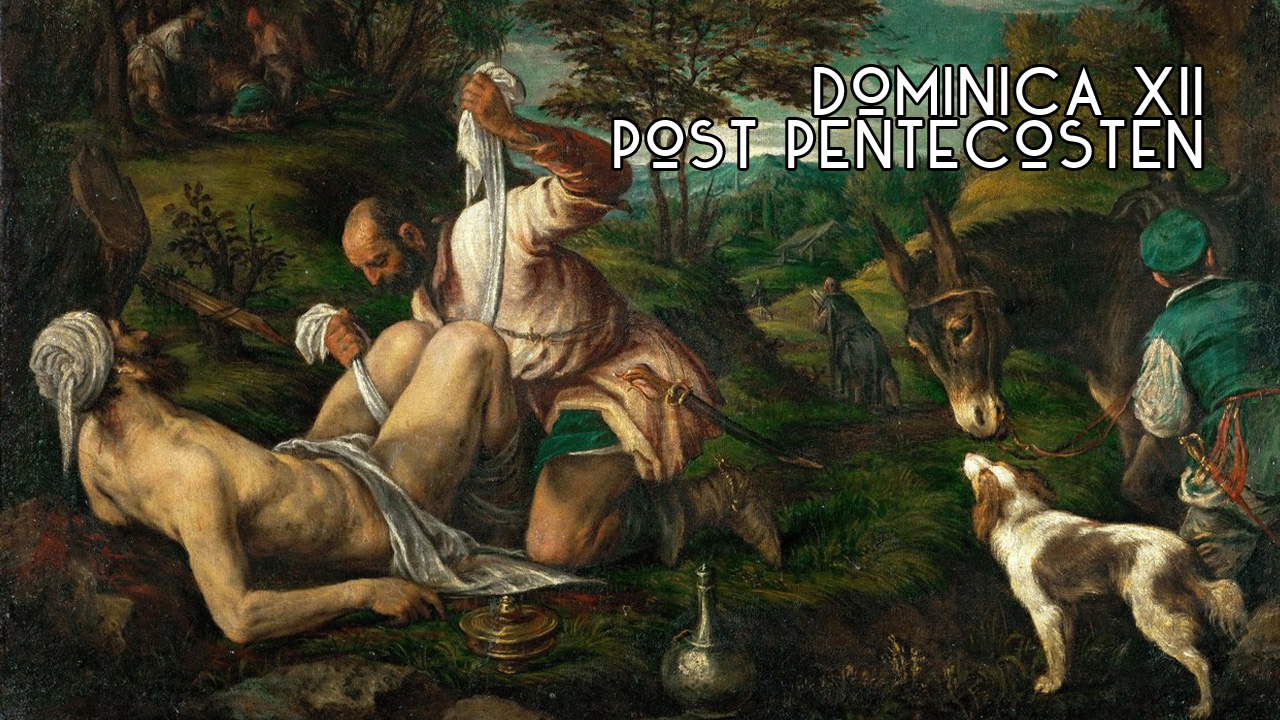
St. Augustine (+430) reads the wounded traveler as Adam in the human race. Jerusalem signifies the heavenly city of peace from whose blessedness man fell. Jericho signifies mortality. The robbers are the devil and his angels. The priest and Levite signify the priesthood and ministry of the Old Testament, which could not restore fallen man to salvation. The Samaritan signifies the Lord. Augustine writes, “The inn is the Church, where travelers returning from their pilgrimage to the eternal fatherland are refreshed” (Quaestiones Evangeliorum II, 19). Elsewhere he condenses the identification: “perduxit ad stabulum, id est ad Ecclesiam … he brought him to the inn, that is, to the Church” (en. ps. 125, 15).
…
The parable carries a sharper warning. Jerusalem to Jericho can symbolize a descent from the life of grace into mortal sin. The robbers strip the soul of sanctifying grace and wounded both reason and will. The man becomes “half-dead,” unable to restore himself to supernatural life by his own power. Christ comes first with prevenient grace. The binding of wounds suggests examination, instruction, and contrition. The door of the inn suggests the confessional. Within, the recovering sinner is fed with the Eucharist and restored to the living communion of the Church.
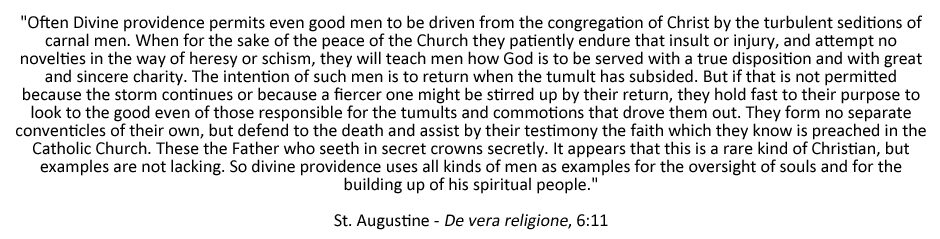
That image bears urgency when Catholics, bewildered by scandal, confusion, bad leadership, or ecclesiastical folly, are tempted to walk away. The inn may contain incompetent servants, yet Christ still brought the wounded man there. The Church remains the place in which He entrusted the means of sacramental healing. Spiritual apathy, unconfessed grave sin, abandonment of prayer, and separation from sacramental life place the soul back on the road where robbers operate.
Whatever wicked or weird things some churchmen may do, Christ’s Church remains the place to which the Samaritan carried the wounded man.
[…]































i can’t possibly do justice in a precis, but here goes. NO. Gospel of the Syro-Phoenician woman.
Father started by mentioning how recent heavy rains vividly illustrated the fact that water finds its level. He noted that the large park across the street from the church was specially modified to take so much runoff as to reduce street flooding in the neighborhood. He then quoted St. Augustine who noted that water finding its level is a great analogy for humility. Those who are haughty are like hills and the waters of spiritual blessings roll off them, but they accumulate on the humble.
Then he started to expound on the day’s Gospel. The woman displayed great humility in likening herself to a household pet dog – qualitatively so different from a child – and calling our Lord “Master”.
Then Father went into the martyrology and recounted the tale of St. Roch (sometimes called St. Rocco). Roch was born into wealth and privilege in Montpelier on the French Mediterranean coast, but like St. Francis about a century before, renounced his wealth and position. He set out as a mendicant pilgrim. He came upon cities and towns laid low by the plague. he did what he could to help the sick. eventually the plague caught him too. so as not to spread it, he went and hid in the woods awaiting death. a hunting dog belonging to a nearby landowner found him by the stench of his wounds and brought him bread from his master’s table. the dog licked Roch’s wounds and gradually he returned to health. when Roch set out again, the dog accompanied him and Roch miraculously cured many suffering from the plague.
it’s now been a full year since i’ve joined this parish. The pastor again returned to a familiar theme: worthy reception of the Eucharist and the importance of confession. In just this one year i’ve heard that mentioned more times than in nearly a quarter-century in the Church combined! He mentioned that if we don’t regularly confess, the words “Lord, I am not worthy . . . ” become a lie and a sacrilege. I’m so blessed to be part of this parish, not to mention the schola.
For the second week in a row the schola welcomed a new young lady.
I appreciate the Mass intention for today. I needed it.
It’s the one year anniversary of my mother’s fall and 6 months of medical mistreatment until she died in February.
Listening to Father’s homily today on this sad anniversary I was aware there are no coincidences. His words seemed to fit my experience. He talked about who is your neighbor. My mother was a very difficult woman. But I still battled for her to receive the medical care and dignity she deserved.
He also reminded us that everyone deserves mercy no matter who they are. The mercy of Jesus on the cross. He said if we remembered that how much better off we’d be!