Was there a good point or two in the sermon you heard for your Sunday Mass of obligation?
Let us know!
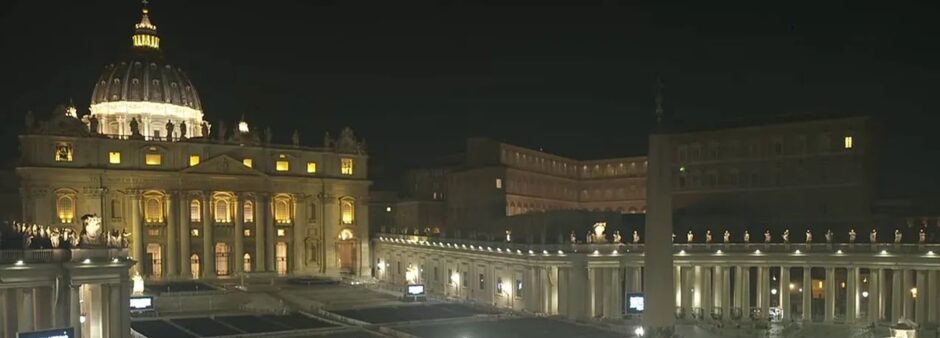
Was there a good point or two in the sermon you heard for your Sunday Mass of obligation?
Let us know!
 I have received a few more voice mails. It has been a while since I posted about them.
Here is this one, from across the pond. A second came in just after I posted this, reacting (in part) to the first.
Podcast: Play in new window | Download
Subscribe: RSS
In the first, … I know about “censed”. You can’t do much traditional liturgical stuff without knowing it. I occasionally see words I don’t know in my Word of the Day emails to which I subscribe (the OED WOTD is especially helpful). I saw one the other day that was pretty spiffy: bafflegab – though it is modern. I might use it a lot during October. There was also oology. Didn’t know that one. Having the Latin and the Greek makes it possible to figure out most of the technical stuff. But words that come out of, say, medieval Scots, like gaberlunzie, I need to look up. And, please don’t be either censed or incensed that I was having a little fun with your language. Thanks for noticing and thanks for the kind words! I look forward to my next visit to Blighty. And the “Extraordinary Ordinary” to which he referred is, of course, the redoubtable Bp. Morlino.
In the second…, yes, there was the Cappella della Separazione, which was destroyed to build the road to Ostia. HERE It was the property of Ss. Trinità dei Pelegrini where the FSSP is and where you find one of the most glorious paintings of Baroque Rome, the Trinity by Guido Reni. The Great Roman Fabrizio tells me that he will take a photo of an inscription from the original chapel preserved at Ss. Trinità. Apparently there is now a modern chapel near the place of the original.
Also, I am not sure about the why of the lineage of bishops all going to Benedict XIII (+1730), other than that, as in bloodlines, they all converge somewhere. There were fewer consecrations, once upon a time, and it makes sense that they converge. You can see at the site Catholic Hierarchy that most lines run beyond Benedict XIII to Scipione Card. Rebiba (+1577). Eventually, of course, they go back to the Apostles themselves.
And, as a bonus, one of my favorite images of Benedict XIII.

A pretty humble guy, from all accounts, though sitting on the other side of the desk might be a bit intimidating.
Speaking of being either censed or incensed (the object of incensation) or incensed (smokin’ angry), Benedict XIII lifted the ban on smoking, which his urbane papal predecessors Urban VII and Urban VIII had imposed. And speaking of imposed, we impose incense in the thurible, or censer if you please, in order to produce the holy smoke. And not to impose on your patience any longer, I will censor my digressions lest I be further (not farther) censured.
Finally… the English… yes.
I had a few timid hang ups. C’mon!
Please leave me voice mail. I don’t call back, but I listen to it. You have three options:
 WDTPRS
 020 8133 4535
 651-447-6265
Since I pay a fee for the two phone numbers, USA and UK, I am glad when they are used.
TIPS for leaving voice mail.
By the way, if you emphatically say at the beginning of a message, or anywhere else in a message for that matter, not to use your message in a post or a podcast… then I (probably) won’t. But then don’t complain that you didn’t see something about it on the blog. ‘kay? Yes, that happens.
UPDATE:
Podcast: Play in new window | Download
Subscribe: RSS
At Monday Vatican Andrea Gagliarducci has news about changes to be made in the procedure for the upcoming Synod in October.
Last year the organizers of the Synod changed rules in order to more easily ram through their agenda. This year is no different. Look what they are going to do. My emphases:
[…]
Some well-informed people say that the 2015 Synod will be completely different from any other. First of all, a midterm report will not be released. Last year, the midterm report was completely revised by some of the Pope’s closest collaborators prior to its release, and the report resulted in many controversies. Even Cardinal Petr Erdo, the Synod’s General Relator, distanced himself from the report. But its release united the followers of the Church’s doctrine, who stood up against the Synod’s drift. They ultimately achieved an acceptable compromise for the Synod’s Final Report, which was filled with biblical references that had been lacking in the midterm report.
Avoiding the release of a midterm report would mean eliminating any possibility of discussion. The plan is for the Synod to carry out discussions mostly in “small groups” (circuli minores) without a general discussion. In the end, the reports of the small groups would be put in the Pope’s hands, and the Pope would then give a final address. No final report or post-synodal apostolic exhortation is foreseen at the moment, at least according to recent rumors. In this way the adapters hope to convince the Pope to employ vague language so they can eventually exploit his words.
[…]
If they don’t have general discussion after small groups discussions, and if reports won’t be circulated to other groups, the members of Group A won’t know what members of Group B said. If the reports from the individual groups go straight to the Pope via the office that organizes the Synod…
I direct the readership’s attention to Edward Pentin’s new ebook about last years Synod. There efforts to rig the last Synod to accomplish a pre-determined agenda.
The Bolletino is … packed today with news that I don’t consider all that good.
There will be a presser tomorrow at the Sala Stampa.
Two Motu Proprio Letters will be rolled out on the reform of the canonical process for declarations of nullity of marriage in the Code of the Latin Church and of the Eastern Churches.
Avviso di Conferenza Stampa, 07.09.2015
Si avvisano i giornalisti accreditati che domani, martedì 8 settembre 2015, alle ore 12.00, nell’Aula “Giovanni Paolo II” della Sala Stampa della Santa Sede, avrà luogo la Conferenza stampa di presentazione delle due Lettere motu proprio datae di Papa Francesco Mitis Iudex Dominus Iesus e Mitis et misericors Iesus, sulla riforma del processo canonico per le cause di dichiarazione di nullità del matrimonio, rispettivamente nel Codice di Diritto Canonico e nel Codice dei Canoni delle Chiese Orientali.
Parteciperanno e interverranno nell’ordine:
– S.E. Rev.ma Mons. Pio Vito Pinto, Decano della Rota Romana e Presidente della Commissione speciale per la Riforma del processo matrimoniale canonico; [Why is the Cardinal (next down) not the President of this Commission?]
– Em.mo Card. Francesco Coccopalmerio, Presidente del Pontificio Consiglio per i Testi Legislativi e Membro della Commissione speciale;
– S.E. Rev.ma Mons. Dimitrios Salachas, Esarca Apostolico di Atene per i cattolici greci di rito bizantino e Membro della Commissione speciale;
– S.E. Rev.ma Mons. Luis Francisco Ladaria Ferrer, S.I., Segretario della Congregazione per la Dottrina della Fede e Membro della Commissione speciale;
– Mons. Alejandro W. Bunge, Prelato Uditore della Rota Romana e Segretario della Commissione speciale;
– Rev. P. Nikolaus Schöch, O.F.M., Promotore di Giustizia Sostituto del Supremo Tribunale della Segnatura Apostolica e Segretario della Commissione speciale.I testi dei documenti in forma cartacea (in latino e nella traduzione in lingua italiana) saranno a disposizione dei giornalisti accreditati a partire dalle ore 10.30 di domani martedì 8 settembre con Embargo fino alle ore 12.30. [Paper copies of the Latin with Italian translation will be given to the journalists ahead of time.]
La conferenza stampa potrà essere seguita in diretta streaming audio-video tramite: [live streaming…]
il VaticanPlayer via web digitando http://player.rv.va
il Canale TheVatican su YouTube digitando http://youtube.com/vatican
le App RadioVaticana per Android – iPhone – Windowsphone. Le app si possono scaricare direttamente dal sito della Radio Vaticana: www.radiovaticana.va
What could be in these?
It could streamline the process by eliminating second instance (which won’t save a lot of time provided the first court does its job well). It could alter the role of the Defender of the Bond. It could reduce the number of judges (which would be disastrous). Perhaps there will be something about competence.
We shall see!
 Burke Derangement Syndrome™ has struck again!
Michael Sean Winters of the Fishwrap has swooned upon his fainting couch at the news of Edward Pentin’s new book about what happened at the Synod of Bishops last October.
More about Pentin’s new Smoking Gun Book™ about last year’s chaotic Synod.
MSW hasn’t read the book. “I have not read this tome”, he wrote.
But he seems to know all about it!
Not only that, even though he wasn’t there and didn’t have any special access to the key players cited by Mr. Pentin, MSW knows how to judge all things concerning that Synod.
What has brought on this case of the vapors? This is the key, according to MSW:
The second charge Pentin levels is more pernicious [not to say “venomous“]. He suggests that the Interim Report was given to the press in an effort to sway the synod towards its purportedly more “liberal” views, especially on the hot button issue of homosexuality. [There it is.] Apparently, few if any of the spoken interventions even mentioned the topic, so people were surprised to see it in the Report. This is one of the problems with the Synod format: If the topics are not assigned in advance, and each of the synod fathers can speak on whatever they want [sic], they are more likely to focus on the issues affecting a vast majority of families, not on a relative side issue like homosexuality. [I don’t think it was a side issue at all.] We do not know how many of the written interventions discussed the topic, nor how often the topic was addressed in less formal settings. [“We do not know”… and yet here is MSW, judging.] I thought the language on homosexuality in the Interim Report was unimpeachable: It basically said everyone should be welcomed in the Church. Full stop. [Not quite full stop, no. First, they were vague. What does “welcome” mean? In the civilized world is there a Catholic parish that turns homosexuals away? Not a one. It isn’t a sin to be a homosexual. Does it mean give them Holy Communion without emendation of life if they are openly sexually active? What does “welcome” mean? Should we have them stand up during Mass so we can all say “Bravo!”? Also, are we to welcome homosexuals because they are homosexuals or because they are people? There was clearly an agenda hidden inside the vague language.] It happily, and hopefully, avoided the language of “intrinsic disorder” which, whatever its theological precision, which is questionable, its pastoral significance is obvious and malign. [The Church teaches that homosexual acts are gravely sinful and intrinsically disordered. Full stop.]
And it’s all Card. Burke’s fault, apparently!
This book was written by Pentin, but it could alternately be called The Synod According to Cardinal Burke. The petulant cardinal made a beeline for Pentin and other conservative reporters at the end of each session of the synod last year.
This is complete B as in B, S as in S.
Read Pentin’s book, everyone. There were indeed people trying to rig the last Synod to accomplish a pre-determined agenda.
Buy it and tell others to buy even if it is unlikely that they (like MSW) will actually read it.
Warning: What we saw last year will be nothing compared to the skulduggery this year. As I have written before, I expect and less transparency and more rule changes to shut down opposition to the underlying agenda. The Synod will be a real battlefield. Prayers are in order.


UPDATE:

Today’s Collect survived the long knives of the Consilium to live on the in the Novus Ordo editions of the Missale Romanum on Monday of the 3rd Week of Lent. Figure that one out. We find it in the 8th century Gelasian Sacramentary for a Sunday, with a minor spelling variation. It is thus ancient. There are other reason to think that the prayer is even more ancient. But first here is the text:
COLLECT (1962MR):
Ecclesiam tuam, Domine, miseratio continuata mundet et muniat: et quia sine te non potest salva consistere; tuo semper munere gubernetur.
First, we cannot pass over the sound of the prayer. The Roman Latin prayers, particularly those which were handed down intact from earlier centuries, such as the time of St. Pope Leo the Great (+461), are elegantly sculpted both in their rhythm and their sounds. Notice the wonderful alliteration throughout. Tying the whole thing together from top to bottom are the glottal sounds (made in the back of the throat with the tongue), on the voiced or unvoiced “k” sound of Ecclesiam… continuata…quia…consistere…gubernetur. . Then we have an interlocking series of alliterations. There are many humming “m” and “n” sounds: Ecclesiam tuam, Domine, miseratio continuata múndet et múniat…. Keep in mind that in ancient times, the final “m” was pronounced in a very nasal way, which survives in many instances in French and Portuguese. So, this pray begins with a deep hum. Then you shift to sibilants, the hissing “s”, with snappy “t”s along the way: et quia sine te non potest sálva consístere; tuo semper…. Then we go back to our humming “m” and “n”, but with a lovely rhythmical closure or clausula: semper múnere gúbernétúr. Speak or sing this to get at the real beauty of this gem, with its glittering facets of phonemes.
We still have space linger over some vocabulary. Gubnero was a favorite word of the great ancient Roman orator Cicero. Our thick and juicy Lewis & Short Dictionary, that feast of Latin lemmata, says guberno is “to steer or pilot a ship”. Logically, it also means “to direct, manage, conduct, govern, guide”. The Liddell, Scott, Jones Greek Lexicon, or LSJ, says that kubernao is “steer”, “drive” and metaphorically “guide, govern” and then “act as a pilot, i.e., perform certain rites in the Ship of Isis”. I can’t quite imagine what those “rites of Isis” are. I suspect they might still be used in odder versions of the newer Mass in some places, but this lies outside of our sphere of interest and it is too irritating to speculate about. We can leave that the liturgical abuse office of the Congregation for Divine Worship.
The super-charged word munus is a little hard to get at in English is this Collect. A munus can be “a service, office, post, employment, function, duty”. Should we avoid reducing God to a functionary? It is true that God is often said in our prayers to have pietas, which carries a strong sense of “duty”, but in Latin prayers pietas, when applied to God, is really more like “mercy”. For man the term pietas is “duty”. In this instance of munere, we ought to lean toward another, less common meaning in the L&S, namely, “a service, favor”. In fact the liturgical Latin dictionary we call Blaise/Dumas has, “don, faveur (de Dieu)”. There is a connection between munus as “duty, service” and as “gift”, in that munus stood also for a public work given to the city by an individual. For example, a great Roman might put on public games and feasts for the people, or erect a temple or public building as a munus given from civic duty as well as to increase his and his family’s gloria, that is, his share in the honor of the state.
The verb consisto is “to stand still, stand, halt, stop, make a stop” but also many other sorts of “taking a stand”, such as what soldiers do when about to fight, or what you do in court to defend your position. There is a “moral” stand one takes, as well as “stand with” someone. However, both in the L&S and Blaise/Dumas we see that consisto can simply mean “to be, exist”. In fact, this notion of “standing” (sisto) is also the root for existo. It is as if, in the case of the later, that as things come into being, they “stand forth” (ex-sisto) from nothingness.
It seems to me that our author was also having a good time with the similar sounds of mundet, muniat, and munere, all very different but with phonic hooks that pull them conceptually together.
This week allow me also to play around with some alliteration in rendering our prayer, still sticking to a slavish version of the Latin lines. I will also try to capture something of the nautical imagery.
LITERAL TRANSLATION:
Let Your continuous compassion, cleanse and defend Your Church, O Lord, and because without You she cannot stand to safe, may she forever be steered by Your favor.
In nautical parlance, to “stand to” means to “stay on a certain course”. This is how I try to unpack the meaning of consisto, which aims at the concept of “consistency” and “staying” firm. Because in this world the Church is on a journey, as a pilgrim, I didn’t want simply to say “stand firm”. But gubernator, as the master of the ship’s course, who “governs” where the ship goes, helped me think of “stand to”. Also, I could have said “safely”, but salva is an adjective, not an adverb, and I am feeling a bit more archaic than usual as I write today.
One of the meanings of munio, which gives us the muniat in the prayer (“to build a wall around, to defend with a wall, to fortify, defend; to guard, secure, strengthen, support”, for munio stems from moenia “walls”) is also “to open a road”, viam munire. Maybe we can get our heads into this prayer by thinking of the Church, often portrayed as a ship, as in Peter’s Barque or the sailing ship in the vision of St. John Bosco, as that fortified way through the heaving waters of the world, with its distractions both sensual and diabolical, that threaten to blow us off our course. As they sail in dangerous waters, ships need a well-prepared steersman to govern her through the shoals and currents, to avoid the reefs and rocks hidden beneath the waves. There are times when we have a following wind, that favors smooth and direct sailing. At other times, we must tack back and forth to make slow headway, or even run before the wind, when the sea and the storms rise in frightful force against us. In all these conditions, the captain and navigator and steersman seek the best course for the good of the whole ship and all who sail in her, according to the charts available, personal experience, the smell of the wind, the look of the sea, and the map of the sun, moon and stars.
In many ways these images of the ship at sea exemplify the experience of the Church. Our Popes, bishops and pastors seek the best course as they know how, seeking to guide the barque in perilous waters and times. In human terms we do our best to steer our course and we can make mistakes. But in divine terms we know that no matter how terrifying are the winds and seas which buffet us and threaten to bear away our spars and sails, Christ’s sure hand rests on the wheel. Nothing contrary will prevent Holy Church from finding safe harbor in Him. We will come home to a safe landfall.
I am not a fan of the New York Times (aka Hell’s Bible) but they got something right this week.
The Summit Dominicans (the “Soap Sisters”) are featured in the Style section. HERE
Bucking a Trend,
Some Millennials Are
Seeking a Nun’s LifeA contemplative order in New Jersey, where sisters live in cloister and practice a life of prayer, is attracting eager, college-educated women.
[…]
There are some great photos.

 I will set up and turn on my rig sometime during the day and in the evening. Perhaps some of you might use the combox to set up some scheds.
I didn’t post last Saturday because I was travelling. But I was travelling in a place where I did one hamish radioish thing in between museums.
In the last couple weeks I have visited two ham radio shops… physically, not virtually via the interwebs. First, I drove over to Milwaukee (where the great Sheriff David Clarke gives sensible advice to the citizenry) to find one of the last ham radio shops in the region. I am told that there isn’t even one in the Chicago metro anymore. Imagine. I didn’t get much, and, frankly, there wasn’t much on display to look at. I obtained an antenna/cable switch and an extra length of cable. Anyway, now I know where it is. While I was in Milwaukee I also made a pastoral visit to my old friend and Latin mentor Fr. Reginald Foster. We caught up on his Latin book project (HERE) and argued amicably for a while. He had galleys of his new book on the table along with his vast array of colored pens for which he is rightly famous. He dropped me a note a while back in response to an article on Latin I sent him from (I think the New Yorker). It was a scream.
Anyway… back to radio
I was in L.A. recently, and I visited the Burbank store of Ham Radio Outlet. There was quite a bit on display there and some really nice people in the store. I am finding that most hams are really nice people. One of you readers has given me some credit at HRO! I’ll have to figure out what to use it one. It seems that people can give you credit that you can use at any store, but you have to call in your order. You can do so at any of their branches. The credit is assigned to your callsign.
In the last couple weeks I made a few long distance contacts. However, each time I had to take several runs at communicating my callsign to the station on the other end. Twice I was told – with the same description – that I was “way down in the mud”. So, I need to make some changes. I was operating at full power (100W). Yes, the bands were grumpy and not cooperating, but other stations were coming in 5×9. I am pretty sure it is my antenna placement that is limiting me.
BTW… I received from one of you readers a morse code key that was, I believe, on my Amazon wishlist. Alas, it arrived broken, with an adjustment screw bent sideways. I must contact amazon to figure out what to do, but the problem is that I don’t know who it came from. There was no packing slip included with the name of the giver. That happens sometimes. Anyway, if you – the giver – see this, drop me a note.
I still haven’t moved forward with QSO/QSL cards. I am wavering about a vanity call, for one thing. Also, I sent a note to a fellow who makes cards and helps with design, but I haven’t heard back from him. I guess there is no rush. My design…

I was told by a local ham who has been a great Elmer that this card is not quite right. The call sign should be far more visible so that it “screams” across the room at you. More visible? I don’t think neon tubes go through the mail easily.
I draw the readerships attention to a video posted by USNERDOC (whose videos and AMP-3 gear is pretty cool). He has practical videos about getting your comms up and running. His latest shows him setting up his homebrew wire antenna to tune in with a CountyComm GP-5/SSB to the AmRRON 40m Voice Net. HERE USNERDOC does some great father/son things such as road trips and geocaching. He and his wife design and make emergency medical kits and portable radio gear. I was partly inspired to get into ham radio by his videos, especially where he shows homebrew gear he crafted. Check him out. Anyway, I mentioned this because last week I was working 40m and heard the AmRONN Voice Net. People were checking in. Frankly, I didn’t know what to do. I was tempted to check in, but I don’t know if you have to be formally a member. Maybe I should actually take time to look at their site and figure it out?
I continue my study for the Extra ticket. I was frustrated the other day because I heard some fun stuff going on just out of reach. So… gotta get it.
Finally, I ask your prayers for one of our fellow commentators here who is a ham. I won’t give his callsign here, but he can chime in if he wants. He wrote:
Have been scheduled to go under the knife on 9/15 to reconstruct (not cosmetic) my nose, sinus configuration, biopsy of some masses they found in a cat scan, and such. Never been under; taking care of confession etc beforehand..but would appreciate prayers if you think of it that the Lord guide the surgeon’s hand, that the biopsy is negative, but in any and all cases, regardless of the outcome, His Will be done.
Amen. So… DX some prayers for him, would you please?
And don’t forget Echolink! WB0YLE-R
That it for now.
de KC9ZJN 73
I am building a list of hams who frequent this blog. I hope I haven’t missed any of you. Check in!
Z-Blog HAMS (by your username here and your call)
PRIESTLY HAMS (out there somewhere)
There must be more of you!
UPDATE 2356 UTC:
Thank to a text tip from an Elmer I made a contact with a fellow in Morocco a few minutes ago.
I have posted updates from time to time about the wonderful restoration work being done at Corpus Christi Church in Maiden Lane, London, near Covent Garden. Fr. Alan Robinson has the task in hand and is making great progress. I’ve always enjoyed my visits to the church and look forward to seeing the newly restored Lady Chapel.
I receive an email from Fr. Robinson saying:
Last Thursday evening the new statue of Our Lady of Walsingham was blessed. What an incredible evening. Three bishops were on the sanctuary – lots of clergy in choir – the church was packed to the doors – and a great party afterwards. Thank you to all of you for making it possible – by the money you have contributed and by your encouragement. If you follow the link below you can see some photographs pf the evening, taken by the Diocesan Communications Office. HERE
SO – next is the SANCTUARY. I really would like to begin this asap – let’s not lose the momentum. Please keep the payers going for the funding of this part of the church.
A couple pics:


Brick by brick in London!
Fr. Z kudos to the parish and to Fr. Robinson.
UPDATE:
I like this blurb in the parish bulletin:

Some time I wrote about a parish in my native Minnesota, St. Mark’s Church in Shakopee, which has implemented Holy Mass in the Extraordinary Form with preaching also in Spanish. HERE
Fr. Erik Lundgren, the pastor, sent a few photos.
Here is a sampling:

The building is typical of so many small towns in the upper midwest, though the pop-combo structure wasn’t in the original plan.

It’s too bad that he has to use that postage stamp altar, barely the size of a decent credence table, set up in front of that marvelous German Gothic revival altar which is the obvious point of focus of the whole building.
It looks as if Fr. Lundgren is trying to unite his Anglophone and Latino groups. Fr. Z kudos. Hopefully it’ll catch on.
The Vetus Ordo… uniting communities since 1570.

Coat of Arms by D Burkart









A Daily Prayer for Priests


They find you a pro-life agent in your area who commits to giving a portion of the fee to a pro-life group!

PLEASE subscribe via PayPal if it is useful. Zelle and Wise are better, but PayPal is convenient.
A monthly subscription donation means I have steady income I can plan on. I put you my list of benefactors for whom I pray and for whom I often say Holy Mass.
In view of the rapidly changing challenges I now face, I would like to add more $10/month subscribers. Will you please help?
For a one time donation...



Help Monks in Wyoming (coffee – UPDATED LINK) and Norcia (beer) and the wonderful "Soap Sisters" of Summit, NJ!


Please follow me on Twitter!










Visits tracked by Statcounter
since Sat., 25 Nov. 2006:

