STrib: An opinion piece about the ordination of women (well done!)

A few days ago I posted something from the liberal newspaper of my native place, the Minneapolis Star Tribune about wymyn who thynk they are prysts.

Today there is an opinion piece in response:

As a 20-something Catholic woman with a master’s degree in theology, I found the article “Female priests push Catholic boundaries” (Dec. 11) relevant and provocative.

Having shown a religious interest at a young age, I often was asked whether I would want to be a priest when I grew up. It seemed to me a possibility at the time.

When the question of the ordination of women first became especially prominent in the 1970s, Pope Paul VI called for a team to research and explain the church’s teaching on the subject.

Looking into such fields as history, sociology and psychology, in addition to theology, some questions raised were: What is the priesthood? Have women been ordained before?

Did Christ allow for it? Is it in the Scriptures? What did the Apostles do?

What has the teaching of the church been over the centuries? How does the church acknowledge and affirm the participatory role of women in the church and in contemporary society?

After thorough consultation, it was determined that it is not in the church’s power to ordain women — not just that it won’t, but that it can’t. There is nothing the church can do to “make” the ordination of women valid.

This is because the Catholic Church does not manufacture what is true, but looks at the way things are, the way God has given them to us.

And that is one of the main reasons I am still a practicing Catholic. I want to know what is true, not just what I want to be true.

Over recent decades, a number of intelligent but sensitive Vatican documents have further explained the church’s teaching on ordination, as well as on the essential and irreplaceable role of women and the laity. (These articles are readily available in print form and online.)

Over time, the question “So, do you want to be a priest?” has become, to me, offensive. [NB:] It implies that the ordained ministry is the only way to be “in” the church, and that my current roles as a lay Catholic woman are somehow inadequate.  [Exactly.  It is a horrible form of “clericalism” to suggest that to, say, participate actively in liturgical worship, you have to do what the priest does, as if you are not good enough unless you are being “clericalized”.]

All Catholics have an essential part to play in the church, and not just inside the church building. There are unique things that a single woman or a religious sister or a mother can do that a priest cannot.

Similarly, there are family fathers, single men, and nonordained, consecrated men (brothers, monks, etc), who each have their own important contribution to make.

We all have to work together, in our various roles, to be one body of Christians.

The news article also made numerous references to the declining number of male Catholic priests as one of the reasons to ordain women.

This runs contrary to accessible, easily verifiable evidence that the enrollment of young men in U.S. Catholic seminaries has actually increased in recent years. Many seminaries have more men enrolled this year than they have had in decades; some are even full.

Being of the same generation, I am especially proud of these men, who have grown up hearing nothing but ridicule of their church in the public arena, yet have found a love for their Catholic faith and have answered a call to give their lives in service of others.

It is what we are all called to do in our various states of life. As a woman, I look forward to working alongside these priests in the future — without being one.

* * *

Katherine Thomas is a Twin Cities bookseller and religious educator.

Posted in Linking Back, New Evangelization, Our Catholic Identity | Tagged ,
27 Comments

Archbp. Martin: “Irish Catholics are very weak, and that’s the fault of generations of the Church…”

From CNA:

Dublin archbishop says lapsed Catholics should admit their non-belief
By Benjamin Mann

Dublin, Ireland, Dec 14, 2011 / 06:05 am (CNA).- Non-practicing and non-believing Irish Catholics should be honest about their relation to the Church, Dublin Archbishop Diarmuid Martin told the makers of a TV documentary that aired Dec. 11.

“It requires maturity on two sides: maturity of those people who want their children to become members of the Church community, and maturity of those people who say, ‘I don’t believe in God, I really shouldn’t be hanging on to the vestiges of faith when I don’t really believe in it,’” he said.

Archbishop Martin’s comments were featured in an episode of “Would You Believe,” RTE Television’s investigative series on religion.

Its Dec. 11 episode looked at the issue of Irish parents who have ceased to practice their faith, but still want their children to receive the Catholic sacraments of Baptism, Eucharist and Confirmation.

Filmmaker Mick Peelo’s interviews showed many self-identified Irish Catholics seeking sacramental preparation for their children, while lacking either the intention or the ability to pass on the principles and meaning of the faith.

People interviewed for the show gave various reasons for wanting their children to receive the sacraments, despite their own lack of belief and practical commitment.

One woman described the rites of initiation as a “platform from which (children) can question” in later life. Another noted that a child often “doesn’t want to be left out” when their peers are making their First Communion.

While Archbishop Martin called for honesty among adults no longer committed to the Church’s faith, he also acknowledged that the problem’s roots run deep.

“Irish Catholics are very weak, and that’s the fault of generations of the Church in their understanding of Scriptures,” he said, reflecting on teachings that “taught us things about religion” but “didn’t really deepen our faith.”

He suggested that practices of the past may have inspired anxiety, in place of a personal commitment.

“For many people in Ireland, the God we were practicing and teaching wasn’t necessarily the God of love at all. It was a God who inspired fear, it was a God who was sort of a ‘somebody watching you,’ rather than freeing and empowering you.”

The situation calls not only for honesty, but for a more substantial presentation of Catholicism.

“We have to do a radical new look at the way that religious education takes place,” Archbishop Martin said in his interview with Peelo.

[…]

Read the rest there.

Read Pope Benedict’s Letter to the Irish People HERE.

Pray for the new Nuncio, Archbp. Brown.

Posted in "How To..." - Practical Notes, Brick by Brick, Dogs and Fleas, New Evangelization, Our Catholic Identity, The Drill, The future and our choices | Tagged , ,
14 Comments

CH: Why have confessions dropped off in England but not Kenya?

From the UK’s best Catholic weekly, The Catholic Herald.

Many Catholics in Britain do not grasp how important and rewarding regular Confession can be

Why has the practice dropped off so dramatically here, but not in Italy, say, or Kenya?

By Fr Alexander Lucie-Smith

It is easy to forget that Advent is a penitential season, [We fast before our feasts.] especially if you are invited to numerous Christmas parties before the Christmas season begins, or if you are subjected to Christmas carols (rather than proper advent hymns) in pubs, shops and clubs in the lead up to December 25. But one welcome and counter-cultural development is the Advent penitential service that seems to be a fixture now in many parishes. I have been to several this year already. Almost all parishes seem to have them, and I certainly consider them worthwhile.

The best penitential service is, to my mind, the simplest of all: perhaps an introductory hymn, a prayer, a brief reflection, and then the chance for individual confessions. [Do I hear an “Amen!”?] If there are lots of priests there, the individual penitent does not have to worry that he or she is holding up the queue, but can spend as long as required talking to the priest. And then, having received individual penance and absolution, the people are free to go. I don’t think one really needs anything else.  [“Amen!”, bruthuhs n sistuhs!]

The guided examination of conscience is rather important; it can help a great deal if it is sensitively done. And here we get to the nub of the question. We all know that in recent decades the number of people going to confession in our churches in England and Wales (and I can’t imagine Scotland is much different) has fallen off dramatically. Why is this? It hasn’t happened, strangely enough, in Italy, where people still go to confession in considerable numbers. [?] Or in Kenya, where I often used to hear confessions during days of recollection for young people.

Is there something in our national character which stops us going to confession as often as we might?

Or is it that we simply do not need to go?

Or is it that we have not been properly catechised, and that we do not know just how rewarding regular and frequent confession can be, and indeed how essential for progress in the spiritual life?

I think the answer might be a combination of the first and third options, not the second. I wonder what other people think? And if they have any suggestions that, if put into practice, might lead to a revival of this essential Catholic practice?

I think priests have to move their collective backsides from the comfy chair in the rectory to the comfy chair in the confessional.  I think priests and especially bishops have to preach about and teach about and talk about confession far more often.  I think we need proper confessionals, too.

A few minutes of confessions before Mass will help.

This is the promotion of the “new evangelization”.

Posted in "How To..." - Practical Notes, Brick by Brick, Liturgy Science Theatre 3000, Mail from priests, New Evangelization, Our Catholic Identity, The future and our choices | Tagged , , ,
21 Comments

Learning Latin responses for the TLM

Every once in a while I get a request to record the Latin responses for the TLM so that people who want to serve Mass can learn them more easily.

A friend sent me a link to online recordings made in the 1950’s!

HERE.

Posted in "How To..." - Practical Notes, ASK FATHER Question Box, Just Too Cool, Liturgy Science Theatre 3000 | Tagged , ,
7 Comments

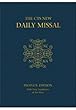
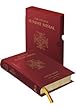
UK: CTS edition of the DAILY Missal with the new translation

I have seen the Catholic Truth Society’s edition for people in the pews of the SUNDAY Masses.  You can pre-order the DAILY Mass edition at a reduced price.

And for those of you in the UK who just want the Sunday edition with a slip cover.  Click HERE.

Posted in "How To..." - Practical Notes, The Campus Telephone Pole | Tagged ,
7 Comments

QUAERITUR: Rubrics for Aztec dancers during the offertory

From a reader:

On the fest of Our Lady of Guadeloupe the local parish here had Aztec
liturgical dancing during the offertory
. Everything else was fine, but this seemed a bit off.

It opened with the dancers running to the altar accompanied by a
excruciatingly loud beating of the drums. [So far so good.] They then proceeded to present the gifts, while dancing around the altar as the priest celebrant prepared it.

We had few questions about the rubrics that might allow for something like this. On an almost petty note, should the Aztec dancers present the gifts before or after the priest incense the altar?

On a more serious note, is it acceptable to have clearly non-Catholic images onthe cultural costumes and drum?

I assume that these things are not in line with the will of the current Roman Pontiff, but we were wondering if thisshould be raised to the attention of our bishop or perhaps the CDW?

I’ve linked to some of the better photos that you can use if you want.
They should also give you an idea of what we were talking about.

[…]

I think I get the general idea.   I wonder if the CDW has enough of these photos yet.

Perhaps you should send them in, asking for the clarification about the incense.

My sense about the incense is that the priest is to incense the altar after the Aztec dancers present their gifts.  I understand that the gifts may be carried in also to the accompaniment of special ordination tambourines.

However, if any of the victims are sneezing because of the smoke, or are otherwise manifesting their resentment loudly enough to be heard over the beating of the drums (which is why the drums are important, by the way!), it may be necessary to act as an Extraordinary Minister of Blows to the Head … ad hoc, as it were.  I think there is a blessing and commissioning for an EMBH, though normally the local bishop has to certify EMBHs for Aztec rituals during Mass.

If you are going to “EM”, do it right!


Seriously, I don’t think there is any problem with ethnic or indigenous garb for people who are “bringing up the gifts”, so long as it is decent and modest and doesn’t have elements that are contrary to our Christian Faith.

Posted in "How To..." - Practical Notes, ASK FATHER Question Box, Lighter fare, Liturgy Science Theatre 3000 | Tagged , ,
70 Comments

Wyoming Catholic College Video

From time to time I have mentioned Wyoming Catholic College, which trains students in a modified form of the Trivium and Quadrivium, and makes sure they know their Latin, have the TLM, and how to take care of a horse.

I’ve been there.  Impressive place with a great vision.

They learn how to learn, how to think and make distinctions.  They also learn how to articulate what they know.

WCC now has a video about the college which you will enjoy.  It is about 7 minutes long.

[wp_youtube]2ganIqre0QE[/wp_youtube]

Posted in Just Too Cool, The Campus Telephone Pole | Tagged , , ,
47 Comments

QUAERITUR: Missing Masses with the “corny music”

From a reader:

I am having difficulties reconciling my love of the EF Mass with the
fact that sometimes I miss the OF Mass and it’s corny music. You know, sometimes I miss being able to expressively belt out Table of Plenty or something classic like Peace is Flowing Like a River or something hip smacking like Lord of Glory. I don’t know what to do, and I can’t help but feel like I’m sinning because it’s the sheer comedic enjoyment I get out of such Masses rather than the most holy sacrifice.

What should I do?

First, make sure you fulfill your Mass obligation on days of precept and receive Holy Communion in the state of grace in either form of Holy Mass

I have here sometimes used the provocative image of the TLM being the grown-up Mass (T-Bone steak and Cabernet) and the Novus Ordo, at least as celebrated in many places, as the kiddy Mass (jar of pureed carrot and milk). Condescending? I suppose. I can live with that. While milk and pureed carrots are the proper food for the very young, sometimes adults eat it too, as for example when she has a broken jaw. Each form of food has its time and purpose.



So, if you want to attend Holy Mass with the out of tune guitars and tambourines and poorly written, self-referential music, I say go for it!


Posted in "How To..." - Practical Notes, ASK FATHER Question Box, Liturgy Science Theatre 3000, Our Catholic Identity, SUMMORUM PONTIFICUM | Tagged , , , , ,
55 Comments

QUAERITUR: Priests and a silent Roman Canon

In another post I wrote about an option for a silent Canon/Eucharistic Prayer in the Ordinary Form.

This comes from a priest:

I have had an interesting experience with the new translation of the Roman Missal. Since it arrived, I decided that I will use the Roman Canon solely. However, because of it’s beauty, I am being drawn into it unlike the older translation. That may be because it is so new and I’m being a bit more intent on it. And, it is difficult not to add all of the signs of the cross that I have become accustomed to in the Extraordinary Form. On about three occasions I have begun to to recite the Roman Canon in silence as I would in the EF and then realize what I was doing and start again. I wonder if any other priests have had this experience?

Good question.

I sure do resonate with the tendency to insert many of the TLM gestures into the Novus Ordo (genuflections, signs of the Cross).  We become creatures of habit.  I really have to concentrate.  The same applies with the new translation, doesn’t it?

For many years I said Mass daily at St. Peter’s Basilica, often privately or with only one or a few people. To the consternation of the censorious sacristans I said the TLM most of the time, but I would also use the Novus Ordo entirely in Latin. I would say the Roman Canon silently, not only because it is best not to disturb other priests saying Mass, but because it seems the most natural thing in the world to do so.

Fathers?

Posted in "How To..." - Practical Notes, ASK FATHER Question Box, Brick by Brick, Linking Back, Liturgy Science Theatre 3000, Mail from priests, The future and our choices | Tagged , , ,
28 Comments

QUAERITUR: Can EMCHs give “blessings”?

From a reader:

At Mass this morning, at least one of the EMs was ‘blessing’ children
as they came forward. My understanding was that only priests could
give blessings.

We are a parish with 2 priests covering 3 churches, plus one Permanent Deacon.

The priest in charge was officiating today, alone. He also happens to
be the Vicar General.

I’m only in RCIA so I don’t feel I can comment but it just didn’t seem
quite right. Can you advise?

Since you are in RCIA, you are no doubt curious and interested to learn about Catholic worship and practices. I wish all Catholics were interested for their whole lives in learning about our worship.

I will refer you to a good entry about this issue HERE. It includes an article by Mr. Paul M. Matenaer, who wrote it for the newspaper of the Diocese of Madison.  My emphases and comments.

Excerpt:

In 2008, the Congregation for Divine Worship and the Discipline of the Sacraments received a letter asking precisely this question. The congregation responded in a private reply with five observations on why this practice is not permitted. [NOT]

But first, let me note that even though private replies do not have the force of universal law, they typically (and this one especially) contain an excellent analysis and resolution of the issue, giving us a unique look at the practice of the Roman Curia. In other words, this private reply is persuasive not by reason of authority but by the authority of right reason, to which every well-intentioned Catholic should submit. Here are their five observations:

Blessing given at end of Mass

[1] The Congregation for Divine Worship points out in their first observation that the liturgical blessing of the Mass is given to everyone gathered in the church just a few moments after the distribution of Holy Communion. This occurs when the priest, making the sign of the cross, says, “May Almighty God bless you, the Father, and the Son, and the Holy Spirit.”

In other words, there is no need to bless only some members of the congregation (e.g. children and non-Catholics) during communion, when the entire congregation is blessed by the priest just moments later.
Laity unable to bless at Mass

[2] In the second observation, we are reminded that within the context of Mass, blessings are the competency of the priest, not lay persons. Article 18 of the Book of Blessings [ugh] notes that even though lay persons may give some blessings, “whenever a priest or deacon is present, the office of presiding [over a blessing] should be left to him.”  [And at Mass there is always a sacerdos present.]

A 1997 instruction, Ecclesia de Mysterio, on the collaboration of the lay faithful further indicates that the laity should never say prayers or perform actions during the Mass which are proper to the priest, as this may lead to a confusion of roles. Since the blessing of the congregation during Mass is reserved to the priest, lay persons must avoid doing so.

Laying on of hands discouraged

[3] The third observation addresses the practice in some places where the EMHC lays hands on a member of the congregation as a sign of blessing. The private reply states that this practice “is to be explicitly discouraged” because the laying on of hands has its own “sacramental significance” which is inappropriate here. The Catechism notes that since this specific sign commonly accompanies the administration of sacraments (e.g. Confirmation) and the succession of the apostles, the laying on of hands must not be used here.

Some prohibited from receiving blessings

[4] Finally, in the fourth and fifth observations, the private reply notes there are some who should neither approach Holy Communion nor receive a blessing. This would include non-Catholics and those mentioned in canon 915 of the Code of Canon Law, such as those under the penalty of excommunication and those persisting in manifest grave sin. [!] Giving a blessing to these persons might give the impression that they are in full communion with the Church or have returned to good standing. In order to avoid the possibility of scandal, EMHCs should not give blessings.

Additions to the rite prohibited

[5] Finally, even though the private reply does not specifically mention this, we ought to recall that “no one may on a personal initiative add to or omit or alter anything in [liturgical] books” as canon 846 of the Code of Canon Law clearly states. Nowhere in the Roman Missal or the GIRM are the extraordinary ministers of Holy Communion instructed to bless those unable to receive communion; therefore, this practice of blessing is one of these additions to the rite which is strictly prohibited.

Making use of the sacramentals

Sometimes we may be tempted to think that since something is not part of the Mass it has no spiritual importance. But this would be to neglect the power of the sacramentals, such as blessings, which are liturgical actions signifying spiritual effects obtained through the intercession of the Church. Done properly and in the right context, these blessings better dispose us to receive grace and sanctify various occasions in life.

[NB] One such sacramental that lay persons may administer is the blessing of sons/daughters, which can be as simple as praying over your children: “May the Lord keep you and make you grow in his love, so that you may live worthy of the calling he has given you, now and for ever. Amen.”

Therefore, even if EMHCs are not permitted to give blessings during Mass, the desire to bless is good nonetheless and can become a fruitful aspect of our faith when done in accordance with the Church’s rites. As a parent, I have always enjoyed the practice of blessing my young children before bed and teaching them to reverence the Eucharist with a simple bow of the head as they walk past the minister of Holy Communion at Mass.

Posted in "How To..." - Practical Notes, ASK FATHER Question Box, Linking Back, Liturgy Science Theatre 3000, The Drill | Tagged , , ,
50 Comments