CNS makes the same “Copernican Revolution” error about the CDF’s “Doctrinal Preamble” for the SSPX

A long time reader alerted me to a video put out by the Rome office of Catholic News Service about the recent development in the talks between the Holy See and the Society of St. Pius X.  You can read about the “Doctrinal Preamble” here.  The CNS video features commentary by Carol Glatz and my friend and fellow Minnesotan John Thavis.  The video reveals high production values.  It is a great idea that they have these videos, provided they offer some accurate and interesting features.

The video in question is in a queue of videos HERE. Look for “Unity with Traditionalists”, at the time of this writing at the top of the queue.  They report on the topic rather as if it were a mission to the Sultan of Pulo Prabang, but let that pass.

As I watched the video, my impression was that they were doing a pretty good job.  I object to their use of the phrase “bargaining table”, since the talks the Holy See and SSPX have been engaged in are not really negotiations, in the sense of what businesses do, or countries looking towards a treaty.  With allowances for the journalists need to use shorthand and common parlance we let that slide.

At about 1:12 into the video, however, they went off the rails with this statement (my transcription from the video and my emphases):

I think the Vatican wanted to make clear to the Society that they were not willing to let these talks drag on forever.  At the same time the Vatican appeared to offer the group some wiggle room on the Second Vatican Council.  It said there could be legitimate discussion about some of the content of Vatican II documents and the teaching of the Popes who implemented the Council.  Well, that was new and unusual.  I really can’t remember another Vatican statement that says there’s room for disagreement with Church teachings.

To my friend Mr. Thavis, I suggest a review of my entry here which I posted in the wake of a claim made on an Italian language and then an English language site that what Pope Benedict and the Holy See was doing in view of the SSPX was tantamount to a “Copernican revolution”.

A couple things must be repeated.  We don’t know for sure the content of the “Doctrinal Preamble”.  It hasn’t been released.  But from what has been said about it but good sources, if the Holy See is saying that there can be “wiggle room”, as Mr. Thavis put it, some measure of dissent from some of the content of the documents of the Council and subsequent Magisterium,. dissent from the texts themselves and not merely the interpretation of the texts, then the “Doctrinal Preamble” would be repeating… I repeat… repeating what the Congregation for the Doctrine of the Faith already wrote in 1990 Instruction Donum veritatis “On the ecclesial vocation of the theologian”. Especially relevant are Donum veritatis 6, 21-22, 24, and 30-34.

There are levels of assent which Catholics must give to different levels of Magisterial teachings. Catholics are, of course, bound to accept (and not dissent from) teachings which are definitive. But there are other teachings which are not at that level. Though they cannot simply be brushed aside, dissented from freely, they do not bind in the same way that defined or infallible teachings do. There is some “wiggle room”.

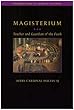
The late Card. Dulles book Magisterium: Teaching and Guardian of the Faith is very useful on these points. Every seminarian and parish priest – and Vaticanista – should have this book.   I direct your attention to pp. 97-98.

In any event, is not helpful for CNS to suggest that what the CDF may be saying to the SSPX is “new and unusual”…. because it isn’t either new or unusual. such a thing.

In my previous entry about this matter, I asserted that were such an idea to get hold, it would be possible for liberals – who will fiercely oppose reunification of the SSPX – to claim that the Holy See caved into the SSPX.  In fact it would also be possible for less than well-read traditionalists to claim that the Holy See caved into the SSPX.  But that is not what is going on.

If the speculation about the “Doctrinal Preamble” is accurate, the Holy See has not caved in on the texts of the Second Vatican Council. Donum veritatis laid out the possibility of and parameters of dissent in 1990. The theologians of the SSPX can work with the divinely constituted Magisterium along the lines already laid down in 1990.

The Rome office of CNS would do well to get this straight for their future reportage.

Posted in Linking Back, O'Brian Tags, Pope of Christian Unity, The Drill, The future and our choices | Tagged , , , , ,
10 Comments

Reality TV

From Savage Chickens:

Posted in The future and our choices | Tagged
20 Comments

Benedict XVI’s sermon for Mass in Berlin’s Olympic Stadium: “Every one of us is faced with this choice.”

The Holy Father’s Mass in Berlin’s Olympic Stadium continues as I write.  The music for the offertory was as bad as anything I have ever heard for a Papal Mass anywhere.  But I digress.

I love this quote from Augustine used by Benedict:

As much as any man loves the Church of Christ, so much has he the Holy Spirit.

Let’s have a look at his sermon with some emphases and comments.

Dear Brothers and Sisters,

As I look around the vast arena of the Olympic Stadium, where you have gathered today in such large numbers, my heart is filled with great joy and confidence. I greet all of you most warmly – the faithful from the Archdiocese of Berlin and the Dioceses of Germany as well as the many pilgrims from neighbouring countries. It was fifteen years ago that Berlin, the capital of Germany, was first visited by a Pope. We all remember vividly the visit of my venerable predecessor, Blessed John Paul II, and the beatification of the Berlin Cathedral Provost Bernhard Lichtenberg – together with Karl Leisner – here in this very place.

If we consider these beati and the great throng of those who have been canonized and beatified, we can understand what it means to live as branches of Christ, the true vine, and to bring forth rich fruit. Today’s Gospel puts before us once more the image of this climbing plant, that spreads so luxuriantly in the east, a symbol of vitality and a metaphor for the beauty and dynamism of Jesus’ fellowship with his disciples and friends.  [“in the east”.. he is in what was East Germany, now reconnected to West Germany.]

In the parable of the vine, Jesus does not say: “You are the vine”, but: “I am the vine, you are the branches” (Jn 15:5). In other words: “As the branches are joined to the vine, so you belong to me! But inasmuch as you belong to me, you also belong to one another.” This belonging to each other [At his arrival in Germany, the Pope spoke of relationships and individualism.] and to him is not some ideal, imaginary, symbolic relationship, but – I would almost want to say – a biological, life-transmitting state of belonging to Jesus Christ. Such is the Church, this communion of life with him and for the sake of one another, a communion that is rooted in baptism and is deepened and given more and more vitality in the Eucharist. “I am the true vine” actually means: “I am you and you are I” – an unprecedented identification of the Lord with us, his Church.

On the road to Damascus, Christ himself asked Saul, the persecutor of the Church: “Why do you persecute me?” (Acts 9:4). With these words the Lord expresses the common destiny that arises from his Church’s inner communion of life with himself, the risen Christ. He continues to live in his Church in this world. He is present among us, and we are with him. “Why do you persecute me?” It is Jesus, then, who is on the receiving end of the persecutions of his Church. At the same time, when we are oppressed for the sake of our faith, we are not alone: Jesus is with us.  [Can we take this as anything other than a reference to rising secularism and the resulting anti-Catholicism in the West?  In Germany?  Yes, it underscores that because we belong to Christ and, therefore, to each other in Christ, we have a relationship that mediates against individualism.]

Jesus says in the parable: “I am the true vine, and my Father is the vinedresser” (Jn 15:1), and he goes on to explain that the vinedresser reaches for his knife, cuts off the withered branches and prunes the fruit-bearing ones, so that they bring forth more fruit. Expressed in terms of the image from the prophet Ezekiel that we heard in the first reading, God wants to take the dead heart of stone out of our breast in order to give us a living heart of flesh (cf. Ez 36:26). He wants to bestow new life upon us, full of vitality. Christ came to call sinners. It is they who need the doctor, not the healthy (cf. Lk 5:31f.). Hence, as the Second Vatican Council expresses it, the Church is the “universal sacrament of salvation” (Lumen Gentium, 48), existing for sinners in order to open up to them the path of conversion, healing and life. That is the Church’s true and great mission, entrusted to her by Christ.

Many people see only the outward form of the Church. [Especially the sins of her ministers.] This makes the Church appear as merely one of the many organizations within a democratic society, whose criteria and laws are then applied to the task of evaluating and dealing with such a complex entity as the “Church”. If to this is added the sad experience that the Church contains both good and bad fish, wheat and darnel, [Or “tares”, weeds.] and if only these negative aspects are taken into account, then the great and deep mystery of the Church is no longer seen.

It follows that belonging to this vine, the “Church”, is no longer a source of joy. Dissatisfaction and discontent begin to spread, when people’s superficial and mistaken notions of “Church”, their “dream Church”, fail to materialize! [This is something I have addressed several times on this blog.  We should reflect on the experience of the N. African Church in the 4-5th centuries, the time of the Donatist schism.  The Donatists had a notion of a pure Church which depended on the transmission of holiness from a pure minister to the faithful.  When the minister was no longer pure, grace was not transmitted.  We can fall into a trap of equating the the life of grace with the person of the minister, the priest or bishop.  One easily falls in to disillusionment when we cannot see Church because we have placed too much on the sinful ministers.  And all the ministers of the Church are sinners.] Then we no longer hear the glad song “Thanks be to God who in his grace has called me into his Church” that generations of Catholics have sung with conviction.

The Lord’s discourse continues: “Abide in me, and I in you. As the branch cannot bear fruit by itself, unless it abides in the vine, neither can you, unless you abide in me … for apart from me [i.e. separated from me, or outside me] you can do nothing” (Jn 15:4f.).

Every one of us is faced with this choice. The Lord reminds us how much is at stake as he continues his parable: “If a man does not abide in me, he is cast forth as a branch and withers; and the branches are gathered, thrown into the fire and burned” (Jn 15:6). In this regard, Saint Augustine says: “The branch is suitable only for one of two things, either the vine or the fire: if it is not in the vine, its place will be in the fire; and that it may escape the latter, may it have its place in the vine” (In Ioan. Ev. Tract. 81:3 [PL 35, 1842]).

The decision that is required of us here makes us keenly aware of the existential significance of our life choices. At the same time, the image of the vine is a sign of hope and confidence. Christ himself came into this world through his incarnation, to be our root. Whatever hardship or drought befall us, he is the source that offers us the water of life, that feeds and strengthens us. He takes upon himself all our sins, anxieties and sufferings and he purifies and transforms us, in a way that is ultimately mysterious, into good wine. In such times of hardship we can sometimes feel as if we ourselves were in the wine-press, like grapes being utterly crushed. [There is surely a personal touch here.] But we know that if we are joined to Christ we become mature wine. God can transform into love even the burdensome and oppressive aspects of our lives. It is important that we “abide” in Christ, in the vine. The evangelist uses the word “abide” a dozen times in this brief passage. This “abiding in Christ” characterizes the whole of the parable.

In our era of restlessness and lack of commitment, when so many people lose their way and their grounding, when loving fidelity in marriage and friendship has become so fragile and short-lived, when in our need we cry out like the disciples on the road to Emmaus: “Lord, stay with us, for it is almost evening and darkness is all around us!” (cf. Lk 24:29), then the risen Lord gives us a place of refuge, a place of light, hope and confidence, a place of rest and security. When drought and death loom over the branches, then future, life and joy are to be found in Christ.

To abide in Christ means, as we saw earlier, to abide in the Church as well. [Many German Catholics have apostatized.] The whole communion of the faithful has been firmly incorporated into the vine, into Christ. In Christ we belong together. Within this communion he supports us, and at the same time all the members support one another. They stand firm together against the storm and they offer one another protection. Those who believe are not alone. We do not believe alone, but we believe with the whole Church.

The Church, as the herald of God’s word and dispenser of the sacraments, joins us to Christ, the true vine. The Church as “fullness and completion of the Redeemer” (Pius XII, Mystici Corporis, AAS 35 [1943] p. 230: “plenitudo et complementum Redemptoris“) is to us a pledge of divine life and mediator of those fruits of which the parable of the vine speaks. The Church is God’s most beautiful gift. Therefore Saint Augustine also says: “as much as any man loves the Church of Christ, so much has he the Holy Spirit” (In Ioan. Ev. Tract. 32:8 [PL 35:1646]). With and in the Church we may proclaim to all people that Christ is the source of life, that he exists, that he is the one for whom we long so much. He gives himself. Whoever believes in Christ has a future. For God has no desire for what is withered, dead, ersatz, and finally discarded: he wants what is fruitful and alive, he wants life in its fullness.  [And those who don’t believe….?]

Dear Brothers and Sisters! My wish for all of you is that you may discover ever more deeply the joy of being joined to Christ in the Church, that you may find comfort and redemption in your time of need and that you may increasingly become the precious wine of Christ’s joy and love for this world. Amen.

Germany is a place where Pope Benedict must be concerned earnestly to advance the New Evangelization, aimed especially at regions once Christian and Catholic and new falling away.

Germany cannot be Germany without a Christian identity.

Posted in Brick by Brick, New Evangelization, Our Catholic Identity, The Drill, The future and our choices | Tagged , , , ,
37 Comments

El Paso priest transferred because of his public remarks leading up to a mayoral recall vote

On the site of KVIA in El Paso, Texas, we find this.  My emphases:

El Paso Bishop Halts Priest’s Anti-Gay, Political Discourse

EL PASO, Texas — The Rev. Michael Rodriguez was transferred to a new parish because his stance on morality and the upcoming recall election “raised serious issues regarding whether his participation could be attributed to the Diocese of El Paso” and his parish, El Paso Catholic Bishop Armando X. Ochoa said.

[…]

I urge you to go to that site, now, and read that whole piece.

From this KVIA report, it seems that Fr. Rodriguez went to city council meetings and spoke his mind from his perspective.  I assume that Fr. Rodriguez is an American Citizen with 1st Amendment rights, and is a tax payer since he is a diocesan priest, and a resident in that city.  On the surface of it, he has a right as a citizen to speak his mind when it comes to how his taxes are used in that community.

From this report, it sounds as if Fr. Rodriguez confined himself in his remarks and in what he wrote to what the Church teaches.  I assume that, had he made a specific statement about a political figure or specifically how to vote, that statement would have been included in the report as evidence that he crossed a clear line into politics.

From this report, it sounds as if Fr. Rodriguez words were printed in the paper because in the context of an ad paid for by a private individuals with no connection of employment by the Diocese of El Paso or another Catholic entity.  Those people have 1st Amendment Rights and the paper accepted the ad and the money that came with it.

From this report, it sounds as if a Washington DC based group called Americans United for Separation of Church and State accused a local evangelical pastor “of using his church to advance the recall” of the local mayor because of the proposal to give benefits to homsexual “couples” in the same way married couples receive them.  In this report we read:

“(Father) Rodriguez has recently challenged certain city officials to participate with him in a partisan debate on issues related to an upcoming election,” said Ochoa. “This type of intervention in the political in the political process by religious organizations such as the Diocese of El Paso and San Juan Bautista Church is not permitted under Section 501 of the Internal Revenue Code.

I am not use what “partisan” means here.  It is often used to connote a strong and public political stance.   However, I suppose it could also be used to connote a strong public doctrinal stance.  Again, I did not read in the KVIA reportage that Fr. Rodriguez made partisan political statements in public.  He certainly made partisan doctrinal statements. Had he made specifically political statements, you would think that his statements would be prominently reported as evidence of having crossed a line.

I suppose that Fr. Rodriquez was perceived to be “campaigning” (my word) in a political sense for one of the sides in the upcoming recall election.

Context: a local religious group’s tax exempt status was being threatened by a Washington DC based group, …

UPDATE 23 Sept 15:37:

On a related story, HERE, the Bp. of Bathurst in Canada (not in Australia) has suspended a priest, Fr. Donat Gionet, 85, because of his preaching about the evil influence on the Church coming Catholics engaged in homosexual acts and abortions procured by Catholics.  According to the news report, the decision was “welcomed by Joseph Lanteigne, the openly gay mayor of Saint-Léolin.”

Fr. Gionet wrote to the local newspaper to explain what he was preaching about:

“I said: ‘Today, it is we Catholics who are destroying our Catholic Church. We need only look at the number of abortions among Catholics, look at the homosexuals, and ourselves.’ (That’s when I pointed at my chest – through that action I wanted to say, we the priests) and I continued saying: We are destroying our Church ourselves. And that’s when I said that those were the words expressed by Pope John Paul II. At that point, in the St-Léolin church only, I added: ‘We can add to that the practice of watching gay parades, we are encouraging this evil’ … What would you think of someone who seeing what was happening on (Sept.) 11, 2001, the crumbling of the towers, had begun clapping? We must not encourage evil, whatever form it takes.”

There are some interesting parallels with the situation in El Paso.  They don’t line up perfectly, but there are echoes.

This is a situation which I predict will be repeated more and more often.

Posted in One Man & One Woman, Our Catholic Identity, The Drill, The future and our choices | Tagged , ,
Comments Off on El Paso priest transferred because of his public remarks leading up to a mayoral recall vote

Pope Benedict is now in Germany: opening remarks

The Holy Father is in his native place, Germany.  The liberal German press and many groups have, in a way even nastier than what we saw in England, tried to poison the Pope’s visit before the fact.  I suspect he will have a warmer visit than the haters desire.

Pope Benedict’s visit to Scotland and England, almost exactly a year ago, was a state visit, rather than an apostolic visit.  This is also an official visit.  However, the Pope will address all the pressing issues through his special perspective.

Therefore, as he arrived in Germany he said, among other things:

Even though this journey is an official visit which will reinforce the good relations existing between the Federal Republic of Germany and the Holy See, I have not come here primarily to pursue particular political or economic goals, as other statesmen rightly do, but rather to meet people and to speak about God.

We are witnessing a growing indifference to religion in society, which considers the issue of truth as something of an obstacle in its decision-making, and instead gives priority to utilitarian considerations.

All the same, a binding basis for our coexistence is needed; otherwise people live in a purely individualistic way. Religion is one of these foundations for a successful social life. “Just as religion has need of freedom, so also freedom has need of religion.” These words of the great bishop and social reformer Wilhelm von Ketteler, the second centenary of whose birth is being celebrated this year, remain timely.

Freedom requires a primordial link to a higher instance. The fact that there are values which are not absolutely open to manipulation is the true guarantee of our freedom. The man who feels a duty to truth and goodness will immediately agree with this: freedom develops only in responsibility to a greater good. Such a good exists only for all of us together; therefore I must always be concerned for my neighbours. Freedom cannot be lived in the absence of relationships

In human coexistence, freedom is impossible without solidarity. What I do at the expense of others is not freedom but a culpable way of acting which is harmful to others and also to myself. I can truly develop as a free person only by using my powers also for the welfare of others. This holds true not only in private matters but also for society as a whole. In accordance with the principle of subsidiarity, society must give sufficient space for smaller structures to develop and, at the same time, must support them so that one day they will stand on their own.

I noticed that little coverage of this visit has been offered to people by the main stream media.

I wonder why….

Posted in Biased Media Coverage, Brick by Brick, New Evangelization, Our Catholic Identity, The Drill, The future and our choices, The Last Acceptable Prejudice | Tagged , ,
14 Comments

Really cool fossil. Nothing to do with liturgy.

For your “Just Too Cool” via Sancte Pater comes this from The Sun (the whole thing there):

A girl of six got more than she bargained for when she went digging with a plastic spade and found a 160million year old fossil.

Lucky Emily Baldry unearthed the massive Rieneckia odysseus fossil during her first archaeological dig last year.

And now after months of restoration she has donated it to a museum to be enjoyed by the public.

She pulled the 130lb specimen — which has a diameter of 40cm — out of the ground in March last year when she was just FIVE.

Stunned dad Jon Baldry couldn’t believe his eyes when Emily’s seaside spade hit the fossil at Cotswold Water Park in Gloucestershire.

It has since undergone a year’s worth of careful restoration and now boasts fearsome 2cm spikes.

[…]

Very cool.  Read the whole thing.

Posted in Just Too Cool | Tagged ,
13 Comments

QUAERITUR: Altar breads/hosts made in USA by religious?

From a reader:

Just a quick question: are there any congregations of religious women in the United States that still bake altar bread? I know many communities will sell altar bread from a large manufacturer, but not sure of any groups that actually bake their own bread? I would love to support this ministry if it exists.

Anyone?

Posted in ASK FATHER Question Box | Tagged ,
32 Comments

Surprise! Today Card. Scola of Milan received his pallium from Benedict XVI.

palliumI saw in the Bolletino today that at Castel Gandolfo Pope Benedict XVI imposed the pallium today on Angelo Card. Scola, the new Archbishop of Milan.

In the normal course of events, the Pope gives the pallium to newly appointed archbishops on the Feast of Sts. Peter and Paul in St. Peter’s in Rome.

The Pope can give the pallium to whom it pleaseth His Holiness of Our Lord to do so.  The Pope can choose when and where to do this.

This unusual move, however, underscores the importance of the Archdiocese of Milan.  The imposition also could have been accelerated by the fact that this was a Cardinal Patriarch of Venice moved to be Archbishop of Milan.  The dignity of those offices could suggest a different schedule.  Also, it may say something about what Benedict thinks about Card. Scola.

Finally, and I don’t have any information or insight on this, there may be something going on in Milan or the province which could require Card. Scola to fill his role as Metropolitan.  In that case, it would be handy if he had his pallium.

UPDATE 1401 GMT:

I checked the website of the Archdiocese of Milan and found that today was also the 20th anniversary of Card. Scola’s consecration as a bishop.

UPDATE 1450 GMT:

A friend sent a shot of his invitation to the event.

UPDATE 22 Sept 1924 GMT:

A contact wrote to explain that the imposition of the pallium on this date had little to do with the 20th anniversary of Card. Scola’s consecration.  He was scheduled to get it a couple weeks ago, but he became ill and couldn’t make it then.

Posted in Just Too Cool | Tagged , ,
16 Comments

QUAERITUR: Why bother going to Mass in the state of sin? Fr. Z rants with hellfire and brimstone.

From a reader:

Fr. Z I’m struggling to wrap my head around what the point of going to Mass if we’re not in the state of sanctifying grace.

My understanding is when we fall from grace, any good works we do merit us nothing. Also, it only takes one mortal sin to sever our relationship with God, so committing another one by not fulfilling my Sunday obligation wouldn’t really make a difference in regards of the state of my soul. And finally, I can’t receive communion, so I don’t receive any graces from that.

So in summation, I wouldn’t sever my relationship with God because it already is; I can’t merit any good works or graces from Mass because I’m not in the state of sanctifying grace, and finally, because my relationship with God is severed, he doesn’t care if I’m there or not.

So really, what’s the point of going to Mass when i’m in the state of mortal sin?

The attitude described in your question above, and I assuming you are presenting this as a hypothetical question, is dangerous.  Hypothetical it may be, but I will treat it seriously.

There is an image in Evelyn Waugh’s Brideshead Revisited: the blow upon the bruise.

To commit a mortal sin is bad.  To commit another with the attitude that it doesn’t make any difference now that you have already committed one is dreadful.  It can lead to what we refer to as hardness of heart, the ingrained callousness about sin that ultimately ends in never seeking forgiveness and reconciliation.

Not to attend Mass, intentionally not to fulfill your obligation, is itself a mortal sin.

Purposely multiplying mortal sins with the attitude that it doesn’t make a difference or that it is pointless to do something good and indeed obligatory is foolish and dangerous.

The Lord Himself speaks about blasphemy, sins against the Holy Spirit, which are unpardonable.  This sin against the Holy Spirit can manifest in various ways, including impenitence and despair.

A few more things.

First, our obligation to attend Holy Mass on days of precept is a commandment of the Church rooted in the divine positive law given in the Ten Commandments.  Holy Church says you have to go to Mass because God says we are to give Him His due.  That is a good enough reason to go.

Second, while it is true that, being in the state of mortal sin you would not receive the graces that would come from reception of the Eucharist, there are other actual graces offered to sinners to help them return to the state of grace.  Just because you cannot go to Communion, that doesn’t mean that you cannot receive human formation and edification from the readings, sermons, probity and good example of the congregants, the ars celebrandi of the priest, the beauty of the windows, a waft of incense, etc.  God works in the small things, too, in the spaces between the signs, and in the silences.  It could very well be that something will penetrate which will help to bring about conversion and, thus, help drag the soul back from the ledge looming above the pit of eternal hell.

Third, some people are under the mistaken impression that attendance at Holy Mass automatically implies reception of Holy Communion.  When they go to Mass, they automatically receive whether they ought to or not.  Similarly, people could have the false idea that if they cannot receive Communion, then it is pointless to go to Mass.   It is good for people to receive Communion if they are properly disposed.  However, the Latin Church’s law requires reception of Communion once a year.  At the same time, the laws says that we must attend Mass on every day of precept, which of course includes all Sundays.  Going to Mass does not imply automatic Communion.  We go to Mass for many other reasons as well.

Finally, and I’m serious, spend a little while trying to imagine the first ten seconds of realization experienced by the soul who winds up in hell.

Imagine the shock of realization.  “This can’t be happening to me!”   Imagine the first ten seconds.  Imagine the surprise and panic and anger and fear and the growing understanding that it will never end.

I suggest avoiding the voluntary infliction of your own blow upon the bruise you already inflicted on yourself.  Don’t hurt yourself, at least because of the dread of the loss of heaven if not, at first, the love of God who made you in His image and desires your eternal happiness with Him in heaven.

Posted in "How To..." - Practical Notes, ASK FATHER Question Box, Our Catholic Identity, The future and our choices, Wherein Fr. Z Rants | Tagged , , , , , , ,
66 Comments

RUN! RUN FOR YOUR LIVES! FALLING BURNING SPACE BUS! AAAAH!

From Space Weather:

RE-ENTRY ALERT: NASA reports that UARS, an atmospheric research satellite the size of a small bus, will re-enter Earth’s atmosphere on Sept. 23rd plus or minus one day. [AAHHHG!  We don’t even know WHEN we’re ALL GOING TO DIE!] The disintegration is expected to produce a fireball that could be visible even in broad daylight. [huge flaming ball of hurtling DDDEATH!] Not all of the spacecraft will burn up in the atmosphere, however; according to a NASA risk assessment, as many as 26 potentially hazardous pieces of debris could be scattered along a ground track some 500 miles long. But where? [We don’t know when or…. where?!?] No one can say. Because of the rapid evolution of UARS’s decaying orbit, the location of the debris zone is not yet known. Stay tuned for improved predictions as the moment of re-entry nears.

On Sept. 15th, astrophotographer Theirry Legault video-recorded the doomed satellite during one of its last passes over France:

“The satellite appears to be tumbling, perhaps because a collision with satellite debris a few years ago,” notes Legault. [junk hitting junk?  It’s all so unpredictable!] “The variations in brightness are rapid and easily visible to the human eye.” (Other observers have reported UARS flashes almost as bright as Venus.)

For last-chance sightings of this brightly flashing satellite, please check the Simple Satellite Tracker or download the Satellite Flybys app for your smartphone.

Falling… burning… hurtling… unpredictable killer space bus junk.

Doomed.  We’re all doomed.

Posted in Global Killer Asteroid Questions, Look! Up in the sky! | Tagged ,
31 Comments