Meteor shower and solar eclipse on the same day!

From spaceweather.com:

QUADRANTID METEOR SHOWER: Sky watchers in the northern hemisphere should be alert for meteors before sunrise on Tuesday, Jan. 4th.  Earth is about to pass through a narrow stream of debris from shattered comet 2003 EH1, the parent of the annual Quadrantid meteor shower.  Forecasters say the encounter could produce a fast flurry of 100 meteors per hour during the early hours of Jan. 4th. Details and observing tips may be found at http://spaceweather.com .

GOT CLOUDS?  No problem. You can stay inside and listen to the Quadrantids. Tune into SpaceWeather Radio for live meteor echoes from the US Air Force Space Surveillance Radar in Texas: http://spaceweatherradio.com .

PARTIAL SOLAR ECLIPSE:  After the meteor shower, observers in Europe, northern Africa, the Middle East and parts of Asia can witness a partial eclipse of the sun.  In western Europe, as much as 86% of the solar disk will be covered by the Moon at dawn, producing a fantastic crescent sunrise on Jan. 4th.  Check http://spaceweather.com for details, animated maps and live webcasts.

Posted in Just Too Cool |
1 Comment

When heresy leads to apostacy

Who is Addison Hart? And why should we care?

Addison Hart was an Anglican who joined the Catholic Church.   Now, he is leaving the Church and sliding back into the Anglican communion.  I hear they have some job vacancies right now.

Hart delivered a bit of a manifesto on his blog The Continuum

I wouldn’t be posting about this fellow, except for the fact that I got some pithy emails about him.

Given the backdrop of the recent conversion of the former Anglican bishops to the Roman Church, and given Hart’s theological errors in his “Dear John” letter posted on his blog in a comment under the main entry, I figured I should add some observations.

My emphases and comments.

Great encouragement to your congregation and readers, brother. First, as your brother, I send greetings to your wife and children, and wishes for a happy new year.

Second, as an Anglican priest who, with high ideals but considerably lower savvy, “poped” back in 1997, all I can say to those who may be thinking likewise is this: Unless you know in your heart you can believe in such super-added dogmas as papal supremacy and infallibility (very late inventions), [There is no dogma of papal supremacy.  The writer could be referring to the Pope’s universal jurisdiction, which is a matter of canon law, not dogma. As to papal infallibility, did Hart not hear of this dogma before he “poped” back in 1997? What exactly has happened between 1997-2011 whereby this dogma has caused him problems?] that Jesus did not need to possess “faith” during his earthly years (to which I respond, was he or was he not fully human?), [Where, exactly, did Hart learn that Roman Catholics are required to believe that Jesus lacked faith?] and that the bread and wine physically change into his body and blood during the Eucharist without any palpable evidence of it; [I’ll get rid of the BOLD, or this will be impossible…. In fact, Roman Catholics do not believe that the bread and wine physically change during the Eucharist. The change, referred to as Transubstantiation, is sacramental and metaphysical, not physical. The “substance” of Christ’s body is a reality apart from its “accidents” or specific physical manifestations. It is this substance which is present under the accidents of bread and wine. If “physical” is understood in the sense of “accidents” (or that which is empirically verifiable), then in Roman Catholic dogma, physically speaking, the bread and wine remain bread and wine. Did this guy study at all before he “poped”?] unless you can believe in Mary’s “Immaculate Conception” (an unnecessary and unverifiable belief, if ever there was one), [Roman Catholics recognize a hierarchy of truths, according to which, for example, belief in the Resurrection of Christ is more important and more central to the Faith than belief in Mary’s Immaculate Conception.  Is he bothered that dogmas “unverifiable”?   Catholics respond, that’s why dogmas require faith. As to belief in the Immaculate Conception of Mary being “unnecessary”, as Hart holds, I reply with the following argument.  We can accept that someone may be saved while not really sustaining a strong belief in Mary’s Immaculate Conception.  St Augustine of Hippo, for example, did not believe in Mary’s Immaculate Conception as it is formulated in later Catholic dogma. However, it is another matter entirely to accept that someone who denies, and even strongly objects to Mary’s Immaculate Conception, can really believe in the Incarnation. Think of what such a position would logically entail. It would mean accepting the strong likelihood that Mary had sinned. How could the eternal Word of God be born of a sinner, of someone who, at some point in her life, had rejected God? Admittedly, Mary’s sinlessness is a different matter from her Immaculate Conception. However, because Roman Catholics also accept as dogma the existence of original sin, it is difficult for Catholics to explain how Mary could be sinless if she had been tainted by original sin.  St Augustine, who believed that Mary had contracted original sin, nevertheless believed that Christ cleansed her of that sin prior to his conception in her womb. But Augustine does not explain when that cleansing by Christ took place. So even Augustine, who admits that Mary was conceived in original sin, had to find a miraculous way for her to be cleansed of that sin prior to Christ’s conception in her womb. Later Roman Catholic dogma represents a development of Augustine’s reasoning to a logical conclusion. If Hart truly believes that the dogma of the Immaculate Conception is “unnecessary”, he might want to think harder about Mary, Christ and the problem of original sin.] her bodily assumption, [The corruption of one’s body is a direct result of death, both of which are, in Roman Catholic doctrine, consequences of original sin. In other words, had they not sinned, Adam and Eve would not have died. But, one might object, Christ died, and yet he had no sin. Yes, but he died not because he had to die as a result of sin, but because he wanted to die in order to save us. Could Mary have been spared a death that even her Son, the eternal Word of God, suffered? Who knows? Perhaps God wanted to spare her death. God can do whatever He wants. Roman Catholic dogma does not claim that Mary didn’t die. Eastern Orthodox Christians speak of Mary’s Dormition (falling asleep), by which they indicate a belief that she died. In addition to believing that Mary was conceived without original sin, Roman Catholics, along with all orthodox Christians, believe that Mary is the Mother of God. Is it really strange to believe that God would not allow the body of His Son’s mother to rot in a tomb?] and so on, then I would urge you to stay put. [“And so on“? What are the other Roman Catholic beliefs that so offend your sensibilities, Addision? “And so on”? Why on earth did you “pope” in the first place if belief in Mary’s Immaculate conception, in her glorious bodily assumption into heaven, “AND SO ON”, so deeply offended you? Did you not know in 1997 that Roman Catholics believe in Mary’s Immaculate Conception, in her glorious bodily assumption into heaven, AND SO ON? When did you discover these strange, “unnecessary and unverifiable beliefs” that Catholics hold?] You already have everything you need, and, what Rome would add to you, you not only do not need, but should positively avoid weighing yourselves down with. Anglicanism is doctrinally sound and blessed with great forms of worship. Rome is neither. [Anglicanism is doctrinally sound? To which Anglicanism are your referring? To the Anglicanism that believes in the Incarnation and Resurrection, or to the Anglicanism that regards these teachings as myths? According to Anglican doctrine, does the Bible approve of homosexual behavior, or does it not? Does Anglican doctine believe that abortion is morally wrong, or does it not? And who exactly decides what Anglican doctrine is? Is is up to the individual conscience of each Anglican to decide, or does doctrine depend on the Church?  If the latter, to which Province of the Anglican Communion does it pertain to decide what Anglican doctrine is? To the Americans? To the Ugandans? Does the Apostolic Tradition matter to contemporary Anglican doctrine, or does it not? Why did you leave whichever Anglicanism you believed in in the first place?] As for Rome’s claims to a vastly superior moral authority — well, I would venture to say that after such revelations as clerical sexual abuse on an international scale and their bank’s money-laundering, the lie has been put to that. [Tisk, tisk. Because Anglicans in Canada, the United States, Australia, and Great Britain never had a massive problem with clerical sexual abuse and its coverup by bishops! I think you know better than that. If not, check the internet. Christians believe that all men and women are sinners. In case you missed that bit in your theological training, that means that the Church possesses from God a teaching authority which derives from fidelity to Scripture and Tradition, but that the human beings who administer the Church’s worldly affairs are frail and oftentimes betray that teaching, sometimes tragically so. The fact that Jesus called Judas and Peter to be apostles did not mean that the authority of the college of apostles as teachers was weakened by Judas’s betrayal of Jesus or by Peter’s denial.]

No, don’t make my mistake. I wouldn’t make it again myself, and, as it is, I’m making my way out the Roman door. [GUH-BYE! You so obviously didn’t belong to the Roman Catholic Church in the first place. Given your views about the papacy, the Eucharist, and Mary, you probably should have “patriarched” into Eastern Orthodoxy, but instead you “poped” into Roman Catholicism. We are not better off without you, but we are better off without your Protestant beliefs.]

Just a word to the wise.

[Because you’re so wise!]

Remember… if you dissent from Catholic teaching, there is still a church for you out there.

Heresy can lead to schism.  Worse, it can also lead to apostasy.

Benedict XVI is the Pope of Christian Unity.

Posted in The Drill | Tagged
64 Comments

QUAERITUR: EF practices in OF, OF in EF

From a reader:

I’d value your opinion. I attended Mass today at a parish run by a new, quite traditional community of priests that regularly uses the Extraordinary Form. Today they celebrated a reverent Ordinary Form Mass but the priest brought in two things common to the EF.

First, at the Gloria (which was chanted in Latin from Mass VIII) the priest sat down, as did everyone else. Should a short Gloria be sung seated?

Second, the Benedictus was choral and rather long, and the priest started the Eucharistic Prayer silently and was well along by the time the Benedictus was over. Is this allowed or advisable in the EF?

Ad 1ª: I guess that depends on how short short is.  That is a bit subjective.  Frankly, I think any chant from Mass VIII is a little long, but I don’t prefer Mass VIII.  On the other hand, the Mass of Creation and some other settings seems, to me, interminable.  I’ll take Mass VIII any day in that case.   But, for the sitting down…. I guess you have to make the call.  The rubrics indicate that the Gloria is sung standing.  On the other hand, if the whole congregation isn’t singing, and the Gloria (or any other chant for Mass) is long-ish, then I see nothing wrong with having people sit (including the celebrant).

This is where the “mutual enrichment” of the two forms can be helpful.  Sung Masses were around a long time before the Novus Ordo.  There were centuries to work out the best way to do things and the old ways seemed to work pretty well.

Ad 2ª: You mention the Benedictus.   Could it be you meant the Sanctus?   In the practice of the Extraordinary Form, the priest, having sung the Preface, would recite the Sanctus quietly while the schola or other choir began the sung version.  Once the priest was done with the Sanctus, he moved straight into the Canon, since the Preface, Sanctus and Canon all form a whole.  If the musical setting was longer, as is the case with many polyphonic and orchestral settings, once the Sanctus was concluded the choir would stop when they came to the Benedictus.  They would begin the Benedictus after the two-fold consecration.

Again, for the Ordinary Form…. I think we can take a clue from the “mutual enrichment” desired by Pope Benedict.  Before his election he even mused in his writings about the usefulness of having a silent Canon from time to time in the Novus Ordo.

Keep in mind that in the older form of Holy Mass, it was essential that the priest, if no one else, said all the texts.  In the Novus Ordo it is foreseen that, if other people are present, many of the texts are said by priest and people together (e.g. Gloria, Sanctus/Benedictus).

For the Ordinary Form, the Novus Ordo, the rubrics indicate that there should be no music during the Eucharistic Prayer.  I have firmly in mind the piano bar style rubbish that tinkled from the ivories in during the consecration in the chapel of our seminary… piano… an absurd instrument for a church… but I digress.

That brings me to another point.  I wonder, now as I write this, whether the prohibition of music during the Eucharistic Prayer wasn’t aimed at prohibiting musical  accompaniment of the Eucharistic Prayer itself.  Could it be that the prohibition of music during the Eucharistic Prayer doesn’t extend to the Sanctus/Benedictus?  Hmmmm… I wonder.

In any event, in the OF if there is to be a sung Sanctus/Benedictus (undivided), everything generally comes to a halt and the priest/bishop stands at the altar waiting for it to conclude… which can take while when they were written by Haydn.

I have a great memory of doing something like this.  For an orchestral Mass in the Novus Ordo the practice in the place was to begin the Canon quietly as the orchestra and choir did their thing, as in the older form.  However, in this case, after the consecration the Benedictus was quite a bit longer than the text of the rest of the Canon.  Thus, there I stood, deacon by my side, waiting for the conclusion of the Benedictus.  The choir sang, the fiddles scraped, the horns blew… Beeeenediiiiiiictus…. tus…. tus…. qui veeeeeeeenit… venit venit veeeeeenit, in nomine Doooooooooooooominiiiiiii…. qui venit qui venit qui venit….. You get the idea.   After about the 300th “qui venit“, I heard the deacon mutter, “I wish he’d hurry up and get here.”

The point is, the division of the Sanctus/Benedictus was done to help keep the Mass a reasonable length and still have the glorious music the liturgy and the people deserve.

We should be willing to dig into the treasury of the Church’s sacred music and then apply common sense to its use.  If it is a little long, sit down.  If it is going to be quite long, get on with the Canon…. unless of course people don’t mind Mass getting pretty long.

Again, I am all for saying… singing the black and doing the red.  At the same time, I am also for common sense and paying attention to the mutual enrichment the Holy Father desired, which must go beyond issues of text and calendars.   Priests and liturgists of the liberal stripe do all sort of goofy things that are not in keeping with either the rubrics of the Ordinary Form or our tradition.   Surely what our ancestors… remember, this is all within living memory… did for so long is not wicked or contumacious.    The former seems truly out of bounds to me.  The later, well… taking a clue from the Roman Pontiff… I think we have to use some common sense.

It sure would be helpful to have some of this loosened up a bit, and get some direction from Rome on these matters of mutual enrichment…. gravitational pull.   But I digress.

To use our great treasury of music, written for the Roman Rite, we have to also consider what our forebears did to accommodate that music within our sacred rites.  They had it worked out.

All these things having been said:  If you are in doubt, use the Extraordinary Form for some occasions when the music seems more appropriate for it.   It is a shame to have to sequester it that way, for I believe that the great flexibility permitted for music in the Novus Ordo was intended for the vast spectrum of truly sacred artistic music, not so much most of the rubbish that has passed for liturgical music for the last decades.

Nevertheless, it just seems that the more the Ordinary Form is adjusted in the direction of the Extraordinary Form, the better we are able to seek – in the Ordinary Form – that continuity within our tradition which is of such critical importance today.
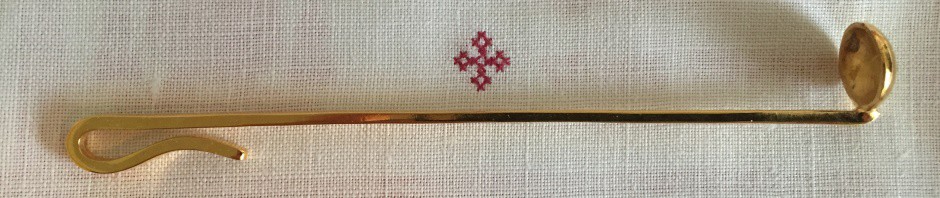
Posted in "How To..." - Practical Notes, ASK FATHER Question Box | Tagged ,
29 Comments

Benediction of the Blessed Sacrament

Yesterday at Holy Innocents Church in Manhattan, in the afternoon, people gathered again for Vespers, sung in Gregorian chant.  Then there was Exposition of the Blessed Sacrament, Litany of the Most Holy Name (for the Feast, of course) and Benediction.

Here is a little video of the rites from Exposition to the end.

They got a daily TLM going at Holy Innocents.  Now they are starting on Sunday Vespers.

Brick by brick.

Play
Posted in "How To..." - Practical Notes, Brick by Brick, New Evangelization, Our Catholic Identity, The future and our choices | Tagged , ,
2 Comments

Here comes the choo-choo!

From a reader:

Happy New Year. I thought I would share a funny story regarding Mystic Monk Coffee. I recently received my first order for Christmas. I explained to my two boys ages 4 & 8 that it is roasted by monks in Wyoming.

My 4 year old is now pretending he is taking the train (dressed up as an engineer) to Wyoming to pick up some Mystic Monk coffee. He tells me the engineer loves his Mystic Monk coffee! He will drink overnight while he is driving the train.

Excellent.  If only we had some video.

Meanwhile…

[CUE MUSIC]

Mystic Monk CoffeeWhen you’ve had a tough day driving that choo-choo allllll the waaaaay down the track to Wyoming, why not enjoy a WDTPRS mug filled to the brim with piping hot Mystic Monk Coffee?

Ordering coffee from the Wyoming Carmelites by the train car load is sure to make Fr. Z nod with approval, the monks smile quietly to themselves, liberals wring their hands and pout, and, of course, all four-year-olds very happy.

Even though four-year-olds have active imaginations, they are by nature conservative.  And they behave better during traditional liturgy, too!   Another good reason to buy some coffee, right?

Refresh your coffee supply now!

After all, …. it’s for the children.

Mystic Monk!

It’s swell!

Posted in Just Too Cool, Lighter fare |
22 Comments

Z-CAM/RADIO SABINA STREAMING TODAY – Rosary in Latin, prayers for Pope Benedict, music, other stuff

Z-Cam & Radio Sabina,Twitter or “Fr Z TV”.

I don’t control the ads.  Sorry.  I use Adblock Plus for Firefox, which works just fine!

The stream might get cut off from time to time and I can’t monitor it all the time.

I have entirely Latin chaplets of the Rosary followed by the Litany of Loreto and also prayers for the Pope in Latin and English cycling constantly. I also have a wonderful sung Salve Regina sung in Chinese. I will leave the chat box open so people can communicate, though beware of idiots.

Also, I cannot control the ads without paying Ustream a stupidly high fee. One of the versions of the Prayer for the Pope, Oremus pro Pontifice is sung in the Greek liturgical style but in Latin! Very interesting.

Watch the bird feeders and occasionally also my office.

Z-Cam and RADIO SABINA

Z-Chat should be open. I send out Tweets about when it is open via Twitter.

These critters are hungry. Will you help feed them? It’s just “tuppence a bag…

Well… far more than tuppence, actually…. HELP!

REGISTER to be able to post comments on this blog.

By the way, Latin has various words for tweeting and tweets.  For example, pipo, pipare and pipio, pipire are both useful verbs for “to chirp, tweet”.  A pipatio (from pipo) is “a piping, chirping, whimpering” (which can be used to describe what people do, too). Even better is pipatus, us, m., one of those fun 4th declension nouns like senatus, meaning “a peeping, piping, chirping”.  Then there are pipilum, i, n. and pipilus,i, m., both meaning “a peeping, piping, chirping” and hence, “whimpering, crying” and therefore, “an outcry, upbraiding”.  Both of these are pretty good, considering how Twitter is often used.

Perhaps pipila can be used for angry tweets and pipatus for happier tweets.  There’s subtlety for you.

Posted in LIVE STREAMING, The Feeder Feed, What Fr. Z is up to | Tagged , , ,
Comments Off on Z-CAM/RADIO SABINA STREAMING TODAY – Rosary in Latin, prayers for Pope Benedict, music, other stuff

Another round of ecumenical dialogue in Assisi!

At his Angelus Address on 1 January the Holy Father announced that, 25 years after the inter-religious meeting as Assisi, he will visit Assisi in October 2011 for a meeting with “Christian brothers of the different confessions, leaders of the world’s religious traditions, and, ideally, all men of good will”.

Oh joy!

The first meeting was such a success!

Card. Ratzinger absented himself from the 1986 confab at Assisi.

I’ll keep the combox closed on this.

Posted in The Campus Telephone Pole |
1 Comment

Grading my 2010 Predictions

Last year on this 1st day of the year, I made some predictions because people asked for some.

Let’s see how I did.  I’ll grade myself.  18 is a perfect score

  1. The TLM will continue to get traction as aging-hippies leave the scene and younger priests with less baggage take charge. [1 – yah… that’s going on.  Easy one.]
  2. The three-year post Summorum Pontificum report will cause liberal enemies of the Pope to engage in a vicious campaign of disinformation. [1 –  another easy one.]
  3. The GOP will have big gains at the midterm elections in both House and Senate, but not quite take over both. [.5 – I got the gains part right.]
  4. Israel will attack Iran. [.5 – There was the cyber-attack that seemed to work.]
  5. WDTPRS will develop a premium content page. [0 – Didn’t get to that.  But I did change the template.]
  6. The Chinese economy will start to crumble. [0 – Not yet.]
  7. Archbishop Wuerl will not be made a Cardinal. [0 – Pretty much wrong there.]
  8. We will see another Supreme Court vacancy and dreadful nomination. [1 – Yep. Alas.]
  9. The U.S. dollar will collapse. [0 – It didn’t collape yet.]
  10. There will be a major cyber attack on a financial center. [0 – I think.]
  11. The Magic Circle in England will crack further with a good appointment to Southwark. [.5 – Not sure what to say about that.  I will give myself something.]
  12. Before the mid-term elections another attempt at subversion of Catholics will come from the White House. [1 – With the special help of Sr. Carol Keehan.]
  13. Benedict of Rome and Kirill of Moscow will meet or announce they will meet somewhere. [0 – Nope.]
  14. Zapatero will lose his office in Spain. [0 – Nope.]
  15. The U.S. will continue to lose the war in Afghanistan. [.5 – Dunno about that.]
  16. Terrorist attacks on U.S. targets will rise sharply as U.S. resolve concerning a war on terror apparently slackens. [.5 – Sharply?  Not quite.  But it did rise.]
  17. Unemployment will rise globally as economies shrink and people will become more interested in the Faith. [1 – That was pretty safe.]
  18. The Nobel Prize for Peace will be given to Archbishop Rowan Williams. [0 – Liu Xiaobo is not Rowan Williams.]

7.5 of 18

41.7%

Well?

How were your predictions?

Posted in Lighter fare, Linking Back | Tagged ,
22 Comments

iPhone alarm glitch

Those of you who have iPhones… have you noticed a glitch in the alarm function since the first of the year?

My alarms have not rung either yesterday or today.   It is a good thing I woke up when I did!

Heard anything?

UPDATE:

My Liber Pro app isn’t working either.

Posted in "How To..." - Practical Notes | Tagged
22 Comments

Benedictines of Mary, Queen of Apostles get a new home

I have written before about the wonderful Benedictines of Mary, Queen of Apostles, a traditional monastic community, in the Diocese of Kansas City-St. Joseph, where Bp. Robert Finn is the ordinary.

The sister have recorded some nice music.

The sisters have moved to their new digs!

I saw their building site last year… they are out in the middle of nowhere, which is good for them, I am sure.

They have pictures of their move here and here.  Biretta tip to Kansas Catholic.

They are getting ready for the Blessed Sacrament as they prepare their new chapel.

What a great time for the sister!  It is easy to be excited for them.

Brick by brick!

Posted in Brick by Brick |
16 Comments























