Your 21 December End of the World Plans

Advent is more about the ending of the world and the Lord’s Second Coming than it is about His First Coming.

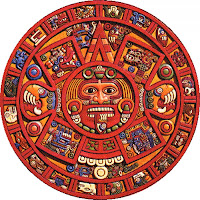
In the meantime, let’s talk about the Mayan calendar.

My friend the mighty P.P. of Blackfen, the Dean of Bexley, His Hermeneuticalness, Fr. Tim Finigan, is at his blog contemplating the end of the world.

The world is going to end, some say, … when was it? Pretty soon.

So, any recommendations for the big show?

Bombay Sapphire Martinis are on my list. I think I might have a steak. No… will it be Friday? Rats. No… not rats, in that sense… in the other “rats” sense. Maybe trout. And I could make some Hollandaise sauce. Before the end of the world, I need to make Hollandaise on a hotplate.

How about you? Anything planned?

Let’s get some ideas.

Posted in Lighter fare | Tagged ,
48 Comments

ACTION ITEM! AUCTION of art by Daniel Mitsui to help St. John Cantius in Chicago

I received this note from the well-known Catholic artist Daniel Mitsui:

Dear Father Zuhlsdorf:

Could you do me the favor of letting your readers know about a special Christmas auction of one of my original drawings that is being done to benefit the sacred music program at St. John Cantius Church in Chicago?

The auction is being processed through eBay, HERE.

The drawing is an original, colored ink on calfskin vellum.

I am also allowing the parish to sell prints of this work, HERE.

All of the proceeds from these sales will go to help fund the music program at the parish (the drawing and the license for the prints are a personal tithe/donation to the parish).

Thank you,

Daniel Mitsui

P.S. Here follows a complete description of the work:

CLICK FOR A LARGER VERSION

This original ink drawing of Christ’s Nativity was created by artist Daniel Mitsui. It will be auctioned to raise funds for the sacred music program at St. John Cantius Church.

It measures 8″ x 10″ and was made with colored inks on calfskin vellum. It is formatted as a page from a Biblia Pauperum.

The Biblia Pauperum (Bible of the Poor) is collection of illustrated typologies that circulated both in illuminated manuscripts and in blockbooks during the late Middle Ages. Each page of the book shows a particular event from the life of Christ, juxtaposed with two events from the Old Testament prefiguring it. The pictures are paired with rhymed Latin versicles and short expalnations. Four prophets are also included, each holding a banderole with his prophecy of the event.

For the Nativity of Our Lard, the two prefigurements are Moses before the Burning Bush, and the Flowering of Aaron’s Rod. The text, translated, reads:

Without pain thou givest birth, Virgin Mary (Star) of the Sea.

It glows and kindles, but the bush is not burned by fire.

We read in the Book of Exodus, chapter 3, that Moses saw a bush burning, and it did not burn up, and he heard the Lord speaking to him from the bush. The burning bush which is not consumed figures the Blessed Virgin Mary giving birth without corruption of her bodily integrity, because a virgin she gave birth and remained uncorrupted.

This is contrary to custom: a little rod bears a flower.

We read in the Book of Numbers, chapter 17, that the rod of Aaron one night leafed and bore blossoms, which rod figured the pure Virgin Mary who was to give birth without male seed to a Son, that is, Jesus Christ ever Blessed.

The prophecies are as follow:

Daniel: A cornerstone was cut out of a mountain without hands.

Isaiah: A child is born unto us, and a son is given to us.

Habacuc: O Lord, I have heard Thy hearing and was afraid.

Micah: Thou Bethlehem the land of Juda shall not be the least among the princes of Juda.

The artwork was inspired by various illuminated manuscripts, blockbooks, tapestries and panel paintings of the late Middle Ages, most obviously the Nativity panel from the 14th century Vyššì Brod altarpiece. The background ornament is composed of tiny plants and animals, and was inspired by 15th century millefleur tapestries.

Open-edition giclée prints of this drawing are also available for $80 each. Each print is signed in pencil by the artist. Giclée prints are made on a spray-jet printer from a high-resolution digital scan or photograph. Hahnemühle German Etching paper is the substrate.

Daniel Mitsui is an artist specializing in meticulously detailed ink drawings, done entirely by hand on paper or parchment. His work is especially inspired by the religious art of the Middle Ages. He lives in Chicago with his wife and two sons, and is a parishioner at St. John Cantius Church. More of his work can be seen at www.danielmitsui.com
 

Posted in The Campus Telephone Pole | Tagged , ,
Comments Off on ACTION ITEM! AUCTION of art by Daniel Mitsui to help St. John Cantius in Chicago

18 Dec: St. Malachi, Prophet

Some people may not know that Holy Church considers many Old Testament figures to be saints.

The liturgical book called the Roman Martyrology contains brief “bios” of saints and blessed celebrated on each day of the year. Some of these even rather obscure figures might not be on the Church’s universal calendar for Holy Mass. However, the Martyrology states that when there is no other feast we could chose to commemorate a figure listed in the same Martyrology.

Today we celebrate the Old Testament prophet Malachi, which in Hebrew means “messenger”.

Perhaps you can work up your own flawless English rendering of the entry in the Martyrologium Romanum.

1. Commemoratio sancti Malachiae, prophetae, qui, post transmigrationem Babylone diem magnum Domini eiusque adventum in templum nuntiavit semperque et ubique mundam oblationem nomini eius offerendam.


Posted in Linking Back, Liturgy Science Theatre 3000, Saints: Stories & Symbols |
6 Comments

Free shipping on Mystic Monk Coffee for certain packs, baskets, orders over $45

You can get free shipping on orders $45. Their most popular item is the 4 bags and sampler package. Economical. Some packs have free shipping. HERE.

And remember that they now have their “Monk Shots” like of K-Cups.  HERE.

And they have … get this… chocolate covered espresso beans and caramels …. yum.  HERE.

Help the Carmelites, help Fr. Z, help yourselves.  Great gifts and good for entertaining around Christmas time.  And their samples can make good small gifts.


Posted in SESSIUNCULA | Tagged
1 Comment

POLL: 2013 March For Life in Washington D.C (25 January).

How many readers here are going to participate in any or all of the events surrounding the 2013 March For Life in Washington D.C., on 25 January.

I understand there is a TLM being sponsored by a Juventutem group after the March.

I am starting to think about going this year.  If I go, we might try to have a D.C. blognic.

2013 Washington DC March for Life Participation

View Results

UPDATE:

I am now seriously thinking about going.

Posted in POLLS, The Campus Telephone Pole | Tagged ,
31 Comments

SUPER-ULTRA-HYPER-URGENT EMERGENCY ACTION ITEM!

Can you help?

The CD of Advent music by the Benedictine Nuns in the Diocese of Kansas City-St. Joseph, the Benedictines of Mary, Queen of Apostles, is doing well on the charts.

I have mentioned them before HERE.  I did a review of their Christmas CD HERE.

At Billboard it is #9 in Christian Albums and #6 in Classical Albums.

But on Billboard’s Top 200, …. LOOK!

Don’t let the sisters down.  I have a soft-spot for ol’ Deano, but don’t let them be beaten by vermin.

Buy the disk:

US disk HERE.
US mp3 HERE.
UK disk HERE.
UK mp3 HERE.

About the backstory on the disk.  HERE.

Sample:

Posted in ADVENT, Lighter fare, Linking Back | Tagged ,
15 Comments

QUAERITUR: Celiac Disease revisited

From a reader:

My husband has Celiac Disease. The communion is wheat. What is he to do?

You have options.

First, you can tell the priest(s) at the parish about the condition and ask if your husband could receive only the Precious Blood.

Otherwise, you if the priest would consecrate a gluten-free host (or low-gluten), obtained from an approved maker, in a small separate pyx, for your husbands Communion.

I did this at a Mass on Sunday morning, as a matter of fact.  A woman explained the problem and had a pyx with a gluten free host.  No problem.  She came up first at Communion.  After she received, I went back to the altar for the ciborium with the normal Hosts.

If you explain the situation to the priest(s), I am confident that some accommodation will be made.  Go ahead and call the priest at your parish for an appointment to talk about it.  You could offer to buy the hosts, if the parish does not have them already.

It may be that others in the parish have this condition and some arrangement has already been worked out.

You might also want to point out this information from the USCCB on the matter.  Another of my posts on this and also low-alcohol altar wine HERE  In that, there are addresses for places which make gluten free or low gluten hosts.

Posted in "How To..." - Practical Notes, ASK FATHER Question Box, Liturgy Science Theatre 3000 | Tagged , ,
35 Comments

Injustice! Why can’t men become women priests too?

From the amusing Eye of the Tiber comes this:

Medford, OR––Speaking at a Women’s Rights group at the home of fellow parishioner Florence Hensley of Medford, Oregon this week, 58-year-old Roger Shannahan complained that the group was being sexist for unjustly excluding men from the group’s hopes of a female priesthood. “I mean, you could see in the early Church numbers of male figures that held positions of authority,” Shannahan told the group. “St. Paul was a man, for instance. He had authority, right? So, if St. Paul was a man and had authority, why wouldn’t I be able to have it?” Hensley, who hosts the weekly Women’s Rights group, told Eye of the Tiber after the meeting that men cannot be considered, not because men are unequal, only because it is not in a man’s nature to become a female priest. But Shannahan believes otherwise, telling Eye of the Tiber that the group has always overlooked men simply because of the group’s own insecurities. “I’m sick and tired of sitting on the sidelines. I too have a voice.”

Posted in Lighter fare | Tagged , ,
17 Comments

O!

O AntiphonsToday we begin the final days of Advent, which bring with them the beautiful O Antiphons, or “Great Antiphons”.

Years ago I made a page about these antiphons. I have intended (for years) to update the last couple days.

The O Antiphons developed during the Church’s very first centuries. The writer Boethius (+525) mentions them. By the 8th century they were in use in Rome. There are seven of these special antiphons, and their texts spring from the Old Testament Hebrew Scriptures, the Prophetic and Wisdom Books. They are found in the Liturgy of the Hours or older Roman Breviary, which clerics, religious, consecrated virgins, and others use for daily prayer.

The O Antiphons are short prayers sung before and after the Magnificat, the great prayer of Mary in Luke 1:46-55 when coming visit to Elizabeth her cousin the Virgin praised God for His favor wondrous deeds. The Magnificat is sung during Vespers, evening prayer. The O Antiphons begin on 17 December, seven days before the Vigil of Christmas (24 December). The seventh and last antiphon is sung at Vespers on 23 December. They are called the “O Antiphons” because they all begin with the letter-word “O”: they address Jesus by one of His Old Testament titles. They are fervent prayers asking Our Lord to come to us.

Advent is about the many ways in which the Lord comes. He came historically at Bethlehem in the fullness of time. In the liturgical year he comes to us sacramentally. He will come again at the end of the world as Judge of the living and the dead. Christ comes to us also in the two-fold consecration of the Body and Blood of Christ by the priest at Holy Mass and, in a special way in a good Holy Communion. He comes in the person of the priest, who is alter Christus, another Christ. He comes in the words of Holy Scripture. He also comes in the person of our neighbor, especially those who are in need of the spiritual and corporal works of mercy.

During Advent, John the Baptist has been reminding us in the liturgy to “make straight His paths”. When we come to the Lord in death, or He comes to us in His Second Coming, He will make straight the path whether we have during our earthly lives done our best to straighten it ahead of time or not. Let us now, while we may, make straight the paths by which Christ Jesus comes.

Here are two additional notes about these O Antiphons.

The first is not apparent in English, but it can be seen clearly in the official language of the Roman Catholic Church: Latin. The Latin versions of each of the titles of the Messiah are: Sapientia (Wisdom), Adonai (Lord), Radix (Root), Clavis (Key), Oriens (Dawn), Rex (King), and Emmanuel (Emmanuel). Take the first letters of each of the titles, starting with the last and working back to the first. You spell: EROCRAS or “ero cras… I will be (there) tomorrow”.

The song “O Come, O Come, Emmanuel” is simply a reworking of the seven O Antiphons. When you sing it, you are joining yourself to a vast throng of Christians stretching back across centuries and spanning the whole of the earth who prayed as all Christians do, “Come, Lord Jesus!” (Rev 22:20)

Posted in ADVENT, Just Too Cool, Linking Back, Liturgy Science Theatre 3000, The Drill |
4 Comments

WDTPRS POLL: Did you see Rose vestments on “Gaudete” Sunday?

Here is a little poll for your 3rd Sunday of Advent.

Please choose an answer and add a comment in the combox.

At my Roman Rite Mass for "Gaudete" Sunday the vestments I saw were

View Results


Posted in Liturgy Science Theatre 3000, POLLS | Tagged , ,
83 Comments
























