A parish priest on Sunday Mass obligation and attendance

Fr. Bill Baer, a priest of the Archdiocese of St. Paul and Minneapolis, former rector of St. John Vianney Minor Seminary (which he turned around in a Herculean labor) and now parish priest of Transfiguration in Oakdale, MN, has intelligent observations about Catholics and Sunday Mass attendance.

Some salient points from Fr. Baer in my arrangement but with links back to his parish blog:

1. A "Good" Parish: A Parish Where the Parishioners Go to Mass

The first of the seven "Precepts of the Church" is this: "To attend Mass on Sundays and Holy Days of Obligation, and to rest from servile works."

[…]

2. Reason #1: A Distaste for Obligation

"When I was young, I went to Mass because I had to.  Now, I go to Mass because I want to." 

It is rare these days to hear a pastor declare, "You must go to Mass."  Actually, it is rare these days to hear a pastor declare that you must do just about anything.

[…]

3. Reason #2: If We Just Ignore that Nasty Little Statistic, Perhaps It Will Go Away Recent studies have determined that between 25% and 30% of American Catholics are at Mass on any given Sunday.  (Statistics on Sunday Mass attendance vary a great deal by region: Catholics in western Kentucky and the Dakotas, for example, have been clocked at 75% – 80%.  At the other end would be the Archdiocese of Boston, which reports attendance rates of 12% – 15%.)

Imagine truancy rates such as these in our schools.

[…]

4. Reason #3: The Third Commandment in Slow Dissolve

The decline in Sunday Mass attendance among Catholics is part of a larger phenomenon: the decline in Sunday itself.  A couple of generations ago, many rural and big-city Catholics had small closets in their bedrooms, containing two hooks: one to hold their working clothes, the other to hold their "good" clothes, their Sunday clothes.  Two hooks, two parts of the week.  Nowadays, Catholics get dressed up for work, and dress down for Sunday.

[…]

WDTPRS kudos to Fr. Baer.  I hope he continues his series.

Pastors of souls are just that… pastors of souls.  They have the responsibility to see the the care of souls of their parishioners.

Getting them to Mass on Sunday, so they don’t risk their souls, is a good start.

From there, you can take them along a sound pastoral path.

Posted in "How To..." - Practical Notes, Fr. Z KUDOS | Tagged ,
94 Comments

The Tears of St. Lawrence are still flowing

Did you know that the annual Perseid Meteor Shower is nicknamed "The Tears of St. Lawrence"?  The shower occurs every year around the feast of the grate … great Saint as Mother Earth zooms through a cloud of debris deposited in the wake of the comet Swift-Tuttle.  The shower is called the "Perseids" because the meteors appear to be stabbing out from the constellation Perseus.

The Tears peak tonight. 

If you have children, even if you have to get them out of bed, take them out (with bug spray if necessary) and show them the meteors.  There can be up to 60 per hour at the peak, so you won’t have to wait long.

One of the great memories of my childhood was being roused in the dead of night – in the even deader bleak midwinter – and lead out onto a frozen lake in northern Minnesota. Following my father’s pointing finger, I aw for the first time a bright comet hanging in motionless in the sky about three feet, it appeared, over my head.

One time I watched the Lagrime di San Lorenzo while lying on my back on a terrace of a villa overlooking the amphitheatre of ancient Cumae.  And a few years ago, I watched the shower for a while with my mother, who was visiting. 

Here is a note about the Perseids from the invaluable Spaceweather.

Spaceweather says you can even listen to the meteors and fireballs live, and even keep count of the meteors as they fry in the earth’s atmosphere.

Furthermore:

If you go outside a little early on Thursday evening, around sunset, you’ll see a beautiful gathering of planets in the sunset sky–Venus, Mars, Saturn and the crescent Moon.  It’s a nice way to start a meteor watch.  Sky maps may be found at http://spaceweather.com.

BTW… you might try an old PODCAzT about St. Lawrence.  Inspired by the Roman deacon, St. Augustine gives a real barn-burner. St. Augustine on St. Lawrence and how to be a Christian

Posted in Just Too Cool, Saints: Stories & Symbols | Tagged , ,
7 Comments

Notes on Sr. Chittister’s talk to LCWR, and then there is a Presbyterian

As you know, the National Catholic Reporter has chosen to flood their paper and website with all manner of articles which dissent from the clear teaching of the Church, especially concerning the ordination of women.

I have of late drilled into articles by Sr. Theresa Kane and Rosemary Radford Reuther.

Now I see that that doyenne of dissent Sr. Joan Chittister, who still hasn’t commented on why the Leadership Conference of Women Religious has straight-armed SNAP in their attempts at dialogue, has a talk published in NCR. 

I am not going to bother drilling into Sr. Joan’s essay for two reasons.  First, she doesn’t say anything new.  Second, the old things she says are not especially well expressed. You will find all the bizarre rereading of Scripture and self-righteousness you have come to expect, but expressed in an even more turgid manner than usual.  She simply and openly calls on these nuns to defy the Church…. yawn.

But here are a few things you might think about when you look at her talk to the LCWR for yourselves.

In her talk, Sr. Joan doesn’t include in her litany of all the good works nuns do in their nunhood:

  • abortion counseling as supporting a woman’s right to choose,
  • active support of pro-choice candidates for political offices,
  • the decline of vocations to their institutes,
  • their self-examination concerning child abuse,
  • and other acts which manifestly set them apart from the Catholic Church.

BTW… is SNAP carrying protest signs outside of where the LCWR is meeting?   Give us a photo. No… there is one already.

Finally, on another note, there is also a article in favor of women’s ordination by a Presbyterian elder.

Ummm… when did Presbyterians think anyone should be ordained a priest?  When did Presbyterians start valuing Mass celebrated by priests?  Does he now believe in the sacrament of penance?

I think he is really concerned about liturgical preaching.  But if he thinks women don’t do things in the Church, he’s poorly informed.

Thanks, however, for the advice.

Posted in The Drill | Tagged ,
14 Comments

QUAERITUR: Exposition of Host during Mass before continuing Mass

From a reader:

Someone asked me today.. "what if after consecrating the bread the priest put it in a monstrance and had 30minutes of adoration before continuing with the mass?"

Every part of me wants to say this shouldn’t be done but I can;t really think of any reasons why… it would seem legitimate because the priest plans to continue with Mass after.. but I don’t know I haven’t really looked into it very far.

Nooooo.

First, you create a serious problem about the two-fold consecration, which is essential for Mass to be Mass.

Mass is Mass and Exposition is Expostion.  We need both (pace McBrien),but they should not be confused.

On the other hand there was something called Mass coram Sanctissimo, Mass in the presence of the Blessed Sacrament Exposed.   This was usually done in the context of Forty Hours Devotion.  If the older rites of Forty Hours are to be used, it seems that a Mass coram Sanctissimo could be celebrated.  Authors are divided, but it seems to be so, for Forty Hours was the only time this form of Mass could be used.

But this would be a Mass which begins with the Host already exposed in the monstrance before Mass would begin.

Posted in ASK FATHER Question Box |
15 Comments

QUAERITUR: Is Latin chant forbidden unless congregation can sing?

A reader asks:

My priest recently mentioned that there is a document (he does not remember what it is called) that forbids the use of choir lofts and the singing of Latin chants unless the congregation is able to sing along. Do you know of any such document? It can’t possibly be so…

No.  It cannot be so.  It isn’t.  That would be absurd.

The priest’s fundamental problem here is that the priest thinks that "active participation" means that everyone has to be able to sing everything.  Listening is somehow not "active participation".   That is the priests fundamental error.

I suspect you won’t get him out of his mindset, especially if he is over, say, 60.

But you might ask Father to read aloud and then explain the following paragraphs from the Second Vatican Council’s liturgy constitution Sacrosanctum Concilium:

36. 1. Particular law remaining in force, the use of the Latin language is to be preserved in the Latin rites. …

54. In Masses which are celebrated with the people, a suitable place may be allotted to their mother tongue. This is to apply in the first place to the readings and "the common prayer," but also, as local conditions may warrant, to those parts which pertain to the people, according to tho norm laid down in Art. 36 of this Constitution.

Nevertheless steps should be taken so that the faithful may also be able to say or to sing together in Latin those parts of the Ordinary of the Mass which pertain to them.

116. The Church acknowledges Gregorian chant as specially suited to the Roman liturgy: therefore, other things being equal, it should be given pride of place in liturgical services.

But other kinds of sacred music, especially polyphony, are by no means excluded from liturgical celebrations, so long as they accord with the spirit of the liturgical action, as laid down in Art. 30.

Why isn’t he obeying the Second Vatican Council?  Why can his congregation sing Gregorian chant?

Posted in ASK FATHER Question Box |
21 Comments

QUAERITUR: Are priests, bishops ordained after 1969 validly ordained?

From a reader:

I realize this must be a sensitive topic for anyone especially a priest ordained after 1969 but please know we are just seeking an objective answer. We have done our "homework" on this but who can we ask? There are very few places where we would actually get a straight answer.

Plainly asked are priests and bishops ordained after 1969 valid priests and bishops?

I have included a few links for you but don’t want to overwhelm you either. The formal answer of the Church today must be that they are priests and bishops because the form according to Pope Paul VI is still used and not the form according to Pope Pius XII.

We just came across documents and information this last weekend August 8th 2010 and before getting crazy thought we would email a few priests we know as well as you because we value your opinion on Catholic issues. Our faith is the most important part of our lives, please do not be mistaken – we are not kooks – but we would like an objective answer not skewed one way or the other because of a priests background. we could ask the SSPX priests all day and know their answer already but would like to hear this from someone we trust.

Plainly answered, YES, those ordained in the normal way with the post-Conciliar rites of ordination are validly ordained.

People who say they aren’t are deeply confused and dead wrong.

For a good book which criticizes the post-Conciliar rite of ordination, but comes down on the correct side when he gets to the bottom line, look at Michael Davies book Order of Melchisedech: Defence of the Catholic Priesthood.

The general line of the book is that the ordination rites after the Council were compromised because they did not adequately express explicitly what the Church says a priest is and what a priest does.   What saves the rite is the knowledge the bishop has of what the rite means.   Davies says that were the bishop to have an insufficient understanding of the Church’s teaching on priesthood, then there would be trouble.   But we are not to that point.  

Furthermore, the book of the rites of ordination was redone by Pope John Paul II in 1990. He put back into the rite some explicit language which helps to clarify what is being done.

In any event, a Pope is not going to promulgate and then use an invalid rite of ordinations of priests and bishops.

Posted in ASK FATHER Question Box | Tagged , ,
47 Comments

Archbp. Burke on altar girls and EMCHs in the Extraordinary Form

I picked up from Il blog degli amici di Papa Ratzinger that H.E. Most Rev. Raymond Burke (Prefect of the Ap. Segnatura) wrote a preface to a canonical study in German of Summorum Pontificum by Fr. Gero P. Weishaupt.

In his preface, Archbp. Burke says, inter alia, that neither altar girls nor Extraordinary Ministers of Holy Communion are admissible in the Extraordinary Form of the Roman Rite because the integrity of the Rite must be respected.

And as I was writing those words, I had another signal that NLM posted a rough English translation of the German original of Archbp. Burke’s preface.  The original text is available on the blog Summorum Pontificum.  My emphases.  Comments will follow.


In the second chapter of his commentary, Weishaupt answers a number of practical issues that arise regarding the implementation of Summorum Pontificum  and result from recent changes to the discipline of the celebration of the sacraments, such as e.g. those regarding female altar servers or lay people who perform the ministry of lecturers or extraordinary ministers of Holy Communion. To answer these questions , the commentary correctly applies two general canonical principles.

The first principle requires that liturgical norms, which were in force in 1962, are to be diligently observed for the celebration of the Extraordinary Form of the Roman Rite, for these norms protect the integrity of the Roman rite as contained in the Missal of Blessed John XXIII. The second principle states that the subsequent liturgical discipline is only to be introduced in the Extraordinary Form, if this discipline affects a right of the faithful, which follows directly from the sacrament of baptism and serves the eternal salvation of their souls.

The application of these two principles to the cases mentioned leads to the conclusion that neither the service at the altar by persons of the female sex nor the exercise of the lay ministries of lecturer or extraordinary ministers of Holy Communion belong to the basic rights of the baptized. Therefore, these recent developments, out of respect for the integrity of the liturgical discipline as contained in the Missale Romanum of 1962, are not to be introduced into the Extraordinary Form of the Roman rite. The commentary presents here in an impressive manner that the mutual enrichment of both forms of the Roman rite is only possible if discipline peculiar to each of the two forms is accordingly carefully observed.

A few comments.


  • This is not an official document.  It is a preface by an official of the Holy See to a book which is a commentary by a writer who is not an official of the Holy See.  The preface has no legal force.
  • Archbp. Burke is a distinguished canonist who also knows inside and out the older, Extraordinary Form because he has been so open to it and has often been celebrant for liturgies in the traditional form.  He knows the logic of the rite from within and not as some onlooker.
  • Archbp. Burke was consulted about the text of Summorum Pontificum before its release.  He knows more than a little about its genesis and intention.
  • As a canonist, Archbp. Burke understands the rights of the baptized from the point of view of the Church’s law.
  • He did not speak in that excerpt about Communion in the Hand in the older, Extraordinary Rite.
  • He also did not speak about "straw subdeacons".

His dictis

  1. It is not a right of the faithful for the sake of their salvation, that they be allowed to serve at Mass or to act as an EMCH.
  2. Since reception of Holy Communion – and the manner of Its reception – comes far closer to the issue of the salvation of the baptized, that might be a stickier issue.  Nevertheless, it seems to me that it is not a manner that touches on the salvation of the baptized to be permitted to receive on the hand when clearly it is contrary to the Church’s normative way of receiving.  Remember that permission to receive in the hand is actually an exception.
  3. I have held (pace Burke) that Summorum Pontificum did not in fact revive the laws that were in force in 1962, thus creating a parallel set of laws.  Was I wrong?
  4. Also, if there is to be such a strict separation of 1962 and 1970/2002, is mutual enrichment possible insofar as rites are concerned?
  5. Or, and this is where I have put all my stress over the last few years, does it have more to do with ars celebrandi?


Posted in Brick by Brick, SUMMORUM PONTIFICUM, The Drill | Tagged
41 Comments

Damian Thompson’s take on the music CD for the papal visit

Damian Thompson has rained vituperation down upon a music CD prepared in advance of the Holy Father’s visit to the UK.

Papal visit CD: musical atrocities that make the Birdie Song sound like Mozart 

[I admit that I didn’t know what "The Birdie Song" was, but when I clicked the youtube video embedded in Damian’s post, I – too my everlasting horror – recognized it.]

Despite everything I’ve written about the incompetence of its organisers, I firmly believe that Pope Benedict XVI’s visit to Britain needs to be a success. Time is running out. The sad trendies of Eccleston Square [For US readers, Eccleston Square is the location of the Catholic Bishops’ Conference of England and Wales] have done enough damage without them handing their critics fresh ammunition at this late stage. My heart sank when I saw that the papal visit team had released two tracks from the official “Pilgrim Journey” CD that comes with the (expensive) tickets for papal events. But nothing could have prepared me for the awful reality.

I’ve just played “Urban Pilgrim (Reprise)” by Alessandro Cherin and “Deus Tuus Deus Meus” by Fr Gerard Bradley to my colleagues in the Telegraph newsroom. And they’re keeling over in embarrassment. “Urban Pilgrim” is described by a friend as “the stuff they play on planes when they switch off your in-flight movie as your prepare to land”. As for Fr Bradley, his vocation does not lie in the area of composition – and the singer has the upper register of a deputy accounts manager on a karaoke machine. [Update: I’ve just discovered that the poor guy is a seminarian who was presumably pushed into this. So, feeling guilty, I’ve taken out his name. His voice is perfectly pleasant – it’s just that the nonsense he’s singing is pitched far too high for him.]

It doesn’t give me any pleasure to make fun of this crap, because it proves that the Church in England and Wales is still in the grip of philistines. I’m not suggesting that visitors to papal events should be given a CD of Renaissance polyphony. [How about the new Gregorian chant CD from the sisters at Le Barroux?] There is such a thing as good Christian rock and pop music; it’s just that Catholics don’t produce it. Instead, “with-it” monsignors and their mates force-feed the faithful with sclerotic folk-style antiphons – or worse.  [The cuts I have heard, and I am not sure I need to hear more, are imbued with the sentimentality that characterizes most of the ditties written for World Youth Day gatherings.  So, I wonder who the target audience was for this CD?]

Seriously, why didn’t the tone-deaf papal visit team just release the song on the video below? It would be no less humiliating for Catholics.

Don’t take his word for it.

Listen and decide for yourselves.

How to describe my impressions as I listened to the tunes? 

I imagine this is what it would be like to be waterboarded first with with Robinson’s Barley Water and then with Lyle’s Golden Syrup.

Posted in The Drill | Tagged
48 Comments

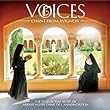
Pre-order Gregorian Chant CD by Benedictines of Barroux

A while back I posted about the Benedictine nuns who signed a recording contract.  Read that here.

If you are a user of amazon.co.uk (the UK store for Amazon) you can pre-order their Gregorian chant CD.

Click here.

I am sure that anyone could order if from the .co.uk site if they want to pay a little extra for shipping.

On the US site is is available as an IMPORT.

Posted in Brick by Brick | Tagged , , ,
3 Comments

A short rant on sacred art and architecture

I was at a conference on sacred music in Rome some years back where something occurred that was both irritating and amusing.

A liberal leaning choir director was going on and on about the sort of music we need for liturgy.  He was dead wrong about everything, of course.  He was, as you might suppose, a bit of a composer himself and he was exalting the rubbish he wrote.  By contrast many of the people at the conference were interested in Gregorian chant and real sacred music.  When it was observed that Gregorian chant had been shoved into the dustbin since the Council, the liberal self-promoter objected that Gregorian wasn’t dead, that it was indeed used – he himself rewrote melodies for his own compositions for responsorial psalms, that we have all these new books of chant from Solesmes!   The crushing response came from Msgr. Miserachs of the PIMS: In that view, Gregorian chant must be seen and not heard.

It is more and more apparent that the setting for our sacred music is not merely a desktop, or in a concert hall, but in church during our liturgical worship.

There is a vast treasury of worthy sacred music.  The doors to that treasury were slammed shut in the name of a false understanding of active participation.  Generations are being denied their patrimony and the opportunity to worship God in continuity with their forebears.

Now shifting to a slightly different gear….

At Sandro Magister‘s site there is a very good article about the famous painting by Raphael of the Transfiguration of the Lord.  You will want to read it.

During your reading you will come to these paragraphs, which I want to highlight with my emphases.

Monsignor Marco Agostini, an official in the second section of the secretariat of state, master of pontifical ceremonies, and a scholar of liturgy and sacred art, has rightly complained in "L’Osservatore Romano" that this improper placement deprives the painting of "three fourths of its capacity to speak."

Above the altar and during the Mass, in fact, the "Transfiguration" helped the priest and the faithful to "see" the mystery that was being celebrated, to identify in the consecrated white host the glorious Christ. This was why Raphael had conceived and painted it. While in a museum, this expressive power and liturgical function disappear.


I often visit museums when I travel.  I always have twinges of regret when I look at altarpieces.  Even as I admire their beauty, I wish that they could still be altar pieces.   The same thing applies during a concert of sacred music. 

Our church should be filled with the very best that we can offer.   The building itself, all that ornaments it, and everything that fills its space through gesture, word and song must be sacred and must be art.

I say: if a building was built in a certain style and it a good example of that style, leave it be.  I’ll grant that some buildings and their accoutrement are not particularly worthy.  Fine.   But generally, if you want something new, then don’t destroy the existing work by bastardizing it.  Go build something new.  But leave things alone.  Leave them whole.

Posted in Wherein Fr. Z Rants |
22 Comments