This reminds me of my drillings into sempiternitas.
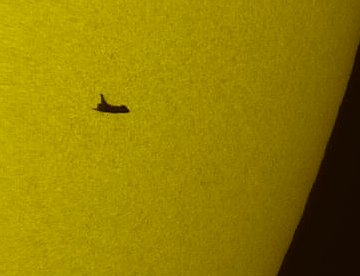
I saw a very interesting bird yesterday evening. As I was out walking about, I spied a very large white bird on a high tree limb. I drew closer and shot this.
This doesn’t give you a sense of the size of the bird. It is much larger than any dove or pigeon I have ever seen.
Note that its leg is banded.
The wings are very long and it has black tail-feathers.
As I drew near, it didn’t seem inclined to fly off, suggesting to me that it was tired.
I think what we have here is some sort of homing or racing bird. The size surprised me.

A reader alerted me to an article on kreutz.net which deals with Communion in the hand at celebrations of Holy Mass with the 1962 Missale Romanum, and the employment of altars girls.
I don’t have time to translate it from German right now.
Apparently a canon lawyer named Wolfgang F. Rothe, has put out a study of Summorum Pontificum Liturgische Versöhnung.
The book has a preface by Msgr. Camille Perl, Vice President of the Pontifical Commission “Ecclesia Dei“.
Perhaps someone who has a little time can drill into this and help the readers.
A reader alerted me to this interesting piece of information from ICEL about musical settings with the new translation.
Music for the Roman Missal
The International Commission on English in the Liturgy, while working on a new translation of the Roman Missal, assembled a small committee of expert musicians to prepare musical settings of the texts that are set to music in the 2002 Latin edition of the Missal. They were directed to follow as closely as practical the Gregorian melodies given with the Latin text. The Music Committee has worked closely with the translators. ["Gregorian melodies"]
The Commission has now approved settings for those parts of the Order of Mass that received recognitio from the Holy See in June 2008, in accord with Cardinal Arinze’s expressed wish that the publication of these texts ‘facilitate the devising of musical settings’. The Commission is now making these settings available on a secure website, accessible by a password, which has been communicated to the Chairmen of the Liturgy Commissions in each of ICEL’s Member and Associate-member Conferences. They will distribute the password as they see fit. [!]
The Introduction, giving a rationale for the choices made, is accessible to all.
Work continues on music for the remainder of the Missal. This will be made available when the final texts are known.
From the Introduction:
MUSIC FOR THE ENGLISH LANGUAGE
ROMAN MISSAL
AN INTRODUCTION
For the forthcoming English translation of the Roman Missal (sometimes called the Sacramentary), the International Commission on English in the Liturgy (ICEL) will offer to the Conferences of Bishops of the English-speaking world chants for everything that is set to music in the Missale Romanum, editio typica tertia (2002):
In some cases, following the example of the Missale Romanum, both simple and solemn settings have been provided.
Principles
ICEL’s work in preparing chant settings of the English translation has been guided by several principles:
- To preserve and recover the tradition of unaccompanied singing in the Roman Rite, since the liturgy “is given a more noble form when . . . celebrated solemnly in song” (Second Vatican Ecumenical Council, Constitution on the Sacred Liturgy Sacrosanctum Concilium, 1963 [hereafter SC] 113);
- To facilitate “full and active participation by all the people,” which is “the aim to be considered before all else” (SC 14);
- To take full account of the accentuation of the English language, since “the nature and laws of each language must be respected” in the adaptation of traditional melodies (Sacred Congregation for Rites, Instruction on Music in the Liturgy Musicam Sacram, 1967, 54);
- To retain vernacular chants now in use where possible, since “there must be no innovations unless the good of the Church genuinely and certainly requires them” (SC 23).
The Commission’s musical consultors have undertaken a detailed analysis of the Latin settings, creating tables of accent patterns and musical formulas. Likewise for the new English translation, tables of the accent patterns have been created, in order to arrive at the best solution where the English text has accent patterns not found in Latin. The musicians have found it helpful to look at the work of other vernacular chant adaptations such as Spanish, French, and German. German-language scholarship has proven helpful, both because German-speaking scholars began investigating vernacular chant adaptation as early as the 1920s, and also because the German language has some similarities to English, for example, in the accent often falling on the final syllable of a phrase. The musicians also examined the previous work of English language chant adaptation in the liturgical books of 1966, 1970, 1971, and 1973. With all this in mind, their uppermost concern has been the actual celebration of the liturgy by worshiping communities and ministers.
Some of the Most Commonly Sung Chants
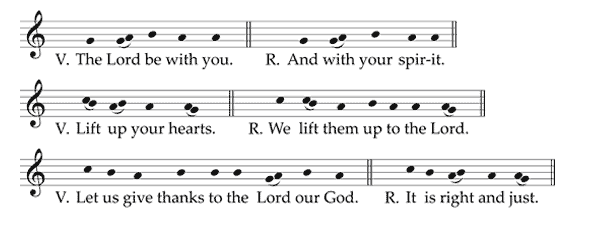
Preface Dialogue
For the Preface Dialogue at the beginning of the Eucharistic Prayer, the setting currently used in most of the English-speaking world is retained, with appropriate adjustments for the revised text:
Take a look and discuss!
A note of interest to Iowans, and others…
Una Voce-Cedar Rapids is very pleased to announce that the Traditional Latin Mass (Missa Cantata) will be offered every Sunday at 7:00am at St. Wenceslaus Catholic Church in Cedar Rapids, Iowa beginning Sunday May 24, 2009.
Mass in the Extraordinary Form will be offered by the pastor of St. Wenceslaus, Fr. Christopher Podhajsky. We are greatly indebted to Fr. Podhajsky who took it upon himself to learn the TLM out of his pastoral zeal for the good of souls. This is another success story for the FSSP/EWTN/UVA training DVD, because Fr. Podhajsky said that the DVD was a godsend to him which enabled him to learn to offer the TLM.
St. Wenceslaus Catholic Church
1224 5th St. S.E.
Cedar Rapids, Iowa 52401
Polls of of ultimate importance to liberals and squishy Catholics. They are more interested in polls than the Magisterium. They incessantly cite polls about how many Catholics don’t follow Church teaching, blah blah, approve of Notre Dame bestowing an honor on Pres. Obama, yadda yadda.
Take a look at this Gallup Poll. Heh heh…
A new Gallup Poll, conducted May 7-10, finds 51% of Americans calling themselves "pro-life" on the issue of abortion and 42% "pro-choice." This is the first time a majority of U.S. adults have identified themselves as pro-life since Gallup began asking this question in 1995.
The new results, obtained from Gallup’s annual Values and Beliefs survey, represent a significant shift from a year ago, when 50% were pro-choice and 44% pro-life. Prior to now, the highest percentage identifying as pro-life was 46%, in both August 2001 and May 2002.
There’s more.
I liked this one too.
"Pro-Life" Up Among Catholics and Protestants
One of the more prominent news stories touching on the abortion issue in recent months involves President Barack Obama’s commencement speech and the bestowal of an honorary doctorate degree on him at the University of Notre Dame — a Roman Catholic institution — on Sunday. The invitation has drawn criticism from conservative Catholics and the church hierarchy because of Obama’s policies in favor of legalizing and funding abortion, and the controversy might have been expected to strengthen the pro-life leanings of rank-and-file Catholics.
Nevertheless, the swelling of the pro-life position since last year is seen across Christian religious affiliations, including an eight-point gain among Protestants and a seven-point gain among Catholics. [!]
Read there… discuss here.
Very interesting.
May 12, 2009, 11:42 am
Vatican Reveals Letter That Split England From Roman Church
By ELISABETTA POVOLEDOThe Vatican has opened its Secret Archives, the repository of centuries worth of documents pertaining to the Holy See, to let the world get a closer look at a document presaging England’s split from the Church of Rome. Dated July 13, 1530 and addressed to Pope Clement VII, the letter asks for the annulment of Henry’s marriage to Catherine of Aragon and includes the seals of dozens of peers of England who concurred with the request. A facsimile of the document will go on sale next month for about $68,000 [gadzooks!] from Venice-based publisher Scrinium, which plans a limited run of 199 copies. A second, more damaged, copy of the document is in England’s National Archives in Kew. The facsimile and accompanying scholarly texts will allow for closer perusal of “the cause of Henry VIII,” Monsignor Sergio Pagano, the archive’s Prefect, told journalists on Tuesday. It will be officially presented in June, on the occasion of the 500th anniversary of Henry’s coronation, but the timing is a coincidence, Monsignor Pagano said. “We do not celebrate kings, only popes.” [Especially that king.]
I have been watching The Tudors. For the most part it is pretty good. There are objectionable scenes: big surprise there. I have been amazed all along at the relatively friendly portrayal of the Catholic cause and the horror of the repression of the Church.
I think the series, made in Ireland, is fairly sympathetic to the Catholic Church and not friendly at all to Henry, because if they hate the Catholic Church, they hate Henry and the English with the C of E even more.
All that aside… think of it. Think of what an interesting historic document that letter is. Fascinating.
I spotted my first Hummingbird today. He came to the little feeder just outside my window.
No photos yet, but I will aim one of the "pips" of the the Z-Cam on the hummer feeder while I do some other things.

Coat of Arms by D Burkart
 Fr. John Zuhlsdorf on ASK FATHER: If a bishop and also priests confirm at the same time, who is the minister of confirmation?: “Bruised: You might be limiting your vision of the Church, which extends beyond where you live. There are places in…”
 on ASK FATHER: If a bishop and also priests confirm at the same time, who is the minister of confirmation?: “Yay. Sounds like another way to be “nice” and “include” the priest in Confirmation. IMHO most of these situations will…”
 on ASK FATHER: Question about the impacts of Excommunication: “I’m pretty sure the state of the priest’s soul does not change the fact that the Eucharist is being conferred…”
 on ASK FATHER: Is it a sin to take a 15 minute leave during a terrible homily?: “I’ve had my fair share of some rough homilies, from some retired priest talking about his “chick magnet” from back…”
 on ASK FATHER: Is it a sin to take a 15 minute leave during a terrible homily?: “I did walk out of a daily Mass once when the priest was going on and on and on about…”
 on ASK FATHER: Is it a sin to take a 15 minute leave during a terrible homily?: “My church- and liturgy-history readings are unsystematic and the opposite of rigorous to put it mildly, but how is the…”
 on ASK FATHER: If a bishop and also priests confirm at the same time, who is the minister of confirmation?: “A wonderful and dearly departed Priest was given the faculties to Confirm when he was a Military Chaplain. Those Faculties…”
 on ASK FATHER: Is it a sin to take a 15 minute leave during a terrible homily?: “If a homily is bad or terrible (in terms of content, up to and even including outright heresy) isn’t there…”
A Daily Prayer for Priests










They find you a pro-life agent in your area who commits to giving a portion of the fee to a pro-life group!

PLEASE subscribe via PayPal if it is useful. Zelle and Wise are better, but PayPal is convenient.
A monthly subscription donation means I have steady income I can plan on. I put you my list of benefactors for whom I pray and for whom I often say Holy Mass.
In view of the rapidly changing challenges I now face, I would like to add more $10/month subscribers. Will you please help?
For a one time donation...



Help Monks in Wyoming (coffee – UPDATED LINK) and Norcia (beer) and the wonderful "Soap Sisters" of Summit, NJ!


Please follow me on Twitter!










Visits tracked by Statcounter
since Sat., 25 Nov. 2006:



 May 12, 2009, 11:42 am


