From a reader:
Last month you had a post about a priest’s letter to his parishioners about a dropped host.
I’m wondering, what was the instruction that he printed on the other side of this letter? [Hmmm…. I don’t know.]
I’m upset because yesterday an extraordinary minister of the Eucharist [actually "of Holy Communion"…] dropped a host on the floor, and when I pointed it out to him (I had received in a different line –from a priest who didn’t see this) he told me "Yes, I’ll take care of it later" and then finished giving Communion to those in his line. When he was done he picked up the host, but no attempt was made to purify the place on the floor or indeed to prevent people from walking there (from the other line).
I keep wondering if I should have indeed deferred to his indication that he would "take care of it" — and I can’t find anything that says what the procedure should be! So even in speaking with the priest later, I felt at a loss.
Even at the Benedictine Abbey where we often go, and where Communion is given on the tongue to kneeling communicants, occasionally the host will fall. It seems that it should be better known what the procedure is, if there is one!
The problem is that so much was jettisoned after the Council that people don’t know what to do anymore. Once upon a time (and now happily again) the rule were spelled out for these occasions, instructing priests about what to do. Of course in those days there were no ministers of Communion, unnecessary or not. Whatever happened could be witnessed by the priest and handled on the spot.
In effect, the process of distribution should have immediately halted there. "Whoever" should have picked up the Host and either consumed it or gone to the priest or else gone to the place (altar, credence table, sacristy) where there is a small cup to purify fingers and put it in there to dissolve. A purificator or paten should have been placed over the spot, to keep in unmolested. After Mass the priest should have taken care of it.
This is yet another problem with the too frequent employment of Ministers of Communion. They don’t know what to do. This is the task of priests and deacons, and perhaps real acolytes.

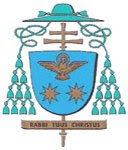 Following the precepts of Summorum Pontificum in the Archdiocese of Ferrara-Comacchio and the Abbey of Pomposa, the archbishop, His Excellency Most Rev. Paolo Rabitti on 8 December, happy day that it always is and now happier still, released a notification about the introduction of Holy Mass in the Extraordinary Form in Ferrara. He has designated a church of the Theatines, Santa Maria della Pietà e san Gaetano, and its rector Fr. Riccardo Linares, to have Mass in the older form every Sunday and Holy Day of Obligation at 5 pm.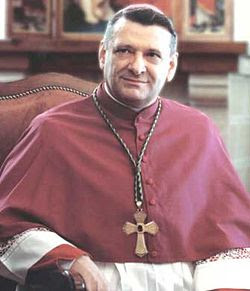



 Fr. Reader on ROME 26/5– Day 57 & 58: doubled up: “This video… ay! poor unfortunate souls…”






























