ENGLAND – Fr. Finigan’s parish, O.L. of the Rosary’s patronal feast 7 OCT: He has a GREAT idea!

Are you in England?  Anywhere near London?

The great Fr. Finigan has posted on his mighty blog, The Hermeneutic of Continuity, the plans for the patronal feast of the parish, Our Lady of the Rosary.  They will have a Solemn Mass in the Extraordinary form on 7 October.

Fr. Finigan has an outstanding idea!  He suggests bring non-Catholic friends.

Here are the plans:

Friday 7 October [8 PM] is the feast of Our Lady of the Rosary and therefore the patronal feast of my parish. We’ll be having High Mass at 8pm (as well as English Mass in the morning and school Mass in the afternoon.)

Cantores Missae will be singing the following:

Mass setting:
Victoria: Missa Simile est Regnum
Motets:
Guerrero: Sancta Maria
Byrd: Ave Verum
Schubert: Salve Regina

Do come along if you can. This year, I thought that I would try a new angle by encouraging people to bring non-Catholic friends to the Mass to hear beautiful music sung for the purpose for which it was composed (the worship of God) and in the setting for which it was composed (High Mass.)

You can gain a plenary indulgence (under the usual conditions) even for just visiting the Church on 7 October and reciting the Pater and Credo. This applies to any parish Church on its titular solemnity.

I have often suggested in preaching that people invite others to come to Mass and to confession.  Non-Catholic friends, of course.  But also fallen away Catholic friends.

His Hermeneuticalness has proposed a great idea.  May I suggest to pastors of parishes and bishops of dioceses to do the same?

New Evangelization starts with small and personal moves.

Brick by brick.

Posted in "How To..." - Practical Notes, Brick by Brick, New Evangelization, Our Catholic Identity, The future and our choices | Tagged , , ,
11 Comments

“Thus I promise, this I swear, so help me God and these holy Gospels of God.”

For some work I am doing today I had occasion to re-read the old Oath Against Modernism.

In 1910 St. Pope Pius X issued Motu Proprio a document called Sacrorum Antistitum in which he provided the Church with an °Oath Against Modernism.  He explains what he is about in the first paragraph:

It seems to Us that it has not been ignored by none of the holy Bishops [Sacrorum Antistitum] that the class of men, the modernists, whose personality was described in the encyclical letter Pascendi dominici gregis, have not refrained from working in order to disturb the peace of the Church. They have not ceased to attract followers, either, by forming a clandestine group; by these means, they inject in the very veins of the Christian Republic the virus of their doctrine, by editing books and publishing articles in anonymity or with pseudonyms. By reading anew Our aforementioned letter, and considering it carefully, it is clearly seen that this deliberate movement is the work of the men that we described in it, enemies that are the more dangerous the closer they are; that abuse their ministry by offering poisoned nourishment and by surprising the less cautious; by handing a false doctrine in which the sum of all errors is enclosed. …

Thus, he issued an Oath and all clergy, anyone holding an office, all seminaries profs, etc., were to take.  Period.

It has been awhile since I have posted on this Oath, and I suspect there may be some readers here who have either never read it or never heard of it.

Since this is something every Catholic should know about, for your opportune knowledge, here it is with my emphases and comments.

THE OATH AGAINST MODERNISM

Given by His Holiness St. Pius X September 1, 1910.

To be sworn to by all clergy, pastors, confessors, preachers, religious superiors, and professors in philosophical-theological seminaries.

I . . . . firmly embrace and accept each and every definition that has been set forth and declared by the unerring teaching authority of the Church, especially those principal truths which are directly opposed to the errors of this day. [Consider the context of the late 19th and early 20th centuries. This could still apply today.] And first of all, I profess that God, the origin and end of all things, can be known with certainty by the natural light of reason from the created world (see Rom. 1:90), that is, from the visible works of creation, as a cause from its effects, and that, therefore, his existence can also be demonstrated: Secondly, I accept and acknowledge the external proofs of revelation, that is, divine acts and especially miracles and prophecies as the surest signs of the divine origin of the Christian religion and I hold that these same proofs are well adapted to the understanding of all eras and all men, even of this time. Thirdly, I believe with equally firm faith that the Church, the guardian and teacher of the revealed word, was personally instituted by the real and historical Christ when he lived among us, and that the Church was built upon Peter, the prince of the apostolic hierarchy, and his successors for the duration of time. Fourthly, I sincerely hold that the doctrine of faith was handed down to us from the apostles through the orthodox Fathers in exactly the same meaning and always in the same purport. Therefore, I entirely reject the heretical’ misrepresentation that dogmas evolve and change from one meaning to another different from the one which the Church held previously. [This would be hard for some people to understand today. There is a difference between development of doctrine and change of doctrine.] I also condemn every error according to which, in place of the divine deposit which has been given to the spouse of Christ to be carefully guarded by her, there is put a philosophical figment or product of a human conscience that has gradually been developed by human effort and will continue to develop indefinitely. Fifthly, I hold with certainty and sincerely confess that faith is not a blind sentiment of religion welling up from the depths of the subconscious under the impulse of the heart and the motion of a will trained to morality; but faith is a genuine assent of the intellect to truth received by hearing from an external source. By this assent, because of the authority of the supremely truthful God, we believe to be true that which has been revealed and attested to by a personal God, our creator and lord.

Furthermore, with due reverence, I submit and adhere with my whole heart to the condemnations, declarations, and all the prescripts contained in the encyclical Pascendi and in the decree Lamentabili, [remember the historical context.] especially those concerning what is known as the history of dogmas. I also reject the error of those who say that the faith held by the Church can contradict history, and that Catholic dogmas, in the sense in which they are now understood, are irreconcilable with a more realistic view of the origins of the Christian religion. [This would knock a few people out of their present offices.] I also condemn and reject the opinion of those who say that a well-educated Christian assumes a dual personality-that of a believer and at the same time of a historian, as if it were permissible for a historian to hold things that contradict the faith of the believer, or to establish premises which, provided there be no direct denial of dogmas, would lead to the conclusion that dogmas are either false or doubtful. Likewise, I reject that method of judging and interpreting Sacred Scripture which, departing from the tradition of the Church, the analogy of faith, and the norms of the Apostolic See, embraces the misrepresentations of the rationalists and with no prudence or restraint adopts textual criticism as the one and supreme norm. Furthermore, I reject the opinion of those who hold that a professor lecturing or writing on a historico-theological subject should first put aside any preconceived opinion about the supernatural origin of Catholic tradition or about the divine promise of help to preserve all revealed truth forever; and that they should then interpret the writings of each of the Fathers solely by scientific principles, excluding all sacred authority, and with the same liberty of judgment that is common in the investigation of all ordinary historical documents.

Finally, I declare that I am completely opposed to the error of the modernists who hold that there is nothing divine in sacred tradition; or what is far worse, say that there is, but in a pantheistic sense, with the result that there would remain nothing but this plain simple fact-one to be put on a par with the ordinary facts of history-the fact, namely, that a group of men by their own labor, skill, and talent have continued through subsequent ages a school begun by Christ and his apostles. I firmly hold, then, and shall hold to my dying breath the belief of the Fathers in the charism of truth, which certainly is, was, and always will be in the succession of the episcopacy from the apostles. The purpose of this is, then, not that dogma may be tailored according to what seems better and more suited to the culture of each age; rather, that the absolute and immutable truth preached by the apostles from the beginning may never be believed to be different, may never be understood in any other way.

I promise that I shall keep all these articles faithfully, entirely, and sincerely, and guard them inviolate, in no way deviating from them in teaching or in any way in word or in writing. Thus I promise, this I swear, so help me God and these holy Gospels of God (which I touch with my hand).

…. Haec omnia spondeo me fideliter, integre sincereque servaturum et
inviolabiliter custoditurum, nusquam ab iis sive in docendo sive
quomodolibet verbis scriptisque deflectendo. Sic spondeo, sic iuro, sic
me Deus adiuvet et haec sancta Dei Evangelia.

I have not heard that the Church released men from this oath if they once took it.

Posted in "How To..." - Practical Notes, Linking Back, New Evangelization, Random Thoughts | Tagged ,
37 Comments

How to save a wet book.

A friend of mine who works in a diocesan chancery sent me a copy of a reference guide about how to keep and care for parish sacramental records.  Very cool.  Very informative.  The 1983 Code of Canon Law requires that all parishes keep sacramental records, or registers, in actual books which must be cared for.  All sorts of sacramental information is to be stored by hand in these books as a permanent record.  Scripta manent.

Care for the books might deal with situations in which damage occurs.  Say, for example, there is a fire or a flood and the parish registers are damaged by water. How do you rescue the books and the precious information within?  Ink can run when wet, paper can fall apart or mold.

Here is a tip I learned from this guide, which was prepared with the help of professional archvists.

Water damage is the most likely severe damage a register could suffer.

If the book is only damp or partially wet, stand the book upright on its bottom or top edge (with wettest edge down), with the covers open at a 90 degree angle. If the book won’t stand up, lay it open flat, and use clean, all white paper towels to absorb as much water as possible by blotting. Do not scrub the pages or covers to get out more water.

This may smear the ink. Air dry in a room with low humidity and good air circulation.

Do not have a fan blowing directly on the register.

If the book is very wet: close it, wrap the book in wax paper and place it spine down (making sure the covers are supported) in a freezer. A sub-zero commercial freezer is best, but a home freezer works too. The book must be placed in the freezer within 48 hours of getting wet.

Freezing stabilizes the book: mold growth will be stopped, ink will not run, and dye transfer and swelling will be reduced.

Very interesting and useful!

There are sites of libraries which deal with this too.  However, it is important that people who work for the Church understand these things.

Posted in SESSIUNCULA |
14 Comments

Brick by Brick: Personal Parish Granted to the FSSP in Fort Wayne

For your Brick By Brick file.

A reader alerted me to the following from The TLM in Michiana:

Personal Parish Granted to the FSSP in Fort Wayne

Father Gabet announced at Mass this morning that Bishop Kevin Rhoades in a letter to the parishioners of Sacred Heart and St. Henry Churches in Fort Wayne that Sacred Heart parish is to become a personal (non-territorial) parish for those attached to the Extraordinary Form of the Roman Rite in Fort Wayne, Indiana, under the administration of the Priestly Fraternity of St. Peter. The territory of St. Henry parish has been expanded to include the territory of Sacred Heart parish since it will no longer be a territorial parish.

Fr. George Gabet, FSSP, chaplain of the St. Mother Theodore Guérin Traditional Latin Mass Community of the Diocese of Fort Wayne-South Bend will become the first pastor of this new personal parish in November of this year.

[…]

WDTPRS kudos to Bp. Rhoades!

Let no one forget that just because there is now a parish for people who desire the older forms, that does not mean that other pastors of parishes don’t have to implement Summorum Pontificum.  If there is a stable group across town or even at the neighboring parish, and if they ask for the TLM from their pastor, the pastor cannot simply blow them off, saying “Go over there if you want that.”  If people want the older Mass in their own parish, they can ask for it … and then provide whatever is necessary to make it work.

Brick by brick.

Posted in Brick by Brick, Fr. Z KUDOS, New Evangelization, Non Nobis and Te Deum, SUMMORUM PONTIFICUM, The future and our choices | Tagged , , , ,
11 Comments

“I had honestly forgotten that the Sacrament of Reconciliation existed.”

The following note in my email today is what makes it worth what I have to do to continue with this blog.

From a reader with my emphases:

Recently, after a long period away from the Church I have come back.

In an effort to learn, find inspiration and challenge myself I have been reading a lot more of and about the faith than I ever did before. One of the first things I came across was your column from 9/12/11 where a reader had written to say he had gone to confession again after 6 months. Sadly, I think I had honestly forgotten that the Sacrament of Reconciliation existed.

Anyways, yesterday for the first time in 8 years, I literally bawled my way through a confession.

And you know what that priest said to me, after I told him how long I had been away? “Well, welcome home.

Not sure I’ve felt that accepted and at peace in, well, about 8 years. God’s mercy truly knows no bounds.

Do I hear an “Amen!”?

Let priests who don’t want to hear confessions read this and let them be stung in the heart: “Sadly, I think I had honestly forgotten that the Sacrament of Reconciliation existed.”

Posted in Non Nobis and Te Deum | Tagged , ,
Comments Off on “I had honestly forgotten that the Sacrament of Reconciliation existed.”

Waiting and waiting and waaaaaiting in line for confession. Fr. Z rants.

From a reader:

If you’re sitting in the box and no one’s coming, double-check to make sure the other side isn’t stuck in the “occupied mode”.

Father, I went to confession last night, as did several other people.
We patiently stood in line for over a half hour thinking someone was in the box (the door was closed and the red light was on), and just taking a really long time (something that’s completely normal at our parish). Then the priest stepped out of the box, looked at us and said, “oops, sorry.” and opened the door. There was a lot of moaning, groaning, murmuring, and sighing from the line.

First, I must observe that the priest was actually in the box.  He was hearing confessions.  This is a blessing for the people.  You must be very happy that the priest was hearing confessions.  Aren’t you?

Many box-style confessionals with a grate and built in kneeler have a pressure switch which makes the light come on as soon as someone kneels. Sometimes it get’s stuck.  That can be fixed.  Sometimes there is a switch on the door, so that when it is closed, the light goes on.  Sometimes there is no light, but the door being ajar is a sign that no one is inside.  In the case of a box style, classic style, confessional, I am not convinced it is Father’s responsibility to open the door to the other side of the confessional.  Since he doesn’t have either x-ray vision or psychic powers, if no one gets into the box, he might suspect that there isn’t someone out there. If, however, there is almost always a good number of people and a line, that is another matter.

If the confessional is one of those horrid little rooms with comfy chairs and an end table accessorized with a vase of fake flowers, a box of tissues, a Bible with a white cover, and a framed print of happy Jesus cuddling a lamb then I guess Father should have seen the door was closed.  Reason #676 to eliminate those horrid little rooms.

Let horrid little rooms be eliminated!  Let all confessionals have fixed partitions with grates as soon as possible!

Because I am an unreconstructed ossified manualist, on my planet confessionals have on the penitent’s side are accessorized with the Act of Contrition under a crucifixion scene framed and bolted to the wall.  On the other side, on the priest’s side of the fixed barrier and the curtain over the grate, there is a rosary, breviary, a copy of the Code of Canon Law, my Examen Conscientiae, and Tanquerey’s or another manual for light reading.  Thus endeth the rant.

Frankly, I am and priests I know are very reluctant to get out of the box and look at the people in line because we want to make sure no one gets nervous for being recognized.   People should know they are going to confession anonymously if they wish to.  When getting into the confessional, I never look at people in line. When getting out I don’t look at people who may be doing penance… unless it is time to lock the church.  Even then there is mostly key rattling rather than pointed glances.

Finally, in my opinion, if people normally take “a really long time”  or a half of an hour to make a confession in the scheduled time for confessions then Father should rethink what he is doing.

But the upside is, Father was in the confessional.  That is the overriding good news.

Posted in "How To..." - Practical Notes, Liturgy Science Theatre 3000, Wherein Fr. Z Rants | Tagged , , , , , ,
40 Comments

TOWNHALL: Will Obama Destroy Franciscan University of Steubenville?

This is an excellent piece from Townhall.

Will Obama Destroy Franciscan University of Steubenville?

Ken Blackwell
Columnist, Townhall.com

Daniel Webster was the most famous lawyer of his day. In 1819, the “Godlike Daniel” stood before the U.S. Supreme Court and argued passionately for the right of Dartmouth College to govern itself, and not to be brought under the rule of the New Hampshire legislature. Webster appealed to the Constitution, arguing that New Hampshire’s actions would violate that provision that forbade states to “impair the obligations of contract.” But the emotional power of his argument caught the attention of Chief Justice John Marshall, Justice Joseph Story, and in truth, captured the hearts of the country.

Richard N. Current gives us a gripping description of Daniel Webster’s defense of Dartmouth College in a 1963 American Heritage article.

Sir, you may destroy this little institution. It is weak. It is in your hands! I know it is one of the lesser lights in the literary horizon of the country. You may put it out. But if you do so, you must carry through your work. You must extinguish, one after another, all those great lights of science which, for more than a century, have thrown their radiance over our land. It is, Sir, as I have said, a small college, and yet, there are those who love it. …

The Dartmouth College case became one of the pillars of American jurisprudence. And Webster’s powerful appeal propelled him to a brilliant career in the U.S. Senate.

The Supreme Court that year ruled in favor of Dartmouth College. It recognized not only the supremacy of the Constitution, but it showed that it valued the signal role played by colleges and universities in American life.

[NB] The Obama administration is showing it values that role not at all. It is attempting to crush The Franciscan University of Steubenville in Ohio. Mr. Obama’s HHS Secretary, Kathleen Sebelius, is trying to force Steubenville to dispense abortion-producing drugs and pay for sterilizations. This is a Roman Catholic institution. Such things are strictly proscribed by the Catholic faith.

Sec. Sebelius [catholic] may be aware that Catholic institutions are required by faith and fidelity to their mission to uphold these principles. It is an indispensable part of their mission and their reason for being. To force a Catholic institution to violate the consciences of its faculty, students and alumni in this fashion is like forcing a Yeshiva to serve pork to Orthodox Jewish students. [Why not use the example of a Muslim school?  Say, perhaps, one sponsored by a sister school in Indonesia?]

This attempt to crush The Franciscan University of Steubenville is, tragically, not an isolated example. From the first days of the Obama administration, there has been a kulturkampf (culture clash) against Catholic institutions not seen since the days of the Iron Chancellor of Germany, Otto von Bismarck. It was Bismarck who attempted to put all churches and universities in Prussia under his hobnailed boot. [All repressive regimes seek control of existing schools and hospitals.]

Writer Charlotte Allen wrote of the “Persecution of Belmont Abbey” by the Obama administration in 2009. There, too, liberal zealots were demanding that the Catholic school, founded in 1876, provide contraception, abortifacients, and sterilizations or face federal sanctions. This, according to the institution’s president, could lead to closing down the historic little college.

Chai Feldblum is a tenured professor at Georgetown University Law School. This is the oldest Catholic university in the country. Ironically, Feldblum, is also a homosexual legal activist. She was Barack Obama’s choice for the Equal Employment Opportunity Commission. She told a panel at Family Research Council that if it came to a clash between what she calls gay rights and religious liberty, religious liberty must give way. [NB] In other words: “Be Amish, or be quiet.

We have already seen this as the most anti-Israel administration in U.S. history. Never before has an American president and secretary of state stooped to counting Jews in Jerusalem.

The Obama administration is also the most anti-Catholic administration in American history. [Indeed?  There is a long history of anti-Catholicism in the USA which hasn’t been talked about for long time.] Never before have tens of millions of Catholic Americans been forced to subsidize the killing of unborn children with their taxes—as they are under ObamaCare. But now they are also forcing Catholic institutions to take part in the destruction of innocent human lives and the maiming of others by paying for abortifacients and sterilizations. As Americans, we must defend our religious liberties–while we still have them. Steubenville is a little college, but there are those who love it!

Posted in Emanations from Penumbras, One Man & One Woman, Our Catholic Identity, SESSIUNCULA, The Drill, The future and our choices, The Last Acceptable Prejudice | Tagged , , , , , , , , , , , , ,
29 Comments

QUAERITUR: Using the Breviarium Romanum but with the Novus Ordo calendar

From a priest:

Thanks for all of your work on behalf of the Church and, from a brother priest, oremus pro invicem! [Libenter!]

I was ordained this year and thank God for the tremendous gift of offering the Divine Sacrifice and forgiving sins in the Sacrament of Penance.

The Lord blessed me with many very good years of Latin study before priestly ordination and as a result I have the ability to read well and speak a little; what great treasures of the Tradition the key of Latin unlocks to those willing to suffer and work for it. Thanks for encouraging all seminarians to fulfill their canonical obligation by learning it well.

My question for you is this: may a priest fulfill his obligation by praying the traditional breviary according to the new calendar? I happen to be exercising my priestly ministry in a parish following the new calendar. Basically this would mean celebrating the feasts that both calendars have from the traditional calendar, using the common for feasts that don’t exist in the old calendar and praying the ferial days in the breviary when it is a ferial day in the new calendar.

I know this is not ideal but in light of the present historical moment would this fulfill one’s obligation apropos the breviary until the calendars are reconciled?

While there are some genuine benefits of the new breviary (the richer selection of Church Father’s for the Office of Readings et alia) the new psalter, in my humble opinion, is atrocious.

I am getting quite a few breviary questions these days.  Interesting.  These are complicated issues and I don’t really know quite how to respond.  The Church’s law isn’t entirely apparent to me.

It is clear that we can use either the Liturgia Horarum or the Breviarium Romanum. It is clear that we can use either the 2002 Missale Romanum or the 1962 Missale Romanum.   The new office is aligned to the new Mass and the older office is aligned to the older Mass.  It is best to be consistent: say the old Mass and say the older office, etc.

I don’t believe there is any obligation to say the Breviarium Romanum on the days you opt to use the 1962 Missale Romanum.  But it sure makes sense to do so.

What happens for the priest in the parish who has less control over which missal he uses is that he can wind up caught between two calendars.  That gets a little schizophrenic.  Thus, you are trying to reduce the craziness by using the older breviary with the newer calendar.  Good luck.

I think the mens of the Roman Pontiff is not to mix these two expressions of the Roman Rite… yet.  It seems to me that we need more direction on this.  My own thought on this is evolving.  Therefore, I suggest that, in the morning when your hand reaches to the right to pick up the Breviarium Romanum, or to the left to take the Liturgia Horarum, you stick what you chose – and its calendar – through the day.

Posted in "How To..." - Practical Notes, ASK FATHER Question Box, Liturgy Science Theatre 3000, Mail from priests, SUMMORUM PONTIFICUM, Universae Ecclesiae | Tagged ,
13 Comments

Lutheran Airlines

As a former Luderan from Minnesohta and someone who travels a lot, I found this pretty amusing.

Find this on Dauckster.Posterous or click below.

Posted in Lighter fare | Tagged
18 Comments

The path we are on. A book that might help explain things.

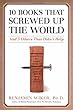
If you want a book which can shed light on the trajectory we are on, from a philosophical view point, try 10 Books That Screwed Up the World: And 5 Others That Didn’t Help by Benjamin Wiker.

It is also available as an audiobook which you could listen to also on your Kindle.

This is a book pretty much everyone can read.  It might be good for bright highschool age students, but for sure give this book to every college student and seminarian and priest you know. No, really.

Wiker (pronounced like the letter Y + ker) also has others I haven’t yet read:

Posted in The future and our choices |
11 Comments























