ReplayTV redivivus

Do any of you readers use the great DVR ReplayTV?
Posted in "How To..." - Practical Notes | Tagged , ,
8 Comments

Monday Supper

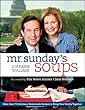
I was in the mood for soup, and I didn’t care if it was a summer soup or winter soup.  Therefore, I opened up my very own autographed copy of Lorraine Wallace’s Mr. Sunday’s Soups. “More than 75 delicious homemade recipes to bring your family together.”

Lorraine Wallace is the wife of Fox News’s Chris Wallace, a fine gentleman I had the pleasure to work with once upon a time.  Because of the Wallace’s busy Sunday schedule – for a long time – they have soups on Sundays.

I was also thinking down the line to an annual gathering of priests coming up.  I will do some of the cooking so we can keep the expenses down a bit.  Thus, I am looking at soup recipes.

I opted for the White Bean Soup, with Great Northern Beans, which I have in abundance.  Since I am not 10 people, the amount the recipes makes, I made a half recipe.

I soaked the beans from the early morning, several hours.

For the base you sweat onion and carrot and then red swiss chard.  I like chard and often buy it.  I had some on hand, which helped by make the choice of this recipe.  You then add in diced garlic, diced tomatoes, chopped basil, the beans and chicken broth.  You could use vegetable broth if you wanted it to be wholly veggie.  See the book for the proportions.

20110725-022334.jpg

When the beans are tender, you put half the soup in a blender or processor till smooth and add it back in.

20110725-022341.jpg

Add the other half of the chard you held back.  NOTE: I should have chopped the second half into smaller pieces.

20110725-022346.jpg

This would go well with a hearty, crusty bread and a wedge of sharp cheddar cheese.

My variation was a dash of ground cayenne pepper.

20110725-022354.jpg

Great stuff, this soup.

20110725-022406.jpg

Soup is always good, easy to make in large or small quantities, usually inexpensive, of nearly infinite variety and provides great flexibility for serving times.  But you do need to plan around it.  When you use ingredients such as beans, you have to plan ahead.

Soup is swell with Mystic Monk Coffee, by the way.

Posted in "How To..." - Practical Notes, Fr. Z's Kitchen, Lighter fare, Linking Back | Tagged , ,
14 Comments

QUAERITUR: cremation

From a reader:

Father..I’m making end of life arrangements. I am a cradle Catholic.  We have a columbarium in our ____ and it all makes sense but…cremation freaks me out. Do you think Our Lord will be angry at me if I have my body cremated? All this hesitation comes from my childhood.

I am glad you are making some arrangements now.  That is the responsible thing to do.

We affirm that to bury the dead is a corporal work of mercy.  We also affirm that the bodies of the deceased baptized are worthy of respect because people are made in the image and likeness of God and have great dignity and because they were temples of the Holy Spirit.

The Catechism of the Catholic Church teaches:

2301 [… ]  The Church permits cremation, provided that it does not demonstrate a denial of faith in the resurrection of the body.

In the ancient Roman cremation was very common, but inhumation (burial) was more common for the Jews.  Early Christians followed the Jewish practice more than the pagan.  In the case of plague, however, and some other situations, cremation was abandoned.

However, the practice of cremation was rekindled in modern times.  The Church forbade it since it seemed like a denial of the teaching of bodily resurrection.  The 1917 Code of Canon Law funeral rites for the cremated.  In 1963, however, the prohibition was lifted.  The 1983 Code of Canon Law allows cremation but inhumation is strongly recommended.  However, if there is a way in which the cremation is a statement in some way against the teaching of bodily resurrection, cremation would be prohibited.  I don’t know what censures there would be.  We need the Canonical Defender!

So, in short, cremation is permitted by the Church.

Absolutely prohibited as in wrong wrong wrong is the scattering of ashes.

It is understandable that Catholics would have a… hesitation about cremation.

That said, friend, I don’t think you need to fear that the Lord will be unhappy with you for doing something the Church allows, so long as you have striven to know Him, love Him and serve Him in this life.

Posted in ASK FATHER Question Box | Tagged , , , ,
35 Comments

RECENT POSTS and thanks

Some recent posts of interest as they scroll along:

Also, many thanks to readers for the notes of support and prayers.  I am also grateful to those who have used the donation button and the wishlist.  I will be saying Mass tomorrow morning for the intention of asking God to give abundant graces and blessings to these benefactors, as is my pleasure and duty.

Since last time I am adding to the list

JG, Fr. JB, EL, TT.

Posted in SESSIUNCULA |
Comments Off on RECENT POSTS and thanks

Prof. Peters on canon Law and “presumed death”

The Canonical Defender, Prof. Ed Peters, has on his excellent blog In The Light Of The Law, an interesting post about marriage and presumption of death.

I suspect that this issue could include also military combatants who are MIA.

Thus, Prof. Peters:

Arthur Gerald Jones, declared dead in 1986 some seven years after he had simply disappeared under ambiguous circumstances, was recently found alive and well, working under the name of Joseph Richard Sandelli. Jones, whose religious affiliation was not identified, was married with children when he vanished, and it seems that he has not remarried since then, but, as technological advances make more likely the discovery of other erroneous declarations of death, the Jones-qua-Sandelli episode occasions three quick points about the canon law of “presumed death” per Canon 1707.

1. A civil certificate of presumed death is not sufficient basis for a bishop to declare a “survivor’s” freedom to marry in the face of a prior marriage per Canon 1085. An ecclesiastical determination of presumed death must be made.

2. In making that ecclesiastical determination, a bishop find evidence (albeit not proof) of actual death, and not merely of absence, however protracted.

For example, a man books a passage on ship, but he never shows up at the dock, and is not heard from again, even for many years. Such a fact pattern is insufficient for a canonical declaration of presumed death because there is no evidence that the man died. Alternatively, a man books a passage on ship and is seen on the ship before it sinks at sea with loss of life. He is not heard from after the shipwreck. That would be much closer to providing a basis for an ecclesiastical declaration of presumed death, because circumstances pointing to death are present.

3. If a spouse remarries after having received an ecclesiastical declaration of presumed death, but the original spouse is later found alive, the second marriage is null and a petition declaring such nullity should be filed, if necessary, by the promoter of justice per Canon 1674.

Read more about the canon law of “presumed death”: CLSA New Comm (2000) at 1798-1799 or GB & I Comm (1985) at 949.

Posted in "How To..." - Practical Notes | Tagged , , , ,
6 Comments

More about the new, corrected version of the Confiteor

Elsewhere I answered a question about the new, corrected ICEL version of the Confiteor.  I said I would post something more about the Confiteor.  Liberals will hate this new version, by the way.  We have already seen that (here).

Here is something I wrote for my weekly column in the UK’s best Catholic weekly, The Catholic Herald.

And With Your Spirit
by Fr John Zuhlsdorf

Confiteor

The first major change people will notice in the new, corrected English translation for Holy Mass will be, as we saw last week, the response “And with your spirit”.  After that, in many places – depending on the penitential rite option chosen by the priest – the next major change will be to the Confiteor (“I confess”). I suspect younger priests will more and more choose this option.

Our English word “confess” comes from the Classical Latin confiteor, confessus, “to acknowledge, confess, own, avow (an error, mistake, or a fact previously denied or doubted, etc., implying a sacrifice of will or a change of conviction”.  In ancient Christian Latin, a confessio was the witness, unto death, made by a martyr. Confiteor was used for recognition of the greatness of God, and then later recognition of one’s faults.  When we speak of a Confiteor now, we mean the public declaration, together with others, of our own fallen sinful state at the beginning of Mass.

In Matthew 18 Our Lord urges us to make peace with each other before coming to the altar of sacrifice.  In Luke 18 He tells the parable of the tax collector who beat his breast in the temple, calling himself a sinner.  When we enter the holy precincts of a church for the sacred action of Mass, we should have a healthy sense of our unworthiness which leads to outward expressions in our worship or sorrow and thanksgiving.

That said, try reading this aloud.

THE NEW CORRECTED TRANSLATION:
I confess to almighty God and to you, my brothers and sisters, that I have greatly sinned in my thoughts and in my words, in what I have done and in what I have failed to do, [And, striking their breast, they say:] through my fault, through my fault, through my most grievous fault; [Then they continue:] therefore I ask blessed Mary ever-Virgin, all the Angels and Saints, and you, my brothers and sisters, to pray for me to the Lord our God.

Note the changes.  We will now admit in English, as Catholics have done together for centuries in Latin, that we have not merely sinned, we have “greatly sinned”.  The strong, uncommon word “grievous”, echoing pre-Conciliar hand missal translations, emphasizes that even a lesser sin is a true offense against God’s love.

The most dramatic difference in the new, corrected translation will be the reintroduction of the provocative three-fold mea culpa.  And we are to strike our breast.  Please do strike your breast!

In 5th century North Africa, the great Doctor of Grace St. Augustine of Hippo (d. 430) observed in a sermon (s. 67.1) how the people automatically beat their breast whenever they heard the word confiteor.  In another place he said they struck themselves so forcefully that the sound resounded in the church.  The 20th century writer of the Liturgical Movement, Romano Guardini (d. 1968) wrote in his 1955 work Sacred Signs:

“To brush one’s clothes with the tips of one’s fingers is not to strike the breast.  We should beat upon our breasts with our closed fists. … It is an honest blow, not an elegant gesture.  To strike the breast is to beat against the gates of our inner world in order to shatter them.  This is its significance. … ‘Repent, do penance.’  It is the voice of God.  Striking the breast is the visible sign that we hear that summons. … Let it wake us up, and make us see, and turn to God”.

The future Pope Benedict XVI wrote in Spirit of the Liturgy (p. 207): “We point not at someone else but at ourselves as the guilty party, [which] remains a meaningful gesture of prayer. … When we say mea culpa (through my fault), we turn, so to speak, to ourselves, to our own front door, and thus we are able rightly to ask forgiveness of God, the saints, and the people gathered around us, whom we have wronged.”

We oh-so-modern Catholics will benefit from clear talk about sin and the physical action of beating our breast to counteract the “I’m Okay, You’re Okay” rubbish so prevalent today. We need Mass precisely because we are not “okay”. Sinners need a Saviour. A realistic recognition of who we are and who we are not is a necessary starting point for all worthy prayer and liturgical worship.

The revised, corrected translation of the Confiteor will have a greater impact on us as we begin to pray at Mass.  It will remind us more forcefully that we should be in the state of grace before receiving Holy Communion. The improved translation will, over time, repair a sense of continuity with our forebears as well as strengthen our need for a regular examination of conscience, frequent sacramental confession, and deeper gratitude during Mass.

Posted in WDTPRS | Tagged , , , , ,
15 Comments

A tot of coffee!

As you may know, a “tot” is not just a small child but also a small quantity of anything, especially of some beverage, and most especially of a beverage such as rum.

Here is a photo sent by a reader.  I share it with you in a shameless attempt to use the ain’t-that-cute factor so as to manipulate you into buying some Mystic Monk Coffee or Tea right now. (The separate Tea page here.)

What a swell photo.  I am pretty sure these are the five pound bags.   How ’bout trying a fiver of Dark Sumatra?

Help the Carmelites build their monastery and get great coffee doing it.

Mystic Monk Coffee is swell too!

I will now go to the fridge and pout myself a refreshing glass of iced-coffeeMystic Monk Coffee!

It’s swell!

Posted in Just Too Cool, Lighter fare | Tagged ,
13 Comments

QUAERITUR: New translation of Confiteor omitted from Mass today.

From a reader:

Dear Fr Z, I’ve just been to Mass, using the new translation for the first time[hmmm] I was looking forward to the Confiteor, but our priest left it out. Was that because it was a weekday? I thought from now on the Confiteor was going to be a part of the ceremony.

There is indeed a new translation of the Confiteor in the new, corrected translation.  However, in the Ordinary Form, the use of the Confiteor is included in just one version of the “penitential rite” of Mass.  In other words, there are legitimate penitential rites in the Ordinary Form which don’t include the Confiteor.

Another issue is whether or not the new, corrected translation should have been used.  In some places the new translation of the Order of Mass will begin in September, with the whole translation on the 1st Sunday of Advent at the end of November.

That said, I will post something about the new Confiteor elsewhere very soon.

Posted in "How To..." - Practical Notes, ASK FATHER Question Box, WDTPRS | Tagged ,
8 Comments

We mustn’t take a vacation from prayer and God

From ZENIT:

Benedict XVI Offers Tips for Summer Holidays

Father Lombardi Summarizes Pontiff’s Suggestions

VATICAN CITY, JULY 24, 2011 (Zenit.org).- Benedict XVI is offering some tips on how to live one’s summer holiday, says a Vatican spokesman.

On the most recent edition of Vatican Television’s “Octava Dies,” Jesuit Father Federico Lombardi spoke of the “brief but important suggestions” that the Pope has made over the past few weeks about vacation.

“First of all, [the Pope] invited those of us who can, to use our vacation time in a way that helps renew our relationships with others and with God,” said Father Lombardi. “Interrupting the hectic and frantic pace of daily life, we can take time to dedicate ourselves to others and to God.

“The Pope even suggested we include a copy of the Sacred Scriptures in our suitcase. He also invited us to contemplate the greatness, and admire the beauty, of creation around us, recognizing in it the wonderful presence of the Creator.”

“We need to observe this magnificent gift,” Father Lombardi said, paraphrasing Benedict XVI, “with the same attention Jesus did. He knew how to interpret the language and signs of Creation, which is a gift we must respect, protect and care for, in the name of God, humanity and future generations.”

“Finally, Pope Benedict suggested that pilgrims and travelers apply their intelligence and curiosity to discovering the monuments of the past — witnesses of culture and faith, as he called them, examples of our spiritual roots and heritage,” the priest said. “Cathedral and abbeys, in particular, are places where beauty helps us feel the presence of God and inspires us to pray for the rest of humanity, on its pilgrimage through the Third Millennium.

“The enjoyment of friendship, reading, nature and culture helps to nourish and restore our spirit. It gives us the strength to continue our journey refreshed and renewed.”

Posted in SESSIUNCULA |
5 Comments

QUAERITUR: Wore a black chapel veil and women scoffed

From  a reader:

I wore my black mantilla (it blends in with my dark brown hair better) to an OF Mass this evening for the second time (no issues the first time), but after I arrived, a group of chatty and gossipy elderly women came and sat behind me. [Is the technical term “biddies”?  (as I now cautious back out of the room…)] When I turned around during the Sign of Peace, and (I’m assuming) realized how young I was, she scoffed me, and another one wouldn’t shake my hand.

I’m single and can legitimately wear white, so the last thing I want is for people to think otherwise of me. Do I still have to worry about the connotations behind black and white veils that elderly people might have?

Why did the image of Monty Python’s Granny Gang just pop into my head?

And now for something completely different…

[wp_youtube]OFiN7Zsz2zM[/wp_youtube]

Back to our topic.

I, for one, am glad when women decide to to return to this custom.  Kudos.

First, while I believe that there may be some connotation to colors (e.g., black for the married and widows, white for the nubile) you can wear any color veil that it pleaseth you to wear.  I suggest avoiding blaze orange, unless its autumn.

Second, did the old woman scoff, really, or did you just imagine that she did?

Third, perhaps it is a blessing in disguise that you got to avoid a handshake o’ peace.

Seriously, you have to determine for yourself whether or not you care.  They’ll probably get used to you in a little while.  Some may start using a veil themselves.

However, you may from time to time have to take a little heat from a scoffing ninnyhammer, feckless gowk, Fishwrap subscriber, or excerebrose flibbertigibbet.

If you have a run in with your local granny gang again, invite them out to coffee afterwards and you can ask them if it was the color they objected to or to the wearing of any veil.  Be nice to them.  If nothing else, you will have followed Proverbs 25:22.

So…

On your mark!  Get set!  ….

Posted in Puir Slow-Witted Gowk | Tagged , , , ,
67 Comments
























