Do you remember the “What If We Just Say Wait?” priest in Seattle? Fr. Michael G. Ryan tried to rouse up a movement to block the process of the new, corrected English translation of the Missale Romanum. He had a lot of help from the liberal camp and their megaphones such as The Tablet (aka The Bitter Pill).
The Bitter Pill is giving Fr. Ryan more space. They do this on the eve of the implementation of the Order of Mass in the new translation in England. And thus the editors of The Pill confirm their bitterness. Why work so hard to turn people against the translation? Cui bono?
In this week’s number of the Pill Ryan makes a case that priests should implement the new translation as it is rather than adjust it according to their own brilliant theological insights and English style.
Fr. Ryan is not, however, advocating acceptance of the new translation from – as far as I can tell – a positive motive. His basic premise is that if the new Roman Missal is read as is, without priests making changes to the text, then people will quickly see how bad it really is.
Here is the last part of Ryan’s piece with my emphases and comments.
[…]
… I intend to implement the new Missal and not change a word, no matter how questionable or offensive I may personally find it. Why? Not because I am a legalist or a purist. No, I will make no changes because I am convinced that, after all the years of wrangling and behind-the-scenes manoeuvring (including the shelving of the elegant and accessible 1998 Icel translation), the only way the new Missal will have its full impact is if the People of God can judge it for themselves without edits of any kind. [Hasn’t that always been the case?]
This is another way of saying that the new Missal should be allowed to stand on its own and be judged for what it is, not for what we priests decide to make of it. I am of the opinion that the Missal will in time – I’m guessing not a long time – be judged deficient, but an informed judgement will never be made if we priests, even for the best of motives, give our people not the new Missal but our version of it. So we should do whatever is necessary to prepare our people for the new Missal but not take on the responsibility for making it work by doctoring or diluting it. [Say the Black – Do the Red?]
I will understand if our senior priest brothers, who offer their services to parishes that would otherwise not have a priest, want to avoid all this by staying with the present Sacramentary for the celebrant’s parts. (They could make a good case with their bishops [?] that there is already a precedent for doing so in the provision made for the use of the Tridentine Rite or in the liturgical accommodations being made for the new Anglican ordinariate.) [Ridiculous. First, the Extraordinary Form and the Anglican Use aren’t translations. Also, local bishops do not have the authority to allow priests to use books that are not approved for use. When the new book comes into force, the former will no longer be approved for use.] The same might be true for some of our international priest brothers who have worked to master the current texts and who may find that the new ones are tantamount to learning a brand new language. [Does that strike anyone as convincing?]
But for the rest of us who are doing our best to face ever-increasing pastoral challenges amid the relentless, though rewarding, demands of parish life, and who still embrace the Second Vatican Council’s vision of a collegially governed Church [Oooo… a little dig there!] – and of a liturgy in which the people are able to participate fully [Perhaps Father has a limited view of what “active participation” is, but let that go.] – we will best serve our people if we give them the new Missal just as it is. I doubt they will be slow to let us know what they think.
 He is probably right. Some people will let us know, and quickly. Most people won’t say anything.
I suspect that Fr. Ryan’s circle, which has undoubtedly been conditioned by relentless sour grapes, will echo back to him what he has said all along: “But Father! But Father! This translation is sooooo baaaad. Can’t we have the old book back?” In another parish, where the priest has been more favorable and optimistic, people may have a more positive reaction.
We who live in echo chambers, and blogs, should have a care not to think we are being universally affirmed.
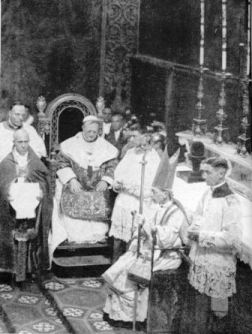
Fr. Ryan’s proposal reminds me of a story about a late Archbishop of St. 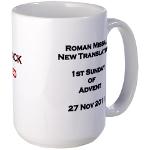 Paul and Minneapolis. When, back in the day, the deacon put his miter on the archiepiscopal head, he put it on backwards so that the lappets, the attached ribbons, fell down over the archbishop’s face rather than down his back. When the deacon reached to correct the mistake, the archbishop said, “Leave it. That way people can see how stupid you are.”
One is left to wonder which of them looked stupider, the deacon who made the mistake or the guy with the lappets in front of his face.
I grant that the analogy limps, since the implementation of the new translation is a done deal, and in no way do I mean to imply that Fr. Ryan is intellectually challenged. The deacon wasn’t stupid, he just made a mistake. By his writings you can tell that Fr. Ryan is an erudite fellow. But his recommendation to leave the translation be so that people can see how bad it is doesn’t leave me edified. It grieves me that a priest would hope the Church will look bad in the eyes of the people in the pews. Isn’t that, in effect, what he is promoting?
 The new translation is not perfect. I show that in my own comparisons of the Latin and the new, corrected translation week in and week out… but I don’t harp on it. I don’t think the translation is as bad as Fr. Ryan suggests, but – yes – it could have been better.
Also, if the way Rome dealt with the production of the translation wasn’t always flawless, those involved nevertheless overcame the institutionalized lethargy imposed in the name of “collegiality” by liberal enemies of greater fidelity to the Latin original (and therefore clearer theology), and got the job done. It may be that Fr. Ryan was really concerned mostly about style. Most people who don’t like the new translation don’t like that it reflects more clearly the content of the original.
Nevertheless, I embrace Fr. Ryan’s proposal: What If We Just Say The Black? Leave it as it it is. His motive is different than mine, but the old adage “the enemy of my enemy is my friend” seems applicable. Fr. Ryan is right, but for the wrong reason. Priests should in fact just say what is printed on the page without imposing themselves on the text and on the people.
As a sincere gesture of good will, I have sent a Say The Black – Do The Red New Translation edition coffee mug to Fr. Ryan.
And to Latin Church priests who, for whatever reason, don’t like the new translation of the Roman Missal:
Say Mass in Latin.
Finally:

 Over at


 There is a bit of a dust up concerning the journal Theological Studies, a prominent English language publication, sometimes useful and much venerated by liberals.




 ProfessorCover on Daily Rome Shot 1116: “This reminds me of something Thomas Pink said in a response to a question fromAndrew Cusak: Many European Bishops are…”




























