Wm Oddie: Extraordinary Form in seminaries

UPDATE 15 March 15:29 GMT:

Mr. Oddie in his article, below, speaks about how Card. Rigali in Philadelphia has said that seminarians should be taught to say also the Extraordinary Form of the Roman Rite, and that he is introducing seminarians to the older form at the archdiocesan seminary.

I asked for feedback about that.

What I am receiving by email doesn’t exactly match Mr. Oddie’s more sanguine view.

Of course we have to keep in mind that the plural of “anecdote” isn’t “data”, but something can be gleaned from email feedback.

The email I am getting – and I welcome more about this – suggests that in the Archdiocese of Philadelphia there is what some perceive as an atmosphere of intimidation extended to priests who are interested in using the provisions of Summorum Pontificum.  St. Charles Borromeo seminary has an elective course for the Extraordinary Form, but there is no general instruction of the students.  Some suggest that they are afraid to take it.  The course seems to cover rubrics for Low Mass only. At the seminary there is only one public celebration of the Extraordinary Form per year.  The instruction for deacons on how to say Mass does not mention the Extraordinary Form.  If any of this is true, you can decide for yourselves if that is adequate exposure to the Roman Rite before ordination.

I will grant that this is better than most US seminaries in regard to the Extraordinary Form of Mass.  But it is not quite the rosy picture painted below.  At the same time I will grant that perhaps the whole of Card. Rigali’s plan for the Extraordinary Form at that seminary hasn’t yet been rolled out.

That said, I think it bears repeating that, given the fact that Summorum Pontificum states that the Roman Rite has two forms, not one.  This is a juridical fact in the Latin Church.  Therefore we have to ask a serious question.  Are seminarians who are not taught to say also the older form of Roman Rite adequately trained to be priests of the Latin Church?  They are required by the Church’s law to be adequately trained before they are ordained.  At every ordination someone stands before the ordaining bishop and attests that the ordinands are adequately trained.  I think this question deserves deeper consideration.

___
ORIGINAL posted 14 Mar 1922GMT:

From the UK’s best Catholic daily, the Catholic Herald (for which the undersigned now writes a weekly column – you can still get the digital edition for 10 pounds =$16) comes this engaging piece from William Oddie.

Oddie repeats in that publication, and forcefully, what I have been droning about here for a long time.  Let’s see his offering with my usual approach of my emphases and comments. I will edit.

Extraordinary Rite? And if not, why not?

The Pope’s wishes are quite clear. But are our bishops carrying them out?

By William Oddie on Monday, 14 March 2011

Cardinal Rigali, Archbishop of Philadelphia, has recently declared that the Extraordinary Rite should be available “to those who prefer it”, and that seminarians ought to be taught to say it. He isn’t just talking the talk but walking the walk: he is introducing seminarians to the Extraordinary Form at the St Charles Borromeo seminary [Is this true?] (this vast establishment is one of the sights of Philadelphia) with teaching on the Motu Proprio Summorum Pontificum “that elucidates the theology underlying the 1962 Missal so that the seminarians are afforded a clear understanding of the Motu Proprio and the Holy Father’s pastoral concern for the faithful who have a deep love for the Tridentine liturgy”. He also said that “seminary course work in theology, liturgy and Church history will cover and expound upon the Holy Father’s initiative. It will be helpful for them to see the continuity between the two expressions, but will also afford the opportunity to address the changes that took place in the liturgy following the Second Vatican Council.”  [CALLING ALL ST. CHARLES SEMINARIANS!  SEND ME SOME FEEDBACK!]

What is happening here? This isn’t the first we have heard of the idea of training seminarians in the celebration of the Extraordinary Rite: according to a CNS story in 2008, “the Vatican” was then writing to all seminaries to request that all candidates for the priesthood should be trained to celebrate the Mass according to the Tridentine Rite.

Well, it seems that now (quite soon if you think of the glacial pace at which these things happen) something seems to be stirring in Philadelphia as a result of this letter. But what about this country? [QUAERITUR:] Is Cardinal Rigali responding to the Vatican letter or is he acting on his own convictions? [Does it matter?  It would be nice if those are his convictions.  I sincerely hope they are, since they are Pope Benedict’s convictions.  But if they aren’t… at least he is doing it.] Come to think of it, was the letter, in fact, ever sent to the seminaries? [Good question.  On the other hand, I recall instances when working for the PCED when things the PCED sent to the office of the president of a certain conference of bishops, for distribution to all the bishops of that conference, were not, in fact, ever distributed.  That is the usual practice, by they way.  Dicasteries of the Holy See usually send things to the head of the conference, who in turn is to distribute to the bishops.  Saves postage, too.] The source of the CNS story was Cardinal Castrillón Hoyos, who was then still president of the Pontifical Commission Ecclesia Dei (the outfit set up to try to re-establish full communion with the SSPX), and therefore a committed traditionalist. Was Cardinal Castrillón’s statement just a bit of Roman gossip, given conviction by his own wishful thinking?

[…]

And what, while we are on the subject, about the selection of our future priests? It certainly used to be the case that any applicant for priestly training who revealed the slightest interest in or approval of, not just the “Old Mass” but even the idea of celebrating the Novus Ordo in Latin, to the diocesan bureaucrats entrusted with weeding out supposedly unsuitable candidates, would have his application immediately blocked. Has that all changed, in the new atmosphere following the papal visit? Or is it still going on?  [And important theme for England and Scotland.  Pope Benedict’s visit… was it a flash in the pan?  Did it effect a change?]

If not, that’s the first thing to which our bishops need to turn their attention if they really want the “Benedict bounce” to maintain its momentum. They should tell their underlings to stop blocking candidates for the diocesan priesthood who want to teach and be formed by the authentic tradition of the Catholic Church. [Do I hear an “Amen!”?  An anecdote.  Not long ago in a major American city, after a High Mass in the older form, a bunch of seminarians came into the sacristy.  During our conversation I learned that all of the men in formation were at least open to learning to older form of Mass and most of them were eager to learn.]

[…]

The clock is ticking and the biological solution is going to make this into a very interesting race of attrition.

Posted in "How To..." - Practical Notes, Brick by Brick, New Evangelization, Our Catholic Identity, The future and our choices | Tagged , ,
19 Comments

Wirral’s Dome of Home: Institute of Christ the King in England?

Brick by Brick.  Wirral’s Dome of Home.

First, a related story: Mass marks re-opening of Wirral church (with video).  The accents tell you we are close to Liverpool!

From the Beeb.

Catholic order could reopen Wirral’s Dome of Home
St Peter and St Paul’s The church was closed in 2008

Church officials are in talks with a Roman Catholic religious order to reopen a landmark Wirral church.

Ss Peter and Paul’s in New Brighton was closed by the Diocese of Shrewsbury in 2008 because it was deemed too large and expensive for its congregation.

Its side chapel was recently reopened to the public after a local campaign.

Now the Institute of Christ the King Sovereign Priest, a group which has experience of reopening churches, has expressed an interest in the site.

[…]

Should the order take over the running of the church, the Bishop of Shrewsbury, the Right Reverend Mark Davies, will consider provision of Mass in English.

[…]

The Grade II-listed church, which first opened in 1935, is known as the Dome of Home because it is one of the first things seafarers see when they sail back to Liverpool.

It stands above the Bay of Liverpool on a sandstone outcrop and can be viewed from as far away as Llandudno in North Wales.

Although its side chapel was recently re-opened for use, the main part of the church needs significant investment and repairs, the diocese said.

Posted in Brick by Brick | Tagged , ,
10 Comments

QUAERITUR: What to wear for my first TLM?

From a reader:

I have recently learned of an EF mass about an hour from my home. I would like to attend. In the past when I’ve had the opportunity, I’ve chickened out.

I have two fears- not know what to do, though I’m sure I can just watch others and follow them. The second is not knowing what to wear.
I always dress up for mass, but is a mantilla or any other garment necessary?

I am glad you are interested in going and very glad that you are concerned to do the right things.

Relax.

As we have discussed quite a few times on the blog, the mantilla is no longer necessary according to the Church’s law.  When you go to a TLM, however, you will find that most of the women use it.  You would not stand out in that crowd if you wear a mantilla.   I suspect there may be a few women there who don’t use it.  If you don’t have one, don’t let that keep you from going… at least for that reason.

I suppose the old adage of wearing your “Sunday best” doesn’t mean much to younger people today.  But I recommend a nice dress.  Perhaps this isn’t the best occasion for the LBD.

You will probably see some young families with lots of kids and also maybe one or two people who will strike you as… odd.  That’s par for the course.

For your first time there you might sit farther back so you can see what everyone else is doing.  Get there a few minutes early to see what booklets they have available.

Also, it may be a good idea to read the readings and prayers for the Mass at least once before you go.  When you are there and in the thick of it, it may be hard to follow your book and also take in everything going on.

Remember: Don’t let the perfect be the enemy of the good.  Some expectations may be met, some confounded.  Just relax and see what happens!

Posted in "How To..." - Practical Notes, ASK FATHER Question Box | Tagged ,
32 Comments

Do you have good news?

Let the other readers here know about your good news!

For my part, the worst of my cold is over, a got a few LENTCAzTs ready (I hope a few more people listen), the sun is shining, chickadees and cardinals are doing their vernal chants, I have a doable list of things to do and leftovers in the fridge so I don’t think about what to eat.

Sometimes, its the small things.

Posted in SESSIUNCULA |
48 Comments

85 years old and on the mark

The great Fabrizio sent me this story from the Daily Mail in the UK saying:

I don’t know if I was more edified by the man’s humility or by that of the young soldiers.

85-year-old U.S. Army sniper veteran proves he hasn’t lost his skills as he picks off a target at 1,000 yards

He may be 85-year-old, but when Army sniper veteran Ted Gundy was given the chance to show off the skills he used in World War Two, he proved he could still keep up with the very best.

Here’s the video.

[wp_youtube]MQRpAxGVg4M[/wp_youtube]

Posted in Just Too Cool | Tagged
2 Comments

QUAERITUR: Can a Vicar General tell a priest not to say the TLM?

From a reader:

Does the Vicar General have the power to tell a Priest to stop saying the Extraordinary Form of the Mass?

No.

Does a Vicar General has the power to overrule Pope Benedict?

I am reminded in these situations of a old acrostics I learned years ago in Latin for different roles in the Church.  The vicarius was Vir Inutilis Carens Auctoritati Rare Intelligentiae Umbra Superioris. This is applied to any sort of vicarius of course, not just a VG.

Everyone took a hit in those acrostics, by the way.  The one for a pastor of a parish begins Pauca Agens

Because the VG is, as mentioned above, the Umbra Superioris, they tend to take on some of the qualities of their master in the episcopal chair, at least while holding that post.  I have known men who are or were Vicars General and who are good, kind, holy men, diligent in the hard work entrusted to them by their bishops.  I have met the opposite.  One in particular has been known as “The Prince of Darkness”.

One of the things priests can expect is that, when the law favors the priest, some bishops – not all – will try to get their way through intimidation, rather than through persuasion.  That’s life, men.  Boo hoo.  We live in a cruel world wounded by original sin.  We eat our bitter bread with tears and carry on.  We live in a world and in times when Summorum Pontificum is necessary.  Summorum Pontificum is the only document I can think of in the last few decades which actually did something for priests, rather than merely enhance the power of the bishops… again.  I often ponder if that is the reason it is so disliked in chanceries.

Now that I am done ranting… the question at the top is vague.  I can think of scenarios in which the VG is right to tell a priest not to celebrate the old Mass.

“But Father! But Father!”, some of you are about to howl.  “NEVER!  JAMAIS!  NUMQUAM!”

No. There are times when the bishop or his VG should get involved!  For example, Father says Mass so badly, and people are so angry, that Father has to be stopped.

Most of the other reasons you could think of would involve liturgical abuses that would be bad no matter which form of Mass he was using.

There are times when the Vicar General has to get involved because there is a problem and the bishop wants him to handle it.

But, in a vague and general sense, does the Vicar General have the power to tell a priest to stop saying the Extraordinary Form of the Mass?  Provided the priest is following the provisions of Summorum Pontificum, then he is within his rights to say the older form of Mass according to those provisions.

Posted in "How To..." - Practical Notes, ASK FATHER Question Box, SUMMORUM PONTIFICUM, Wherein Fr. Z Rants | Tagged
16 Comments

QUAERITUR: Feast days during Lent, or “plenus uenter facile de ieiuniis disputat”

From a reader:

This year, the Annunciation to the Blessed Virgin Mary falls on a Friday.  In the Extraordinary Form, it’s a first class feast.  Meat would normally, therefore, be allowed (despite the Friday).

However, in the universal calendar (ordinary form), it’s a big-F Feast (analogous to a second class feast in the Extraordinary Form).  This is not sufficient rank to waive the Lenten rules.

What to do?  I’m not sure if it matters, but I pray the entire Extraordinary Form Divine Office, so I am more than a casual participant in the older form.

Notice that it is almost always about eating.  This may be a reason why Paul VI, in his perhaps less than fully considered document Paenitemini attempted to get people to see “doing penance” in a fuller way.

This sort of question pops up during Lent every year, usually for the bizarre way in which people think St. Patrick’s feast day is to be celebrated.  During Lent we usually have important feasts, such as St. Joseph and the Annunciation.  This also arises concerning Sundays.  Some will say that all Sundays are “little Easters” and therefore one should not fast, etc.

I think the best approach to maintain the discipline of the season.  It is still possible to mark these days with good fare and yet maintain your Lenten discipline.

Consider it this way: if you have undertaken a solid project for your Lent, then a momentary relaxation will not ruin your discipline.  That doesn’t mean “act as if it is not Lent”, even on those feast days.

There are always alternatives to eating flesh.  There is no reason that you must have meat or dessert on a feast day. If you do, it doesn’t have to be something extravagant.  A pear is a splendid dessert.  You could also choose to have a steak, and omit a dessert if you normally eat one.

There are all sorts of choices you can make.  For example: eat well, but don’t use the computer or turn on the television of radio for the entire day, visit someone who is shut in, for your nice meal invite someone who is alone.  It is an Italian custom for the well-to-do to feed the poor on St. Joseph’s Day.

Also, people should have freedom to observe Lent in a manner which is fitting for them.  I remember being upbraided for posting about having had a steak on Laetare Sunday when I was a guest at someone’s home.  The nitwits had not a clue about other things I may have done that day and seemed not to know that the Church herself relaxes her Lenten stance for a moment that Sunday.  We should be respectful of other people’s choices.

In the final analysis, there are all sorts of ways to fast and do penance during Lent.  One of them – though a good one – involves food.

I will end with St. Jerome’s remark that “plenus uenter facile de ieiuniis disputat“, or, it is easy to talk about fasting when your stomach is full.  This discussion becomes easier when people undertake a serious Lent.

Posted in "How To..." - Practical Notes, ASK FATHER Question Box | Tagged , ,
18 Comments

An evening with St. Joan

TCM has a Joan of Arc movie marathon going!  I think St. Joan of Arc is a great example for young people, girls and boys alike.

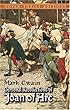
Have you ever read Mark Twain’s superb novel about St. Joan?  He thought it was his best work.

Tonight they had:

1948 – Joan of Arc with Ingrid Bergman – too bad it was so … pretty, and then there was that scandal.  Jose Ferrer = loathsome.

It was idealized, but it was Catholic.  Joan was taken seriously and was portrayed as godly and not… well.. nuts.  It was a different era, to be sure.  And people of the time cared so much for morality even in the actors and actresses that the film failed in its day at the box office.

1957 – Saint Joan based on Shaw’s play – I had forgotten how pernicious it really is, but Richard Widmark?  Really?  Did you know he was born in Minnesota?

There was a hilarious anachronistic moment after the coronation when they included in soundtrack a fugue from the end of a Gloria of a Haydn Mass.  This was as bad as the 19th c. style anthem sung after the battle in Branagh’s Henry V.  Preminger works in a Te Deum, again! Clever script with little jokes for the well-read.  But this is a pernicious film.  Constant reduction of the supernatural to the natural.  George Bernard Shaw.  Dumbed-down Shaw for a screen-play.  But dumbed-down and made contemporary and slick by Graham Greene!  But Widmark was fun… and with John Gielgud to boot!  Panned.  Not well received.  I’m glad Preminger failed.

1928 – The Passion of Joan of Arc – just a few years after her canonization, the great silent film which barely survived destruction, new with new/old music by Richard Einhorn sung by Anonymous 4.

Gripping doesn’t do it justice.

1962 – Le Proces de Jeanne d’Arc – haven’t seen this one.  Based on trial records.

ADDENDUM:

Honorable mention goes to The Miracle of the Bells with Frank Sinatra as a priest and Fred MacMurray.  Frank sings in Polish and Fred helps a fated woman get cast in a movie as St. Joan.   1948.


Posted in Just Too Cool, Lighter fare |
23 Comments

Pontifical Mass in Sydney welcomed by Archdiocese

His Eminence Raymond Card. Burke was recently permitted by the Archdiocese of Sydney to celebrate a Pontifical Mass in the Extraordinary Form in Sydney, Australia at St. Brigid’s in Marrickville.

As a sign of support, in choir was one of the auxiliary bishops, H.E. Most Rev. Julian Porteous.

b/t Australia Incognita

Posted in Brick by Brick, SUMMORUM PONTIFICUM | Tagged ,
32 Comments

Why Anglicans need Romanorum coetibus

I saw this at Insight Scoop.  This piece is an object lesson in why Anglicanorum coetibus was a great idea and why various bodies of Anglicans should sign on to Romanorum coetibus as soon as possible.

You cannot make this stuff up…

… and, sadly, you don’t have to (via The St. Louis Post-Dispatch):

The Rev. Steve Lawler should have just given up chocolate or television for Lent.

Instead, Lawler, of St. Stephen’s Episcopal Church in Ferguson, decided to adopt the rituals of Islam for 40 days to gain a deeper understanding of the faith.

On Friday, he faced being defrocked if he continued in those endeavors. [Contrary to what some may think, Anglicans have laws.]

He can’t be both a Christian and a Muslim,” said Bishop George Wayne Smith of the Episcopal Diocese of Missouri. “If he chooses to practice as Muslim, then he would, by default, give up his Christian identity and priesthood in the church.

Lawler, a part-time rector at the church, didn’t foresee such problems when he came up with the idea. He merely wanted to learn more about Islam, he said, especially in light of the ongoing congressional hearings on the radicalization of the faith.

Key point in the article: “Speaking to a reporter that afternoon, he had no problem reconciling his Episcopalian views with those of Islam…” ‘Nuf said.

And, to top it off:

He also talked about how he was born and raised Roman Catholic but left it during his early 20s because he didn’t care for its conservative viewpoints.

“The Episcopal church is a fairly open church,” he said. “If I was the pastor at a very conservative church, I could come in one day and have the locks changed (for doing the Islamic rituals).”

Surprisingly, no Muslims have yet expressed their belief that their Islamic views can be reconciled with Episcopalianism, although several Muslims did say they had no idea what Episcopalians believe (okay, I made that up. Or did I?). Finally:

That seems about right. But how about showing some real conviction by giving up Islam for Lent?

[Lawler] does, however, plan to go ahead with a series of informal public discussions at St. Stephen’s that will include a Muslim, an atheist, a spiritual-but-not-religious person [I love them.] and someone who “lives a full, moral life but has no spiritual or religious foundation at all.”

The free series begins March 22 and is called “Giving Up Church for Lent.” [Idiot.]

The Insight Scoop piece ends:

[H]ow about showing some real conviction by giving up Islam for Lent?

Posted in Throwing a Nutty | Tagged ,
21 Comments