New Jersey – 15 Aug: Solemn Mass sponsored by Mater Ecclesiae

I received this note from my good friend Fr. Robert Pasley, pastor of Mater Ecclesiae in Berlin, NJ where I have often been a guest.  Each year Mater Ecclesiae sponsors a Solemn Mass in the Extraordinary Form with exceptional sacred choral music for 15 August, the Feast of the Assumption.

Mater Ecclesiae, in the diocese of Camden New Jersey, has a national reputation.  The community was established by the Diocese of Camden on 13 October 2000, the anniversary of the final apparition of Our Lady at Fatima.  All Masses and Sacraments are celebrated according to the liturgical books of 1962.

Here are the details for this year’s Assumption Mass:

15 August at 1:00 PM
Saint Peter Roman Catholic Church
43 West Maple Avenue
Merchantville, NJ. 

The Music for the Mass:

  • Gregorian Propers
  • The Missa brevis septorum sanctorum dolorum B.V.M. by Carl Heinrich Biber
  • Alleluia Assumpta est  and the Dilexisti iustitiam by Heinrich Isaac
  • Offertorium de Sanctissimo Sacramento by Leopold Mozart, the father of A. Mozart
  • Dulcissima Maria – Francesco Guerrero
  • Sonata VII of Heinrich Isaac Biber
  • Ave Maria by Johann Joseph Fux
  • Sonata in D for two trumpets IV  and Sonata in D for two trumpets II by Franceschini
  • O Sanctissima and Hail Holy Queen arranged for Brass and Orchestra by Timothy McDonnell

For more information, please call 856-753-3408 or visit the website:  www.materecclesiae.org.

Posted in The Campus Telephone Pole | Tagged ,
7 Comments

Of lack of a UPS and a quick thanks to a couple readers

On my return home from my canon law conference I found waiting for me, from CG, some coffee, an essential that was on my wish list. 

Today received a new small UPS unit, again from the wish list.  However, when I opened the package I learned that I was receiving Burt’s Bees Baby Bee Shampoo and Wash in 21 oz bottles.  I am sure I got the better end of that deal. 

What this means is that some worker bee put the wrong slip of paper in my package.  Thus, some other person out there somewhere – perhaps in Alabama – now knows who was so generous as to send this UPS to me, but I do not.  Thank you whoever you are.  I remember you all and your intentions at the altar during Holy Mass, which I offer periodically offer pro benefactoribus.

On the note of UPS units, I received this note from a priest reader:

You’ve been mentioning UPS for some time now, and I knew I should worry about it, but just didn’t get to it. And then… lightning just now hit the seminary. It knocked out all power for a nanosecond, enough for me to lose what I had been working on. The computer didn’t explode, probably due to our huge, only fifteen hour old transformer sub-station. But I think I’m lucky, with a guardian angel or two.

UPS! UPS! UPS!

Buy one.  Get a big one, get a little one, whatever.

And Benedict XVI is the Pope of Christian Unity.

Posted in SESSIUNCULA |
Comments Off on Of lack of a UPS and a quick thanks to a couple readers

To priests and bishops: a lament from a soul about confession

I want every priest and bishop who comes here to read this…

I received this from a reader:

 I was confirmed, baptized, and received communion over a year ago (at Easter) and have yet to make a confession.

The priest is supposed to be there from 4-5 PM on Sat., shows up at 4:45 and bustles around getting ready for Mass.

The confessionals are glass walled (frosted) cubicles and not sound proofed in the least.

A coffee clatch of ladies comes and sits a couple of pews up from the confessionals and socializes, stopping to stare at anyone who comes in.

The first time I went I asked these people if Fr was there and they stared at me and turned away without speaking.

I had to leave for work so after coming several times and having to leave just as he came rolling in at 4:45, 4:50, etc. I got disgusted and gave up. I will make no more attempts with this priest. He obviously does not value(believe in??) the Sacrament or care about his flock enough to sit in a confessional for one crummy hour. The only time I have ever heard him refer to reconciliation is when he announced a gang reconciliation Mass around Christmas.

He never fails to insist the parishoners are not giving enough money and every week exhorts people to donate to various collections and charities but never a word about the state of their souls.

I live in a rural area, already drive 16 miles to Church but will drive to the next town tomorrow to see if I have better luck.

I am told many from our parish have left for this Church already. Excuse my venting but I am frustrated with this behavior. I know I am not perfect either but confession is pretty important and to neglect this aspect of his duties is very sad.


Fathers?  

Posted in SESSIUNCULA | Tagged
Comments Off on To priests and bishops: a lament from a soul about confession

QUAERITUR: no confessionals and no confession times

From a reader:

I am requesting help re: the application of Canon 964.2 and 986.1 [which concerns the Seal].

The parish has been the host of a monthly homeschool Mass for a group from all over ____ for a few years.  They have just moved from a temporary building to a new church building, which the pastor has tried very hard to imbue with beauty and reverence.  There are no confessionals of any sort, however, and there are no scheduled confession times

He told a member of our group that the codes for handicapped access made the inclusion of a confessional too difficult; he has always only offered confessions by appointment.

May the two Canons above be dispensed with in this way?

Also, if the group were to contribute a portable confessional screen that he could sit behind, would that satisfy the requirements of 964.2?

First, I am not a canonist.  I consulted a canonist and I will adapt his response to me for my response.

You have the right to pursue recourse, especially if this is your territorial parish.

Regarding the confessional, the USCCB has not issued any norms, as per c. 964, to define the matter.  C. 964.2 is clear (confessionals must have a fixed screen between the penitent and the confessor so that the faithful can use them freely).   I have no idea what the fire code or building code says there.  On the other hand, mentioning the building code has been used as dodge before.
 
Perhaps you could approach the pastor with the proposal that he and others could help build a portable screen.  That would not violate any building code.   And what building code would prohibit the erection of a decent confessional so long as it is accessible and not a fiery death trap of flaming fiery entrapped death?

As far as the times available for confession are concerned, perhaps a gentle reminder to the pastor – not citing Canon Law – that he and a group would like to know a stable time each week when a confessor will be available for confession, since they’d like to go regularly at a predictable time, and they don’t want to "pester" him for appointments. If enough people start going weekly (say, 6-10?) at a stable time, the pastor might see concrete evidence of why regular confession time in the schedule would be valuable.   There is a vicious circle: if people are going, they pastor will maybe not be motivated to sit in the box.  If the pastor does not sit in the box, people won’t come.
 
That said, I think we have to have a little sympathy for pastors of parishes when they may not have assistants or visiting priests to help.  You can see why sometimes they schedule brief periods.   On the other hand, my experience is that some of these pastors do not value the sacrament of penance.  They are the guys who tend to schedule confessions "From 9:00 a.m. to 9:03 a.m. on the second Thursday of months ending in R". 

I would only bring up Canon Law and consider going over Father’s head to the local Bishop or to Rome if Father is stubborn and refuses to cooperate with the possibility of building some sort of a screen and/or offering some accommodation to a group that wants to confess on a regular basis at a regular time at their regular parish where they are parishioners.

Also, it sounds as if the priest is interested in the beauty proper to a church building.  This is a good sign.  Is it likely that he will get around to confessionals soon?

You have to weigh the factors with prudence and due regard for the circumstance and exigencies the priest faces and then try to work it out as peacefully as possible.

Bottom line: help find solutions by your own efforts with others rather than simply make demands on the priest without providing concrete help.

Posted in "How To..." - Practical Notes, ASK FATHER Question Box | Tagged ,
45 Comments

An amusing point about a not so amusing issue: Prop 8

I did a Google search to see if the California Catholic bishop filed an amicus brief with the court that handled the recent Prop 8 case.

If they didn’t, by the way, it would be nice to know why. But I digress.

When I did the search this is what I found.

Anyone see anything odd about this?  Click for another view!

It looks as if enemies of the Church’s position and message are targeting Catholic sites.

With a friend I went over the transcript of the opening arguments for this Prop 8 thing.

The State of California’s AG didn’t want to defend Prop 8.  (Were the California voters betrayed by their own state government?  It was the law of the state, after all.)

But whoever those groups were who did try to defend it didn’t bring the A-Team that day.

Posted in Lighter fare, SESSIUNCULA, The Drill | Tagged ,
18 Comments

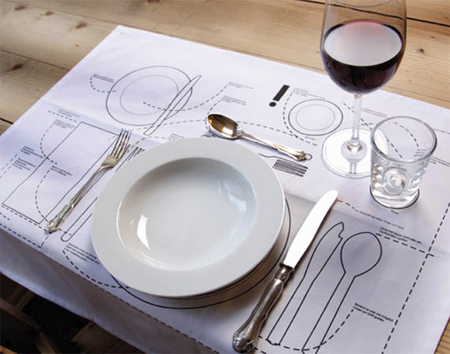
Useless kitchen stuff for morons

For those of you who follow my kitchen posts, be sure to check out The Motley Monk and his comments on useless kitchen gadgets morons might buy.

It’s a hoot.

For example:

and don’t forget…

And while this might be useful to instruct young people that, yes, we set the table in polite company, I object to the lack of indication for the cuillère à sauce individuelle!  

But we can adapt. 

We are flexible.

So it is not exactly for morons, if you get my drift.

Posted in Lighter fare |
13 Comments

USA Skype Number Repaired

I had a couple e-mails indicating that my USA Skype phone/voicemail number was not working.  The subscription had lapsed.

It is fixed.  I just called myself and left a voicemail.

UK number: 020-3239-5957
USA number: 1-651-315-8191
SKYPE: wdtprs

Posted in SESSIUNCULA |
Comments Off on USA Skype Number Repaired

Whither L’Osservatore Romano?

In the wake of the large gathering of altar servers, male and female, in Rome this last week, the Vatican’s newspaper L’Osservatore Romano has an essay by one Lucetta Scaraffia.

Lucetta Scaraffia is not a girl or young woman who was an altar server in the crowd who wrote an essay: "What I did on my summer vacation".  No, she has appeared in the electronic pages of this blog before (here).  This is from her bio on the Italian Wikipedia:  She was born in 1948, so she isn’t young.  She teaches at La Sapienza.   During the 60’s she left the Faith and joined a militant feminist movement.  Through her study of St. Rita of Cascia and St. Theresa of Avila reverted.  I am guessing this had something to do with the Communita di Sant’Egidio, since her recoversion was celebrated in some way at the the Basilica of S. Maria in Trastevere.  She is married to Ernesto Galli della Loggia, an editorialist for Corriere della Sera. 

Panorama had a longish interview with her entitled "I, a heretic, explain my conversion."

John Allen of the NCR saved me time by providing a translation of part of the recent essay in L’Osservatore Romano.

Here’s the relevant section from Scaraffia’s essay, in NCR translation to which I add emphases and comments:

"Being an altar server was always understood as a service but, at the same time, as a privilege, [to which no person has any right] because it leads one into the heart of the liturgical celebration, in the space of the altar, to direct contact with the Eucharist. [Which leads us to the question of why the priest’s hands are anointed, and the reason for a sanctuary in a church which is already a sacred space, and why only males are ordained and why the Lord was male.] The exclusion of girls from all this, for the sole reason of belonging to the female sex, [I don’t think this is a fair way to frame it.  There are other factors involved.] has always weighed heavily and signified a profound inequality within Catholic education, [education?  It is possible that the Italian "educazione" is to be taken here as more than what is supposed to happen in a school room.  "Educazione" has to do with the larger concept of upbringing.] which fortunately has been cancelled ["cancellata", maybe the impact of this is "corrected… eradicated"] by now for several decades. Even if perhaps many pastors have been resigned to altar girls only in the absence of available boys, for young women overcoming this barrier was very important, [For whom?] and in fact that’s how it’s been understood: the presence of a female majority at the tenth gathering of ‘ministrants’ which recently took place in the presence of the pope demonstrates it." [I don’t know what it demonstrates.  It might demonstrate that the boys were playing soccer or were hiking.]

[And we now careen into the thought of a feminist…] "For girls, entering into the space of the altar has meant the end of any attribution of impurity to their sex, [Does it?  I didn’t think this was really an issue.  But since L’Osservatore Romano brings it up, perhaps we ought to reexamine why God Himself gave divine positive laws in the Old Testament concerning these matters.  We live under the NEW covenant, of course.  But obviously God thought that the differences of sex meant something.] it’s meant the possibility of living this formative experience of extraordinary importance in religious education, [See what I mean about "educazione"?  If this is merely "education" in the sense of learning, then Mass is being reduced to a "learning experience".  But Mass is not a didactic moment, as if it were a tool of social formation.  I think to save this thought, that "educazione" has to be something like "upbringing".  Even then, there are questions raised.] and it’s meant a different kind of attention to the liturgy as well as coming closer to the faith by drawing near to its very heart."  [I hope the writer isn’t saying that in order to "draw near to [the liturgy’s] very heart" you have to be – at least – an altar server.]

I am not sure what L’Osservatore Romano is driving at here.

Perhaps we can go back to their essays on Michael Jackson, the Blues Brothers, etc. for a hermeneutic with which to read this.  Frankly, I prefer Romans 12:2.

L’Osservatore Romano last March published a piece by Lucetta Scaraffia which asserted that the clerical sexual abuse of minors would not have happened had there been a greater presence of women in leadership in the Church.  That assertion is, of course, specious.  Women have been abusers and women have also covered up abuse.  Just ask SNAP what it thinks about the cooperation they have received from the LCWR.  The seemingly anti-Catholic Irish Times published an edited version of Scaraffia’s piece in L’Osservatore.

Some time ago, Sandro Magister wrote a piece about how L’Osservatore Romano "broke a taboo" by printing something by Scaraffia about brain death and organ transplants.   Fr. Lombardi of the Press Office was quick to put some daylight between the Holy See and the newspaper (which raises a lot of questions), saying at that time that the article "is not an act of the Church’s magisterium, nor a document of a pontifical organism," and that the reflections expressed in it "are to be attributed to the author of the text, and are not binding for the Holy See."

She also has an interview on the site of Roma Sette of the Diocese of Rome.

An interesting figure.

But the fact that she is interesting doesn’t mean that L’Osservatore Romano is throwing out a lot of confused and confusing signals.

Posted in SESSIUNCULA |
32 Comments

Archbp. Burke describes why he built the Shrine to Our Lady – VIDEO

His Excellency Archbishop Raymond Burke, now Prefect of the Apostolic Segnatura, was once the Bishop of La Crosse.

During his time as bishop, he began the construction of a great shrine to Our Lady of Guadalupe.

The result is spectacular.   If you are ever in the area, you must visit.Twitter

Archbp. Burke returned to the Shrine this week for a Canon Law Conference.

During the course of the conference, His Excellency explained  why he build the Shrine.

UPDATE: I added a lower quality version, below.

BTW… Archbp. Burke speaks of the possibility that body of the late Fr. John Hardon, SJ might be eventually moved to the Shrine, if it is found to be opportune.   Fr Hardon’s Catechism (great for adults) was instrumental in my conversion to the Catholic Church.

Play

This little video, in which Archbp. Burke explains a project so close to his heart, really gives you a sense of the man’s intellect and piety.

Posted in Brick by Brick, New Evangelization, Our Catholic Identity, PODCAzT | Tagged , ,
18 Comments

Transfiguration

Today is the titular feast of the Basilica of St. John Lateran, the Cathedral of Rome.

"But Father! But Father", I can hear you objecting. "Don’t you know that that basilica is called ‘St. John‘? How can the Transfiguration of the Lord be the titular feast?"

Glad you asked. The real name of the Lateran Basilica is the Archbasilica of the Most Holy Savior, St. John Baptist and St. John the Evangelist at the Lateran. So, for a titular feast you really need a feast of the Lord.

While today is the main day for the basilica, they do make much over the two saints John as well. I do too. For my "onomastico", as the Italians call it, or "name day" I claim both the Baptist and the evangelist. That way I get two days in the summer (don’t forget the feast of the Beheading of St. John the Baptist) and one in the winter.

And let us not forget that the Lateran Basilica is a Major Papal (formerly Patriarchal) Basilica. There are lots of minor basilicas in Rome and throughout the world There were five Patriarchal Basilicas in Rome to go with the five ancient patriarchal sees, four major patriarchal basilicas and one minor. How did that happen? The patriarchs always were allocated (symbolically) a basilica in Rome, thus Constantinople, Alexandria, and Antioch, had St. Peter’s in the Vatican, St. Paul’s outside the walls, and St. Mary Major. When Jerusalem was added as a patriarchate it was assigned St. Lawrence outside the walls, though it remained a minor basilica.

The Bishop of Rome as Patriarch of the West had the Lateran Basilica obviously. And he still does, even though the Pope seems to have dropped the title of Patriarch of the West (remember that?). Interesting move that. It demonstrates how Pope Benedict is the Pope of Christian Unity.   Without changing anything of the substance of the office of the Bishop of Rome, Successor of the Prince of the Apostles, he is willing to set aside things that are non-essential for the sake of greater mutual good will.

Anyway, this is the titular feast of the Lateran Basilica.

The word transfiguratio is interesting in itself. In classical, post-Augustan Latin Pliny used this for “a change of shape”. However, that is not what happened with Christ on the mountain, probably Mount Tabor in Galilee not far from Nazareth.

What happened?

If we see Christ’s Baptism at the Jordan as the beginning point of His public life, and the Ascension as the end, then the Transfiguration its zenith.

The accounts of the Transfiguration are found in Matthew 17:1-6, Mark 9:1-8, and Luke 9:28-36. Also, 2 Peter 1:16-18 and John 1:14 refer to it.

Scripture tells us that a week or so after Jesus and the disciples were at Caesarea Philippi (where Christ gave Peter the "keys") Jesus took Peter, James and John to a high mountain. They were surrounded by a bright cloud, like that in which God spoke to Moses. Christ shone with light so dazzling it was hard to see. On either side of Him were Moses the Lawgiver and Elijah the Prophet. A voice was heard, as at the time of Jesus’ Baptism: "This is my beloved Son, with whom I am well pleased; listen to him". The Gospels of Matthew and Mark use the Greek word metemorphothe for what happened. St. Jerome in his Vulgate chose transfiguratus est. The Synoptic Gospels (Matthew, Mark and Luke) expand the event saying "his face did shine as the sun: and his garments became white as snow," or "as light," according to the Greek text. This brightness has been taken to be a glimpse of Christ’s divinity shining through His flesh. Christ allowed the three key Apostles to see this so as to strengthen them before His Passion soon to follow.

Getting back to the word transfiguratio, it clearly points to a dramatic change, though in Christ’s case not one of form or shape. The word is from the preposition trans with figura. A figura is “a form, shape” but also in philosophical language a “quality, kind, nature, manner”. Most interesting to me is the mean of figura as a “form of a word” or “a figure of speech”. Think of the Prologue of the Gospel of John 1:14, recited by priests for centuries at the end of Holy Mass: “we have beheld his glory, glory as of the only Son from the Father”.

In the Prologue of John the Evangelist says that Jesus the Son is the divine logos, the Word: “In the beginning was the Word….” A word is an utterance which projects the concept of the speaker. The Jews has used Hebrew memra, God’s creative or directive word or speech which manifests His power in the mind or in matter, as a substitute for the divine Name of God.

Jerome’s choice of a word with the root figura or “figure of speech” is very apt in many ways, and its draws our imaginations into the realm of God’s eternal uttering, His eternal rhetoric.

COLLECT (Transfiguration):
Deus, qui fidei sacramenta
in Unigeniti tui gloriosa Transfiguratione
patrum testimonio roborasti,
et adoptionem filiorum perfectam mirabiliter praesignasti,
concede nobis famulis tuis,
ut, ipsius dilecti Filii tui vocem audientes,
eiusdem coheredes effici mereamur.

LITERAL VERSION:
O God, who in the glorious Transfiguration
of your Only-begotten Son
strengthened the sacrament of faith by the witness of the fathers (Moses and Elijah),
and in a marvelous way foreshadowed the perfect adoption of children,
grant to your servants that,
hearing the voice of Your beloved Son himself,
we may merit to be made the same Son’s coheirs.

In the Transfiguration, God reveals more fully the Sonship of Jesus and, thus, reveals in Jesus, our own sonship.

When the Father reveals the Son as Son, He is telling us about His own life, how He generates the Son and how the Holy Spirit from all eternity is the love between them. Fortified with this knowledge, we can participate in the life of the Trinity in a fuller way. Because of our unity with Christ in our common human nature, the way to divine sonship is opened up. He is the Father’s Son by nature, but we by grace. God makes us His children through a perfect adoption… adoptio perfecta. From God’s point of view, it is perfect (“brought to completion”) because God puts His seal and mark upon us. From our point of view, it will be perfect only when we see God face to face in heaven.

Because of this adoption, the adoptio filiorum and adoptio perfecta, an eternal inheritance awaits us. We merit a patrimony.

St. Leo the Great (+461) said in a sermon (s. 51):

“In this mystery of the Transfiguration, God’s Providence has laid a solid foundation for the hope of the Church, so that the whole body of Christ may know what a transformation will be granted to it, and that the members may be assured that they will be sharers in the glory which shone forth in their Head.”


We are already sons and daughters by God’s adoption, but that sonship is not yet completed.

We lack the final essential component: perseverance in faith and obedience for the whole course of our lives. Even the Apostle Peter, his eyes dazzled by the Lord on Mount Tabor, failed to see what was happening. The great St. Augustine in a sermon on the Transfiguration (s. 78, 6), addresses Peter, and through Peter he really addresses us: “Descend the mount, O Peter. You wanted to rest on the mountain. Come down.”

We still have work to do in this life before we can rest.

Citing the same passage of Augustine the CCC 556 takes up this same theme:

Peter did not yet understand this when he wanted to remain with Christ on the mountain. It has been reserved for you, Peter, but for after death. For now, Jesus says: “Go down to toil on earth, to serve on earth, to be scorned and crucified on earth. Life goes down to be killed; Bread goes down to suffer hunger; the Way goes down to be exhausted on his journey; the Spring goes down to suffer thirst; and you refuse to suffer?”

You might also be interested to look at the entry for the 4th Luminous Mystery: Transfiguration in the Patristic Rosary Project.

Posted in SESSIUNCULA, WDTPRS | Tagged
5 Comments