QUAERITUR: a blessed object as a raffle prize

From a reader:

We recently had a bingo at our parish and the main prize for a raffle was a beautiful portrait of Our Lady of Guadalupe. Prior to the bingo, the portrait was blessed by a priest. I know sacramentals can’t be sold (that’s why they are blessed after the item is sold), would the same rationale apply for a raffled item? Thanks.


I suspect that there was no intention on the part of the priest to cause confusion.  The fact that he wanted people to know that the image was blessed is a clue that he has a good understanding that blessings are important.

I cannot tell the difference between a direct sale of a blessed image, and, on the other hand, an auction or a raffle.

We may not sell objects which are in themselves holy things (the Blessed Sacrament, relics) or things which have been consecrated or blessed (sacramentals, etc.).   The sale of things which are in themselves holy is the sin of sacrilege.  In the case of the sale of the Blessed Sacrament there is an automatic excommunication and the sin falls in the category of graviora delicta, more serious crimes, which have been in the spotlight recently.  The sale of blessed objects causes them to lose their blessing and gives the impression that holy objects are for those who can afford them, or that holy things can be the objects of commerce.

I recommend that the person who obtained the painting take it to be blessed again.   Also, in the future, should there be such a raffle, the priest should bless the objects after people have taken possession of them.

Posted in ASK FATHER Question Box | Tagged , ,
4 Comments

Another note about UPS units

I have had another nasty surprise.  I have written elsewhere about the need for UPS units.

A large UPS unit that was playing a critical role in my network was done in at some point, I am guessing a recent storm that got a different unit elsewhere in the house.

Alas, this was a large ULTRA 2000 unit.

I noticed a flashing light. I determined after tinkering that it was not charging. I just got off the phone with their customer service.  (There was no online support or manual, etc.)

Bottom line: ULTRA is not going to replace the unit.

My editorial observation.

I have never had any problems getting batteries or units replaced by APC, if you get my meaning.

ULTRA and TIGER DIRECT are sister companies.

I will now buy or wish for only APC UPS units.

I am hoping that the large and rather heavy black paperweight which decorates my floor will still act as a good surge protector.  I can at least move it to equipment which doesn’t absolutely demand uninterrupted power.

Finally, I am deeply grateful to the person who sent me this unit.  I think it must have died doing its job.  It protected equipment.  This unit was protecting my router and large switch, network remote power controller, internet phone base and slingbox: the sort of stuff that gets screwed up when there are power losses. That’s what they are for!

Posted in SESSIUNCULA | Tagged ,
6 Comments

Prayer request

May I request your prayers for a few personal points?

First, I feel as if I may be coming down with something

Second, I had some car trouble today: please let it not be serious.  (I think you can pray for that sort of thing.)

Third, an important private intention.

Thanks in advance!

Posted in SESSIUNCULA |
31 Comments

QUAERITUR: Priest in confession doesn’t ask for Act of Contrition

From a reader:

My parish pastor forgets to ask me to say the Act of Contrition after I’ve finished my Confession.  (I should note that he is from Cuba and that he does not speak English well at all, although he does read the Absolution in English and I can understand it.) 

Should I add it in somewhere – at the beginning or at the end – or just say it to myself before I go into the Confessional?  Has my Confession been valid if I haven’t said the Act of Contrition? 

(I am a convert, and didn’t have any instruction on how to make a good Confession.  I’m just trying to educate myself so I can receive all of God’s graces, since I really need them.)

Thank you for being so interested in receiving absolution properly and receiving the graces from the sacrament.  Would that all priests were so diligent.
 
The main point of the Act of Contrition (which everyone should know – and I think the traditional version is best) is to give the priest confessor the assurance that you are sufficiently sorry for your sins and purpose of amendment so that he can give you absolution.  If a priest is not sufficiently assured that the "penitent" is really penitent, he cannot absolve.  So, the Act of Contrition expresses both a less perfect sorrow for sin (dread of the loss of heaven and the pains of hell) and a more perfect sorrow (because God is worthy of love) and also a purpose of amendment. 

It is all packed into that excellent little formula which is so easy to memorize.

If the priest is sufficiently assured that you are sorry and have a firm purpose of amendment even without hearing you say the Act of Contrition, he can absolve.

However, the priest in this case perhaps is unaware of the expectations and customs of confessing penitents in the USA.  He should be informed that it is expected that the priest invite the penitent to say the Act of Contrition, or at least start it, before he begins the form of absolution.

If you are concerned, you can always say your Act of Contrition after telling your sins even before you hear the priest’s counsel.  Perhaps if enough people do that, he will get the hint.   Otherwise, if you are doing your best to confess all your mortal sins, you are sorry for having committed them, and you are resolved not to commit them again, you are good to go!

Good to go after absolution and saying "Thank you!", of course!

"But Father! But Father!", I can hear some curious readers exclaiming. "You mention the Act of Contrition you prefer, but you only hint at what it is.  Tell us!  Which one do you use?"

This is what I say:

O my God, I am heartily sorry for having offended Thee and I detest all my sins because I dread the loss of heaven and the pains of hell, but most of all because they have offended Thee, my God, Who art all good and deserving of all my love. I firmly resolve with the help of Thy grace to confess my sins, to do penance, and to amend my life. Amen.

Posted in "But Father! But Father!", "How To..." - Practical Notes, ASK FATHER Question Box | Tagged , ,
49 Comments

Webcams: R.I.P.

The webcams for the birdfeeders… the cams I had outside… survived the elements for a long time.

They died in a recent storm.

Only the internal cams are left.   I have pointed them to the small feeder attached to my office window, but I no longer can provide a good view of the other hanging feeders.

I found in searching for the cheap 5.0 megapixel cams, that there are now cheap 12.0 megapixel cams ($8).  The 5MPs gave a very clear image.  The drawback was that they are made for low light.  When there is direct sun they wash out pretty much completely.  The more expensive cams adjust for light.  But the cheap price on the cams makes it possible to put them outside without much worry.  These last two endured pretty brutal conditions for a long time.  I have an idea about how to protect them further.  Furthermore, the 12.0 cams have built in mics, whereas the 5.0’s did not.

Technology is great, when it works.

UPDATE: A kind soul, and obviously birdwatcher, W, has notified me that new webcams are on the way!

AN ASIDE: The Google thingy on the side bar shows that there are nearly 600 followers.  That’s a hint.  Also, follow me on Twitter: @fatherz

ANOTHER UPDATE:

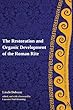
I received today from the great Roman, FA, Laszlo Dobszay’s The Restoration and Organic Development of the Roman Rite.  In the finest Roman style, FA sent not only food for the mind and soul, but food for the body as well.  Included in the shipment was a sixpack… of packets of linguine!

And I want to assure FA that I was paying attention.  No sooner did I start playing with the plastic bad it came in, but I noticed that there was a stern warning on the bag itself: THIS BAG IS NOT A TOY.  I immediately stopped playing with it.

Given the great FA’s sense of humor. however, I am surprised that he did not send me strozzapreti.

Thanks, FA! 

Posted in SESSIUNCULA |
9 Comments

Card. Canizares suggests lowering age of First Holy Communion?

This is worth a discussion.

I am not sure, but perhaps His Eminence is overly optimistic about the state of catechism today and the competence, therefore, of most parents to catechize their very young children?  

They need to be prepared for first confession before first Holy Communion too, right?

From CNA:

Vatican prefect says today’s world merits lower age for first communicants

Rome, Italy, Aug 9, 2010 / 05:15 am (CNA/EWTN News).- Children must not be deprived of the Eucharist, source of grace and assistance to them as they begin their walk with Jesus, stressed the Vatican prefect of the congregation for sacraments. In an article in L’Osservatore Romano to mark the 100-year anniversary of a papal decree which lowered the age of first communicants, Cardinal Antonio Cañizares underscored that children should still be allowed to receive the Eucharist as soon as they are able[Sounds about right.  As soon as they are able.]

The Vatican newspaper published an article by Cardinal Antonio Cañizares, the prefect of the Congregation for Divine Worship and the Discipline of the Sacraments, titled "Jesus and the Children" on Sunday. In it, the cardinal remembered Pope St. Pius X’s "Quam singulari" decree from Aug. 8, 1910 which gave children the ability to receive the Eucharist once they had reached the "age of reason," deemed then at around seven years of age.

"With this decree … he taught the entire Church the meaning, the opportunity, the value and the centrality of Holy Communion for the life of all of the baptized, including children," wrote the cardinal prefect of St. Pius X.

"At the same time, he underscored and reminded everyone of the love and the predeliction of Jesus for children … ," added the cardinal, noting in from Bible passages that the youngest "are always very special friends of the Lord."

Emphasizing that there is "no greater love, no greater gift" than that of communion, he said that being with the Lord is "worth more than every other thing in the life of each man" and first communion, as the beginning of our "walk together with Jesus" should not be put off. [And FIRST PENANCE before First Holy Communion.]

"We cannot, (by) delaying first communion deprive children … of this grace, work and presence of Jesus, of this encounter of friendship with him, of this singular participation of Jesus himself to be able to mature and thus reach fullness."

In today’s world, he said, children are in great need of this sacrament and, "thanks to their immaculate and open souls," no one is more disposed than them to the union, friendship, strength and presence it offers.

Citing the 100th anniversary of Pope Pius X’s decree as a "providential occasion to remember and insist" on the fact that children can receive communion from the time they are able to reason, Cardinal Cañizares said that rather than continuing a trend which sees children receive communion ever later, if nothing else, today they should be able to receive it earlier than ever. [I am not so sure about that.  Are children better able to reason today than 100 years ago?  OR am I reading this wrong?  I get the sense from the English here and the original Italian that perhaps the Cardinal Prefect is suggesting that the age for Communion should be even before 7 years.]

"In the face of what is happening with children and to the very adverse environment in which they grow up, [An environment which perhaps stiffles their ability to reason?] let’s not deprive them of the gift of God," he concluded, " … it is the guarantee of their growth as children of God, generated by the sacraments of Christian initiation in the bosom of the holy Mother Church. The grace of of the gift of God is the most powerful of our works, and of our plans and programs."

And, today, he said, as Pope Pius X urged a century ago, "we must accompany this same ‘anticipation’ of age with a new and vigorous pastoral plan of Christian initiation."


Once upon a time in the USA, children organized their own games and were creative in their activities.   Does it not seem today that, when they are not being managed, they are stuck in front of a screen of some sort?

What does that do to "the ability to reason"?

Discuss.

UPDATE 1917 GMT:

The CNS coverage of this story assumes that Card. Canizares was suggesting 1st Communion "even before 7"
 

Posted in The Drill | Tagged , , ,
119 Comments

WDTPRS: 19th Sunday of Ordinary Time – COLLECT: sheer audacity

Let’s have a look at this daring prayer.

COLLECT – (2002MR):
Omnipotens sempiterne Deus,
quem paterno nomine invocare praesumimus,
perfice in cordibus nostris spiritum adoptionis filiorum,
ut promissam hereditatem ingredi mereamur
.

The Latin prayer was not in previous editions Missale Romanum before the 1970 Novus Ordo.  It has roots in the 9th century Sacramentary of Bergamo and thus is ancient text.  

Paternus, a, um is an adjective, “fatherly”.  Literally, a paternum nomen would be “Fatherly name”.  In English we need to break that down a little, just as we do with the Latin for “Sunday”: dies dominica or “lordly Day” in place of what we say “the day of the Lord”. In English a paternum nomen is “the name of Father”.  Latin uses adjectives and adverbs for more purposes than we do.  Our trusted old friend Lewis & Short Dictionary informs us that invoco means “to call upon, invoke” especially as a witness or as aid.  So, there is an element of urgency and humility in the word.   Praesumo gives us the English word and concept of “presumption”.  At its root it means, “to take before, take first or beforehand.”  The adverb and adjective prae, the prefix element of prae-sumo, is “before, in front of, in advance of”.  In a less physical sense it can mean “anticipate”, in the sense of “to imagine or picture to one’s self beforehand” or in a moral nuance “to presume, take for granted”.   It is even, more interestingly, “to undertake, venture, dare” together with “to trust, be confident”.  

LITERAL TRANSLATION:
Almighty eternal God,
whom we presume to invoke by the name of Father,
perfect in our hearts the spirit of the adoption of children,
so that we may merit to enter into the inheritance promised
.
 
Notice that I translate filii as “children” rather than as just “sons”, according to the literal meaning.  Latin masculine plurals, depending on the context, can also include females even though the form of the word is masculine.

During the Holy Mass, through the words, actions and intentions of the ordained priest, as a Church we presume with trusting audacity to consecrate bread and wine and change them substantially to the Body and Body of the Second Person of the Trinity.  

We do this because Jesus commanded us to do so, but it is a harrowing and consoling undertaking all the same. 

We are laying hands upon truly sacred things, the most sacred things there can be: Christ’s Body, Blood, soul and divinity. 

What could be more presumptuous? 

Two sections of the great Corpus Christi sequence by St. Thomas Aquinas (+1274) remind us of what is at stake when we approach the Blessed Sacrament for Communion (not my translation):  

“Here beneath these signs are hidden
priceless things, to sense forbidden;
signs, not things, are all we see.
Flesh from bread, and Blood from wine,
yet is Christ in either sign,
all entire confessed to be.
… Both the wicked and the good
eat of this celestial Food:
but with ends how opposite!
With this most substantial Bread,
unto life or death they’re fed,
in a difference infinite.” 

That last part bears repeating:  “Mors est malis, vita bonis: / vide paris sumptionis / quam sit dispar exitus."  

Eternal death for the wicked if they receive Communion improperly.  Eternal life for the good if they receive well.  See how dissimilar the different outcomes from the same act of Holy Communion can be?  This is good to ponder during Mass and the lead up to Mass:

Am I properly disposed to receive what Christ and the Church have promised are truly His Body and Blood?  Do I dare receive?  When was my last good confession?

Immediately after the Eucharistic Prayer but before our intrepid reception of Communion, we dare to pray with the words that the same Son taught us.

In introducing the Lord’s Prayer the priest says in Latin, “Having been instructed/urged by saving commands and formed by divine institution, we dare/presume (audemus) to say, ‘Our Father…’”.   Audeo is “to venture, to dare”, and in this it is a synonym of praesumo.   Jesus taught us to see God as Father in a way that no ever one had before.  Christ revolutionized our prayer.  In our lowliness we now dare to raise our eyes and venture to speak to God in a new way.  We come to Him as children of a new “sonship”.  

We learned from our examination of the Collect for the Third Sunday of Easter that adoptio is “adoption” in the sense of “to take as one’s child”.  We find the phrase in Paul: adoptionem filiorum Dei or “adoption of the sons of God” in the Latin Vulgate of Jerome (cf. Romans 8:23; Galatians 4:5; Ephesians 1:5).  

We do not approach God as fearful slaves.  We are now also able to receive Communion with reverent confidence provided we have prepared well.  God has done His part.

ICEL (1973 translation of the 1970MR):
Almighty and ever-living God,
you Spirit made us your children,
confident to call you Father.
Increase your Spirit within us
and bring us to our promised inheritance
.

Take careful note that the language of adoption has been expunged.  Does this change the impact of the prayer?  Does it present a different view of the Christian life than that presented in the Latin Collect?   

An important element of our Collect comes from Paul: “For you did not receive the spirit of slavery to fall back into fear, but you have received the spirit of sonship.  We can invoke God the Father with confidence, not fear, when we cry, ‘Abba! Father!’” (Romans 8:15… and “Abba” does not mean “daddy”).  

God will come to us not as a stranger God, but as a Father God.  What God does for us is not cold or impersonal.  It is an act of love.  Even in commanding us God the Son did not mean to terrify us into paralysis.  This, however, was the result for some who, when hearing Christ’s teaching about His flesh, left Him because what they heard was too hard (cf. John 6).   We need not be terrified… overwhelmed with awe, certainly, but not by terror.

Warned, urged, instructed by a divine Person who taught us with divine precepts, let’s get straight who our Father is and who we are because of who He is.   We are children of a loving Father.  He comes looking for us to draw us unto Him because of His fatherly heart.  The Holy Father Pope John Paul II wrote for the Church’s preparation for the Millennium Jubilee: “If God goes in search of man, created in his own image and likeness, he does so because he loves him eternally in the Word, and wishes to raise him in Christ to the dignity of an adoptive son” (Tertio millennio adveniente 6).  

As God’s adopted children we have dignity.  The adoption brought by the Spirit is not some second rate relationship with God or mere juridical slight of hand.  It is the fulfillment of an eternal love and longing.  This is a primary and foundational dimension of everything we are as Catholic Christians.  It is perhaps for this reason that that the Catechism of the Catholic Church speaks so clearly to this point, in the first paragraph.

The adoption we speak about in this Collect is something far more profound than a juridical act by which one who is truly not of the same blood and bone is therefore considered, legally, to be so.  Indeed some Protestants see our return to righteousness in God’s sight, that is, justification through baptism, in these terms: a sort of legal sleight of hand whereby we remain in reality guilty and corrupt, but our disgusting sinful nature is ignored by the Father because the merits of Christ are interposed between His eyes and our debased nature.  

However, we know by divine revelation and the continuing teaching of the Christian Church that by baptism more than a legal fiction takes place. 

We are more than justified, we are sanctified.  

Something of God’s divine grace is transferred to us, infused into our being so that we truly become sons and daughters of Almighty God, transformed radically from within, as members of Christ’s own Mystical Person.  Thus, we too share Christ’s sonship.  It is almost as if God infused His own DNA into us to make us His own in a sense far beyond any legal adoption could accomplish.  Astonishingly, this transformation alters who we are without removing our individuality or dignity as persons.  We are His and unified as One in Christ, and yet we remain ourselves.  We are integrated into a new structure of Communion, indeed a new family.  By our discordant actions we can make this earthly dimension of our supernatural family, our Church, dysfunctional.  

What a mystery it is that God, who lavishes upon us the mighty transforming graces we all have known and profess to love, leaves also in our hands the freedom to spurn Him and trivialize His gifts.  This freedom, itself a gift, could only be a Father’s gift to beloved children.

Posted in WDTPRS |
19 Comments

Sunday Supper 6 – Who knows? I now know… SALMON!

I am contemplating Sunday Supper 6.  I have had no time to shop and the Sunday company will be bringing groceries: mystery groceries.

Therefore I will be punting. 

But I have dragged out my big sauce book, which I haven’t used forever.  (Amazon shows that it is now in a 3rd printing and has a fancier cover.  But it is still enormous.) 

I will be flipping through and contemplating what to make if beef shows up, or pork, or fish, etc.

Veg and probably dessert will come from the garden.

UPDATE: The mystery ingredient was salmon – wild Koho Salmon.

What to do?

First stuff from the garden.  I turned to Julia Child’s volume 2 and found a recipe for Courgettes en Pistouille, which is based on an eggplant recipe.  Essentially you get the moisture out of zucchini and, in the meantime, create a base of sauteed peppers and onions, and tomato pulp.  You add a paste of garlic and basil to the sautee and then mix in your browned zucchini.

It is necessary to get a lot of the moisture out of the zucchini, or eggplant, etc. 

Peel the zucchini and cube and coat with salt.

After a while you can see the moisture gathering at the bottom. 

You do this so that when you cook it it won’t turn to mush.

In the meantime, I sweated together onions and peppers and tomatoes, all from the garden.

After browning the zucchini in olive oil, I combined them with a paste I made from garlic and fresh basil (from the garden).

Later I would add chopped parsley (from the garden). 

Dry your fresh herbs before you chop them so they don’t lose that immediate essential flavor into the water around them.

In the meantime I am making the sauce for the salmon.

Various stages are needed for this Coriander-Scented Clam Sauce.

You start a court-boullion of fennel and wine.  Reduce and later strain.

Start another pan of mushrooms and clam juice.  Reduce and strain.

Later, combine the two and reduce, whisking in heavy cream and the ground coriander with lemon juice (I didn’t have verjuice).

The coriander is also from the garden.

I used some of the fennel for a base for the salmon, white wine, and a touch of tomato paste.  I tented it and put it in the oven at 350F.

Now I am whisking in the cream and coriander.

I will strain this.

The straining was a problem.  I need a chinois.  I used a mesh coffee filter, but it was awkward, to say the least, and time consuming, which was worse.

Eventually, I got it all together with some chopped flat-leaf parsley.

This was served with Sauvignon Blanc.

I think, in retrospect the sauce was a bit too intense.  Next time I make it I will not reduce it so severely in its stages.

Also, I think I could have gone with a less aggressive bain for the salmon, but it was perfect.

The Sauvignon Blanc was from Frog’s Leap…. [insert shrug here] … ehhhhh.  Okay.  I would have preferred a Kim Crawford with less wood.

Sundays are special days.  Invite people.  Make a meal.  Sit together.  Eat together.  Do the work together.

It doesn’t have to be stuff like this, of course.  The important thing is that you are together.  I worked as a cook so some things come easier.  Stretch yourselves.  It really isn’t that hard.

And as the old Latin phrase goes:

Fabricando fabri fimus.

Perhaps this should be coquinando coqui fimus?

Yes, it should be. 

Posted in Fr. Z's Kitchen |
35 Comments

Stingy schedule for confessions in parishes and “New Evangelization”

During the summer months, I often mention in sermons the need for confession.  Summer is not vacation time from the sacrament of penance.   In the busy weeks and long lingering days – now getting shorter –  people must make time for this important aspect of our salvation.  

It’s only our salvation at stake.  Both the salvation of souls of lay people and the salvation of souls of the priest confessors themselves.

My ASK FATHER entry ("Quaeritur") from a lay person asking about the lack of confession times, prompted not only lots of comments, but also emails, from lay people and from priests.

Here is a note I received from a priest reader (my emphases and comments):

That’s an issue [lack of scheduled confession times] I’m dealing with here in my new assignment.  The previous pastor had Confessions scheduled at 5 PM, with Mass at 5:30 PM.  Oh, and Confessions "by appointment", of course.  The parishioners tell me that he was rarely, if ever, actually in or near the confessional at 5, and was usually busy getting things ready for Mass at 5:15.  One of the first changes I made, by the way, was to move Saturday confessions to 4 – 5 PM, and I will be there every time it’s scheduled
In addition, appointments are still welcomed.

I’m sure the official reason for the limited availability was lack of demand for the sacrament, but I don’t think that was the only reason. 

Yesterday, a parishioner told me that they hadn’t heard any homilies calling something a sin throughout the previous pastor’s tenure in this parish.  Why weren’t parishioners making use of the sacrament?  They don’t believe that sin exists any more.  Why don’t they believe that sin exists any more?  Father wasn’t preaching on it. [Do I hear an "Amen!"?]

[QUAERITUR:] How do we as priests fix this problem? 

First, preach on sin and the necessity of Confession.  Sin exists, and it is a serious matter that is being ignored in our culture.  If we don’t preach on it, the parishioners won’t hear it. 

Second, make Confession times convenient for your parishioners, publicize them as widely as possible, and be there.  Even if you spend the hour praying and doing spiritual reading, the parishioners need to be sure you’ll be in the Confessional when they come.  If you’re not there when they show up, they may not be as persistent as the reader above.  They might come back a second time. 
Maybe, but it’s more likely that they won’t even bother.  If you don’t make Confession a priority, they won’t either.

This is a problem which puts the souls of our parishioners at risk.  We as priests need to do everything we can to eliminate this problem.

My priest correspondent has hit the nail directly on its little flat button.

And this tale he tells is not rare.

I was once in a parish where the pastor clearly had contempt for confessions (and for priests who wanted to receive them).  They were scheduled for one half hour before the Saturday evening Mass.  The priest who was to say the Mass was to hear confessions.  But, he demanded that the priest be in the sacristy 15 minutes before Mass.  That cut the time in half.  Furthermore, he not only had me in residence, but invited in an old friend to say the Saturday Mass every third week.  That meant that I would have the chance to hear confessions for 15 minutes every three weeks.  There were always lines at my confessional.  People would beg me to hear longer when I got out to go to the sacristy.  Once I did hear longer, until about 5 minutes before Mass.  The pastor screamed at me – literally screamed – in the sacristy, in front of lay people, using vocabulary that verged on violating the 1st Commandment as well.  Not only a control freak, but a sign of his hatred for the confessional (and for me). This is the situation for many a younger priest under the eyes of aging-hippie pastors.   This is the state of affairs of lay people as well.  I am often amazed that so many people are still as faithful as they are, given what we priests have done to them for so many years.

By contrast, I know a priest in his 80’s who hears confessions before every daily morning Mass and before all Masses on Sundays.  And when there is a visiting priest to help with Sunday Masses, he hears confessions during Mass (which is both licit and laudable) up to the Offertory.

If priests are reading this – and you are – consider well your own salvation in attending to the confessions of the faithful.

In the Rite of Ordination as renewed by Pope John Paul II in 1990, the bishop asks the ordinandi a question:

Vultis mysteria Christi ad laudem Dei et sanctificationem populi christiani, secundum Ecclesiae traditionem, praesertim in Eucharistiae sacrificio et sacramento reconciliationis et fideliter celebrare?

Lay people reading this, perhaps may begin politely asking priests to preach about sin and confession and expand the hours.  And Then Go.

Repeat to yourselves:

New Evangelization… New Evangelization… New Evangelization…

Posted in "How To..." - Practical Notes, New Evangelization, Our Catholic Identity, SESSIUNCULA | Tagged ,
128 Comments

Dropping “Patriarch of the West” and changing titles of Roman Basilicas to “Papal”

Under another entry I had mentioned the move made by Pope Benedict a few years ago to change the titles of Major Roman Basilica’s from "Patriarchal" Basilicas to "Papal" Basilicas.  He left aside his title "Patriarch of the West". Commentators leapt on that issue, and so derailed the entry.

But I sense that there are some rich possibilities for discussion in the Holy Father’s moves.

Benedict XVI is the Pope of Christian Unity.

So, I open this entry with the purpose of providing an amicable discussion about the reasons behind and effects of Pope Benedict’s move to alter the titles of the Basilicas and to leave aside his title as Patriarch of the West.

Was this a helpful decision for ecumenical purposes?

Was this merely something internal to the West, Latins?

What theological implications could those changes have or represent?

Discuss.

Posted in Pope of Christian Unity | Tagged ,
68 Comments