 From time to time the question of female servers for the Extraordinary Form of the Roman Rite pops up in my inbox. Yes… Extraordinary Form or TLM
At present, the 1983 Code of Canon Law is interpreted such that females can substitute for installed acolytes (exclusively male). That is to say males always and at times females – in those areas where the bishop permits it and where the priest wants it – can substitute for the officially installed acoylte (an all male ministry).
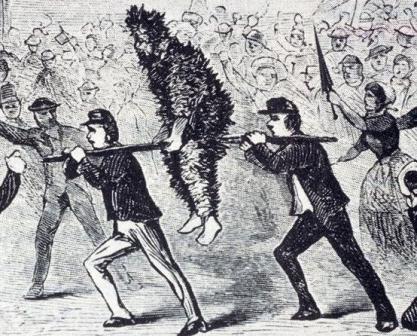
Here at WDTPRS I concluded a long time ago that, the present law being in force, yes, it would be licit for females to serve at a TLM, but … I wouldn’t give much for the life of the priest afterward. That tar and those feathers are pretty tough to remove, I hear.
Furthermore, according to the present law, male servers are the norm and female servers cannot be imposed on a priest’s celebration of Holy Mass. Moreover, the local diocesan bishop can decide whether or not female servers will be permitted in his diocese.
Thus, there is no obligation to have female servers at any celebration of Mass, nor is it – in my opinion – desirable in most cases. Those cases certainly include the TLM.
Now this comes from ZENIT with my emphases and comments.
Female Servers in the Extraordinary Form
And More on the Blessed Sacrament
ROME, SEPT. 8, 2009 (Zenit.org).- Answered by Legionary of Christ Father Edward McNamara, professor of liturgy at the Regina Apostolorum university.
Q: Is there any definitive answer available [no] regarding the use of female servers at celebrations of the extraordinary form of the Roman rite? — A.J., Pontypridd, Wales
A: Although a clarifying instruction on several such questions was frequently described as "imminent," a long time has passed and it would seem that it is still in the pipeline.
All the same, it is important to remember that, even in the ordinary form, the use of female altar servers is in virtue of a specific permission and is not automatic. As the Holy See has explained on several occasions, the local bishop may permit the use of female servers but may not oblige the pastor to use them.
Also, the Holy Father’s motu proprio granting permission for the celebrations of the extraordinary form was for the Roman Missal according to the edition issued under Pope John XXIII. Since the rubrics of this missal in no way contemplate the possibility of female servers, then it must be surmised that only altar boys or adult men are allowed as servers in the extraordinary form of the Roman rite. [Let’s see if he can be convincing.]
To help us to understand the underlying logic behind this we can reflect on a particular situation.
It appears there was at least one case in which women were allowed some functions habitually carried out by the servers. In the preface to the 1936 first edition of H.E. Calnan’s guide for altar servers, he mentions the following circumstance: "In most parishes, a dozen influences combine to restrict the supply of efficient Mass servers. Layfolk must be asked to serve at short notice, or without warning. A woman with knowledge of Latin may venture, because she has only to answer and not to move about."
The case foreseen here is when there were no assigned altar servers present. In such a plight a woman with knowledge of Latin could do the responses. [And only the responses.]
A woman could carry out this role because it was properly speaking a role of the assembly. [Some will disagree with that, of course.] In making the Latin responses the altar boys in a way represented and substituted the assembly, who frequently did not know the liturgical language. One of the challenges of being an altar boy (and a source of legitimate pride to his parents) was memorizing the Latin texts to be recited.
However, years before the conciliar reform there was already a liturgical movement that encouraged the whole assembly’s recitation of these parts, and not just the server. This practice is relatively common today among communities that habitually celebrate the extraordinary form. [But not universal.]
Father Calnan’s mention that the woman "has only to answer and not move about" makes it clear that she did not carry out any of the other functions of the altar boy in serving the Mass. Since in these roles the altar servers substituted some of the functions of those who had received minor orders (and who were thus canonically numbered among the clergy), only males could carry out these functions.
[And here is the sticky point…] In the ordinary form the clerical minor orders have been replaced by the lay ministries of lector and acolyte. However, even though they are lay ministries, only males may be instituted as lectors and acolytes. Since instituted lectors and acolytes are uncommon in most parishes, other lay readers and servers may be delegated. At this stage the rubrics allow either men or women to be chosen as readers and, were permitted, as servers. [And there, friends, is the smoking gun, I’m afraid.]
In the extraordinary form, though, the minor orders and the liturgical logic behind them still exist. For this reason I would say that in this form the rule reserving altar service to boys or men remains in force.
Well… then I suppose Fr. McNamara would also conclude that it is proper, nay rather, necessary for priests to deny people Communion in the hand during celebrations of the TLM, even if in that region the bishops have (alas) given approval to the practice.
I think the difference in our opinion lies in the fact that, as I see it, Summorum Pontificum did not revive all the old decrees of the Sacred Congregation of Rites. I think we have to be guided closely by those old decrees – otherwise we have very little to go by. Those decrees existed to fill in ambuguities and they were developed over a long time.
That said, the present 1983 Code is in force in the Latin Church.
Finally, having altar girls at a TLM or Communion in the hand for that matter, as so contrary to the spirit of the moment that I have a hard time imagining who would want those aberrations: for that is what they are – aberrations from the norms. I can imagine some goofy priest who thinks he is being clever and is going to stick it to the TLM group, but… as I said at the top, that whole tar and feather thing has a pretty bad reputation.
Old posts about female servers:




 From time to time the question of female servers for the Extraordinary Form of the Roman Rite pops up in my inbox. Yes… Extraordinary Form or TLM
 In his latest piece for the dissenting, ultra-liberal



 fac on Daily Rome Shot 1118 – Paddywhack!: “Speaking of the disputatio back on October 31st between Archbishop Vesco and Bishop Barron (Vesco saying the Catholic Church was…”




























