Are funerals really no longer for the purpose of praying for the soul of the deceased?
Do the dead no longer need prayers?
I’m just askin’
What are funeral Masses for?
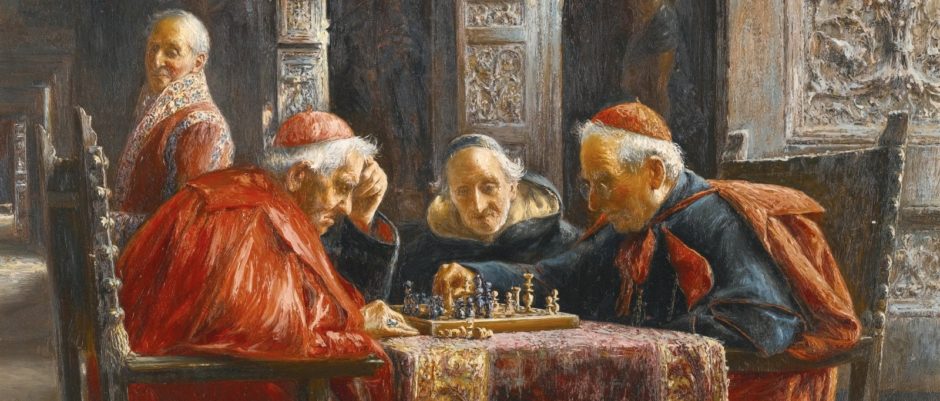
Are funerals really no longer for the purpose of praying for the soul of the deceased?
Do the dead no longer need prayers?
I’m just askin’
What are funeral Masses for?
I have successfully rebuilt the most important part of the mothership. It has been a real anabasis.
However, I am now trying to figure out how to restore files from a shadow backup, in a .vhd file.
The Vista program with which it was made, won’t recognize it.
Cool, huh? Really useful feature.
Today’s liturgy, on this feast of the Beheading of John the Baptist, perhaps has something to say about what we are witnessing in another sphere.
From the Office of Readings a selection from Ven. Bede in which we read:
His persecutor had demanded not that he should deny Christ, but only that he should keep silent about the truth.
Here is a reallllly good idea.
From CNET with my emphases and comments:
August 28, 2009 12:34 AM PDT
Bill would give president emergency control of Internet
by Declan McCullaghInternet companies and civil liberties groups were alarmed this spring when a U.S. Senate bill proposed handing the White House the power to disconnect private-sector computers from the Internet. [Get that? "private-sector computers"]
["But Father! But Father!", you are saying. "Who is behind that!"] They’re not much happier about a revised version that aides to Sen. Jay Rockefeller, a West Virginia Democrat, have spent months drafting behind closed doors. CNET News has obtained a copy of the 55-page draft of S.773 (excerpt), which still appears to permit the president to seize temporary control of private-sector networks during a so-called cybersecurity emergency. [So… in the interest in national security…]
The new version would allow the president to "declare a cybersecurity emergency" relating to "non-governmental" computer networks and do what’s necessary to respond to the threat. Other sections of the proposal include a federal certification program for "cybersecurity professionals," and a requirement that certain computer systems and networks in the private sector be managed by people who have been awarded that license.
"I think the redraft, while improved, remains troubling due to its vagueness," said Larry Clinton, president of the Internet Security Alliance, which counts representatives of Verizon, Verisign, Nortel, and Carnegie Mellon University on its board. "It is unclear what authority Sen. Rockefeller thinks is necessary over the private sector. Unless this is clarified, we cannot properly analyze, let alone support the bill."
Representatives of other large Internet and telecommunications companies expressed concerns about the bill in a teleconference with Rockefeller’s aides this week, but were not immediately available for interviews on Thursday.
A spokesman for Rockefeller also declined to comment on the record Thursday, saying that many people were unavailable because of the summer recess. A Senate source familiar with the bill compared the president’s power to take control of portions of the Internet to what President Bush did when grounding all aircraft on Sept. 11, 2001. The source said that one primary concern was the electrical grid, and what would happen if it were attacked from a broadband connection.
When Rockefeller, the chairman of the Senate Commerce committee, and Olympia Snowe (R-Maine) introduced the original bill in April, they claimed it was vital to protect national cybersecurity. "We must protect our critical infrastructure at all costs–from our water to our electricity, to banking, traffic lights and electronic health records," Rockefeller said.
The Rockefeller proposal plays out against a broader concern in Washington, D.C., about the government’s role in cybersecurity. In May, President Obama acknowledged that the government is "not as prepared" as it should be to respond to disruptions and announced that a new cybersecurity coordinator position would be created inside the White House staff. Three months later, that post remains empty, one top cybersecurity aide has quit, and some wags have begun to wonder why a government that receives failing marks on cybersecurity should be trusted to instruct the private sector what to do.
Rockefeller‘s revised legislation seeks to reshuffle the way the federal government addresses the topic. It requires a "cybersecurity workforce plan" from every federal agency, a "dashboard" pilot project, measurements of hiring effectiveness, and the implementation of a "comprehensive national cybersecurity strategy" in six months–even though its mandatory legal review will take a year to complete.
The privacy implications of sweeping changes implemented before the legal review is finished worry Lee Tien, a senior staff attorney with the Electronic Frontier Foundation in San Francisco. "As soon as you’re saying that the federal government is going to be exercising this kind of power over private networks, it’s going to be a really big issue," he says.
Probably the most controversial language begins in Section 201, which permits the president to "direct the national response to the cyber threat" if necessary for "the national defense and security." The White House is supposed to engage in "periodic mapping" of private networks deemed to be critical, and those companies "shall share" requested information with the federal government. ("Cyber" is defined as anything having to do with the Internet, telecommunications, computers, or computer networks.) [Great, huh? Not really any limit. Phones… TV satellites… just about anything.]
"The language has changed but it doesn’t contain any real additional limits," EFF’s Tien says. "It simply switches the more direct and obvious language they had originally to the more ambiguous (version)…The designation of what is a critical infrastructure system or network as far as I can tell has no specific process. There’s no provision for any administrative process or review. That’s where the problems seem to start. And then you have the amorphous powers that go along with it."
Translation: If your company is deemed "critical," a new set of regulations kick in involving who you can hire, what information you must disclose, and when the government would exercise control over your computers or network.
The Internet Security Alliance’s Clinton adds that his group is "supportive of increased federal involvement to enhance cyber security, but we believe that the wrong approach, as embodied in this bill as introduced, will be counterproductive both from an national economic and national secuity perspective."
Update at 3:14 p.m. PDT: I just talked to Jena Longo, deputy communications director for the Senate Commerce committee, on the phone. She sent me e-mail with this statement:
The president of the United States has always had the constitutional authority, and duty, to protect the American people and direct the national response to any emergency that threatens the security and safety of the United States. The Rockefeller-Snowe Cybersecurity bill makes it clear that the president’s authority includes securing our national cyber infrastructure from attack. The section of the bill that addresses this issue, applies specifically to the national response to a severe attack or natural disaster. This particular legislative language is based on longstanding statutory authorities for wartime use of communications networks. To be very clear, the Rockefeller-Snowe bill will not empower a "government shutdown or takeover of the Internet" and any suggestion otherwise is misleading and false. The purpose of this language is to clarify how the president directs the public-private response to a crisis, secure our economy and safeguard our financial networks, protect the American people, their privacy and civil liberties, and coordinate the government’s response.
Unfortunately, I’m still waiting for an on-the-record answer to these four questions that I asked her colleague on Wednesday. I’ll let you know if and when I get a response.
I think we will be waiting as well.
And… may I say to the 17 national security agencies probably reading this blog, all I can say is… I’m really really sorry for everything I have ever written about President Obama or any Democrat, or anyone who knows a Democrat, or who has ever heard or read the word Democrat.
…
I wish I had said it all better.
I have been reviewing the always useful and amusing Peter’s Evil Overlord List.
There is some good advice here…
12. One of my advisers will be an average five-year-old child. Any flaws in my plan that he is able to spot will be corrected before implementation.
Many bloggers – certainly patristibloggers – will be posting today about St. Augustine.
Rather than relate the same old stuff you already know, you might be interested in other less known episodes from the life of this titanic figure who so influenced the course of Western Civilization.
 Here with the help of the best biography of Augustine I have read, by Serge Lancel, is a description of how Augustine was made a priest of Hippo.
BACKGROUND: Augustine had been a Manichean, had gone to Milan for a position as imperial orator, had converted and, once baptized by Ambrose, returned to N. Africa. He started a monastic community in his home town of Thagaste and began to recruit for his community, traveling and interviewing likely candidates. Augustine would avoid towns which had no bishops, for he feared being constrained to remain and to be consecrated. In what follows, from Lancel’s Augustine, (pp. 150 ff) (emphasis mine).
Passing through Hippo to meet a friend who wanted to talk to him about his monastic vocation, Augustine had had to prolong his stay, as we have seen, because of the man’s wavering. There he attended church and took part in the services without keeping on the alert, since the bishopric was duly provided with a bishop. But he, Valerius, was old; Greek by birth, he was a mediocre speaker in Latin and knew no Punic at all, though it was a good thing to know at least a few words to use with the rustic faithful, who spoke the remnants of Carthage’s ancient language, very much bastardized, as a kind of patois. In a text from this era, Augustine records a detail about his bishop which is very significant in this respect: in a conversation between peasants Valerius had heard the word salus – or at least something near it – and had asked one of them who also knew Latin what the word meant; he had answered ‘three’ (tria), and Valerius had gone into ecstasies over the remarkable meeting, between one language and the other, of "salvation" and the Trinity!
Moreover, the Christian community headed by Valerius was not in a good position at this time. The Manichaeans prospered at Hippo, under the leadership of a "priest" named Fortunatus, whom Augustine had known previously at Carthage when they had been co-religionists in the sect, and whose clever proselytism had won followers among the town’s citizens as well as in the little foreign colony. At the same time, the community itself was divided: the Donatists there were in a strong position, and their bishop, Faustinus, was able to indulge in a gesture as serious and symbolic as forbidding bakers to cook bread for the Catholic minority. Valerius clearly lacked the stature to stand up to them, even less to put the situation right. Was Augustine unaware of this state of affairs? The faithful of Hippo, for their part, were only too conscious of it, and when the old bishop declared in his sermon that he needed a priest who was capable of helping him, there was a unanimous shout from the congregation. Immediately recognized, surrounded, dragged into the apse to the bishop in his chair, Augustine was ordained priest forthwith.
He had not been able physically to oppose this enforced ordination. He burst into tears and, Possidius recorded later, some of the congregation mistook the meaning of his tears, seeing them as chagrin for entering the clergy through the back door, instead of acceding directly to the episcopacy! Assuredly, those tears had quite a different significance; as Possidius also says, setting down what Augustine later confided to his friends, looking ahead to his almost inevitable elevation to the position of bishop, "he had the premonition of the multiplicity and immensity of the perils that the guidance and government of a church would bring to bear on his life." Here again, even though Hippo was not Milan, the image that came to his mind, symbolic of such a heavy burden, was that of Ambrose, whom he had seen to terribly busy, faced with such important responsibilities. But there was still something else at the root of the knot of anguish which had formed in his heart; such a rude change of destiny implied a farewell to what had been his considered aspiration, since Milan and Cassiciacum in 386, of which the deificari in otio, of course, in his letter to Nebridius told of his strong spiritual need, a life of the spirit and of prayer in a monastic setting, which did not rule out serving others but did not put it in institutional terms. In the evening of his life, making an appraisal of it in a sermon to those people to whom he had devoted his life, the bishop says: "I had said farewell to all worldly hopes, and what I might have been I no longer wished to be; but by no means did I seek to be what I am." On that day early in 391, with a few fine books already behind him, but with an immense work in gestation in his head, he knew that henceforward days would no longer suffice, and that night vigils would have to be added to daily work: in die laborans et in nocte lucubrans, as Possidius would write.
Augustine already had a pretty sound theological training, and ran no risk of finding himself actually in the situation Ambrose had experienced, of having to learn while teaching, but he was aware that Valerius had appealed to him particularly for the ministry of preaching. And for that first time in his life, someone who know how to speak before the high and mighty of this world, address a cultivated public, correspond with people who were more or less his peers, now had to envisage speaking before the lowly of Hippo, before fisherman (piscatores) who were also sinners (peccatores), for whom Christ had come more than for philosophers and the erudite, and whom he had to reach with their own words. He had already been reproached for the difficulty of understanding certain of his works; besides complementing his scriptural reading, he needed to learn to speak in simple terms – ad usum populi – of things as complicated as the soul, God or the Trinity. Only just ordained, he asked for leave, for both study and meditation.
The letter he addressed to his bishop was preserved. Nothing, he says first, is more satisfying than the office of bishop,priest and even deacon, but nothing is more srethced than to perform it for the vainglory of the social status that accompanies it. And nothing is more difficult than to do it when fully conscious of the lofty mission entrusted to a bishop, priest or deacon. He continues:
I was ordained when I was thinking of giving myself time to get to know the divine Scriptures, and I had made my arrangements so as to benefit from the otium necessary for his negotium. And, to tell the truth, I did not yet know what I lacked for this task, which now torments and crushes me … Perhaps your Holiness will object: "I would like to know what is missing in your education." My reply is that the things I don’t know are so many that I could more easily enumerate those that I know than those I would like to know. I would dare to say that I know and hold with firm faith what concerns my own salvation; but how could I make use of this knowledge for the salvation of others, "seeking not what is useful to me but what is useful too the greater number for their salvation" (cf. 1 Cor. 10.23)? and perhaps, or rather without any doubt, there are counsels written in the holy books which, by knowing and meditating upon them, the man of God may improve his service in ecclesiastical matters and even, in the hands of sinners, either live without failing his conscience, or die, but without losing the only life that is worth Christian hearts sighing for, in humility and meekness. But how could that be obtained except as the Lord himself says: "by asking, seeking, knocking at the door" (cf. Matt.7.7; Luke 11.9)? That is to say, by means of prayers, reading and tears. It is with this aim that I wanted to ask my brothers to obtain from your very earnest and venerable Charity a little time, just until Easter, which I now desire and hereby request.
Augustine obtained a few weeks’ liberty from Valerius. Perhaps not quite until Easter, which fell that year on 6 April, for there is at least one sermon delivered by the new priest included in the series of "quadragesimal" catechesis sermons, to bear witness that his priest ministry began at Hippo as early as March 391. Where did he go for his brief additional spell of training? Probably Thagaste, at his home, or rather in the "monastery" he would leave to Alypius. For he would have had to settle his affairs, before organizing his life and that of his future companions at Hippo in the real monastery for which Valerius had offered him the material wherewithal. The bishop had in fact given him a house with a garden near the cathedral church. At the cost of accepting the priesthood, and having to give up a great deal, Augustine had attained the goal to which he had aspired for a good few years. We shall have occasion to return to both the concrete realities and the developments and regulatory arrangements of the monastic life he would live at Hippo for nearly forty years.
 From a reader:
Dear Fr. Z,
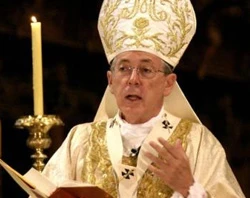
This seems to be quite significant news: This is the first time, as far as I know, that our bishop, His Eminence Juan Luis Cardinal Cipriani, Archbishop of Lima, Perú, publicly in a homily (last Sunday’s one, at the Cathedral), strongly recommends the reception of Holy Communion kneeling and on the tongue, and with the Communion plate. This is the link.And here is my [the writer’s] translation [with Fr. Z’s emphases]:
“Let us recover that love to the Eucharist, by receiving Jesus with a clean body and soul, in God’s grace. Let us use that small Communion plate, so that if a small particle from the Host falls, it does not touch the floor. There must be an education, which must be taught from the childhood to the elder ones.We receive Holy Communion on the tongue. In that way we avoid using our dirty hands in contact with the Body of Christ. In this archdiocese there is still permission to receive It in the hand. I say “there is still” because more and more frequently I ask priests and religious to manifest that visible respect to the Body of Christ, and to not just hand It as if one was distributing some papers.
Also, the correct way of receiving Jesus at the Eucharist requires a personal preparation to be in a state of grace. And to show a visible sign of respect, which may be bowing the head or, much more recommendable, receive the Holy Eucharist kneeling”.
Cardinal Cipriani wants
WDTPRS kudos to Card. Cipriani!
How do you say that best in Spanish… something like… "¡felicidades!", perhaps? Maybe… "¡Buen trabajo!"
Remember… to post comments you must register.
I ask for some information which for the most part is not displayed.
What is displayed is your username or screen name.
Hint: If you are stingy with information (which won’t be posted) the less likely I am to approve your registration on the spot. FWIW
Example… one person wrote in the personal blurb section: "… and the only sport that matters is baseball".
His registration was approved without delay.
My recent struggles with my Vista driven computer have me looking down the road to Windows 7.
Apparently if you have a certain level of Vista, you have to upgrade to a certain level of Windows 7, right?
Also, since some Mac/Apple enthusiasts were chiming in about their systems and the relevant glories therein, I suppose you have seen that there is a new OS called Snow Leopard, recently made famous as the bad guy in Kung Fu Panda.
On another note…
Given that many people suggested I should move to a Mac…
What Mac should I get?
I am a pretty intense user, lots of multitasking.
Desktop and very portable laptop suggestions.
UPDATE 1842 GMT:
This is not a discussion about Linux, Unix, or other systems.
Why is it that when I post on a topic having to do with computers, people free free to talk about something else? o{]:¬)
Let’s stick to this topic, please!
UPDATE 2302 GMT:
When speaking of laptops, mention battery life, please.


Coat of Arms by D Burkart
 fac on Daily Rome Shot 1118 – Paddywhack!: “Speaking of the disputatio back on October 31st between Archbishop Vesco and Bishop Barron (Vesco saying the Catholic Church was…”
 on Continue the Rome shot posts? I dunno.: “Please call continue the Rome photo posts if it not too much of a burden. Thank you, Father!”
 on Daily Rome Shot 1117 – A *POLL* about 2026-27: “Sorry… my bad. It is indeed SIX. 1. Rh8+! Kxh8 2. Qh2+ Kg8 3. Qh7+ Kf8 4. Qh8+ Ke7 5.…” on Encrypted Yeast? The Fathers on “What does the “leaven” really say?” (6th Sunday after Epiphany Resumed): “I especially like St. John Chrysostom’s insight, that when we are “hidden” in the normal places we live and work,…”
 on Daily Rome Shot 1117 – A *POLL* about 2026-27: “pestolover: For what it’s worth, your solution was the best I could do also.”
 on Daily Rome Shot 1117 – A *POLL* about 2026-27: “Fr Z thanks so much for 2 reminders. 1. Using your Amazon link! For heaven’s sake it costs us nothing…”
 on 10 November – St Andrew Avellino (Vetus Ordo). Wherein Fr. Z rants.: “So interesting that you bring this up, a couple weeks ago a priest at a neighboring parish died unexpectedly. They…”

A Daily Prayer for Priests






They find you a pro-life agent in your area who commits to giving a portion of the fee to a pro-life group!

PLEASE subscribe via PayPal if it is useful. Zelle and Wise are better, but PayPal is convenient.
A monthly subscription donation means I have steady income I can plan on. I put you my list of benefactors for whom I pray and for whom I often say Holy Mass.
In view of the rapidly changing challenges I now face, I would like to add more $10/month subscribers. Will you please help?
For a one time donation...


Help Monks in Wyoming (coffee – UPDATED LINK) and Norcia (beer) and the wonderful "Soap Sisters" of Summit, NJ!


Please follow me on Twitter!







Visits tracked by Statcounter
since Sat., 25 Nov. 2006: