“Home Pictures in May”

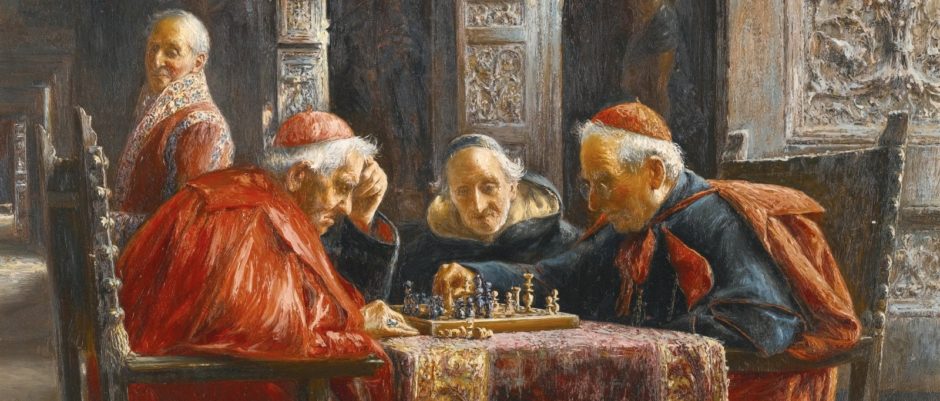
Biretta tip to the Laudator….  o{]:¬)

John Clare, Home Pictures in May:

The sunshine bathes in clouds of many hues
And mornings feet are gemmed with early dews
Warm Daffodils about the garden beds
Peep thro their pale slim leaves their golden heads
Sweet earthly suns of spring—the Gosling broods
In coats of sunny green about the road
Waddle in extacy—and in rich moods
The old hen leads her flickering chicks abroad
Oft scuttling neath her wings to see the kite
Hang wavering oer them in the springs blue light
The sparrows round their new nests chirp with glee
And sweet the Robin springs young luxury shares
Tuteling its song in feathery Gooseberry tree
While watching worms the Gardeners spade unbears

Posted in SESSIUNCULA |
1 Comment

Gotta read this: the child of the “Fetal Hand Grasp” photo

From the blog And Sometimes Tea. My emphases:

It has been ten years since photographer Michael Clancy, then pro-choice, took some pictures during a fetal surgery that changed his mind about abortion. And that famous picture is still changing minds and hearts about abortion–something the little boy in the original picture is very happy about:

"When I see that picture, the first thing I think of is how special and lucky I am to have God use me that way," Samuel told FOXNews.com. "I feel very thankful that I was in that picture."

On Aug. 19, 1999, photographer Michael Clancy shot the "Fetal Hand Grasp" — his picture of a 21-week-old fetus grasping a doctor’s finger during innovative surgery to correct spina bifida. Nearly four months later, on Dec. 2, Samuel Armas was "born famous."

The photo, which first appeared in USA Today on Sept. 7, 1999, quickly spread across the globe as proof of development in the womb and was later cited during congressional debates on the Partial-Birth Abortion Ban Act, which passed in 2000.

"It’s just a miracle picture, a miracle moment," Clancy told FOXNews.com. "It shows the earliest human interaction ever recorded."

Samuel, now 9 and living in Villa Rica, Ga., said the photo likely gave countless "babies their right to live" and forced many others to debate their beliefs on abortion, something he’s proud of.

"It’s very important to me," Samuel said of the photograph. "A lot of babies would’ve lost their lives if that didn’t happen."

Julie Armas, Samuel’s mother, said her eldest son has a "very strong sense of right and wrong" and understands the impact of his unconventional first baby photo.

"He identifies it more in terms of a pro-life message more than anything," she told FOXNews.com. "This photo happened and God used it to show people that this baby in mom’s tummy is alive. He’s pleased that his photo conveyed that message."

Michael Clancy’s famous picture can be seen with the article (click on the thumbnail pictures) or on his website, here.

Given Samuel’s beautiful understanding of how his pre-birth picture has been used to help people decide not to abort, I think it’s fair to call him the first pro-life advocate who was a pro-life advocate while still unborn. God has certainly blessed this beautiful young man!

Posted in SESSIUNCULA |
24 Comments

A flash from the past…

While working on a WDTPRS article for the paper, I rediscovered something I wrote some years back.  I thought some of you might enjoy it….

With all the gorgeous prayers from various ancient Latin sacramentaries at our disposal, was it really necessary to cobble a new one together like that?  Wait!  I am having a vision of the scene back in the 1960’s…. 

In a dark room lined with metal jammed bookshelves and cabinets stuffed with files of notes, an articulated lamp strains with its stingy 40 watts to produce a pool of light on a paper stacked table.  The rolling chair supporting a bespectacled cleric, squeaks as he shifts.  His scrambled gray hair is thinning and during the night he must have tugged the collar of his too-long worn cassock open around his skinny neck.

Monsignore is a professor at a Roman university and a prized consultant for Annibale Bugnini’s Consilium. 

Monsignor has drunk the Kool-Aid. 

He riffles the pages of good-ole Leo Cunibert Mohlberg’s edition of the Sacramentarium Veronense with rapt attention, occasionally jotting down phrases on slips of paper.  His consultation complete, he squeaks forward to the table.

Uttering a prayer to the Holy Ghost, he begins to slide the slips around. 

He rearranges them, and gazes, and tries again, substituting now this one and that one in practiced curves until, … EUREKA!  a new Super Oblata emerges ouija-like from out the depths of research and inspiration. 

“Hmmm “heúreka”, perfect of heúrisko….”,  he mumbles and drags closer the manual typewriter he scrimped to purchase, lo many decades ago, for his doctoral dissertation on the dative case in the Liber Sacramentorum Augustodunensis. 

Clack, clackity, ding, zzzip… clack clack, he whacks together his new prayer footnoting the source references for a future edition of the fontes of the Missale Romanum. 

One day WDTPRS readers will need them on a weekly basis. 

“Grazie, O Signore!” he beams at the framed print of the Crucified Jesus on the wall over his little metal framed bed.  

The tiny window suggests the approaching dawn, but zeal for the Council consumes him. 

“Now, what to do with the Twenty-Eighth Sunday?” he muses. 

Scanning a shelf, his red-rimmed eyes linger over yellowing notes on the Gregorian Sacramentary.

Posted in Classic Posts, Linking Back, Patristiblogging, SESSIUNCULA | Tagged ,
13 Comments

Have any positive news?

I think we need some happy news!

Posted in SESSIUNCULA |
111 Comments

Thomas Reese, SJ “Memo to Bishops: Most Catholics Aren’t Listening”

From The Washington Post we have this slithery piece from Thomas Reese, SJ:

Memo to Bishops: Most Catholics Aren’t Listening

THIS CATHOLIC’S VIEW

By Thomas J. Reese, S.J.

During the 2008 presidential campaign, there was a steady drumbeat of opposition to Barack Obama from some U.S. Catholic bishops, which only increased after his election. But despite the attention these attacks received in the media and on Internet blogs, polls show that the Catholic people are not listening.  [A polls are really important for people in Reese’s camp.]

He has been criticized:

• for being the most pro-abortion president ever, even though [watch how he praises the most pro-abortion President ever…] he wants to develop programs that will reduce the number of abortions while keeping it legal under most circumstances (he supports restrictions in the third trimester with an exception for the health of the mother);  [and let’s forget about that whole thing about the death of the child when he or she survived the abortion, shall we?]

• for allowing organizations that do abortions outside the U.S. to receive government funds, even though the funds cannot be used for abortions but only for non-abortion-related activities such as health care and birth control;  [last time I looked, money is fungible.  What those groups don’t have to spend on X, they can spend on Y.]

• for proposing to revise the Bush regulations dealing with stem cell research, even though the proposed revisions are less radical than many anticipated (no cloning is allowed and only stem cells from IVF embryos that would otherwise be discarded can be used; plus the informed consent rules are tightened);  [So, just a little less killing of the innocent than we expected.]

• for proposing to revise the Bush regulations that allow conscientious objection in health care, even though it is clear from the law that the revised regulations cannot require doctors, nurses or hospitals to perform abortions;  [Maybe not at first.]

• and for supporting the Freedom of Choice Act, even though everyone in Congress says FOCA is going nowhere (it has not even been introduced in this Congress) and the President has said it is not one of his priorities (which is the equivalent of deep-sixing it).  [He is getting it done in other ways.]

[So… after those "even though"s, you are now supposed to wonder just how stupid those bishops are if they oppose Pres. Obama.  But go back and read those "even though"s again.  Can a bishop be for any of those things?  It seems to me that the cumulative effect of those "even though"s is pretty bad.]

These critiques seem to be falling on deaf ears.

In the presidential election, Catholics voted for Obama, and Hispanic Catholics, who are a growing percentage of U.S. Catholics, gave him around two-thirds of their vote. Since the election, Obama has continued to do as well if not better with Catholics in the polls.

Nor are Catholics listening to those bishops who have condemned Notre Dame University for inviting the President to speak at its commencement this month. According to a Pew Forum poll, 48 percent of Catholics have not even heard of the controversy. And when asked whether it was right or wrong for Notre Dame to invite Obama to speak and to give him an honorary degree, 50 percent of Catholics said it was right and only 28 percent said it was wrong.  [I believe that that poll also revealed that those who didn’t approve of the ND thing were precisely the group that usually went to church on Sunday.]

What is wrong? Why are the bishops not being listened to?

Many think they lost their credibility because of the sex abuse crisis. Others say it was even earlier when the laity rejected the hierarchy’s opposition to artificial birth control.

[And here we go!  Reese is going to propose his model of the Church and what a bishop should be…] I think part of the problem is that the bishops stopped listening and teaching and started ordering and condemning. With an educated laity [This old thing? You know the drill: This isn’t a country of ignorant immigrants. People are are grown up and modern now!  We are too sophisticated for that old-fashioned religion. ] it no longer works to simply say, "it is the teaching of the church." This is the equivalent of a parent shouting, "Because I said so."  [Parenting Tips from Thomas Reese.]

The bishops must persuade and convince with arguments not by turning up the volume. [?] When they resort to commanding and threatening punishments, people are turned off. [I’m sorry… I … did I miss something?  Was there a sudden outbreak of punishments I should have been blogging about?  But watch this next unctuous move:] Banning speakers, denying Communion, silencing theologians is a sign of weakness not strength. Censorship and violations of academic freedom come across as admissions that their arguments are not convincing and therefore the opposition must be silenced.  [So, the Church is not supposed to exercise any oversight about teaching or the public conduct of high-profile Catholics who are in a position to shape laws?  Oh… wait… this isn’t supposed to make sense.  Reese is just telling you that this is how it should be.  He has his own personal animus he is working through, I suspect.]

The result is that the sales of books go up after a theologian is condemned. Obama’s Notre Dame speech will be covered by every cable news channels. Even movie producers understand this dynamic, which is why "Angels and Demons" is having its world premier in Rome and is just begging the Vatican to condemn it. 

[And here Reese does what you knew he simply had to do.  He makes the bishops’ opposition a political issue.] The bishops are being egged on by Republican activists whose presidential candidate lost the election. [But wait! There’s more!] There is clearly a conservative conspiracy [a Vast Right-Wing Conspiracy?!?] to do whatever is possible (including lying about ambassadorial candidates) [Was that a defense of Caroline Kennedy?  Doug Kmiec?  Am I reading this right?] to create conflict between the Catholic Church and the Obama administration. They want the Catholic Church to be the Republican Party at prayer. Some bishops are falling for this.  [That’s just silly.]

But the Vatican is not falling into this trap. It clearly wants to have a positive relationship with Obama. [We are talking about diplomatic relations between states.] The Pope sent him a congratulatory note after his election, although it is normal Vatican protocol not to do this until after the inauguration. [Oooooo that’s proof of something!]  Recently, an article in L’Osservatore Romano stated that the first 100 days of the Obama administration have not confirmed the Catholic Church’s worst fears about radical policy changes in ethical areas. No American bishop has been brave or honest enough to say this.  [L’OR had an editorial.  But… did it praise Pres. Obama for all those "even though"s?]

The best Vatican journalists John Allen of the National Catholic Reporter and John Thavis of Catholic News Service could find no evidence of an anti-Obama sentiments from the Pope or the Vatican Secretariat of State. The Vatican has had centuries of experience working with governments where they agree and talking to them about those issues where they disagree.  [That is the point… right?  This is about relations between states.  Does Reese think the Holy Father approves of Pres. Obama’s position on abortion?]

The bishops who oppose the President’s presence at Notre Dame are going to be embarrassed by the warm welcome he receives from the commencement audience. Every round of applause will be a repudiation of their condemnations.  [Or… ever round of applause will be a confirmation of poor catechism, a weak Catholic identity, and the effects of scandal.]

The bishops will also be embarrassed when Pope Benedict welcomes President Obama at the Vatican, or are all these people going to tell the Pope that he cannot talk to a pro-choice President? [Just plain ridiculous.]

Thomas J. Reese, S.J., is Senior Fellow at Woodstock Theological Center at Georgetown University.


Just another political camp-follower, I’m afraid.   Yet… I think he really does believe this stuff.

Once you get used to their talking points and bad arguments, it is all rather pathetic.
UPDATE 2133 GMT

I received this note from a senior Republican House staffer:

"I’m not sure where Reese is coming from.  Considering that the Bishops’ rarely meet with Republicans here on the Hill, I am not sure how we can be egging them on.  We all thought we were irrelevant to the USCCB. In 12 years on the Hill, I have never once sat down with a staffer from the USCCB on any issue."


Posted in SESSIUNCULA | Tagged ,
Comments Off on Thomas Reese, SJ “Memo to Bishops: Most Catholics Aren’t Listening”

Gollum… Gollum

Tolkien fan?

Have you watched this yet?

The Hunt For Gollum

Posted in Just Too Cool |
30 Comments

Exotic Communion practices of the past!

From a reader.  My emphases:

I thought you would find the following interesting.  I was at a meeting at my NO parish last night and found this small book obviously being used by the youth ccd director.  I’m sure it is very typical of what is used in most NO parishes.

As I flipped through it, I found the following "aside" in the section on receiving Communion (typed as printed).

Receiving Communion "In the Old Days"

The Communion Fast began at midnight and included everything–even water!  Catholics approached the Communion rail, a marble or wooden divider between the sanctuary and the benches or pews in the larger section of the church.  They ascended one or more steps, knelt on the top one, placed their hands under a cloth, which was draped over the rail, and formed a flat space in the cloth with their thumbs and forefingers (to hold the consecrated host if it should slip from their tongue).  The priest approached each person from the right, accompanied by an acolyte or altar server, who carried a small plate called a paten, which was placed under the person’s chin (again, to catch the host if it should slip).  The priest would hold up the host in front of each communicant and say, in Latin, "Corpus Domini nostri Jesu Christi custodiat animam tuam in vitam aeternam," which means, "May the Body of our Lord Jesus Christ preserve your soul into eternal life."  Then he would place the host on the person’s tongue and move on to the next person.  Only priests were allowed to distribute Communion.  If there were many receiving Communion and only one or two priests, the distribution could take…quite some time.

Too much ceremony and too many precautions based on fear?  Perhaps.  But it did instill reverence for the sacredness of receiving Communion.  It was difficult to think of receiving Communion as ordinary and routine.

From Liguouri, "Handbook for Today’s Catholic Teen"

Posted in "How To..." - Practical Notes | Tagged
60 Comments

Swiss Guard-ettes?

Grrr.

Vatican Swiss Guards consider opening to women

By NICOLE WINFIELD, Associated Press Writer Nicole Winfield, Associated Press Writer   – Wed May 6, 7:16 am ET

VATICAN CITY – The Vatican’s Swiss Guards will swear in 32 new recruits Wednesday amid suggestions from their new commander that women might one day join their ranks.  [Read the headline carefully.   Okay.. continue.]

Col. Daniel Anrig said Tuesday he was open to the idea of women serving in the elite, 500-year-old papal security force, reversing the long-held position of his predecessors.  [The Commandant is "open to the idea" but the headline implies something else.]

"Personally, I could imagine it for one job or another, surely," Anrig told private Mediaset television. "One could think about it."

He acknowledged there might be logistical problems, since the Vatican barracks housing the Swiss Guards are already crowded. "Sure, there could be problems, but every problem can be resolved," he said.

The housing crunch has long been cited by previous commanders as the reason why women couldn’t join.

Anrig, a former Swiss police commander with a degree in civilian and church law, was tapped by Pope Benedict XVI to head the Swiss Guards last August.

The 110-strong force provides ceremonial guard duty, assists at Vatican functions as well as helps to protect the pope. The guards are ubiquitous around the Vatican, in their trademark blue-and-gold uniforms, halberds and crimson-plumed helmets.

Currently, each recruit must be a Catholic male, between the ages of 19 and 30, have completed mandatory Swiss military service, have an impeccable reputation and agree to sign up for at least two years.

On Wednesday afternoon, 32 new recruits will join their ranks in an elaborate swearing-in ceremony in the Vatican’s Apostolic Palace. The ceremony is held each May 6 to commemorate the 147 Swiss Guards who died protecting Pope Clement VII during the 1527 Sack of Rome.

During the ceremony, the new recruits raise three fingers and swear to uphold the Swiss Guard oath to protect Benedict and his successors "and also dedicate myself to them with all my strength, sacrificing if necessary also my life to defend them."

The Swiss Guards were founded by Pope Julius II in 1506.

Their legend was stained in 1998 by the slayings in a Vatican City apartment of a guard commander and his wife. The Vatican blamed the killings on a disgruntled guardsman who, according to the Holy See, then fatally turned the gun on himself.  [Why do outlets like AP always have to dredge up something lurid?  It is like they can’t stand anything being… good.  Not even the BBC did that.]

The slayings were the first killings in the Vatican in 150 years.

Posted in SESSIUNCULA |
49 Comments

QUAERITUR: territorial parishes

A reader sent a question.  I consulted a canonist for the answer:

Can you discuss the role that parishes play for most Catholics in worship?  In particular, I wanted to know the duty that people had to join their territorial parish, the responsibilities people have to their parish, etc.  Did this change in the 1983 Code of Canon Law?  Often, those of us who care about liturgy become nomads.  That’s clearly not what the Church wants.  Yet, we have some truly awful parishes out there.  What are our responsibilities here?

Many years ago I remember hearing the late Msgr. Richard Schuler talk about this topic.  He reflected on the fact that the new, 1983 Code described a parish as a "portion" of the people of God.  Since Msgr. Schuler was pastor of a "national" parish rather than a territorial parish, he paid attention to these things.

In many places in the wealthy, developed world we are very mobile.  We are not so restricted anymore to the nearest church.  Given that people have the right to the Church’s worship according to the book and sound teaching, they often seek what meets their needs.

Still… there has to be some way of figuring out jurisdiction.  Right?  In the 1983 Code parishes are mainly territorial.  The lines are drawn on the world’s map.

Here is where I start working from what the canonist sent.

People belong to the territorial parish in which they reside unless they belong to a personal parish. These later can be national or ethnic or for some chaplaincy such as military, university students…. TLM goers….
 
The canonist pointed out that there is nothing about the obligation of the faithful to attend or support their territorial parish.

Canon 222 provides that the faithful have an obligation to provide for the needs of the Church – not specifically their parish Church, and, of course, c. 214 establishes that the faithful have the right to worship according to the legitimate provisions of their own rite.

The canonist continues with my emphases:

All of the obligations that speak about parishes are geared towards the obligations of a pastor – he is to ensure that the faithful living in his parish (and indeed EVERYONE living in his parish) have the Gospel proclaimed to them, that the faithful receive religious instruction, that the sacraments are celebrated worthily and frequently, that the sick are visited and comforted – canons 528 and 529 are, in my opinion, two of the most beautiful canons in the Code – and two canons which every pastor of a parish should read on a daily basis.
 
So, for all the liturgical nomads … there’s no reason to feel guilty for not attending one’s territorial parish, particularly if it is a locus of liturgical abuse. Yes, there can be heroism in suffering in silence, and there can be great virtue in being a leaven to bring about change in one’s territorial parish, but the canonical burden is upon the pastor – not the faithful (who are often guilted into feeling that they should stay worshiping in a parish that fails to provide for their legitimate spiritual needs). I think there can be a balance between a consumerist approach, wherein one shops for the parish that best fits one’s needs, and a martyr approach that says I need to stay put, even though I leave Mass every Sunday more angry and depressed than when I entered.
 
I would think it a salubrious action to inform one’s territorial parish that one will be attending and participating in the parochial and sacramental life of St. Fidelissimus parish rather than St. Smileyhugs parish, and to give the specific reasons (more faithful liturgy, orthodox preaching, better catechetical programs for the kiddies, specific devotions), and maybe copy it to the bishop or vicar forane. The pastor should be aware of how many parishioners he’s losing out on by letting Sr. Go-Go Boots do liturgical dance. As always, letters should be carefully thought out and crafted, and not done with high emotion – scripta manent!

Very sound reflections.

"But Father! But Father!" some of you… yes, I can hear you … are exclaiming, "You can’t leave us hanging!  What are those canons you mentioned?  Tell us now, for we are too lazy to look them up ourselves!"

Can. 528 §1. A pastor is obliged to make provision so that the word of God is proclaimed in its entirety to those living in the parish; for this reason, he is to take care that the lay members of the Christian faithful are instructed in the truths of the faith, especially by giving a homily on Sundays and holy days of obligation and by offering catechetical instruction. He is to foster works through which the spirit of the gospel is promoted, even in what pertains to social justice. He is to have particular care for the Catholic education of children and youth. He is to make every effort, even with the collaboration of the Christian faithful, so that the message of the gospel comes also to those who have ceased the practice of their religion or do not profess the true faith.

      §2. The pastor is to see to it that the Most Holy Eucharist is the center of the parish assembly of the faithful.  He is to work so that the Christian faithful are nourished through the devout celebration of the sacraments and, in a special way, that they frequently approach the sacraments of the Most Holy Eucharist and penance. He is also to endeavor that they are led to practice prayer even as families and take part consciously and actively in the sacred liturgy which, under the authority of the diocesan bishop, the pastor must direct in his own parish and is bound to watch over so that no abuses creep in.

Can. 529 §1. In order to fulfill his office diligently, a pastor is to strive to know the faithful entrusted to his care.

Therefore he is to visit families, sharing especially in the cares, anxieties, and griefs of the faithful, strengthening them in the Lord, and prudently correcting them if they are failing in certain areas. With generous love he is to help the sick, particularly those close to death, by refreshing them solicitously with the sacraments and commending their souls to God; with particular diligence he is to seek out the poor, the afflicted, the lonely, those exiled from their country, and similarly those weighed down by special difficulties. He is to work so that spouses and parents are supported in fulfilling their proper duties and is to foster growth of Christian life in the family.

     §2. A pastor is to recognize and promote the proper part which the lay members of the Christian faithful have in the mission of the Church, by fostering their associations for the purposes of religion. He is to cooperate with his own bishop and the presbyterium of the diocese, also working so that the faithful have concern for parochial communion, consider themselves members of the diocese and of the universal Church, and participate in and sustain efforts to promote this same communion.

Posted in ASK FATHER Question Box | Tagged
47 Comments

A Dubium answered: Celebrant’s Communion after the faithful

Have you ever seen a priest/celebrant during Mass receive Communion after everyone else?

I have.  And the answer I was given was… I am not making this up… "It is rude not to serve your guests first."

No kidding.

The April Newsletter of the USCCB’s Committee on Divine Worship is out.

In this newsletter there is published an English version of a response to a dubium.  Here it is with some added emphases:

Dubium on the Priest Celebrant Receiving Communion After the Faithful

In the November-December 2008 issue of Notitiæ (vol. 45, pg. 609), the Congregation for Divine Worship and the Discipline of the Sacraments published their response to a dubium on the possibility of the priest celebrant receiving Holy Communion at Mass after or at the same time as the lay faithful. For the benefit of our readers, an unofficial translation is provided here:

Question: Whether it is permitted for the Priest celebrant to communicate only after he has distributed the Holy Eucharist to the faithful, or whether he may distribute the Holy Eucharist and then afterwards communicate together with the people.

Response: No, to both questions.

Certain practices of this kind in particular are being introduced, namely, where the Priest celebrant communicates only after he has distributed the Holy Eucharist to the faithful, or, by the same thinking, he waits until after the Holy Eucharist has already been distributed to communicate together with everyone else, namely, the faithful, as though feasting together at the Eucharistic table.

In all the Rites of the Church, an order is found which has been handed on for approaching Holy Communion: first, the Bishop or the Priest celebrant communicates, and then the other ministers according to their hierarchical rank, and finally, the people. The Priest communicates first, not because of any human superiority, but on account of the nature and dignity of his ministry. For, the Priest acts in the person of Christ on account of the integrity of the sacrament and because he presides over the assembled people: “So, as Priests join themselves with the action of Christ the High Priest, they daily offer themselves wholly to God, and as they are nourished by the Body of Christ, they partake of love from the heart of him who gives himself as food to the faithful” (Presbyterium ordinis, no.13).

In the edition of the Missale Romanum promulgated by the Servant of God, Pope Paul VI, the communion of the faithful follows immediately upon the communion of the Priest, establishing it in this way as a unique action, different from the form in the edition of the Missale Romanum which appeared in 1962, in which the communion of the Priest is separated from the communion of the faithful through the recitation of the Confiteor [The Second Confiteor was removed in the 1962MR.  I believe it remained only in the Holy Week section of the Missal (Good Friday – but that is neither Mass nor the usual sort of liturgy) and in the Pontificale for ordinations (as a commenter, below, clarified).] and of the prayers, the Misereatur, Indulgentiam, Agnus Dei and the Domine, non sum dignus.

The governing liturgical norm states: “A Priest must communicate at the altar at the moment laid down by the Missal each time he celebrates Holy Mass, and the concelebrants must communicate before they proceed with the distribution of Holy Communion. The Priest celebrant or a concelebrant is never to wait until the people’s Communion is concluded before receiving Communion himself” (Redemptionis Sacramentum, no. 97).


I add that Redemptionis Sacramentum should be periodically reviewed by priests, especially, and lay people.

Posted in "How To..." - Practical Notes, ASK FATHER Question Box |
31 Comments























