Card. Castrillon is little inclined to shoulder the blame – rightly

His Eminence Dario Card. Castrillon Hoyos, President of the Pontifical Commission Ecclesia Dei, had an interview with the Spanish language El Tiempo.  He made comments about the lifting of the excommunications of the four SSPX bishops, especially Williamson’s.

Card. Castrillon seems very little interested, and rightly so, in taking full blame for the controversy.

He is an excerpt with my emphases and comments.

La polémica con el obispo

Monseñor Castrillón era el encargado de dialogar con los cuatro lefebvrianos excomulgados y su labor fue criticada por permitir su reintegro a la Iglesia sin que Williamson se hubiera retractado primero de sus palabras.

El hecho, en el que se vio involucrado el cardenal colombiano, generó gran escándalo mundial a principios de febrero pasado, pues la comunidad judía rechazó que se le diera el perdón papal a quien negó la existencia de las cámaras de gas durante el régimen nazi en Alemania.

EL TIEMPO ¿Cuál fue su papel en la mediación con los lefebvrianos a quienes se les levantó la excomunión?

Monseñor Darío Castrillón: Tenía que hacer los diálogos, pero no significa que era yo solo el que estaba dialogando con (Bernard) Fellay (jefe de la Fraternidad Sacerdotal San Pío X de los lefebvrianos). Tuve siempre en torno a mí todo el grupo necesario dentro de la Santa Sede para cada uno de los pasos. Cuando hablábamos de las excomuniones no fue un diálogo de Castrillón con Fellay…, no, no, no. Yo no negocié con nadie. Fue la Comisión de Cardenales, incluido Ratzinger (el Papa Benedicto XVI), porque de esto comenzamos a hablar cuando él no era Papa. No hubo ni un solo acto que no se hiciera colegiadamente. [The Cardinal wasn’t alone.  And I understand that there was a Commission of dicasterial heads headed by Card. Bertone, before the lifting of the excommunications.]

¿Cómo se enteraron de las palabras de Williamson en las que niega el Holocausto?

Cuando hubo una reacción grande del mundo hebreo y de obispos de las áreas más sensibles (Alemania, Suiza y Austria), oficialmente nos enteramos. Llegó una comunicación el 5 de febrero a nuestras manos. Pero a los lefebvrianos no los excomulgaron por motivos de doctrina, sino porque habían sido ordenados sin permiso.

¿Hubo un ‘jalón de orejas‘ cuando el portavoz del Papa, Federico Lombardi, dijo que usted tenía que saber lo que había dicho Williamson?

El no dijo exactamente eso y si lo dijo es un absurdo, una idiotez, porque no se trataba de estudiar la vida de estos obispos. Lo único que había que saber es que fue ordenado por (Marcel) Lefebvre sin permiso.

¿Para levantar la excomunión no hacía falta que Williamson se retractara?

Nadie le iba a pedir retractación porque el Santo Padre ni nosotros sabíamos lo que había dicho.

Si lo hubieran sabido, ¿hubieran pedido su retractación antes de levantar la excomunión?

Yo pienso que no, porque es un problema histórico no moral. Por prudencia el Santo Padre hubiera podido decir que esperaran un momento. Me parece que hubo una imprudencia del portavoz de la Santa Sede en la declaración que le dio a ‘La Croix’, porque no tiene por qué entrar en juicios sobre personas ni decir que un cardenal tiene que saber algo que no tiene por qué saber. Si alguien tenía que saber eso es el cardenal que se encarga de la vida de los obispos, el cardenal Re.  [interesting]

¿Es consciente de lo que el portavoz dijo?

Francamente no me ha interesado. Él me escribió una carta pidiéndome excusas. Hemos sido muy buenos amigos.

Posted in SESSIUNCULA |
11 Comments

Rabbi: Pope must remove his Cross to visit Western Wall

From The Jerusalem Post, this beggars belief.

Western Wall rabbi says pope should not wear cross at site
Mar. 17, 2009
Matthew Wagner , THE JERUSALEM POST

Ahead of Pope Benedict XVI’s May visit to Israel, the rabbi of the Western Wall, Shmuel Rabinovitch, has said that it is not proper to come to the site wearing a cross.

The pope wears a cross in all public appearances and is slated to visit the Western Wall on May 12 after a meeting with Muslim religious leaders at the Dome of the Rock.

After the visit, which will include a meeting with Rabinovitch, the pope is slated to meet with Israel’s two chief rabbis, Yona Metzger and Shlomo Amar.

"My position is that it is not fitting to enter the Western Wall area with religious symbols, including a cross," said Rabinovitch in a telephone interview with The Jerusalem Post Monday. "I feel the same way about a Jew putting on a tallit and phylacteries and going into a church."  [Would he object to a Jew wearing tellit and phylacteries at the Western Wall?]

Rabinovitch is responsible for religious decorum at the site.

"In coming days I intend to discuss the issue with the pope’s people," Wadie Abunassar, media coordinator for the pope’s visit to the Holy Land, said in response to reports that the pontiff would not remove his cross. "I cannot imagine the Holy Father removing his cross."    [Wouldn’t be interesting were the Holy Father to leave his pectoral Cross in a crack in the Western Wall.]

On a historic visit to the Holy Land in 2000, Pope John Paul II prayed at the Western Wall, stuffing a written prayer between the cracks. Pictures from the visit clearly show him wearing a golden cross while praying.

Despite this precedent, Rabinovitch maintains his position against the display of religious symbols. In recent years there have been at least two incidents in which Rabinovitch has barred access to the Western Wall by Christian clergy wearing crosses.  [Great!  I suppose he bars Jews wearing tallit and phylacteries also, since they too are religious symbols.]

In November 2007, he refused to allow a group of Austrian bishops led by the Archbishop of Vienna, Christoph Schonborn, access to the site after the clergymen refused to remove or hide their crosses.

At the time Rabinovitch told the Post that "crosses are a symbol that hurt Jewish feelings."  [Hurts his feelings, perhaps.]

In May 2008, a group of Irish prelates from both Catholic and Protestant churches were prevented from visiting the Western Wall for the same reason.

Rabinovitch also opposes security arrangements that would prevent worshipers from reaching the Kotel for several hours before and during the pope’s visit.  [It sounds to me as if this fellow might be a bit of a pill.]

"Police and Shin Bet (Israel Security Agency) authorities met with me and presented certain demands for security during the visit that include closing the Western Wall to people who want to pray," said Rabinovitch.

"For the past 42 years, no one has ever been prevented from praying at the Western Wall and, God willing, no one ever will. A solution needs to be reached that provides adequate security for the pope without infringing on the right of everyone to pray. The Western Wall belongs to everyone."

A senior Catholic church official said in response that the security arrangements for the pope were an internal Israeli affair that had nothing to do with the Church.

Before 1967, when the Western Wall was under Jordanian rule, Jews were forbidden to pray there. In the Six Day War, Israel conquered east Jerusalem, including the Western Wall, from Jordan and prayer was opened to all religions.

Posted in SESSIUNCULA |
Comments Off on Rabbi: Pope must remove his Cross to visit Western Wall

NEW TLM ANNOUNCMENTS

Every day I get notes from people asking me to be their college campus telephone poll, and advertise their TLM celebrations.

I am usually happy to do so, of course, especially for new TLMs placed on parish schedules.

But I am so overwhelmed with e-mail, I can’t possibly respond to everything.

So… use this entry to post announcements of TLMs for the near future.

Include the necessary who what when where how people need.  Post a parish site link if possible.

These Masses must be at approved churches/chapels in clear union with the Catholic Church.

This isn’t intended to be a discussion thread.

Remember:

NEW TLMs.

NEW TLMs.

NEW TLMs.

Not already scheduled, long-standing TLMs.

Posted in Brick by Brick, SUMMORUM PONTIFICUM |
26 Comments

QUAERITUR: beer

I had a question from a reader:

Do you have any good opinions on beer (in general) or belgian/lambic beer in particular


I am in favor of beer, in general, and in particular.

I don’t know much about Belgian beer, frankly.

Most recently I have favored English beers, and I am especially in favor of bitter.

I suspect readers might have something to add.

Perhaps in our flexibility we can include stouts, etc.

BTW… I know three words in Latin for beer.

Posted in SESSIUNCULA |
79 Comments

S. Africa protest over new Catholic Mass translation

This is in from the wire.  My emphases and comments.

SAfrica protest over new Catholic Mass translation

By MICHELLE FAUL, Associated Press Writer Michelle Faul, Associated Press Writer – Mon Mar 16, 5:03 pm ET

JOHANNESBURG – A new translation of the Roman Catholic Mass that is to be introduced  [NB: It hasn’t been yet.] worldwide in a few years is getting an accidental trial run in South Africa, where some parishioners are complaining it’s too hard to understand.  [Accidental… yah… right.]

The controversy comes as Pope Benedict XVI travels Tuesday to Cameroon on his first papal pilgrimage to the continent that has the fastest growing congregation of Catholics.

Critics say the new, more literal word-for-word translation [that is NOT what the new translation is] is part of an attempt to roll back the progress made decades ago when the church halted its insistence on Latin.  [It is a constant drumbeat: "turn back the clock" blah blah blah]
 
Before Communion, for example, the prayer "Lord, I am not worthy to receive you" becomes "Lord, I am not worthy that you should enter under my roof." "One in being with the Father" becomes "consubstantial with the Father" in the Nicene creed.

And the congregation’s response to the greeting that opens Mass with the priest saying "The Lord be with you," changes from "And also with you" to "And with your spirit."

In a misunderstanding, [misunderstanding… yah… right…] some South African church leaders started using the new version prematurely in some parishes, even though the English-language prayers won’t be approved for global use for at least a couple of years. But instead of pulling back in the face of their mistake, they are continuing to use the liturgy.  [I think they did it so that they could create controversy.  Overly suspicious?]

Distribution of the prayers has fueled debate over whether the new translation — meant to more closely follow the original Latin text  [the writer reveals confusion: is the new translation "closer" to the Latin or "word-for-word"?] — will help deepen parishioners’ prayer life or alienate them from the church.  [oh the drama!]

"I think the church has been very lucky that the South Africans jumped the gun because it’s showing the Vatican that there is going to be a worldwide problem when these new translations are put into effect," said Thomas Reese, a Jesuit priest and senior fellow at the Woodstock Theological Center at Georgetown University.  [To which I respond what I have written before: COWARD!  Why do they keep calling this guy?  Because he gives them the answer they want to hear, not because he has anything sound to contribute.]

"Once again the Vatican isn’t listening to the critics, and we’re going to have another major embarrassment to the pope when these translations are put into effect and are forced on the people in the pews," he said.  [This all gives Reese another chance to attack the Holy See, a little payback.]

Vatican II, the 1962-1965 meetings that inspired liberalizing reforms of the Roman Catholic Church, led to changes such as Mass being celebrated in local languages. Reese said prior to that, Mass was said in Latin and parishioners followed along in a missile [!?!  ZOOM!] that had an English translation.

The new Mass translation now is being used in some parishes of the Southern African Church, which also includes Botswana and Swaziland and serves some 3.2 million Catholics. The premature use, which began in late November, is being blamed on a misplaced letter advising  [?] that the texts weren’t to be used immediately.  [What is this, "Spanky and the Gang" have a Conference?]

Bishop Edward Risi, in charge of the local bishops’ liturgical department, said the new translation is "a more faithful rendering … an echo of the scriptures. What the original Latin has done uses the scriptures and English must also reflect that."

The debate over translating the latest edition of the Roman Missal, the ritual text for celebrating Mass, began years ago.

In 2000, Pope John Paul II issued a third edition of the "Missale Romanum," followed by a Vatican document a year later that insisted translations should stay close to the Latin and adhere to church doctrine. An international panel representing English-speaking bishops began tackling the job of translating the new liturgy.

But Clement Armstrong of Bryanston, South Africa, said some of the changes in wording are "simply nonsense."  [Let’s send him a dictionary.] While his home parish has not yet adopted the changes, a church where he attended Mass over the holidays has.

"I am resistant to change and I think the older community in my parish will feel the same," he said. "I can accept change when there is a good reason but I cannot see one." 

His daughter-in-law, Anne Armstrong agrees: "We are all familiar with the liturgy we have used since we were children. Why is there the need to say Mass differently?" [Because, maybe, we should say it correctly?]

The Rev. Efrem Tresoldi warned in The Southern Cross, a regional Catholic weekly: "I’ve heard it said that younger people are leaving the Church because, among other things, the language used in our liturgy sounds foreign to them. I think this new version of the order of the Mass is even more alienating."  [I don’t buy that for a moment.]

Lay leader Paddy Kearney also points to the theological implications in the "mea culpa." [Yes… there are theological implications to what words we use.  He got that right!] The new translation reverts to repeated pronunciations of guilt emphasized by beatings on the breast reflected in the Latin Mass: "Through my fault, through my fault, through my most grievous fault."

Under Vatican II, the breast-beating was abandoned and people pronounced only once on grievous sinning.

"I think this is because some feel we need to have more emphasis on our guiltiness and sinfulness, because the feeling is that we have lost our sense of guilt," Kearney said.

There’s a feeling, Kearney said, "that Vatican II was a mistake, [Nooo…. is the TRANSLATION that is being CORRECTED.  The TRANSLATION was WRONG.]  that a lot has gone wrong as a result of its decrees and that we need to get back in line, get knocked into shape, that we need to inch back to where we were before."

In an article in The Southern Cross, Bishop Kevin Dowling agreed.

"I am concerned that this latest decision from the Vatican may be interpreted as another example of what is perceived to be a systematic and well-managed dismantling of the vision, theology and ecclesiology of Vatican II."  [Then, Your Excellency, teach them what it really is.  You have the biggest pulpit in the diocese.  For the love of God, teach them what it really is!]

The Rev. Russell Pollitt also questioned whether nonnative English speakers in South Africa, where there are 11 official languages, would understand the more abstract concepts.  [Then TEACH THEM for goodness’ sake!]

"The new text seems almost to imply that there is something inherently holy about Latin and inherently unholy about proper English," English Professor Colin Gardner said.   [sigh]

Posted in SESSIUNCULA |
72 Comments

Year of the Priesthood: 19 June 2009-2010

A you all know by now, the Holy Father has proclaimed a special "Year of the Priesthood" beginning 19 June 2009.

This coincides with the 150th Anniversary of the death of St. John Vianny, the Curé of Ars, who hitherto has been the patron of parish priests.  The theme of the year is "Faithfulness of Christ, faithfulness of the priest".

On 19 June, the feast of the Sacred Heart, Pope Benedict will preside at Vespers in the presence of the relics of St John Vianney, brought to Rome by the Bishop of Belley-Ars and there will be a Worldwide Meeting of Priests in St Peter’s Square.

During the year, the Holy Father will proclaim St John Vianney "Patron of all the priests of the world." There is also going to be a new "Directory for Confessors and Spiritual Directors."

Speaking to members of the Congregation for the Clergy, Pope Benedict said that awareness of the radical social changes of recent decades made it necessary for the "best ecclesial energies to be applied to the formation of candidates for the ministry."

"Mission has its roots in a special way in a good formation, developed in communion with unbroken ecclesial Tradition, without pausing or being tempted by discontinuity. In this context, it is important to encourage priests, especially the young generations, to a correct reading of the texts of Vatican Council II, interpreted in the light of all the Church’s doctrinal inheritance."


Posted in SESSIUNCULA |
2 Comments

Hand in Glove – 02: another Communion in the hand experiment

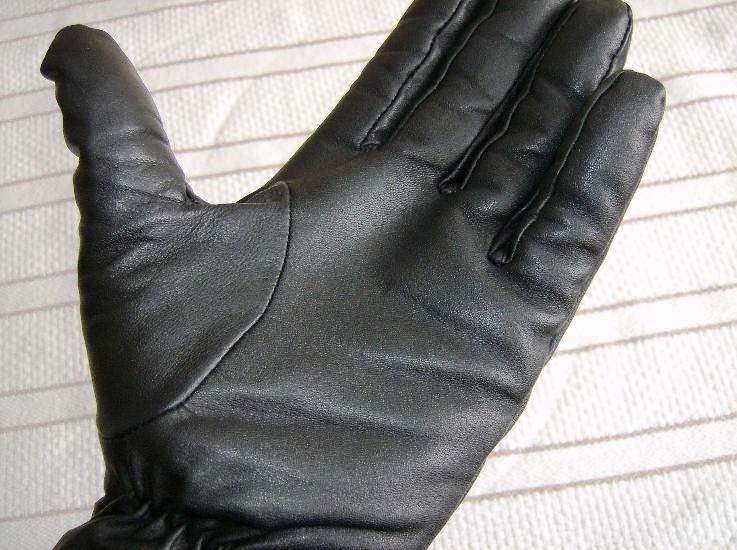
The entry on Communion in the hand, which had photos of a black glove before and after an unconsecrated host was placed on it, has generated a lot of comments.

Some people were concerned that experiment the photos showed perhaps wasn’t well conducted.

Another reader, a seminarian, took the matter in hand and gave this experiment another try.  I have here the message sent with the photos and the photos themselves.  You can click any of the photos for larger versions.

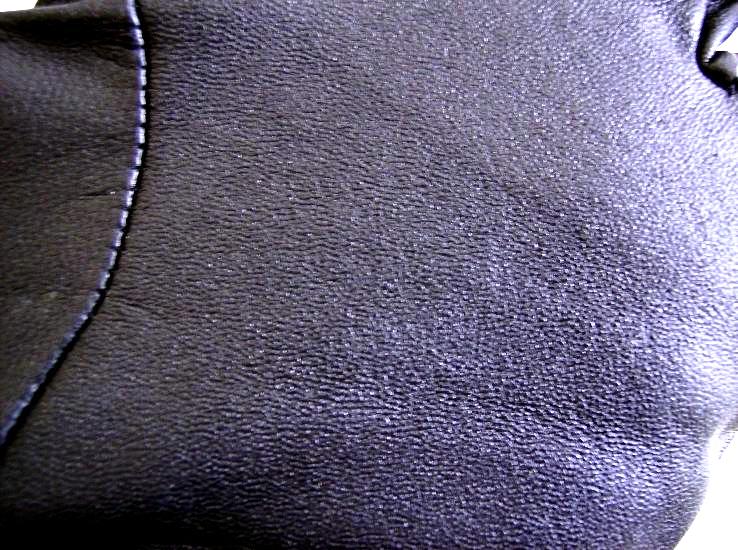
I recently saw the "black glove test" photos that you posted on your blog, and read some of the objections some people had to the experiment (felt glove, possibility of lint beforehand, etc.).  To help settle the issue, I performed a similar experiment using clean, black leather gloves.  I’ve attached "before" and "after" photos of the results.  For those interested in my experimental method, I observed the following points:

1.    I performed the experiment three times.
2.    Before each trial I ensured that the glove was free of any lint or other contaminant particles
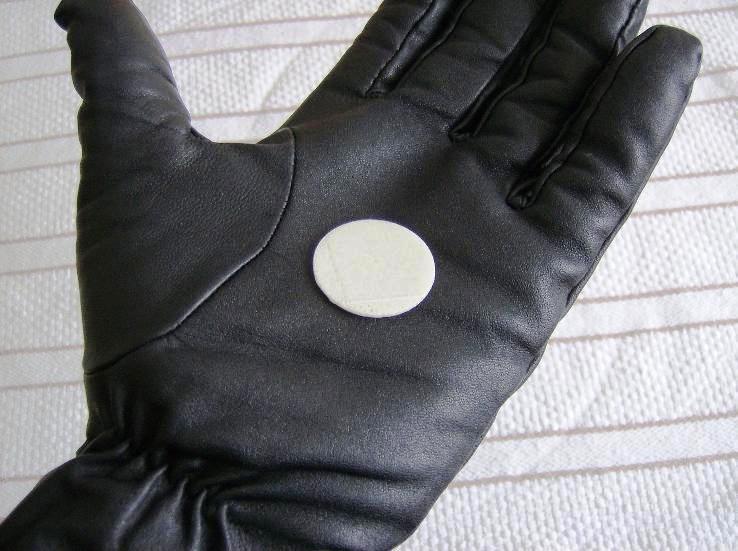
3.    I gently placed a new, unconsecrated host in the palm of the glove.  I tried to reproduce the distribution of communion in the hand that one generally sees at mass, both in placing the host in the hand, and removing it several seconds afterwards.  I did not use excessive force, or rub the host against the glove in any way. 
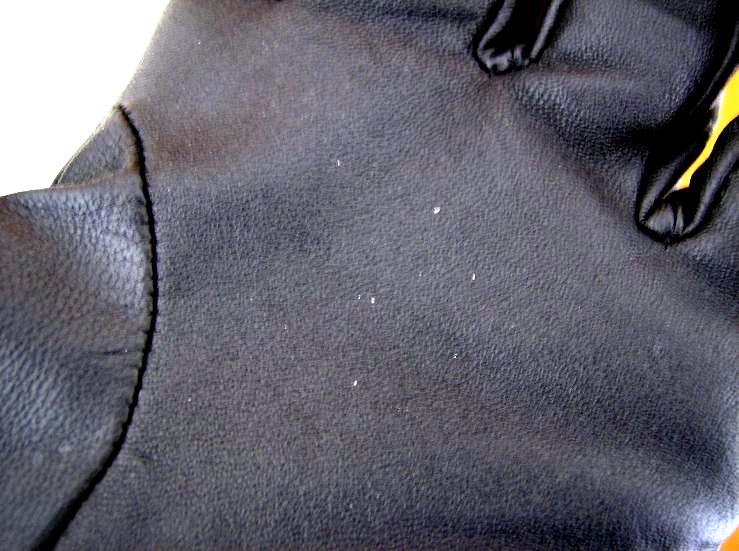
4.    The results from all three trials were very similar, with four to ten particles of bread clearly visible to the naked eye

Here are the photos sent by the seminarian who conducted the experiment.

BEFORE

Hand in Glove - 02: another Communion in the hand experiment

CLOSEUP BEFORE

Hand in Glove - 02: another Communion in the hand experiment

DURING

Hand in Glove - 02: another Communion in the hand experiment

AFTER

Hand in Glove - 02: another Communion in the hand experiment

Posted in SESSIUNCULA |
79 Comments

QUAERITUR: priest lays on hands, deacon anoints the sick


From a reader:

Father, I have a question about what happened during all the Masses (OF) this weekend at my local parish.  I’m assuming it was the same at the other two because it was advertised, but the Mass that I attended had Anointing of the Sick at the end of the Liturgy of the Word.  All the people who wanted to receive it (about 40) lined up in the center aisle then proceeded down while the priest laid hands on them and then they split off to the sides.  Then he and the deacon separately proceeded with the oil on the palms. My understanding is that only priests and bishops can give this sacrament, but what if the priest lays on hands and a deacon places the oil on the palms?   

In the Novus Ordo there are provisions for the administration of sacraments during Mass, as you point out, after the Liturgy of the Word.  I don’t much go for that, but it can be done licitly.

I am sure the the priest thought he was doing a good thing in trying to make it available to people who might not have come onto his radar screen otherwise.

I have reservations about Anointing during Mass and inviting anyone to come to receive it.  This sounds like a dicey approach to the administration of the Sacrament.  Given what I am reading in the description, I suspect there may not have been a clear preaching beforehand about the sacrament, its effects, and who may received it.  I don’t know that, of course.

First, who is going to go forward to receive this Sacrament?  Anyone at all… even those who don’t need it.  They will go because they don’t have a clue what the sacrament is really for.  Of course it might all have been explained in a sermon before, etc.  Still…

The reception of sacraments requires some preparation, unless it is an emergency. 

There is an old distinction between the sacraments of the "living" and the sacraments of the
"dead".  The sacraments of the living are those which are to be received in the state of grace.  Those of the dead are to be received by those who are spiritually dead in sin.  Baptism and Penance are for the dead and the others are for the living.

The sacrament of Anointing is normally to be received in the state of grace, though it can confer when necessary sanctifying grace.  So, unless there is an emergency or pressing need, reception of the sacrament of Anointing should usually be preceded by sacramental confession.  Again, if there is an emergency, the sacrament can be given without sacramental confession because, in those cases, the sacrament of Anointing can also forgive sins, as the Council of Trent affirmed and the CCC reaffirms.  This effect of forgiveness of sins when necessary is one of the reasons why only priests can given this sacrament.

But the sacrament of Anointing is not a substitute for the sacrament of Penance in normal circumstances.

That brings us to the next point.  You say the priest laid on hands but the deacon anointed.   I am pretty sure that is not merely illicit, but it is also invalid. 

The rite calls for the priest to lay on hands, say the form of the sacrament and anoint with oil.  The form of the sacrament is the words to be spoken and the matter is the anointing with oil. 

In the ritual for anointing during a Mass, the rubrics say that "the priest" is to do these things, not "the priest or deacon".  The Prenotanda at the beginning of the book indicate:


16: The priest is the only proper minister of the anointing of the sick. 

19: When two or more priests are present for the anointing of the sick person, one of them may say the prayers and carry out the anointings, saying the sacramental form.  The others may take the remaining parts, such as the introductory rites, readings, invocations or instructions. Each priest may lay hands on the sick person.

44: … The words "priest," "deacon," and "minister" are used advisedly.  Only in those rites which must be celebrated by a priest is the word "priest" used in the rubrics (that is, the sacrament of penance, the sacrament of anointing of the sick, the celebration of viaticum within Mass).  Whenever it is clear that, in the absence of a priest, a deacon may preside at a particular rite, the words "priest or deacons" are used in the rubrics. …


The parish priest really ought to review these things. 

Just the other day the Holy Father spoke to the Congregation for Clergy and stressed that priests need to have a sound doctrinal foundation.  There are theological aspects of the sacrament of anointing which must be clear in the minds of the ministers.

Let’s review:

Only priests can anoint.  Deacons cannot anoint.  If deacons do that, who knows what grace might come from their actions, but they simulate a sacrament, which is a grave abuse and, if they know this, a very serious sin.

Sacraments have both matter and form.  The form is the words and the matter is the material part, the physical aspect.  In the sacrament of Anointing the matter is the anointing with oil by the priest.  The priest must do it, because the effects of the sacraments are threefold, that is, strengthening of the sick person, possible physical healing, and the forgiveness of sins.  This is based on Scripture and it is defined by the Church.

If this is going on, and the priest will not correct the practice, then the diocesan bishop must be informed.

For questions about how the rite is to be conducted, one can have recourse always to the Congregation for Divine Worship and Discipline of the Sacraments.  In the case of the question about validity of a sacrament in a concrete case you must have recourse to the Congregation for the Doctrine of the Faith. However, after the pastor, the diocesan bishop really ought to be the best first source to consult for this.

Posted in ASK FATHER Question Box, SESSIUNCULA |
10 Comments

Benedict XVI to Cong for Clergy: priesthood without discontinuity

His Holiness Pope Benedict addressed the Plenary Meeting of the Congregation for Clergy.

One might expect a Pope to speak about the importance of priests to such a Congregation, but his remarks to the Congregation today stressed priesthood and priestly ministry in a way that reminded me sharply of both his great solicitude for priests in in the Church in the provisions of Summorum Pontificum and the concern he openly expressed in his recent Letter to bishops for the priests of the SSPX.

Here are a couple paragraphs in my rapid translation from the Italian.  My emphases.

A grasp of the radical social changes of the last decades must move our better ecclesial energies to take care for the formation of candidates for ministry.  In particular, it must stimulate constant solicitude of Pastors toward their first collaborators, either cultivating truly paternal human relations, or concerning themselves with their continuing formation, above all in the matter of doctrine.  The mission has its roots in a special way in a good formation, developed in communion with the uninterrupted ecclesial Tradition, without breaks or temptations to discontinuity.  In such a sense, it is important to foster in priests, above all in younger generations, a correct reception of the texts of the Second Vatican Ecumenical Council, interpreted in the light of the whole doctrinal train of of the Church.  There appears to be an urgent need for the recovery of that awareness which drives priests to be present, identifiable and recognizable both for their judgment of faith, and for their personal virtue, and also for their dress (abito), in ambients of culture and of charity, which have ever been at the heart of the mission of the Church.

As a Church and as priests we proclaim Jesus of Nazareth is Lord and Christ, crucifed and risen, King of time and history, in the happy certainty that such a truth coincides with the deepest desires of man’s heart.  In the ministry of the incarnation of the Word, in that fact that God became man like us, there is situated both the content and the method of the Christian message.  The mission has here its true driving core: namely, in Jesus Christ.  The centrality of Christ brings with itself the proper evaluation of the priestly ministry, without which there would be no Eucharist, nor, much less, the mission of the same Church.  In this sense it is necessary to be vigilant that "new structures" or pastoral organizations are not considered for a time which one must "do without" ordained ministry, starting from the erroneous interpretation of a right promotion of the laity, for in such a case presuppositions would be advanced for the further dilution of the priestly ministry and the eventual presumed "solutions" would come dramatically to coincide with the real causes of the present challenges bound up with ministry.


Notice that "further" dilution, not just "dilution".

Very interesting. 

The Holy Father is making making himself clearer in the last week or so.

Posted in SESSIUNCULA |
25 Comments

3rd Sunday of Lent (sermon)

A sermon for the third Sunday of Lent.

The B Cycle readings were used, which took me by surprise, so I had to think fast.

Posted in SESSIUNCULA |
Comments Off on 3rd Sunday of Lent (sermon)